Paraty packs a remarkable festival calendar into one small colonial town: a world-class literary festival, one of Brazil's oldest religious feasts, a cachaca celebration, a mud-covered Carnival and a New Year on the water. Here is the whole year, with honest advice on what each does to the crowds, the prices and the mood.
For most of the year Paraty is a quiet town. The cobblestones empty out by mid-evening, the schooners come home at dusk, and the loudest thing on a weekday is the church bell. Then, a handful of times a year, the whole place changes character overnight: writers and readers fill every guesthouse, or a religious procession winds through streets dressed in blue and white, or a few hundred people coat themselves head to toe in mangrove mud and dance down the beach. Paraty's festival calendar is one of the richest in Brazil for a town its size, and a festival landing in your dates — by accident or on purpose — will shape your whole trip.
We host guests up on the ridge, and the festival questions we field most are practical ones: is anything on while we're there, will it be packed, and should we plan around it or steer clear? This is the long answer — the festival year, month by month, with honest notes on what each does to the crowds, the prices and the mood. One rule runs through all of it, so we'll say it up front: exact dates move every year, especially the religious feasts that track the church calendar and the cultural festivals that are confirmed only a few months ahead. Treat every date here as a season, not a promise, and check the current programme before you book around any single event.
How festivals work in a town this small
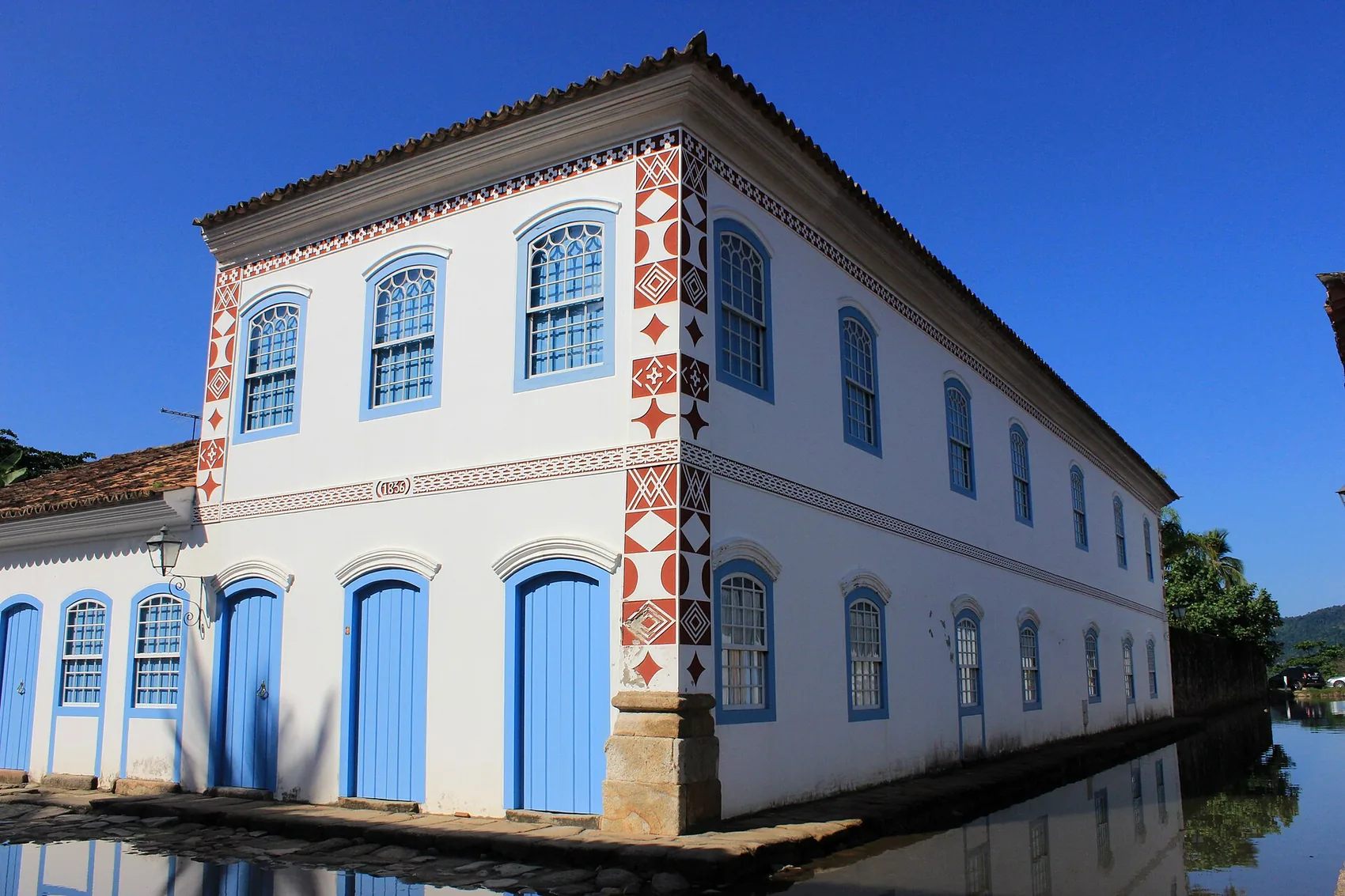
Before the calendar itself, a word about scale, because it explains everything that follows. Paraty's historic centre is barely a few hundred metres square, and the town has only so many beds. When a major festival arrives, demand does not rise gently — it spikes. Accommodation across the region books out, often months ahead, and rates climb with it. Restaurants run waiting lists. The car-free centre, which on a normal Tuesday you can cross in ten minutes, becomes a slow shuffle of people.
None of that is a reason to avoid the festivals. They are some of the best things that happen here, and for many travellers a festival is the trip. But it does mean you have to decide which camp you're in. If you want the festival, commit early: pick your dates, confirm them against the official programme when it's published, and reserve well ahead. If you'd rather have the quiet town — the empty morning streets, the easy dinner reservation, the lower rates — then the shoulder weeks on either side of a big event are often the sweet spot. You get a town that's warmed up and lively without the crush, and prices ease back fast once the crowds leave.
This is also why we tell people to check the calendar before fixing dates, not after. It is a small thing that prevents the two most common festival disappointments: arriving for a festival you didn't know was sold out, or arriving in the one quiet week of the year expecting a party.
Why the dates really do move
It's worth understanding why nothing here has a fixed annual date, because once you see the logic you'll stop trusting any single number — including the ones in this guide. There are two separate clocks at work. The religious feasts run on the church calendar, which is anchored to Easter, and Easter itself moves by more than a month from year to year. The Festa do Divino falls around Pentecost, fifty days after Easter; Carnival falls in the days before Lent, which begins forty-odd days before Easter. So both of those slide every year, and they slide together. When Easter is early, Carnival lands in early February and the Divino comes in May; when Easter is late, both shift weeks later. The patron-saint feast and the saints' days are a little steadier, tied to fixed dates on the liturgical calendar, but even those publish a slightly different programme each year.
The cultural festivals run on a different clock entirely — they're organised by committees, depend on funding and sponsors, and are confirmed only a few months ahead. FLIP, the music festival and the cachaça festival all tend to recur in the same broad window each year, but the precise dates are announced when the organisers are ready, not on a calendar you can predict in advance. That's the whole reason we keep repeating the same advice: use the season to plan the trip, then wait for the official announcement to pin the days.
The festival year at a glance
Here is the shape of the year, roughly in order. Treat the timing as seasonal guidance, not a fixed schedule.
- January–February (high summer): the Brazilian holiday peak, then Carnival — small, homemade and muddy here rather than a Rio-scale spectacle. The busiest, hottest, most expensive stretch of the year.
- Late autumn / around Pentecost (often May–June, follows Easter): the Festa do Divino Espírito Santo, the town's deepest religious tradition, with weeks of build-up.
- Winter (June–August): the cultural season. FLIP, the international literary festival, usually lands in late July or early August; a major music festival brings free jazz and concerts to the squares; and the cachaça festival turns the local spirit into a street party, usually in August.
- Late August into early September: the feast of Nossa Senhora dos Remédios, Paraty's patron saint and its second great religious celebration.
- Year-round: sacred-music concerts, gastronomy weekends, and the steady hum of live music in the historic centre, which we cover in the nightlife guide.
- 31 December: Réveillon — New Year on the waterfront, with white clothes, boats and fireworks over the bay.
Now the detail, festival by festival.
FLIP — the international literary festival
FLIP, the Festa Literária Internacional de Paraty, is the festival that put the town on the global map, and it is genuinely unusual: a serious international literary festival held in a tiny colonial port, drawing authors, publishers, journalists and readers from across Brazil and around the world. It was founded in the early 2000s, modelled in part on the long-running Hay Festival in the United Kingdom, and it quickly became one of the most important literary gatherings in Latin America.
It usually runs over about five days, most often in late July or early August — but the exact dates move every year and are announced by the organisers some months ahead. Each edition is built around a featured author, often a deceased Brazilian writer whose work and world the programme explores, and the main events are ticketed talks and debates staged in a big tent (the tenda) by the waterfront. Around that official spine grows a whole second festival — the FLIP Off and the fringe — with free readings, book launches, poetry, music, children's programming and pop-up events spilling through the squares and bars of the historic centre.
What FLIP does to Paraty is total. For its few days the town is full to the walls: every bed in the region is taken, the bookshops and bars overflow, and the cobblestone streets fill with people clutching tote bags of new titles. It is intellectual and convivial in equal measure, and even if you don't attend a single ticketed session, simply being in town during FLIP — eavesdropping on the fringe, catching a free reading, watching the place buzz — is an experience in itself.
The honest planning note: if FLIP is your reason for coming, book as early as you possibly can, and buy tickets for the headline sessions the moment they go on sale, because the best ones sell out fast. If FLIP is not your reason for coming, check the dates before you book — arriving in the middle of it expecting a quiet colonial getaway is the surest way to be surprised by the prices and the crowds.
Paraty is one of the few towns on earth that sells out its hotels for a literature festival.
Festa do Divino Espírito Santo
If FLIP is the festival the world knows, the Festa do Divino Espírito Santo is the one the town holds closest. It is one of the oldest and most deeply rooted religious celebrations in Brazil, brought over from Portugal, and it has been kept in Paraty since the 18th century. It is so important to the town's identity that it has been formally recognised as part of Brazil's intangible cultural heritage. This is not a tourist event that happens to draw locals; it is a community's living tradition that visitors are welcome to witness.
The feast falls around Pentecost — about fifty days after Easter — which means its dates move every year with the church calendar, often landing in late spring or early winter by the Southern Hemisphere reckoning (frequently May or June). It honours the Holy Spirit, the third person of the Trinity, and its roots reach back to medieval Portugal and the cult associated with Queen Isabel.
What you'll see
The celebration unfolds over many days and carries traditions you won't find spelled out on a tourist sign. The heart of it includes:
- The Folia do Divino — groups of singers and musicians who travel from house to house in the weeks beforehand, carrying the banner of the Divine, singing, blessing homes and collecting offerings to fund the feast. Being received by a folia, with food and lodging and quiet faith, is one of the oldest customs in the region.
- The coronation of a symbolic emperor or empress of the Divine, a custom of Portuguese origin in which a child is often crowned in a ceremony of real solemnity.
- Masses, novenas and processions through the historic centre, with the churches at the heart of it all.
- The festive side — the bandstand and the square fill with traditional food, music, auctions, raffles and folk performances, so the sacred and the celebratory run side by side.
For travellers, the Festa do Divino is a chance to see Paraty as something other than a beautiful backdrop — to watch a coastal community do exactly what it has done for two and a half centuries. It's busy but not in the FLIP way; the crowd is more local, the mood more devotional, and the pleasures are quieter. Come with respect, hang back during the religious moments, and you'll see a side of the town most visitors miss entirely. The roots of all this — the gold port, the church-building, the caiçara coastal culture — are in our history of Paraty.
The cachaça festival
Long before it was a tourist town, Paraty was a sugar-and-spirit town. Its alembics turned out a sugarcane spirit so well known across Brazil that for a time the word "parati" was simply slang for cachaça. That heritage is still alive in the artisanal distilleries in the hills behind town, and once a year it gets its own festival.
The cachaça festival (you'll also see it called the Festival da Pinga or the Festival da Cachaça) dates back to the early 1980s, when the town set out to revive and promote its most typical local product. It usually takes place in August, though, as with everything here, the exact dates shift from year to year and are confirmed in the current programme each season. Expect distillery stands and tastings — a chance to compare the clear, grassy white spirit against the rounder, barrel-aged versions meant to be sipped like a good rum — alongside food stalls, workshops on how the spirit is made, and live music running into the evening: samba, the accordion-driven forró of the northeast, and more.
It's a sociable, easygoing festival, more street party than spectacle, and it pairs naturally with a daytime visit to one of the working distilleries in the hills, where you can taste at the source. We cover those — and how to visit them year-round, festival or no festival — in the cachaça distilleries guide. A caipirinha made with genuine local cachaça is a different drink from the airport version, and the festival is the easiest crash course there is.
Festa de Nossa Senhora dos Remédios
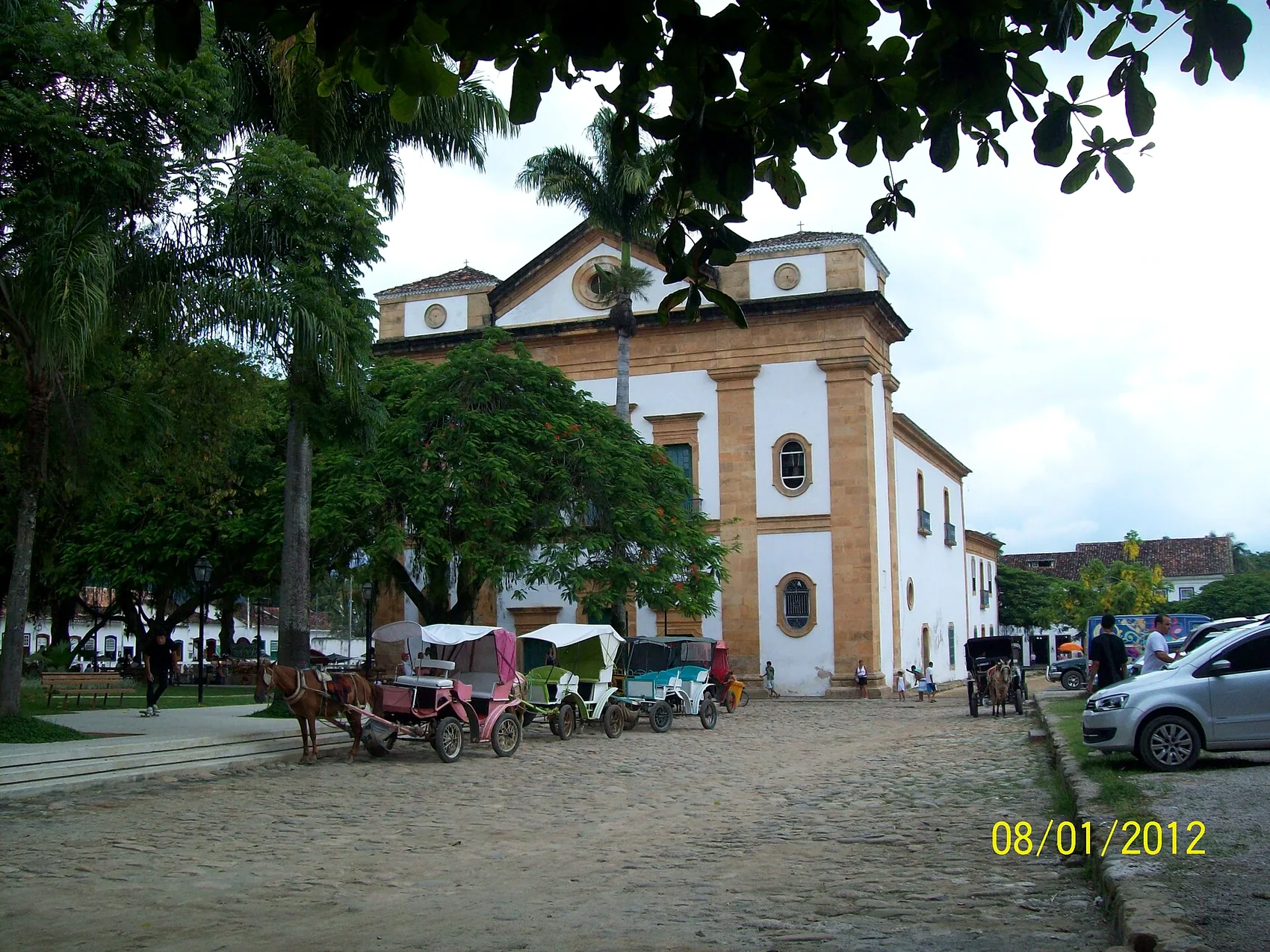
Nossa Senhora dos Remédios — Our Lady of Remedies — is the patron saint of Paraty, and her feast is the town's second great religious celebration after the Festa do Divino. Devotion to her here goes back to the town's earliest days; her first church was built in the 17th century, and she has been Paraty's patron ever since. The grand Igreja Matriz de Nossa Senhora dos Remédios on the main square is named for her.
The feast runs over roughly ten days, typically from late August into early September, often culminating around the 8th of September — but the dates are set by the church each year, so confirm the current schedule. It blends the liturgical and the popular: masses, novenas, litanies and a solemn procession, and around them music, food and the gathering of the whole town. Two details make it especially worth seeing. The church and the streets of the historic centre are dressed in blue and white, the colours of the Virgin, and the procession traditionally includes children dressed as angels, carrying paper cones filled with homemade sweets. It is tender and old-fashioned in the best way.
For visitors, the patron-saint feast has a real advantage of timing: it falls at the tail end of the busy winter festival season, often catching the shoulder between the school holidays, so the town is festive without being at its absolute fullest. It's a fine time to see Paraty's faith and community on full display while still being able to get a dinner table.
Music, jazz and sacred-music festivals
Beyond the headline events, Paraty keeps a steady year of music, and the squares of the historic centre are made for it. The standout is a music festival, usually in the winter, that brings jazz and related music to the open-air stages on the Praça da Matriz and around Santa Rita. The format is generous: many of the concerts are free and open, staged outdoors against the colonial backdrop, with additional buskers and roaming performances threading through the streets and a more itinerant, pop-up feel after dark. It draws serious musicians and a warm crowd, and because so much of it is free, it's one of the easiest festivals to simply stumble into.
Alongside it, Paraty has a tradition of sacred-music concerts — performances staged inside the historic churches, where the acoustics and the candlelit colonial interiors do half the work. These tend to cluster around the religious calendar and special cultural dates rather than running as one fixed festival, so they're best caught by checking the local cultural programme once you know your dates. There are also gastronomy weekends, art and film events, and smaller cultural festivals that come and go year to year. The town's official cultural calendar is the place to confirm what's on; we keep the practical contacts and seasonal pointers in our travel resources.
Even with nothing formally programmed, the historic centre hums most evenings — bossa nova drifting out of a small bar, a samba circle finding its feet, forró on a weekend. If live music is part of what you're after, our nightlife and bars guide covers where the sound tends to gather.
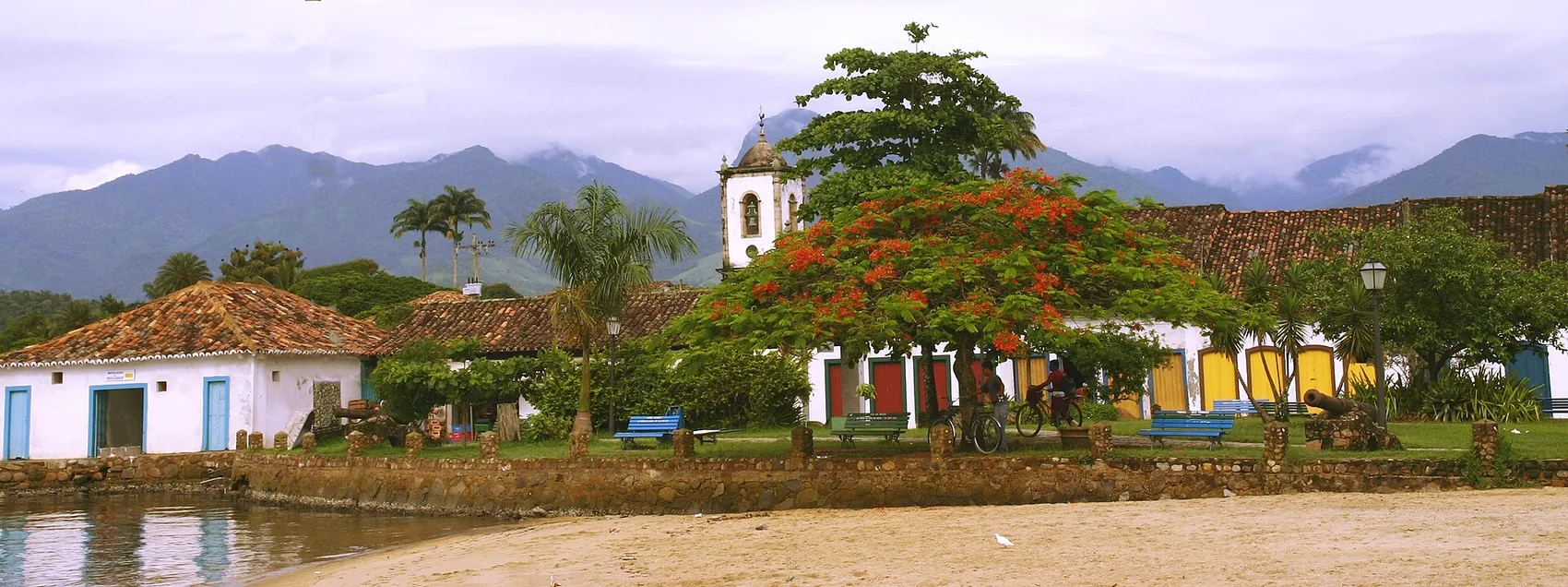
Carnival in Paraty
If you're picturing Rio — the Sambadrome, the giant blocos, the trios elétricos of Salvador — set that aside. Paraty's Carnival is small, homemade and a little bit wild, and that's exactly why people love it. It is a town-scale celebration: family-friendly blocos winding through the car-free historic centre by day, music in the squares, and a mood that's closer to a big village party than a stadium event.
Its signature is the Bloco da Lama — the "mud block." The tradition began in the 1980s with local teenagers and has grown into Paraty's most famous Carnival custom: participants coat themselves head to toe in dark mud from a nearby mangrove, sometimes adding leaves and shells, and parade down the beach grunting and dancing like a procession of friendly swamp creatures. It usually plays out at Jabaquara beach, a short walk or drive from the centre. It is silly, joyful, environmentally themed in spirit, and unlike anything you'll see at a bigger Carnival. Wear nothing you mind ruining, and accept that you will get muddy whether you planned to or not.
Carnival's dates move every year — it's tied to the church calendar and falls in February or early March, the five days before Ash Wednesday — so confirm the year you're travelling. Practically, this is peak season layered on top of high summer: hot, busy and pricey, with accommodation booked far ahead. If a small, characterful Carnival appeals more than a massive one, Paraty delivers; if you want quiet, this is the week to be somewhere else on the coast.
Paraty's Carnival is the only one where the most photographed costume is a complete coating of mangrove mud.
New Year — Réveillon on the bay
New Year's Eve — Réveillon — is one of the most atmospheric nights of the Paraty year, and it has its own gentle traditions. Many people wear white for luck and peace, as Brazilians do up and down the coast, and the celebration centres on the waterfront: crowds gather along the seawall and the pier, boats fill the inner bay, and at midnight fireworks go up over the water, reflected in the harbour and framed by the dark ridges behind town. Some people follow the coastal custom of jumping seven waves or sending flowers and small offerings out onto the sea for Yemanjá, the goddess of the waters.
It falls in the middle of high summer and the long Brazilian holiday season, so it is busy and expensive, with a multi-night minimum stay almost everywhere — Réveillon is rarely a one-night booking. But the setting is hard to beat: a 300-year-old colonial town, a bay full of lit boats, fireworks doubling on the water, and the warm summer sea right there. If you want to ring in the New Year somewhere that feels like nowhere else, this is a strong candidate. Just book early and budget for the season.
Planning around a festival — the practical advice
Whichever festival pulls you, the planning logic is the same. A few honest pointers we give every guest:
Book early, then confirm the dates
For any of the big events — FLIP, Carnival, the cachaça festival, Réveillon — the region books out months ahead and rates rise. Reserve as early as you can. And because dates genuinely move, confirm them against the official programme before you lock flights and bookings around a single day. The religious feasts shift with Easter; the cultural festivals are announced a few months out. We'd rather you double-check than arrive a week early.
Match the festival to the traveller
The festivals suit very different people:
- FLIP is for readers, talkers and the intellectually curious — and for anyone who enjoys a town at full, buzzing capacity.
- The Festa do Divino and the patron-saint feast are for travellers drawn to living tradition, faith and folk culture, who'll enjoy watching more than participating.
- The cachaça festival and the music festival are the easygoing crowd-pleasers — sociable, often free, low-commitment, good for almost anyone.
- Carnival is for those who want fun and don't mind heat, crowds and mud; families do well with the daytime blocos.
- Réveillon is for the once-in-a-while big night, if you'll book ahead and pay peak-season rates for the setting.
…or plan to avoid them
There's no shame in this, and for many of our guests it's the right call. If you want the quiet colonial town — empty morning streets, easy dinner tables, the bay to yourself — simply steer clear of the festival weeks and lean into the shoulder months. Our best-time-to-visit guide lays out, month by month, which weeks are calm and which are not. It is entirely possible to have a wonderful Paraty trip without a single festival in it; for some people, that is the trip.
Quick reference: which month, which festival
To pull it together — and, once more, with every date treated as a season rather than a fixed schedule:
- January–February: high summer; Brazilian holidays; Carnival (date moves, Feb–early March) with the Bloco da Lama.
- Around Pentecost (often May–June, follows Easter): Festa do Divino Espírito Santo.
- Winter, June–August: the cultural season — FLIP (usually late July / early August), the music festival, and the cachaça festival (usually August).
- Late August–early September: feast of Nossa Senhora dos Remédios, the patron saint.
- Throughout the year: sacred-music concerts, gastronomy and cultural weekends, and nightly live music in the centre.
- 31 December: Réveillon on the waterfront — white clothes, boats and fireworks over the bay.
For the full picture of how these slot into the weather, the sea temperature and the crowds, read this alongside the best-time-to-visit guide and the complete guide to Paraty. If a festival is the centrepiece of your trip, the history of Paraty will deepen what you're looking at, and our travel resources point you to the official programmes once your dates are set.
The last word on festivals
Paraty's festival calendar is one of its quiet superpowers: a town small enough to walk across in ten minutes that somehow hosts a world-class literary festival, one of Brazil's oldest religious feasts, a spirit festival, a mud-soaked Carnival and a New Year on the water — each one transforming the same few hundred metres of cobblestone into something different. The trick is simply to know which is happening when you come, and to choose on purpose. Want to be in the thick of it? Pick your festival, book early, and lean in. Want the town at its calm, candlelit best? Slip into a shoulder week and let Paraty be quiet. Either way, check the dates first — they move — and let the place do the rest. When you're ready to turn a festival into a full trip, the complete guide to Paraty is the next thing to read, and you can always write to us on the ridge for a steer on timing.
Come stay above the bay
Chalé Bel Air sits on the ridge that looks over everything in this guide. Tell us your dates and what kind of trip you are after — we answer personally.
Ask about your datesFrequently asked questions
What is Paraty's most famous festival?
Internationally, it is FLIP, the Festa Literaria Internacional de Paraty, an international literary festival that usually runs over five days in late July or early August. For locals, the deeply traditional Festa do Divino Espirito Santo, held around Pentecost, matters just as much. The two could not be more different, and both fill the town.
When is FLIP held each year?
FLIP typically takes place over about five days in late July or early August, but the exact dates move every year and are announced by the organisers a few months ahead. If you are coming for the festival, confirm the current dates before you book anything, because the town sells out.
Do festivals make Paraty more expensive?
Yes. During FLIP, Carnival, the cachaca festival and the New Year period, accommodation across the region books up early and rates rise, sometimes steeply. If you want a festival, reserve months ahead. If you would rather avoid the crush, the shoulder weeks on either side are calmer and cheaper.
Is Carnival in Paraty like Rio?
No, and that is the point. Paraty's Carnival is small and homemade rather than a stadium spectacle. Its best-known tradition is the Bloco da Lama, a mud-covered street party that began with local teenagers in the 1980s, alongside family-friendly blocos through the historic centre.
When does the cachaca festival happen?
The cachaca festival usually takes place in August and celebrates Paraty's long history of distilling the sugarcane spirit. Expect tastings, distillery stands, food and live music. Dates shift from year to year, so check the current programme before planning around it.
.jpg)


.jpg)