Paraty is the rarest kind of Brazilian destination: a perfectly preserved colonial town wrapped in rainforest and floated on a bay full of islands, far enough from the cities to have kept its character and close enough to reach in an afternoon. This is the long version of everything we tell guests before they come — what Paraty is, what to do, and how to do it well.
Some places announce themselves; Paraty just quietly is. There is no skyline, no resort strip, no airport arrivals hall. You come down off the mountains on the Rio–Santos road, the forest opens onto a bay full of islands, and there at the water's edge is a small grid of whitewashed houses that has looked more or less the same for two and a half centuries. The cars stop at the edge of it. From then on it is cobblestones, church bells, the smell of the sea and grilled fish, and boats — always boats — fanning out across the water.
We host guests on the ridge above all of this, and the questions we answer most are the simple ones: what is Paraty, what should we actually do, and how do we do it without wasting a day getting it wrong? This guide is the long answer. Read it once before you come and you will arrive knowing the place better than most people who have driven through it.
What and where is Paraty
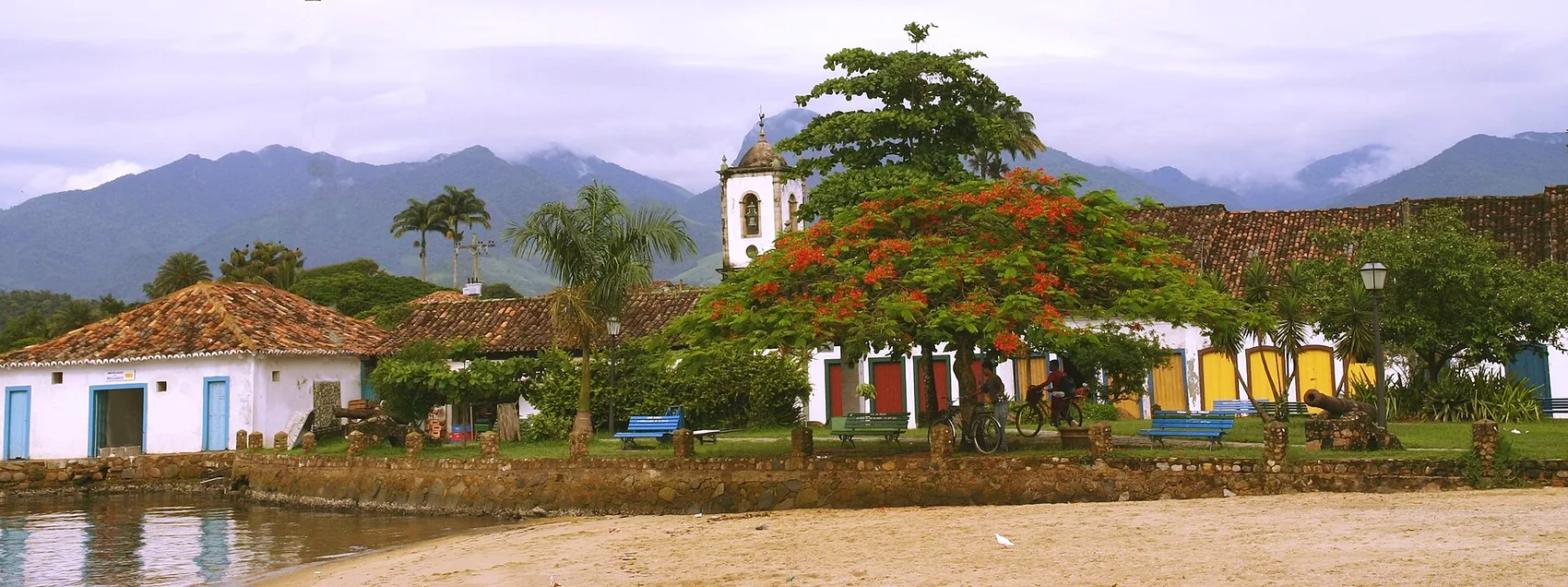
Paraty (sometimes spelled Parati, and pronounced pah-rah-CHEE) is a small historic town on the Costa Verde, the stretch of coast in the far south of Rio de Janeiro state where the Serra do Mar mountains drop almost straight into the Atlantic. It lies roughly midway between the cities of Rio de Janeiro and São Paulo, about 236 kilometres down the coast from Rio — close enough for a weekend, far enough that it has never become a suburb of either.
Three landscapes meet here and never quite blur together. There is the town: a flat, car-free colonial centre of barely a few hundred metres square, almost unchanged since the 1700s. There is the bay: a wide, sheltered body of green water studded with dozens of islands and ringed by jungle-backed beaches. And there is the forest: the steep, dripping Atlantic rainforest of the Serra da Bocaina, laced with waterfalls and old stone trails, rising straight out of the back of town. Most of this — town, bay and mountains together — was inscribed in 2019 as “Paraty and Ilha Grande: Culture and Biodiversity,” Brazil's first mixed UNESCO World Heritage Site, recognised at once for its colonial culture and its extraordinary nature.
A short history: gold, cachaça, and a town the railway forgot
Paraty's near-perfect preservation is, like a lot of beautiful things, partly an accident of bad luck. The town was founded in the 17th century, but its great age came with the gold rush of the 1700s, when the mines of Minas Gerais needed a port. The gold came down out of the mountains on the backs of mules along a paved stone road — the Caminho do Ouro, the Gold Trail — to Paraty's harbour, where it was loaded onto ships bound for Rio and Lisbon. The town grew rich, built its churches and its merchant houses, and filled its warehouses.
Then it was bypassed. A new mountain road let the gold travel straight to Rio without the sea voyage, and later the coffee boom and the railways ran their wealth through other towns entirely. Paraty slid into a long, quiet poverty. For more than a century it was a half-forgotten fishing port reachable mainly by boat — too marginal to modernise, too poor to knock anything down. By the time the coast road finally reached it again in the 1970s, the rest of Brazil had discovered that the very thing that made Paraty poor had made it priceless: an entire Portuguese colonial town, frozen, intact.
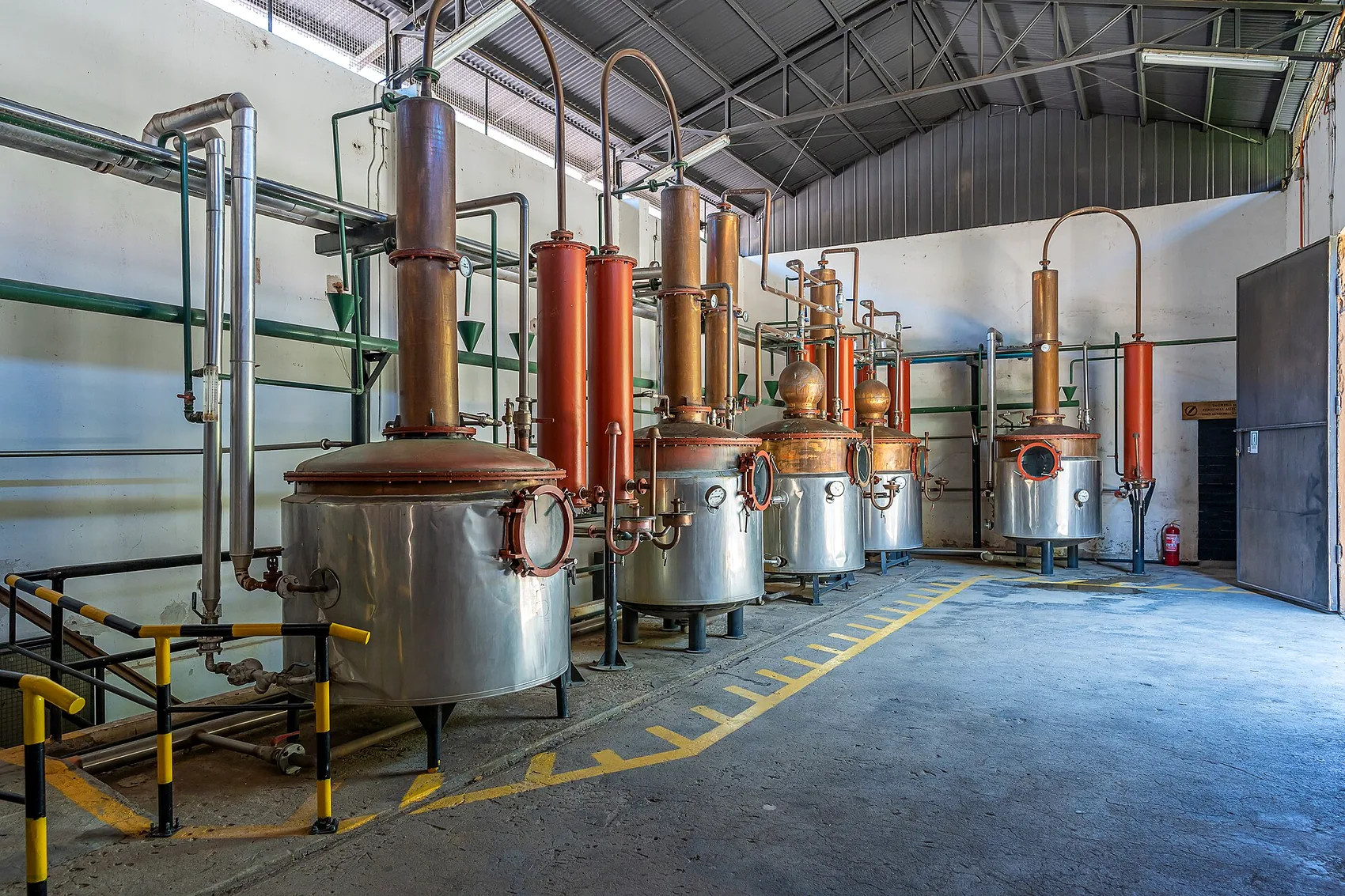
The other thread running through that history is cachaça. Long before it was a tourist town, Paraty was a sugar-and-spirit town, and its alembics turned out a sugarcane spirit so well known that for a time “parati” was simply slang for cachaça across Brazil. The distilleries in the hills behind town are the direct descendants of that trade, and a tasting at one of them is a taste of the oldest industry on this coast.
The historic centre: cobblestones, churches and the tides
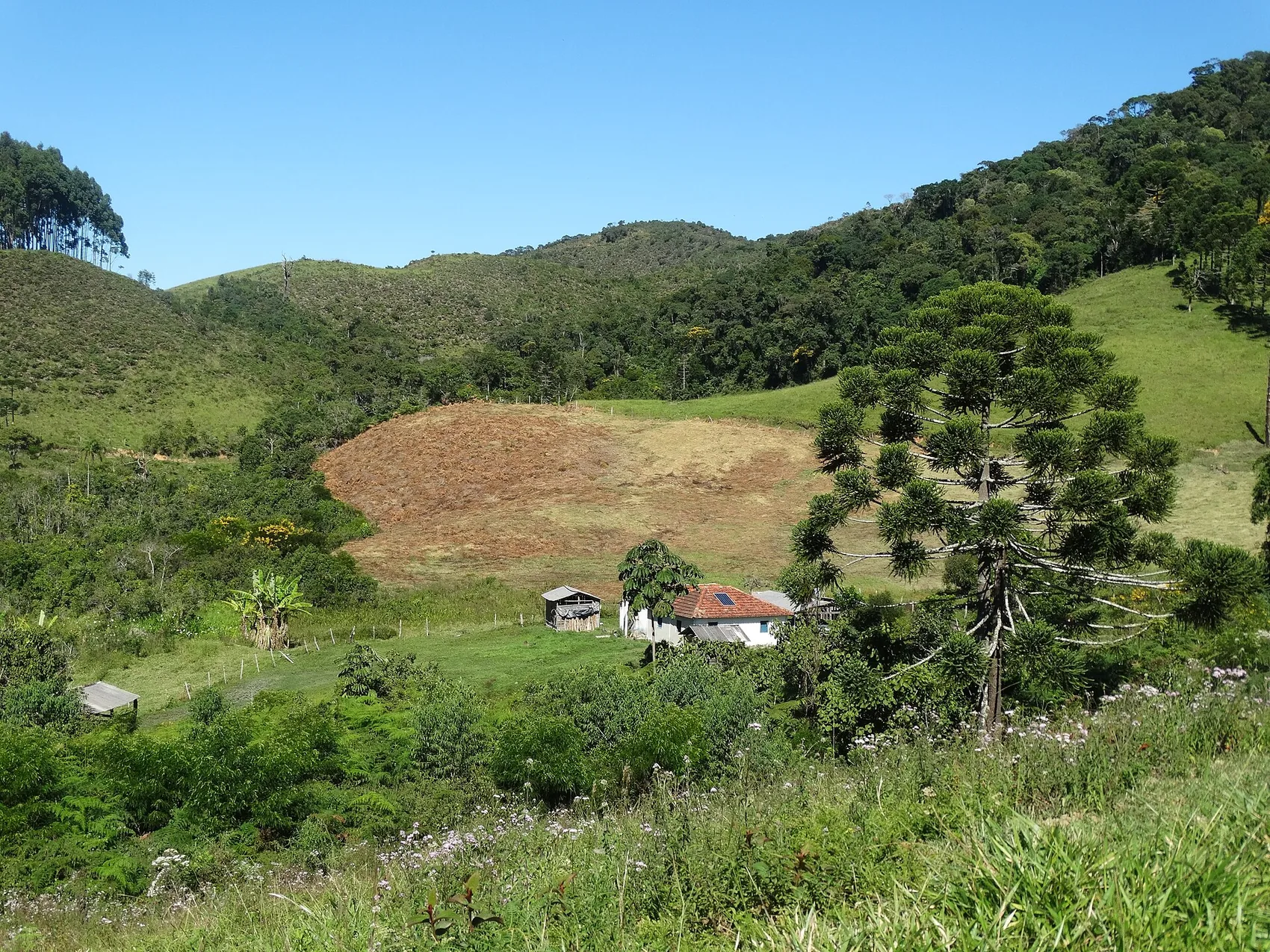
Start here, on foot, ideally on your first morning before the day-trip buses arrive. The colonial centre is closed to traffic, so you simply wander. The houses are thick-walled and whitewashed, their doors and windows picked out in strong blue, ochre, red and green; the streets are paved with pés-de-moleque — huge, irregular, ankle-testing stones laid by hand. There is no straight line and no level surface in the whole grid, and that is the charm. Wear flat, sturdy shoes and look where you walk.
Two churches anchor the town. The little Igreja de Santa Rita (1722), with its three-tiered white facade standing right at the water's edge, is the most photographed building in Paraty and now holds a small museum of sacred art. The larger Igreja Matriz de Nossa Senhora dos Remédios presides over the main square a couple of blocks inland. A third, the Igreja de Nossa Senhora do Rosário, was the church of the town's enslaved and free Black population — a reminder that the gold economy ran on slavery, a history the town does not hide.
The strangest and most delightful detail is the tides. The lowest streets near the water were built, deliberately, to flood at the spring high tides; the sea slides in through gaps left in the seawalls, washes the cobbles clean, and drains away again. Locals call the effect the streets becoming mirrors. It is not a flood and not a fault — it is 18th-century street-cleaning, and on a full-moon high tide it turns the town into a reflection of itself.
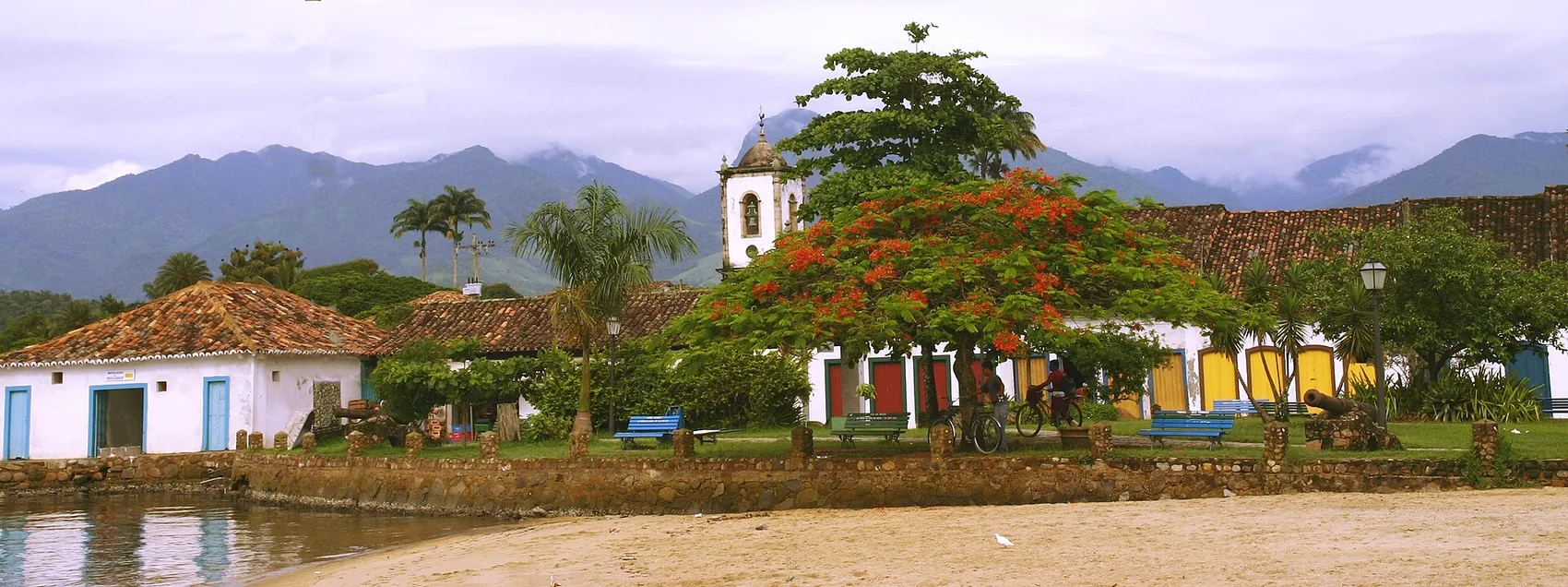
Paraty is one of the very few places where you can stand in the 18th century, get your feet wet on purpose, and not see a single thing that breaks the spell.
The bay and the boats
If the town is the heart of Paraty, the bay is its reason for being. From any rise above the water you see the same thing every morning: a fleet of wooden schooners and small motorboats leaving the pier and spreading out across a sheet of green-blue water dotted with islands. Sooner or later you will want to be on one of them, and a day on the water is the single experience we tell people not to skip.
There are two kinds of trip. The schooner (escuna) is the classic: a big wooden boat that carries a few dozen passengers on a fixed loop of the inner bay, with music, a bar, shade and long swimming stops. It is sociable, cheap and effortless. The private charter — a small motorboat, or lancha, hired for the day with a skipper — flips that: your route, your pace, the quiet coves the schooners skip. Our advice is to do the schooner once for the atmosphere and charter for the day you want the bay on your own terms. The full breakdown of how a boat day works is in our guide to a day on the water.
The classic circuit takes in a handful of islands and beaches with names worth knowing — Praia da Lula and Praia Vermelha on the eastern shore, the snorkelling rocks of Ilha Comprida and Ilha dos Meros — but the exact stops shift with the tide and the weather. What matters is the shape of the day: out past the fort, a warm-up swim, an island anchorage, a seafood lunch behind a beach, and a last swim on the way home in the late light.
The beaches
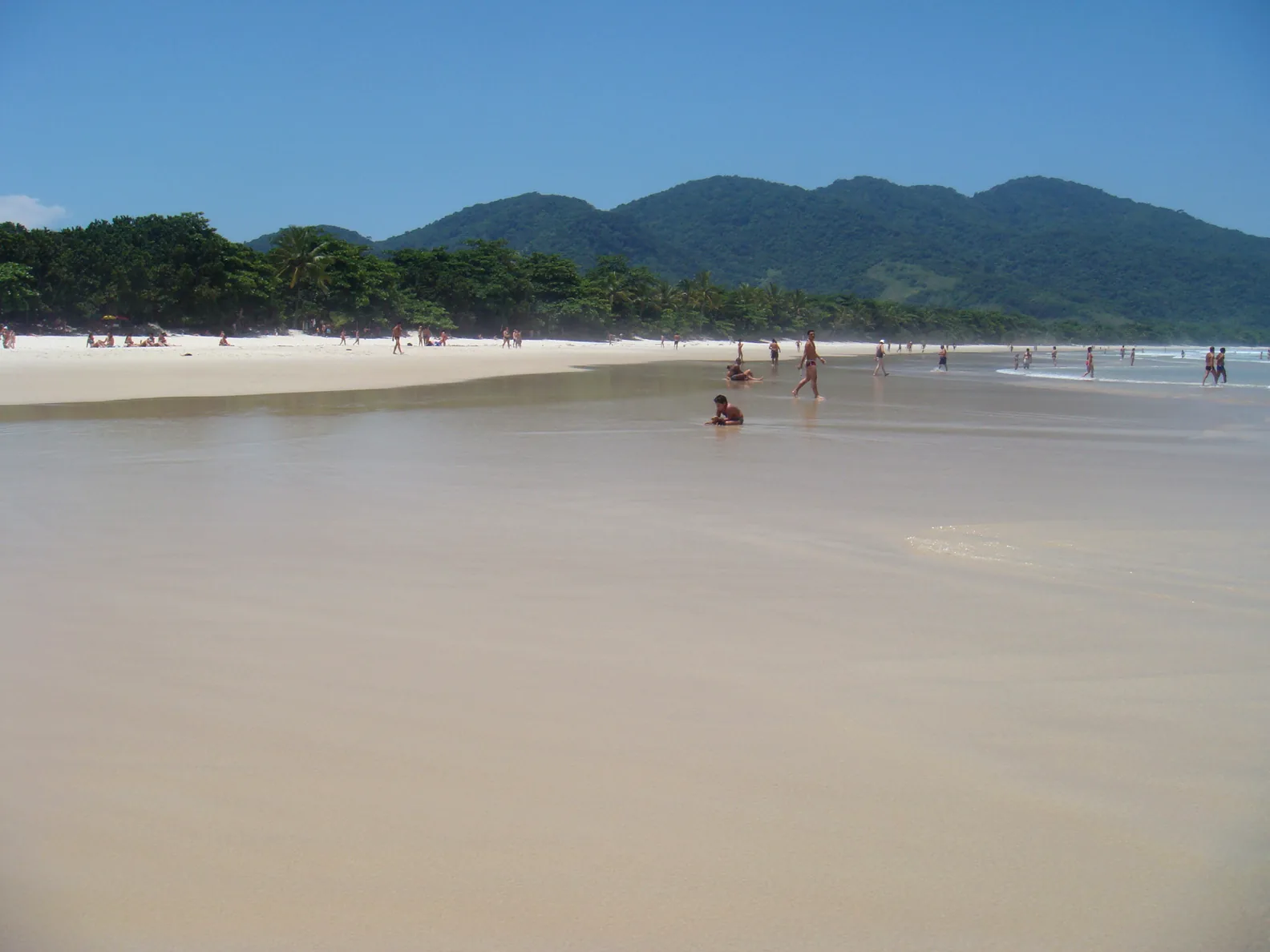
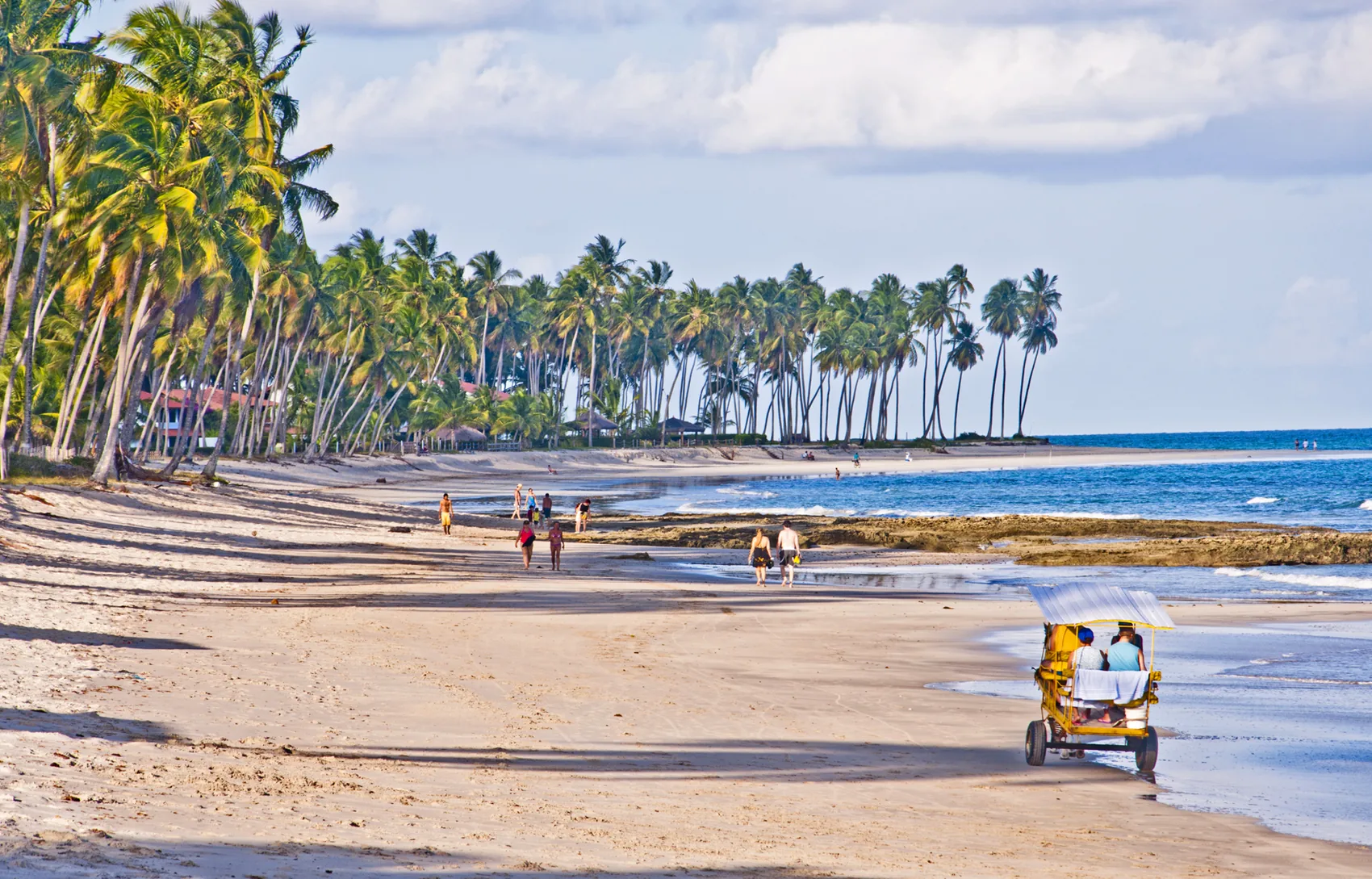
Paraty's beaches come in two flavours, and knowing the difference saves disappointment. The beaches in and around town — Pontal across the bridge, Jabaquara just north — are calm, shallow and convenient but not the postcard. The beauty is further out: the boat-access coves of the inner bay, the roadless beaches reached by trail or boat-taxi, and the surf beaches down the coast.
Two stand out for first-timers. Trindade, about forty minutes south, is a laid-back former fishing-and-surf village strung along several beaches, with the boulder-ringed natural swimming pool of the Cachadaço as its prize. Praia do Sono, reached by a forest trail from Laranjeiras (or a boat-taxi when the sea allows), is the roadless caiçara beach everyone hopes Brazil still has — and mostly does, here. We have ranked and mapped the whole coast, from the easy town beaches to the wild ones, in the complete beaches guide.
Waterfalls and the forest
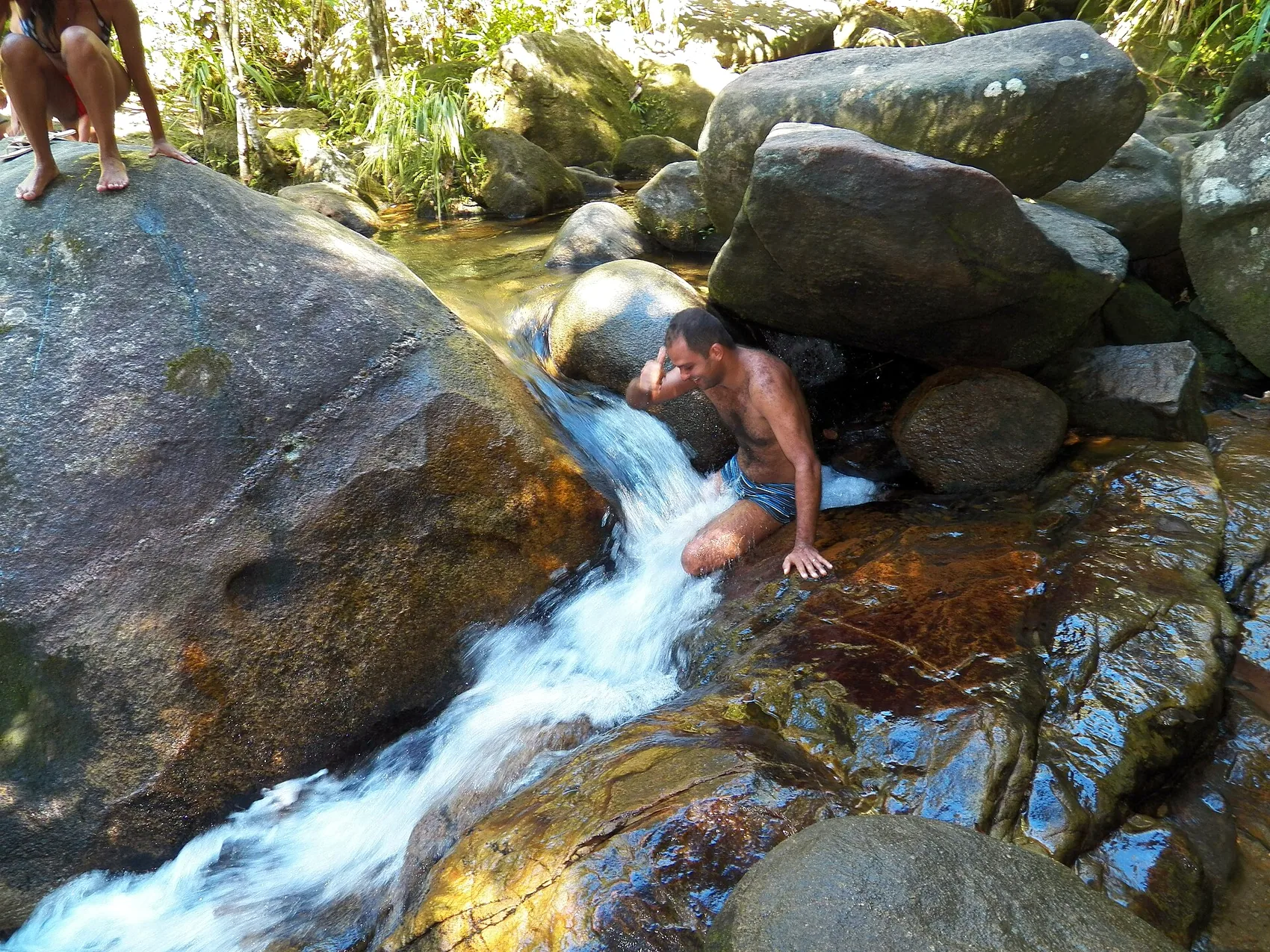
Turn inland and the landscape changes completely. The road toward Cunha climbs out of town into the Atlantic Forest, and within twenty minutes you reach the swimming holes: the Cachoeira do Tobogã, a natural rock waterslide where locals surf the wet stone standing up (watch, applaud, and slide on your backside if at all), and the deep, rope-swung Poço do Tarzan nearby. The same road holds the cachaça distilleries and surviving stretches of the Gold Trail, which makes a forest-and-tasting day one of the easiest good days to plan. The full list of falls, with the safety notes that matter, is in our waterfalls guide; the trails, from the gentle to the serious Mamanguá sugarloaf climb, are in the hiking guide.
Behind all of it stands the Saco do Mamanguá, an eight-kilometre finger of still sea pushed between two forested ridges — often called Brazil's only tropical fjord, though geographers will tell you it is properly a ria. It is the quietest water on the coast and the setting for one of its best climbs and its best stand-up paddling; we give it its own deep-dive guide.
Ilha Grande, on the horizon
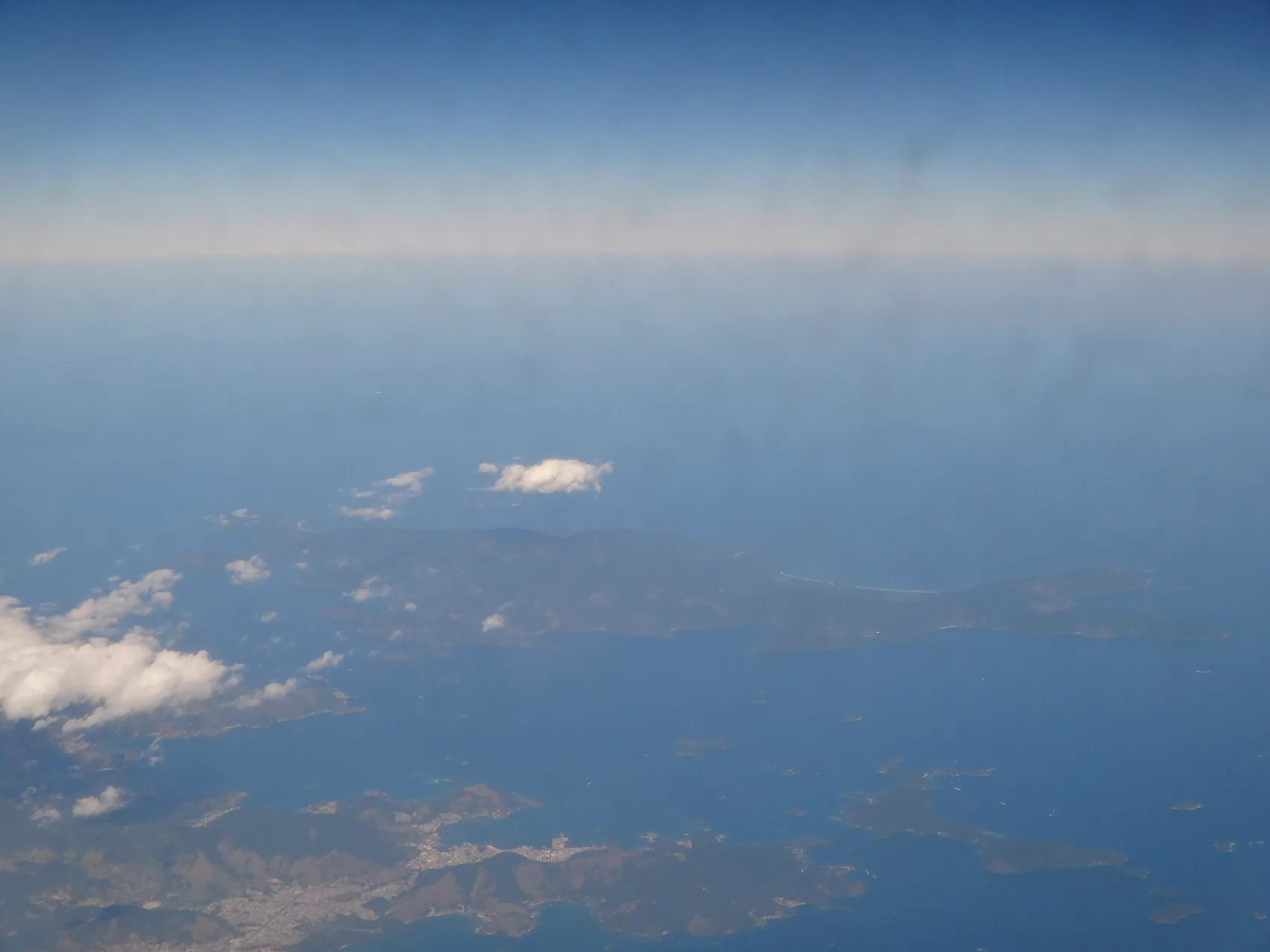
From the high ground above Paraty, the long blue ridge on the horizon is Ilha Grande — Brazil's great car-free island and the other half of the UNESCO listing. There are no roads and no cars on it; you arrive by boat at the single village of Vila do Abraão and get around on foot, by trail, or by boat-taxi. Its prize is Lopes Mendes, regularly called one of Brazil's most beautiful beaches: three kilometres of squeaky white sand and clear surf, reached by a boat-taxi to a neighbouring cove and a short forest walk.
You can visit Ilha Grande as a long day trip, but it deserves an overnight. The crossing logistics — which port, which boat, how long — are genuinely worth getting right, and we have laid them out, along with what to do once you land, in the complete Ilha Grande guide.
Cachaça, caipirinhas and the food
Paraty eats and drinks very well for its size. The defining product is cachaça: the artisanal distilleries in the hills run daytime tastings where you can compare the clear, grassy white spirit against the rounder, barrel-aged versions that are meant to be sipped like a good rum. A caipirinha made with genuine local cachaça is a different drink from the airport version, and learning the difference is part of the trip. The distilleries, and how to visit them, are covered in our cachaça guide.
On the plate, the coast shows up as seafood: grilled fish straight off the day's boats, prawns, and above all moqueca — the slow seafood stew of coconut milk, palm oil, tomato and coriander that is the great dish of the Brazilian coast. Inland flavours appear too, from feijoada on a slow Saturday to the tropical fruit that fills the morning markets. Where and what to eat, without a list of restaurant names that would be stale by your visit, is in the food guide.
Festivals and culture
For a town of its size, Paraty has an outsized calendar, and a festival in your dates changes the whole character of a visit. The best known is FLIP — the Festa Literária Internacional de Paraty — an international literary festival that fills the town with writers and readers for several days, usually in the winter (its dates move, so check). In August the Festival da Cachaça turns the spirit into a street party. And the religious calendar runs deep, above all the Festa do Divino Espírito Santo around Pentecost, with processions, folk music and weeks of preparation. Even outside the festivals, the historic centre hums after dark with live music — bossa nova, samba, the accordion-driven forró of the northeast — which we describe in the nightlife guide. The deeper roots of all this, and the living caiçara coastal culture behind it, are in our pieces on the history of Paraty and caiçara culture.
The islands of the bay
It is worth saying a word about the islands, because they are the feature that makes Paraty's bay unlike anywhere else within reach of Rio. The water is scattered with them — dozens inside the Bay of Paraty itself, and hundreds more if you count the neighbouring bay of Angra dos Reis, which markets itself, with only mild exaggeration, as the “bay of 365 islands.” Some are no bigger than a parked truck; some carry a single house and a jetty; a few are private and off-limits, their owners' speedboats the only traffic. Most, though, are public, and they are the anchor points of every boat day: you motor out, tie up off a rocky shore, and slip into water clear enough to watch the fish gather under the hull.
The named ones worth knowing are Ilha Comprida and Ilha dos Meros for snorkelling — their rocky edges busy with sergeant-majors and parrotfish — and Ilha do Algodão, “Cotton Island,” which marks the mouth of the Mamanguá ria on the charter routes. You do not need to memorise them. What matters is the principle: in Paraty the islands are not scenery you photograph from shore, they are the destinations themselves, and a day spent moving between three or four of them is the most Paraty thing you can do. The island-hopping guide sets out how to plan one.
Who Paraty suits — and how to shape it to you
Paraty is unusually adaptable, which is part of why it rewards a little planning. The same town that hosts a literary festival also hosts surfers, honeymooners, families with toddlers and groups of friends in their sixties, and each finds a different Paraty.
Couples tend to want the town's evenings and the bay's quiet coves, with perhaps a sunset from altitude — a mix the honeymoon guide leans into. Families do best with a base that has a pool and easy access to the calm, shallow beaches near town, with the wilder stuff rationed to taste; we cover the specifics, including the one waterfall to be careful about, in Paraty with kids. Groups — friends, reunions, a milestone birthday — almost always do better in a private villa than in scattered hotel rooms, with a boat chartered for the day and a cook for the evenings. And walkers and adventurers have, in the trails of the Juatinga peninsula and the climb up the Mamanguá sugarloaf, some of the most remote coastline reachable on foot in southeast Brazil.
The practical lesson is to decide which of those you are before you book anything. The town is small and everything is close, but the shape of a good Paraty day — town-led, water-led, trail-led — is different for each, and the best trips commit to one rhythm rather than trying to do all three every day.
What to set your expectations about
A few honest notes, because they prevent the only disappointments we ever hear about. Paraty is not a beach-resort town: the best beaches take a boat or a walk to reach, and the ones you can stroll to from the centre are pleasant rather than spectacular. It is not a nightlife city: the evenings are about candlelit dinners and live music in small rooms, and they wind down gracefully by midnight on weeknights. It rains, sometimes hard, especially in summer — which is exactly why the forest is so green and the waterfalls so full — so flexibility beats a rigid itinerary. The cobblestones are genuinely difficult underfoot and rule out wheels and heels. And it is seasonal: over the Brazilian summer holidays and Carnival the small town fills up and prices climb, while the shoulder months feel almost private. Come understanding those five things and Paraty will overdeliver on everything that actually matters.
When to go
Paraty is a year-round destination with two distinct seasons. The summer (December to March) is hot and humid, with the warmest sea and the most life, but also the heaviest rain — the classic pattern is a brilliant morning and a short, dramatic afternoon thunderstorm — and the biggest crowds over the Brazilian holidays and Carnival. The winter (June to August) is drier, clearer and cooler, with the best underwater visibility for snorkelling and the calmest atmosphere; evenings can want a light layer. Spring and autumn shoulders (April–May, September–November) are the connoisseur's choice: warm water, thinner crowds, lower prices. The month-by-month detail — weather, sea temperature, festivals and what it costs — is in our best-time-to-visit guide.
How to get to Paraty
There are no scheduled flights, which is part of why the town is the way it is. Almost everyone arrives by road on the BR-101 Rio–Santos coastal highway — itself one of Brazil's great scenic drives, hugging the green coast the whole way.
- From Rio de Janeiro: about four hours by car or Costa Verde coach, southwest down the coast past Angra dos Reis. The full options are in our Rio to Paraty guide.
- From São Paulo: about five hours, either down the mountain on the Cunha road or out to the coast via Ubatuba. Detailed in the São Paulo to Paraty guide.
- Renting a car gives you the waterfalls, the distilleries and the down-coast beaches under your own steam — see driving the Costa Verde.
Once you are here, the town itself needs no car at all — it is walked — and the bay is reached by boat. How it all fits together on the ground is in getting here and around.
Where to stay
Paraty's lodging splits roughly three ways. The colonial centre is full of pousadas — small guesthouses inside the historic houses themselves, atmospheric but compact, and right in the middle of the evening bustle. Out along the coast and up in the hills are the villas and chalets, which trade the walk-everywhere convenience of the centre for space, privacy, a pool and a view. And there is everything in between, from simple rooms to boutique design hotels.
We are biased, of course: Chalé Bel Air sits up on the ridge precisely because the view from altitude — the whole bay, Angra and Ilha Grande in one sweep — is the thing the town centre cannot give you. If you are weighing a hillside or coastal rental against a room in the centre, our guide to luxury vacation rentals in Paraty lays out the honest trade-offs.
How long to stay, and how to shape it
The single most common mistake is treating Paraty as a day trip from Rio. It can be done, but you will spend eight hours in a car to spend three in the town and see none of the bay. Give it time instead:
- A long weekend (2–3 nights): one day for the town, one full day on the water, and whatever the weather allows on the third — waterfalls or a down-coast beach. This is the sweet spot, and it is mapped hour by hour in our three-day itinerary.
- A week (5–7 nights): the above plus an overnight on Ilha Grande and a day among the islands of Angra dos Reis, with a real rest day built in. See the seven-day Costa Verde itinerary.
- Longer: Paraty rewards a slow stay better than almost anywhere — the rhythm of town, water and forest never runs dry, and the longer you stay the more the place opens up.
Practical things worth knowing
- Money: the currency is the Brazilian real (R$). Cards are widely accepted in town, but carry some cash for boat lunches, beach kiosks and the smaller distilleries.
- Language: Portuguese. English is spoken in tourist-facing places but a few words of Portuguese go a long way and are warmly received.
- Shoes: the cobblestones are no joke. Flat, grippy shoes for town; proper footwear for the trails.
- Weather: build flexibility into your plan and put the boat day on the clearest forecast — the town and the indoor pleasures handle a grey day fine.
- Connectivity: good in town, patchy at the far beaches and gone entirely behind the ridgelines — which is rather the point.
Everything else a first-timer asks — safety, tipping, health, when to book — is gathered in our Paraty travel tips, and the wider context of a first Brazilian trip is in the luxury Brazil travel guide.
Your first day, if you only read this far
If you take nothing else from this guide, take the shape of a good first day. Arrive the afternoon before if you can, so your first morning is not eaten by the drive. Go down into the historic centre mid-morning, before the day-trip coaches, and just walk — no plan, no list, letting the streets and the two churches pull you around. Find lunch slowly and eat it late. In the heat of the early afternoon, retreat: a pool, a hammock, a nap. As the day cools, climb to the Forte Defensor Perpétuo or out to a quiet beach for the light, then come back into town as the lanterns come on and the day-trippers leave. Eat dinner outdoors, follow the live music by ear, and have one good caipirinha. That single day — town, rest, light, music — contains the whole of Paraty in miniature, and everything else in this guide is a variation on it. Save the boat for the clearest morning of your stay, and let the rest unfold.
When you are ready to turn this into an hour-by-hour plan, the three-day itinerary is the next thing to read; if you have a week, jump to the seven-day Costa Verde itinerary instead.
The last word
Paraty is not a place you tick off. It is a place you settle into — a town that does its best work at the slow end of the dial, where the right itinerary is mostly an excuse to be on the water by day and in the lantern-lit streets by night, with a long lunch somewhere in between. Plan the logistics, then let the place set the pace. From up on the ridge, watching the schooners leave in the morning mist, it is very easy to remember why people have been quietly in love with this stretch of coast for three hundred years.
Come stay above the bay
Chalé Bel Air sits on the ridge that looks over everything in this guide. Tell us your dates and what kind of trip you are after — we answer personally.
Ask about your datesFrequently asked questions
Where is Paraty?
Paraty sits on the Costa Verde — the “green coast” — in the far south of Rio de Janeiro state, roughly halfway between the cities of Rio de Janeiro and São Paulo on the BR-101 Rio–Santos highway. It is about 236 km from Rio (around four hours by road) and a little further from São Paulo (around five).
Is Paraty worth visiting?
Yes — it is one of Brazil's most rewarding small destinations. You get a car-free 18th-century colonial centre that is a UNESCO World Heritage Site, a bay scattered with islands and clear-water beaches, rainforest waterfalls, a serious cachaça and food culture, and Ilha Grande within reach, all in one compact area. It rewards a slow three or four days far more than a rushed day trip.
How many days should I spend in Paraty?
Three full days is the classic stay: one for the town, one on the water, one for the forest or the beaches down the coast. A week lets you add Ilha Grande and Angra dos Reis without rushing. Even a long weekend works if you protect one full day for a boat trip.
When is the best time to visit Paraty?
The dry, clear winter months of roughly June to August give the best visibility and the calmest crowds, with cooler evenings. The summer months of December to March are hottest with the warmest sea, but bring afternoon thunderstorms and the biggest holiday crowds. See our month-by-month guide for the detail.
Does Paraty have an airport?
There is a small airstrip used by private aircraft, but no scheduled commercial flights. Almost everyone arrives by road from Rio or São Paulo — by rental car, by Costa Verde coach, or by private transfer.
.jpg)
.jpg)


