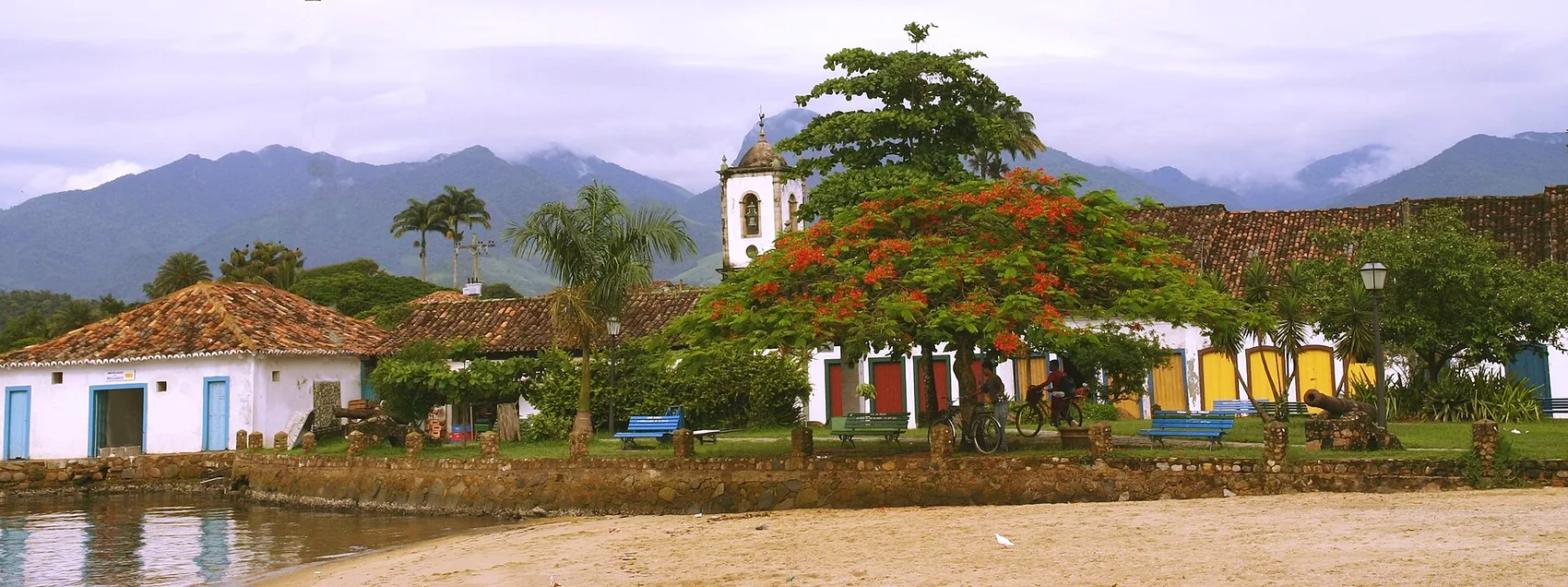
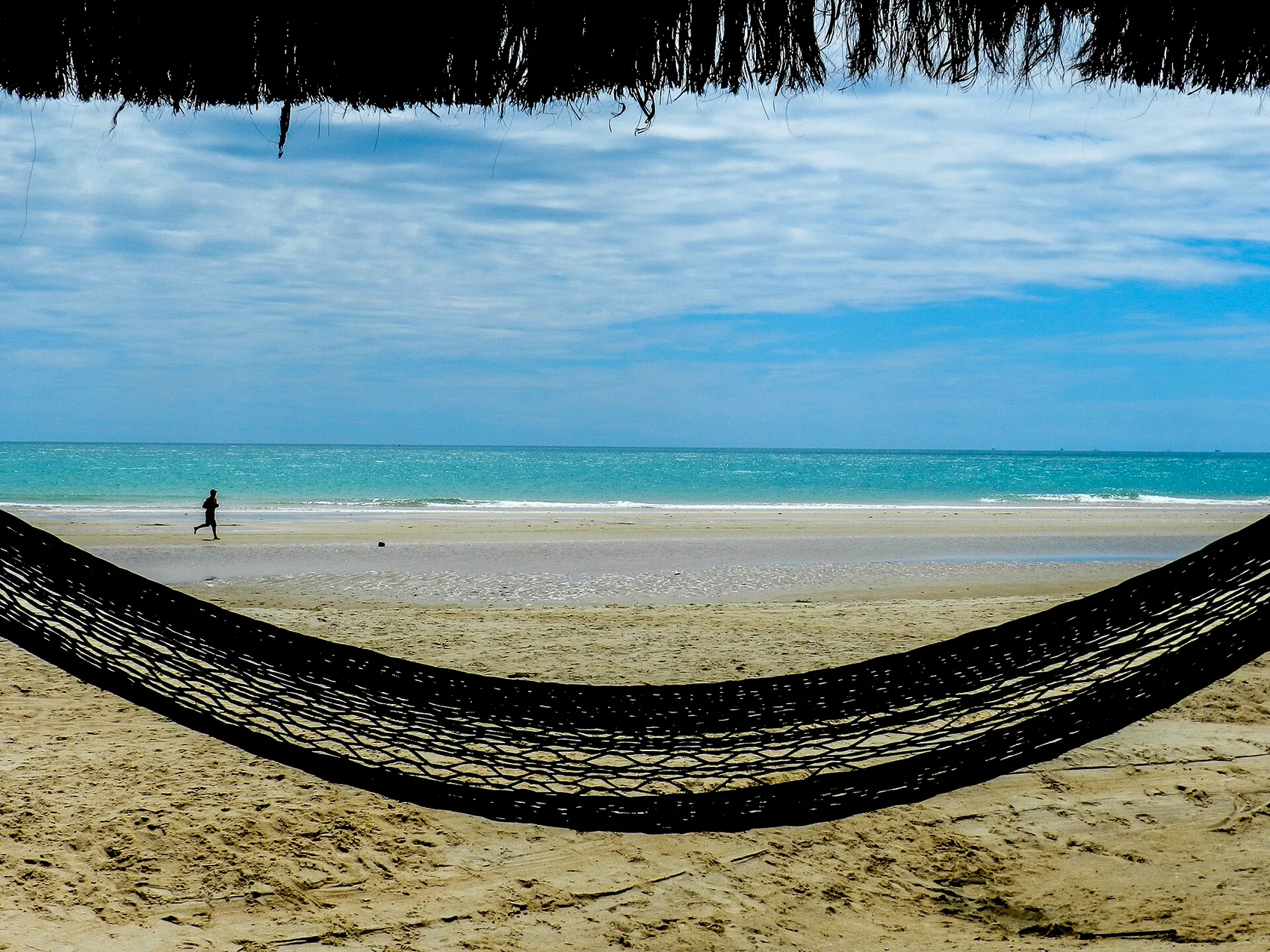
Paraty sits roughly halfway between Rio de Janeiro and São Paulo on the BR-101, the Rio–Santos coastal highway. There is no airport with scheduled flights, which is part of why the town has stayed the way it is. Here are the real options.
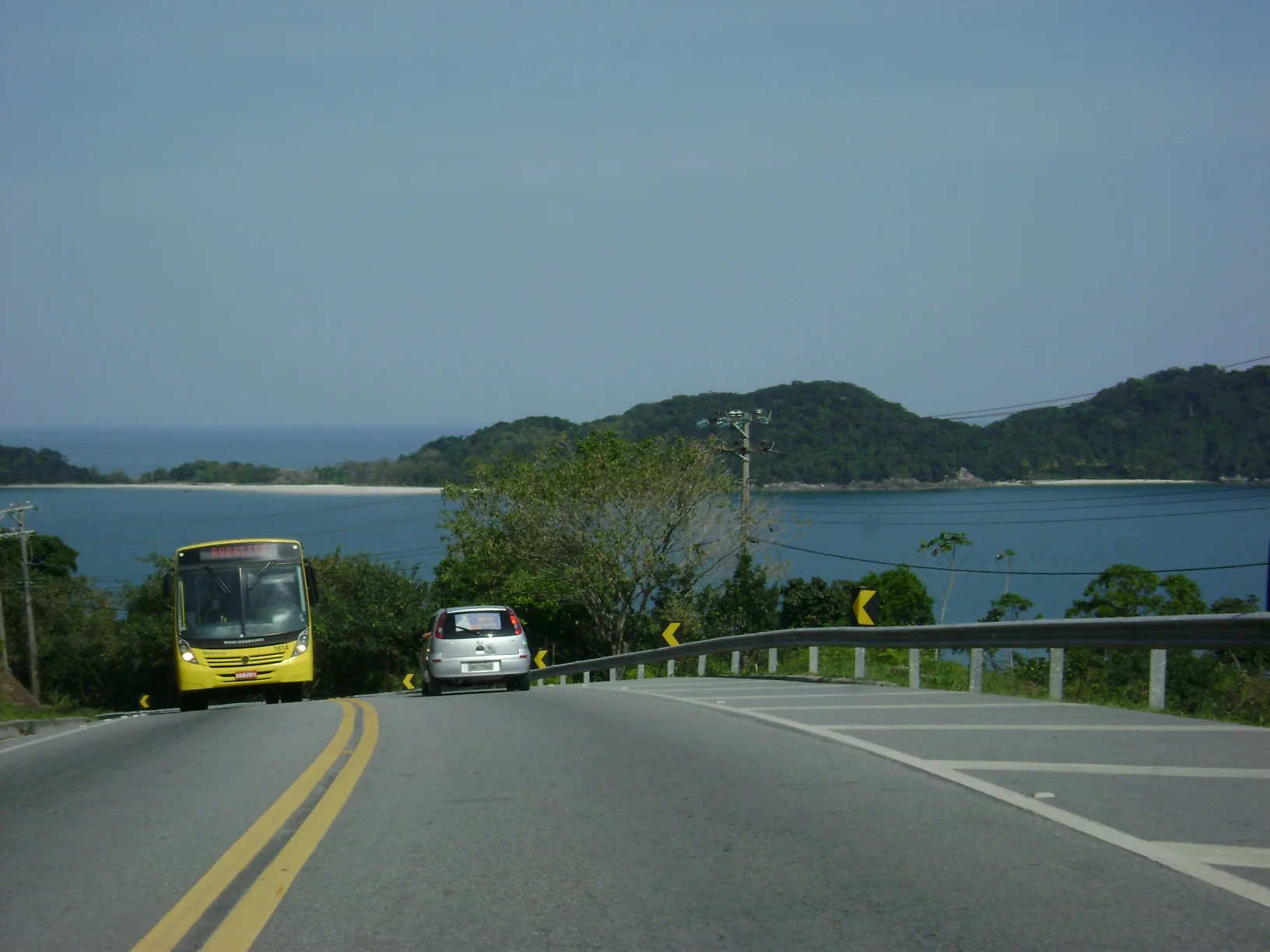
From Rio de Janeiro (about 4 hours)
Most international guests land at Rio's Galeão airport (GIG). From there it's around four hours by road: out of the city, then south-west down the BR-101 Rio–Santos, one of Brazil's great coastal drives. The second half hugs the Costa Verde — green mountains on one side, island-dotted sea on the other, with Angra dos Reis about two-thirds of the way along.
- Rental car: the most flexible option, and useful for waterfall and beach days once you're here. The road is paved and well-trafficked; drive it in daylight your first time, take the curves patiently, and watch for rain.
- Bus: Costa Verde line coaches run several times a day from Rio's Novo Rio terminal to Paraty's rodoviária, taking roughly 4–4.5 hours. Comfortable, air-conditioned, inexpensive. Buy seats in advance on summer weekends and holidays.
- Private transfer: door-to-door from GIG or your Rio hotel to the chalé. The most relaxed option after a long flight, and what we suggest for groups arriving late in the day — ask us and we'll point you to a reliable driver.
From São Paulo (about 5 hours)
Two roads, both scenic in different ways. The classic route runs via the Dutra highway and then down the serra on the Cunha road into Paraty — a winding mountain descent through farmland and forest. The alternative goes out to the coast first and follows the BR-101 north-east through Ubatuba. Either way budget around five to five and a half hours. Buses also run from São Paulo's Tietê terminal to Paraty daily.
The last leg: up the hill
The chalé sits in the hills above town, about 400 m of altitude up from the bay. The access road climbs through the forest — fine in a normal car taken calmly, and we send exact directions and a pin when you book. If you arrive by bus, a local taxi or driver brings you up from the rodoviária; we'll arrange it if you give us your arrival time.
Getting around once you're here
The historic centre: on foot, always
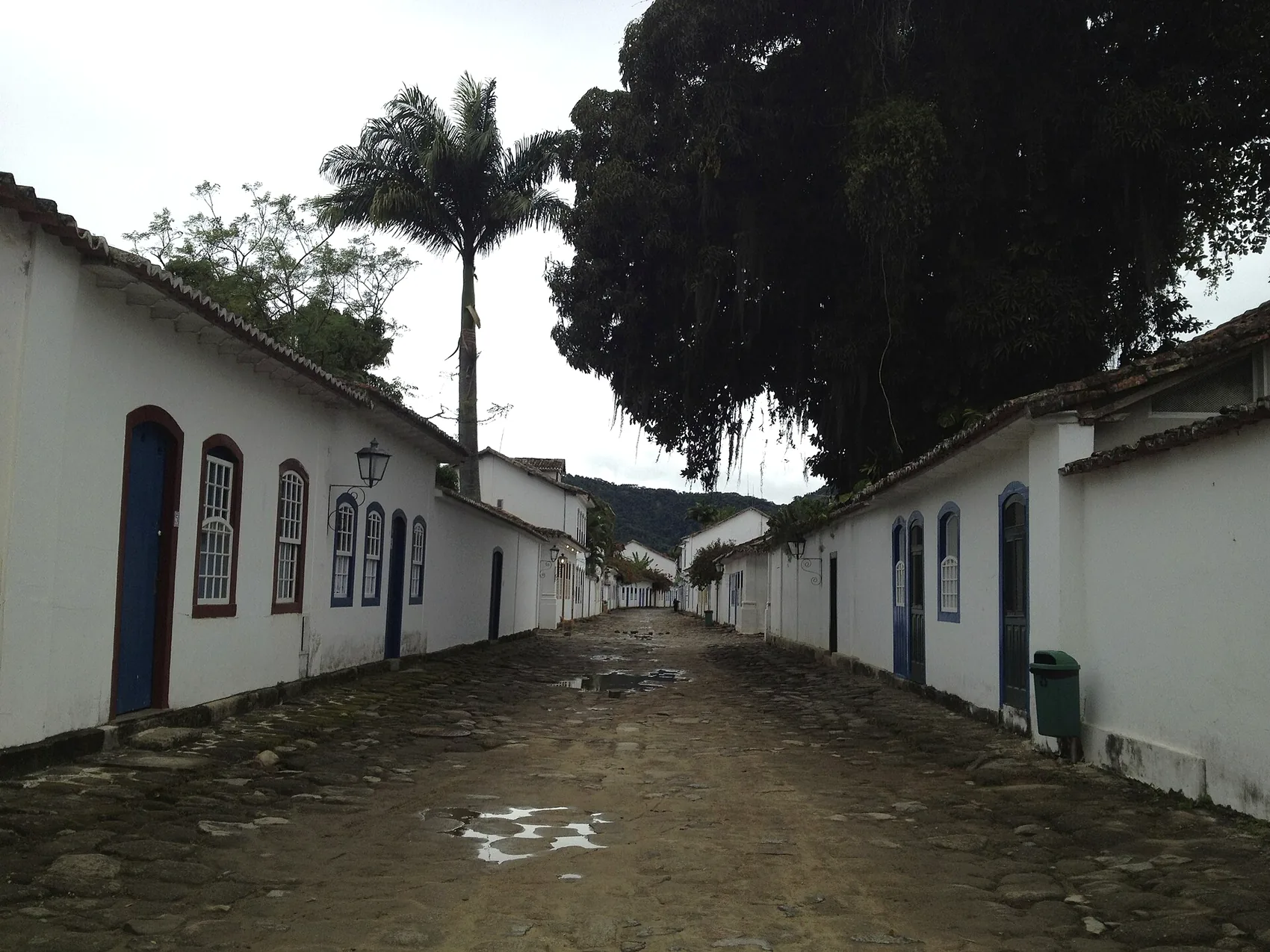
Paraty's colonial grid is closed to cars. Everyone walks, and the distances are tiny — ten minutes corner to corner. The famous cobblestones (huge, irregular pés-de-moleque stones) are beautiful and genuinely uneven, so flat sturdy sandals or sneakers beat anything with a heel. At spring tides the sea slides up the lowest streets by design; it's the town's oldest party trick, not a flood.
Taxis and apps
Regular taxis wait near the rodoviária and the edge of the historic centre, and ride-hailing apps work in and around town with patchier coverage at the far beaches. For a day built around drop-offs — say the Trindade beaches or the cachaça distilleries — agreeing a price with one driver for the day is common and practical.
Boats from the pier
For anywhere on the bay, the boat is the transport. Schooners and charters leave from the pier by the historic centre, and simple boat-taxis serve beaches that have no road at all — Praia do Sono, the Saco do Mamanguá and others. Our boat days guide covers how it works.
When you actually need a car
Three cases: the waterfalls and distilleries inland along the Cunha road, Trindade and Paraty-Mirim down the coast, and trailheads like Laranjeiras for the Praia do Sono hike. Local buses do reach Trindade and Paraty-Mirim cheaply, just slowly. Everything else — town, boats, the bay — needs no car at all.
Come stay above the bay
Chalé Bel Air sits on the ridge that looks over everything in this guide. Tell us your dates and what kind of trip you are after — we answer personally.
Ask about your datesFrequently asked questions
How do I get from Rio de Janeiro to Paraty?
It's about four hours by road from Rio. You can rent a car (the most flexible, and useful for waterfall and beach days here), take a Costa Verde line coach from the Novo Rio terminal in roughly 4–4.5 hours, or arrange a private door-to-door transfer — the most relaxed option after a long flight.
How long does it take to drive from São Paulo to Paraty?
Around five to five and a half hours. The classic route runs via the Dutra highway and down the serra on the winding Cunha road; the alternative goes out to the coast and follows the BR-101 north-east through Ubatuba. Buses also run daily from São Paulo's Tietê terminal.
Do I need a car in Paraty?
Not for the town or the bay. The colonial centre is car-free and walked in minutes, and the bay is reached by boat. A car helps for three things: the inland waterfalls and cachaça distilleries on the Cunha road, the down-coast beaches at Trindade and Paraty-Mirim, and trailheads like Laranjeiras. Local buses reach Trindade and Paraty-Mirim cheaply, just slowly.
How do I get around Paraty's historic centre?
On foot, always — the colonial grid is closed to cars and is only about ten minutes corner to corner. The cobblestones are large, irregular and genuinely uneven, so flat, sturdy sandals or sneakers beat anything with a heel.