Paraty is one of the quietest romantic destinations in Brazil: a colonial town with no cars and no skyline, a bay full of empty coves you can only reach by boat, and the kind of slow evenings a honeymoon is actually for. This is how we'd shape a few days here for two.
A honeymoon is the one trip where doing less is the whole idea. You don't need a packed itinerary or a list of sights to tick off; you need a place that lets the two of you slow right down without getting bored. Paraty is unusually good at that. It is a small colonial town on Brazil's Costa Verde with no cars in its centre and no skyline anywhere, set on a bay full of islands and backed by rainforest. The beauty is all close at hand but most of it takes a short boat ride or a walk to reach, which means the best parts of Paraty are quiet by default.
We host couples on the ridge above the town, about 400 metres up, with the whole bay laid out below — Paraty, Angra dos Reis and the long blue line of Ilha Grande in a single view. Honeymooners are some of our favourite guests, partly because they ask the right question: not "what's the most we can see," but "how do we spend a few days here really well, just the two of us?" This guide is our long answer. It covers the quiet coves, the sunset spots, the candlelit dinners, the silent ria behind the bay, where to stay, when to come, and how to fold in a few days of Rio on either end. If you want the full overview of the town first, start with our complete guide to Paraty and come back here for the romance.
Why Paraty works for a honeymoon
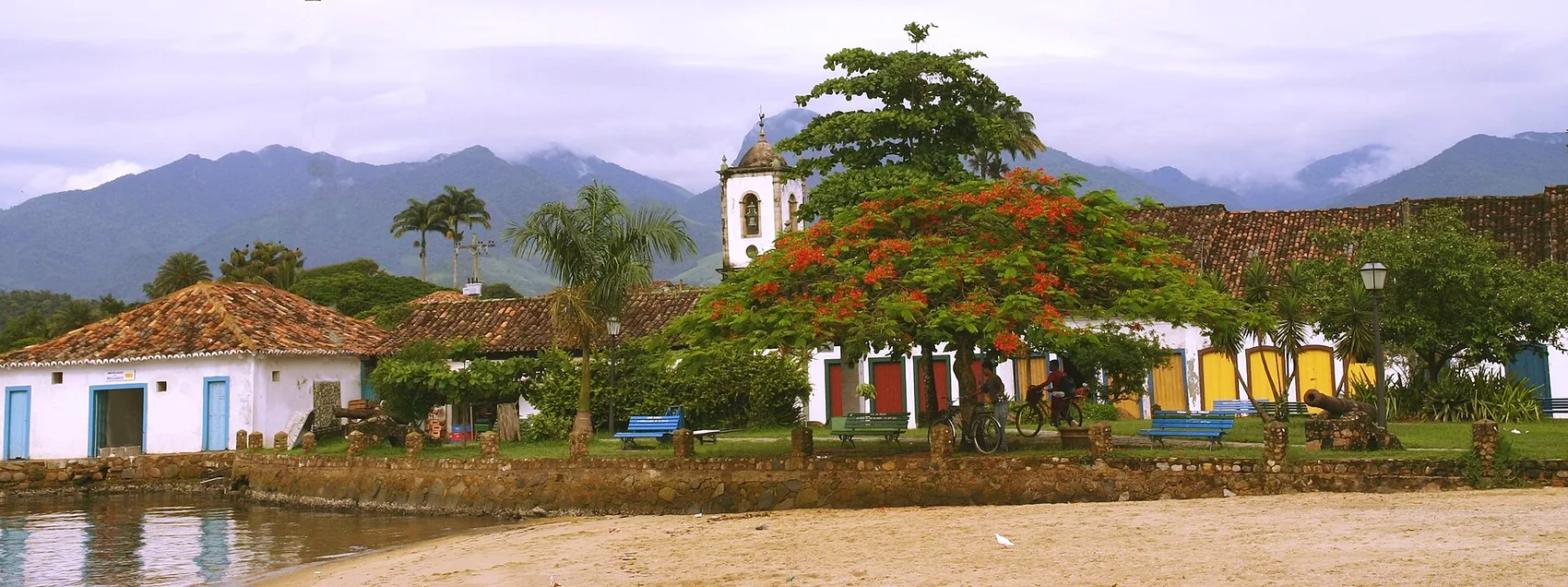
Plenty of places sell themselves as romantic and then turn out to be loud, built-up, or designed for crowds. Paraty is the opposite. It was an 18th-century gold port, grew rich, and then got bypassed and forgotten for more than a century — which is exactly why its colonial centre survives almost untouched, a grid of whitewashed houses with no traffic running through it. In 2019 the town and the neighbouring island of Ilha Grande together became Brazil's first mixed UNESCO World Heritage Site, recognised at once for the colonial culture and the wild nature around it. What that history left behind is a town built at a human pace, where the evenings are about a good dinner and live music rather than clubs and noise.
The other thing in Paraty's favour is geography. The good beaches are not the ones you can walk to from the centre; they are the coves around the bay that you reach by boat, or the roadless beaches you reach on foot through the forest. That sounds like a drawback and it is the opposite. It means that with a little effort — a boat for the day, an hour on a trail — you can have a strip of sand and clear water more or less to yourselves, even in a busy week. Privacy here is not a luxury add-on; it is just how the coast is shaped.
We'll be honest about what Paraty is not, because it saves the only disappointments we ever hear about. It is not a beach-resort town with sun-loungers and swim-up bars. It is not a party destination; the evenings wind down gracefully. And the cobblestones in the centre are genuinely rough underfoot, so this is a trip for flat, sturdy shoes rather than heels. Come understanding that, and Paraty delivers the kind of honeymoon people remember for the quiet rather than the photos.
Secluded beaches and coves, just for two
This is the heart of a romantic trip here, so we'll spend time on it. Paraty's bay is scattered with small jungle-backed coves, many with no road to them and a few with nothing on them at all — no kiosk, no road, just sand, shade and clear green water. The classic boat-tour stops are lovely, but the real prize for a couple is getting to one of the quieter ones at a time when no one else is there.
The boat-only coves of the inner bay
Some of the prettiest beaches in the bay can only be reached by boat. They tend to be small — a curve of pale sand, forest dropping right to the waterline, water clear enough to watch fish gather under the hull. Because there is no land access, they stay empty outside the middle of the day when the tour schooners swing by. The trick, which we'll come back to, is to charter your own small boat and time your visit for early morning or the late afternoon, before or after the crowd. Arrive at one of these coves at eight in the morning with coffee and the place is yours; the schooners don't get there until eleven.
You don't need to memorise names. What matters is the type of place: a roadless cove, reached by water, with no facilities, where you swim and lie in the shade and don't see another soul for an hour. Your skipper will know which ones are quietest on the day, depending on tide, wind and where the tour boats are headed. That local read is worth more than any list we could print here.
The roadless beaches you walk to
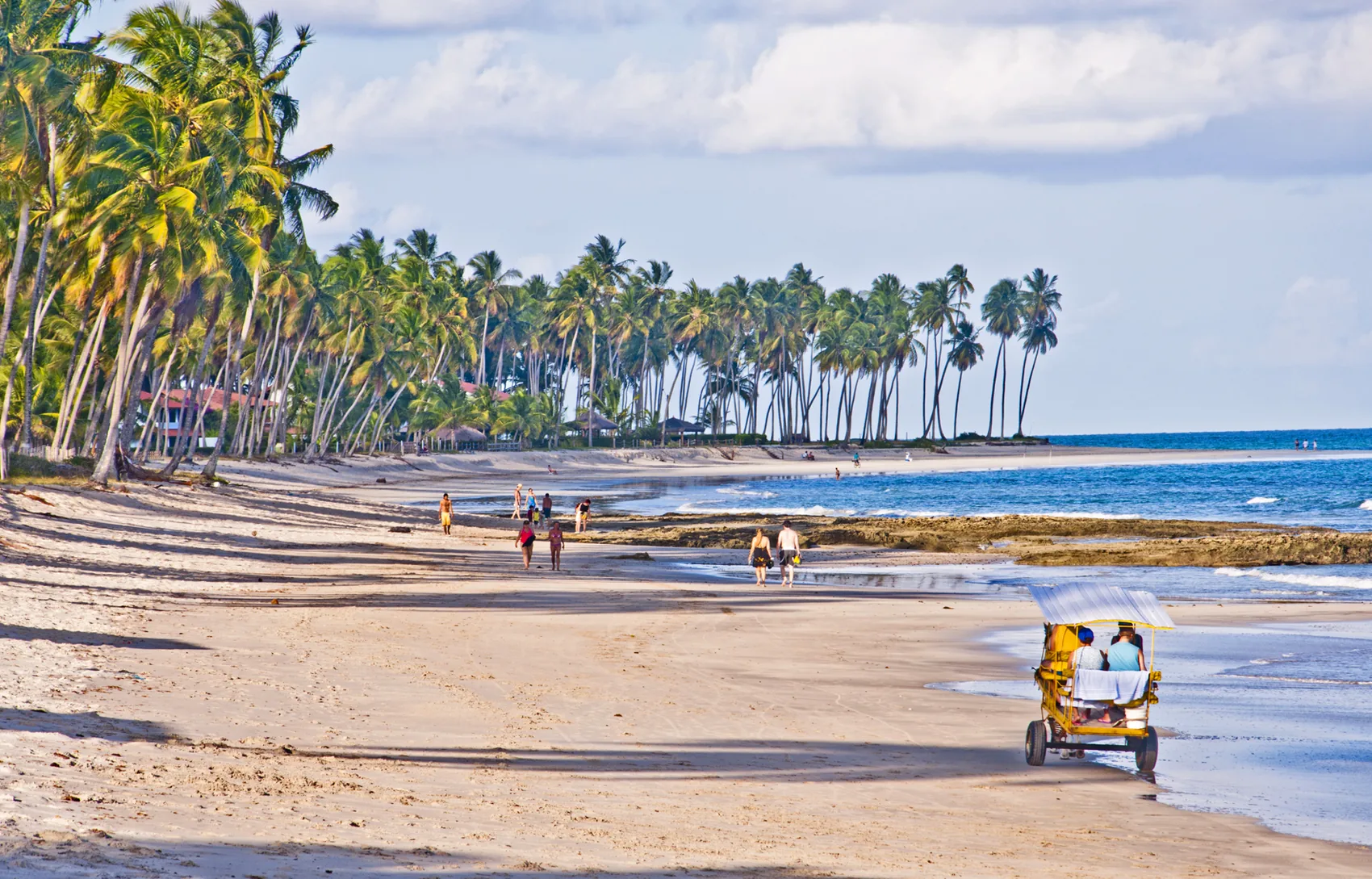
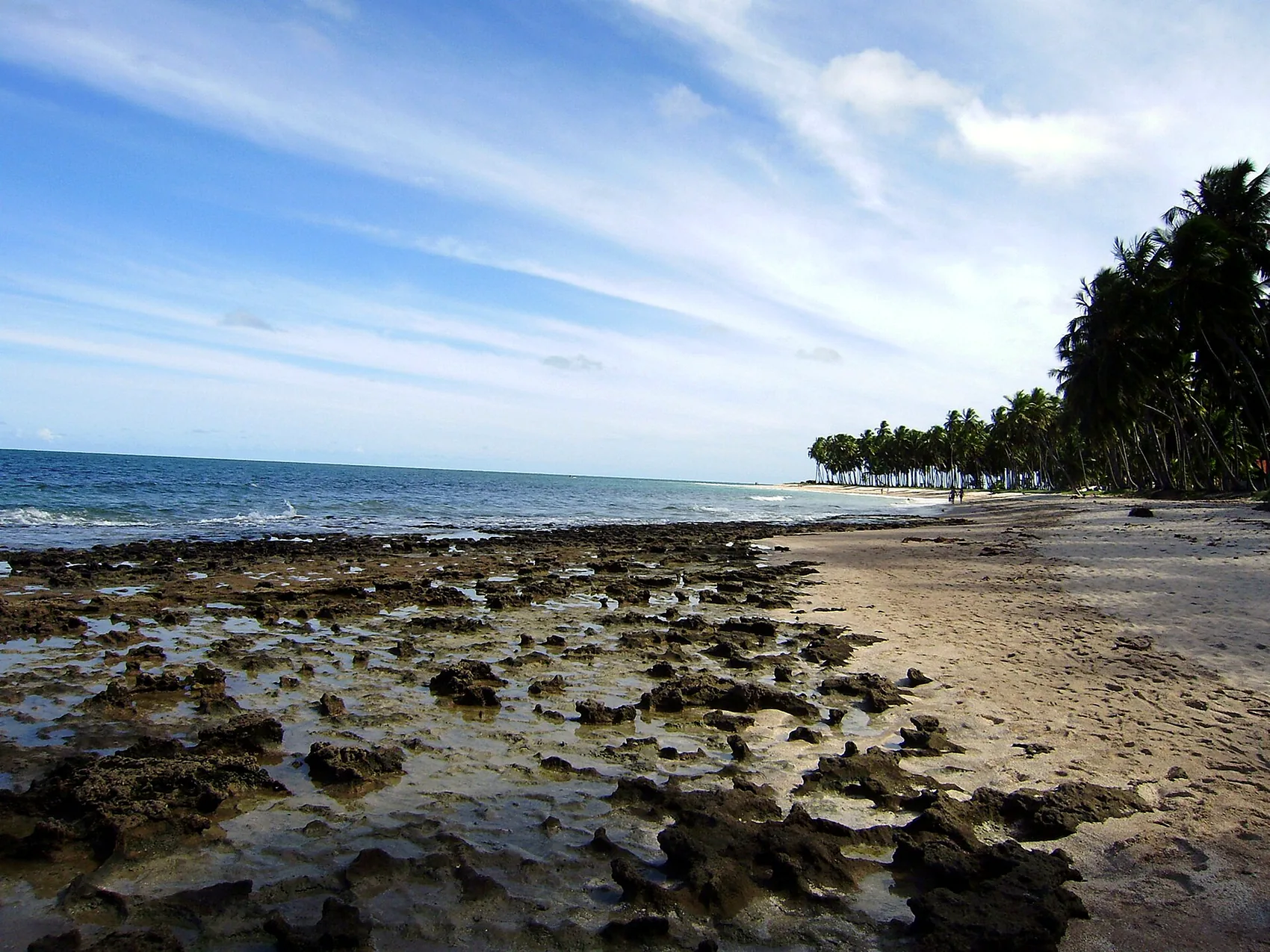
South of town, past the village of Laranjeiras, the coast turns wild. The best-known of the roadless beaches is reached by a forest trail of about an hour over a low headland (or by a short boat-taxi when the sea is calm). It is a true caiçara beach — the caiçara are the traditional fishing communities of this coast — with a scatter of simple homes, a couple of rustic bars serving cold drinks and whatever was caught that morning, and no development to speak of. Beyond it, further along the same trail, lie even emptier beaches for couples who like to walk for their solitude.
The walk itself is part of the romance: a shaded forest path with glimpses of the sea, birdsong, and the satisfaction of arriving somewhere most people never bother to reach. Wear proper shoes, carry water and cash (there are no card machines out there), and check the tide and weather before you set off. If a long hike isn't your idea of a honeymoon, take the boat-taxi instead and save your legs for the dancing. We map the whole coast, from the easy beaches to the wild ones, and you can plan around your appetite for walking.
How to actually get a beach to yourselves
The honest mechanics of privacy come down to timing and a boat. The bay's coves fill up between roughly eleven and three, when the tour boats run their loop. Bracket that window. A morning charter that leaves at eight, or an afternoon one that pushes out at three and stays for the sunset, will find the same beaches half-empty. A private boat — a small motorboat with a skipper, hired by the day — lets you do exactly that: choose the cove, set the pace, linger as long as you like, and move on when company arrives. It is the single best money you can spend on a honeymoon here, and we'll come to it properly below.
A private boat day
If you do one big thing in Paraty, make it a day on the water, and if you can, make it a private charter rather than a group schooner. The schooners are sociable, cheap and fun, and there is nothing wrong with doing one for the atmosphere. But a charter is a different experience, and for two people on a honeymoon it is worth the difference.
Here is how a good private day tends to go. You meet your boat at the pier in the morning. The skipper points it out past the old fort and into the bay, and from there the day is yours to shape. You stop at a quiet cove for the first swim of the day while the water is still glassy. You anchor off a rocky island to snorkel — the inner bay has clear patches busy with sergeant-majors and parrotfish. You pull in behind a beach for a long seafood lunch, grilled fish or prawns straight off the day's catch, eaten with your feet more or less in the sand. And on the way home, in the soft late light, you take a last swim somewhere empty while the schooners are already back at the pier.
What makes it romantic is the control. You are not on anyone else's clock. If you find a cove you love, you stay. If you'd rather skip a stop and just drift with a bottle of something cold, you do that instead. A skipper who knows the bay will read the day for you — where the wind is, where the crowds aren't, which cove catches the best light at the hour you're there. Bring sunscreen, a hat, cash for lunch, and let the rest go. The full breakdown of how chartering works, what it costs in general terms, and what to ask for is in our guide to a day on the water.
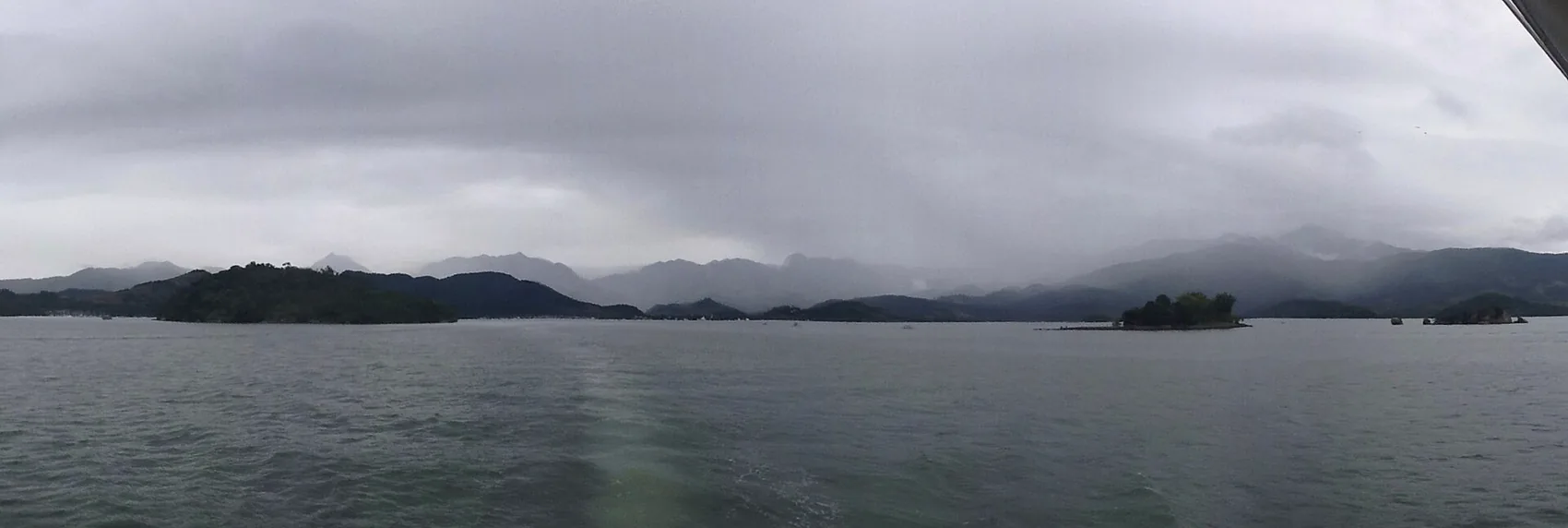
The best money you can spend on a honeymoon here is a small boat and a whole day with nowhere you have to be.
The Mamanguá ria, for total quiet
For couples who want the deepest quiet on this coast, there is the Saco do Mamanguá. It is an eight-kilometre finger of still sea pushed between two forested ridges, often called Brazil's only tropical fjord — though geographers will gently correct you that it is properly a ria, a drowned river valley rather than a glacial one. Whatever you call it, it is the calmest water in the region and one of the most peaceful places we know.
There are no roads into the heart of Mamanguá. You arrive by boat, and once you're there you get around on foot, by kayak or by stand-up paddleboard. The water is sheltered and almost always flat, especially in the early morning and at dusk, which makes it ideal for a slow paddle with no skill required. Small caiçara communities live along the shore, oyster farming and fishing as they have for generations, and a handful of simple, rustic places offer a bed and a meal for couples who want to stay overnight and wake up to absolute stillness. It is not luxurious — it is the opposite of luxurious — but for one night of total disconnection on a honeymoon, it is hard to beat.
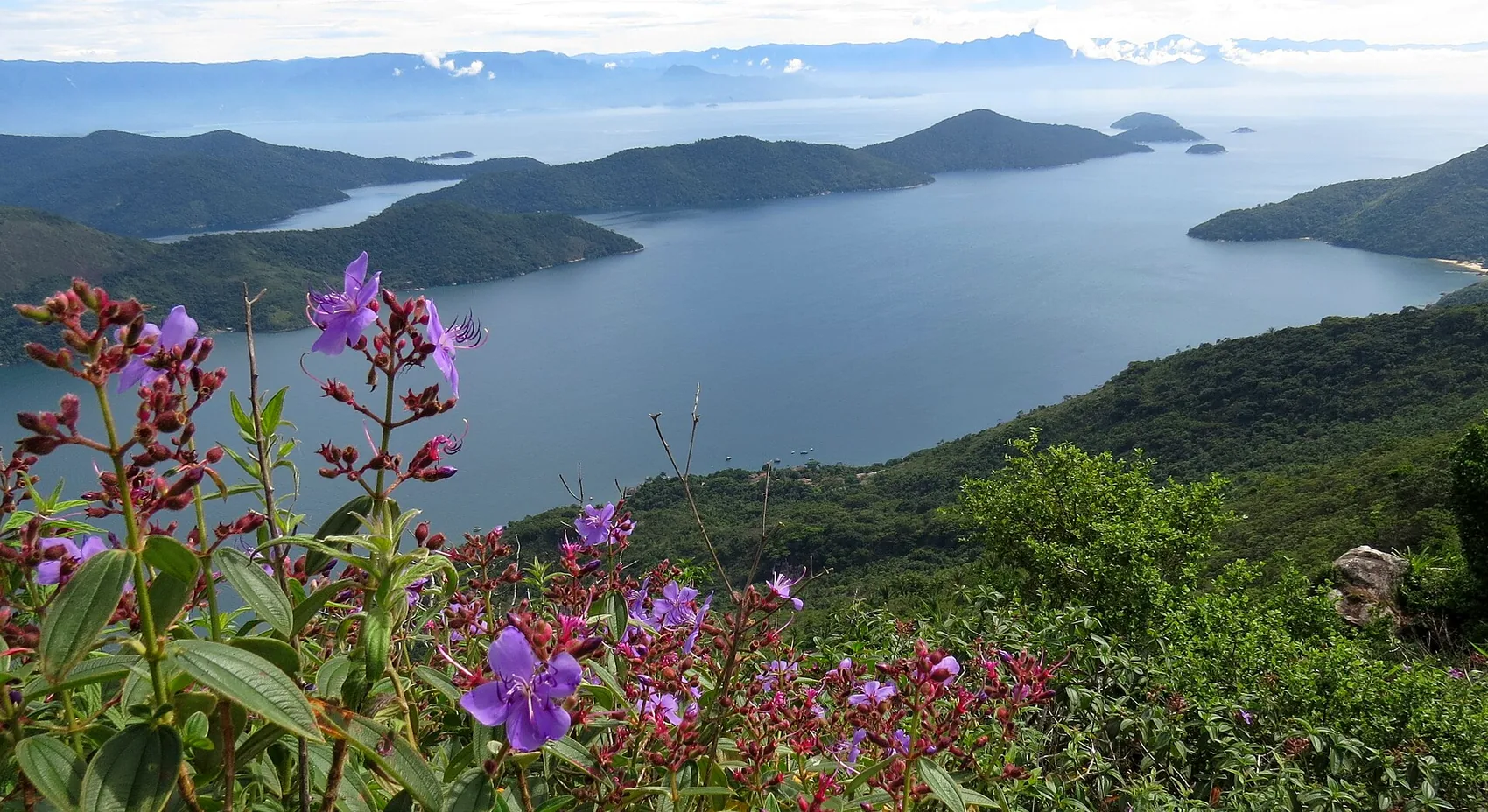
The walkers' reward at Mamanguá is the climb up the Pico do Mamanguá, the sugarloaf peak at the mouth of the ria. It is a steep, sweaty hike of a couple of hours through forest, but the view from the top — the whole green inlet curling away below you between its ridges — is one of the great panoramas of the Costa Verde, and a quietly romantic place to catch your breath together. If a climb isn't on the cards, simply paddling the ria at first light, with mist still on the water and not a single engine in earshot, gives you most of the magic with none of the effort.
Sunset spots
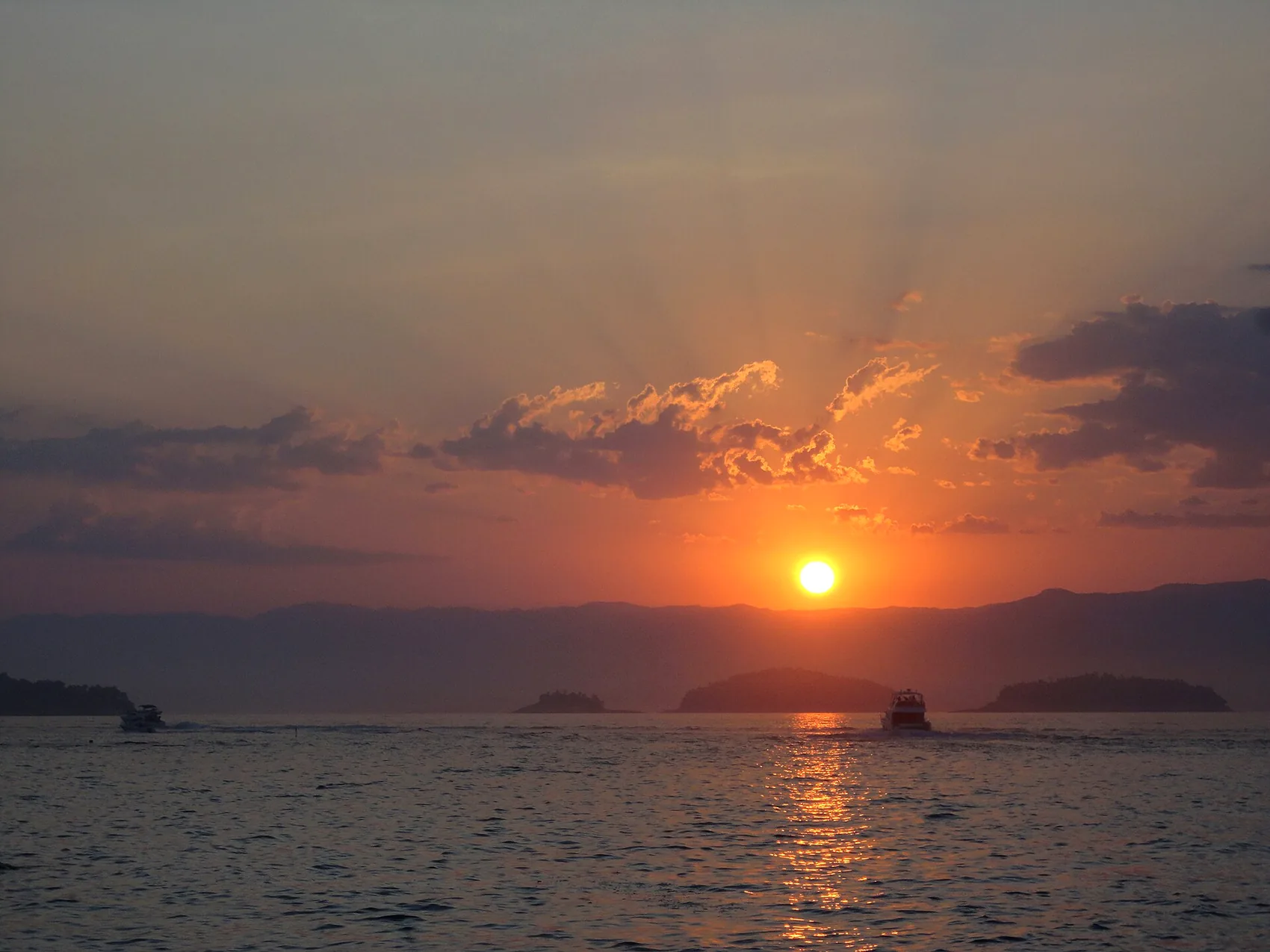
The end of the day is when Paraty does its quiet romance best, and there are a few reliable ways to catch it. The coast faces broadly west and southwest across the bay, so the sun goes down over water and islands rather than behind a wall of buildings — there are no buildings — which gives you a clean, glowing horizon almost every clear evening.
From altitude, the whole bay turns gold and then pink, the islands going to silhouette and the lights of the town coming on below. This is the view we live with, and it is the single thing the colonial centre, down at sea level, cannot give you — one reason we built where we did. From the water, the last hour of a boat day is the best of it: a final swim in warm, low light with the bay emptying around you. And from the town itself, the old fort on the hill above the centre, the Forte Defensor Perpétuo, catches the evening light over the rooftops and the harbour, and the waterfront fills with people simply watching the day end.
Wherever you choose, the move is the same: be in position twenty minutes before the sun touches the horizon, with a drink and nowhere else to be. The light here changes fast and the afterglow lingers, so don't pack up the moment the sun is gone — the ten minutes after sunset are often the best ten minutes of the day.
Candlelit dinners and live music in the centre
After dark, the colonial centre is where a honeymoon comes to life — gently. The day-trippers leave, the lanterns come on, and the whitewashed streets fill with a soft, unhurried buzz. The centre is full of restaurants set inside the old colonial houses, with tables spilling out onto the cobbles by candlelight and music drifting between them. This is the romance Paraty is quietly famous for, and it asks nothing of you but to show up and slow down.
Dinner in the colonial centre
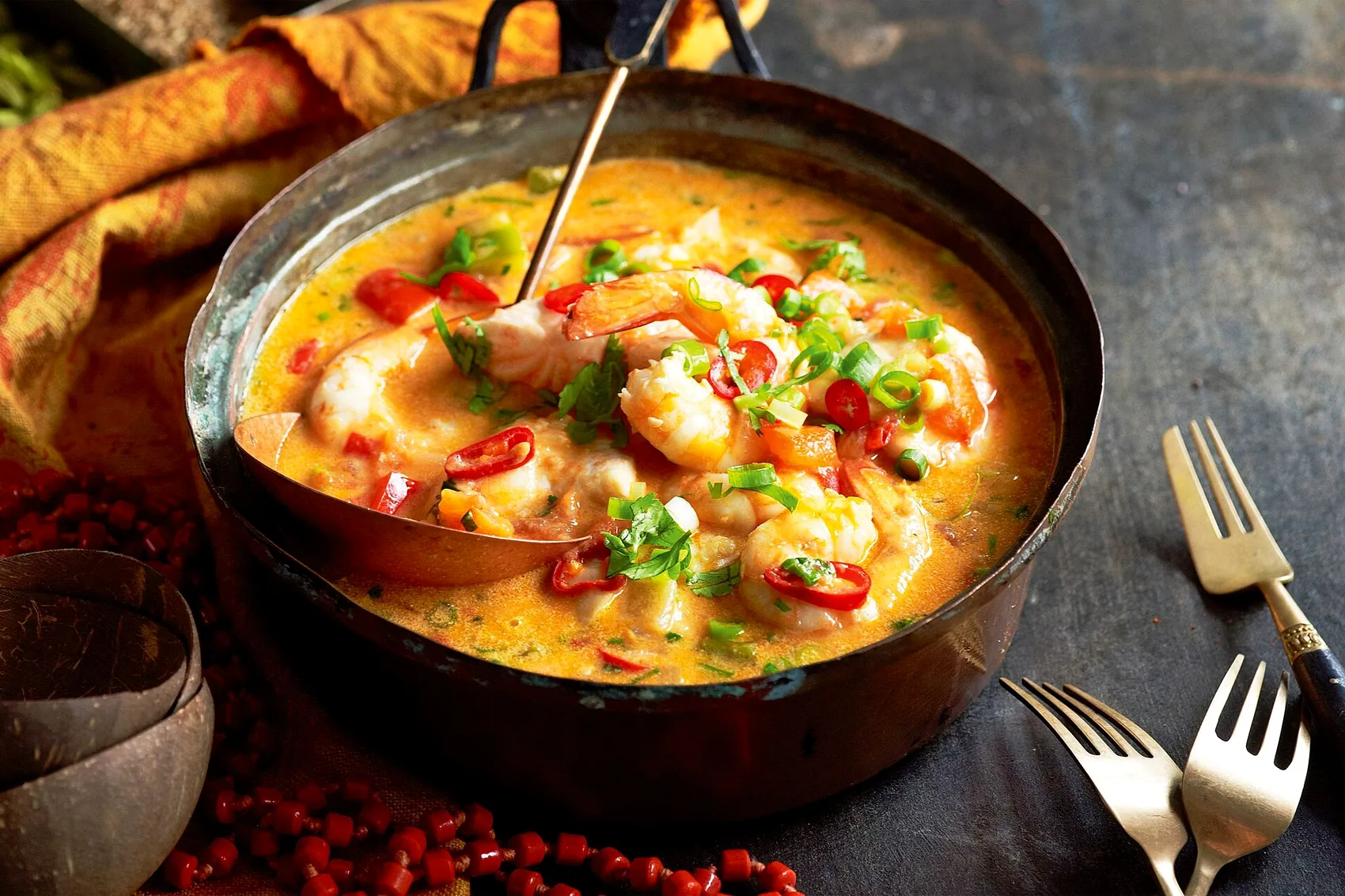
The food leans, as you'd expect on this coast, toward seafood. The defining dish is moqueca — a slow seafood stew of coconut milk, palm oil, tomato and coriander, brought to the table bubbling in its clay pot, and easily shared between two. Beyond that you'll find grilled fish straight off the day's boats, prawns done a dozen ways, and inland flavours too, from a slow Saturday feijoada to the tropical fruit that fills the morning market. We don't print restaurant names here, because the good ones change and a stale list helps no one; the better approach is to wander the centre in the early evening, see which candlelit courtyard pulls you in, and book a table for later. Reserve ahead in the busy season — the best small rooms fill up.
Live music, by ear
The other half of a Paraty evening is the music. On most nights, and especially at weekends, the bars and squares of the centre have live Brazilian music — bossa nova, samba, the broad sweep of MPB, sometimes the accordion-driven forró of the northeast. There's no need to plan it. Finish dinner, walk out into the cobbled streets, and follow the sound until you find a room or a corner you like. Order a caipirinha made with genuine local cachaça — the artisanal sugarcane spirit that this region has distilled for centuries, and a different drink entirely from the airport version — and stay as long as the music holds you. Some nights the main square itself fills with people dancing samba while the musicians play. None of it is staged for tourists; it's just how the town spends its evenings, and you're welcome to join.
The evenings wind down naturally rather than late — this is not a city that stays up until dawn — which suits the rhythm of a honeymoon. You eat well, you hear music, you walk lantern-lit streets home, and you're rarely the last ones out. If you want the deeper roots of all this, our complete guide covers the town's history and culture, and the cachaça tradition that gave Paraty its evenings their fuel.
You don't book the music. You finish dinner, step into the street, and follow it until you find the room you want to stay in.
Slow days inland: waterfalls and forest
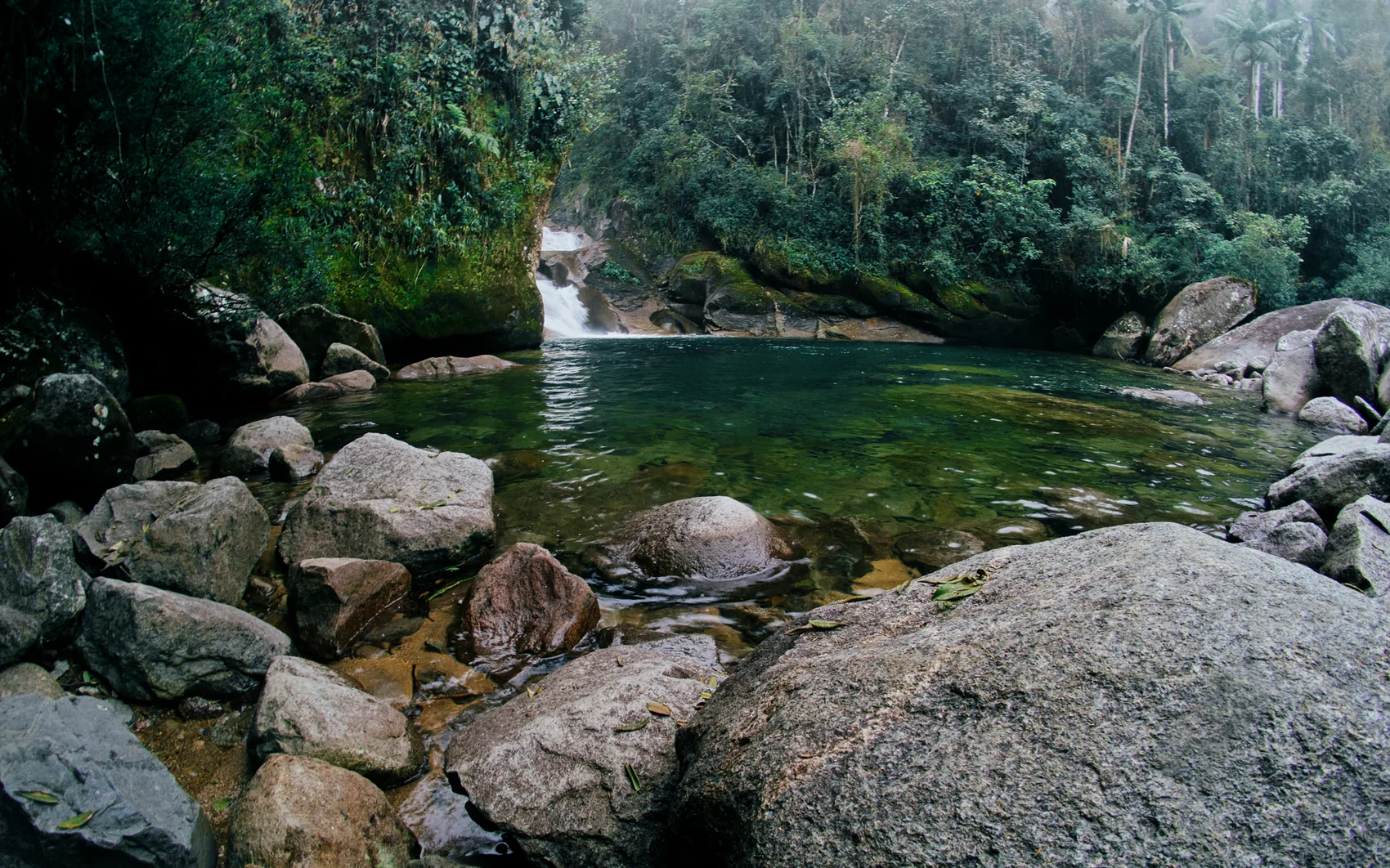
Not every romantic day has to be on the water. Turn inland and the landscape changes completely. The road that climbs out of town toward the mountains runs into the Atlantic Forest within twenty minutes, and along it are the swimming holes: natural rock pools and waterfalls deep in green forest, some with a rope swing, where you can spend a slow afternoon with the water to yourselves if you go early or midweek. There are tame ones and there are more powerful ones to be careful around, so it pays to know which is which before you go.
The same road holds the old cachaça distilleries and surviving stretches of the Caminho do Ouro — the Gold Trail, the colonial stone road that once carried gold down from the mines of Minas Gerais to Paraty's port. A morning combining a quiet waterfall with a distillery tasting and a walk on the old trail makes one of the easiest good days to plan, and it gives a honeymoon a change of texture from sea and sand. Bring shoes you don't mind getting wet, and don't rush back; the forest is at its best when you're in no hurry to leave it.
Where to stay for two
Where you base yourselves shapes the whole feel of a honeymoon here, and Paraty's lodging splits roughly three ways. Knowing the trade-offs up front helps you choose the right one for the trip you want.
A pousada in the centre
The colonial centre is full of pousadas — small guesthouses set inside the historic houses themselves. Their charm is obvious: you step out of your door straight into the cobbled streets, the dinners and the music, with nothing to drive to. They are atmospheric and full of character. The trade-off is that they tend to be compact, they sit in the middle of the evening bustle (wonderful at nine, less so at midnight if you're light sleepers), and they have no view to speak of — the centre is flat and at sea level. For a couple who want to be in the thick of the town's romance and don't mind a small room, a good pousada is a lovely choice.
A villa or chalet with space and a view
Out along the coast and up in the hills are the villas and chalets, which trade the walk-everywhere convenience of the centre for space, privacy, a pool of your own, and — if you go up rather than along — a view. This is the choice for couples who want the place to themselves: a private terrace, an infinity pool, breakfast with no one else around, and the town a short drive away for the evenings. We're biased, of course. Chalé Bel Air sits up on the ridge precisely because the view from altitude — the whole bay, Angra and Ilha Grande in one sweep, an infinity pool hung over the lot of it — is the thing the town centre simply cannot offer, and it is hard to beat as a place to start and end a honeymoon day.
If you're weighing a hillside or coastal rental against a room in the centre, our guide to luxury vacation rentals in Paraty lays out the honest trade-offs in detail. The short version: stay in the centre if the town's evenings are the whole point for you, and stay up high if privacy, a pool and the view matter more, with the town an easy drive away when you want it.
A night somewhere wilder
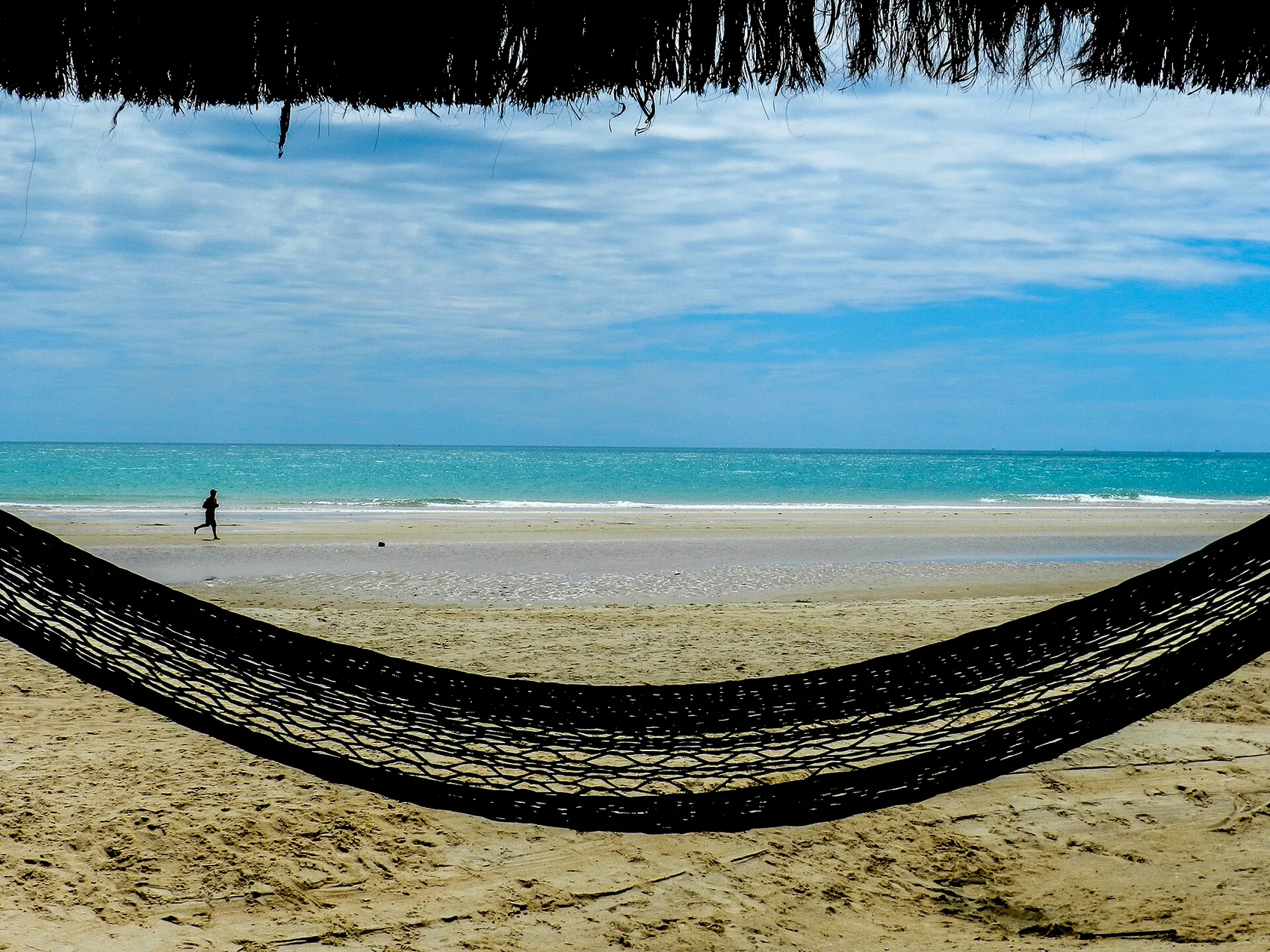
Some couples like to break a Paraty stay with one night somewhere genuinely remote — a simple room out at Mamanguá, or a rustic guesthouse on a roadless beach reached by boat or trail. Don't expect luxury; expect a bed, a meal, a hammock and a silence you rarely get to keep. As a one-night contrast in the middle of a more comfortable trip, it can be the night you remember most. Just go in knowing what it is, and book ahead, because these places are small.
The best season for a honeymoon
Paraty is a year-round destination, but the season changes the trip's character, and for a honeymoon the differences are worth getting right.
The dry winter, roughly June to August, is what we'd point most honeymooners toward. The skies are clearest, the rain is minimal, the underwater visibility is at its best for snorkelling, and the crowds are thinnest outside the school holidays. The temperatures are pleasant by day and cool in the evening — often cool enough to want a light layer, which is no hardship when there's a fire and a bottle of wine involved. Clear, calm, and quiet: it's the easiest season to fall in love with the place.
The summer, December to March, is hot and humid with the warmest sea and the most energy, but it brings the heaviest rain — the classic pattern is a brilliant morning and a short, dramatic afternoon thunderstorm — and the biggest crowds over the Brazilian holidays and Carnival. It's a fine time to visit if you want warm water and don't mind sharing the town, but it asks for flexibility. The shoulder months (April–May and September–November) are the connoisseur's compromise: warm water, thinner crowds, gentler prices.
Whatever season you choose, build flexibility into the plan and put your boat day on the clearest forecast you get — the town and its indoor pleasures handle a grey day perfectly well, but the bay deserves a blue one. For the month-by-month detail on weather, sea temperature and what's on, see our best-time-to-visit guide, and bear in mind that festival dates move from year to year, so always check the current calendar before you fix your dates.
Combining Paraty with a few days in Rio
Most couples flying in from abroad arrive through Rio de Janeiro, and pairing the two cities makes a near-perfect honeymoon: Rio for the spectacle, Paraty for the quiet. The two are about 236 kilometres apart — roughly four hours by road down the BR-101 Rio–Santos coastal highway, which is itself one of Brazil's great scenic drives, hugging the green coast the whole way.
The question is which order. We usually suggest Rio first, Paraty second, so the trip builds toward calm and you finish somewhere slow rather than somewhere loud — a gentler way to come down off the high of a wedding. A few days in Rio gives you the famous views from Christ the Redeemer on Corcovado and the cable car up Sugarloaf, the long curves of Copacabana and Ipanema, and a great city's restaurants and energy. Then you drive down the coast, the buildings give way to forest, and you arrive in Paraty ready to do nothing for a while. Couples who'd rather hit the city while their legs are fresh sometimes reverse it — Paraty first, Rio second — and that works too.
However you order it, give each place enough time to be itself: three or four nights in Rio, four or five in Paraty, is a comfortable two-week-ish honeymoon that never feels rushed. You can do the drive by private transfer, by comfortable coach, or in a rental car if you want the freedom to stop along the coast — and once you're in Paraty you won't need the car much at all, since the town is walked and the bay is reached by boat.

A loose seven-day shape for two
We resist over-planning a honeymoon, but a skeleton helps. Here's how we'd hang a week in Paraty itself, leaving plenty of room to abandon the plan whenever you feel like it.
- Arrival and the town. Get in by mid-afternoon, settle, and let your first evening be the colonial centre: a slow walk through the cobbled streets as the lanterns come on, a candlelit dinner, the first caipirinha, and the music found by ear.
- A private boat day. Put it on the clearest forecast. Out past the fort in the morning, a quiet cove to yourselves, snorkelling off an island, a long seafood lunch behind a beach, and a last swim in the late light.
- A slow day inland. The forest road for a quiet waterfall and a swim, a cachaça tasting, a stretch of the old Gold Trail, and home before dark. A change of texture from the sea.
- The Mamanguá ria. A boat in, a dawn or dusk paddle on the stillest water on the coast, and — if you're up for it — the climb to the sugarloaf for the view. Stay the night out there if you want total quiet, or come back to comfort.
- A roadless beach. Walk the forest trail (or take the boat-taxi) to one of the caiçara beaches south of town, with a rustic lunch and a long lazy afternoon. Nowhere to be, no signal to check.
- A day with no plan. The most important day of the week. Pool, hammock, a book, a long lunch, a sunset. Honeymoons are made in the unscheduled hours.
- One more morning, then onward. A last swim or a last wander through the centre, then the drive back up the coast toward Rio or the airport, already planning to come back.
None of that is fixed. Weather will reshuffle it, and so will the simple pleasure of finding you'd rather stay where you are. That's the right instinct here — let the place set the pace.
Practical notes for couples
A few honest, useful things that smooth a romantic trip:
- Shoes. The cobblestones in the centre are large, irregular and genuinely ankle-testing. Flat, grippy shoes for town; proper footwear for the trails. Leave the heels at home.
- Money. The currency is the Brazilian real (R$). Cards work in town, but carry cash for boat lunches, beach bars, the roadless beaches and the smaller distilleries, where card machines are scarce or absent.
- Language. Portuguese. English is spoken in tourist-facing places, but a few words of Portuguese go a long way and are warmly received.
- Booking ahead. In the busy season, reserve your private boat, your standout dinners and any night out at Mamanguá in advance — the best small options fill up. The quieter the place, the smaller it is, and the sooner it books out.
- Connectivity. Good in town, patchy at the far beaches, and gone entirely behind the ridgelines and inside the ria — which, on a honeymoon, is rather the point. Tell the people who need to know that you'll be off-grid for stretches, then enjoy being off-grid.
- Flexibility beats a rigid plan. It rains here, sometimes hard, especially in summer — which is exactly why the forest is so green and the waterfalls so full. Keep your boat day loose enough to chase the blue sky, and let the grey days be for the town, long lunches and the pool.
If you'd like a hand shaping the trip around your dates — which season suits you, how to fit a boat day and Mamanguá and a few Rio nights into the time you have, or simply where to base yourselves — that's the sort of thing we're glad to help with. Our resources page gathers the practical guides in one place, and you're welcome to get in touch directly. If you're marking the honeymoon with something bigger, or thinking about a small celebration on the coast, our notes on celebrations and weddings in Paraty are a good place to start, and our luxury long-weekend guide works well if your honeymoon is on the shorter side.
The last word
A honeymoon in Paraty is not about doing a lot. It's about a private cove reached by a small boat, a long candlelit dinner with music drifting down a cobbled street, a paddle on water so still it mirrors the forest, and a sunset watched from somewhere high with nothing else on the schedule. The town gives you the evenings; the bay gives you the days; the quiet is built into both. Add a few days of Rio for contrast, come in the clear dry winter if you can, base yourselves somewhere with space and a view, and then — this is the only real instruction — let the place slow you down. From up on the ridge, watching the last light go off the water with the town beginning to glow below, it's very easy to understand why couples who come here for a honeymoon so often start planning the way back before they've even left.
Come stay above the bay
Chalé Bel Air sits on the ridge that looks over everything in this guide. Tell us your dates and what kind of trip you are after — we answer personally.
Ask about your datesFrequently asked questions
Is Paraty good for a honeymoon?
Yes, if your idea of a honeymoon is quiet rather than busy. Paraty pairs an unhurried, car-free colonial town with a bay full of secluded beaches you reach only by boat or trail, candlelit dinners with live music, and the still water of the Mamangua ria. It rewards couples who want time alone and good food over nightlife and resorts.
How many days do you need in Paraty for a honeymoon?
Four or five nights is the sweet spot. That gives you a day for the town, a private boat day among the coves, a day inland for waterfalls or the Mamangua ria, and at least one day with no plan at all. Many couples add three or four days in Rio de Janeiro on either side, since Paraty is about four hours away by road.
When is the best time for a honeymoon in Paraty?
The dry winter months of roughly June to August give the clearest skies, the calmest crowds and the best underwater visibility, with cool evenings made for a fire and a bottle of wine. The summer months (December to March) are hotter with the warmest sea but bring afternoon storms and holiday crowds. The shoulder months are the connoisseur's compromise. Always check the current forecast before fixing your boat day.
What are the most romantic things to do in Paraty?
Charter a small boat for a day and have a cove to yourselves; watch the sunset from high ground or a quiet beach; eat a long candlelit dinner in the colonial centre and follow the live music by ear; and take a slow paddle or boat trip into the Saco do Mamangua, the silent ria behind the bay. None of it needs to be rushed, which is rather the point.
Should we combine Paraty with Rio de Janeiro for our honeymoon?
It's a natural pairing and we recommend it. Rio gives you the city, the beaches and the famous views; Paraty gives you the quiet. Most couples do a few days in Rio first, then come down the coast to Paraty to slow down, or reverse it so the trip ends somewhere calm. The drive between them is around four hours on the coastal road.