“Luxury” is a slippery word on this coast. Paraty has no chain resorts, no marble lobbies, no swim-up bars with wristbands — and that is precisely the point. What it has instead is a particular kind of luxury that suits the place: privacy, space, a pool with a view, the quiet of the forest or the lap of the bay, and someone local who can arrange a boat or a cook so you never have to think about logistics. Choosing well is mostly about understanding what kind of stay you actually want, then matching it to the right kind of property in the right part of the region.
We host on the ridge above town, so we will be honest about our own bias up front and then give you the straight version of the choices, including the ones that point away from us. The goal here is simple: that you book the right place for your trip, whether or not it is ours.
What “luxury” actually means in Paraty
Set your expectations correctly and you will be delighted; set them on a Dubai brochure and you will be confused. Luxury in Paraty is not about gloss. It is about four things, in roughly this order:
- Privacy and space. A whole house to yourselves, a garden, a deck, a pool no one else uses — the opposite of a hotel corridor.
- A view, or the water. The region's scarcest asset. Either a sweeping view from altitude, or direct access to a calm beach or the bay.
- Service that is human, not corporate. A host or manager who answers personally, arranges your boat day and your transfer, and can send a cook for the evenings you would rather not move.
- Design that respects the setting. Timber, glass, stone and shade — houses built to frame the forest and the sea rather than to shut them out.
Notice what is not on that list: brand names, room service menus, a concierge desk. The best stays here feel like borrowing a beautiful private home from a friend who happens to know everyone in town.
The four kinds of place to stay
Almost everything in the region falls into one of four categories, and they suit very different trips.
Pousadas in the historic centre
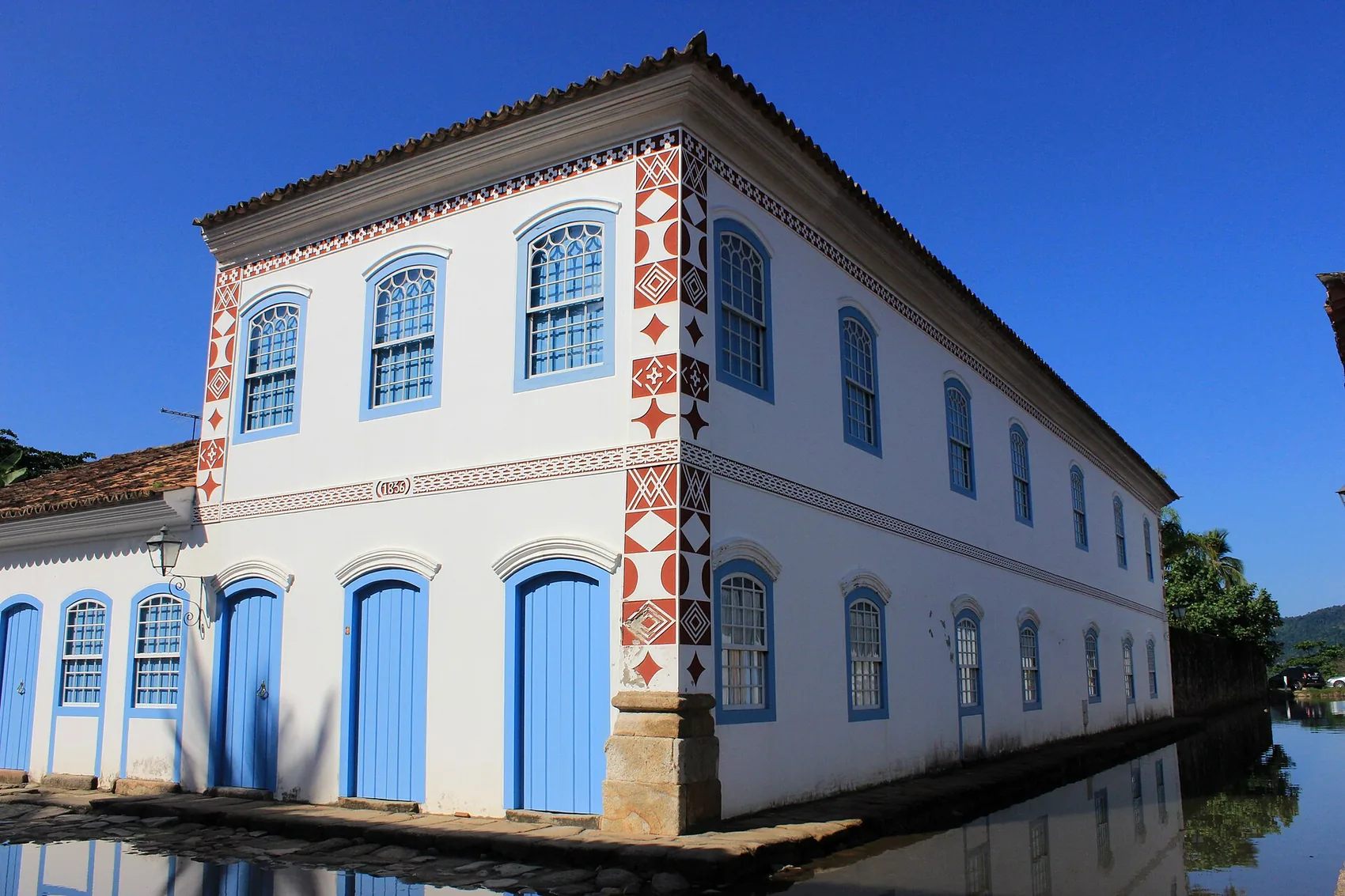
The pousada is the classic Paraty stay: a small guesthouse, often inside one of the colonial houses themselves, a few rooms around a courtyard. The boutique ones are genuinely lovely — antique floors, a plunge pool in a tropical garden, breakfast under a mango tree — and you step straight out into the cobblestoned town. The trade-offs are real, though: rooms in 18th-century buildings are compact, sound carries on the stone streets at night, and you do not get a big private pool or a view. This is the choice for couples who want to be in the town, walking to dinner and the music, and who value atmosphere over space.
Hillside chalets and villas
Out of the centre, in the hills and along the coast, are the houses built for the view and the pool. A chalet on a forested ridge trades the walk-everywhere convenience of the centre for the thing the centre cannot offer: altitude, privacy, an infinity pool, and a sweep of bay and islands you wake up to. These suit anyone who wants the pool to be the centre of the day, who is travelling as a family or a group, or who simply wants to retreat from the heat and crowds of town to somewhere cooler and quieter at night. The catch is a car: you drive down to town and back, which most guests come to see as a feature — the quiet up top is the reward.
Boutique and design hotels
A handful of small design-led hotels sit on the edges of town and along the coast, offering the middle path: hotel service and a restaurant, but at a human scale and with real character. Good for travellers who want someone else to handle everything and do not need a whole house to themselves.
Private islands and waterfront houses
At the top of the range, the bays of Paraty and neighbouring Angra dos Reis hide private-island rentals and waterfront houses with their own jetties and boats. These are spectacular and priced accordingly, and they make most sense for groups who intend to live on the water for a week. They also require the most planning, since everything — supplies, staff, transfers — arrives by boat.
Where to base yourself
Location matters more than almost any single feature, because it decides the rhythm of your days. The region breaks into a few distinct zones.
- The historic centre and its immediate edge: maximum atmosphere and walkability, minimum space and quiet. Best for short, town-focused stays.
- The hills and ridges above town: views, cool air, privacy and pools; a short drive from everything. Best for families, groups and anyone who wants the view to be the holiday.
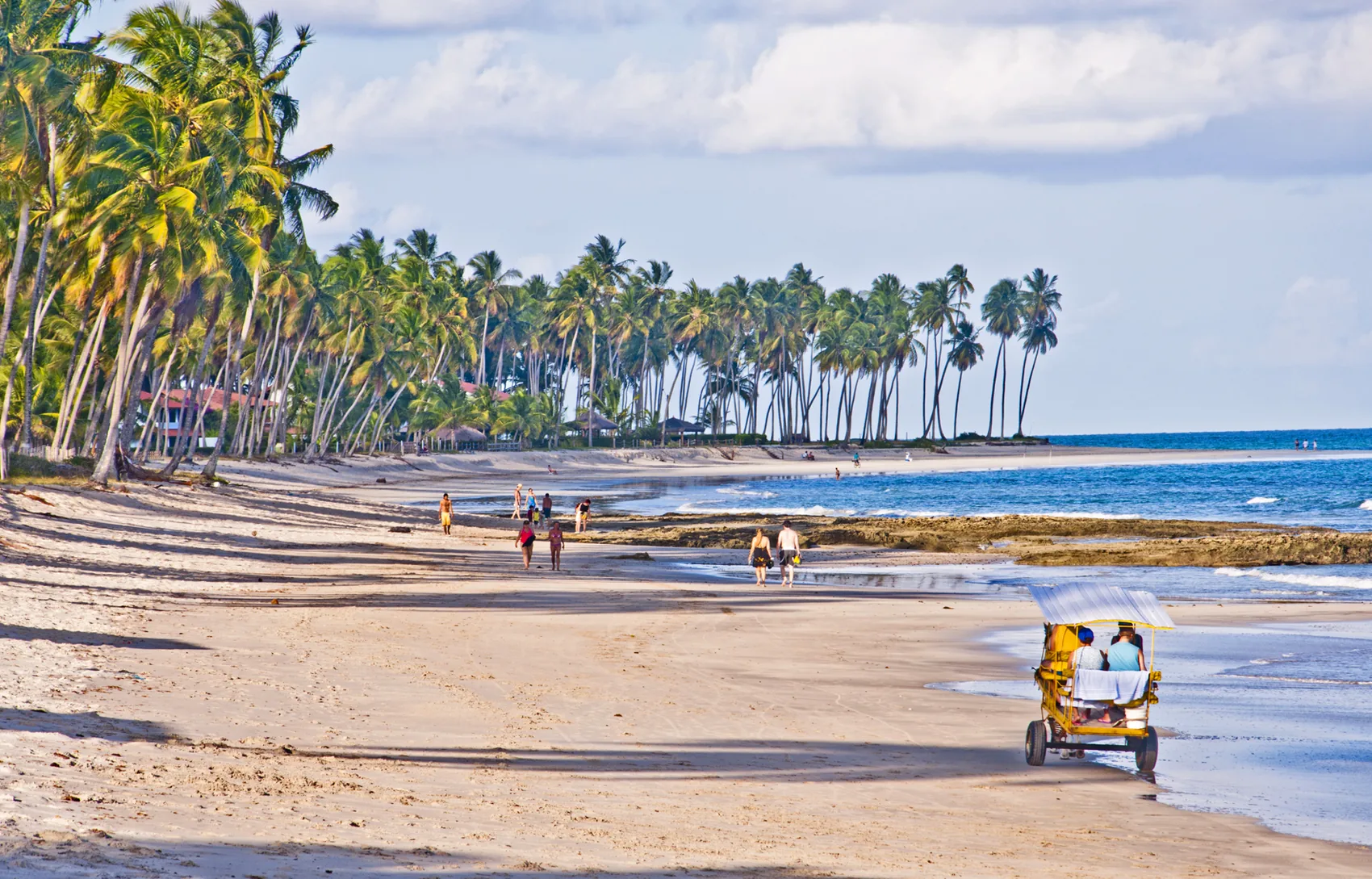
- The coast road north and south: beach access and seclusion, from gated communities near Laranjeiras to rustic Trindade. Best for beach-led trips, with a car essential.
- The far bay and islands: total seclusion reached by boat. Best for longer, water-centred stays with a generous budget.
If you are torn, work backwards from how you imagine the days: if the picture is dinners in town and live music every night, base in or near the centre; if the picture is the pool, the view and a boat day, base in the hills or on the coast. Our complete guide to Paraty maps how the whole region fits together.
The best question to ask yourself is not “which house is nicest?” but “where do I want to wake up?”
What to ask before you book
A beautiful gallery tells you almost nothing about whether a place will work for you. These are the questions that actually decide the stay, and a good host will answer every one of them plainly and without defensiveness.
- “Where exactly is it?” Ask for a map pin, not a neighbourhood name. Then ask how long the drive to the historic centre really takes, and what the access road is like — paved, dirt, steep — and whether a normal car manages it.
- “How many does it really sleep?” A house listed for ten may be perfect for six and a squeeze for ten. Ask how many bedrooms are proper suites versus sofa-beds.
- “What is included?” Daily cleaning? A welcome breakfast? Can you arrange a cook, a boat day, an airport transfer? The answer separates a rental from a hosted stay.
- “What does it look like in my season?” The pool that glows in a December photo may sit under afternoon storms in January; the green hills of summer turn a touch drier in winter. Ask for honest, recent images.
- “What are the rules?” Minimum stays in high season, check-in times, whether events or extra guests are allowed if you are celebrating.
- “Who do I actually talk to?” The single best predictor of a good stay is a responsive, straight-talking host. If they are slow and vague before you have paid, that is your answer.
For families, groups and celebrations
This is where a private rental decisively beats hotel rooms. A villa with several suites, a pool, a full kitchen and outdoor space gives a family or a group of friends what no set of hotel rooms can: somewhere to be together. Children can swim while the adults talk; a group can cook and eat at home on the nights they do not want to drive in; everyone has their own bathroom. For a special trip — a milestone birthday, a reunion, a honeymoon with a few days of friends bolted on — the house becomes the venue. If you are planning something bigger, our guides to honeymoons in Paraty and celebrations and small weddings go deeper.
Reading price, season and value
Rates here move with the calendar more than with the day of the week. The peak is the Brazilian summer holidays — late December through Carnival — when prices are highest, minimum stays are longest, and the best houses book out months ahead. The shoulder months (April–May, September–November) are the value sweet spot: the water is still warm, the region is quiet, and the same house can cost markedly less. The dry winter (June–August) is calm, clear and often well-priced outside the July school break. The mechanics of all this, season by season, are in our best-time-to-visit guide — and the honest read on how many nights to book is in how many days you need in Paraty.
On value, the thing to weigh is not the nightly number but what the place gives you. A villa with a pool and a view, split across a family or two couples, often costs less per person than separate hotel rooms — and includes the boat-day planning, the cook, the quiet, and the morning on the deck that you cannot buy from a front desk.
The zones in detail
Because location decides so much, it is worth walking through the region's zones properly — what each is like to stay in, and who it suits.
In and around the historic centre
Staying inside the colonial grid is a particular pleasure: you wake to church bells, step out onto cobblestones, and never touch a car. The pousadas here range from simple to genuinely beautiful, and a few private houses inside the centre come up for rent. The trade is space and quiet. The houses are old and compact, sound travels on the stone streets late into the night during high season, and the lowest lanes flood on the big tides. For two or three nights focused on the town — the churches, the food, the music, the markets — there is nowhere better to be. For a longer, slower, pool-centred stay, the centre starts to feel tight.
The hills and ridges
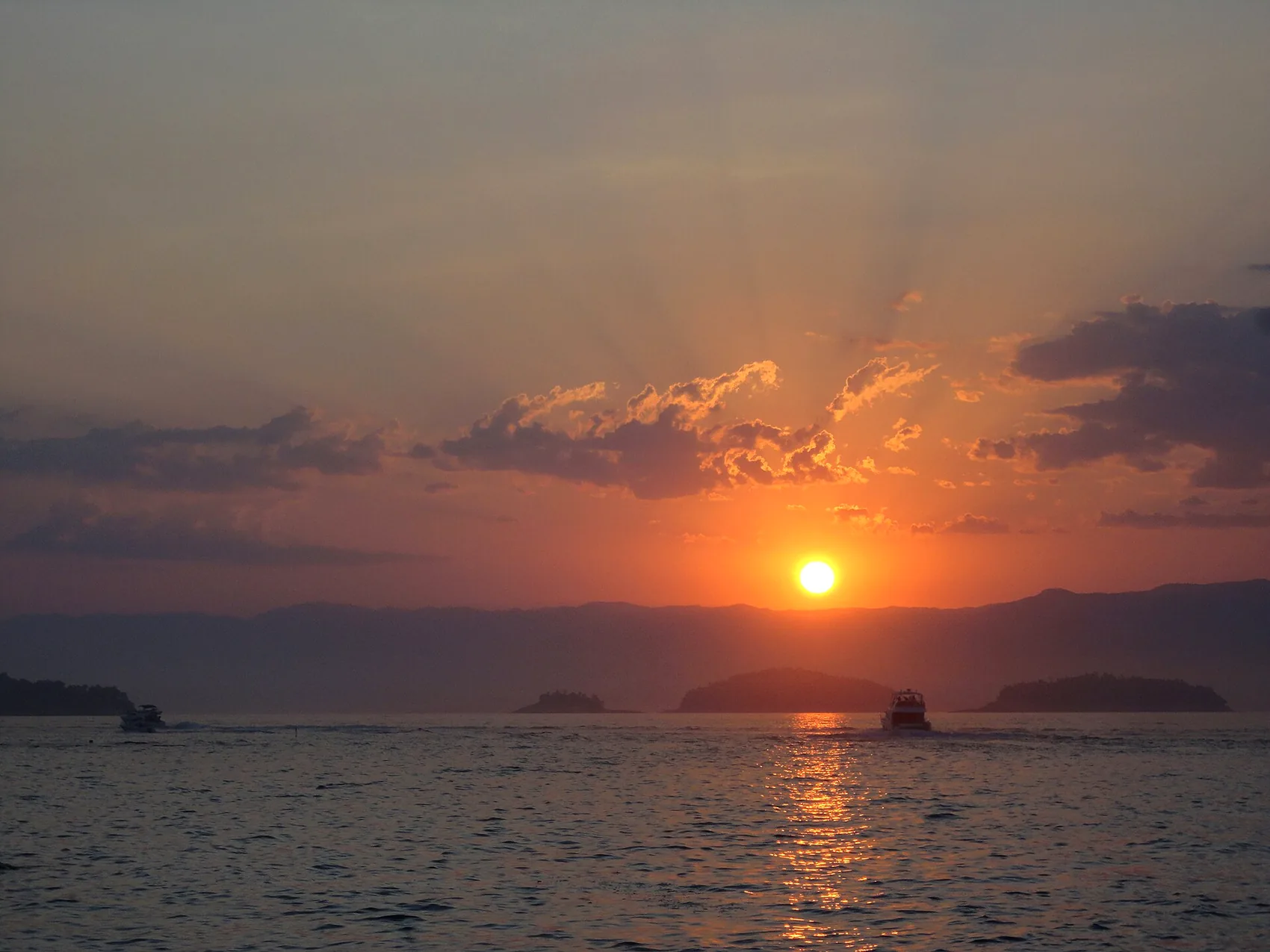
Climb out of town and the proposition flips. Up here are the houses built around the view — chalets and villas on forested slopes with decks and infinity pools that take in the bay, the islands and, from the right ridge, Ilha Grande on the horizon. The air is cooler, the nights are full of forest sound rather than street noise, and the privacy is complete. The cost is a short drive to town and back, and access roads that climb through the forest. This is the zone for anyone who wants the view and the pool to be the centre of the holiday, and it is, unsurprisingly, where we have planted ourselves.
The coast north and the gated communities
North toward Angra, the coast holds a string of beaches and a few high-end gated communities, the best known being the Laranjeiras area — discreet, secured enclaves with private beaches and serviced houses, popular with well-off paulistanos and cariocas. They offer security, beach access and a resort-like calm, at the cost of being a real drive from Paraty's centre and somewhat sealed off from town life. Good for a beach-led, self-contained stay; less good if you want to be in and out of the historic centre every evening.
The coast south and Trindade
South of town the road runs to Trindade, a rustic former surf-and-fishing village with simple guesthouses and a young, barefoot feel, and on toward the wild Laranjeiras trailhead for Praia do Sono. Accommodation here is more modest than luxurious, but for travellers whose idea of luxury is a hammock, a board and an empty beach, it has its own appeal. Most luxury seekers visit Trindade on a day trip and sleep elsewhere.
The bay and the islands
At the far end of the scale are the waterfront houses and private-island rentals scattered through the bays of Paraty and Angra. These are the region's true trophy stays — your own jetty, your own boat, water on three sides — and they make most sense for a group settling in for a week of living on the sea. They demand the most planning, since supplies, staff and every outing arrive by boat, but for the right trip nothing else compares.
Amenities that matter — and ones that don't
Listings love to advertise features. Only some of them change a stay. Here is how we would weight them on this coast specifically.
Worth paying for:
- A real view or real water access. The single most valuable thing a Paraty property can have. A sweep of bay from a deck, or steps down to a calm beach, is the difference between a nice house and an unforgettable one.
- A proper pool. Afternoons here are hot, and the best beaches need a boat or a walk. A private pool you can fall into between outings earns its keep every single day.
- Outdoor living space with shade. A covered deck or veranda where you can eat, read and nap out of the midday sun is used more than any indoor room.
- A serious kitchen, or the option of a cook. Driving into town for every meal gets old. A kitchen you can actually cook in — or a host who can send someone to cook for you — quietly transforms the trip.
- Air conditioning in the bedrooms. In summer especially, non-negotiable for sleep. Hill properties are cooler and sometimes manage on breeze and fans; on the coast, insist on it.
Nice but not decisive: a hot tub (the sea and pool are warm enough), a gym (you are surrounded by trails and water), a vast number of bedrooms you will not use. Quietly essential and often overlooked: reliable water and power, decent Wi-Fi if you need to stay reachable, insect screens, blackout in the bedrooms, and a generator or backup if the property is remote. Ask about the boring things; they are what actually go wrong.
The booking process, step by step
Booking a villa here is less like reserving a hotel and more like arranging to borrow a friend's house. The good version goes like this.
- Enquire with specifics. Send your exact dates, the number of adults and children, and a sentence on what you are picturing. Vague enquiries get vague answers; specific ones let a host tell you honestly whether their place fits.
- Get the real picture. Ask the questions in the checklist above — location pin, true sleeping capacity, what is included, recent images from your season. A confident host volunteers most of this.
- Agree what is included, in writing. Cleaning frequency, welcome supplies, whether a cook, a boat day or transfers can be arranged and at what cost. Put it in the message thread so there are no surprises.
- Understand the deposit and balance. Most direct bookings take a deposit to hold the dates and the balance closer to arrival. Confirm the cancellation terms before you pay anything — high-season cancellations are often strict, for understandable reasons.
- Confirm the logistics. Check-in time, who meets you, how you get from the road to the door, and a phone or WhatsApp contact for the day itself.
If any of those steps produces a slow, evasive or contradictory answer, treat it as information. The quality of a host's communication before you pay is the most reliable preview of the stay you will get.
Hosts, cooks and what a “hosted” stay includes
One of the real luxuries here has nothing to do with the building. It is having someone local who knows the coast and handles the friction for you. At the simplest level that is a responsive host who answers questions and arranges your transfer. A step up is a property that comes with daily cleaning and a welcome breakfast. At the top, a fully hosted stay can include a cook who shops at the morning market and prepares dinner on your deck, a skipper and boat booked for your bay day, and a manager who books the restaurant, the distillery visit and the airport car so you never open a booking app.
None of this is necessary — plenty of guests happily self-cater and drive themselves — but it is the part of “luxury” that travellers remember most, because it converts a beautiful house into an effortless week. When you compare properties, weigh the service as heavily as the architecture. A simpler house with a brilliant, hands-on host often beats a grander one run at arm's length through a platform inbox.
Getting to and from your rental
Where a property sits decides how you arrive and how you move once you are here, so factor it into the choice rather than discovering it on the day. A villa in the hills or along the coast almost always assumes a car: you will want it for the down-coast beaches, the waterfalls and the distilleries, and the access roads can be steep or unpaved, so ask what kind of vehicle copes. A place in or beside the historic centre means no car — and nowhere to park one inside the pedestrian grid — so you arrive by transfer and walk from there. A waterfront or island house is reached by boat, with everything that implies for timing and supplies.
Most guests arrive from Rio (about four hours) or São Paulo (about five) by road; the routes and the choice between driving, the coach and a private transfer are laid out in our guides to getting here from Rio and from São Paulo. A good host will arrange a transfer or meet you, and will send precise directions and a map pin — directions in this region are worth more than any address, because the addresses are often approximate and the turnings unmarked.
Common mistakes people make booking in Paraty
- Booking the centre, then resenting the noise — or booking the hills, then resenting the drive. Both are fine choices; the mistake is not matching the choice to how you actually want your evenings to go.
- Trusting a wide-angle gallery over a location pin. A lens flatters small rooms and crops out the neighbour. Always anchor the decision to where the place really is and what the access is like.
- Underestimating the season. A house that is a steal in May is a different proposition, and price, over New Year. Book early for summer holidays; lean on the shoulder months for value.
- Overbuying bedrooms. Paying for a ten-sleeper when six of you want comfort and space is a worse trip than the right-sized house with a great pool.
- Ignoring the host. The building is fixed; the host is the variable that makes or breaks the week. Choose the responsive one.
A week in a Paraty villa, in practice
To make all of this concrete, here is the rhythm a week in a well-chosen hillside or coastal rental tends to fall into — not a schedule, just the shape. The first day is for arriving and doing nothing: the pool, the view, a meal at home while you find your feet. One day goes to the historic centre, walked slowly and ended with dinner and music in town. One clear day is given entirely to the water — a chartered boat, a string of island swims, a seafood lunch behind a beach. Another goes inland to the waterfalls and a cachaça tasting, or down the coast to Trindade. A day is kept deliberately empty for whatever the week revealed you wanted more of. And if there is a seventh, it goes to Ilha Grande, on the horizon, for a night away from the mainland. Through all of it the house is the constant — the place you return to, swim at, eat at, and watch the light leave the bay from. That, more than any single feature, is what a Paraty rental is for.
Staying responsibly
Most of this region sits inside protected areas, and the communities along the coast are small and traditional. The best rentals are run by people who live here and care about that, and a good stay leaves the place as it found it. Favour hosts who employ and source locally, respect the quiet of residential lanes and protected beaches, go easy on water and power on a coast where both can be tight, and take their rubbish back out from the wild beaches and islands. None of this costs you anything, and it is the difference between tourism that wears a place down and the kind that lets it stay worth visiting. Our guide to travelling lightly on the Costa Verde goes further.
Our own bias, stated plainly
We will not pretend to be neutral: Chalé Bel Air exists because we believe the single best thing this region can offer is the view from altitude — the whole Bay of Paraty, Angra dos Reis and Ilha Grande in one sweep, with an infinity pool at the edge of it. That is a hills-and-view answer to the question, and it will not be right for everyone. If your trip is about being in the lantern-lit streets every night, a pousada in the centre is the better call, and we will happily tell you so. If it is about the pool, the quiet and waking up above the bay, that is exactly what we built for. Either way, the way to find out is to write to us with your dates and what you are picturing — we answer personally, and we would rather point you to the right place than the nearest one.
Why a rental usually beats a hotel here
It is worth saying plainly, because Paraty has perfectly good small hotels and the instinct is often to book one. For a one- or two-night stop, a central pousada is the simplest choice and a fine one. But for the kind of trip most people come here for — three days to a week, with a boat day, a beach day and slow time built in — a private rental tends to win on every axis that matters. You get more space and total privacy; a pool that is yours; somewhere to gather, cook and host that a hotel room cannot offer; and, in a hosted villa, a level of personal attention a small hotel cannot match. Split across a family or a group, it is frequently cheaper per person too. The hotel wins on walk-out-the-door convenience in the centre and on the days you want zero responsibility; the rental wins on everything to do with space, privacy and the feeling of belonging somewhere rather than visiting it. For a destination whose whole appeal is settling in and slowing down, that is usually the more important column.
A short checklist before you commit
- Does the location match the rhythm of days you actually want?
- Have you seen a map pin and understood the access road?
- Does it sleep your group comfortably, in real beds?
- Do you know what is included, and what a cook, boat and transfer would add?
- Have you seen recent images from your season?
- Is the host responsive, specific and easy to talk to?
Tick those six and you will not be surprised when you arrive — which, on a trip built around a single beautiful house, is the whole game. For the wider picture of planning a first luxury trip to Brazil, the luxury Brazil travel guide is the place to go next.
Come stay above the bay
Chalé Bel Air sits on the ridge that looks over everything in this guide. Tell us your dates and what kind of trip you are after — we answer personally.
Ask about your datesFrequently asked questions
Is it better to stay in Paraty's historic centre or in the hills?
It depends on what you want. The historic centre puts you in the middle of the atmosphere, the restaurants and the music, and you walk everywhere — but the colonial houses are compact, can be noisy at night, and the lowest streets flood at spring tides. The hills and coast give you space, privacy, a pool and a view, at the cost of needing a car to reach town. Couples who want immersion lean to the centre; families, groups and anyone who wants a pool and a view lean to a villa or chalet outside it.
How do you book a luxury villa in Paraty?
Some are listed on the big rental platforms, but many of the best villas and chalets are booked directly by enquiry — you email the host or a local manager with your dates and group, and they confirm availability, rates and what is included. Booking direct usually gets you better information, a real person to plan with, and often a better price.
What should I ask before booking a rental in Paraty?
Ask for the exact location pin and what the access road is like; how many bedrooms and how many it truly sleeps comfortably; what staff or services are included (cleaning, a cook, transfers, a boat day); minimum-stay rules in high season; and what the view and the pool actually look like at the time of year you are coming. A good host answers all of this plainly.
Are Paraty villas good for families and groups?
Very. A private villa or chalet with several suites, a pool, a kitchen and outdoor space is usually a better fit for a family or a group of friends than separate hotel rooms — more space, more privacy, somewhere to gather, and the option of a cook for the days you do not want to drive into town to eat.