Paraty can be a wonderful place to work from for a month or a season, but it is a small colonial town, not a nomad hub, and the honest version of that matters. Here is what really works, what to watch for, and how to get the balance of work and coast right.
Most of the people who ask us about working from Paraty have already half-decided to do it. They have seen the photos — the colonial streets, the bay full of islands, the green wall of forest behind it all — and somewhere in there is the thought, I could just bring my laptop and live here for a while. We get it. We did a version of the same thing. And the honest answer, the one we give before anyone signs a lease or books a month, is that Paraty is a genuinely good place to work from for a season — as long as you understand what it is and what it isn't.
What it is: a small, beautiful, slow town on a spectacular coast, with good-enough infrastructure in the right spots and a rhythm that rewards a long stay. What it isn't: a digital-nomad hub. There is no co-living tower, no humming startup scene, no row of laptop cafes with standing desks. If that is what you are looking for, you want a city. But if you want somewhere to do focused work for a month or three, with the rainforest out one window and the sea out the other, Paraty can be close to ideal. This guide is the unvarnished version of how to make it work — written from the ridge, where we have learned exactly where the Wi-Fi holds and where it gives up.
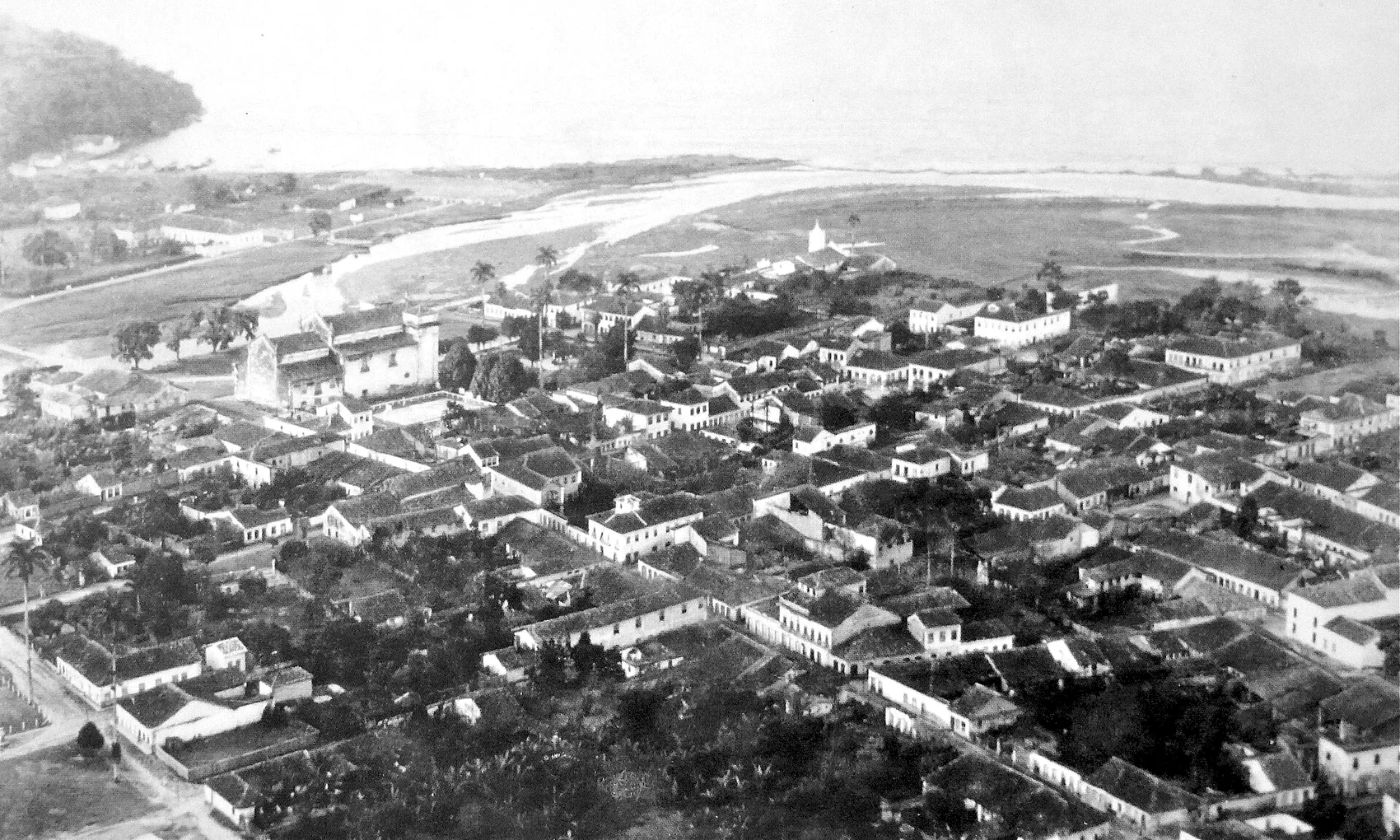
The honest version, up front
Let us get the disclaimers out of the way, because they shape every other decision. Paraty has roughly forty thousand people and a tourist economy built around long weekends, not laptops. The infrastructure is good in the centre and the established neighbourhoods and thins out fast as you move away from them. The town fills and empties with the Brazilian calendar, so the experience of a long stay in quiet May is a completely different thing from a long stay over the December holidays. And it is a town where Portuguese, not English, is the language of getting anything practical done — opening a SIM account, calling an internet provider, asking a landlord about the fibre line.
None of that is a reason not to come. It is a reason to come with your eyes open and to set up deliberately rather than assuming a place this lovely must also be frictionless to work from. The travellers who are happiest here are the ones who treat the first few days as setup — sorting connectivity, a base, and a routine — and then settle in. The ones who struggle are the ones who arrive expecting a city's conveniences and a beach town's calm at the same time. You generally get one or the other in any given spot; the skill is choosing where you sit on that line.
Connectivity: the real picture
This is the question that matters most, so we will be specific. In the historic centre and the main residential neighbourhoods around it, fixed fibre broadband is widely available and good. A normal rental with a proper fibre line will handle video calls, large uploads, and a full workday without drama. This is not a place where you are nursing a weak signal to send an email; in the right house, it is genuinely unremarkable, which is the highest compliment you can pay working internet.
Mobile coverage follows the same pattern. The major Brazilian carriers have solid 4G across the town and the busier parts of the coast, and a local prepaid SIM with a data plan makes a reliable backup or a primary connection if you are moving around. We always tell guests to buy a local SIM in the first day or two regardless — it is cheap, it untethers you from any single Wi-Fi network, and it is the difference between a dropped call being a shrug and being a crisis.
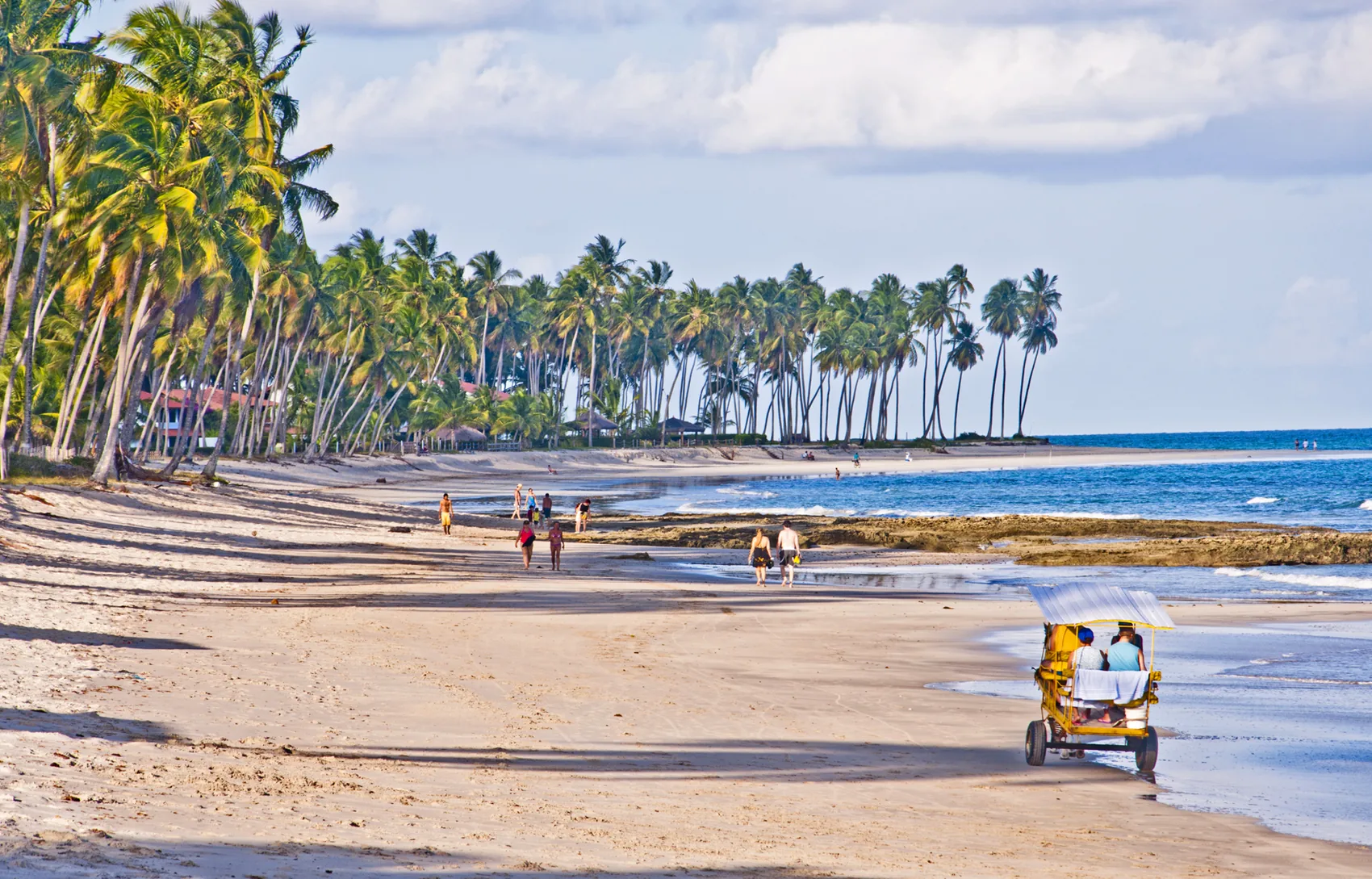
Now the honest part. The further you get from the centre, the less you can count on any of this. The roadless beaches south of town — the ones everyone wants to photograph — range from patchy to genuinely off-grid. Up in the hills and behind the ridgelines, signal drops away. Some of the most beautiful places to be in this region are the worst places to try to join a meeting from, and that is not a bug you can engineer around. The water and the forest swallow the signal. The right way to think about it is not "can I work from that beach" — usually you can't, not reliably — but "can I work brilliantly from a good base in town and visit that beach when I'm off the clock." The answer to the second question is yes.
Some of the best places to be in Paraty are the worst places to take a call from. Plan around that and you'll be happy; fight it and you won't.
Build in redundancy
However good a single connection is, treat it as fragile, because in a small town a single point of failure is real. Rain can knock out power. A fibre line can go down and take a day or two to fix on local time, which is its own adventure. The fix is the same one remote workers use everywhere, just more important here: have at least two ways online. A fixed fibre line in the rental as your primary, a local SIM with a generous data plan you can hotspot from as your backup, and — if your work genuinely cannot tolerate any downtime — a sense of where the nearest reliable cafe or coworking spot is as a last resort. With that stack, an outage is an inconvenience, not a lost day.
One more practical note: confirm the internet before you commit to a long rental. Do not take "yes there is Wi-Fi" as an answer. Ask specifically whether the line is fibre, what the speed is, and ideally get the host to run a quick speed test and send you the result. A place can be stunning and still have an internet connection that was fine for weekend guests checking email and hopeless for your workday. This single question, asked clearly, prevents the most common disappointment we hear about.
Where to base yourself
For a working stay, location is a trade-off between connectivity and convenience on one side and quiet and views on the other, and there is no single right answer — only the right answer for you.
In or beside the historic centre
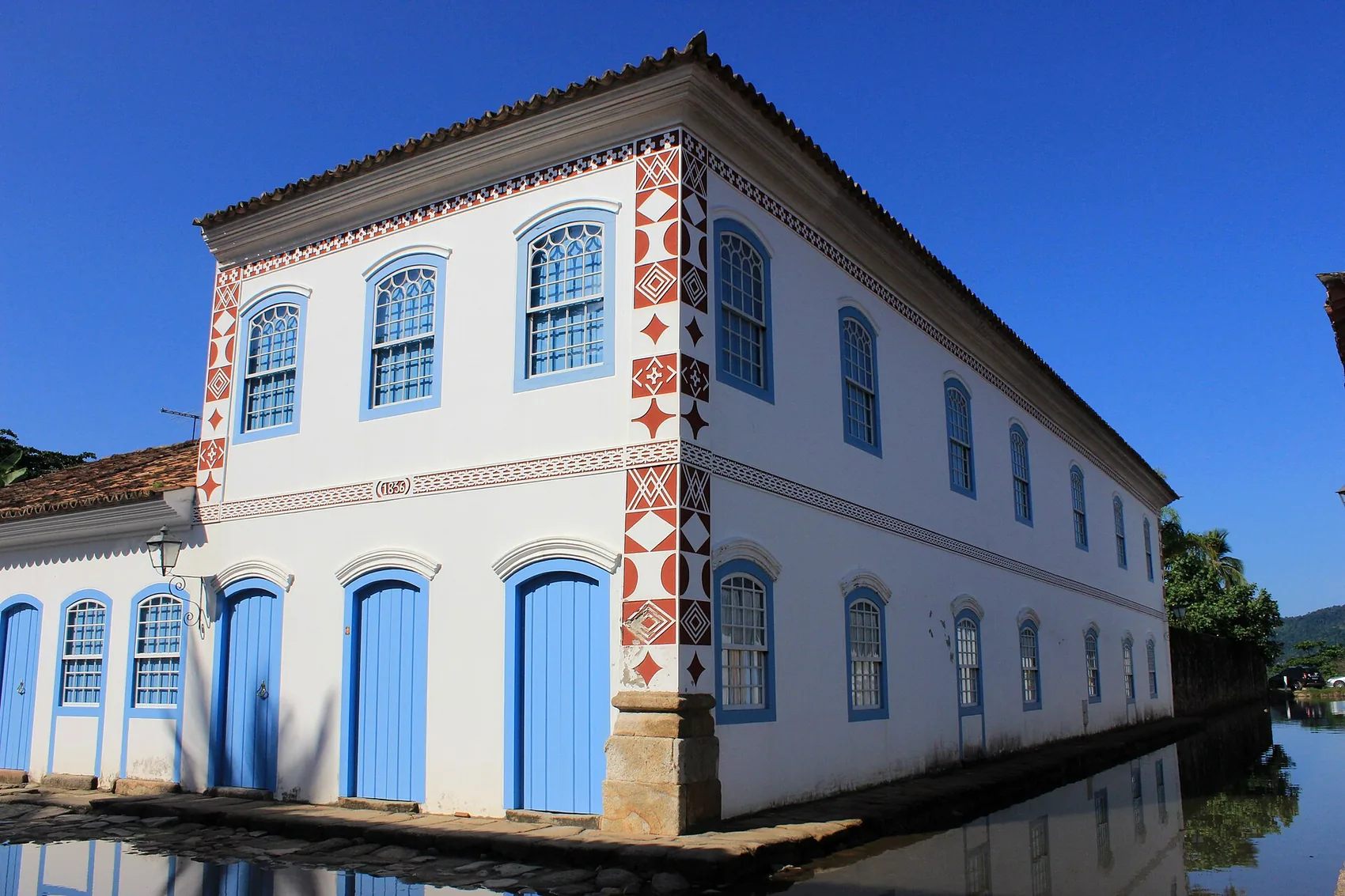
Basing in or right beside the colonial centre gives you the best of the practical stuff. You are inside the fibre footprint, you can walk to everything — groceries, the bakery, the bank, the cafes, dinner — and you never need a car for daily life. The trade-off is that the centre is the busiest part of town. It is also the loudest at night, especially on weekends and during festivals, when live music carries through the streets until late. For some people that is the charm; for anyone who needs early, quiet mornings to work, a flat one or two streets back from the main bustle is the sweet spot — close enough to walk in, far enough to sleep.
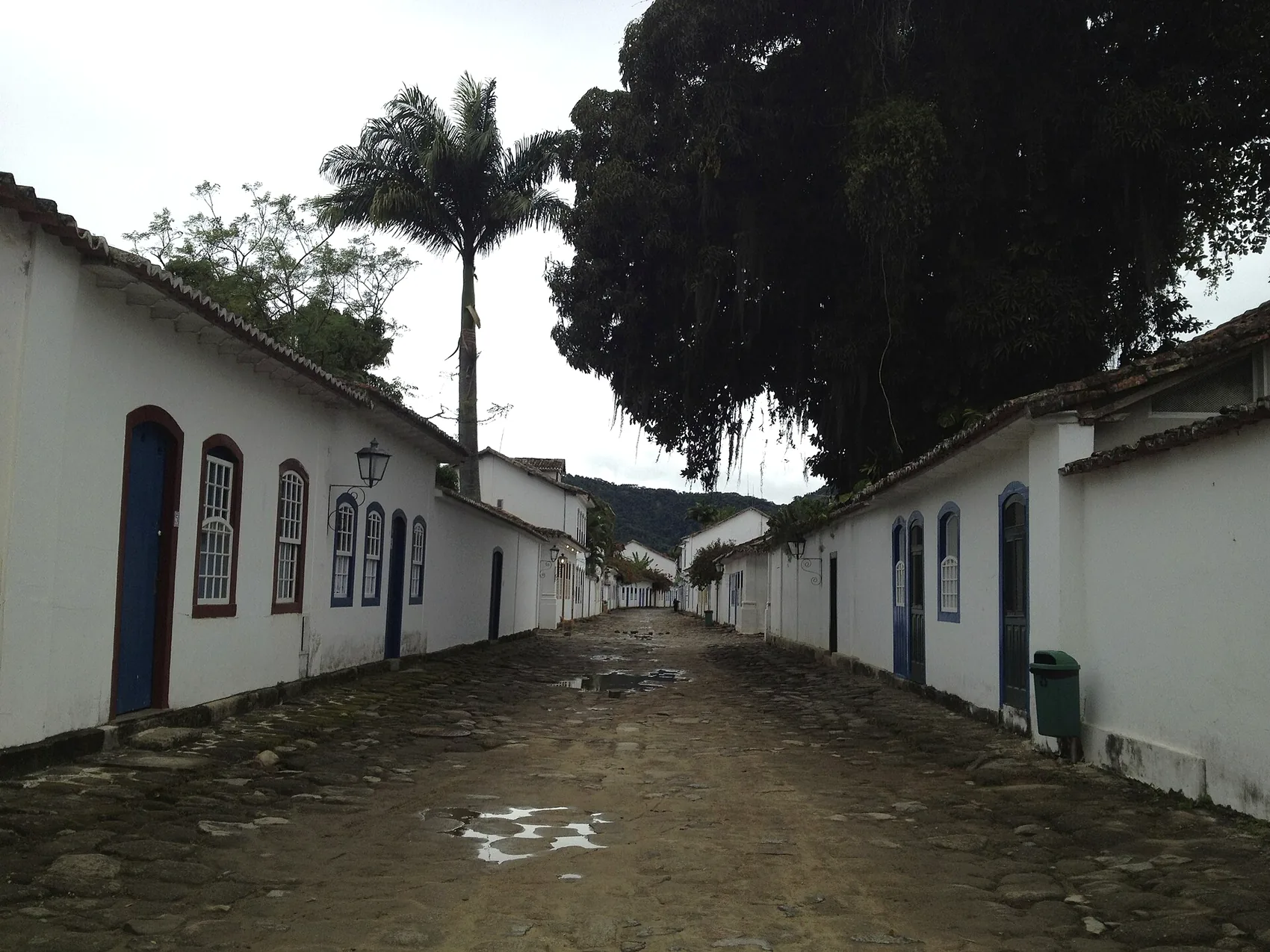
The residential neighbourhoods
Step just outside the historic grid into the everyday residential parts of Paraty and you trade a little atmosphere for a lot of practicality and, usually, better value. These are the streets where locals actually live, with supermarkets, pharmacies, and the kind of quiet that makes a Tuesday workday easy. Fibre is generally available, you are still a short walk or cheap ride from the centre, and monthly rents tend to be friendlier than for the postcard houses on the cobblestones. For a month-plus stay, this is where a lot of working travellers end up once the romance of sleeping inside a colonial museum meets the reality of needing to concentrate.
The hills and the coast
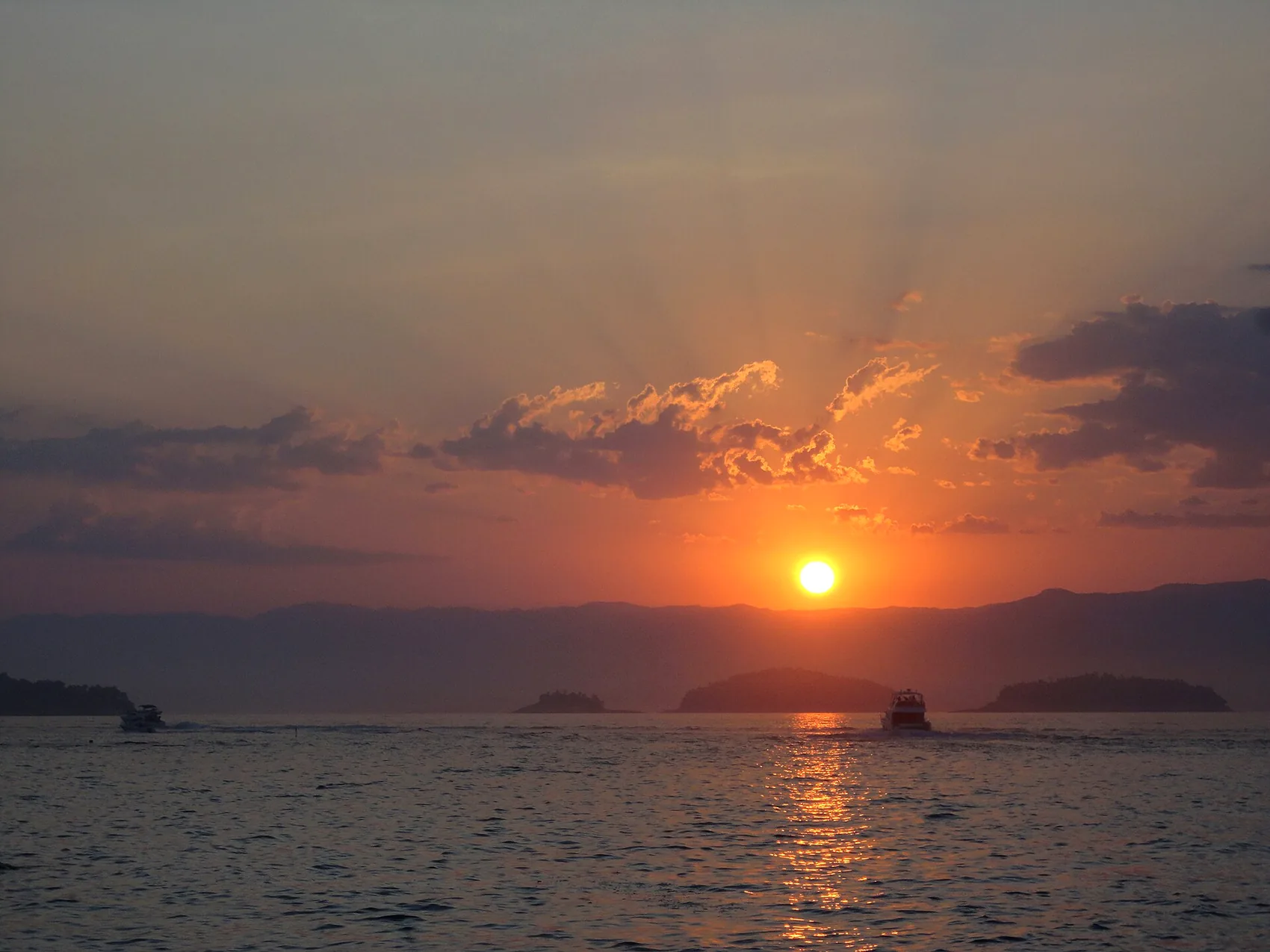
Then there is the option we know best: up out of town, on the ridge or along the coast, where the view is the whole point. This is where Chalé Bel Air sits — about four hundred metres up, with the infinity pool looking out over the bay of Paraty, Angra dos Reis and Ilha Grande all in one sweep. It is, frankly, a glorious place to write or think or take a clear-headed call with the forest around you. But we will be honest about the trade-off, because we would rather you arrive happy than surprised: the higher and more remote you go, the more you have to be deliberate about connectivity and the more you need wheels to get into town. A hillside base rewards the kind of work that is heads-down and self-directed, where you are not bound to a fixed meeting schedule, and where a daily commute down to a cafe is a pleasure rather than a chore. It is a different rhythm from town living, and for the right person it is the best one there is. If you are weighing a view-led base against a walk-everywhere one, our guide to luxury vacation rentals in Paraty lays out the trade-offs in detail.
Cafes and coworking, honestly
Here is where we have to gently manage expectations. Paraty is not a coworking town in the way Lisbon or Medellín or even some Brazilian cities are. There are a few cafes in and around the historic centre with good coffee and workable Wi-Fi, and there have been small coworking and hostel work-areas come and go over the years. But this scene is thin and it changes, so we will not name specific places — a cafe that is perfect for working when we write this may have changed hands or changed its Wi-Fi by the time you arrive. The durable advice is more useful than a list that goes stale.
So treat cafes here as a change of scenery, not as your office. For a month-plus stay, the winning setup is a proper desk in your own rental, on your own reliable line, where you control the environment — and then a rotation of cafes for the mornings when you need to be around other humans and the smell of coffee. Buy something, tip well, do not camp on a single table for six hours during a lunch rush, and you will be welcome. A small town remembers the guest who treats its businesses kindly.
If community and a shared work table are essential to you — if you genuinely cannot work well alone — be honest with yourself about whether a town this size is the right fit, or whether you want to split your time, doing your social-and-coworking weeks in a bigger city and your heads-down weeks here. Plenty of people do exactly that, and Paraty is a wonderful place to be the quiet half of that equation.
Finding a monthly rental
The biggest practical lever you have over the cost and quality of a long stay is how you book your base. Nightly tourist rates are built for weekends and they add up fast over a month. Almost every kind of property here — pousada rooms, apartments, houses, hillside chalets — becomes dramatically more reasonable when you take it by the month and negotiate directly. Hosts and owners generally prefer a reliable month-long booking to the churn of weekend turnover, so there is real room to agree a fair monthly rate, especially outside the peak season.
A few things to sort before you commit:
- The internet, specifically. We said it above and we will say it again because it is the one thing people forget to nail down. Confirm it is a fibre line, ask the speed, and get evidence if you can.
- A real workspace. A holiday rental optimised for lounging is not the same as one you can work from. You want a desk or a proper table, a comfortable chair, decent light, and ideally a spot with shade and air movement for the hot afternoons.
- What is included. In Brazil the headline rent is often not the whole story. Utilities — electricity especially, which climbs when you run air conditioning — may be on top, and apartment buildings carry a monthly condomínio fee for shared costs. Ask what is included so the cheap-looking place does not turn out otherwise.
- Climate control. A fan is fine in the cool months. In the summer heat you will want air conditioning, at least in the bedroom and the room you work in, and you will pay for the electricity to run it.
- The neighbourhood at night. If you can, find out how noisy the street gets after dark, particularly near the centre on weekends. Light sleepers should weigh this seriously.
Look on the big international rental platforms for furnished monthly stays, but also consider the Brazilian property portals and simply asking around once you arrive — a fair number of the best long-stay deals here never get listed in English at all and surface through word of mouth. If you would rather we point you toward suitable longer-stay options ourselves, get in touch and tell us roughly what you need.
Cost of living
We will be careful here, because specific prices date quickly and exchange rates move, so anything we quote today could mislead you tomorrow. The durable truth is this: for most visitors from North America, Europe or the wealthier parts of the world, Paraty is comfortably affordable for a long stay, and noticeably cheaper than equivalent coastal living back home — provided you live a bit like a local rather than a tourist on holiday.
The thing that swings your budget most is how you eat and how you book. Eating where the tourists eat, in the prettiest squares, every night, will cost you. Shopping at the local market and supermarket, cooking at home in your rental, and saving the restaurants and the boat-day lunches for a few times a week brings the number down a lot. Likewise, a place booked by the month at a negotiated rate costs a fraction of the same place booked night by night.
A rough way to think about your monthly outlay, without putting fragile numbers on it:
- Your base is the biggest line, and it swings hugest by season — peak summer rates can be a multiple of off-season ones for the same property.
- Food is very reasonable if you cook and shop locally, and adds up if you eat out constantly. Tropical fruit, fish and the basics are cheap; imported goods and tourist-square dining are not.
- Connectivity — a fibre line (often bundled into a monthly rental) plus a prepaid SIM data plan — is a small, predictable cost.
- Getting around in town is mostly free because you walk. A car, if you base in the hills or want to explore the coast, is the variable here.
- The fun stuff — boat days, distillery visits, the occasional big dinner out — is the part you can dial up or down to taste, and the part that makes living here rather than just existing here.
For the broader money picture across a Brazilian trip — cards versus cash, tipping, what is worth paying up for — our luxury Brazil travel guide covers the ground, and the Paraty travel tips for first-timers handle the on-the-ground practicalities.
The best season for a long stay
For a holiday, the calculus on when to come is one thing. For a working stay, where you have to actually concentrate through your days, it shifts — and our advice shifts with it.
We think the cooler, drier stretch from roughly April to September is the better window for working. The heat and humidity are manageable, which matters enormously when you are indoors at a desk; the town is calmer, with fewer crowds and lower rental prices; and the clear winter days give you the best weekends — the sea visibility is at its best for swimming and snorkelling, and a Saturday on the water under a blue sky is the reward for a focused week. Evenings can want a light layer up in the hills, which most people find a pleasure after a tropical afternoon.
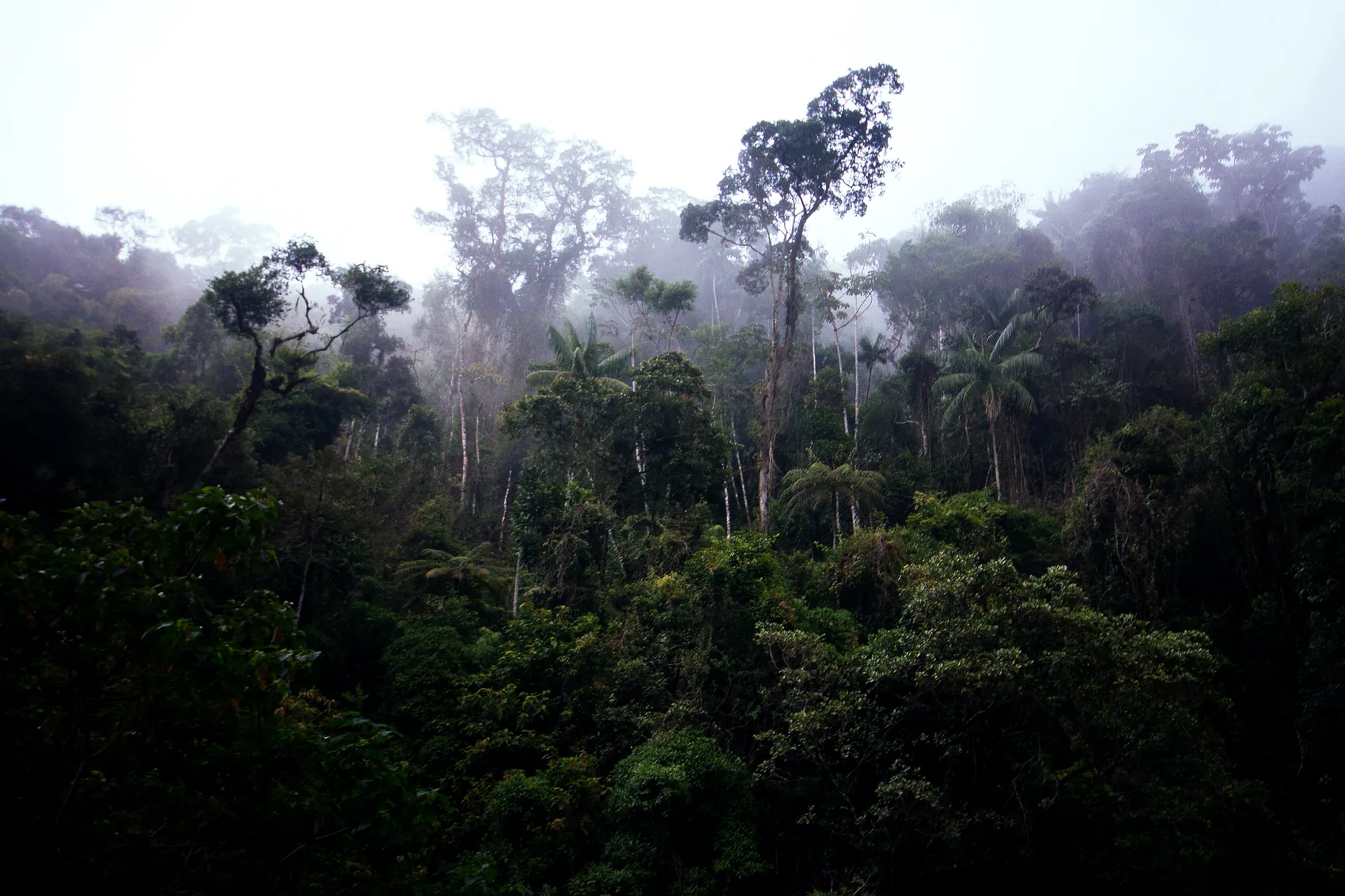
The summer — December through February or March — is the hot, wet, crowded season. The sea is at its warmest and the town is at its liveliest, which is glorious if you are on holiday and harder if you are trying to hold a workday together. Afternoon thunderstorms are the norm, the heat is serious, the holiday crowds fill the town, and monthly rents climb to match. If your dates are fixed to summer, it is entirely workable — just budget for air conditioning, plan your work around the cooler mornings, and book your base early before the good ones go. The shoulder months on either side give you a middle path: warm water, thinner crowds, gentler prices. The month-by-month detail is in our guide to the best time to visit Paraty.
Balancing the work and the coast
This is the part nobody warns you about and the part that decides whether a working stay is a joy or a slow disappointment. You are surrounded by one of the most beautiful coastlines in Brazil, and you still have to get your actual work done. Get the balance wrong in either direction and you lose — either you grind through the weeks barely lifting your head and wonder why you bothered coming somewhere this lovely, or you treat every day like a holiday and your work, and eventually your income, falls apart.
The travellers who get it right tend to do a few things. They keep real working hours — a defined start and stop — rather than letting work bleed into a permanent low hum across the whole day. They protect their best, most focused hours, usually the cooler mornings, for the work that matters, and they save the errands and the lighter tasks for the heavy heat of the early afternoon. And then, crucially, they actually stop, and use the place: a swim at the end of the day, dinner in town, the late light from somewhere high up.
The structural trick is to think in weeks, not days. You will not get a relaxed beach day and a productive workday out of the same Tuesday — the wild beaches and islands eat a whole day by the time you boat or walk out and back. So do not try to. Work properly Monday to Friday and give a full weekend day to the coast. That one full day — a schooner trip or a private charter out among the islands, a swim somewhere clear, a long seafood lunch behind a beach — is worth ten half-hearted half-days squeezed around your inbox. The shape of a proper day on the water is its own thing, and we lay it out in our guide to boat days; the pillar guide to Paraty has the full menu of what to do with your time off.
The long-stay advantage
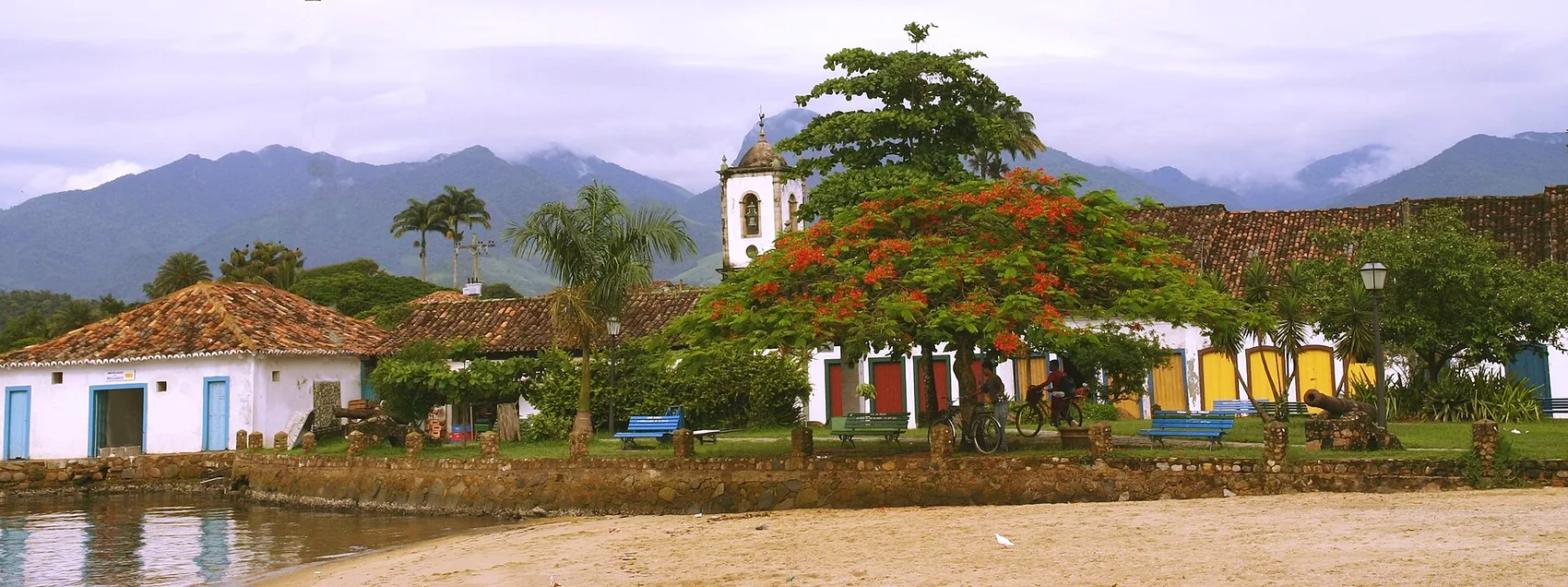
Here is the upside that short visitors never get, and the real reason a long stay in Paraty beats a week of it. When you are here for a month or a season, you do not have to cram. You can wait for the perfect clear morning to take the boat out rather than gambling your one booked day on the forecast. You can have lazy weeks and busy weeks. You can get to know a single beach properly instead of speed-running ten of them. You can let the place set the pace, which is the whole point of Paraty in the first place. A long stay turns the coast from a checklist into a backdrop — and a backdrop is a far better thing to work against than a to-do list.
A realistic daily rhythm
People always ask what a normal working day actually looks like here, so here is an honest sketch — not a prescription, just the shape that tends to work, especially in the warmer months when the heat dictates a lot.
- Early morning is the gift. It is cool, it is quiet, the light is soft, and it is the best block of focused work you will get all day. Coffee, desk, the hardest task first. If you protect nothing else, protect this.
- Late morning is for calls and collaboration while you are sharp and the connection is fresh, or a stretch at a cafe for a change of air.
- The hot early afternoon is when the town slows down and you should too. Lunch, lighter tasks, the unglamorous admin, maybe a swim or a nap. Fighting the afternoon heat at a desk is a losing battle; working with it is the local skill.
- Late afternoon cools off and gives you a second usable work block as the day softens — often the most pleasant hours to be at a desk.
- Evening is for the place. Dinner in town, live music drifting out of a small room, a caipirinha, the streets after the day-trippers have gone home. This is when Paraty does its best work on you, and it is why you came.
Adjust for your own time zone and the demands of your job, of course. If you are working with clients several hours behind you to the west, your evenings become your overlap window and your structure flips. The point is not this exact schedule; it is that a long stay works best with some structure, shaped around the heat and the light, rather than a formless blur of half-work and half-rest that satisfies neither.
Community and not being lonely
A long solo stay anywhere can get quiet, and a small town more than most. Paraty does not have a big, organised digital-nomad community the way some destinations do — there is no Tuesday meetup of fifty laptop people. What it has instead is a warm, sociable local culture and a steady flow of travellers, and the connections here tend to come the old-fashioned way: through the same cafe each morning, the bar with the live music, a Portuguese class, a yoga or surf or capoeira session, the neighbours who run the shop on your street.
The single best thing you can do for both your social life and your daily life is to learn some Portuguese. English will get you through the tourist-facing parts of town, but the real Paraty — the one where you become a regular, get invited to things, and stop being a visitor — runs in Portuguese. Even a clumsy, well-meant attempt is met with warmth here. A few weeks of effort changes the texture of a long stay completely, turning a place you are staying into a place you are, however briefly, part of.
If you are coming as a couple or with family, you have built-in company and a different set of needs, and Paraty handles both beautifully — the calm beaches and the pool-and-forest rhythm suit family life, and the evenings suit couples. If you are coming solo and you know that long stretches of your own company wear on you, build the social scaffolding in early: pick your regular spots, say yes to things, take the class. The town rewards the person who shows up more than once.
Visas and the legal side
We have to be plain about this section: we are hosts, not immigration lawyers, the rules change, and they depend on your nationality. So take everything here as a pointer toward the official sources, not as advice you should act on directly. Confirm your own situation with the Brazilian consulate, the official government channels, or a qualified immigration professional before you commit to a long stay. Getting this wrong is expensive and stressful; getting it checked is cheap and easy.
That said, here is the lay of the land in broad strokes, to tell you what to go and verify. Many visitors arrive on a tourist entry, which typically allows a stay of up to 90 days and can in some cases be extended once, within limits on how long you can be in the country across a rolling twelve-month period. The catch is that entry requirements differ by passport — some nationalities need a visa arranged in advance, others do not, and these policies have changed in recent years, so check what currently applies to your passport rather than assuming. Extensions, where available, are generally handled in person at the Polícia Federal and are not guaranteed, so do not build a plan around an extension you have not secured.
For genuinely long or repeated stays, Brazil also offers a digital-nomad visa aimed at people working remotely for an employer or clients based outside Brazil. It generally asks you to show a minimum level of income or savings, proof of the remote working relationship, valid health insurance, and a clean background check, and it allows a longer, renewable stay than a tourist entry. The exact income thresholds, fees and document requirements change and vary by consulate, so the specifics you will find quoted around the internet — including any number we might write here — can be out of date by the time you read them. Go to the source.
A few durable, low-risk points worth knowing regardless of which route you take:
- Overstaying carries penalties — fines per day and possible complications on future entry. It is not worth the risk; track your days carefully and plan your exit before you arrive.
- Health insurance that is valid in Brazil is a sensible thing to have for any long stay and a hard requirement for some visa routes.
- Tax is its own question entirely. Spending long enough in any country can have tax implications back home and locally, and that is genuinely a question for an accountant, not a travel guide.
- Keep your documents in order — entry stamp, proof of onward travel, proof of where you are staying — because you may be asked for them.
We say all this not to scare you off but because the legal logistics are the one part of a long stay where winging it can actually go wrong, and a couple of hours of proper research up front removes the whole worry. Sort it once, sort it right, and then forget about it and enjoy the months.
Who a long stay in Paraty suits
Pulling it together: Paraty is a wonderful long-stay base for a particular kind of remote worker, and a frustrating one for another. Knowing which you are saves everyone disappointment.
It suits the self-directed worker who does heads-down, asynchronous work and does not live or die by a packed calendar of fixed live meetings. It suits people who genuinely want quiet and nature and a slower pace, and who will use the coast on weekends rather than pining for a city's buzz on weeknights. It suits couples and families who travel with their own company built in. It suits anyone who has done the nomad thing before, knows how to set up a reliable base, and is looking for somewhere beautiful to be the calm chapter rather than the social one. For these people, Paraty is close to a dream — productive, affordable, and quietly spectacular.
It suits less well the worker whose job depends on constant, perfect, always-on connectivity with zero tolerance for the occasional small-town outage. It suits less well the person who needs a big social scene, a coworking community, and a city's nightlife to feel alive, and who will find a small town lonely. And it suits less well anyone who cannot resist treating a beautiful place as a permanent holiday — Paraty will happily let you not work, and your income will notice. If you are in this second group, the answer is not necessarily "don't come" — it might be "come for a focused stretch and pair it with time in a city," and we would rather tell you that honestly than sell you a stay that won't fit.
Getting set up in your first week
If you do come, a little front-loading makes the whole stay smoother. Here is the short checklist we give arriving long-stayers:
- Sort connectivity first. Confirm the rental's fibre line is live and fast, and buy a local prepaid SIM with a generous data plan as your backup. Do this before you do anything fun.
- Set up your workspace. Claim a desk, get the chair and the light right, find the spot in the place that is coolest and quietest during your working hours, and make it feel like an office, not a holiday corner.
- Find your basics. Locate the nearest supermarket, the market day, a pharmacy, the bank or ATM, and a couple of cafes you like. Walking these out in the first days makes the town yours.
- Learn a little Portuguese. Even a handful of phrases for shops, greetings and basic logistics changes how the town treats you and how at home you feel.
- Plan one weekend reward. Book or pencil in your first proper day on the water for a clear forecast. Knowing it is coming makes the first working week fly.
For the wider mechanics of a first trip to this part of Brazil — getting here from Rio or São Paulo, getting around once you are here, and the things every first-timer asks — start with the complete guide to Paraty and the first-timer travel tips. Our wider resources and things to explore pages gather the rest of what you will want for the months around the work.
The last word
We are biased, obviously — we love it here, and we host people on the ridge precisely because we think the view and the calm are worth the small trade-offs of a town this size. But we would rather you arrive with the honest version than the brochure version. Paraty is not the frictionless nomad hub the photos might suggest. It is something better, for the right person: a real, working town on a coast that has barely changed in three hundred years, where you can do good, focused work in the cool of the morning and be swimming in clear water by the weekend. Set yourself up properly, base in the right spot, sort the boring logistics once, and then let the place do what it does — which is to slow you down, in the best possible way, and remind you why you wanted to work from somewhere like this in the first place. When you are ready to talk through where to base for a longer stay, come and find us. We have learned, from up here, exactly where the work and the coast meet best.
Come stay above the bay
Chalé Bel Air sits on the ridge that looks over everything in this guide. Tell us your dates and what kind of trip you are after — we answer personally.
Ask about your datesFrequently asked questions
Is the internet in Paraty good enough to work remotely?
In the historic centre and the main residential areas, yes. Fibre broadband is widely available and reliable enough for video calls on a normal workday, and the main mobile networks have solid 4G in town. The picture changes as you head out to the far beaches and up into the hills, where signal gets patchy or disappears entirely. If your job depends on being online, base yourself in or near town and treat the wild beaches as off-grid weekends.
Does Paraty have coworking spaces and cafes to work from?
A handful, but do not picture a city scene. Paraty has a few cafes with decent Wi-Fi and the odd small coworking or hostel work area, and they come and go, so check what is open for your dates. The practical answer for a month-plus stay is to set up a proper home office in your rental with your own fibre line, and use cafes for a change of scenery rather than as your main desk.
How much does it cost to live in Paraty for a month?
It varies a lot by season and how you live, so treat any single number with suspicion. A furnished monthly rental, food, a local SIM and the occasional boat day are very reasonable by North American or European standards, especially outside the December-to-February peak when rental prices climb. Booking a place for a full month directly, rather than at nightly tourist rates, is the single biggest saving you can make.
Can I legally work remotely from Brazil on a tourist visa?
This is a question for official sources and ideally an immigration lawyer, not a travel guide, and the rules change. In broad terms many visitors get a tourist entry of up to 90 days that can sometimes be extended, while Brazil also has a dedicated digital-nomad visa for longer stays working for a foreign employer or clients. Requirements, income thresholds and fees shift, so confirm everything against the Brazilian consulate or Polícia Federal before you book a long stay.
When is the best season for a long stay in Paraty?
For a working stay we like the cooler, drier months from roughly April to September. The town is calmer, rooms cost less, the heat is manageable for working indoors, and the clear winter days are perfect for swimming on weekends. The December-to-February summer is hot, wet in the afternoons and crowded over the holidays, which is harder to work through and more expensive to rent in.



.jpg)
.jpg)