Paraty asks your suitcase to handle three environments at once: a humid rainforest, a 17th-century cobblestone town, and days spent on or in the sea. None of it requires special equipment — it requires the right ordinary things. Here's the list we send friends.
The climate, honestly
This is the wet tropics moderated by sea and mountains. Summer (December–March) is hot and humid — low thirties by day — with afternoon thunderstorms that arrive, perform and leave. Winter (June–August) is the dry, clear season: mid-twenties by day, cooler at night. Up at the chalé's altitude, evenings run a few degrees below the town year-round — a feature in summer, a light-sweater matter in winter. It can shower in any month; the forest is green for a reason.
Clothes: light, quick-drying, layered
- Quick-dry everything. Cotton stays damp here; light synthetics and linen dry between wears. Two swimsuits, so one is always dry.
- One warm layer — a light fleece or sweater for chalé evenings and the breezy boat ride home.
- A packable rain shell or compact umbrella. Non-negotiable, all seasons, rarely needed for long.
- Long sleeves and trousers for forest evenings — your anti-mosquito system, more reliable than repellent alone.
- Nothing formal. The nicest restaurant in town is happy with a clean shirt and sandals. Heels are vetoed by geology (see shoes).
Shoes: the section that matters
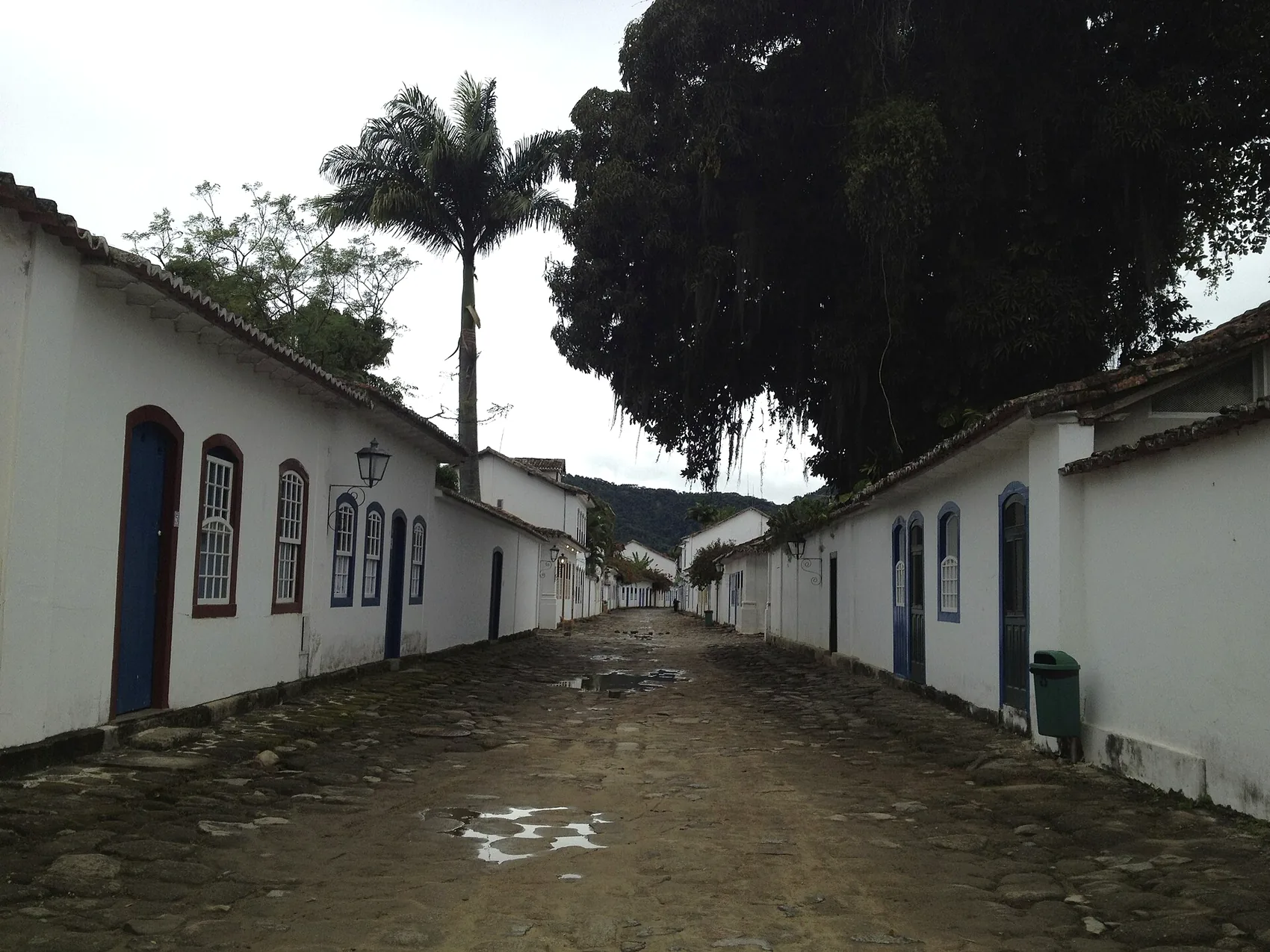
Paraty's famous cobblestones are not the smooth European kind — they're huge, rounded, irregular stones (pé-de-moleque, “brittle-candy” paving) with real gaps between them, often wet at the sea-flooding streets. Pack three kinds of footwear:
- Sturdy flat sandals or sneakers with grippy soles — your town shoes.
- Trail shoes or robust sneakers if you'll do any hiking — the Sono trail eats flip-flops, and the Gold Trail's stones get slick.
- Flip-flops or sandals that can get wet — beaches, boats, and wading ashore at swimming stops.
The boat-day kit
One small bag, packed once, grabbed every boat morning (full context in boat days):
- Reef-safe sunscreen and a hat with a strap — the light off the water doubles down.
- A dry bag (or stout zip-locks) for phone, cash and a dry shirt.
- Your own snorkel mask if fit matters to you.
- Cash for the beach-lunch stop and onboard drinks.
- Seasickness tablets if you're prone — essential for the Ilha Grande crossing, taken before boarding.
- A light long-sleeve for the ride home.
The things everyone forgets
- Insect repellent — dusk in the rainforest is feeding time; icaridin-based formulas work well here.
- A power bank — days run long between sockets, and your phone is camera, map and boat-booking tool.
- Plug adapters: Brazil uses type N sockets (the three round pins); many European plugs fit, North American ones don't.
- A small day-pack that you'd be happy to carry on a sweaty trail.
- Motion-sickness bands or tablets even if you “never get seasick” — the person who says that is always the one asking around the boat.
- Copies of documents in your luggage and your email; carry the original passport only on travel days.
What to leave behind
Hairdryers (humidity wins), serious jewellery (nowhere to wear it, no reason to mind it), drones without checking rules (much of the coast is protected airspace over reserves — see travelling lightly), and any plan that requires being dry at a fixed time. Pack light; the chalé has laundry weather on its side — things dry fast on a breezy deck at 400 m.
Come stay above the bay
Chalé Bel Air sits on the ridge that looks over everything in this guide. Tell us your dates and what kind of trip you are after — we answer personally.
Ask about your datesFrequently asked questions
What shoes should I bring to Paraty?
Three kinds: sturdy flat sandals or sneakers for the historic centre's huge irregular cobblestones, trail shoes or grippy sneakers if you'll hike (Praia do Sono, the Gold Trail), and flip-flops for beaches and boats. Leave heels at home — the cobbles veto them.
Do I need rain gear in Paraty?
Yes, year-round. Paraty sits between rainforest and sea, and showers happen in every season — usually short afternoon downpours in summer. A packable rain jacket or compact umbrella covers it; bulky raincoats are unnecessary.
What should I bring for a Paraty boat day?
Reef-safe sunscreen, a hat, a dry bag for phone and cash, your own snorkel mask if you're particular, a light layer for the breezy ride home, and seasickness tablets if you're prone. Lunch at the beach stop is usually paid separately, so carry cash.
Is it cold at night in the hills above Paraty?
Cooler than the shore, not cold. At around 400 m of altitude, evenings at the chalé run a few degrees below the town — pleasant in summer, and worth a light sweater or fleece on winter nights (June–August).