A night out in Paraty is a slow walk through candlelit lanes, a well-made caipirinha at a table on the cobbles, and live music you find by ear. Here is how the cachaça bars work, what to order and how to get home safely.
The best way to start a night out in Paraty is to leave your car behind and walk in. The historic centre is closed to traffic, so the last stretch is on foot, over cobblestones worn smooth and slightly uneven by three centuries of use. Dinner is behind you, the day-trippers have gone home, and the lanes have shrunk to lantern light and the low sound of a guitar somewhere you cannot quite place yet. This is when the cachaça bars in Paraty come into their own, and it is one of the most enjoyable evenings you can have anywhere in Brazil.
We host guests just above town, and the question we field most often once the sun is down is a simple one: where do we go tonight, and what do we order when we get there. This is the long answer. It covers what cachaça actually is and why this small colonial port is the place to drink it, how a caipirinha is really made, how to read a bar's list of bottles, where the live music lives, and how to get yourself home afterward without anyone having to drive. We will not hand you a list of venue names, because the good ones change hands and the great ones you should find by ear. We will give you something more useful, which is how the whole thing works.
A night out here is not a strip of clubs or a queue behind a rope. It is a town that hums for a few golden hours after dinner and then hands the streets back to the lanterns. Understand the rhythm and you can slot straight into it, whether you have flown in from São Paulo for a long weekend, driven down the coast from Rio, or come the whole way from abroad for your first taste of Brazil.
Why cachaça, and why the cachaça bars in Paraty matter
Cachaça is Brazil's national spirit, distilled from fresh-pressed sugarcane juice. That last part is what sets it apart from rum, which is usually made from molasses, the sticky syrup left over after sugar is refined. Cachaça is made from the raw juice straight off the press, so it keeps a greener, grassier, more vegetal character. Artisanal producers pot-distil it in copper in small batches, the way good brandy or single-malt whisky is made, rather than running it through industrial column stills. The result, at its best, is a spirit with real texture and place, not just alcoholic heat.
Paraty has a deeper claim on it than almost anywhere. Cachaça has been distilled here since the early 1600s, back when the town was a sugar port before it was a gold port. At one point more than a hundred small distilleries, called alambiques, worked the hills around the bay. The spirit was so tied to this place that for a long time Brazilians called any good cachaça a "paraty," the way people once called sparkling wine "champagne" regardless of where it came from. Only a handful of those historic alambiques still run today, all of them artisanal, and their bottles are the backbone of every serious bar list in town.
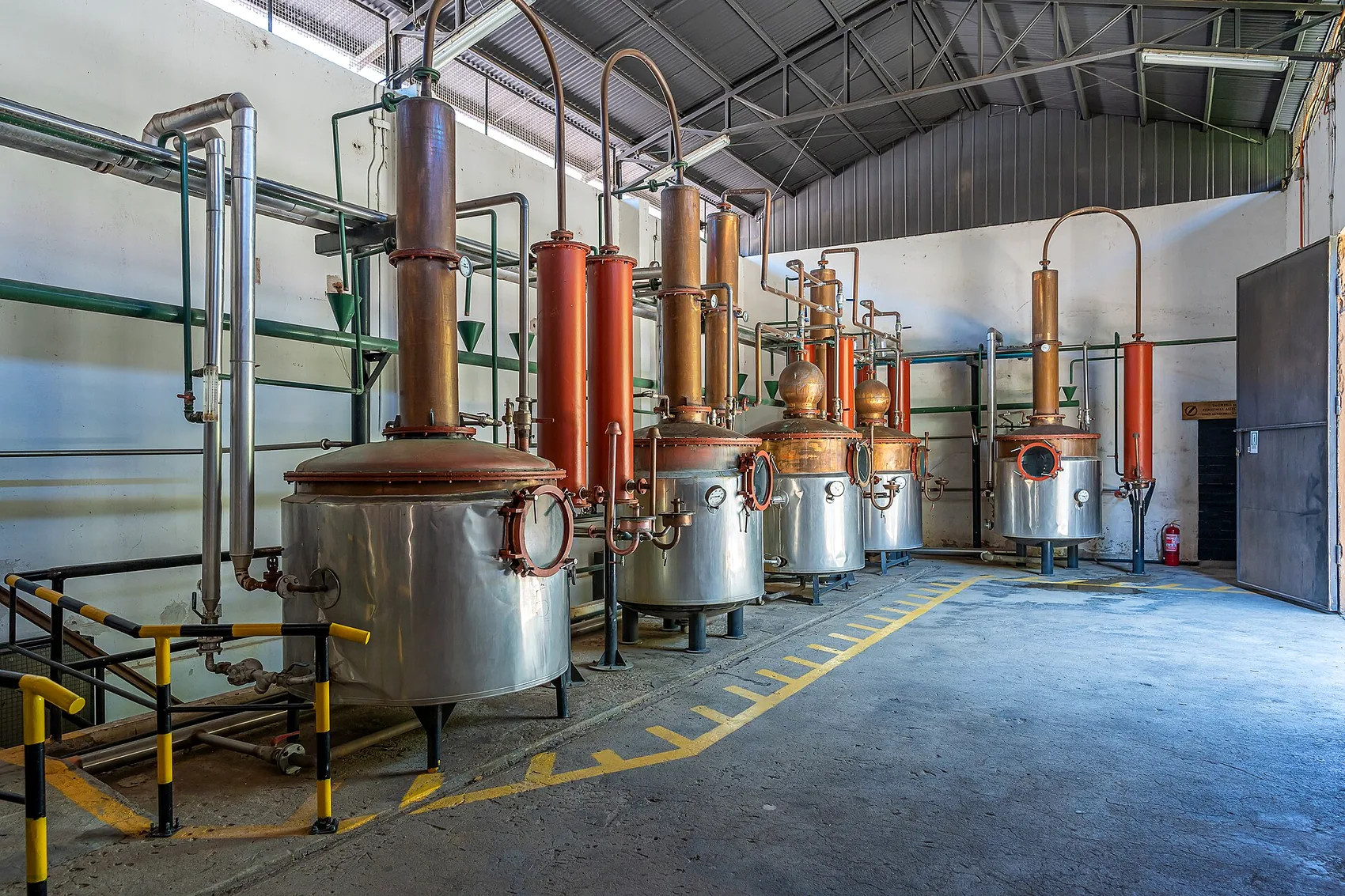
So when you sit down at a bar in the old centre and see a shelf of local bottles behind the counter, you are not looking at décor. You are looking at the living end of a four-hundred-year-old industry that never left. That is what makes drinking here different from drinking almost anywhere else in the country. If you want the daytime half of this story, how the distilleries work and how a tasting in the hills unfolds, we have written that up separately in our guide to cachaça distilleries around Paraty. This piece is about the evening.
The caipirinha, properly explained
Almost everyone arrives knowing the word caipirinha and very few arrive knowing what is actually in one. It is worth getting right, because a good one and a bad one are barely the same drink, and Paraty is the place to learn the difference.
The three ingredients, and nothing else
A true caipirinha is three things: cachaça, fresh lime and sugar. That is the whole list. The lime is cut into wedges, dropped into a heavy glass with a spoon or two of sugar, and pressed, or muddled, so the juice comes out and, just as importantly, the oils in the peel do too. Ice goes in, then the cachaça, and it gets a stir. There is no soda water, no bottled lime cordial, no fruit juice from a carton. If someone tops it with sparkling water or pours it from a pre-mixed jug, you are drinking something else wearing the same name.
The caipirinha is taken seriously enough in Brazil that it was declared part of the country's cultural heritage in 2003, and it carries formal legal definitions about what can and cannot go in it. You do not need to memorise any of that. You just need to know that the real thing is simple, fresh and made in front of you, and that in a cachaça town it should be made with a decent local spirit rather than the cheapest bottle on the shelf.
A good caipirinha and a bad one are barely the same drink, and this is the place to learn the difference.
Caipiroska, caipifruta and the honest variations
Two variations come up constantly, and both are legitimate. A caipiroska swaps the cachaça for vodka, which gives a cleaner, more neutral drink; it is genuinely popular across Brazil and there is no shame in ordering one. A caipifruta keeps the lime-and-sugar base but adds crushed fresh fruit, or leans on it entirely: passion fruit, pineapple, tangerine, kiwi, cashew fruit, whatever is ripe and local. In summer a passion-fruit caipirinha made with good cachaça is hard to beat, tart and floral and cold.
Our honest advice in Paraty is to order the classic caipirinha with a local cachaça first, so you taste what the fuss is about, and then experiment. If you find the lime-and-cachaça version too sharp, a caipifruta with something sweeter, or a caipiroska, is a fair landing spot rather than a lesser choice. The one thing worth avoiding is the oversweet, oversized tourist version poured heavy on sugar to hide a rough spirit. You will spot it by the price and the plastic straw.
How a cachaça bar actually works
The word to know is boteco, which is the Brazilian version of a neighbourhood bar: unpretentious, often open to the street, as much about the company and the snacks as the drinks. Paraty's botecos spill their tables straight onto the cobbles under the colonial house-fronts, and on a warm night the seating is effectively the street itself. There are more polished tasting rooms and a few proper live-music venues too, but the boteco is the baseline, and it sets the tone.
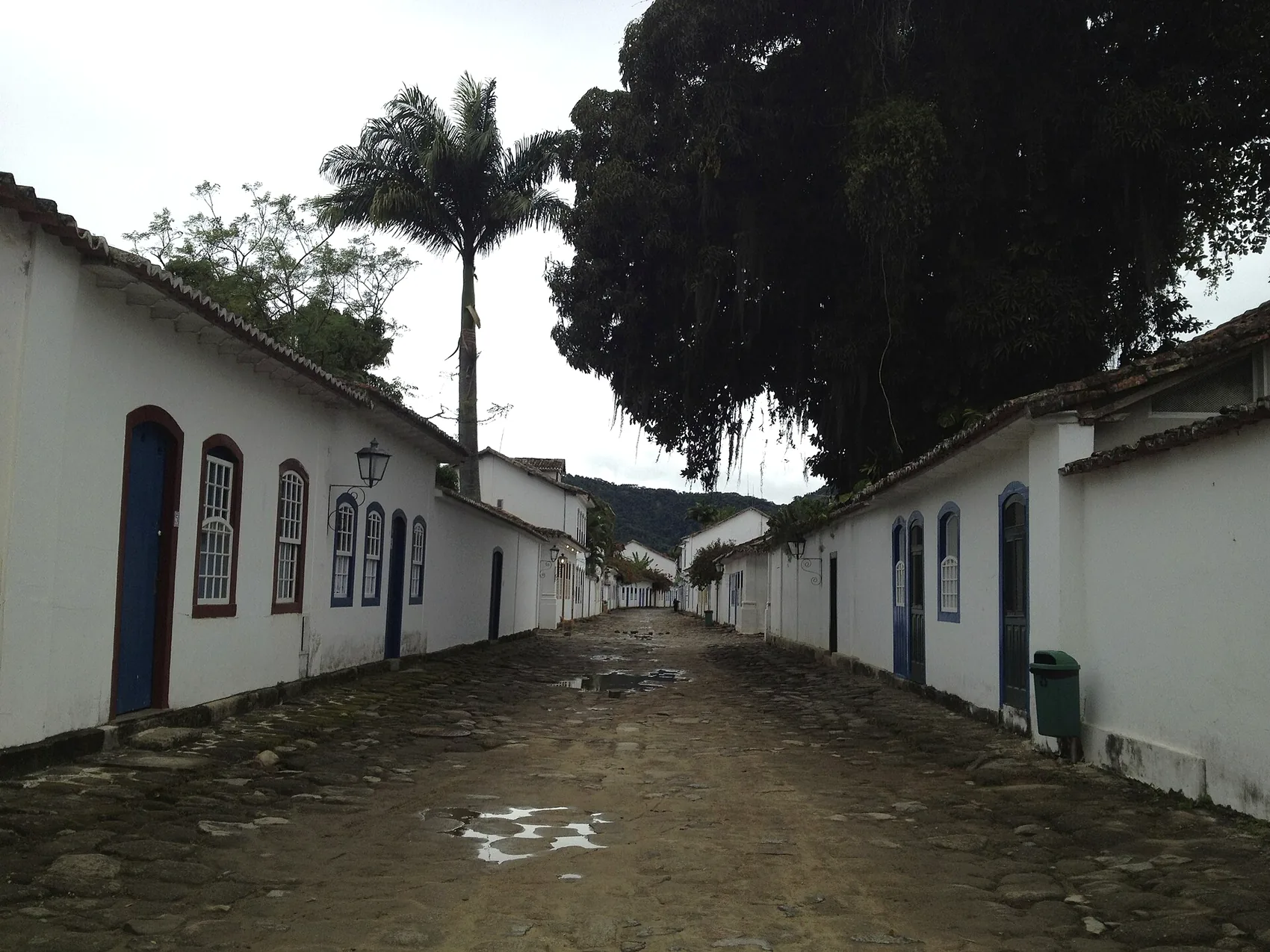
A few practical things are useful to know before you sit. Service runs on a relaxed clock; you flag the waiter when you want to order and again when you want the bill, and nobody will rush you out of a table you are enjoying. The bill, the conta, usually arrives with a ten percent service charge already added, which functions as the tip; you can adjust it but the default is fine and expected. Many places take cards, and Brazil's instant-payment system, Pix, is everywhere, but it is worth carrying some cash for the smallest street bars and for the music charge we will get to.
You will also notice there is no rush to turn the table. A boteco expects you to nurse a drink, order a plate of something to pick at, and stay an hour or three. That is the point. If you treat it as a quick stop you will feel like you are doing it wrong, because you are.
Two small phrases go a long way. "Uma caipirinha, por favor" gets you a drink; "a conta, por favor" gets you the bill. Staff in the centre are used to visitors and warm about it, and a little Portuguese is met with real goodwill rather than corrected.
Reading the cachaça list
Sit down at a bar that takes its cachaça seriously and you may be handed a list of bottles, or simply shown the shelf. It can look like a wall of unfamiliar names. Here is the map.
White versus aged
The first and most useful division is between white cachaça and aged cachaça. White, sometimes called prata or unaged, rests in steel or glass and stays clear. It is bright, grassy and a little raw in the best way, and it is the classic base for a caipirinha, where the lime and sugar meet it head on. Aged cachaça, called amburana, carvalho or simply envelhecida depending on the wood, has spent months or years in barrels. Brazilian producers use native woods you will not have met in a whisky, and each leaves its own mark: amburana brings a warm, almost cinnamon spice, others lend vanilla, caramel or a floral note. Aged cachaça takes on colour, from pale straw to deep amber, and softens.
The rule of thumb is simple. White cachaça is for mixing; aged cachaça is for sipping, neat, in a small glass, slowly, the way you would treat a good rum or a single malt. Drowning a fine aged cachaça in lime and sugar is a small waste, and any decent bartender will gently steer you away from it if you try.
How to taste, without overthinking it
If you want to sip rather than mix, order a flight, a few small pours side by side, and start with the white before the aged so the barrel notes do not flatten your palate. Hold the glass a moment, take a small sip, let it sit before you swallow. You are looking for whether it is smooth or hot, sweet or dry, grassy or spiced. There is no wrong answer and no exam. The tasting rooms in town are set up exactly for this, with staff happy to walk a first-timer through three or four bottles, and it is one of the most pleasant hours you can spend on a night that started with no particular plan.
One quiet tip: the sweet, cloying, bright-yellow bottles marketed hard to tourists are not where the good stuff is. The spirits worth your time are usually the ones the bar is quietly proud of and the staff drink themselves. Ask what they would pour for a friend.
The live music, and how to find it
Music is not an add-on to a Paraty night; it is the current the whole evening floats on. You do not book it or queue for it. You walk the grid and follow your ears, and on any given night there will be something playing within a few blocks of wherever you are standing.
Bossa nova and MPB, for the earlier hours
The earlier, gentler current is bossa nova and MPB, which stands for Música Popular Brasileira, the broad, sophisticated songbook that runs from the 1960s to now. This is music pitched for conversation: a singer with a guitar, maybe a percussionist, tucked into the corner of a bar while the tables carry on talking. It is the soundtrack to the first caipirinha and the plate of snacks, and it is the reason a lot of people who came for one drink stay for three.
Samba and forró, for later and louder
Later and louder, the current shifts. Samba brings the rhythm up and the volume with it, and forró, the accordion-driven dance music of Brazil's northeast, turns a bar into a dance floor whether or not there was one to begin with. This is where the night stops being about sitting and starts being about moving, and where a warm evening in the old centre can carry on well past midnight. You do not need to know the steps. You need to be willing to be shown, and someone always will.
The couvert, and why it is worth paying
Bars with live musicians usually add a couvert artístico, a small per-person charge for the music, to your bill. This is completely normal and not a scam. It is how the musicians get paid, and it is well worth it. Sometimes the charge applies only to the tables inside or nearest the band while a stool at the bar is free, so if you are counting, you have a choice. Either way, ask when you sit down if you would rather know the number in advance than meet it on the conta.
A night out, hour by hour
To make it concrete, here is the shape of a good Paraty evening, the version we would sketch for guests over morning coffee before they head down the hill.
Dinner is late by northern-European or North-American habits, usually eight or nine, and unhurried; if you have not sorted where to eat, our guide to where to eat in Paraty covers the harbour seafood houses and the rest. After dinner, do not go anywhere with a plan. Walk the pedestrian streets, let the town narrow to lantern light, and pick the first bar by feel: a candlelit table on the cobbles, a shelf of local bottles, a singer you like the sound of. Order a classic caipirinha with a local cachaça and a small plate of something to share.
From there the night moves itself. When the music at your table winds down, or the crowd thins, drift to the next block and the next sound. Somewhere in the middle, if you are so inclined, is a good moment to duck into a tasting room and try two or three aged cachaças neat, before the palate is too far gone to notice the difference. When the botecos start handing the streets back to the lanterns, you either follow the samba to a later, louder room, or you take the hint and start the walk home. There is no closing bell. You navigate by energy, yours and the town's.
There is no closing bell. You navigate by energy, yours and the town's.
The festival current
A few times a year the whole town becomes the venue, and if your dates line up it changes the character of a night out entirely. The one that belongs to this subject is the Festival da Cachaça, Cultura e Sabores, held every August in the historic centre. It grew out of a festival first held in the early 1980s and has run for more than four decades since. For several days the regional alambiques set up tasting tents, there are drink competitions, food stalls and music from afternoon into the night, and the town fills with people who have come specifically to drink well. If cachaça is the reason you are curious about Paraty, August is worth building a trip around, though you should book a place to stay early because everyone else has the same idea.
Paraty's other famous festival, the mid-year international literary festival known as FLIP, is not about cachaça but transforms the nights all the same, filling the bars and squares with writers, readers and a buzz that runs late. There are jazz and sacred-music gatherings in the calendar too. The town has a long habit of turning itself inside out for a good festival, and any of them will make the bars busier, the music better and the beds harder to find. Plan around them deliberately, in either direction, depending on whether you want the crowd or the quiet. Our complete guide to Paraty lays out the yearly calendar if you are still choosing your dates.
Beyond the caipirinha
A cachaça bar is not only cachaça, and a good night out has range. It is worth knowing the rest of the menu so you can pace yourself.
Beer is the everyday drink, and the phrase you want is "uma cerveja bem gelada," a really cold beer, because Brazilians take the temperature of their lager seriously. It usually arrives as a shared large bottle in an insulated sleeve for the table, poured into small glasses so it stays cold to the last drop, which is a civilised system worth adopting. There is a growing craft-beer scene too if you prefer something with more to it.
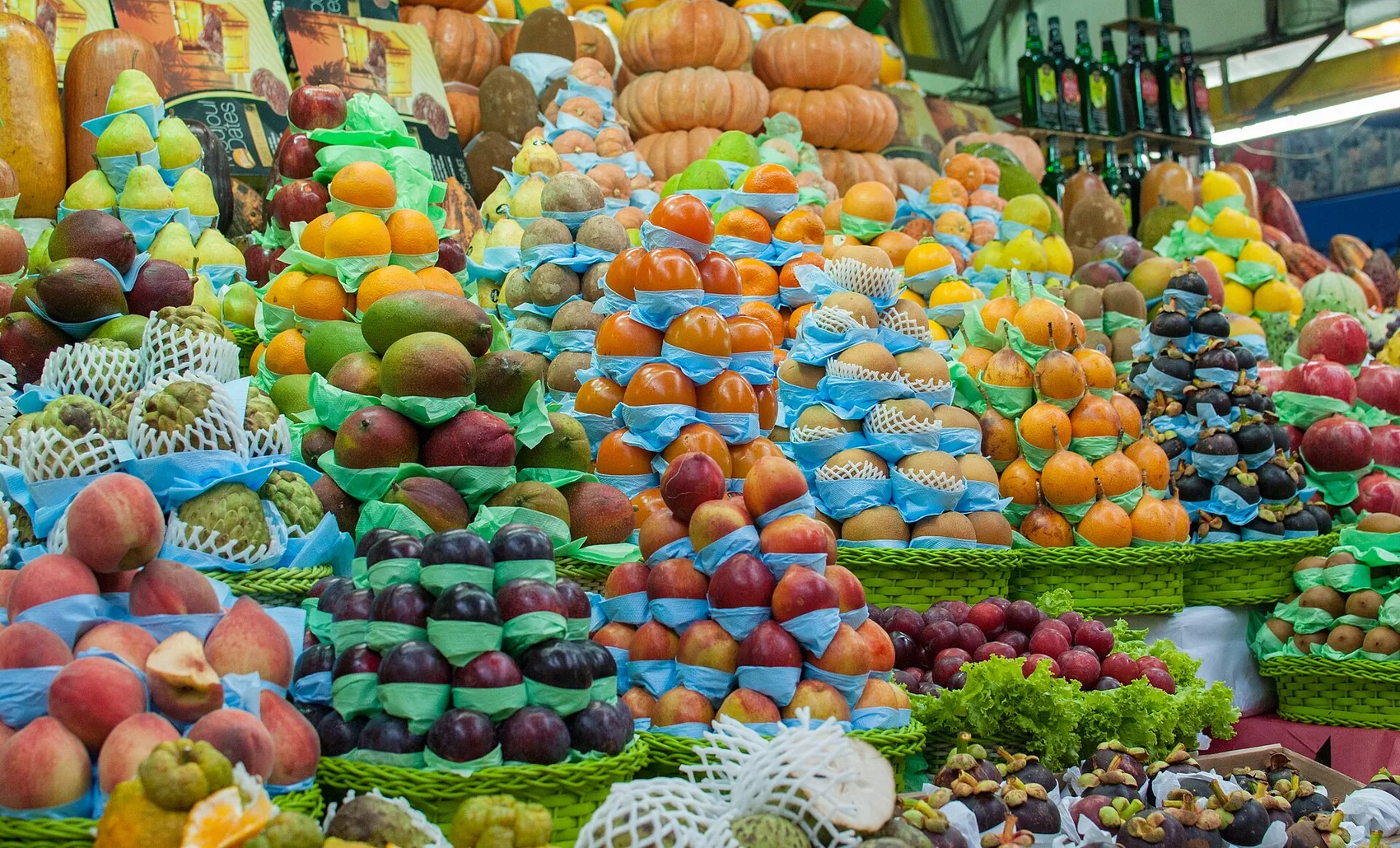
If you want the flavour of the region without the alcohol, ask for a caipirinha de suco or a mocktail built on the same fresh fruit, or simply order the juices themselves. Brazil's fresh fruit juices are a genuine highlight and no afterthought: passion fruit, cashew fruit, acerola, soursop and more, blended fresh and served cold. On a hot night a fresh juice between rounds is the smartest move in the room, and it keeps you in the evening longer. There is no social awkwardness in not drinking here; the point of the boteco is the table, not the tally.
Eating while you drink
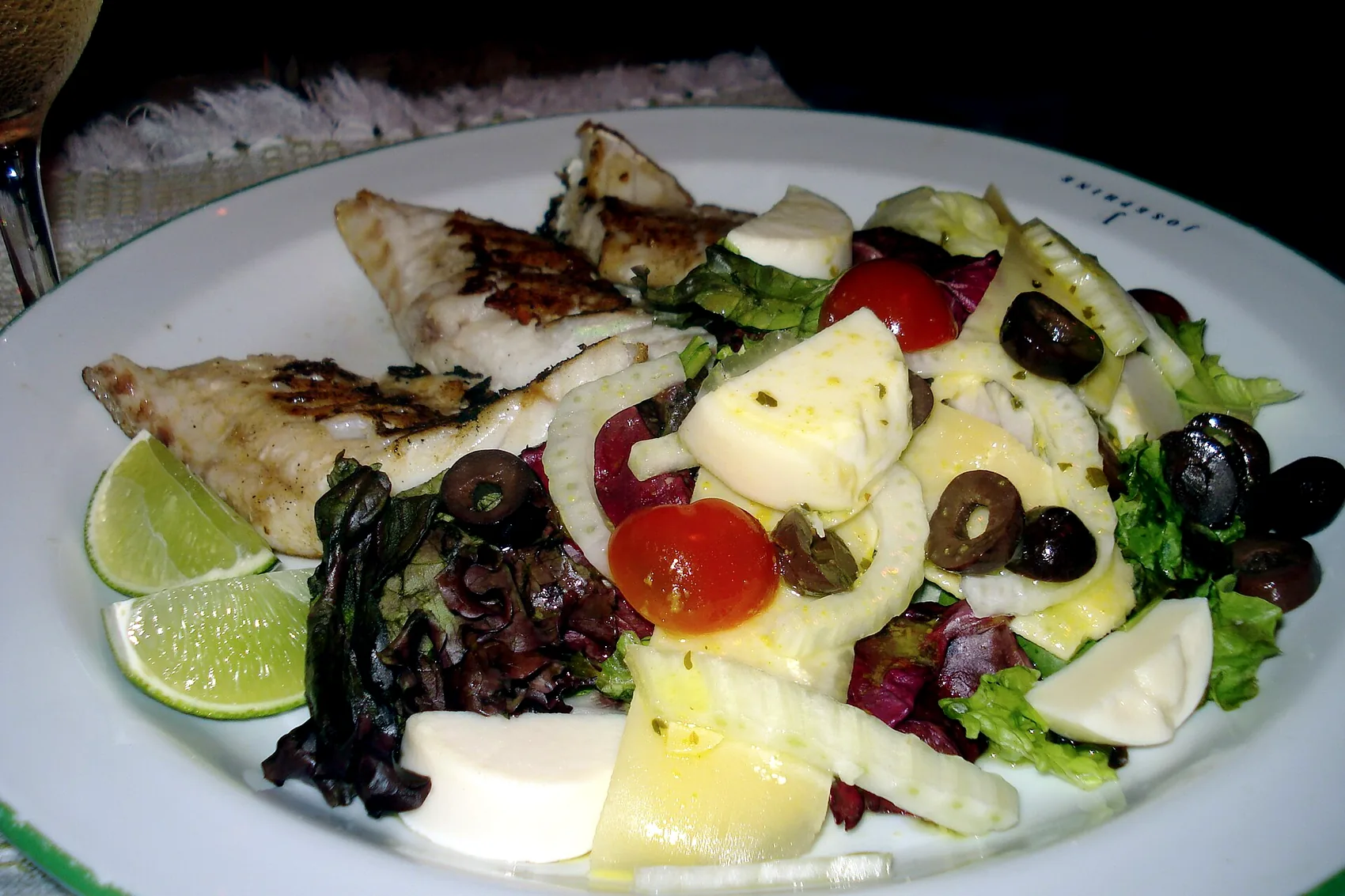
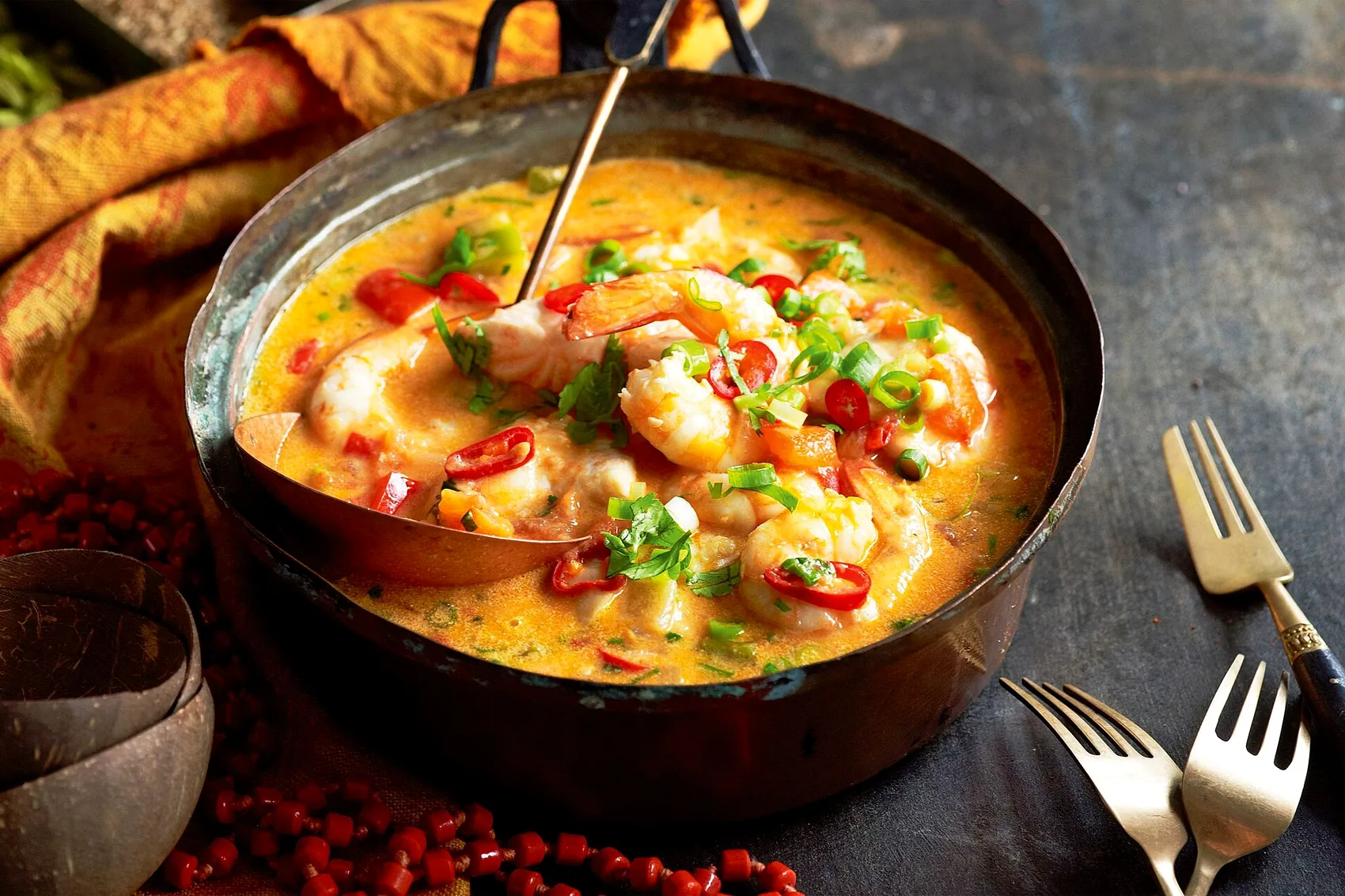
Nobody in Brazil drinks on an empty table for long, and the food that comes with the drinks, the petiscos, is half the pleasure. These are small plates meant for sharing and picking at over an hour: crisp little pastel parcels, bolinhos of salt cod, fried cassava with a dipping sauce, grilled sausage, cubes of cheese, small fried fish. In a port town the seafood snacks are the ones to chase, plates of prawns or squid that pair with a cold beer or a lime-sharp caipirinha as if they were designed together, which in a sense they were.
Ordering a couple of petiscos early does two useful things. It gives the table a centre of gravity so you settle in properly, and it slows the drinks down, which on a long night is exactly what you want. If you would rather make food the main event and drinks the accompaniment, that works too, and our guides to where to eat and to the town's nightlife after dark go deeper on both halves of the evening.
A few words worth carrying
You do not need Portuguese to have a good night out here, and staff in the centre are used to visitors, but a handful of phrases smooth everything and are met with real warmth. "Uma caipirinha, por favor" orders your drink; add "com cachaça de Paraty" and you have asked for it made with a local spirit, which quietly signals you know what you are doing. "Uma cerveja bem gelada" gets you a properly cold beer. "O que você recomenda?", what do you recommend, is the single most useful question at a cachaça bar, because it hands the choice to the person who knows the shelf. "Sem álcool" means without alcohol if you want a fruit drink instead. And "a conta, por favor" asks for the bill when you are ready to move on.
Two more are worth knowing for the end of the night. "Você pode chamar um táxi?" asks the bar to call you a car, which they do all the time and without fuss. And "tudo bem?", roughly "all good?", is the all-purpose greeting and check-in you will hear constantly; answering "tudo bem" back is the whole conversation. None of this needs to be perfect. The effort itself is the point, and it changes how a night unfolds more than the accuracy does.
A responsible night out
The whole point of a night in Paraty is that it is gentle and unhurried, and a few sensible habits keep it that way. None of this is heavy going; it is just the difference between a good memory and an avoidable one.
The cobblestones are the real hazard
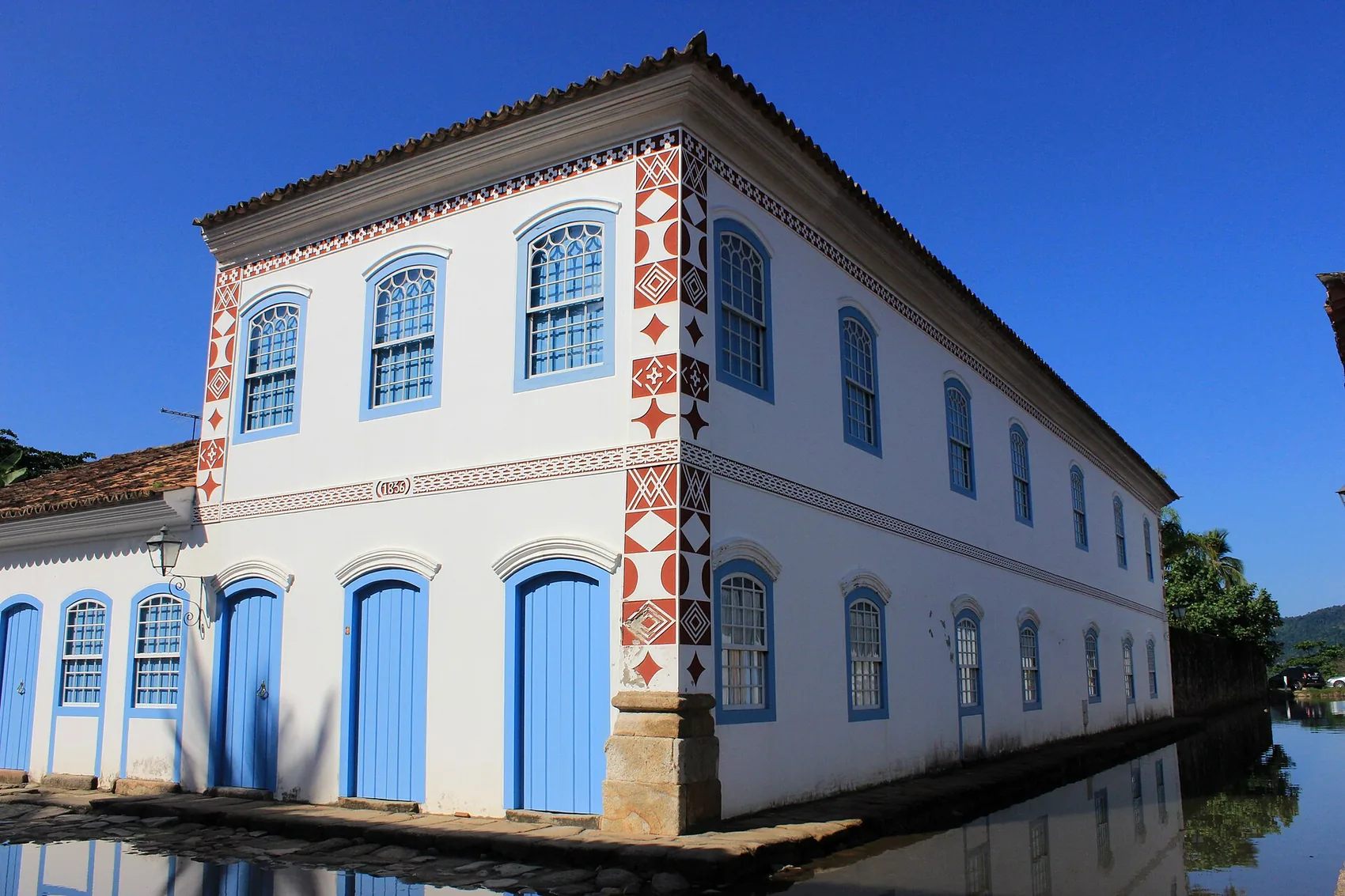
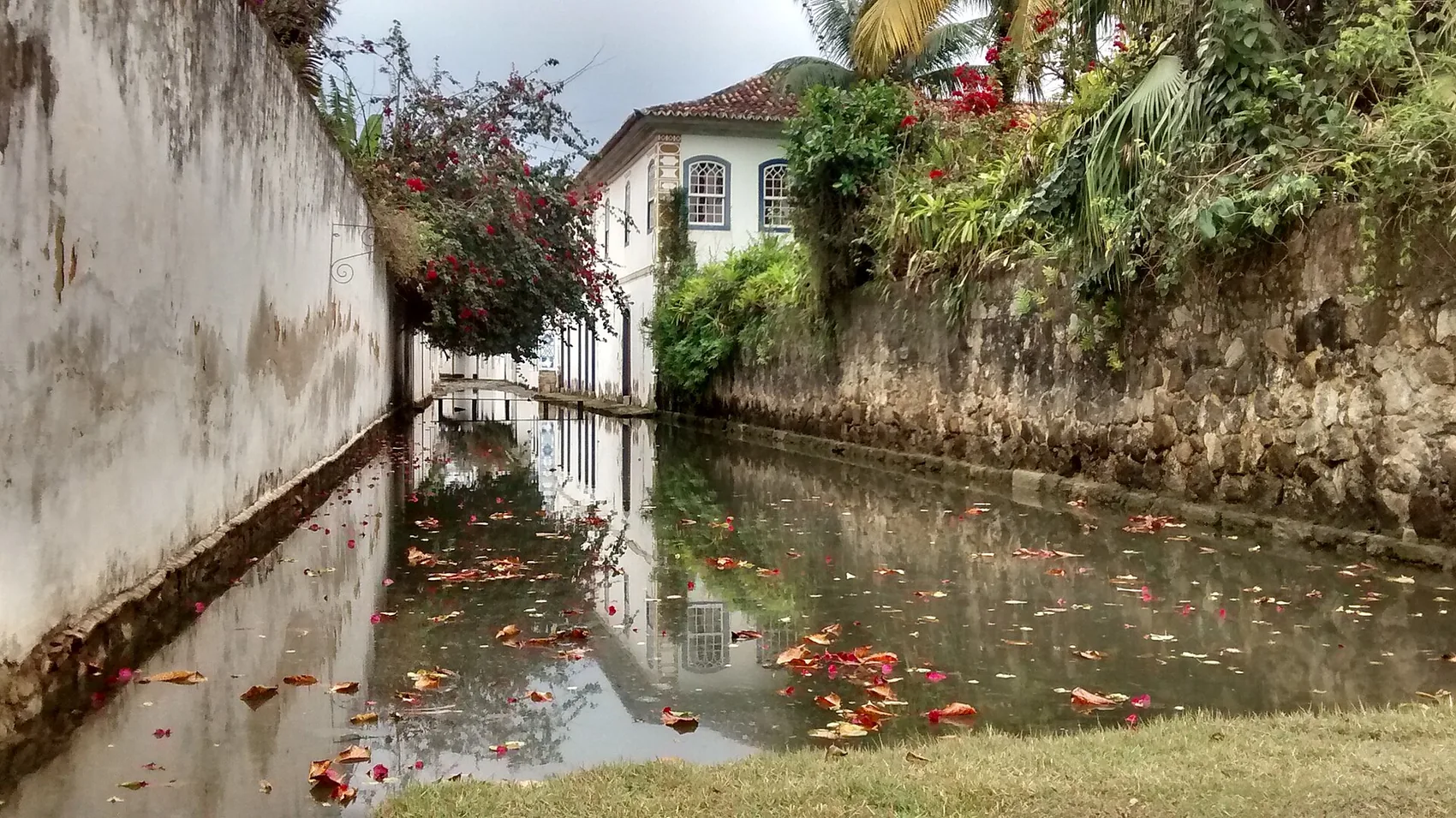
Paraty's streets are made of large, irregular stones set deliberately unlevel, a colonial design that let the sea wash through on the highest tides. They are beautiful and they are genuinely uneven, and they do not get easier after two caipirinhas. Wear flat shoes with some grip and leave the smooth soles and high heels at the chalet. Watch your footing on the walk between bars, especially where a street dips toward the water. More visitors come to grief on the stones than on anything else in town.
Pace, water and the heat
Cachaça is stronger than it tastes in a well-balanced caipirinha, and the coastal heat and humidity speed everything up. Order a glass of water alongside your drinks, use the fresh juices as a break, and eat as you go. Aim to enjoy three or four good drinks over a long evening rather than race through twice that. The tasting rooms exist precisely so you can appreciate a spirit in small measures rather than large ones, and that is the spirit to bring to the whole night.
The single most useful rule: sort out how you are getting home before the last drink, not after. It is much easier to arrange a ride with a clear head at ten than a fuzzy one at one, and it removes the only real pressure from the end of the night.
Getting home when the cars are banned
Because the historic centre is closed to traffic, you walk out to its edge to find a ride. Taxis and app cars, mainly Uber and the local equivalents, work the ranks around the perimeter, but they thin out noticeably after midnight, and more so if it is raining or the town is quiet out of season. If you are staying outside the centre, up in the hills or along a quiet road, do not assume a car will be waiting when you are ready. Arrange your return earlier in the evening, or ask the bar to call one for you; staff do it all the time. And whatever you do, never plan to drive yourself after a tasting. For the full picture of taxis, apps and the walk-in geography, see our guide to getting around Paraty.
The right night out for who you are
A Paraty evening flexes to fit almost anyone, and it is worth knowing which version is yours.
For couples, the early bossa-nova hours at a candlelit table on the cobbles are about as romantic as a night out gets, and there is no need to push past them into the loud rooms unless you want to. For a group of friends, the pleasure is the drift, the way you can start at one boteco and let the night carry you block to block, gathering an evening rather than booking one. Solo travellers do well here too; the bar-side stool at a music venue and the shared table at a boteco are both easy, unforced ways into a conversation, and the town at night is relaxed enough to wander alone.
Families are the one group with a bit of planning to do. The early evening in the historic centre is genuinely all-ages, with children out on the cobbles, ice cream in hand, while their parents have a first drink and the music is still gentle. As the night gets later and louder that window closes, which is the natural moment to head home. If you are travelling with children, treat the caipirinha as an early-evening pleasure rather than a late-night one, and everyone is happier for it.
Coming from São Paulo, Rio, or abroad
Where you have travelled from changes the practicalities more than the pleasure, and a little foresight smooths the edges.
If you have driven down from Rio or over from São Paulo, the single most important thing is that the night out and the car do not mix. Paraty is reached by winding coastal and mountain roads that are no place for a driver who has been tasting cachaça, and the old centre is car-free anyway, so park once when you arrive and leave it parked. Plan on walking and local rides for the whole of your stay. Both cities are close enough that people come for a weekend, which means the town is busiest and the bars fullest on Friday and Saturday nights; a midweek visit trades some of the buzz for more room and easier tables.
If you have come from abroad, a few things are worth knowing going in. Brazilian evenings run late, so do not turn up to an empty bar at seven and conclude the town is dead; it fills after nine. Cards and Pix are widely accepted but small cash is still useful for the tiniest bars and the music charge. And the caipirinha you will drink here, made with a fresh lime and a good local spirit in a cachaça town, is a considerable step up from the version you may have met at home. Order the classic first and let it recalibrate your sense of the drink. If you want to understand why this particular town is soaked in cachaça in the first place, the story runs through our history of Paraty, and the daytime version of the same subject is in the distilleries guide.
The place you come back to
Here is the part that turns a good night into an easy one. We host at a hillside chalet a short drive above town, with an infinity pool and a deck that looks out over the Bay of Paraty, Angra dos Reis and Ilha Grande all at once. The reason it matters to this subject is straightforward: the best nights out are the ones you do not have to worry about ending. When the caipirinhas are done and the samba has wound down, you are a short, pre-arranged ride from a quiet room and a pool with a view, rather than a long uncertain journey from somewhere loud.
There is a particular pleasure in coming back up the hill after a night in the old centre, the town's lights spread out below, and slipping into the water under the stars before bed. And there is a matching one the next morning, when a slow swim and a long look at the bay is a far better recovery than an alarm clock. If that is the shape of trip you are after, have a look at the chalet itself, browse what there is to do by day on our explore pages, and when you are ready to talk dates, get in touch. The night out is yours to find by ear. The soft landing afterward is the part we take care of.
A last word, the one we always end on with departing guests. The measure of a Paraty night is not how many bars you counted or how late you stayed. It is whether you slowed down enough to let the town set the pace, followed the music instead of a map, drank something made with care instead of something poured for tourists, and got home safe and unhurried. Do that, and a night out among the cachaça bars in Paraty becomes one of the things you talk about long after the tan has faded. That is the whole game, and it is a gentle one.
Come stay above the bay
Chalé Bel Air sits on the ridge that looks over everything in this guide. Tell us your dates and what kind of trip you are after — we answer personally.
Ask about your datesFrequently asked questions
Where are the best cachaça bars in Paraty?
The cachaça bars cluster in the historic centre, thickest around the main square and the streets that run toward the waterfront. Rather than chase a single name, walk the pedestrian grid after dinner and pick by feel: a candlelit table on the cobbles, a shelf of local bottles behind the bar, and music you like. The good ones are easy to find on foot in twenty minutes of wandering.
What is a caipirinha made of?
A proper caipirinha is only three things: cachaça, fresh lime and sugar, muddled together over ice. The lime is cut into wedges and pressed with the sugar so the oils in the peel come through, then the cachaça goes in. There is no soda, no juice and no bottled mix in the real version. If a bar makes it any other way, it is not a caipirinha.
What is the difference between a caipirinha and a caipiroska?
A caipirinha is made with cachaça, Brazil's sugarcane spirit. Swap the cachaça for vodka and it becomes a caipiroska; swap in whatever ripe fruit is around instead of, or alongside, the lime and it becomes a caipifruta. All three use the same lime-and-sugar base. In Paraty, where cachaça is the local industry, the caipirinha is the one to order.
Is Paraty nightlife safe for tourists?
The historic centre at night is well-walked, well-lit by lantern and generally relaxed. The real hazards are the uneven cobblestones underfoot and losing track of how many caipirinhas you have had, in that order. Keep valuables close as you would anywhere, wear flat shoes with grip, and sort out your ride home before the last round rather than after.
When is the Paraty cachaça festival?
Paraty's cachaça festival, the Festival da Cachaça, Cultura e Sabores, is held every August in the historic centre, with tasting tents from the regional distilleries, live music and food over several days. It has run since the early 1980s. Exact dates shift from year to year, so check the current schedule if you want to plan a trip around it.
Do Paraty bars charge a cover for live music?
Often, yes. Bars with live musicians usually add a small couvert artístico, a per-person music charge, to the bill, and it is normal and worth it. Ask before you sit down if you would rather know. Tables closest to the band sometimes carry the charge while a spot at the bar does not, so you have a choice.
How do I get home from the historic centre at night?
Cars are banned from the old grid, so you walk out to the edge and pick up a taxi or an app car from there. Drivers thin out after midnight, so if you are staying outside town, in the hills or up a quiet road, it is smart to arrange your return earlier in the evening or ask the bar to call one for you. Never plan on driving yourself after a tasting.


.jpg)

