Paraty is a UNESCO Creative City of Gastronomy, and the proof is in the ordinary things: a market stall, a cake cart, a plate of grilled fish. This is the tasting walk we send guests on, from the produce feira to the sweets you carry home.
Most people arrive in Paraty looking for the postcard: the cobbled streets, the colonial fronts, the boats on a flat blue bay. They leave talking about the food. Somewhere between the first cup of fresh sugarcane juice and the last bite of coconut sweet handed over from a cart, the town gets you. A Paraty food market is not a grand hall or a tourist attraction with a ticket booth. It is a handful of stalls near the bus terminal, a covered fish counter by the water, and a scatter of cake carts that appear when the light softens. Learn to read them and you have the whole town on a plate.
We host guests up the hill above town, and food is the thing they ask us about most. Not where the fanciest tasting menu is, but the small stuff: what is that purple fruit, why does the fish taste like that, which sweet is the one everyone means when they say cocada. Paraty has been a UNESCO Creative City of Gastronomy since the late 2010s, and the honest truth of that title is not in any single restaurant. It is in the ordinary things done well, generation after generation, because the sea, the forest and the sugarcane all happen to meet here.
This guide is the long version of the tasting walk we send people on. It moves from the produce feira to the fish stalls, through the tropical fruit worth learning, the street snacks, the seafood cooked the local way, the doces you carry home, and the banana-and-cane thread that ties it all together. At the end there is a self-guided route you can follow at your own pace, with a swim back at the chalet waiting for you when the afternoon heat wins. Take it slowly. This is not a food scene you conquer; it is one you graze.
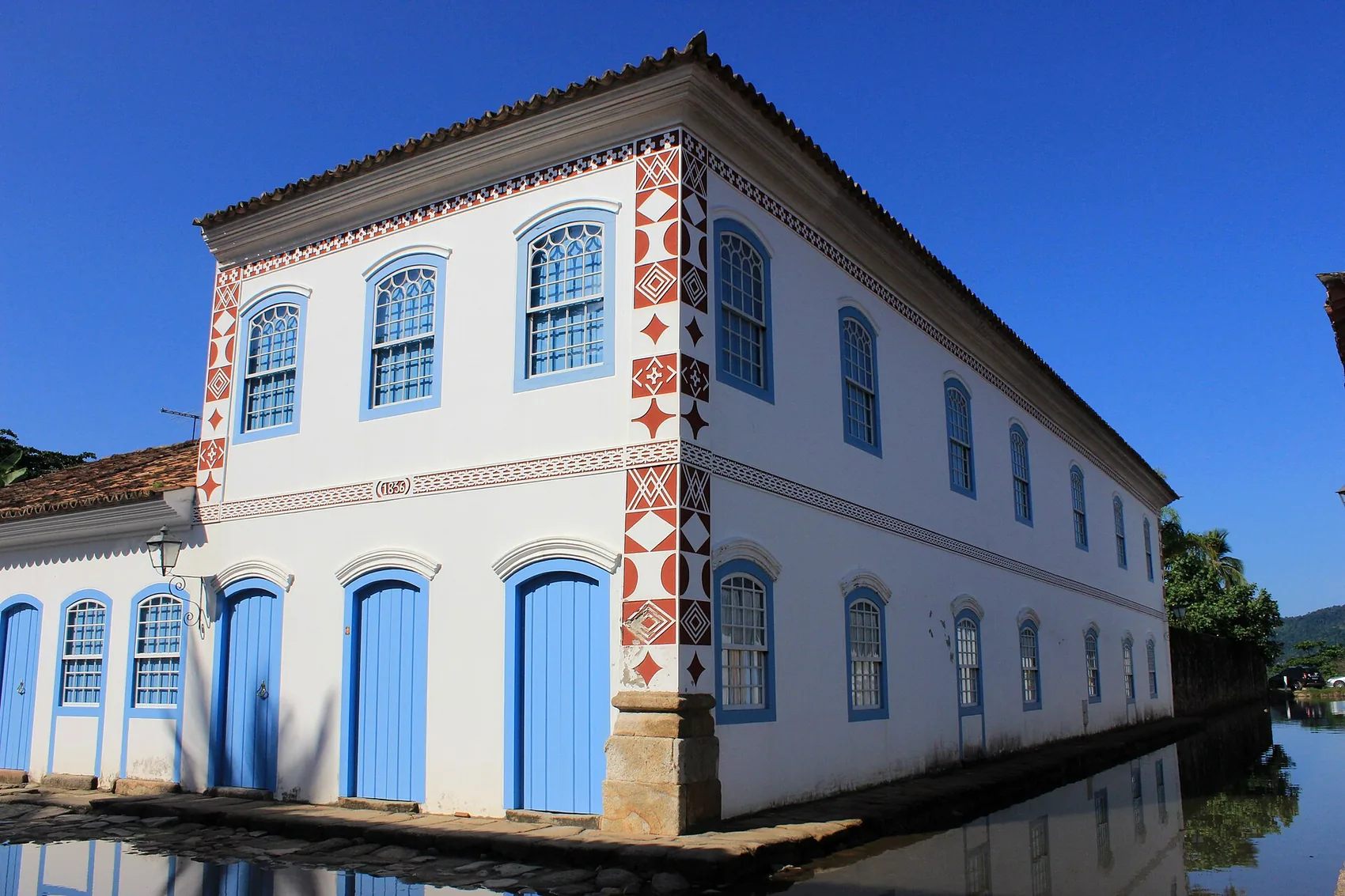
Why Paraty tastes the way it does
Every good food town is really a piece of geography you can eat, and Paraty is a clean example. Three ingredients meet here that rarely sit together. There is the sea, which gives up fish and shellfish daily to the boats that still work the bay. There is the Atlantic forest of the Serra da Bocaina rising straight up behind town, thick with fruit, hearts of palm and the streams that feed the cane fields. And there is sugarcane itself, planted here since the colonial period and turned into cachaca in small copper stills that never really stopped running.
Layer the people on top of the land and the plate makes sense. Indigenous Guarani knowledge of cassava, fish and forest fruit sits underneath everything. Portuguese settlers brought the sweet tooth, the ovens and the habit of preserving fruit in sugar. Enslaved and freed African communities shaped the seasoning, the one-pot cooking and dishes built on beans and banana. You taste all three at once in something as plain as pacoca de banana da terra, a savoury mash of plantain and cassava flour, or a plate of farofa alongside a fish.
That is what the gastronomy title is really pointing at. Not novelty, but continuity. If you want the historical spine behind all of it, our history of Paraty lays out how the gold road, the port and the cane economy built the town you are eating in. For now, the useful thing to hold onto is this: nearly every good thing you put in your mouth here started within a few miles of where you are standing.
The Paraty food market: where to start
Begin with the produce. The town's open-air feira sets up on the edge of the historic centre, near the bus terminal, on a rhythm that runs midweek and toward the weekend. This is the real Paraty food market, and it is where locals actually shop, which is the whole point. Get there in the morning. The fruit is at its brightest, the fish has just landed, and the vendors still have the patience to explain what you are looking at instead of packing up in the heat.
Close to the water sits the covered municipal market and the fish stalls, which are a slightly different animal. The feira is farmers and smallholders; the fish counter is the catch of the day laid out on ice, with someone happy to clean and fillet whatever you point at. Between the two you can assemble an entire meal without setting foot in a shop, which is exactly what we do when guests want to cook up at the house.
What is in season
Brazil's seasons run opposite to the northern hemisphere, so plan by that. The hot, wet months from roughly December to March are peak tropical fruit: mango, banana in a dozen forms, passion fruit, and the short jabuticaba window when the little black grapes cling straight to the tree trunk. The cooler, drier stretch from about June to September brings citrus, firmer produce and, not coincidentally, the cane harvest that feeds the distilleries. If you are trying to line your trip up with the best eating, our guide to the best time to visit Paraty breaks the calendar down properly, weather and crowds included.
How to shop like a local
A few habits make the market easier. Bring cash in small notes, because many stalls do not take cards and nobody enjoys breaking a large bill first thing. Bring a bag; you will buy more than you meant to. Ask before you handle the fruit, point if your Portuguese is thin, and do not be shy about asking for a taste, since vendors will often cut you a slice of something to make the sale. Prices are generally fair and fixed rather than a haggle, so a friendly question about what is good today gets you further than trying to knock off a coin.
Market days and hours drift with the season and the holidays. Rather than trust a listing that may be two years stale, ask a local, or just ask us the night before. We keep track of which mornings the feira and the fish stalls are actually running.
Tropical fruit worth learning
If you do one thing at the market, learn three fruits you have never met. Brazil grows things that never survive the export trip, which is exactly why they are worth trying here and nowhere else. Start with jabuticaba, a grape-sized fruit with tight black skin and sweet white flesh that grows directly on the trunk of its tree. It is in season only briefly and does not travel, so a handful eaten standing at the stall is the whole experience.
Then caju, the cashew fruit, which surprises almost everyone. The nut most people know hangs off the bottom of a soft, sweet-tart yellow-red fruit that is juiced across Brazil and rarely seen abroad because it bruises if you look at it wrong. Graviola, or soursop, is the third: a green spiky exterior hiding creamy, custard-like flesh with a flavour somewhere between pineapple and pear. You will meet it most often as a juice or a sorbet.
Beyond the headliners, keep an eye out for local turmeric, sold fresh or as a bright dried powder, which Paraty grows and which turns up in the fish stews. And do not walk past the caldo de cana, the fresh-pressed sugarcane juice run through a hand-cranked or motorised press right in front of you, usually with a squeeze of lime or a knob of ginger. It is the single most refreshing thing on a hot morning and, appropriately for this town, it is the same juice that becomes cachaca once it ferments.
Brazil grows things that never survive the export trip, which is exactly why they are worth trying here and nowhere else.
Street snacks and the salgados
Paraty is not a street-food capital in the way Bangkok or Mexico City is, and it would be dishonest to sell it as one. What it has is a strong culture of salgados, the savoury snacks that Brazilians graze on all day, plus a few sweet counterparts. Learn the short list and you will never be hungry between meals.
Pastel comes first: a thin pastry pocket deep-fried to a blistered crisp, stuffed with cheese, minced beef, hearts of palm or, near the water, prawns. Coxinha is the teardrop-shaped one, shredded chicken wrapped in a soft dough and fried golden, and it is the snack Brazilian children grow up on. Pao de queijo, the little cheese-dough balls made with cassava starch, are naturally gluten-free, chewy and warm, and impossible to eat just one of.
Then tapioca, which deserves its own moment. A crepe made from hydrated cassava starch cooked on a hot griddle until it sets, then folded around a filling. Savoury versions take cheese, ham or hearts of palm; sweet ones take banana, coconut or the guava-and-cheese combination Brazilians call Romeu e Julieta. It is naturally grain-free, quick and endlessly adjustable, which makes it a lifesaver for anyone travelling with dietary limits or fussy kids.
Round it out with acai, served here closer to the Amazonian original than the sugary bowls sold abroad, a thick frozen pulp topped with granola and banana. On a hot afternoon it is half snack, half air-conditioning. None of these will occupy more than a few coins or a few minutes, which is the point. They are the connective tissue of a day spent eating your way around town.
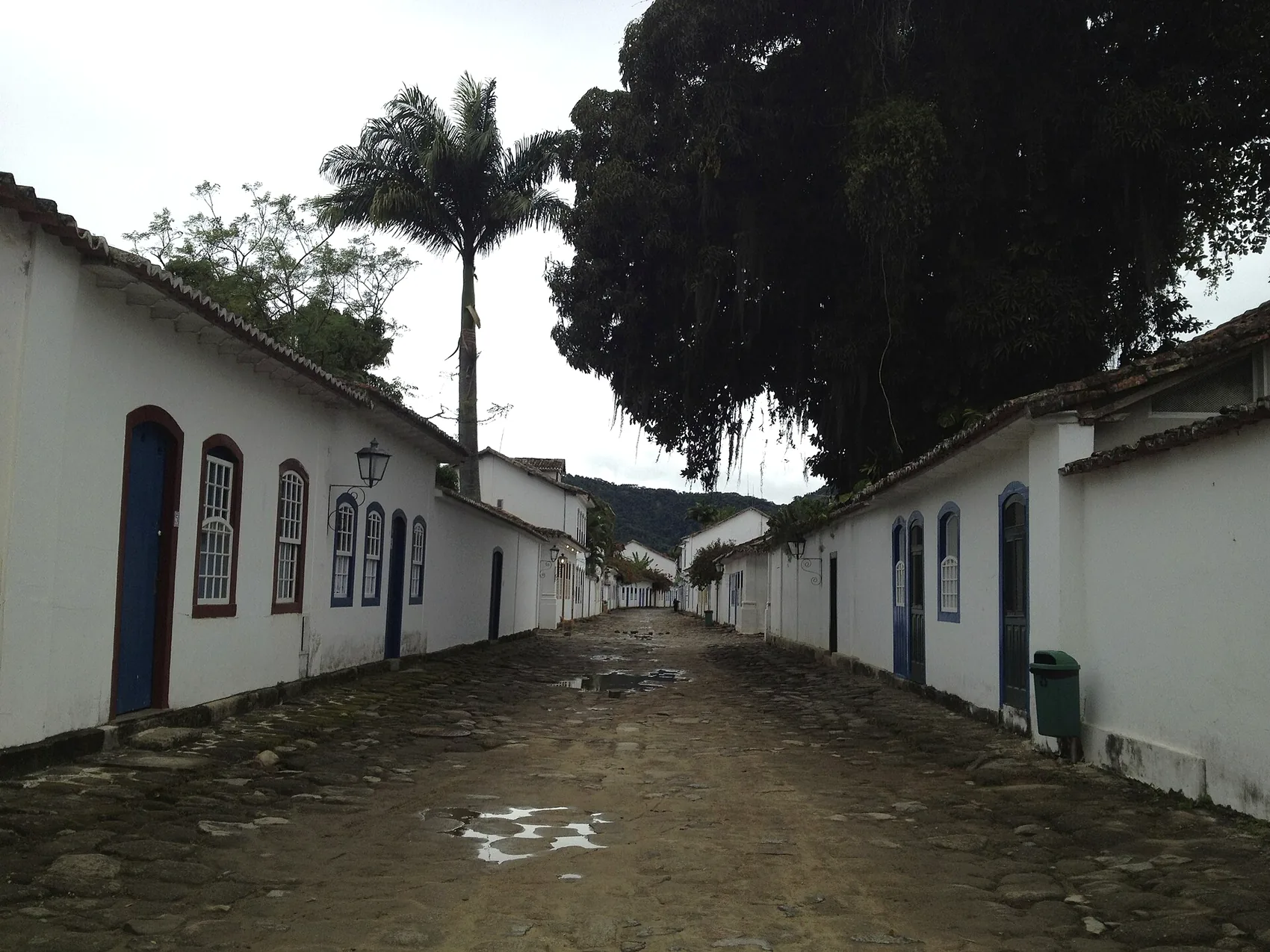
Seafood, cooked the local way
This is the heart of it. Paraty sits on a working bay, and the seafood here is simply better than it has any right to be, because the distance from boat to plate is measured in hours, not days. You do not need us to name a restaurant; you need to know what to order. For the fuller sit-down picture, our guide on where to eat in Paraty covers the range from harbour shacks to the town's more ambitious kitchens. Here we are after the dishes themselves.
The one everyone should try is moqueca, a seafood stew built on coconut milk, tomato, onion, coriander and dende palm oil, cooked slowly until the fish is just set and the broth has gone rich and orange. It arrives bubbling in a clay pot with rice, farofa and pirao, a savoury gravy thickened with cassava flour, on the side. Order it for two people at least; it is generous, and it is the dish that best sums up what indigenous, Portuguese and African cooking made together on this coast.
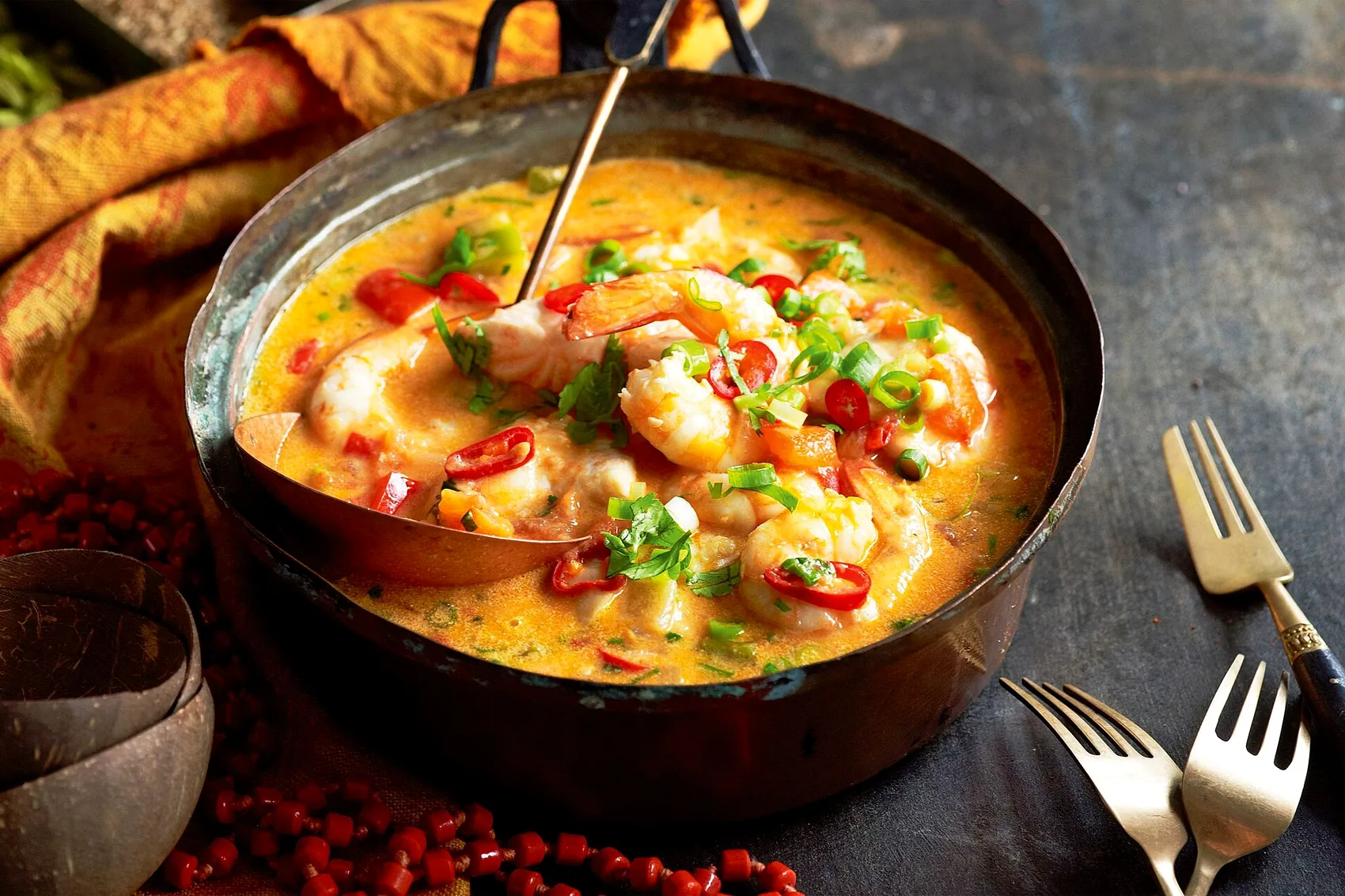
A word on how moqueca is cooked, because it varies across Brazil and the difference is worth knowing. The version you meet on this stretch of the Rio de Janeiro coast leans toward the Bahian style, heavy on coconut milk and the red dende palm oil that gives it colour and a distinct, slightly savoury depth. Further south the sauce can be lighter and more tomato-driven. Neither is wrong; they are regional dialects of the same dish. If you have had moqueca elsewhere in Brazil and found it different, that is the reason. Order it here on its own terms and let the coconut and palm oil do their thing.
Caldeirada is its lighter cousin, a clearer seafood-and-vegetable stew closer to a Portuguese fisherman's pot, worth ordering when the coconut richness of a moqueca feels like too much in the heat. Beyond the stews, keep it simple: a whole fresh fish grilled over charcoal, dressed with nothing more than lime and salt, is often the best thing on the table. Prawns show up grilled, in that pastel, or in a garlicky sauce, and squid and octopus turn up when the boats bring them in.
Where to find it
The seafood houses cluster where you would expect: at the harbour end of the historic centre, along the waterfront, and out at the fishing villages around the bay. The ones with the freshest fish are often the plainest, run by families who have worked the water for generations, so do not be put off by plastic chairs and a short menu. A short menu usually means they cook only what came in that morning, which is exactly what you want. If a boat day is on your calendar, many of the schooner trips build in a stop at a beach kitchen or an island restaurant; our boat days page covers how those work.
The doces: Paraty's sweets
Now the part guests come home talking about. Paraty's sweets are a colonial inheritance, born when Portuguese habits of preserving fruit in sugar met an abundance of coconut, banana and cane. They are sold from small shops in the old town and, better, from cake carts that appear in the late afternoon along the cobbles. Follow your nose and a little cash goes a long way.
Cocada is the one to start with. Freshly grated coconut cooked down with sugar, and sometimes condensed milk, it comes in a firm cut version and a soft, spoonable one, plain white or darkened with burnt sugar. Vendors sell it in slabs wrapped in paper, and the good stuff tastes of actual coconut rather than just sweetness. Then bananada, a set banana paste with the texture of a firm jam, cut into blocks. It carries a small history: it was created in the colonial period as a way to use up bananas already too ripe to eat, which is the kind of thrift that turns into tradition.
Look also for pacoca de banana da terra, which confusingly shares a name with the peanut sweet but here means a plantain-and-cassava mixture that swings savoury-sweet, and bolo de tapioca, a dense, pale cake of cassava that eats more like a pudding, often finished with condensed milk. And everywhere, the Romeu e Julieta pairing of firm guava paste with mild white cheese, the salty-sweet contrast that Brazilians treat as a national truth. A wet, rainy afternoon is a fine excuse to work through all of them with a coffee; we keep a longer list of indoor pleasures in the rainy day in Paraty guide.
Many of the best doces travel well. Bananada, firm cocada and guava paste survive a suitcase happily, which makes them the smartest edible souvenir to carry back to Rio, Sao Paulo or home. Buy an extra block; you will wish you had.
Banana and cane: the thread through everything
Two crops run through this whole town like a signature, and it is worth pulling them out on their own. Banana first. Paraty grows it in several varieties, and it is not just a fruit here but an ingredient with jobs to do. Banana da terra, the plantain type, is cooked savoury in stews and mashes. Ripe dessert bananas become bananada, tapioca fillings and cakes. Fried banana turns up alongside fish. Once you start noticing it, you see banana in half of what you eat.
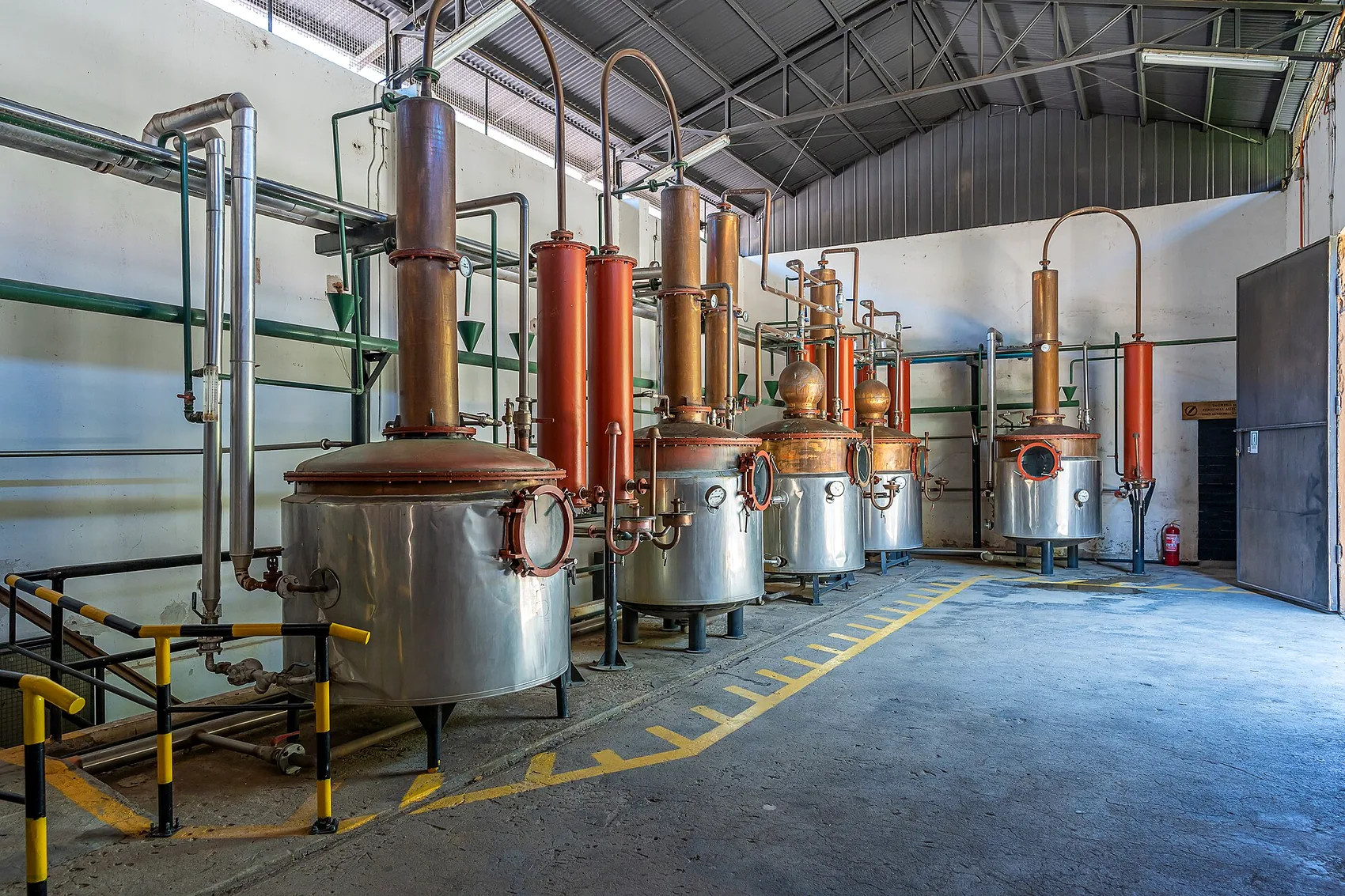
Cane is the other. Sugarcane built the colonial economy here and never left, and its most famous product is cachaca, the spirit distilled from fresh-pressed cane juice in small alambiques in the hills behind town. It reaches your table three ways. As the kick in a caipirinha, muddled with lime and sugar over ice, the drink that needs no introduction. As a slow sipping spirit when it has spent years in wood, closer to a fine rum or whisky than anything you mix. And infused into a local Gabriela-style liqueur, spiced with clove and cinnamon, which turns a caipirinha into something sweeter and more perfumed.
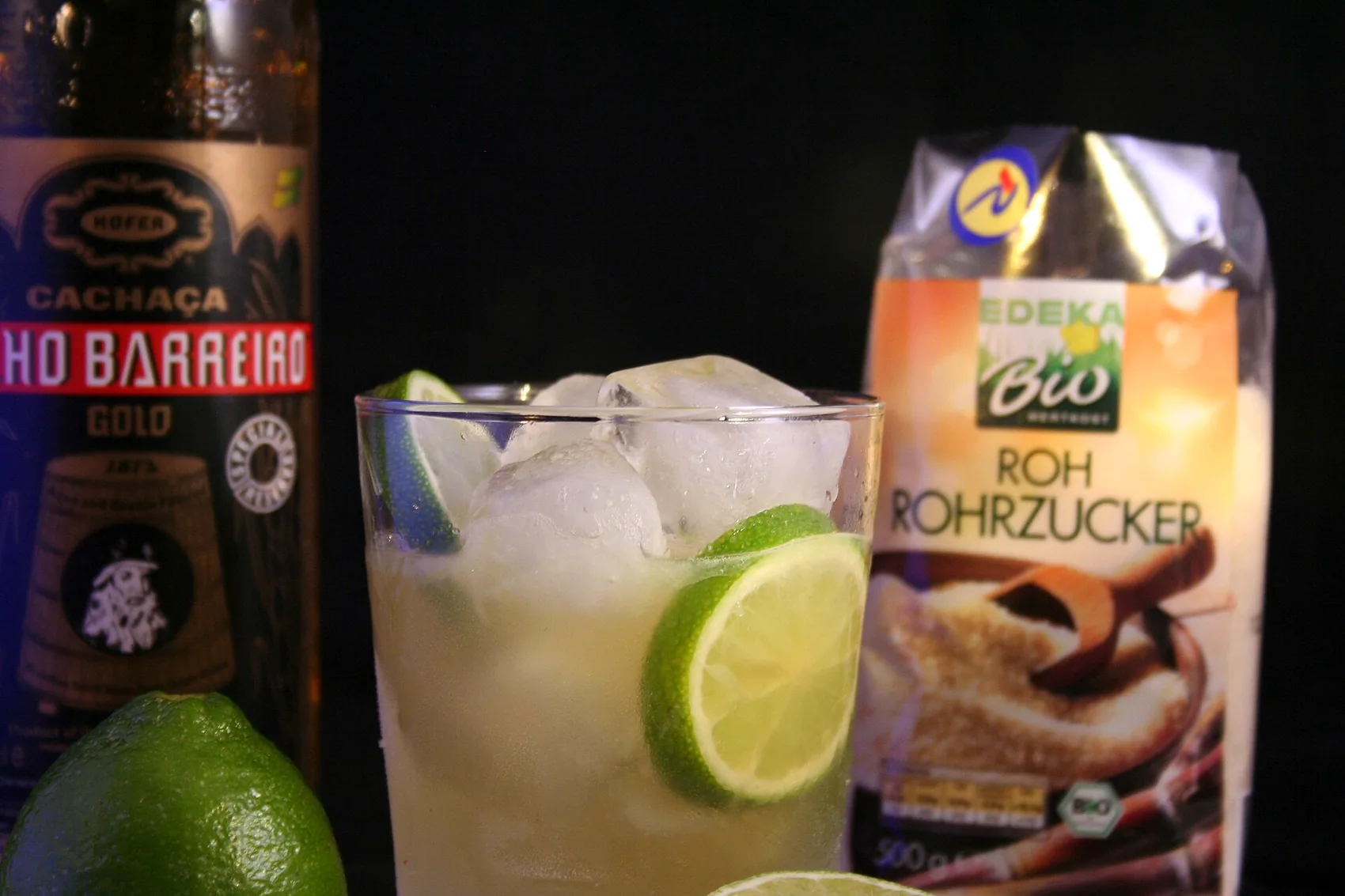
A cachaca tasting is one of the genuine pleasures of a stay here, and it deserves more room than we can give it in a food guide. We wrote a whole piece on the cachaca distilleries of Paraty: how a tasting works, how to tell a grassy white spirit from a barrel-aged sipper, and how to visit without anyone having to drive back down the hill. Read it if the cane thread catches you, which it usually does.
Forest and farm: the ingredients behind the dishes
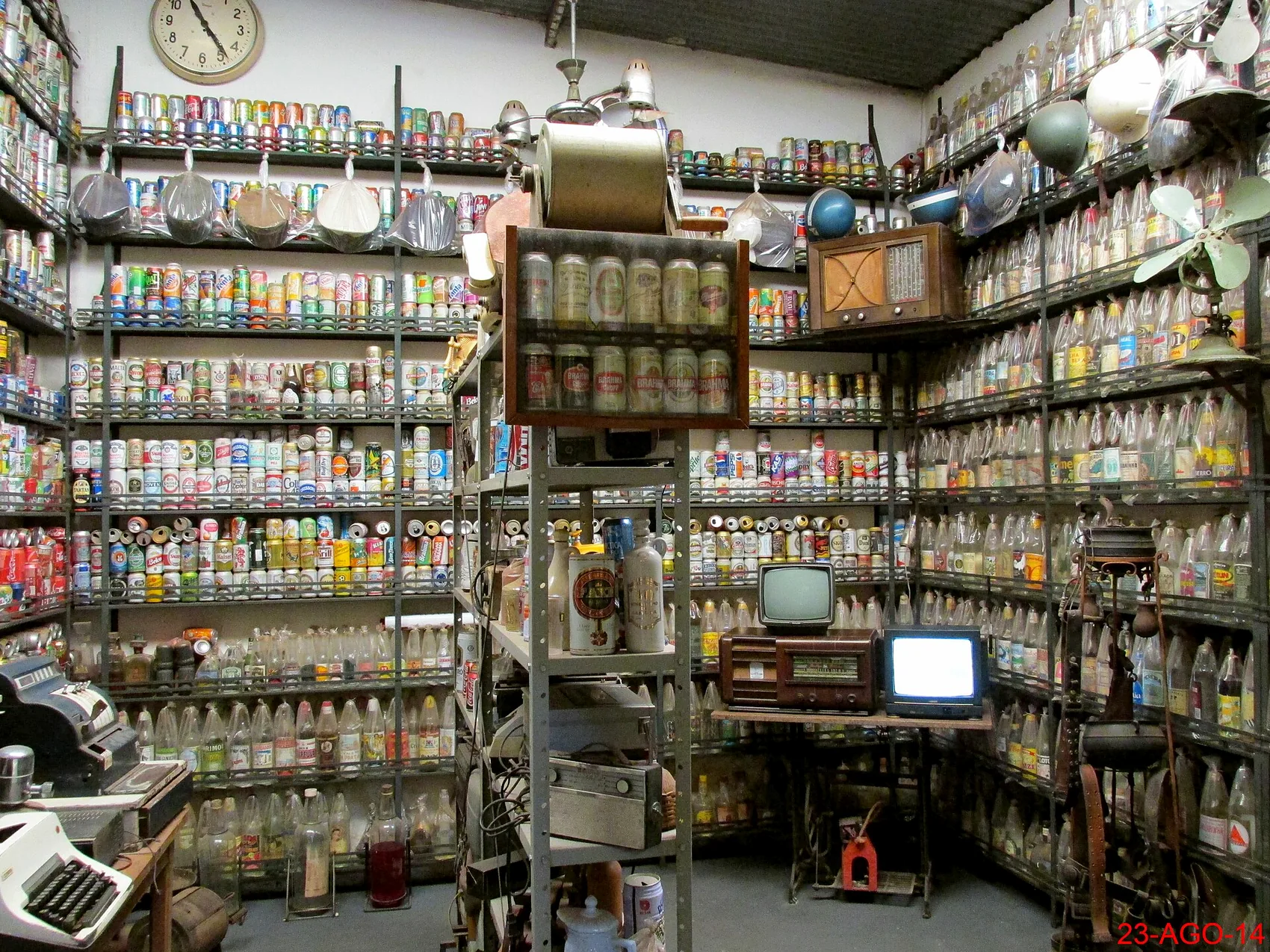
Behind the finished plates sits a pantry of ingredients that come straight off the surrounding land, and knowing a few of them makes the menus read differently. Palmito, the heart of palm, is the big one: tender, pale and mild, it fills pasteis and tapiocas, tops pizzas and turns up braised as a side. Much of the good stuff here is farmed rather than cut wild, which matters, because wild palm harvesting has hammered the Atlantic forest elsewhere. Ask, and the better kitchens will happily tell you theirs is cultivated.
Cassava, called mandioca or aipim depending who you ask, is the quiet backbone of the whole cuisine. It becomes the tapioca starch for crepes, the flour for farofa and pirao, the chewy base of pao de queijo, and a boiled or fried side in its own right. It is the ingredient that ties the indigenous kitchen to the modern one, and it is why so much of Paraty's food is naturally free of wheat. Alongside it, look for local honey from the stingless native bees, small-batch and floral, sold in jars at the market, and the fresh and dried turmeric that colours the fish.
Then there are the drinks beyond cachaca. Fresh fruit juices are a category unto themselves here, pressed from whatever is ripe, and worth ordering by the unfamiliar name rather than defaulting to orange. Coconut water comes straight from the green nut, hacked open at a stall and drunk through a straw, the best rehydration on a hot beach day. Brazilian coffee, small, strong and usually sweet, is how a meal ends here. If a slow morning over pastries and good coffee appeals more than an early market run, that is a fine way to spend a day too.
A self-guided tasting walk
Here is how to string it together into a single, unhurried day on foot. The historic centre is flat and compact, so you can do all of this without a car, and you should, because cachaca and cobblestones do not mix well with driving. Wear shoes you do not mind on uneven stone, bring cash, and pace yourself. This is a graze, not a feast.
Morning: the market and the fruit
Start at the produce feira not long after it opens, while it is cool and full. Buy a bag of whatever is in season to eat as you go, and hunt down the three fruits from earlier: jabuticaba if the window is open, caju, graviola. Get a glass of caldo de cana pressed in front of you. Wander to the covered market and the fish stalls to see what came in, even if you are not buying, because it tells you what to order for lunch. This is also the moment to buy the doces that keep, before the afternoon crowds and the heat.
Midday: snacks, then seafood
Work through the salgados near the square as a warm-up: a pastel, a coxinha to share, a bag of pao de queijo. Then sit down properly at the harbour end for the main event, a moqueca for the table or a whole grilled fish with lime, with a cold beer or a caipirinha. Take your time over it. Lunch is the big meal on this coast, and a long one in the shade is part of the point.
Afternoon: sweets and a swim
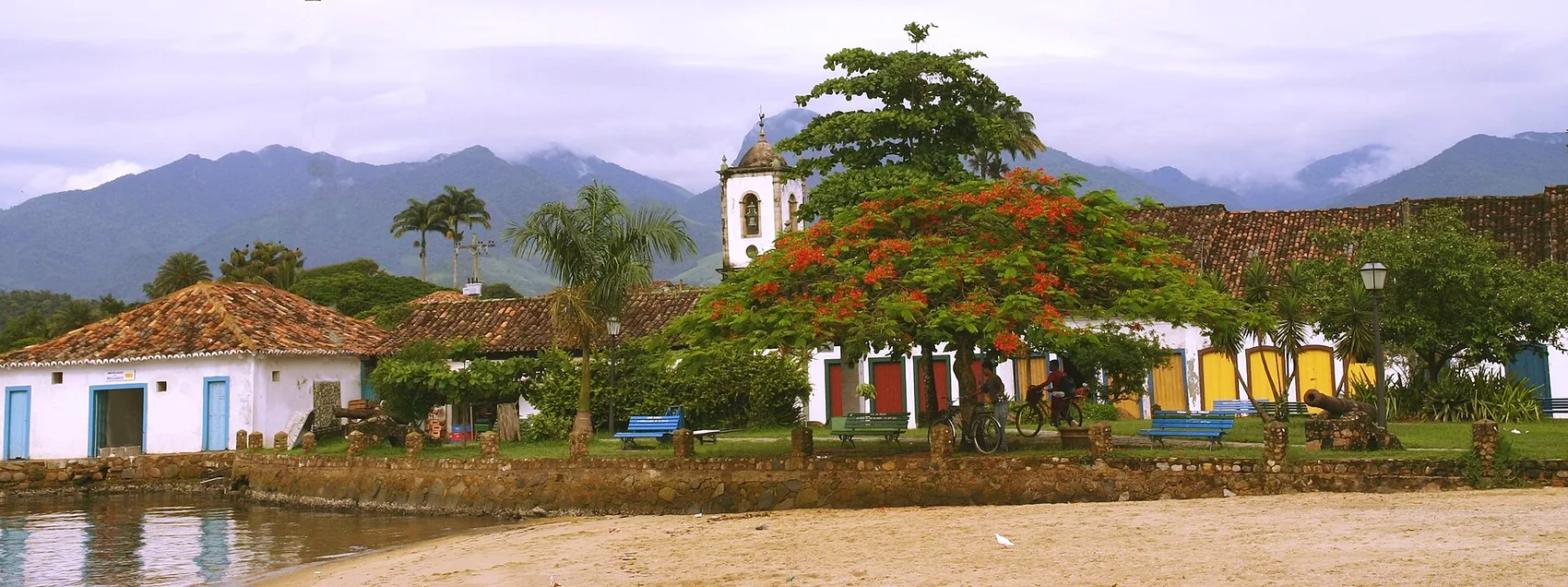
When the light softens and the cake carts come out, do a slow loop of the cobbles for cocada and bananada, or duck into a cafe for a tapioca and a coffee. And then, when the heat has properly won, this is where being based above town earns its keep. A short drive up the hill and you are back at the chalet, into the infinity pool, looking out over the triple view of the Bay of Paraty, Angra dos Reis and Ilha Grande with a cold drink and a block of guava paste. The town is a wonderful place to eat; it is a better one when you have somewhere quiet and high to retreat to afterward. That balance is the whole idea of the chalet.
Practical notes for eating in Paraty
A handful of things smooth the whole experience. Carry cash, especially for the market and the carts, even though most sit-down restaurants take cards. Meal times run late by northern-hemisphere habits: lunch stretches past two, and dinner rarely gets going before eight. Tap water is best avoided in favour of bottled or filtered, which is easy since fresh juice is everywhere anyway. Portions are generous and often built to share, so order fewer plates than instinct tells you and add more if you are still hungry.
Dietary needs are handled better than you might fear. Vegetarians eat well off the market, the tapioca stalls, the bean dishes and the cheese snacks, and most kitchens will adapt a plate without fuss. Coeliacs have an unexpected ally in cassava, since tapioca and pao de queijo are naturally free of wheat, though it is always worth confirming a specific kitchen's practice. Travelling with children is straightforward here; the sweets, the juice, the cheese bread and the calm pace of a Paraty meal suit families, and we say more about that in the Paraty with kids guide.
If you are arriving from Sao Paulo or Rio de Janeiro, you will notice the food leans lighter and more coastal than the meatier, heartier cooking of the big cities, so lean into the fish rather than hunting for a rodizio. And for visitors coming from abroad, the honest advice is to eat where the menus are short and in Portuguese; the language barrier at those places is worth the fresher plate. Getting to any of it is easy on foot once you are in town, though the practicalities of arriving and parking are their own subject, covered in getting around.
Festivals worth timing your trip around
Paraty runs a calendar of festivals, and several are, at heart, about food and drink. If you can flex your dates, it is worth aiming for one. The town's cachaca festival, held in the historic centre and usually in the second half of the year, fills the streets with tasting tents, music and food stalls, and it is the single best time to understand the spirit and the culture around it. The religious Festa do Divino, tied to the Catholic calendar in the weeks after Easter, is a much older tradition with processions, music and communal meals, and it shows Paraty's food in its ceremonial dress.
FLIP, the international literary festival, is the town's most famous event, and while it is about books rather than food, the whole centre turns into a moving feast of pop-up bars, cake carts and packed restaurants for its duration. It also fills every bed in town, so it cuts both ways. We keep a running rundown of what happens when in the Paraty festivals and events guide, which is the place to check before you lock in dates. Time it right and the food tour in this article simply gets louder, longer and more fun, with extra stalls, more music and the whole town treating the street as one long table.
Bring the market home: cooking at the chalet
For all the pleasure of eating out, some of our guests' happiest meals happen up the hill, cooked from a market haul. This is where a self-catering base changes the trip. You can walk the feira in the morning, have the fish counter clean a whole fish for you, buy the coconut milk, the lime, the coriander and the palm oil, and cook a moqueca in your own kitchen that evening, eating it on the deck as the bay goes gold. There is a specific joy in it that no restaurant quite matches: you chose the fish, you watched it come off the boat, and now it is on your table with the view doing the rest of the work.
Even if you never turn on the stove, the market feeds a stay in smaller ways. A bowl of tropical fruit at breakfast by the pool. A block of cocada for the afternoon. Cold beers and a bottle of aged cachaca in the fridge for after a day on the water. Because the chalet sits a short drive above town, you get both halves of the deal: the buzz and the eating of the historic centre when you want it, and the quiet, the pool and the triple view when you have had your fill of crowds. It is the pattern nearly every guest falls into by day two.
If you are still weighing where to base yourself for a food-forward trip, the ultimate guide to Paraty puts the whole town in context, and a three-day Paraty itinerary shows how a market morning, a boat day and a slow dinner fit together without rushing. However you plan it, leave room in the schedule, and in the suitcase, for the food. It is the part of Paraty that keeps calling people back.
A short glossary for the market
Finally, a cheat sheet to carry in your pocket. Feira is the open-air produce market; mercado is the covered one. Caldo de cana is fresh sugarcane juice. Salgados are savoury snacks; doces are sweets. Pastel, coxinha and pao de queijo are the snack trio to know. Moqueca and caldeirada are the two seafood stews. Farofa is toasted cassava flour, pirao the gravy made from it. Cocada is the coconut sweet, bananada the banana one, and Romeu e Julieta the guava-and-cheese pairing. Cachaca is the cane spirit; a caipirinha is what most of it becomes. Learn those dozen words and you can order your way through a full day without ever reaching for a translation app. Vendors warm to the effort, and a mangled attempt in Portuguese almost always earns you a better slice, a friendlier price and, more than once, a tip about what came off the boat that morning.
That is the tour. Not a checklist to tick off, but a way of moving through a town that happens to be very good at feeding people, from the first cane juice to the last block of guava paste carried up the hill. When you are ready to plan the trip around it, or you just want to know which morning the feira is running, get in touch and we will point you at the good stuff. And when you want to see how a food day fits into everything else Paraty offers, from the beaches to the boats to the waterfalls, the explore page is where the rest of it lives.
Come stay above the bay
Chalé Bel Air sits on the ridge that looks over everything in this guide. Tell us your dates and what kind of trip you are after — we answer personally.
Ask about your datesFrequently asked questions
Where is the Paraty food market and when is it open?
The town's produce feira sets up near the bus terminal on the edge of the historic centre, and the covered municipal market and fish stalls sit close to the waterfront. Market days are usually midweek and into the weekend, with mornings the busiest and freshest time to go. Days and hours shift with the season, so it is worth asking us or a local the night before rather than trusting an old listing online.
What food is Paraty known for?
Paraty's food comes from the meeting of sea, forest and sugarcane. Expect fresh fish and shellfish cooked simply or as moqueca and caldeirada, cachaca made in the hills behind town, and sweets built on coconut and banana, like cocada and bananada. The town's indigenous, Portuguese and African roots also show up in dishes such as pacoca de banana da terra and farofa.
Is Paraty good for street food?
It is good for snacks rather than a big street-food scene. Around the main square and the market you will find pastel, coxinha, pao de queijo, tapioca folded around sweet or savoury fillings, acai, and glasses of fresh-pressed sugarcane juice. These are cheap, quick and a good way to graze between meals rather than sit down.
What sweets should I try in Paraty?
Start with cocada, the coconut sweet sold in soft and firm versions, and bananada, a set banana paste that dates back to the colonial habit of using up over-ripe fruit. Look also for pacoca de banana da terra, bolo de tapioca, and the guava-and-cheese pairing called Romeu e Julieta. Cake carts and small shops in the old town carry them.
How does Paraty cachaca fit into the food?
Cachaca is Paraty's oldest industry, distilled from fresh sugarcane juice in small alambiques in the hills. You will meet it three ways: as the base of a caipirinha, as a slow sipping spirit when it is barrel-aged, and infused into the local Gabriela-style liqueur spiced with clove and cinnamon. Our separate cachaca guide covers how a tasting works.
Can I do a Paraty food tour on my own?
Yes, and a self-guided one works well because the old town is small, flat and walkable. Start at the produce market in the morning, graze the snack stalls near the square, sit down for seafood at midday, and finish with a sweet from a cake cart. We lay the whole route out in this guide so you can go at your own pace.
Is Paraty food easy for vegetarians and kids?
Both are well looked after. The market is full of fruit, cheese, tapioca and bean dishes, and most kitchens will happily leave the fish off a plate. Children tend to do well with pao de queijo, tapioca, sugarcane juice and the sweets, and portions in the seafood houses are generous enough to share.
.jpg)


.jpg)