Paraty is a fishing town first and a postcard second, and it shows at the table: boats two streets from your dinner, a clay pot of moqueca built to share, and fish that was swimming this morning. Here is what to order and how.
People arrive in Paraty for the cobblestones and the bay, and they leave talking about the fish. That order surprises almost everyone on their first trip, and it shouldn't, because this is a fishing town before it is a heritage town. The boats that supply the kitchens are tied up two streets from where you eat. The fruit on your breakfast plate grew within an hour's drive. The spirit in your evening drink was distilled in the hills you can see from the water. When you understand that, the food stops being a nice extra and becomes one of the main reasons to come.
This guide is about eating from the sea here: moqueca, Paraty seafood in all its plain and dressed-up forms, the caiçara cooking that ties it together, and the harbour fish houses where it is at its freshest. We are not going to hand you a list of restaurant names. The good rooms change hands, the great ones get booked out, and a list written today is half wrong by the time you read it on the plane. Instead we will tell you what to order, where each thing is found, and how to order it so you eat like someone who has done this before. Learn the dishes and the settings and you can walk into any room in town and eat well.
We host guests up on the ridge, a short drive above the historic centre, and after "what should we do today" the question we answer most is "where should we eat." So this is the honest version, the same thing we tell people over coffee before they head down the hill. It leans toward the sea, because that is what Paraty does best, and it assumes you would rather eat one excellent grilled fish than three mediocre things off a photo menu.
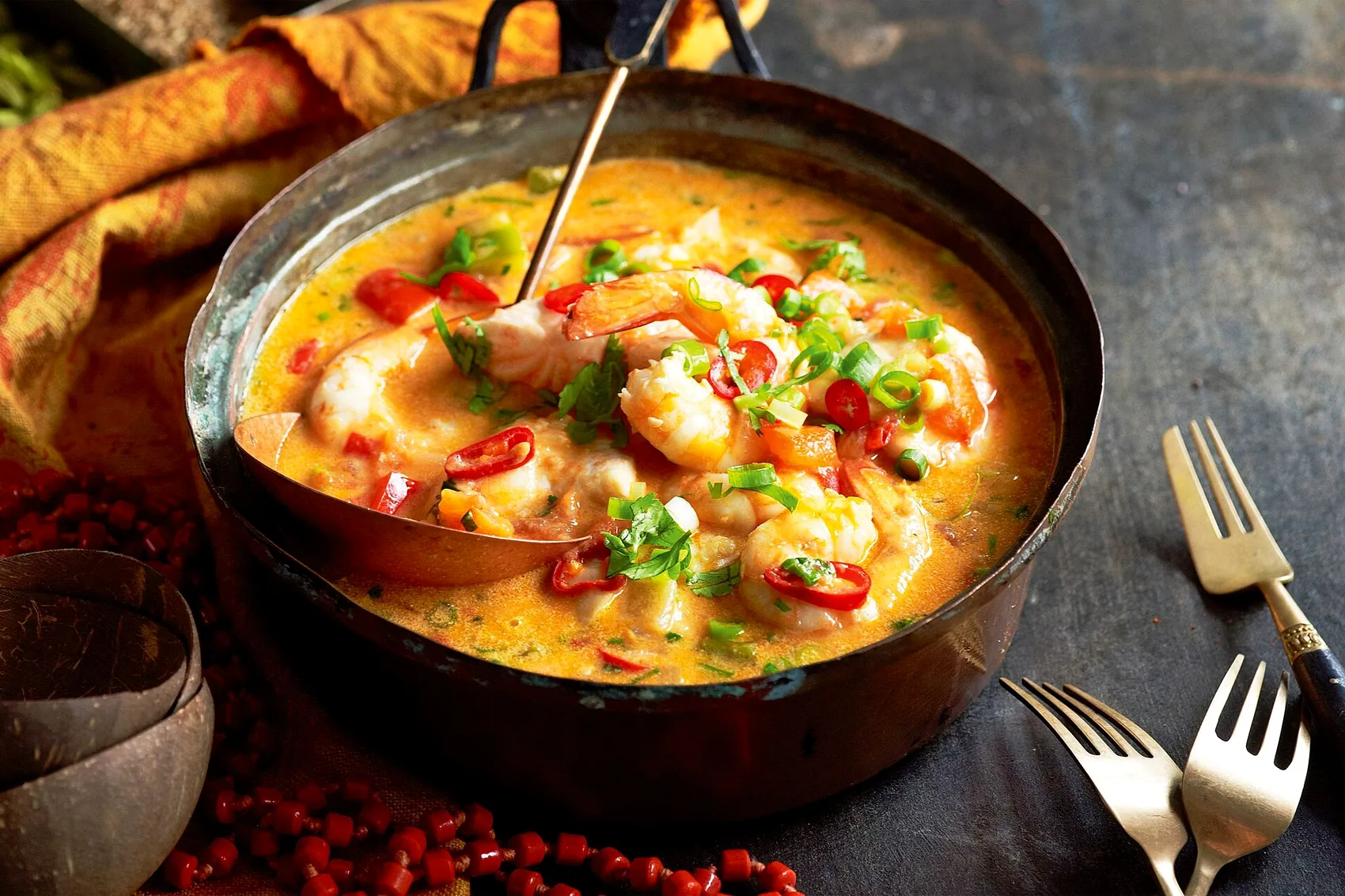
Moqueca, Paraty seafood at its centre: the dish to order first
If you eat one thing in Paraty, make it moqueca. It is the great dish of the Brazilian coast and the one most worth crossing a room for. At its simplest, moqueca is a slow-simmered seafood stew, but the version you usually meet here is the Bahian style: fish or prawns cooked gently with coconut milk, tomato, onion, garlic, a great deal of fresh coriander, lime, and a generous slug of dende, the orange-red palm oil that gives the broth its colour and a faintly smoky, nutty depth. It comes to the table still bubbling in a heavy clay pot, and the smell alone explains why people get sentimental about it.
A moqueca is almost always made for two. It is a sharing dish, and a single portion is rare, so it works as the centre of a dinner rather than a solo lunch. It arrives with a supporting cast that is half the pleasure: white rice to soak up the broth, pirão (a smooth, savoury porridge thickened with cassava flour and the cooking liquid) and farofa (toasted cassava flour, sometimes with egg or banana) to scatter on top for texture. You build each spoonful yourself, and no two are quite the same. It is not a dish you rush. Order it, then relax into a drink while it cooks; the wait is part of the ritual, not a fault in the kitchen.
Bahian versus capixaba: know the two styles
There are two great traditions of moqueca in Brazil, and it helps to know which one is in front of you. Bahian moqueca, from the northeastern state of Bahia, is the rich one: coconut milk and dende give it a deep orange colour, a creamy body and an aroma you can smell from across the room. Capixaba moqueca, from the neighbouring state of Espírito Santo, skips both the coconut and the palm oil and uses annatto for colour, so it is lighter, cleaner and more tomato-forward, and it is traditionally cooked in a black clay pot made by hand from a particular local mud. On the Costa Verde you will mostly meet the Bahian-leaning version, but the two are genuinely different dishes, and if you find the rich style heavy, the capixaba approach is worth seeking out or asking a kitchen to lean toward.
Within the Bahian family you will see the same dish built around different seafood. Moqueca de peixe uses firm white fish. Moqueca de camarão uses prawns. Many kitchens do a mixed seafood version with prawns, fish and sometimes squid or mussels, which is the one to order if you cannot decide. If you do not love coconut or strong palm oil, say so when you order. A good kitchen will not be offended, and can steer you toward a lighter fish preparation instead.
How to order moqueca well. Ask what fish is freshest today and let the kitchen choose. Order it to share, ask for extra pirão if you love it, and go easy on the couvert beforehand so you have room. It is a slow dish, so order it early and settle in with a caipirinha while it cooks. Rushing a moqueca is missing the point of it.
What the boats bring in: the day's catch
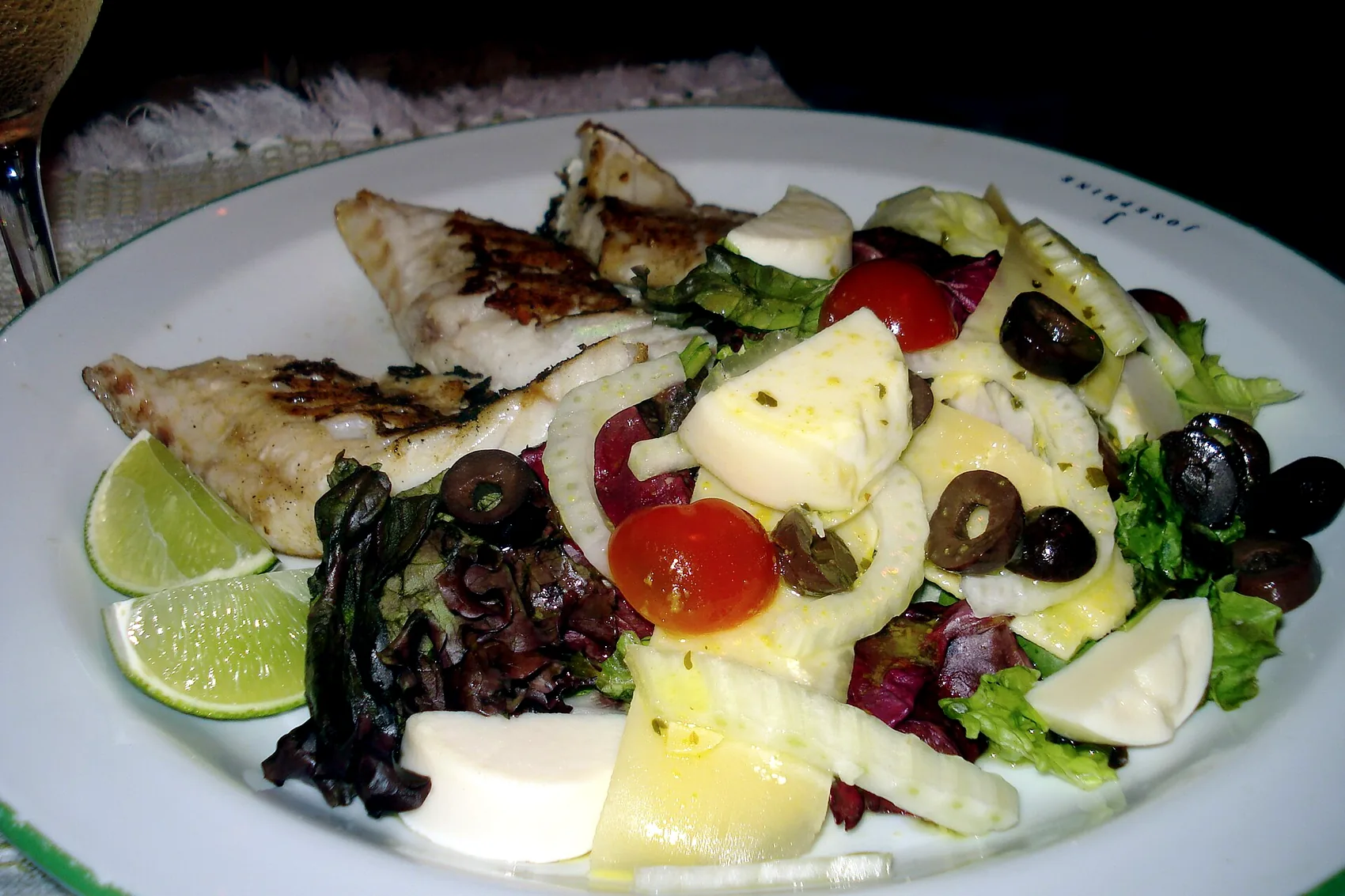
Moqueca is the famous dish, but the everyday glory of Paraty is simpler: fresh fish, grilled or fried, straight off the day's boats. Paraty still has a working fishing fleet and a fish market on the waterfront, and a real share of what lands on plates here was in the bay that morning. That freshness is the whole game, and the best way to honour it is the plainest one. A whole fish grilled over charcoal, or fillets pan-fried, served with rice, beans, a salad and farofa, with lime squeezed over the top, is the high point of this cuisine and not a budget version of it. People who chase the most expensive thing on the menu often eat worse than the person who ordered the catch of the day.
The single most useful phrase at any seafood table here is a question about the fish of the day. Menus everywhere list far more species than any one kitchen actually has fresh on a given afternoon, so asking what came in cuts straight past the freezer to the good stuff. If the answer is vague or the same every day, you have learned something about the room; if the waiter lights up and reels off three names, you are in the right place.
The fish you will meet
You do not need to memorise Brazilian fish names, but a few will keep coming up and it helps to recognise them. Robalo (snook) is a prized, firm white fish, excellent grilled whole or in a moqueca. Badejo and garoupa are groupers, sweet and meaty, and among the best things you can order on this coast. Dourado turns up grilled and holds up well to charcoal. Tainha (mullet) is small, oily and delicious in season, often eaten grilled with its roe. Pescada and namorado are other firm whites you will see. Further out, you will meet larger fish sold by the steak rather than whole. None of this is a test. Order what is freshest, ask how the kitchen likes to cook it, and you will rarely go wrong.
A word on how to eat a whole fish, since a lot of visitors quietly panic when one arrives head-on. Slide your fork along the spine to lift the top fillet, then lift out the whole skeleton in one piece to get at the bottom fillet underneath. The cheek, just behind the eye, is the sweetest bite on the fish, and locals will tell you so with a grin. Bones happen; slow down and you will manage them. A fish eaten this way, unhurried, with a cold drink and a view of the water, is one of the plain pleasures of this coast.
Prawns, squid and octopus
The prawns deserve their own line. Costa Verde camarão runs from small and sweet to enormous tiger prawns, and they turn up everywhere: folded into a moqueca, grilled on skewers at a beach kiosk, fried whole and eaten shell and all with a cold beer, or, in a regional flourish, served inside a hollowed wedge of grilled pineapple or a baked squash. A plate of garlic prawns with rice and a green salad is one of the most reliable good lunches in town. One honest note: prawns are not cheap here, and the biggest ones are priced by weight. That is normal, since they are excellent and hard-won, but it is worth knowing so the bill does not surprise you. A prawn moqueca shared between two, or prawns folded through a seafood rice, spreads them further than a plate of jumbo grilled ones.
Squid (lula) shows up grilled, fried in rings, or stewed, and the fresh local version is tender in a way the frozen imports never are. Octopus (polvo) is a treat when a kitchen does it well, slow-cooked until it gives, then grilled or dressed with olive oil and garlic. Both are worth ordering when you see them listed as the day's fresh item rather than a permanent menu fixture. The tell, again, is freshness: ask, and order the thing that came in, not the thing that is always there.
Shellfish, oysters and the seafood stew
After a rain, when the tide is right, oysters and mussels come in from small cultivators out in the bay, and a plate of them with lime is about as close to the water as food gets. Mussels (mexilhão) turn up steamed, in rice, or in the great catch-all dish of the coast, the caldeirada. A caldeirada is a seafood stew that gathers whatever the day gave up, so a good one might carry fish, squid, prawns in three sizes and mussels together in one pot, served with rice and pirão. Where a moqueca is a composed, aromatic dish, a caldeirada is generous and unbuttoned, a whole day's catch in a single bowl. Order it when you are a table of hungry people who cannot agree on one thing, because it settles every argument at once.
Caiçara cooking: where this food comes from
To understand what is on your plate here you need one word: caiçara. The caiçaras are the traditional coastal people of southeast Brazil, fishing and small-farming communities whose culture is a three-way braid of Indigenous, Portuguese and African roots. Their cooking is what Paraty cooking really is, even in the smartest kitchens. It is a cuisine of the sea and the forest's edge: whatever the boats bring in, cooked simply, rounded out with the plants that grow easily in the heat, which means cassava, banana, palm and coconut.
That history is not decoration; it explains the logic of the food. The Indigenous base gave the coast its fish-and-cassava bones and its habit of cooking things wrapped in banana leaf over fire. The Portuguese brought salt cod, olive oil, the egg-and-sugar sweets and the bacalhau habit. The enslaved Africans brought dende, coconut milk and the deep, layered seasoning that turns a plain fish into a moqueca. Put those three together on one of the wettest, most fertile coasts on earth and you get a food culture that is generous, unfussy and built around freshness rather than technique.
The practical upshot for you is that the best meals here are rarely the most elaborate ones. Paraty holds a UNESCO Creative City of Gastronomy title, but that status was earned by the way the town still eats from its own coast and forest, not by white-tablecloth invention. Order for freshness over fanciness and you will taste why. If you want the wider view of eating in town beyond the sea, our companion piece on where and what to eat in Paraty covers feijoada, açaí, the fruit and the inland flavours in more depth.
The best meal in Paraty is usually the simplest one: a whole fish off the morning boat, charcoal, lime, and the patience to eat it slowly.
Peixe com banana verde and the old dishes worth seeking out
Beyond moqueca, a handful of dishes tell you that you have found genuine caiçara cooking rather than tourist seafood. The signature one is peixe com banana verde, fish cooked with green cooking bananas. It sounds odd to newcomers and it is one of the truest flavours of this coast: fresh fish and the starchy, faintly sweet banana-da-terra simmered together, the broth thickened into a pirão, served with banana farofa and rice. The contrast of salt and sweet is the whole idea, and it is old, with deep Indigenous roots. If you see it on a menu in a family-run room, order it.
Its stranger cousin is peixe azul-marinho, or navy-blue fish, where fish is stewed with unripe green bananas and a reaction between the banana and the pot turns the broth a genuine blue-grey. The name is literal. It is one of the oldest dishes on the coast and it tastes far better than a blue stew has any right to. The third to look for is bobó de camarão: prawns in a thick, golden purée of cassava cooked down with coconut milk and dende. It is moqueca's richer, creamier relative, and on a cool evening after a day on the water it is hard to beat. None of these are fancy dishes. They are the deep tradition, and the rooms that still cook them are usually the ones worth returning to.
The harbour fish houses and the fish market
Down at the waterfront, where the historic centre meets the water near the Ilha das Cobras side, you will find the fish market and the cluster of simple seafood rooms that are, for our money, the honest heart of eating in Paraty. This is not the candlelit-cobblestone experience; it is plastic chairs, a working dock, a chalkboard of the day's catch and a kitchen fifty steps from where the boats unload. It is where locals eat, and it is where the ratio of freshness to price is at its very best.
The fish market itself is worth a wander even if you are not cooking. You can see what the fleet actually landed that morning, which quietly tells you what to order for dinner, and if you have a kitchen of your own you can buy the same fish the restaurants buy, cleaned to order, for a fraction of a restaurant plate. Prices at the market are by the kilo and negotiable in the friendly, unhurried way of a small town. Go in the morning when the selection is widest and the ice is fresh.
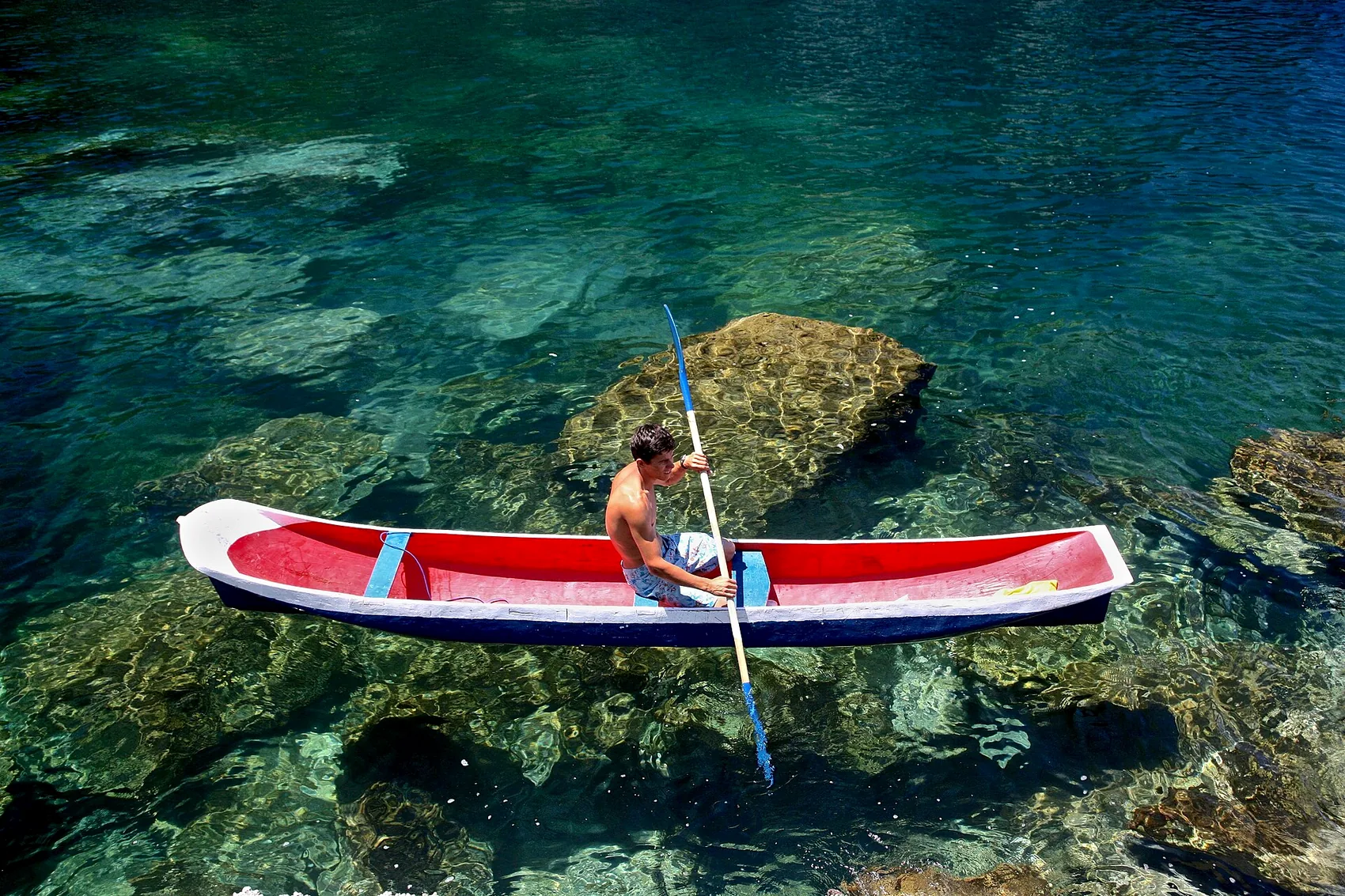
At the harbour fish houses, order plainly and order the catch of the day. A grilled whole fish, a plate of fried squid, garlic prawns, a shared caldeirada: this is the food these rooms exist to cook, and they do it better than anywhere with a fancier fit-out. Do not expect a wine list or a hushed dining room. Expect a cold beer, a squeeze of lime, boats on the water and some of the best-value seafood on the whole coast. If a working harbour lunch appeals more than a formal dinner, this is your Paraty.
How Brazilians eat: couvert, service and timing
A few local conventions will save you confusion and a little money. The first is the couvert: a small paid starter brought to the table before you order, usually bread, a spread, olives or pastes. It is optional and it is charged, so if you do not want it you can simply wave it away with a friendly "não, obrigado." The second is service: a charge of around ten percent is typically added to the bill in place of a tip, listed as serviço, and it is customary to leave it. You do not need to add more on top unless the service was genuinely special.
The third is timing, and it trips up visitors from abroad more than anything else. Brazilians eat late. Lunch runs from around midday into mid-afternoon, and dinner rarely gets going before about eight in the evening, with kitchens busy well past ten. If you turn up at a seafood room at half past six expecting a buzz, you will often have the place to yourself. That is not a bad sign; you are just early. Many rooms in the historic centre stay open all afternoon, but the smaller and better ones keep their own hours, so if there is a specific place you have your heart set on, it is worth checking the day and hour before you walk down.
What to order where: the three Paraty settings
Where you eat in Paraty shapes what you should order as much as your appetite does. There are roughly three settings, and each does some things brilliantly and others not at all. Knowing which is which is most of what saves you from a mediocre meal.
The historic centre
The colonial grid, with its whitewashed houses and lantern-lit cobblestones, is where you will eat most of your dinners, and rightly so. Inside those old rooms are everything from simple seafood kitchens to a handful of genuinely accomplished ones, and Paraty's gastronomy reputation is built on the latter, where cooks take caiçara ingredients and treat them with real ambition. This is where to come for a proper moqueca, for refined takes on fish with banana and palm heart, for a special dinner where the setting does half the work. It is also the priciest zone and the most tourist-facing, so the spread of quality is wide. Our rule: avoid rooms with photo menus and a tout at the door, and look for a short menu, a full room of Brazilians and a chalkboard listing today's fish. The centre is also the heart of the after-dinner scene, which we cover in the nightlife and bars guide.
The waterfront and harbour
The waterfront rooms and fish houses, covered above, are the place for the freshest, plainest seafood at the fairest price. Come here for lunch after a morning walking the centre, or for an unfussy early dinner watching the boats. Order the catch of the day, a caldeirada to share, prawns, squid, a cold beer. This is where the town eats, and it rewards the traveller who wants the real thing over the atmospheric one.
The beach kiosks
Out on the beaches and islands, the kiosks (quiosques and barracas) do a specific, joyful kind of eating: fried whole fish, prawns on a skewer, garlic squid, a fried pastel turnover, all delivered to a plastic table on the sand with a bucket of iced beer and a coconut with a straw in it. Do not expect finesse; expect the pleasure of eating good simple seafood with your feet in the sand after a swim. When you are out on a boat day, this is lunch, and it is one of the best meals of any trip. Our boat days and explore pages set out how to string those days together around the bay.
What to drink with it
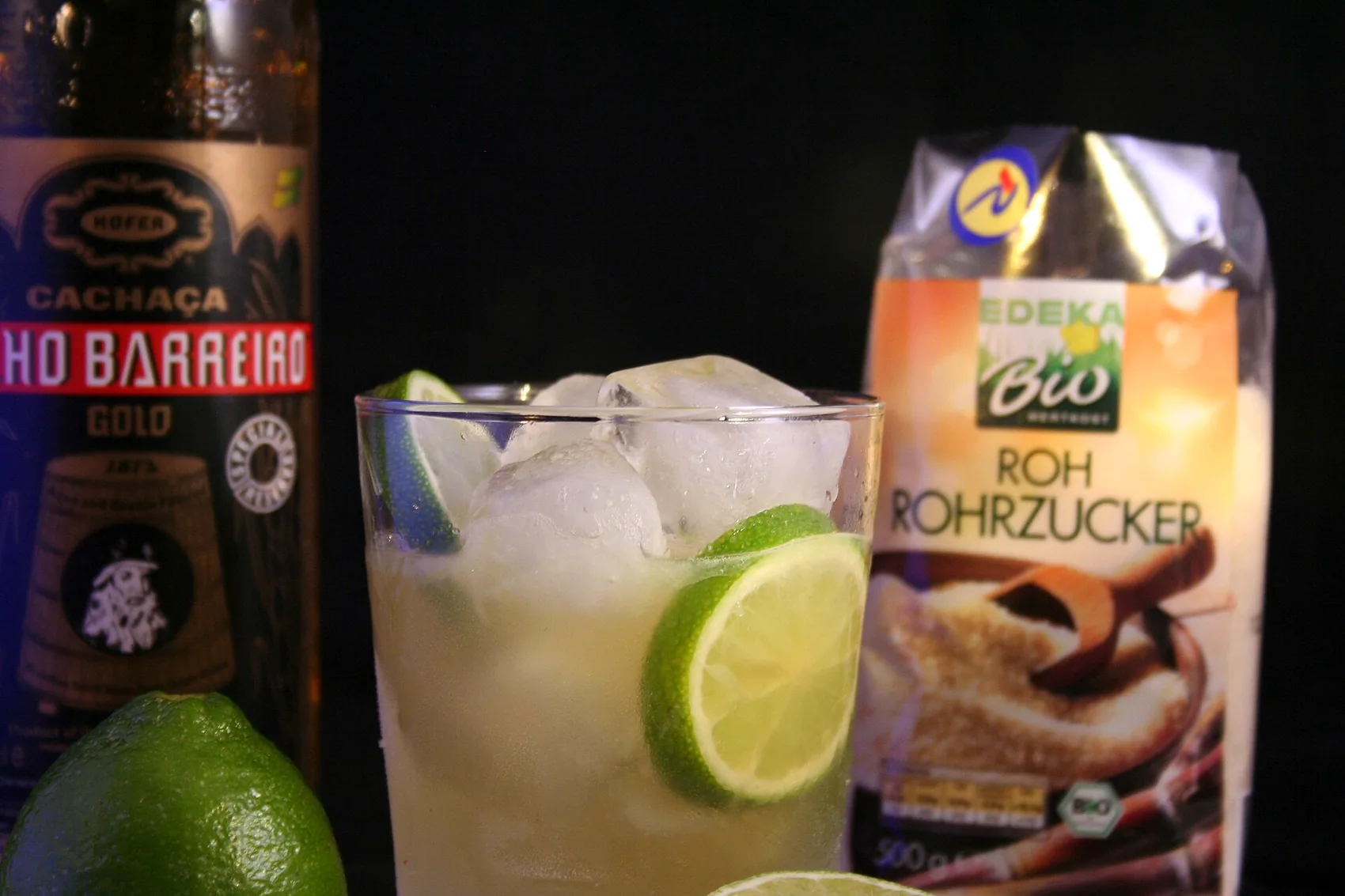
The natural partner to this food is cachaça, the sugarcane spirit distilled in the hills around Paraty for centuries. The town's cachaça is a genuine specialty, and a caipirinha made with a good local bottle is a different drink from the airport version: cleaner, more aromatic, the lime and sugar carrying the spirit rather than hiding it. Start an evening with one while your moqueca cooks and you have done the meal properly. If you want to understand what you are drinking, our cachaça distilleries guide covers the alembics you can visit up in the hills, several within a short drive of town.
Beyond cachaça, an ice-cold beer is the everyday companion to fried fish and prawns, and Brazilians take the coldness seriously; ask for it estupidamente gelada if you want it barely above freezing. Fresh fruit juices (sucos) are everywhere and worth ordering from a fruit you cannot pronounce. Wine is available in the better rooms but it is largely imported and priced accordingly, so a crisp white or a caipirinha usually suits both the food and the climate better than a heavy red. On a hot night, a caipirinha made with fresh passion fruit or a batida with coconut is hard to improve on.
Sides and the supporting cast
Three humble ingredients hold this cooking together, and once you notice them you see them everywhere. The most important is cassava, also called manioc, mandioca or aipim, the starchy root that is to this coast what the potato is to Europe. It appears boiled and fried as a side, ground into farinha and toasted into the farofa you scatter over everything, thickened into pirão, and fried into crisp sticks that arrive as a bar snack and vanish faster than chips. Farofa is not a garnish to ignore; it adds the texture that a soft, brothy dish like moqueca needs, and learning to spoon it on is part of eating here well.
Banana is the second pillar, and it is not just dessert. Green cooking bananas go into savoury dishes, banana purée turns up under grilled fish, and fried banana sits happily alongside a main course. Do not be thrown when banana shows up next to your fish; that is the tradition working exactly as intended. The third is palm heart, the tender inner core of certain palms, sliced into salads, baked into savoury pies, or grilled in thick rounds that eat almost like a scallop. The best of it is fresh local pupunha, a world away from the tinned version most visitors know, and grilled palm heart is a lovely, slightly unexpected thing to start a seafood dinner with, especially for a vegetarian at the table.
Eating well with kids, and with dietary needs
A seafood town can look daunting if someone at the table does not eat fish, but Paraty handles it more easily than you would expect. For children, or for anyone who wants their food plain, a whole fish or a fillet grilled simply with rice is about as gentle as food gets, and kitchens are happy to leave off the coriander, the chilli or the strong sauces. Chicken and grilled beef are on almost every menu, and the everyday rice-beans-salad plate underpins all Brazilian eating, so no one goes hungry. Our Paraty with kids guide has more on eating out with small children, including the late Brazilian dinner hour and how to work around it.
Vegetarians eat better here than the seafood reputation suggests: palm heart, cassava in a dozen forms, tropical fruit, feijão (beans), grilled vegetables and pastel turnovers are all easy to find, though committed vegans should ask about dende and dried shrimp, which sneak into more dishes than menus let on. If you have a shellfish allergy, be clear and specific when you order, since prawns and their stock turn up in unexpected places, and stick to plainly grilled whole fish where you can see exactly what you are getting. A little Portuguese, or a written note on your phone, smooths all of this considerably.
A sample day of eating on the Costa Verde
Here is how a good eating day tends to run for our guests, less a schedule than a rhythm. Breakfast is early and generous, tropical fruit, fresh juice, cheese bread and coffee, often taken slowly before the heat builds. Lunch is the seafood meal to prioritise if you are out and about: a whole grilled fish or a plate of prawns at a harbour fish house or a beach kiosk, unhurried, with a cold drink and the water in view. Keep it light enough that the afternoon does not defeat you.
Late afternoon is for a swim and a slow drink rather than a meal; this is the hour to be back somewhere quiet with a caipirinha in hand. Then dinner, late by the clock you are used to, is the moqueca night: a table in the colonial centre, the pot arriving bubbling, pirão and farofa and rice, a long conversation, the cobblestones cooling outside. You will not eat like this every day of a trip, and you should not, but building even one day around the sea this way is the surest route to understanding why people fall for Paraty at the table. For fitting the eating around the rest of a trip, our 3-day Paraty itinerary and the longer 7-day Costa Verde itinerary both leave proper room for meals rather than treating them as pit stops.

Cooking it yourself up at the chalet
One of the quiet pleasures of staying somewhere with a proper kitchen is buying fish at the market and cooking it yourself. It is easier than it sounds. A whole fish from the waterfront market, cleaned to order, needs little more than salt, lime and a hot grill; a moqueca is forgiving and hard to ruin once you have the coconut milk, dende, tomato, onion and coriander in front of you, and the market and the small grocers in town carry all of it. Buying prawns by the kilo and doing them in garlic and olive oil, with rice and a cold beer, is one of the best-value dinners of any trip, eaten on a terrace with the bay going gold below you.
That is the kind of evening our place is built for. Chalé Bel Air sits about four hundred metres above the town, with an infinity pool and one deck that holds a triple view of the Bay of Paraty, Angra dos Reis and Ilha Grande, and it is the sort of house you come back to for a swim and a slow-cooked dinner after a day on the water. Bring the morning's catch up the hill, put a pot on, pour a caipirinha and let the light do the rest. Guests who plan even one home-cooked seafood night here almost always say it was among their favourite evenings of the trip. If you are weighing dates or want to talk through what a stay looks like, our contact page is the place to start, and the luxury vacation rentals guide sets out how a private house compares to a pousada for a food-focused trip.
Practical notes for eating on the Costa Verde
A few last things worth knowing. Cash still matters at the smaller harbour rooms, beach kiosks and the fish market, even though cards and Pix (Brazil's instant-payment system) are widely accepted in the centre, so carry some reais for the plainest and best places. Portions are large and built for sharing; a moqueca for two plus a couple of starters will usually feed three, so order conservatively and add more if you are still hungry. Peak season, roughly the Brazilian summer from December to February and the festival weekends, fills the good rooms, so book ahead or eat early; our best time to visit guide runs through the seasons and crowds in detail.
For travellers coming from São Paulo or Rio de Janeiro, the great advantage is that you already know the rhythm, the late dinners, the couvert, the service charge, so you can walk in and order without a second thought. For visitors from abroad, give yourself a meal or two to settle into the timing and the sharing culture, and do not be shy about pointing and asking; the caiçara table is generous by nature and nobody minds a curious guest. Above all, order for freshness. Ask what came in, share the pot, eat slowly, and let Paraty feed you the way it has fed people for four centuries. It is very good at it.
Come stay above the bay
Chalé Bel Air sits on the ridge that looks over everything in this guide. Tell us your dates and what kind of trip you are after — we answer personally.
Ask about your datesFrequently asked questions
What is moqueca and what does it taste like?
Moqueca is a slow-simmered seafood stew, the signature dish of the Brazilian coast. The version you meet in Paraty leans Bahian: fish or prawns cooked with coconut milk, tomato, onion, coriander, lime and orange-red dende palm oil, which gives the broth its colour and a faintly smoky, nutty depth. It arrives bubbling in a clay pot and is built to share between two.
Where can I eat the best moqueca and seafood in Paraty?
You eat well in three settings. The colonial historic centre has the ambitious kitchens for a proper moqueca dinner; the waterfront and harbour fish houses do the freshest simple grilled fish; and the beach kiosks handle prawns, fried fish and cold beer. We steer guests toward a short menu, a full room of Brazilians and a chalkboard listing the day's catch rather than any single name.
Is the seafood in Paraty fresh?
Generally yes. Paraty still has a working fishing fleet and a fish market on the waterfront, and much of what reaches kitchens was landed that morning. The single most useful thing you can do is ask what the fish of the day is and order that, because menus list far more species than any one kitchen has fresh on a given afternoon.
What is the difference between Bahian and capixaba moqueca?
Bahian moqueca uses coconut milk and dende palm oil, so it is rich, orange-red and aromatic. Capixaba moqueca, from the neighbouring state of Espirito Santo, skips both and uses annatto for colour, so it is lighter and more tomato-forward, usually cooked in a black clay pot. On this coast you will mostly meet the richer Bahian-leaning style, but a good kitchen can cook you a lighter version if you ask.
How much does a seafood dinner in Paraty cost?
It varies widely. A simple grilled fish or a prato feito lunch at a waterfront room is inexpensive; a shared moqueca with drinks at a good centre kitchen is a proper dinner-out price; and jumbo prawns and lobster are sold by weight and add up fast. Budget for the moqueca-plus-couvert-plus-ten-percent-service rhythm and you will not be surprised by the bill.
Is there good food in Paraty for people who do not eat coconut or shellfish?
Yes. If you do not love coconut or dende, order a whole fish grilled over charcoal with rice, beans and farofa instead of a moqueca, or ask for a lighter fish preparation. Palm heart, cassava and tropical fruit run through the cuisine, so vegetarians eat well, and any kitchen can grill fish plainly for children or fussier eaters.
What should I order on my first night in Paraty?
Order a moqueca to share and a caipirinha made with local cachaca while it cooks. It is a slow dish, so treat the wait as part of the evening. If you are eating alone or want something lighter, a whole grilled fish of the day with rice and farofa is the honest high point of this cuisine, not a budget version of it.



.jpg)

