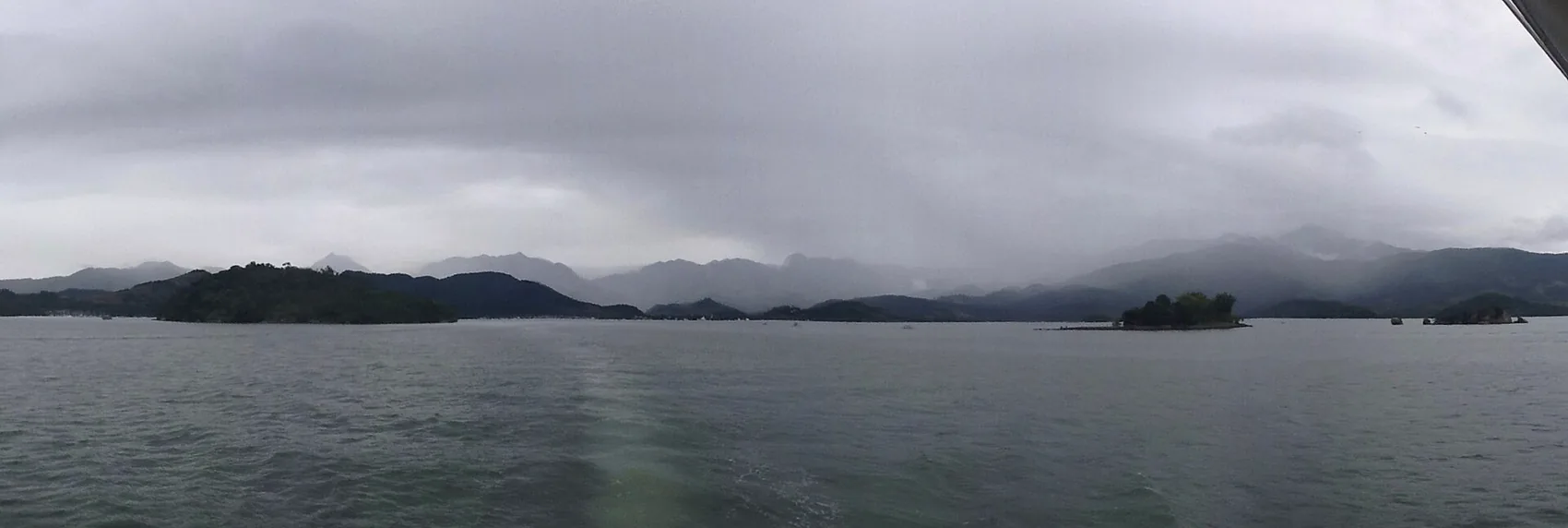
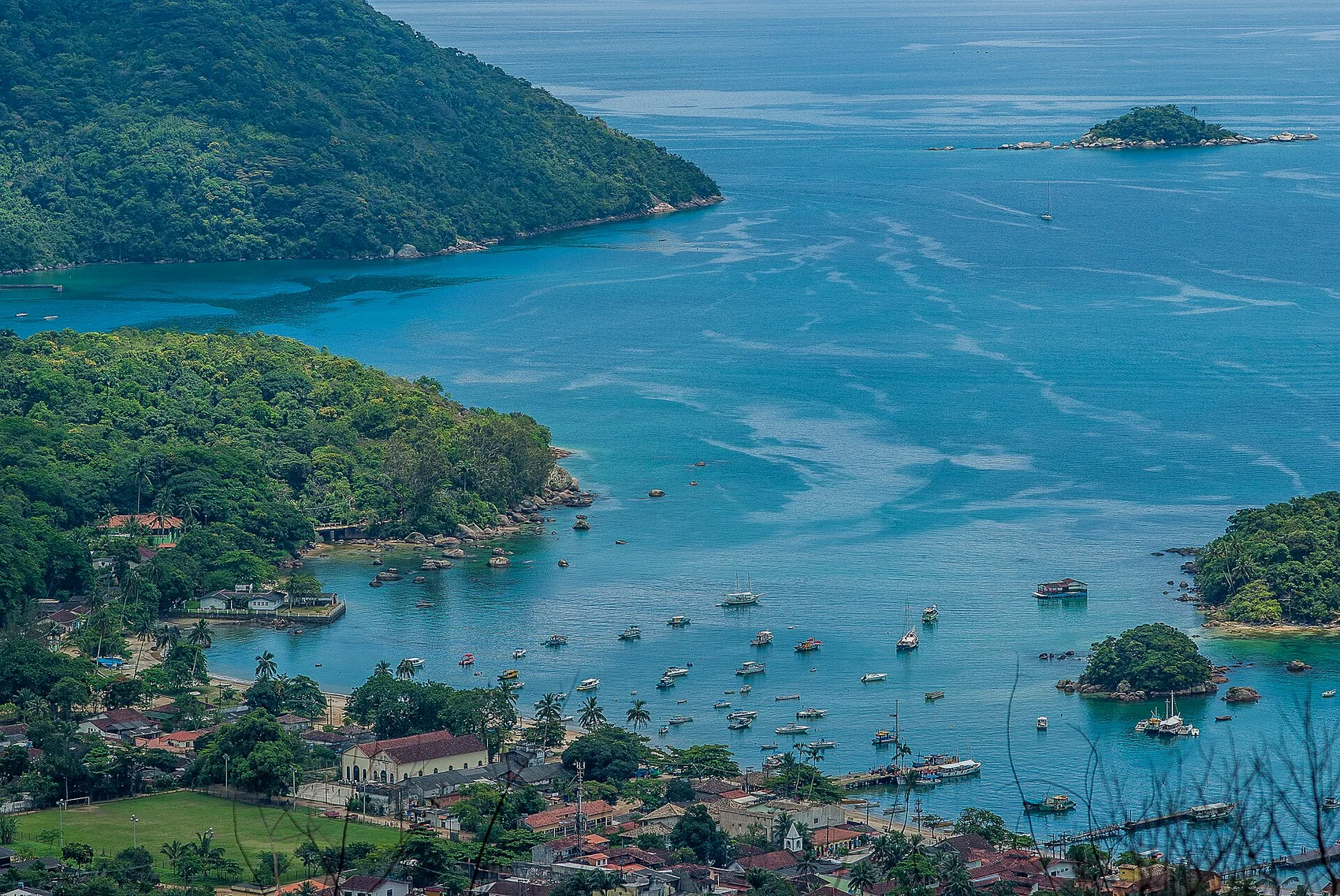
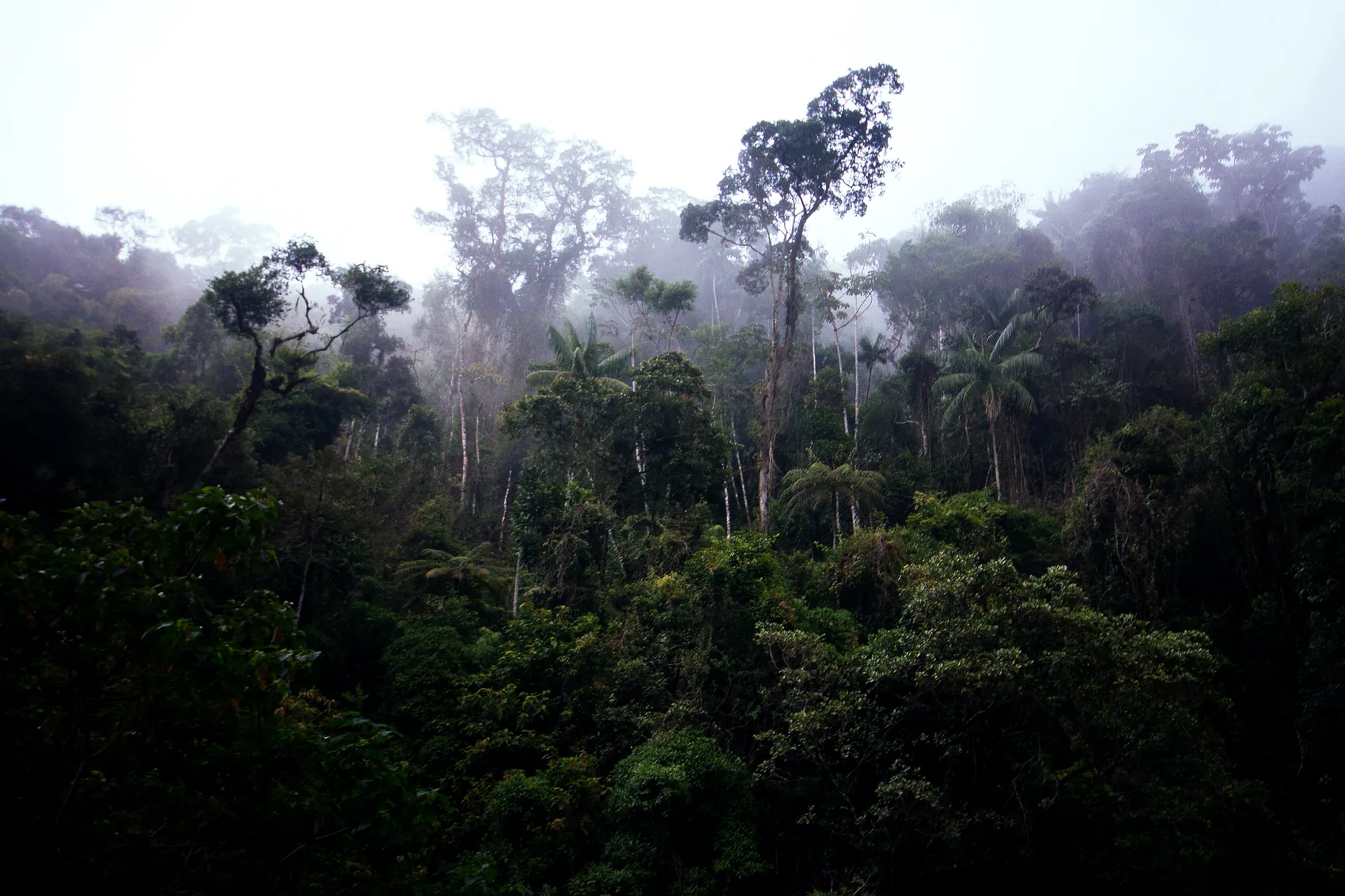
The Costa Verde isn't the Caribbean and doesn't pretend to be — this is a green, plankton-rich sea, which is exactly why it's full of life. Pick the right spot on the right day and you'll float over rocks busy with fish ten minutes after leaving the boat. Here's how to pick.
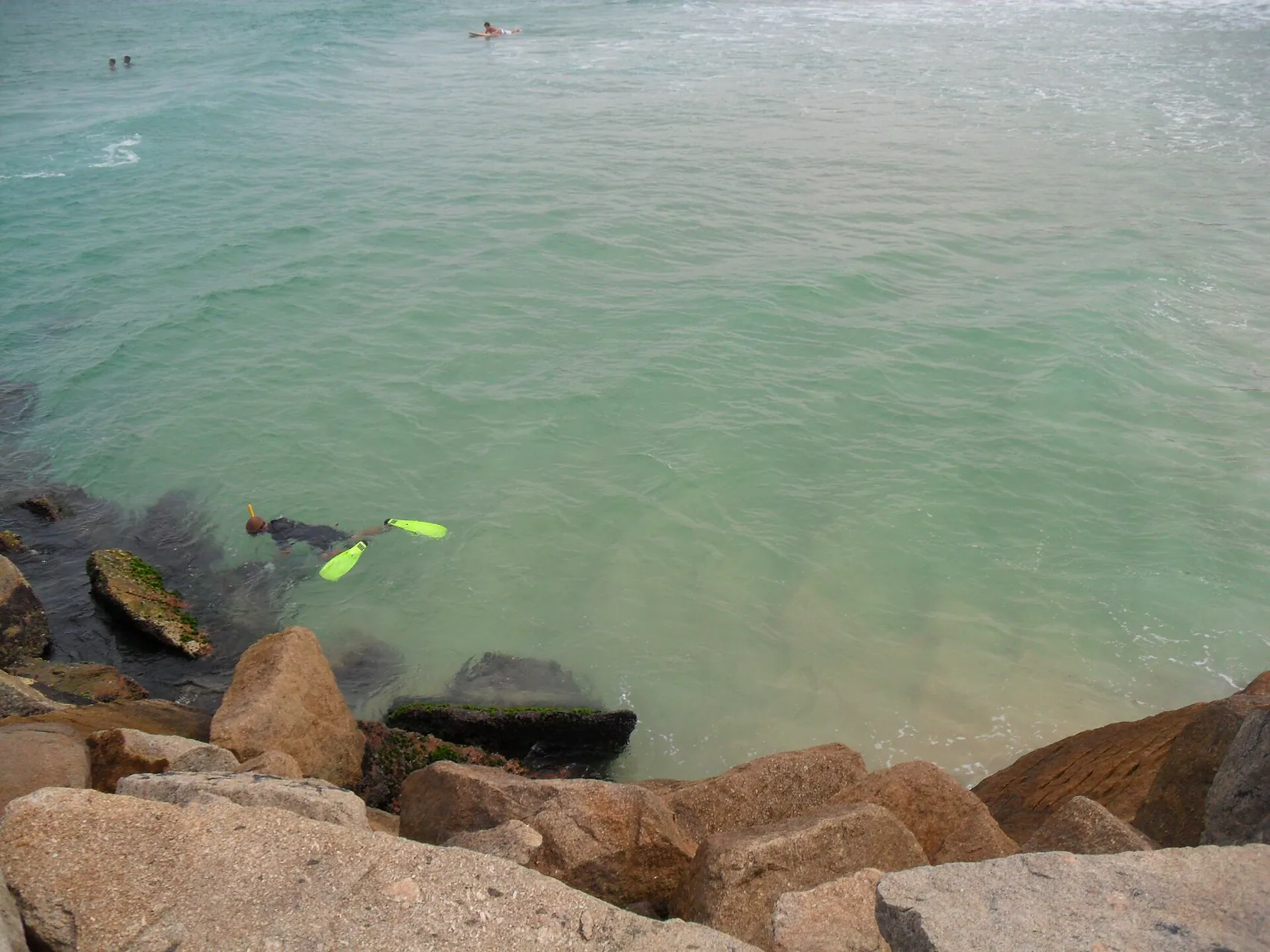
The two names to know in Paraty bay
Ilha Comprida is the bay's snorkeling staple — a long, low island whose rocky edges drop into two to five metres of usually-clear water. Sergeant majors, damselfish, wrasse and parrotfish work the boulders, and most schooners and charters anchor here precisely because beginners do well: short swim, no surf, fish that show up on schedule. If you snorkel once in Paraty, it's probably here.
Ilha dos Meros, further out toward the bay's mouth, is the step up. The name means “grouper island,” and the holes between its rocks still shelter them, along with bigger schools and — on good days — noticeably clearer water than the inner bay. It's more exposed, so skippers call it day by day; when they say yes, say yes.
Beyond those two, any charter skipper has a private list — rock points off Praia Vermelha, the edges of the Algodão island at the Mamanguá mouth — that changes with the wind. Tell the skipper snorkeling is the priority when you book and the route builds itself around water clarity instead of beach bars. That conversation is half this boat days guide.
Reading the conditions
Visibility here is decided by three things, all checkable from the chalé's deck with your morning coffee:
- Rain. The rivers carry sediment after storms; the inner bay turns green-brown for a day or two. After three dry days the water cleans up dramatically. Summer's daily thunderstorms make mornings the clear window.
- Wind. Calm or light north wind = glassy bay. Strong south or southwest wind stirs the shallows and pushes swell into the outer spots — the day to stay in the protected coves.
- Season. Counter-intuitively, winter (June–August) often brings the best visibility: less rain, cooler stable water. Summer wins on water temperature (genuinely warm) but you trade some clarity.
Diving proper
Scuba on this coast centres on Ilha Grande and the Angra islands, where the water runs clearer and there are wrecks and walls worth a tank — dive operators in Vila do Abraão run daily boats and beginner courses. From Paraty, dedicated dive trips exist but are fewer; honestly, if diving is the heart of your trip, build in an Ilha Grande overnight (the logistics) and treat Paraty bay as your snorkel-and-surface-interval playground.
Gear and manners
- Bring your own mask if you're picky — boat gear exists but varies in vintage.
- A rash top beats sunscreen for long floats; what sunscreen you do use should be reef-safe (why).
- Don't stand on, kick or take anything — the rocks are the habitat, and most of this water is inside protected areas.
- Fins make Meros comfortable; Comprida is fine without.
Come stay above the bay
Chalé Bel Air sits on the ridge that looks over everything in this guide. Tell us your dates and what kind of trip you are after — we answer personally.
Ask about your datesFrequently asked questions
Where is the best snorkeling in Paraty bay?
Two names to know: Ilha Comprida, the bay's staple, where rocky edges drop into two to five metres of usually-clear water busy with sergeant majors, damselfish, wrasse and parrotfish — ideal for beginners; and Ilha dos Meros, further out toward the bay's mouth, the step up, with bigger schools and clearer water on good days. Tell your skipper snorkeling is the priority and the route builds around water clarity.
What affects underwater visibility on the Costa Verde?
Three things, all checkable from the chalé's deck. Rain sends sediment into the inner bay for a day or two; after three dry days it cleans up dramatically. Calm or light north wind makes the bay glassy, while strong south winds stir the shallows. And counter-intuitively, winter (June–August) often brings the best visibility, while summer wins on water temperature.
Can you scuba dive near Paraty?
Scuba on this coast centres on Ilha Grande and the Angra islands, where the water runs clearer and there are wrecks and walls worth a tank; dive operators in Vila do Abraão run daily boats and beginner courses. Dedicated dive trips from Paraty exist but are fewer, so if diving is the heart of your trip, build in an Ilha Grande overnight.
Do I need my own snorkel gear?
Bring your own mask if you're particular about fit — boat-supplied gear exists but varies in vintage. A rash top beats sunscreen for long floats, and any sunscreen you do use should be reef-safe. Fins make Ilha dos Meros comfortable; Ilha Comprida is fine without.