Paraty has its own small airstrip, but no scheduled flights land there, so almost everyone flies into Rio de Janeiro or São Paulo and drives the last stretch along the coast — and choosing the right arrival airport saves you hours.
There is a certain question every guest asks us before anything else, before the beaches and the boat days and the best table for a slow lunch: how do I actually get there? Paraty sits on a bend of the coast roughly halfway between two of South America's biggest cities, and yet it feels genuinely apart from both. That gap between how close it looks on a map and how it feels when you arrive is the whole point of the place. Understanding the Paraty airport situation is the first step to closing it gracefully.
Here is the short version, told plainly so you can plan around it. Paraty does have an airport of sorts — a small paved airstrip on the edge of town — but no scheduled airline flies there. What that means in practice is that almost everyone arrives the same way: a flight into Rio de Janeiro or São Paulo, then a few hours by road down the coast. It sounds like a complication. It is really an invitation, because that road is one of the finest coastal drives in Brazil, and the last stretch of it delivers you to a town that has kept its shape precisely because the jets never came.
This guide is our attempt to answer the question properly, once, in the level of detail we would give a friend. We will walk through the local airstrip and what it is actually for, the four real airports that serve Paraty, how long each transfer takes and what it feels like, and how to choose the arrival airport that fits your particular trip — whether you are flying up from São Paulo, across from Rio, or in from another continent entirely. Get this part right and the rest of the holiday starts on the right foot: unhurried, oriented, already half in the mood of the coast.
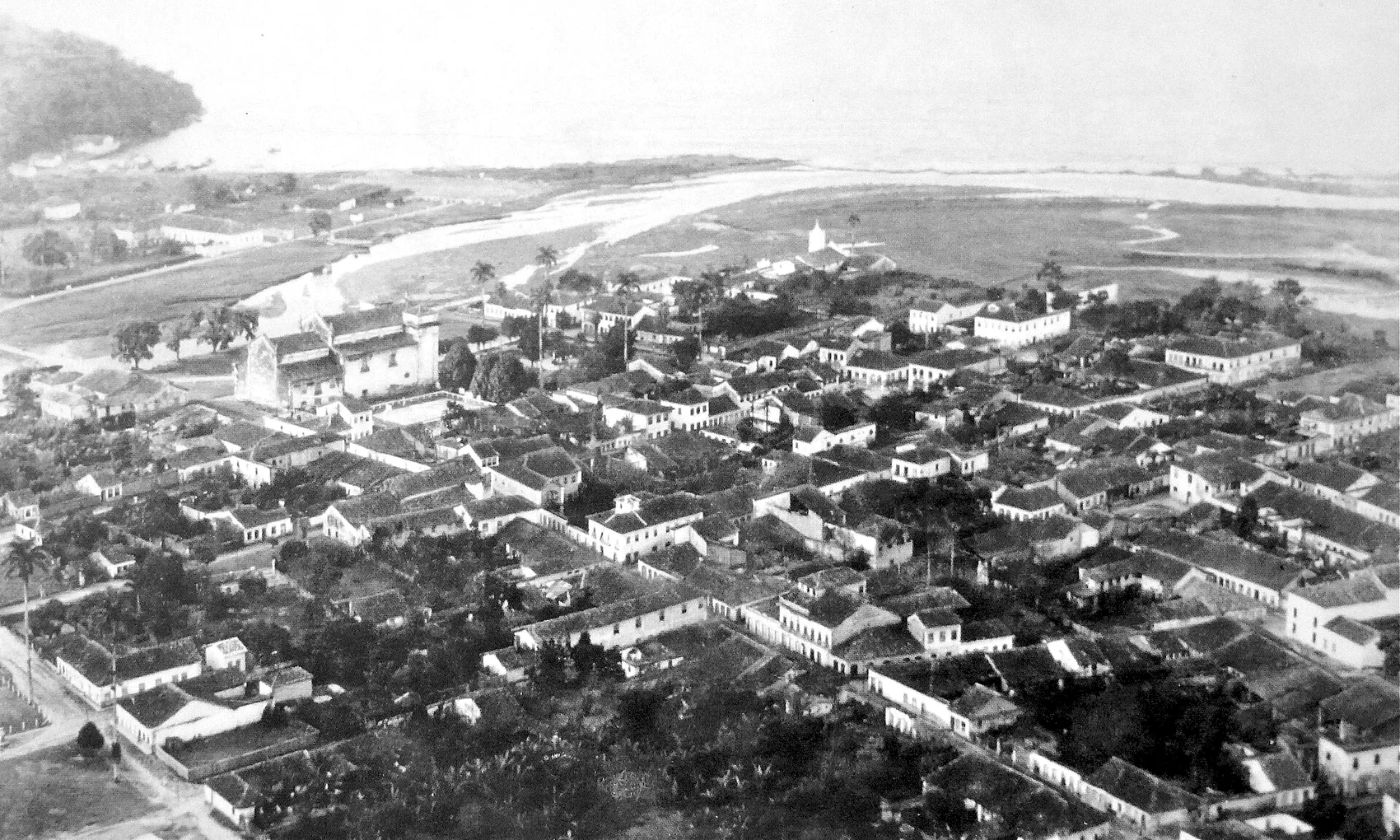
Does Paraty have an airport?
Yes and no, and the nuance matters. Paraty has a small airfield a short distance from the historic centre. It is paved, it is real, and light aircraft use it regularly. What it does not have is commercial service — no daily flights from Rio, no budget carriers, no departures board with cities on it. The runway is short by the standards of jet travel, sized for light planes and the smaller end of private aviation rather than anything with rows of seats and an aisle.
So when people search for a "Paraty airport" expecting to book a ticket, they run into the same gentle wall every time. The airstrip exists to serve private charters, air taxis and the occasional light aircraft, not scheduled passengers. If you are not flying yourself in on a chartered plane, it will not feature in your journey at all, and you can happily set it aside.
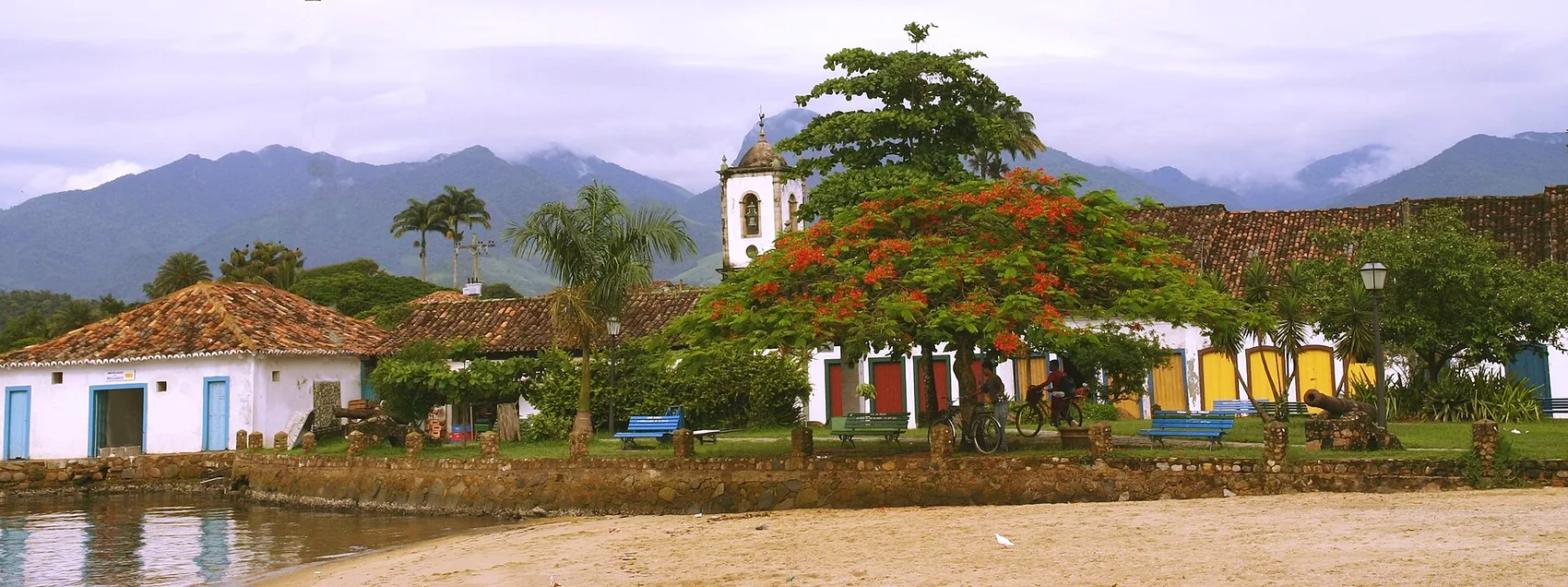
This is not an oversight or a town waiting for an upgrade. Paraty's whole character depends on being a little hard to reach. A commercial airport would have reshaped the place decades ago — the traffic, the development pressure, the flattening that comes when somewhere becomes too easy. Instead the barrier of a few hours' drive has acted as a quiet filter, and the reward for making the journey is a colonial centre and a bay that still feel like themselves. Keep that in mind when the drive stretches on: the inconvenience and the magic are the same thing.
Quick orientation: "Paraty airport" almost never means a flight into Paraty. It means picking a major airport in Rio or São Paulo, then covering the last few hours by car or private transfer. Everything below is about making that choice well.
The local airstrip: charter and air taxi only
Let us deal with the airstrip first, because it is the part people are most curious about and the part that applies to the fewest travellers. Paraty's airfield is a single short paved runway used by light aircraft. Think small propeller planes and the compact end of private jets, along with helicopters. It is the kind of field where an air taxi from Rio or São Paulo can drop a small group and be gone again in minutes.
Who uses it? A narrow slice of visitors. Those chartering a private flight to skip the road entirely. Those arriving by helicopter for a special occasion. Owners and guests of the larger houses who value the hours saved over the cost. For that slice, the appeal is obvious: a flight measured in tens of minutes instead of a drive measured in hours, and a landing almost within sight of the water.
What flying in privately is really like
If you are seriously considering it, a few honest points. The aircraft are small, which means limited luggage and a cabin that feels the weather. The coast here has its own moods — sea mist, sudden cloud building against the mountains, afternoon rain in summer — and light aviation is sensitive to all of it, so a charter can be delayed or diverted in ways a highway drive simply is not. And it is a genuine premium: you are paying for time and novelty, not merely transport.
For the right trip it is a lovely thing to do, and the approach over the bay is unforgettable. For most guests, though, a comfortable car from a major airport is simpler, cheaper and more reliable, and it comes with the consolation prize of the coastal road. If a private arrival is something you want to explore, tell us when you enquire and we will point you toward reputable operators — this is exactly the kind of detail we are happy to help arrange through our concierge.
The airstrip exists, but for almost everyone the real journey to Paraty is a flight to a big city and a drive down a beautiful coast.
Which airports actually serve Paraty
Now the part that applies to nearly everyone. Four airports realistically get you to Paraty, split between the two gateway cities that flank it on the coast. From the Rio side you have Galeão International (GIG) and the smaller downtown Santos Dumont (SDU). From the São Paulo side you have Guarulhos International (GRU) and the secondary Viracopos (VCP), out near Campinas. Each has a distinct personality and a distinct drive, and knowing the difference is most of the battle.
Paraty sits almost squarely between Rio and São Paulo along the coastal highway, which is a rare luxury: you genuinely have two good gateways rather than one, and you can let flight prices and schedules decide. As a rule of thumb, the Rio airports give a shorter, more scenic transfer, while the São Paulo airports sometimes offer more flight choice, particularly on international long-haul. Let us take them one at a time.
Rio de Janeiro — Galeão International (GIG)
Galeão is Rio's main international gateway and, for most guests flying in from abroad, the obvious choice. It handles the majority of long-haul routes into the region, which means you can often reach it in a single connection from Europe, North America or elsewhere in South America without changing cities. From Galeão, Paraty is roughly a four-hour drive south-west down the coastal BR-101 in normal conditions.
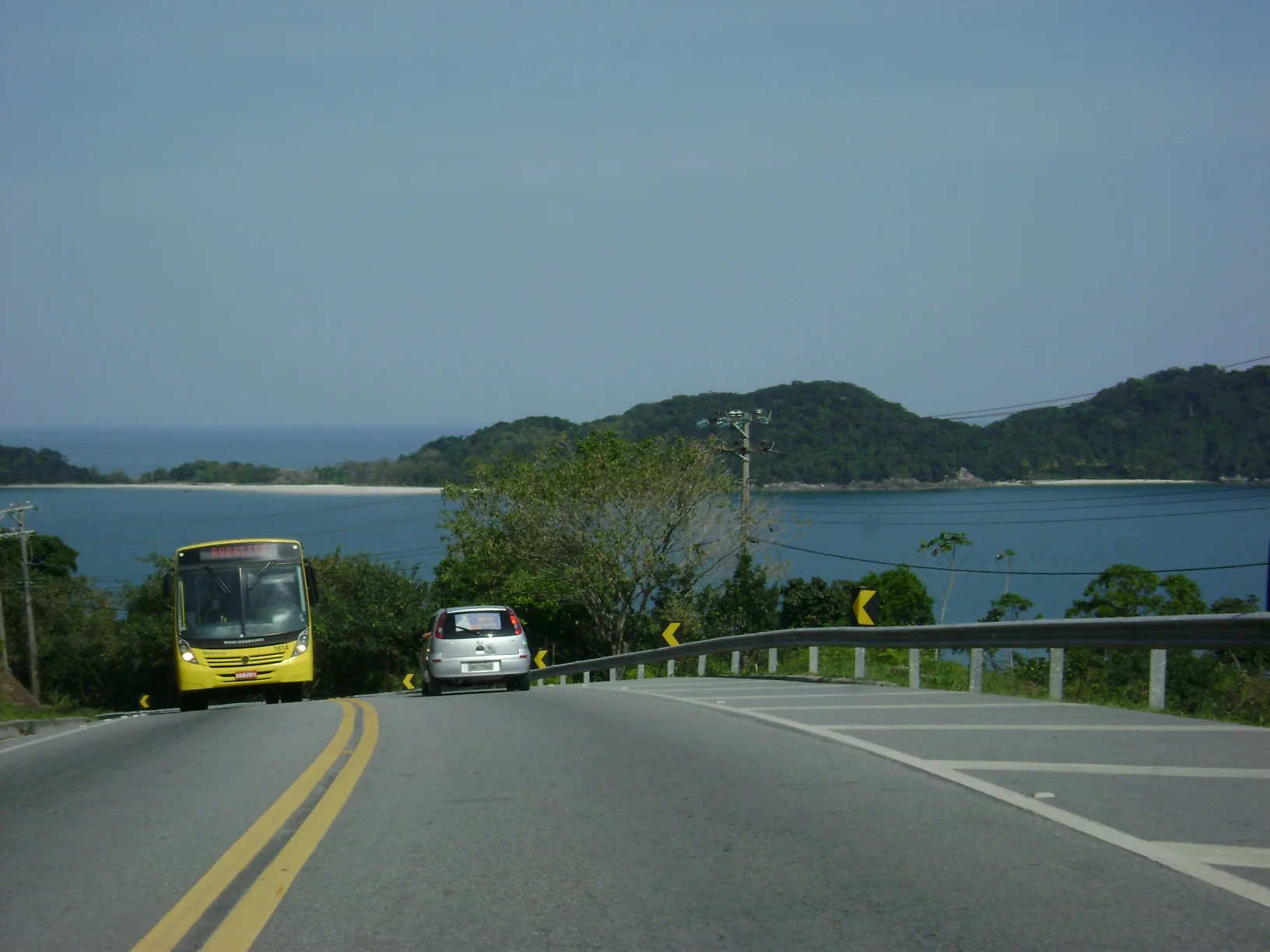
The drive is the selling point. You leave the sprawl of Rio behind, pick up the coast, and follow the Costa Verde — the "Green Coast" — as the road threads between forested mountains and a sea scattered with islands. Angra dos Reis appears about two-thirds of the way along. It is a working highway, not a manicured tourist route, but the second half in particular is genuinely beautiful, and it eases you into the landscape you have come to see.
Rio de Janeiro — Santos Dumont (SDU)
Santos Dumont is Rio's smaller airport, set right on the water in the heart of the city with one of the most dramatic approaches anywhere — Sugarloaf and the bay filling the windows as you descend. It handles mostly domestic flights, so it comes into play if you are already inside Brazil, flying up from São Paulo, Brasília, Belo Horizonte or the like.
Because it sits downtown rather than out by the coast road, the drive to Paraty from SDU is broadly similar in length to GIG once you clear the city, though threading out through central Rio can add time in traffic. Its real charm is convenience if you are spending a night in Rio's South Zone — Copacabana, Ipanema, Leblon — before heading down. Many guests do exactly that, and we think it is a fine way to break the trip.
São Paulo — Guarulhos International (GRU)
Guarulhos is the largest airport in the country and, alongside Galeão, the other major international gateway you might land at. If your best long-haul fare or schedule routes through São Paulo, GRU works perfectly well for Paraty. The catch is distance: it sits on the far side of a very large city, and the drive to Paraty runs roughly four to five hours depending on which route you take and how São Paulo's traffic behaves on the day.
Two roads lead down from São Paulo. The classic inland route drops over the mountains on the winding Cunha road into Paraty — a lovely, curvy descent through farmland and forest. The coastal alternative heads out to the shore first and follows the BR-101 north-east through Ubatuba. Both are scenic in different ways; neither is a motorway sprint. Budget generously and, as with Rio, prefer to drive the mountain sections in daylight.
São Paulo — Viracopos (VCP)
Viracopos sits out near Campinas, well beyond São Paulo proper, and serves a mix of domestic and some international and low-cost routes. It occasionally throws up a bargain fare worth considering. Be clear-eyed about the trade, though: it is the furthest of the four from Paraty, and the transfer is correspondingly the longest. We would only steer you here if the flight saving is real and you are comfortable with a long drive. For most trips, GRU is the more sensible São Paulo option.

Transfer times and distances at a glance
Numbers help, so here are the honest ones. Treat every drive time as a fair-weather, off-peak estimate; the coast road is subject to traffic, rain and occasional roadworks, and it does not hurry for anyone.
- Galeão, Rio (GIG): roughly 240 km and about four hours by road, south-west on the BR-101. The most common international arrival and the most scenic drive.
- Santos Dumont, Rio (SDU): similar overall to GIG once out of the city, with downtown traffic the main variable. Best if you are overnighting in Rio's South Zone.
- Guarulhos, São Paulo (GRU): roughly 250–290 km depending on route, about four to five hours. A solid international alternative if fares favour São Paulo.
- Viracopos, Campinas (VCP): the longest transfer of the four; only worth it for a meaningful flight saving.
A recurring theme: real-world times run longer than the map suggests, especially on Friday and Sunday afternoons, around Brazilian holidays, and across the busy summer months from December to February. If your plan depends on arriving at a particular hour — a dinner reservation, a boat you have booked, sunset from the deck — pad the estimate by an hour or two and thank yourself later. Our companion piece on getting to Paraty and getting around goes deeper into routes and road conditions if you want the full picture.
Rule of thumb: from a Rio airport, plan four hours; from a São Paulo airport, plan five. Then add a buffer for weekend and holiday traffic. Nobody has ever regretted arriving early with time for a swim.
How to choose your arrival airport
With four options on the table, the choice can feel fiddlier than it is. In practice it comes down to three questions, and once you have answered them the right airport usually picks itself.
Where are you flying from?
If you are coming from abroad, start with Galeão (GIG). It gives you the best chance of a single connection into the region and the shorter, prettier drive. Only look to São Paulo's Guarulhos (GRU) if it offers a materially better long-haul routing or fare — which it sometimes does, so it is always worth a quick comparison. If you are already inside Brazil, open it up to domestic options too: Santos Dumont (SDU) into central Rio can be the most pleasant of all, and a cheap São Paulo hop plus a drive is perfectly viable.
What time do you land?
This one matters more than people expect. A morning or early-afternoon arrival means you can transfer straight through and reach the chalet in daylight, which is how we like guests to see the coast road and the hill up to the house for the first time. A late-afternoon or evening landing changes the maths entirely — see the next section on why we steer away from night drives. The airport that lets you start the road leg in daylight is, more often than not, the right one.
Do you want a night in the city first?
There is no wrong answer here, only a preference. Some guests want to touch down and keep moving, trading a long travel day for an extra morning on the deck. Others fold a night of Rio into the trip — Sugarloaf, a beach walk, a first caipirinha — before slipping down the coast the next morning refreshed. If that appeals, it nudges you toward the Rio airports and, specifically, toward the convenience of Santos Dumont near the South Zone hotels. Our explore section has ideas for pairing a Rio stopover with your Paraty stay.

Private transfer or drive yourself?
Once you have your airport, the next fork is how to cover the ground. Both good options have their place, and plenty of guests use a mix across a single trip.
The private transfer
A door-to-door private transfer is the option we suggest most often, especially for guests arriving off a long-haul flight or in a group. A driver meets you in arrivals, handles the luggage and the navigation, and delivers you all the way up to the chalet without you touching a wheel. After twelve hours in the air, being able to close your eyes on the coast road rather than gripping it is worth a great deal. It is also the simplest choice if you are landing later in the day, because a professional driver knows the road in the dark far better than you will.
The trade is cost and a little less spontaneity — you are on a booked schedule rather than your own whim. But for the airport-to-house leg specifically, we think the calm is worth it. Tell us your flight details and we will connect you with drivers we trust; arranging this is part of what we do for arriving guests.
Renting a car
A rental car gives you the run of the region once you are settled, and for the kind of trip that ranges beyond the town it is genuinely useful. The inland waterfalls and cachaça distilleries along the Cunha road, the down-coast beaches at Trindade and Paraty-Mirim, the trailheads for coastal walks — all are far easier with your own wheels. If your holiday leans active and exploratory, a car earns its keep.
Two honest caveats. First, the mountain approach up to the chalet and the general rhythm of Brazilian driving are best met rested, not jet-lagged, so consider whether you want to be behind the wheel on arrival day. Second, you do not need a car for the town itself or the bay at all — the historic centre is car-free and walked in minutes, and everything on the water is reached by boat. A popular middle path is to transfer in on arrival day and pick up a rental locally a day or two later, once you have your bearings. Our guide to getting around once you are here lays out exactly when a car helps and when it just sits parked.
A quiet warning about the last kilometre: the chalet sits about 400 m of altitude above town, and the access road climbs through forest. It is fine in a normal car driven calmly, and we send an exact pin and directions when you book — but it is not a road to meet for the first time at night, tired, in the rain. When in doubt, transfer.
Why we steer you away from night drives
If there is one piece of arrival advice we give more than any other, it is this: try not to drive the coast road for the first time in the dark. The BR-101 along the Costa Verde is a fine road, but it is a coastal highway with curves, elevation, the occasional stretch of works, and weather that can roll in off the sea without much warning. In daylight, well-rested, it is a pleasure. At night, jet-lagged, after a long-haul flight, it is simply more than you need to take on for a holiday.
This is why arrival time so often decides the whole plan. A flight that lands in the morning lets you flow straight through and be swimming by late afternoon. A flight that lands at seven in the evening is telling you, quietly, to spend the night in the city and start fresh the next day. Neither is a problem — you just want to know which one you are dealing with before you book, so the journey stays part of the pleasure rather than the price you pay for it.
The same logic applies to the final climb up to the house. Whether you drive it yourself or a transfer brings you, arriving up the forest road with light in the sky is a far nicer first impression than headlights and guesswork. Give yourself that. The whole point of coming somewhere like this is to arrive softly.

Flying in from abroad: routing and jet lag
For guests coming from another continent, a little routing sense saves a lot of grief. The two viable entry points are Galeão (GIG) in Rio and Guarulhos (GRU) in São Paulo, and between them they take most of the long-haul traffic into the south-east of Brazil. Compare both when you book — the same trip can be a clean single connection into Rio one week and a better deal through São Paulo the next — and weigh the flight saving against the extra hour or so of transfer that GRU adds.
Most intercontinental flights land in Brazil in the morning after an overnight leg, which is close to ideal for onward travel: you clear immigration, meet a driver or collect a car, and still have the daylight hours you need for the coast road. If your routing instead deposits you in the evening, take that as a clear sign to spend the first night near the airport or in the city and drive down rested the next day. Trying to tack a four- or five-hour drive onto the end of a transatlantic journey is how good holidays begin badly.
One practical detail worth planning for: immigration and baggage at a busy international airport can eat an hour or more, so do not schedule a tight transfer connection on the assumption you will breeze straight through. Build slack into arrival day. The reward for a little patience at the front end is a first evening on the deck instead of a white-knuckle drive in the dark, and that is a trade worth making every time. When you know your flights, send them over and we will help you judge whether to push on or break the journey — that kind of small, specific advice is exactly what our hosts are here for.
Arriving from São Paulo and Rio: the domestic view
A large share of our guests are not flying in from abroad at all — they are Paulistanos and Cariocas coming down for a long weekend or a proper stretch of holiday. If that is you, the calculus shifts, and it is worth spelling out.
Coming from São Paulo
From São Paulo, many people skip flying altogether and simply drive, since the door-to-door time is comparable once you factor in getting to and through Guarulhos. If you do drive from the city, you have the two routes described earlier — inland over the Cunha mountains, or out to the coast through Ubatuba — and roughly five to five and a half hours to plan around. If you would rather fly the first leg, a hop into a Rio airport plus a shorter transfer can occasionally beat the full drive, but for most São Paulo guests the road is the honest answer. Our luxury long weekend guide is written with exactly this kind of trip in mind.
Coming from Rio
From Rio it is more clear-cut: the drive down is around four hours and, for most, easily the best option. No airport, no check-in, no waiting — just the coast unspooling in front of you. This is where a rental or your own car really shines, because you arrive with wheels for the whole stay. If you would rather not drive after a busy week, the comfortable line coaches from Rio's main bus terminal reach Paraty in roughly four to four and a half hours, and a private transfer removes every worry for a price. Any of the three works; it is a question of how much you value the freedom of your own car at the far end.
The bus, honestly assessed
We should mention the coach properly, because it is a real and dignified way to travel here, not a last resort. Air-conditioned line buses run daily from both Rio and São Paulo to Paraty's bus station, and they are comfortable and inexpensive. The catch is only that they run on their own timetable and drop you at the rodoviária rather than the door, so you will want a local taxi or a lift up the hill to finish the journey. For a solo traveller or a couple travelling light and unhurried, it is a perfectly good choice — and we are glad to arrange the last leg up to the chalet if you tell us your arrival time.
What arrival day looks like from the chalet
It helps to picture the end of the journey, because it reframes the effort of getting here. However you come — a transfer from Galeão, your own car down from Rio, a charter into the little airstrip — the last movement is the same: up, away from the town, into the hills. The road climbs through Atlantic forest, the temperature drops a degree or two, the noise of the centre falls away, and then the view opens.
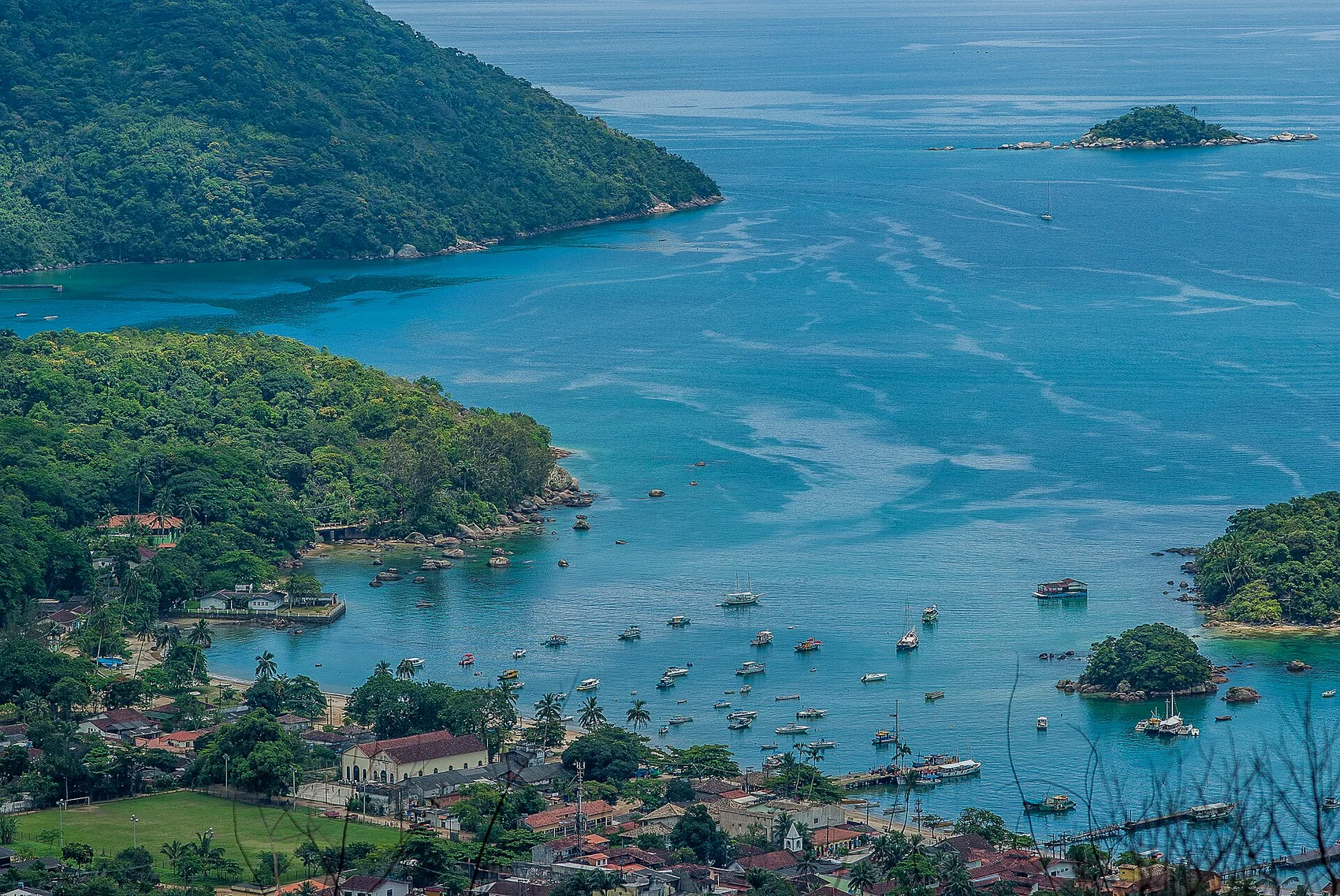
The chalet sits about 400 m above Paraty, and from its one deck you look out over a triple view that is hard to overstate without sounding like a brochure, so we will keep it plain: the Bay of Paraty in front, Angra dos Reis along the coast, and Ilha Grande beyond. There is an infinity pool set against all of it. After a travel day — a flight, a drive, the climb — the first thing most guests do is drop their bags and get in the water. That swim, with the bay laid out below, is the moment the journey pays for itself. You can read more about the house on the chalet page.
That is the argument for planning the arrival well. Do the boring parts thoughtfully — pick the right airport, land at a sensible hour, choose transfer or car with clear eyes — and you protect the good part. Nobody remembers a smooth transfer a week later. What they remember is stepping off the deck into the pool as the light goes gold over the islands, unhurried, already home for the week.
Making the journey part of the trip
One last reframe, because it changes how the whole thing feels. It is tempting to treat the getting-there as pure friction — hours to be endured between the plane and the pool. We would gently push back on that. The road to Paraty is not the tax you pay for the destination; it is the first chapter of it.
The stretch of the BR-101 along the Costa Verde is, by any honest measure, one of the great drives in Brazil. Mountains on one shoulder, islands on the other, little bays and fishing villages sliding past, the light shifting as the afternoon goes on. If you have the time, stop somewhere for a coffee and look at the sea. If you are driving from São Paulo over the Cunha mountains, the descent through cloud and forest into Paraty is its own reward. Treated as scenery rather than schedule, the transfer becomes something you would not want to skip even if you could.
That is also, quietly, the answer to why there is no big airport here and never should be. The friction is the filter. The few hours between the runway and the town are exactly what keep Paraty the size and shape and pace it is. Fly to Rio or São Paulo, come down the coast slowly, and let the journey do its work. By the time you are climbing the last hill to the chalet, you will already have arrived, in every sense that matters.
Planning notes and next steps
To pull it all together into something you can act on:
- There is no commercial flight to Paraty. The local airstrip is charter and air taxi only. Plan on a major airport plus a road transfer.
- For most international guests, fly into Galeão (GIG) in Rio — the simplest connection and the shorter, prettier drive of roughly four hours.
- Consider São Paulo (GRU) if fares or routing favour it, accepting a slightly longer transfer of four to five hours.
- Land in the morning or early afternoon if you can, so you drive the coast in daylight; otherwise spend a night in the gateway city.
- Choose a private transfer for the airport leg if you are tired or in a group; add a local rental car later if you want to roam.
- Tell us your flight details and we will help arrange the last leg up to the house, whether that is a driver, a taxi from the bus station, or advice on a charter.
When you are ready to build the days around the arrival, our other guides carry on from here. If you are still shaping the trip, how many days to spend in Paraty and the three-day itinerary are good starting points, and the ultimate guide to Paraty ties everything together. For getting out on the water once you are settled, see Paraty to Ilha Grande and our boat days page. And whenever a question comes up that a guide does not answer, just ask us — helping guests arrive smoothly is the part of hosting we like best.
Come stay above the bay
Chalé Bel Air sits on the ridge that looks over everything in this guide. Tell us your dates and what kind of trip you are after — we answer personally.
Ask about your datesFrequently asked questions
Does Paraty have an airport?
Yes, but not one you can buy a ticket to. Paraty has a small paved airstrip just outside town that handles private charters, air taxis and light aircraft only. There are no scheduled commercial flights, so nearly everyone flies into Rio de Janeiro or São Paulo and continues by road.
What is the nearest airport to Paraty?
The nearest major airports are Rio de Janeiro's Galeão International (GIG), roughly a four-hour drive north-east, and São Paulo's Guarulhos (GRU), roughly four to five hours south-west. Rio's downtown Santos Dumont (SDU) and São Paulo's Viracopos (VCP) are alternatives depending on your flights.
Which airport should I fly into for Paraty?
If you are coming from abroad, GIG in Rio is usually the simplest single connection and the more scenic drive. If you are already in Brazil or find a better domestic fare, GRU or SDU can work just as well. The deciding factors are your flight routing, your arrival time and whether you want to spend a night in the gateway city first.
How long is the drive from Rio airport to Paraty?
Plan on about four hours from Galeão (GIG) in normal conditions, following the BR-101 Rio–Santos coastal highway south-west. Weekend, holiday and summer traffic, plus occasional roadworks, can push that to five or six, so it is wise to build in a buffer.
Can you fly into Paraty by private plane or charter?
You can. Air taxis and private charters use the local airstrip, most often as short hops from Rio or São Paulo. It is the fastest way in and skips the long drive, but it is a premium option, weather-dependent, and the aircraft are small. For most guests a car transfer from a major airport is simpler and far cheaper.
Is it better to take a private transfer or drive yourself from the airport?
A private door-to-door transfer is the most relaxed choice after a long-haul flight, and it delivers you straight up to the chalet. Renting a car gives you freedom for waterfall days, distilleries and down-coast beaches, but the mountain approach and Brazilian traffic are best met rested. Many guests transfer in and rent a car locally later.
Should I spend a night in Rio or São Paulo before Paraty?
If your flight lands in the afternoon or evening, yes. Driving the coastal road for the first time in the dark, tired, is the one thing we steer guests away from. A night in the gateway city lets you start the drive fresh in daylight and turns the journey itself into part of the trip.


.jpg)