The long version of what we tell guests about mornings in Paraty: how Brazilian coffee culture actually works, where the padarias and brunch tables are, and what pão de queijo, tapioca and açaí really are before you order.
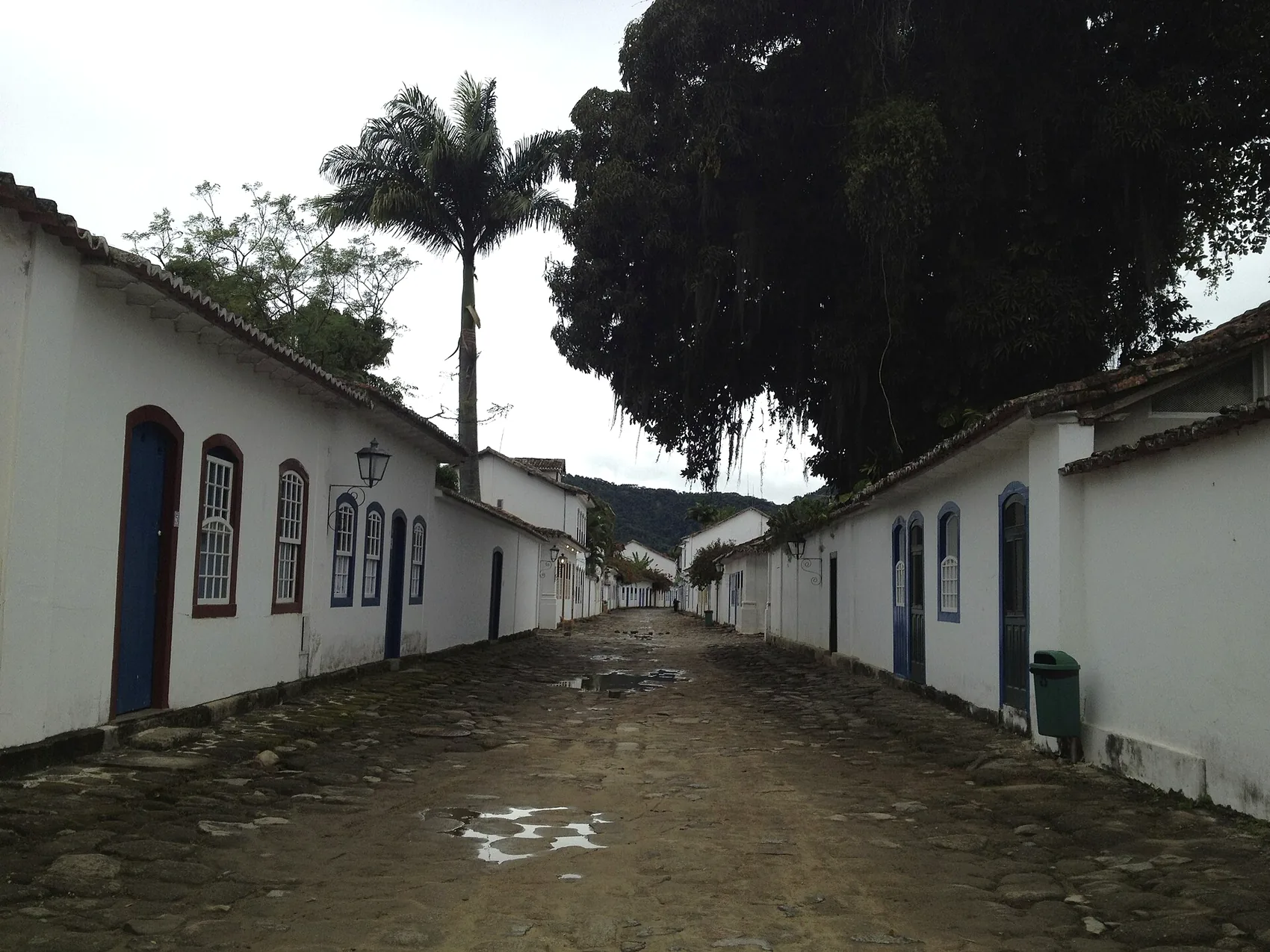
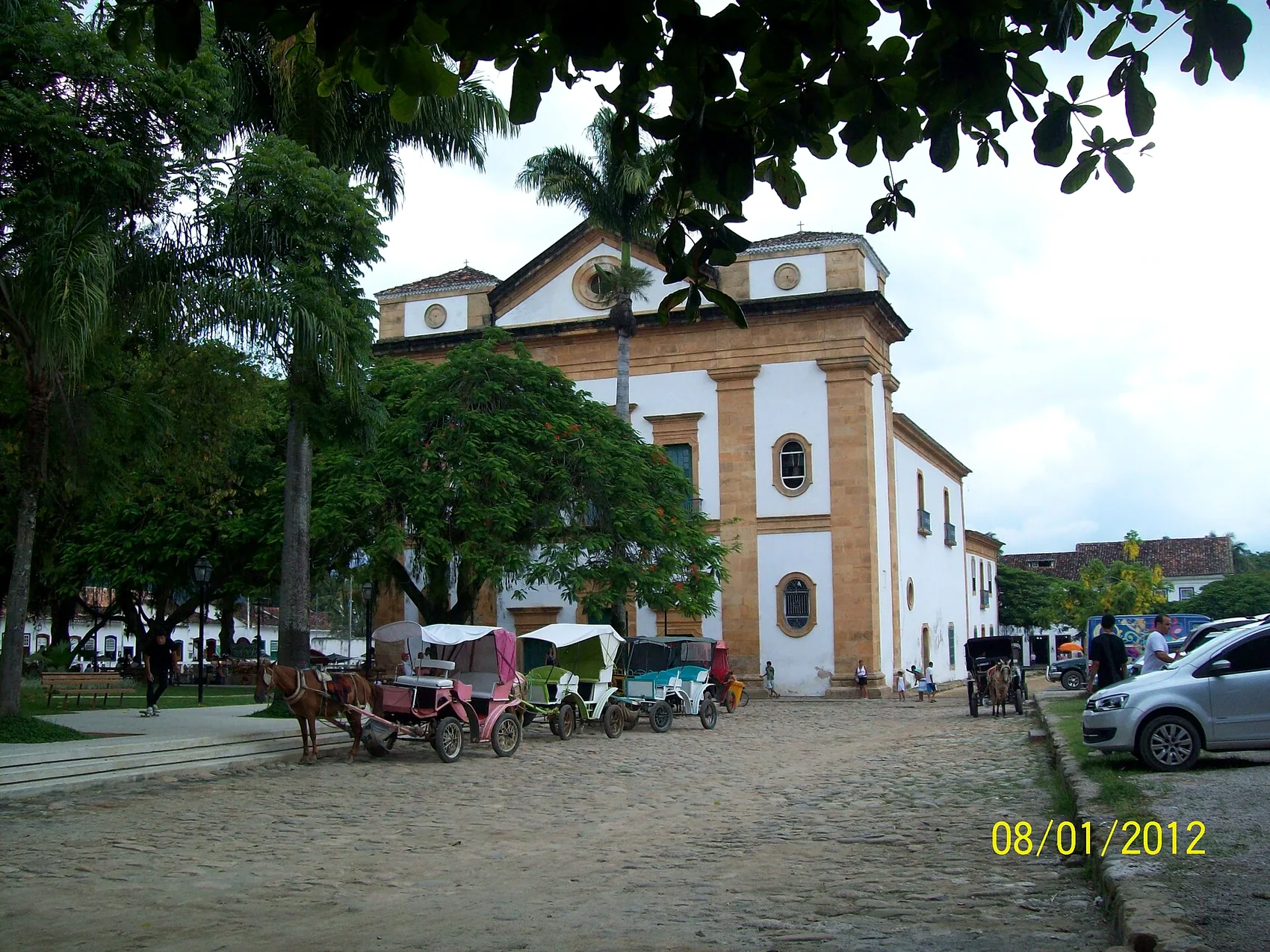
There is a particular kind of morning that Paraty does better than almost anywhere. The heat has not yet arrived, the day boats have not yet loaded, and the historic centre belongs to the people who live here: a delivery bicycle over the cobblestones, a shopkeeper hosing down the stone in front of a doorway, the smell of coffee and warm bread coming out of a padaria that has been open since seven. If you get up for it, this is the quiet, unhurried Paraty that the afternoon crowds never see. And the best way into it is through the town's food, which is what this Paraty café brunch guide is about.
This guide is about the first, gentlest part of the day here: the cafés, the bakeries, the brunch tables and the sweet counters. Paraty café brunch culture is not a single fashionable scene so much as a set of overlapping habits, some of them centuries old and some of them recent, and knowing the difference is what turns a decent breakfast into a good one. We host guests up on the ridge above town, and mornings are the thing people ask about most once the big sights are sorted, because a slow, well-fed start sets the tone for everything that follows. What follows is the long version of what we tell them.
We will go through it by type rather than by name. Which specific café has the best flat white this season, or which padaria the locals swear by this year, changes faster than any guide can keep up with, and we would rather teach you to read the town than send you chasing a name that may have changed hands. So this is a guide to kinds of places and kinds of food: how a Brazilian café actually works, what the padarias do, where brunch lives, and what pão de queijo, tapioca and açaí really are before you stand at a counter deciding. For the wider trip around all of this, our complete guide to Paraty is the place to start.
How a Paraty morning actually works
Before we talk about where to go, it helps to understand the shape of a Brazilian day, because it is not the shape most visitors arrive with. In Brazil, breakfast — café da manhã, literally "morning coffee" — is a light meal on purpose. The big meal of the day is lunch, eaten properly and slowly in the early afternoon, and dinner is often lighter again. So a Brazilian breakfast is not the heaped brunch plate of the English-speaking world. It is coffee, fresh bread, a little cheese and ham, some fruit, maybe a slice of cake, and it is meant to get you moving rather than to hold you down.
That single fact explains a lot about how the town's cafés behave. It is why the padarias are busiest first thing and why the sit-down "brunch" tables, in the international sense of the word, are a more recent, tourist-shaped addition rather than the local default. It also means that if you are coming from São Paulo or Rio you will find the rhythm familiar, while guests from abroad sometimes need a day to recalibrate — a Brazilian breakfast is smaller and a Brazilian lunch is far larger than they expect.
There is one more thing worth knowing up front: most places you will stay, from a small pousada to a rental house, include café da manhã, and Brazilian hospitality takes that meal seriously. A good pousada breakfast is a spread of tropical fruit, several kinds of bread and cake, eggs, cold cuts, cheese, juice and a pot of strong coffee, and it is often genuinely lovely. This changes the calculus of eating out in the morning. On plenty of days the smartest move is simply to eat where you are staying and save the café for a mid-morning coffee. When you do go out for breakfast, you are going for the atmosphere — the cobblestones, the light, the people-watching — as much as for the food.
Padarias open early, usually by seven, and are your reliable bet for a first coffee. The tourist cafés on and around the main square tend to open later, mid-morning, and run through the afternoon. Out of season, some keep shorter and less predictable hours, so if you are up with the sun, aim for a working bakery rather than a brunch café. It is a small thing to know, but it is the difference between a coffee in your hand at half past seven and standing in front of a locked door.
Coffee, and how to order it like a local
Coffee is not a side note in Brazil; it is close to a national identity. The country has been the world's largest coffee producer for around a century and a half, and the crop is woven into the history of this whole region — the coffee boom of the nineteenth century reshaped the state of Rio de Janeiro and the Paraíba valley just inland. So when you drink coffee here, you are drinking something with deep local roots, even if the beans in your cup travelled down from the highlands of Minas Gerais or São Paulo state.
The cafezinho
The building block of Brazilian coffee culture is the cafezinho — "little coffee" — a small cup of strong black coffee, traditionally pre-sweetened, drunk quickly and often. It is less a considered ritual than a punctuation mark in the day: offered to you when you arrive somewhere, drunk standing at a counter, poured from a flask on a shop counter as a courtesy. If someone offers you a cafezinho, the polite and correct answer is yes. It is small, it is strong, and it is one of the friendliest gestures in the culture.
The thing that catches visitors out is the sugar. By long habit, coffee here is often sweetened before it reaches you, sometimes quite generously. If you take yours black and unsweetened, learn the phrase sem açúcar — "without sugar" — and say it when you order. In the more modern speciality cafés this is less of an issue, and you will be handed sugar on the side, but at a traditional counter it is worth saying up front.
Beyond the little cup
The other everyday order is a café com leite, coffee with hot milk, which is the classic breakfast drink and what most people mean when they sit down to eat in the morning. Alongside it you will increasingly find the full espresso-bar vocabulary — espresso, cappuccino, and in the more design-conscious cafés, flat whites, pour-overs and single-origin beans — because a speciality-coffee wave has reached Paraty as it has reached the rest of Brazil. The historic centre now holds a small number of cafés doing careful, modern coffee with imported and domestic beans, and they are a pleasure if that is your thing.
A note for guests from abroad: a Brazilian cappuccino is not always the Italian one. In some places, particularly older and more casual ones, "cappuccino" can arrive as a sweeter, spiced, sometimes powdered drink closer to a hot chocolate with coffee in it. It is not wrong, it is just a different tradition. If you want the espresso-and-steamed-milk version, the speciality cafés are your safer bet, and it is worth a quick look at what other people are drinking before you order.
The padaria: Brazil's most useful institution
If you learn to use one Brazilian institution well, make it the padaria. A padaria is a bakery, but that undersells it. It is a bakery, café, corner shop and neighbourhood meeting point rolled into one, and it is the single most useful place in any Brazilian town. In Paraty the padarias are where the day genuinely starts, long before the cafés on the square unlock their doors.
The heart of a padaria is bread, and the bread you want to know about is pão francês — "French bread," a small, crisp-crusted white roll baked fresh through the day. It is the everyday bread of Brazil, sold by weight, still warm if you time it right, and it is the base of the classic quick breakfast. Order it as pão na chapa: the roll split, buttered and pressed flat on a hot griddle until the butter soaks in and the edges crisp. With a café com leite, that is a proper Brazilian breakfast for the price of very little, and eaten standing at the counter it is one of the most quietly satisfying things you can do here.
Reading the counter
A good padaria counter rewards a slow look. Beyond the bread you will find a glass case of salgados — savoury snacks — and a run of sweet things. The salgados are worth knowing because they carry you through the day: the coxinha, a teardrop of shredded chicken in dough, fried golden; the pastel, a thin, crisp fried pastry with various fillings; the pão de queijo, of which more below; empadinhas, little savoury pies; and esfihas, small open or folded pastries of Middle Eastern origin that are entirely at home in Brazil. None of this is fancy, all of it is good, and a couple of salgados and a juice is a fine, cheap lunch on a beach day.
The sweet side of the counter runs to cakes — bolo de fubá, a dense cornmeal cake often flavoured with fennel or cheese, is a classic morning slice — plus filled doughnuts, brigadeiros, and a rotating cast of puddings. Point at what looks good; the person behind the counter is used to visitors and generous with a taste. And here is the practical magic: because a padaria also functions as a corner shop, it is where you buy water, sunscreen, a phone top-up and a bag of fruit on the way to the boat. Treat it as your basecamp.
If you learn to use one Brazilian institution well, make it the padaria — bakery, café, corner shop and meeting point in one.
Pão de queijo, properly understood
Of all the small foods in this town, pão de queijo is the one guests fall for hardest, so it deserves its own section. It is a small, round, chewy roll made not from wheat but from tapioca starch — the starch of the cassava root — bound with cheese and egg and baked until the outside is crisp and the inside is soft, stretchy and hollow. Because there is no wheat, it is naturally gluten-free, which makes it a small miracle for anyone who cannot eat ordinary bread.
Its home is Minas Gerais, the state inland known for coffee, cheese and mountain cooking, and it spread from there across the whole country until it became a kind of national default. The essential thing to know is that pão de queijo is a warm food. Fresh out of the oven it is springy and fragrant and faintly squeaky against your teeth in the best way; an hour later, cold in a bag, it is a sad shadow of itself. So the move is to buy it where it is coming out of the oven and eat it on the spot, warm, with a coffee. Padarias and cafés both make it; the good ones bake in batches through the morning, and if you catch a fresh tray you are in luck.
You will meet its variations too. There are larger, softer versions and small crunchy ones; there is pão de queijo dough sold frozen to bake at home; and there is the closely related chipa and various regional cousins. You do not need to keep the names straight. You need to keep it warm. If a guest leaves Paraty having learned only one food habit, we would happily have it be this one.
Tapioca, the other gluten-free star
The second great cassava food of the Brazilian morning is tapioca, and it is worth seeking out because it is made fresh in front of you and because, again, it happens to be gluten-free. Brazilian tapioca is not the pudding of tapioca pearls that the word means in English. It is a soft, thin flatbread made by sifting damp cassava starch into a hot, dry pan, where the heat fuses the starch into a pale, pliable round in a minute or two. There is no wheat, no oil and no rising; it is close to the oldest food traditions of Brazil, with roots in Indigenous cooking long before the Portuguese arrived.
What makes it a meal is the filling, folded in while the round is still hot in the pan. On the savoury side you will find cheese, ham and egg, or the dried, salty beef called carne seca. On the sweet side, the classic is coconut with condensed milk, or banana, or a chocolate-hazelnut spread; a sweet tapioca folded around coconut is close to a Brazilian crêpe and a lovely thing mid-afternoon. Because each one is made to order, a tapioca stall or counter is a nice antidote to sitting and waiting — you watch it happen, it takes two minutes, and you eat it walking.
Tapioca lives at a slightly different address than the sit-down cafés. You will find it at dedicated tapioca counters, at market stalls, at beach kiosks and at the food stands that appear around festivals and busy evenings. If you have a coeliac in the party, tapioca and pão de queijo between them will keep that person very happily fed for a whole trip, which is worth knowing before you arrive worrying about it.
Paraty café brunch: what brunch here really looks like
Now for the word people actually search: brunch. Here is the honest picture. Brunch in the international sense — the leisurely, mid-morning, eggs-and-avocado, bottomless-coffee sit-down meal — is not a deep local tradition, because the Brazilian day is built differently, as we have said. But it exists here, and it has grown, because Paraty draws a steady flow of visitors from Rio and São Paulo and from abroad who want exactly that, and the town has answered.
Where to find it
Brunch, when you want it, lives in the cafés on and around the main square and the streets just off it, rather than at the harbour end, which is oriented toward lunch and dinner and the seafood houses. These café-restaurants open mid-morning and do a relaxed menu that bridges breakfast and lunch: eggs several ways, toasted sandwiches, açaí bowls, fruit plates, cakes, good coffee and fresh juice, often at a shaded table on the cobblestones where you can sit for an hour and watch the town wake up. That setting — colonial fronts, uneven stone, the light coming in low — is really what you are paying for, and it is worth paying for at least once.
What you will not generally find is the full brunch theatre of some big cities: the queues, the set menus, the bottomless mimosas. Paraty brunch is a quieter, more improvised thing, and better for it. If you want the platonic long brunch, aim for a weekend mid-morning at a café just off the square, order coffee and something eggy and something sweet, and let it run. If you are travelling with children, this is also the easy meal of the day — the pace is gentle and there is fruit, cake and juice for even the fussiest eater. Our guide to Paraty with kids goes deeper on eating out with a young crew.
The juice, which is the point
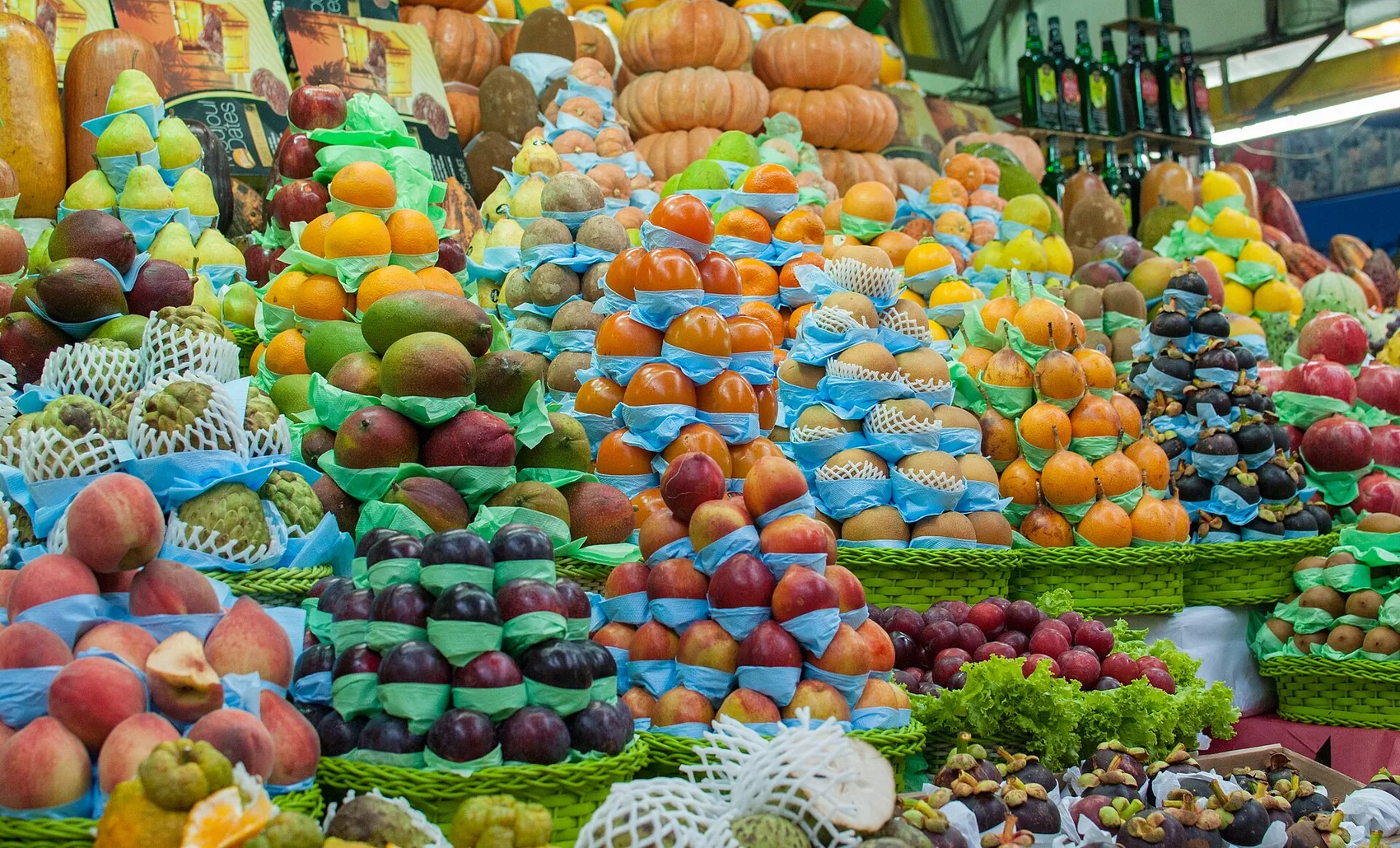
One thing no café menu prepares a first-time visitor for is the fruit juice. Brazil's suco culture is extraordinary, built on tropical fruit that most of the world never sees fresh: acerola, cashew fruit, graviola, umbu, passionfruit, and combinations of the above. A café da manhã or a brunch table is where you meet it, and ordering a juice you have never heard of is one of the small adventures of the trip. Ask for it sem açúcar if you want the fruit rather than the sugar; many places sweeten by default. A cold passionfruit juice on a hot morning is, on its own, a decent reason to sit down somewhere.
Sweet shops, doceria and the old sugar coast
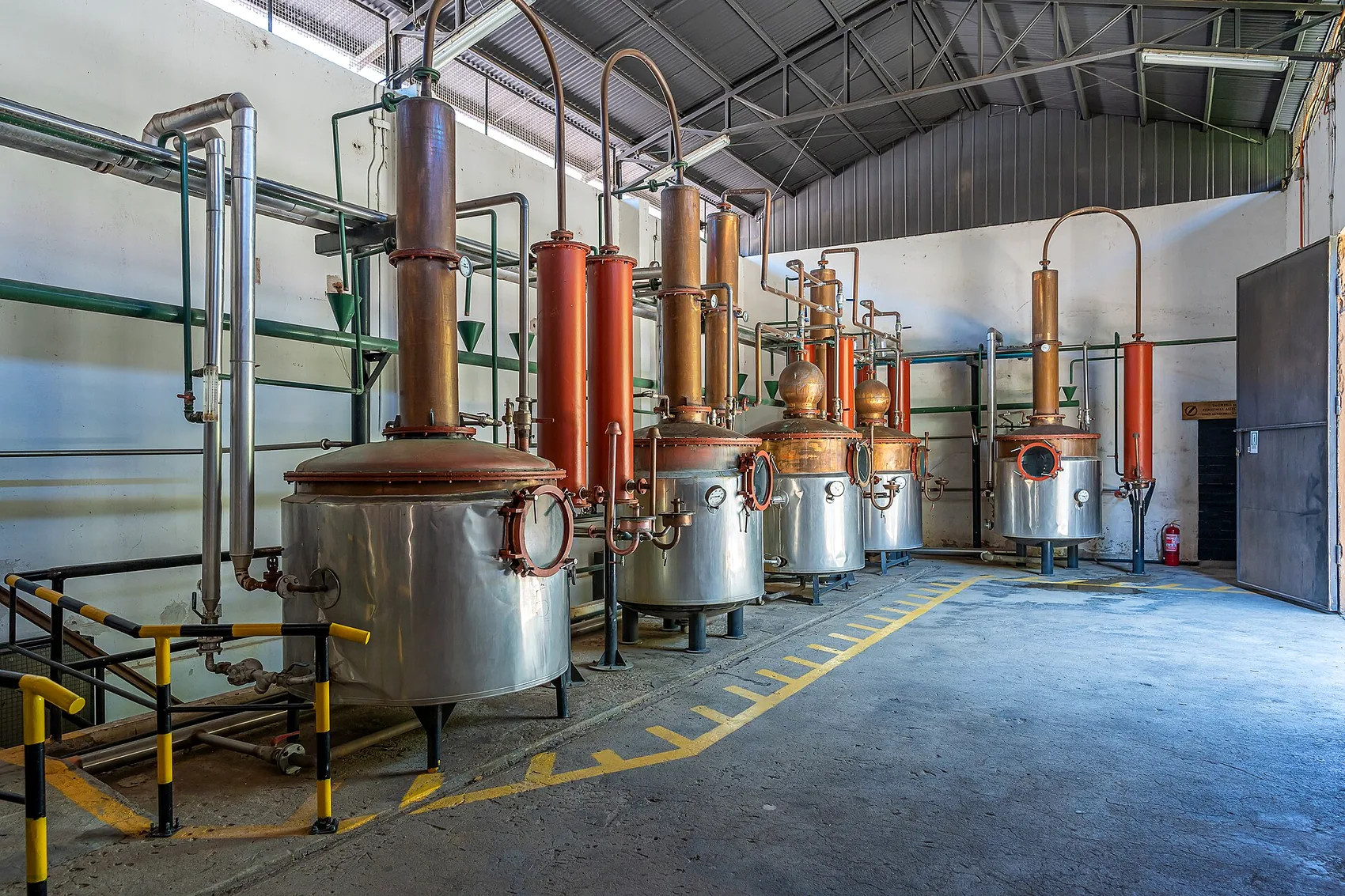
Paraty has sugar in its bones. Long before it was a literary town or a diving base, this was a sugar-and-cachaça coast, with cane growing in the warm valleys behind the bay and mills pressing it into juice and spirit. That heritage shows up on the sweet side of the food culture, and it is worth a wander even if you are not usually a dessert person. For the full story of how sugar and spirit built the town, our guide to the cachaça distilleries of Paraty is the companion piece to this one.
The traditional sweets
The classic Brazilian sweets you will meet here are simple, old and very sweet, most of them descended from Portuguese convent cooking and the abundance of local sugar and fruit. Doce de leite is milk cooked slowly with sugar until it turns to a thick caramel; goiabada is a dense guava paste, superb with a slice of firm cheese in the pairing Brazilians call Romeu e Julieta; bananada does the same trick with banana; and cocada is a chewy coconut sweet sold in slabs, sometimes white, sometimes darkened with burnt sugar. You will find these at market stalls, at little shops in the centre and at the sweet counters of the padarias.
Then there is the brigadeiro, the beloved chocolate-fudge ball rolled in sprinkles that appears at every Brazilian birthday and, increasingly, in dedicated sweet shops that make gourmet versions in a dozen flavours. It is unashamedly a treat for the sweet-toothed, and children adore it. A small box of brigadeiros or a bag of cocada makes a good, cheap, portable souvenir, far more characterful than a fridge magnet.
Sorveterias and cold things
On a hot afternoon, the sweet destination shifts to the sorveteria, the ice-cream shop, and specifically to the ones serving sorvete made from the same tropical fruit that powers the juices. An ice cream or sorbet of graviola, cupuaçu, passionfruit or açaí is a different and better thing than the vanilla-and-chocolate you can get anywhere, and the fruit-forward sorveterias in the centre are a reliable mid-afternoon stop, particularly with kids melting in the heat. This is also, not coincidentally, where açaí often lives, which brings us to the last of the big three.
Açaí, and how not to get it wrong
Açaí has become a fashionable "superfood" abroad, which means many visitors arrive with the wrong idea of it. Here is the Brazilian reality. Açaí is a small, dark purple berry from a palm that grows in the Amazon, sold in the south as a frozen pulp that is blended into a thick, deep-purple, sorbet-like mass and served in a bowl or cup. In Brazil it is not a virtuous breakfast; it is a cold, energising treat, usually sweetened — traditionally in the Amazon with the syrup of another berry, guaraná — and eaten as a snack, a pick-me-up or a light meal when it is too hot to face anything else.
The standard serve is açaí na tigela, "açaí in a bowl": the frozen purple base topped with granola, sliced banana and often strawberry, condensed milk or honey. It arrives cold enough to be an ice cream and thick enough to eat with a spoon standing up, and on a scorching Paraty afternoon it is exactly right. You order it at juice bars, açaí counters and beach kiosks rather than at the sit-down brunch cafés, and you choose your toppings at the counter. A word of warning for anyone watching sugar: the toppings and syrups can pile up fast, so if you want the fruit rather than the sundae, ask for it lighter.
Three foods, three gluten-free wins. Pão de queijo, tapioca and açaí are all naturally free of wheat and gluten. If you or someone in your party cannot eat ordinary bread, these three between them cover breakfast, a snack and a light meal, and they are everywhere in Paraty. It is one of the easier places in the world to eat well gluten-free without making a fuss about it.
Putting it together: a good Paraty morning
Let us make this concrete, because the best way to understand a food culture is to walk through a morning in it. Say you are staying up the hill with us and you have a boat booked for eleven. You wake early, swim in the pool while the bay is still coming out of its haze, and eat a light breakfast at the house — coffee, fruit, some bread. Then you drive the few minutes down into town and park at the edge of the historic centre, because the old streets are closed to cars, which is part of why they are so pleasant on foot.
You walk in over the cobblestones while the town is still quiet, and you stop at a padaria for a second, better coffee and a warm pão de queijo straight off the tray, eaten standing at the counter. You buy a couple of bottles of water and a bag of fruit for the boat while you are there. With half an hour to spare you sit at a café table just off the square, order a fresh juice of something you cannot pronounce, and watch the shopkeepers open up and the first delivery bikes rattle past. Then you walk down to the harbour and your boat. That is a Paraty morning, and it costs very little and asks nothing of you but that you get up for it.
On a rainy day the same logic holds, just slower and indoors: a long café breakfast becomes the event rather than the prelude, and you let it run into an early lunch. Our guide to a rainy day in Paraty leans on exactly this. And if you would rather not go into town at all, a morning of pool, coffee and a book up at the house, with the triple view of the bay laid out below you, is its own kind of perfect — the swim you keep coming back to between everything else.
Where the cafés and bakeries are, by area
Paraty is small, and its food geography is easy to hold in your head once you know the three zones. Getting between them is a short walk or a very short drive; our guide to getting around Paraty covers the mechanics, but for mornings you will mostly be on foot.
The historic centre
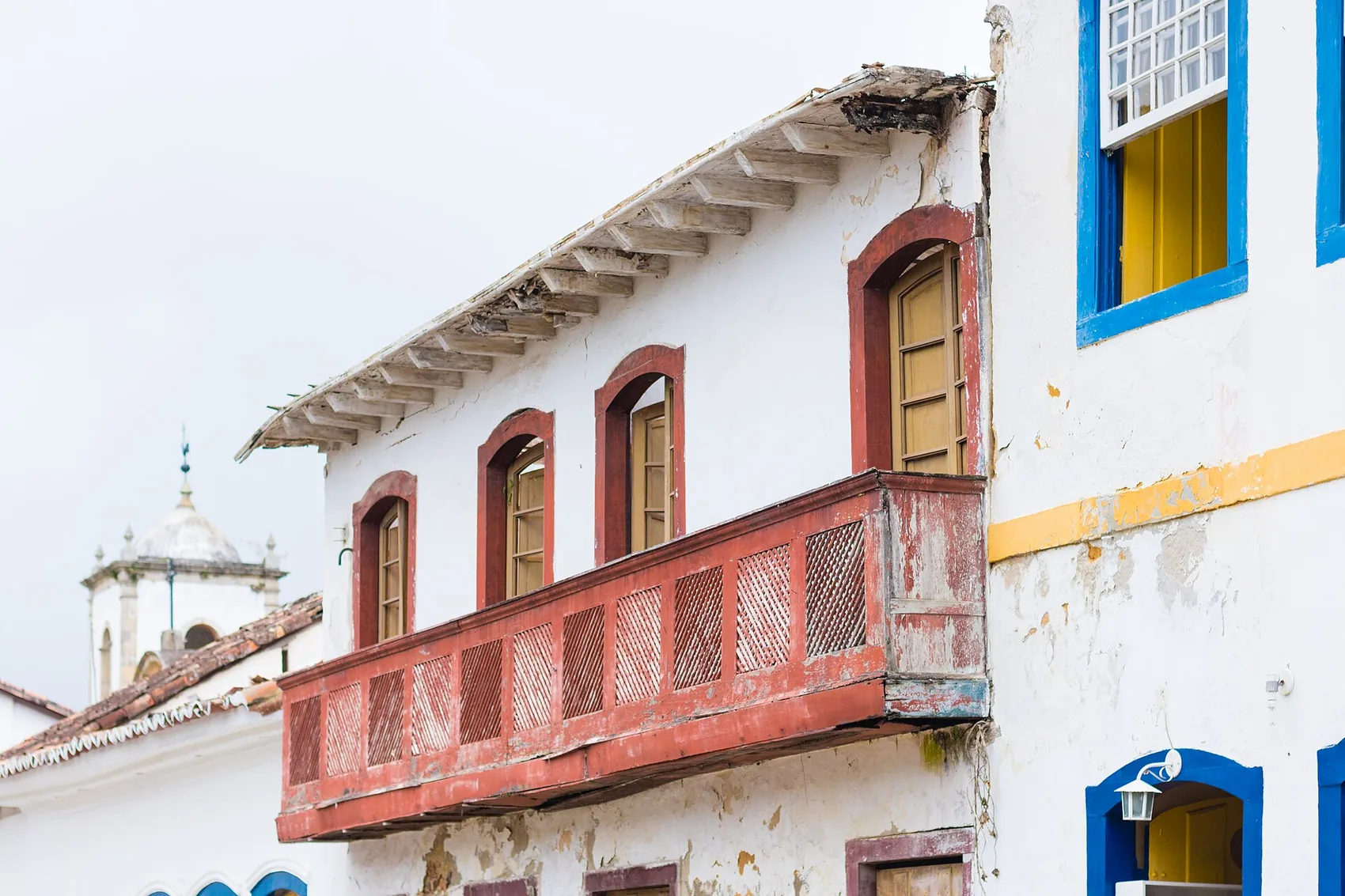
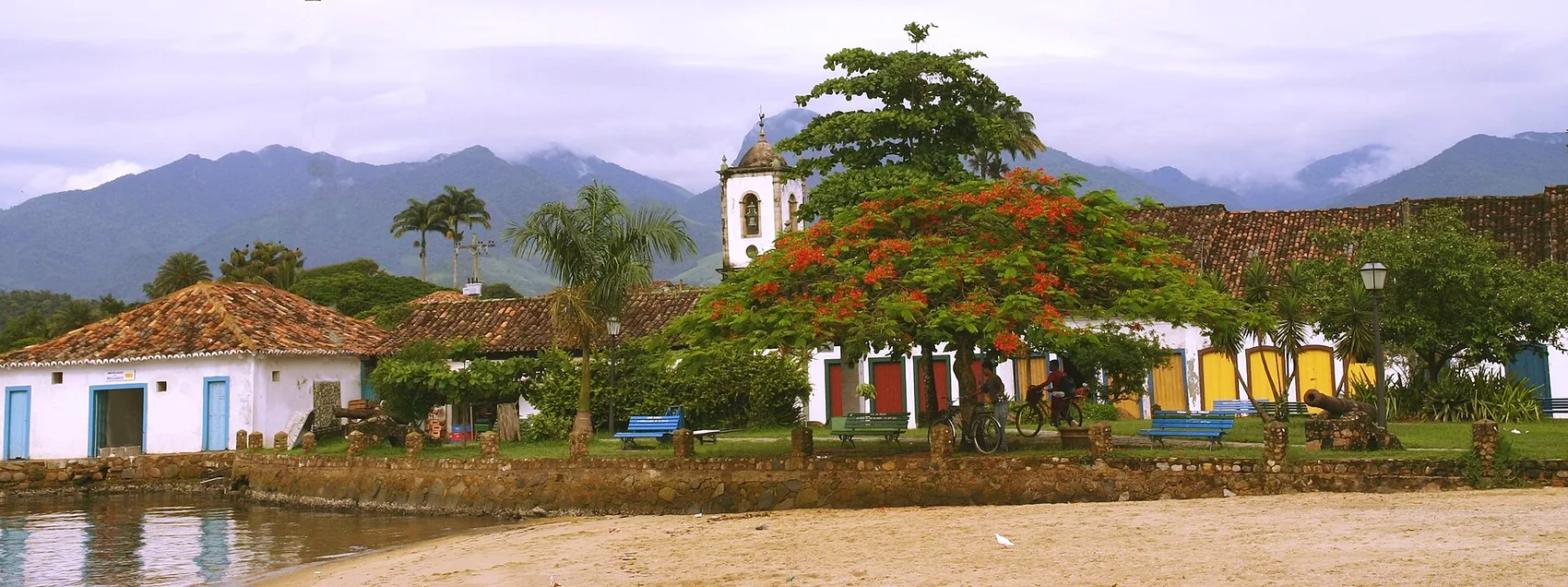
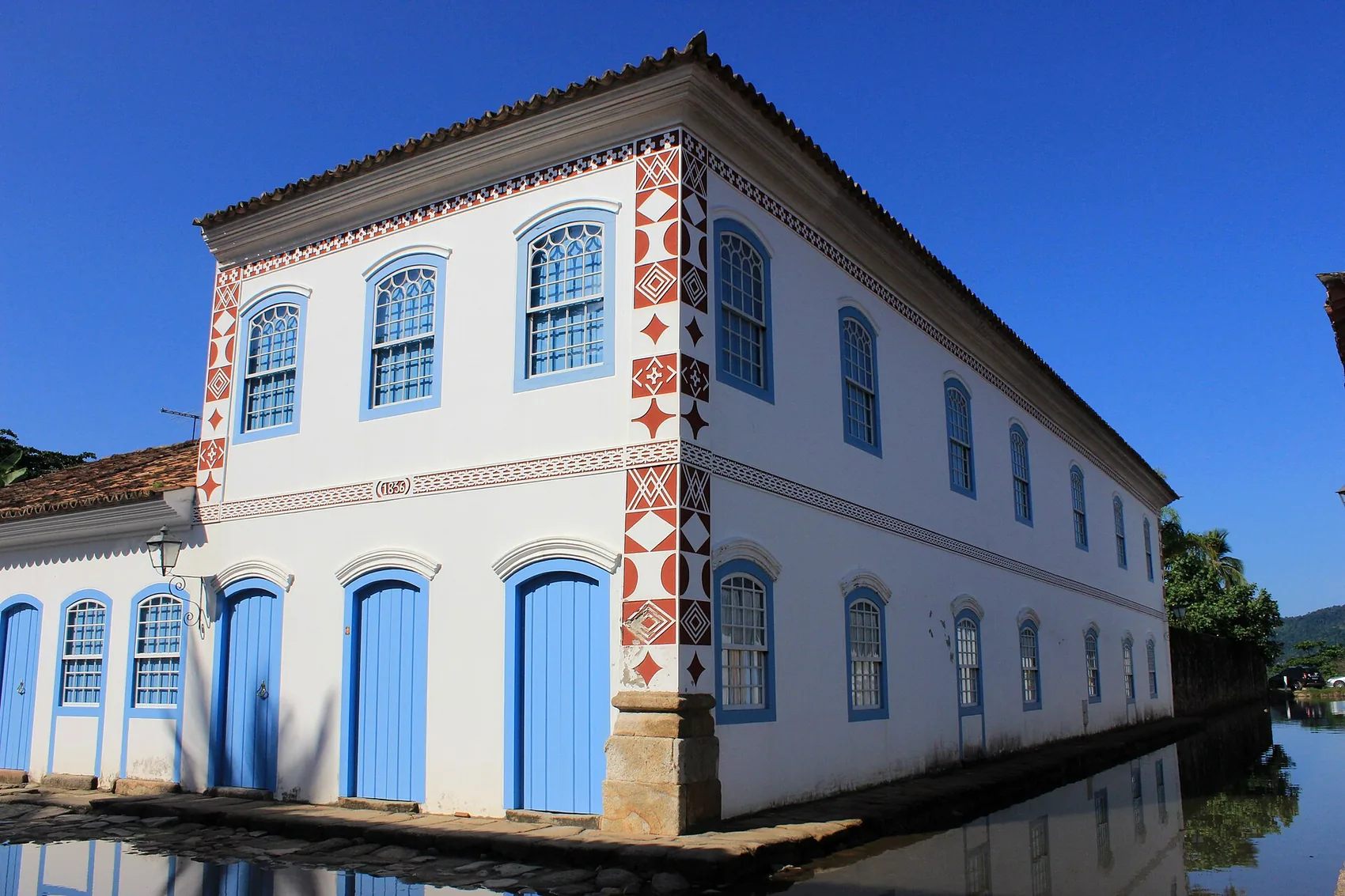
This is the heart of it: the grid of whitewashed colonial fronts and uneven cobblestones, closed to cars, where the atmospheric cafés and the old padarias sit. Everything in this guide is at its best here — the tables on the stone, the light, the people-watching. It is where you go for a slow brunch or a first coffee with a view of colonial architecture, and it is worth the mild ordeal of the cobblestones underfoot. Wear flat, sensible shoes; the stones are handsome and genuinely uneven, and morning is when they are wet from the tide or the hose.
The newer town and the main roads
Just outside the historic grid, the modern working town has its own padarias and cafés, less pretty but often earlier, cheaper and more local. If you want a fast, honest breakfast without the tourist markup, or you are up before the centre opens, this is where to go. It is also where you will find the everyday shops, the pharmacy and the supermarket if you are self-catering up at a rental and stocking up for the house.
The beach kiosks
Out along the coast and on the islands, food shifts to the beach kiosk — the barraca — which does its own morning trade in coffee, coconuts, açaí, tapioca and grilled snacks. These are not brunch destinations, but on a beach day they are exactly what you want: a coconut water straight from the shell, an açaí bowl in the shade, a grilled cheese-on-a-stick from a passing vendor. For where those beaches are and how to reach them, see our guide to the quiet beaches around Paraty.
When the town's food comes out to play
Two or three times a year Paraty's food culture stops being a background hum and becomes the main event, and if your trip lands on one of these you are in for something. During the Festa do Divino, the town's great religious festival in the weeks after Easter, the streets fill with traditional food and sweets tied to the celebration, and the old convent-descended treats are made and shared in a way you will not see the rest of the year. The literary festival, FLIP, held in the historic centre, turns the whole town into a crowded, buzzing café for a few days, with pop-up stalls and every table full. And the cachaça festival, usually in August, is as much about food as spirit, with tasting tents and stalls through the centre.
The trade-off with all of these is crowds and higher prices, so time your visit deliberately. If you want the food culture at full volume and do not mind the crush, aim for a festival; if you want the quiet version, avoid them. Either way it is worth knowing the calendar before you book, which is what our guides to the festivals and events of Paraty and the best time to visit Paraty are for. Even outside festival season, a good morning of coffee, bread and fruit is one of the constants of this town, available every single day.
Practicalities, prices and small etiquette
A handful of practical notes will save you a little friction. On paying: many small padarias and market stalls are still happiest with cash, particularly out of season and away from the main square, so carry some reais even though cards and the Pix instant-payment system are widely accepted at the bigger cafés. On tipping: a service charge, usually ten percent, is often already added to a sit-down bill, so check before you add more; at a counter you do not tip. On language: menus in the tourist cafés often have English, but a padaria counter may not, and a few food words — pão, café, queijo, suco, sem açúcar — will carry you a long way and are warmly received.
On value: café da manhã and counter food in Brazil is, by international standards, inexpensive, and it is one of the genuine pleasures of travelling here that a lovely breakfast costs very little. The sit-down brunch cafés in the historic centre carry a location premium — you are paying for the cobblestones and the view — but even those are reasonable by the standards of Rio or São Paulo, let alone Europe or North America. Guests from abroad are routinely surprised, in a good way, at how far a morning's budget stretches.
One last honest note on expectations. Paraty is a UNESCO-recognised gastronomy town with a serious food reputation, but that reputation rests more on its restaurants, its seafood and its cachaça than on a big-city speciality-coffee scene. The café and brunch culture here is charming, improving and full of good small food, but if you are a serious coffee obsessive arriving from a city with a hundred third-wave roasters, calibrate accordingly: you will find a few genuinely good modern cafés and a great deal of lovely, simple, traditional food, rather than a dense speciality scene. That is not a criticism. It is the character of the place, and it is a large part of why the mornings here feel like a holiday rather than a city.
Where mornings fit in the trip
Food, and breakfast especially, is one of the easiest ways to plan a day here, because a good morning anchors everything else. A slow café breakfast before a boat; a padaria stop on the way to a beach; an açaí in the shade when the heat peaks; a sweet-shop wander to end an afternoon. None of it needs booking, none of it is expensive, and all of it is genuinely Paraty rather than a tourist performance. If you are still shaping your days, our guides to how many days to spend in Paraty and a three-day Paraty itinerary weave meals into a full plan, and the wider things to do around Paraty page collects the rest.
For couples, a long quiet brunch on the cobblestones is one of the gentlest, most romantic hours the town offers, and it costs almost nothing; our honeymoon guide leans into exactly that kind of unhurried morning. For families, the café-and-sorveteria circuit is the low-stress spine of a day. For friends and solo travellers alike, a padaria counter and a cafezinho is the friendliest possible way into a town where the food really is the culture. However you travel, get up for at least one proper Paraty morning while you are here. It is the version of the town the afternoon crowds never get to see.
And when the morning is done and the heat comes up, there is a good argument for heading back up the hill for a swim. The chalet sits about four hundred metres above the town, with an infinity pool and one deck that holds a triple view over the Bay of Paraty, Angra dos Reis and Ilha Grande — the quiet counterweight to a busy morning in the centre, and the place you come back to between everything else. If you are planning a stay and want a hand shaping your days around the town's food, its beaches and its boats, get in touch and we will point you at the right mornings. For everything else — history, boats, beaches and the rest — the full journal is where we keep it.
Come stay above the bay
Chalé Bel Air sits on the ridge that looks over everything in this guide. Tell us your dates and what kind of trip you are after — we answer personally.
Ask about your datesFrequently asked questions
Where do you get the best breakfast in Paraty?
The most atmospheric breakfasts are in the historic centre, where a handful of cafés and padarias set tables out on the cobblestones for coffee, fresh bread and fruit. Most pousadas and rentals also include a generous café da manhã, so many mornings you will not need to leave the house at all. For a proper sit-down brunch, look to the cafés on and around the main square rather than the harbour, which skews toward lunch and dinner.
What is a typical Brazilian breakfast?
Café da manhã is deliberately light, because lunch is the main meal. Expect strong coffee, fresh bread with butter, sliced cheese and ham, tropical fruit, cake and juice. In a café you will also find pão de queijo, tapioca and misto quente, a pressed ham-and-cheese toastie. It is simple, fresh food meant to start the day rather than fill it.
What is pão de queijo?
Pão de queijo is a small, chewy cheese roll made from tapioca starch and cheese, naturally gluten-free and served warm. It comes from Minas Gerais, the coffee state inland, and it is everywhere in Paraty, from bakery counters to café baskets. Eaten fresh and warm with a coffee, it is one of the great small pleasures of a Brazilian morning.
What is tapioca, the Brazilian kind?
Brazilian tapioca is a thin, soft crêpe made from cassava starch that sets into a flatbread in a hot pan, with no wheat and no gluten. It is folded around fillings, sweet or savoury: cheese, ham and egg on the savoury side, or coconut, banana and condensed milk on the sweet. It is made to order and best eaten straight away, while it is still warm and pliable.
What is açaí and how do Brazilians eat it?
Açaí is a dark Amazonian berry served frozen and blended into a thick, sorbet-like bowl, usually sweetened and topped with granola, banana and other fruit. In Brazil it is treated as a cooling snack or light meal rather than a health fad, and on a hot Paraty afternoon it does the job of an ice cream. Look for it at juice bars and açaí counters rather than the sit-down cafés.
How does coffee work in a Brazilian café?
The default is a cafezinho, a small, strong, usually pre-sweetened black coffee served in a little cup and drunk quickly through the day. A café com leite is coffee with hot milk, the usual breakfast order. Espresso-based drinks are common in the tourist cafés, but if you want it unsweetened, say sem açúcar when you order, because sugar is often added by habit.
Do cafés in Paraty open early?
Padarias open early, often by seven, and are the reliable choice for a first coffee and fresh bread. The tourist-facing cafés on the square tend to open later, mid-morning, and stay busy through the afternoon. On quiet days out of season some places keep shorter hours, so if you are up early, head for a working padaria rather than a brunch café.


.jpg)

.jpg)