There are three sensible ways to reach Paraty from São Paulo, and the one you choose depends less on distance than on when you leave, how much you trust a mountain road, and whether you want the drive to be part of the holiday or just the price of it.
Most people who ask how to get to Paraty from São Paulo are really asking three questions at once: how long will it take, which road should I trust, and when should I leave so the day does not turn into a slog. The good news is that Paraty sits within comfortable weekend range of the city, closer than a lot of Paulistanos assume, and the drive itself is one of the better ones in southeast Brazil. The less convenient truth is that the last stretch is a mountain, the traffic out of São Paulo has a mind of its own, and the route you pick changes the character of the whole day.
We host guests at a chalet on the hillside above town, and over the years we have watched people arrive fresh and delighted, and we have watched them arrive frayed after a five-hour crawl that should have been three. The difference is almost never luck. It is the route, the departure time, and a couple of small decisions made the night before. This guide lays out the three real ways to make the trip, with honest times, the trade-offs nobody mentions, and the timing that keeps the drive on the pleasant side of the ledger.
We will cover the two driving routes in detail, the direct bus from the Tietê terminal, and the fly-then-drive option for anyone coming from further afield. By the end you should know exactly which one suits you, what it will cost, and when to pull out of the city so that the first thing you do in Paraty is a swim rather than a sigh.
The quick answer: how far is Paraty from São Paulo
By road, Paraty is roughly 250 to 330 kilometres from São Paulo, and the spread is entirely down to which way you go. The shorter, faster option cuts inland over the mountains through the town of Cunha and covers about 260 to 280 kilometres. The longer, more scenic option runs down to the coast and follows the shoreline highway north through Ubatuba, closer to 320 kilometres. Neither is a straight line, because there is a mountain range and the Atlantic between you and the destination.
In driving time, the mountain route is about four hours of actual motion, and the coastal route is five to six. Those are clean-road figures. Real door-to-door times depend almost entirely on when you leave the city, because getting clear of São Paulo can add anywhere from twenty minutes to well over an hour. Plan on four and a half to five hours for the mountain route on a normal morning, and give yourself six for the coast if you want to enjoy it rather than endure it.
If you are weighing whether the trip is worth it for a short break, it is. A well-timed departure has you dropping your bags and getting in the pool by early afternoon. For a fuller sense of how long to stay once you arrive, our guide on how many days in Paraty is a useful companion to this one, and if you are still deciding on dates, the best time to visit Paraty covers the seasons in detail.
The two driving routes, side by side
Ask ten Paulistanos how they drive to Paraty and you will get two answers, repeated. There is the mountain route through Cunha, and there is the coastal route through Ubatuba. They start the same way, splitting apart somewhere out in the Vale do Paraíba, and they deliver you to the same cobblestones by very different means.
The mountain route, in one line
Head out of São Paulo on the Ayrton Senna and Dutra highways toward Rio, leave the Dutra around Guaratinguetá, climb up to Cunha, then drop down the far side of the Serra da Bocaina straight into Paraty. Shorter, faster, and the descent is a genuine event.
The coastal route, in one line
Take the Ayrton Senna to the Tamoios highway, drop down to the coast at Caraguatatuba, then follow the Rio-Santos road north through Ubatuba and on to Paraty. Longer, curvier, and threaded with beaches you can stop at along the way.
Our short version: if this is your first trip, or you are arriving late, or you have children who wilt in the back seat, take the mountain route and cross in daylight. If you have a whole unhurried day, love a coastline, and do not mind a serpentine road, the coast is the more beautiful drive. Below, each one in full.
The mountain route through Cunha, in detail
This is the route we recommend to most first-time guests, and the one we drive ourselves when we want to be home by lunch. From São Paulo you take the Rodovia Ayrton Senna, one of the better-maintained roads in the state, which flows into the Rodovia Presidente Dutra, the old São Paulo to Rio artery. You stay on the Dutra through the Vale do Paraíba, past Taubaté and the pilgrimage city of Aparecida, and leave the highway around Guaratinguetá.
From Guaratinguetá the character changes completely. You pick up the SP-171 and begin climbing toward Cunha, a small highland town known for its cool air, its pottery studios and its cheese. This is farm country, misty in the mornings, and it feels a world away from the motorway you just left. Cunha is a natural place to break the trip: a coffee, a wheel of cheese for later, a stretch of the legs before the main event.
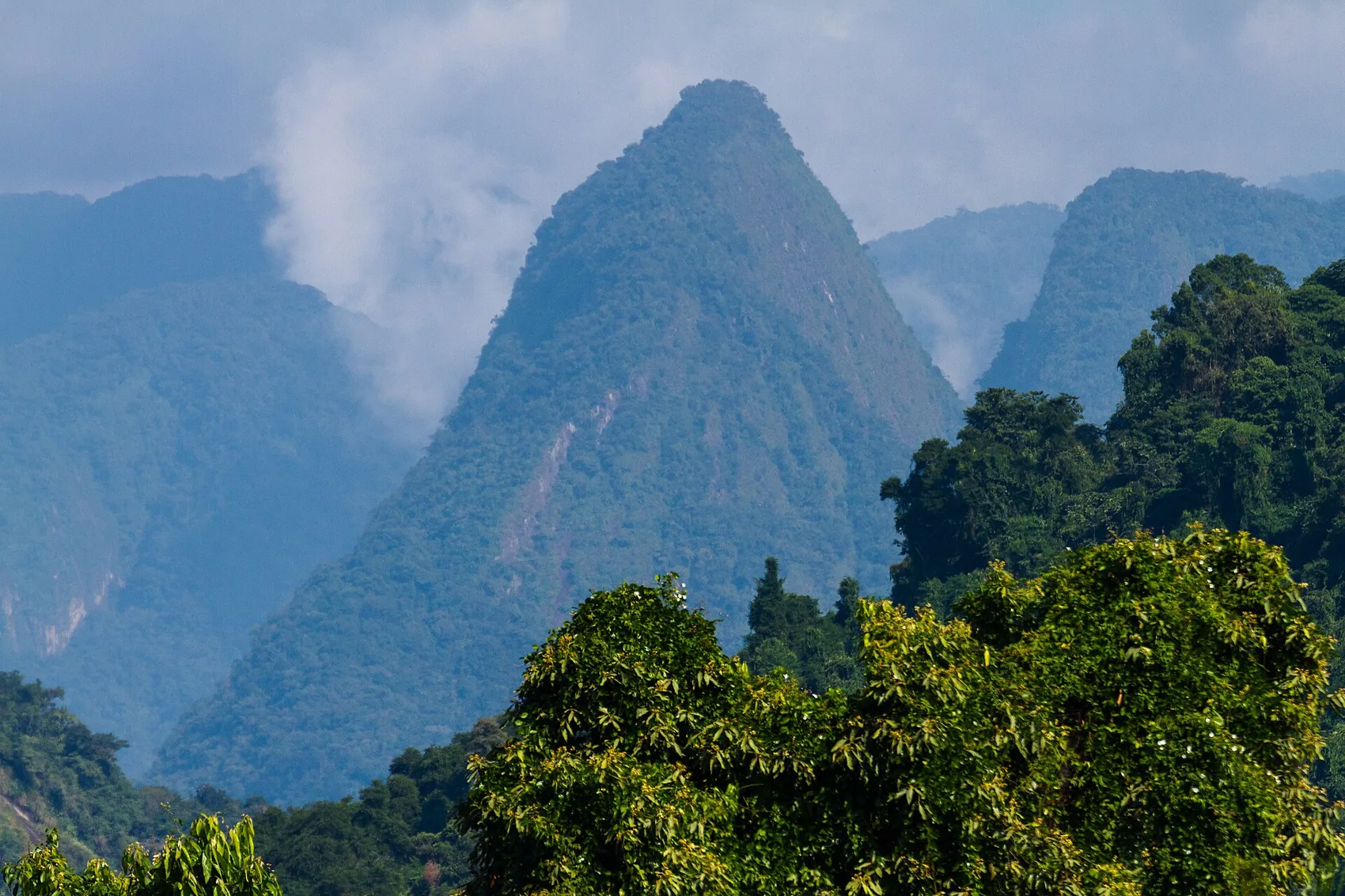
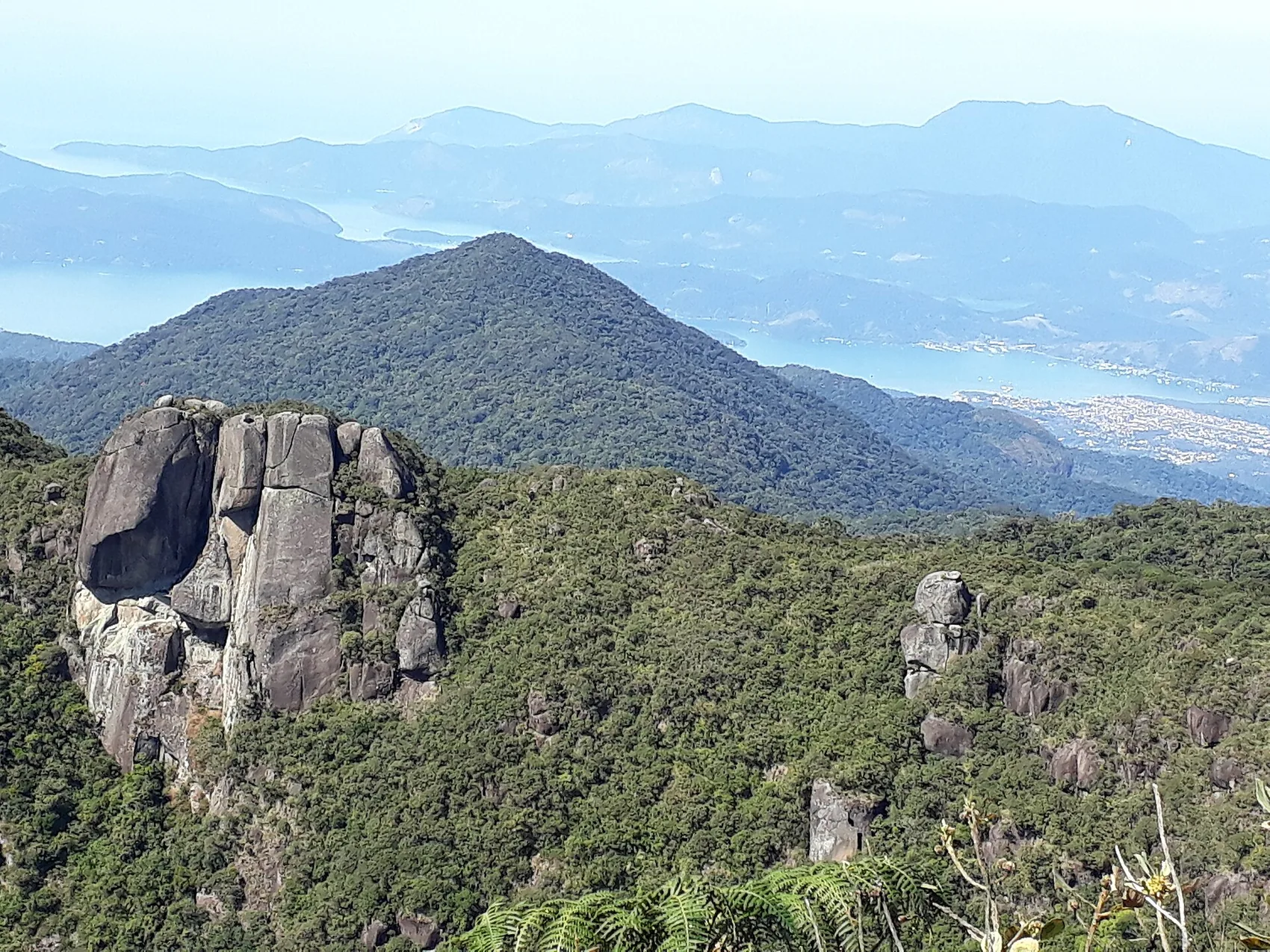
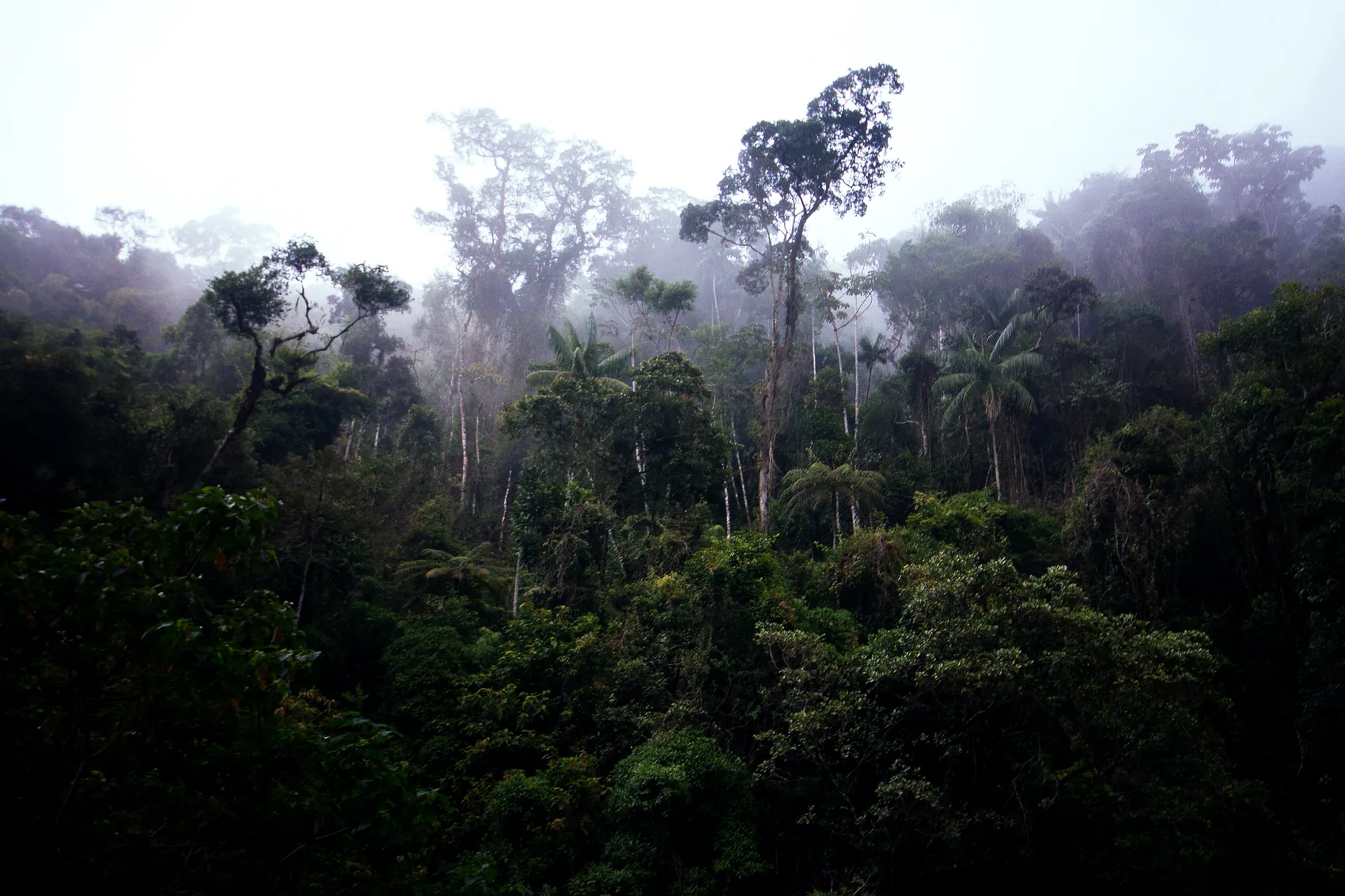
Past Cunha the road crosses into Rio de Janeiro state and becomes the descent through the Serra da Bocaina, dropping from the highlands to sea level in a tight succession of curves. For years this stretch was unpaved and half the reason people avoided the route. That is history. The road is fully surfaced now, including a distinctive cobbled section engineered for the steepest grades, and it runs through protected Atlantic Forest with the bay opening up ahead of you as you come down. It is, quite simply, one of the most beautiful approaches to any town in Brazil.
The descent from Cunha is the rare stretch of road that improves a holiday before it has technically begun.
The whole run is roughly 260 to 280 kilometres and about four hours of driving. The catch is the descent itself, which demands respect: it is narrow, it is steep, and you do not want to be doing it after dark or in heavy fog. Leave São Paulo early and this is a non-issue, because you will be coming down the mountain in bright morning light with the Bay of Paraty laid out below you.
On the descent, shift into a low gear and let the engine hold your speed rather than riding the brakes the whole way down. Long continuous braking on a steep grade overheats the pads and fades them right when you need them. This is standard mountain-driving practice and it costs you nothing but a little noise.
The coastal route through Ubatuba, in detail
The coastal route trades time for scenery, and for a certain kind of traveller that is an easy trade. You leave São Paulo on the Ayrton Senna, then branch onto the Rodovia dos Tamoios, a modern highway that has been substantially upgraded in recent years and now includes tunnelled sections through the mountains. The Tamoios brings you down the escarpment to the coast at Caraguatatuba, and this descent, like the Cunha one, is a proper mountain drop, so the same daylight advice applies.
At the coast you join the Rio-Santos highway, officially the BR-101, and turn north. From here the road hugs the shoreline through São Sebastião's northern reaches and into Ubatuba, a sprawling municipality with dozens of beaches strung along it. The Rio-Santos is famous for good reason: green mountains on one side, open Atlantic on the other, and coves appearing around every headland. It is also curvy, occasionally slow behind a truck, and busy on summer weekends. You trade pace for the view.
Ubatuba to Paraty is a short final leg, well under two hours, and Ubatuba itself makes a fine stop for lunch or a swim if you have started your day at a civilised hour. All in, the coastal route runs about 320 kilometres and five to six hours of driving, more if you stop, and you will want to stop. If beaches are the whole point of your trip, this drive is a preview of what is coming; our overview of the quiet beaches around Paraty picks up where the Rio-Santos leaves off.
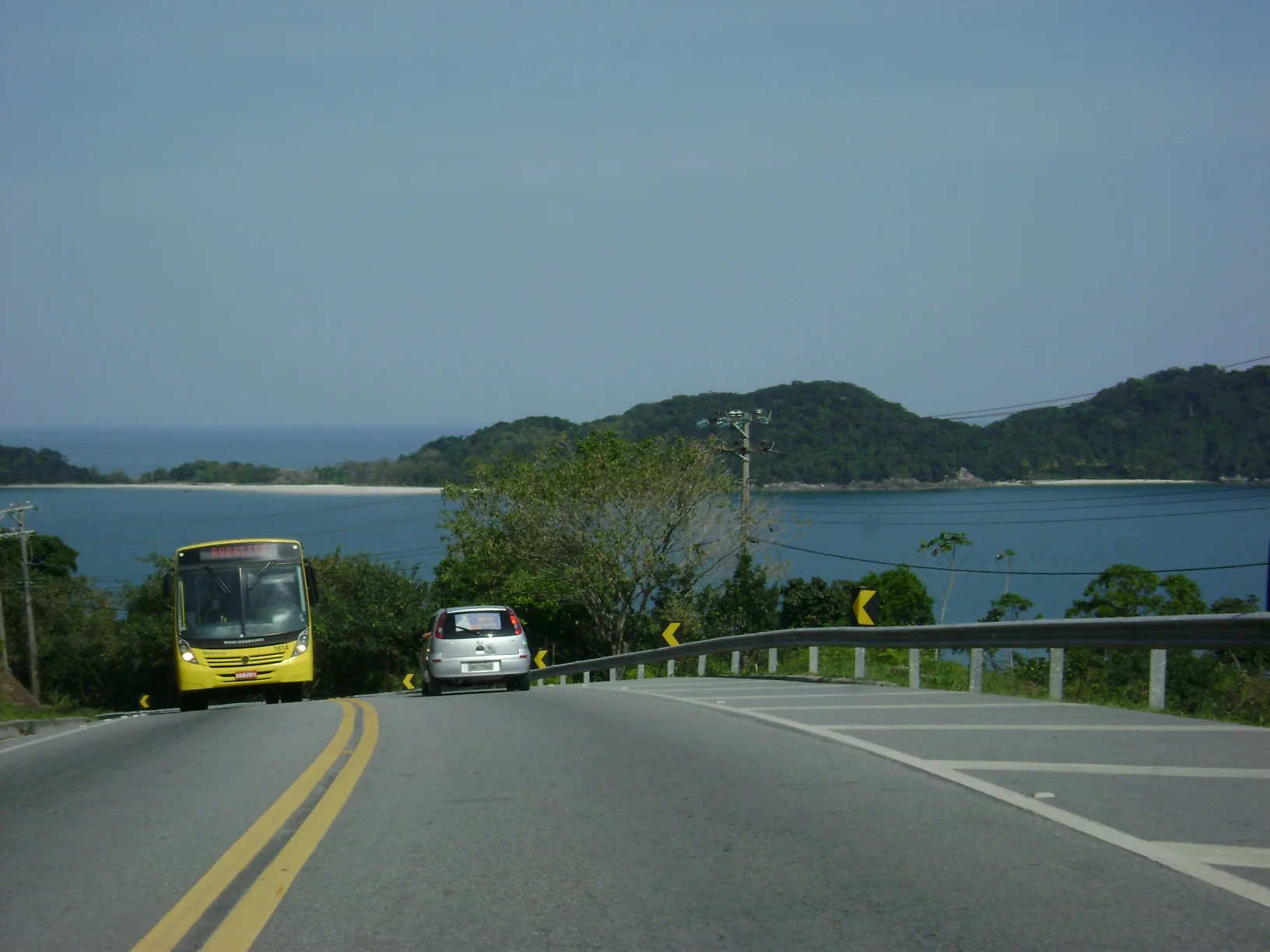
One honest caveat about the coast in high season. On the busiest holiday weekends, particularly around New Year and Carnival, the Rio-Santos can crawl, and what should be a five-hour drive becomes something considerably longer. If you are travelling on a peak date, the mountain route is usually the safer bet for keeping your day intact.
Tolls, fuel and what the drive actually costs
Both driving routes have tolls, and it helps to have a rough sense before you set off. The mountain route via the Dutra passes through several toll plazas on the highway portion, then runs toll-free once you climb toward Cunha. The coastal route via the Tamoios also has tolls on the highway sections down to the coast. Neither is expensive by international standards, but it adds up, and an electronic tag on the windscreen spares you the cash lanes and the stopping.
Fuel is straightforward. A modern car will make the trip on a single tank with room to spare, but fill up before you leave the city or on the highway rather than waiting for the mountain, where stations thin out. On the Cunha route, top up in Guaratinguetá if you are low, because the climb, the town and the descent are not the place to be watching a fuel gauge. Prices at highway stations run a little higher than in the city, as they do everywhere.
If you are renting a car for the trip, pick it up in São Paulo rather than trying to sort transport once you arrive, since Paraty is a small town and options are limited. For a broader rundown of moving around once you are there, from boats to walking the centre, see our note on getting around Paraty.
Road conditions and driving the Serra safely
Neither route is difficult for a competent driver, but both involve a mountain descent, and mountains reward caution. Here is what actually matters on the day.
Daylight is the single best safety decision
Both the Cunha descent and the Tamoios drop are far easier and far more pleasant in daylight. The curves are unlit in places, fog can settle on the higher stretches without warning, and the Atlantic Forest presses right up to the edge of the road. Time your departure so you are crossing the mountain before mid-afternoon and you remove most of the risk from the trip in one stroke.
Weather changes the mountain quickly
The Serra do Mar catches a lot of rain, and a clear morning in São Paulo can become a wet, misty descent by the time you reach the coast. If it is pouring, slow right down, keep your distance, and do not let the car behind you rush you through the curves. Wet cobbles on the Cunha descent are more slippery than dry ones, so ease off. None of this should put you off; it is simply the difference between a relaxed descent and a tense one.
Watch for wildlife and cyclists
Both roads pass through protected forest, and you may see monkeys, birds and the occasional larger animal near the verge, particularly early and late in the day. The Cunha descent was even built with dedicated crossings for animals. On the coastal road, cyclists and the odd pedestrian share the shoulder. None of this is dramatic; it is just a reason to keep your speed sensible and your eyes up.
The bus from Tietê: slower, cheaper, genuinely easy
If you would rather not drive, the bus is a real option and a good one. Services leave from São Paulo's main coach terminal, the Terminal Rodoviário Tietê, which sits directly on its own metro station and is easy to reach from anywhere in the city. From there, direct coaches run to the Paraty rodoviária several times a day, operated by the established lines that serve the coast.
The journey takes around six to seven hours, longer than driving, because the coach makes the trip along the highways and stops en route. The seats are comfortable, most services are air-conditioned, and there is usually a rest stop partway. It is inexpensive compared with the cost of fuel and tolls for a solo traveller, and it removes the mountain from your list of worries entirely, since someone else is driving it.
Book ahead for holiday weekends and the summer months, when seats sell out and prices rise. Any of the online ticketing sites will show you the day's departures and let you reserve a seat. The one thing the bus does not give you is a car at the other end, which matters more in Paraty than in a bigger town.
What arriving by bus is actually like
The Paraty rodoviária is a short walk or a very short taxi ride from the historic centre, so the last leg is painless. Once you are in town, the cobbled centre is best explored on foot anyway, and the beaches and islands are reached by boat. Where a car earns its keep is for the outlying beaches, the waterfalls up the Cunha road, and a hillside stay above town. If you arrive by bus and stay with us, we will always help you sort the final climb up the hill, whether by taxi or a lift; a quick message via our contact page before you travel is all it takes.
Fly then drive: airports and transfers
For guests coming from another Brazilian city or from abroad, flying part of the way and driving the rest is often the sensible plan. Paraty itself has only a small airfield used by private and charter aircraft, so scheduled flights land elsewhere and you cover the final stretch by road.
From São Paulo's airports
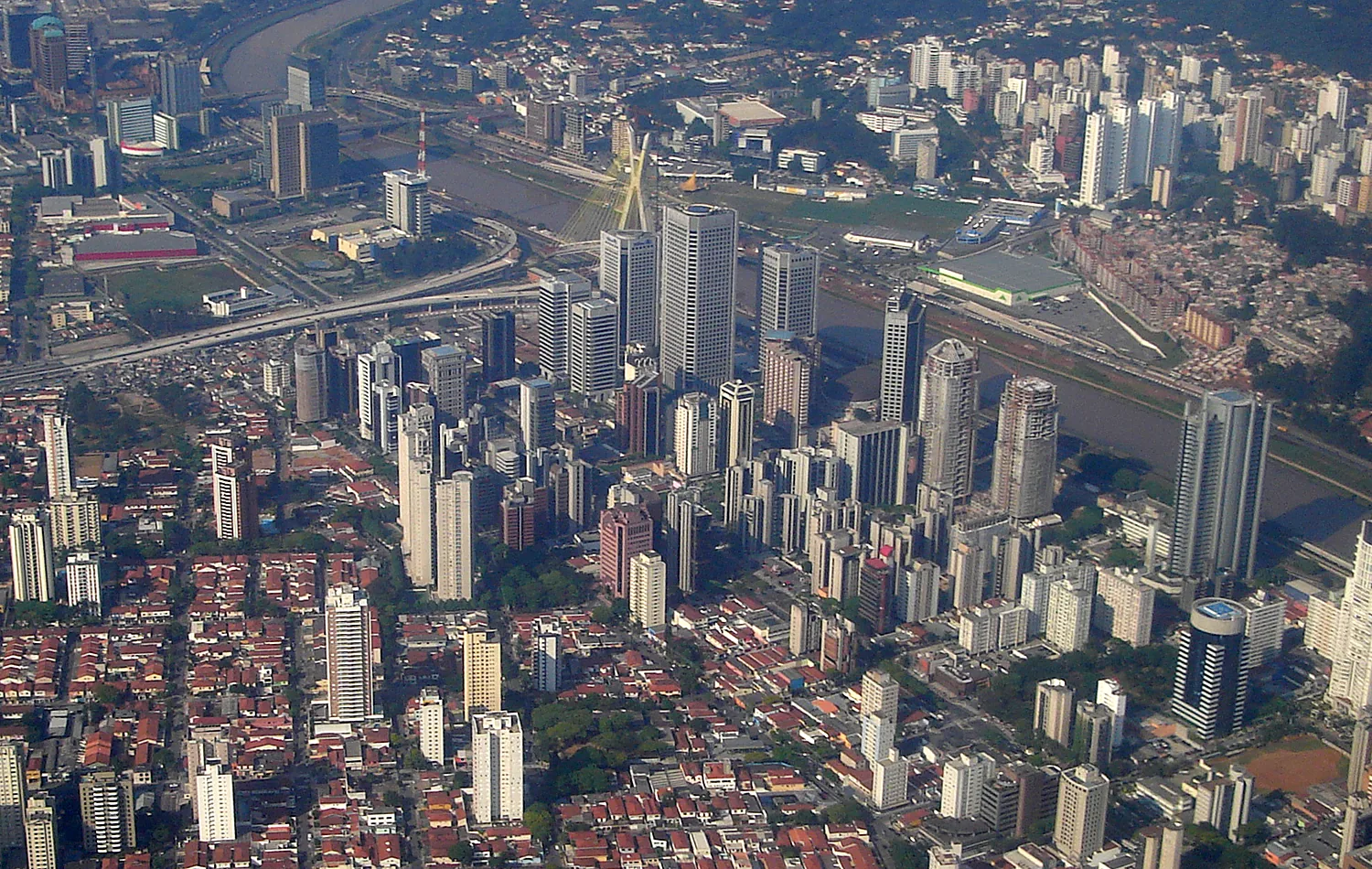
São Paulo has two main airports. Guarulhos handles the international and long-haul domestic traffic and sits on the far side of the city, about four to four and a half hours from Paraty by road. Congonhas, closer to the centre, handles domestic shuttle flights. If you are landing at Guarulhos, you are effectively starting the drive we have already described, just from the airport rather than the city, which conveniently keeps you east of the worst of São Paulo's traffic.
The closer option: São José dos Campos
São José dos Campos, out in the Vale do Paraíba, has a growing schedule of domestic flights and is the closest proper airport to Paraty, under three hours away by the Cunha route. If your itinerary allows a connection through it, it shaves a meaningful chunk off the drive. Availability varies, so check current schedules, but it is worth a look.
From Rio de Janeiro
Coming from the Rio side, Galeão handles the international flights and Santos Dumont the domestic shuttle. Both put you roughly four hours from Paraty along the coast, and the drive down from Rio is a beautiful one in its own right. If your trip pairs the two cities, arriving via Rio and leaving via São Paulo, or the reverse, makes a tidy loop.
Transfers and hired drivers
If you would rather not drive at all after a flight, private transfers can be arranged from any of these airports directly to Paraty. It costs more than a bus and more than driving yourself, but for a family arriving off a long-haul flight, or anyone who simply does not want to tackle an unfamiliar mountain road jet-lagged, it can be money well spent. We are happy to point guests toward reliable options; just ask.
When to leave São Paulo: the timing that makes or breaks the day
This is the part most guides skip, and it is the part that decides whether your drive is three hours or six. São Paulo's traffic is a force of nature, and the coast draws the whole city out at predictable moments. Get the timing right and everything else falls into place.
Leave early, always
The single best move is an early departure. Pulling out of the city before seven in the morning gets you clear before rush hour thickens, puts you on the highway while it is still flowing, and lands you at the mountain descent in strong daylight with hours to spare. An early start also means arriving in Paraty with the afternoon still ahead of you, which is the whole point.
Avoid the Friday exodus and holiday eves
The worst times to leave are Friday evening and the eve of any national holiday, when hundreds of thousands of Paulistanos head for the coast at once and the highways clog. If your break falls on a long weekend, a feriado, try to travel out a day early or leave at dawn. The return is the mirror image: coming back on a Sunday evening or the last day of a holiday puts you in the same jam in reverse, so if you can, drive home mid-morning instead.
If your dates land on a major Brazilian holiday, build in flexibility. The difference between leaving at six in the morning and leaving at six in the evening on a holiday Friday can be several hours of stationary traffic. When in doubt, go early or go a day ahead.
Seasons and events
Paraty is busiest in the Brazilian summer, from December through Carnival, and around its literary festival and other events that fill the town. Those are wonderful times to visit, but they are also when the roads are fullest, so lean harder on the early-departure rule. The quieter shoulder months reward you with emptier roads and a calmer town; our guide on when to visit goes deep on the trade-offs, and the ultimate guide to Paraty ties the seasons to what is actually happening in town.
What to have in the car for the trip
You do not need much, but a few things make the drive smoother. Download your route offline before you leave, because mobile signal drops out on the mountain sections and you do not want your navigation to vanish mid-descent. Keep water and a few snacks within reach, particularly if you have children, since the stretch over the mountain has few services. Have a little cash for tolls if you are not running an electronic tag, and keep your documents handy.
Pack a light layer even in summer. Cunha and the high stretches are noticeably cooler than either São Paulo or the coast, and the temperature swings as you climb and descend. Sunglasses help on the eastward morning drive. And if you are the sort who likes to arrive ready, keep your swimming things in a bag you can reach, because the first thing many of our guests want after the drive is the pool, not the suitcase. Our full Paraty packing guide covers the rest of the trip.
One more small comfort. Break the drive properly rather than pushing through in one grim stretch. On the mountain route, Cunha is the obvious pause, with its cool air and good cheese; on the coastal route, any of the calm beaches short of Ubatuba will do. A twenty-minute stop to stretch, eat something and swap drivers costs you almost nothing and turns a tiring haul into a pleasant morning out. Nobody arrives happier for having shaved fifteen minutes off the clock.
Arriving in Paraty and getting up the hill
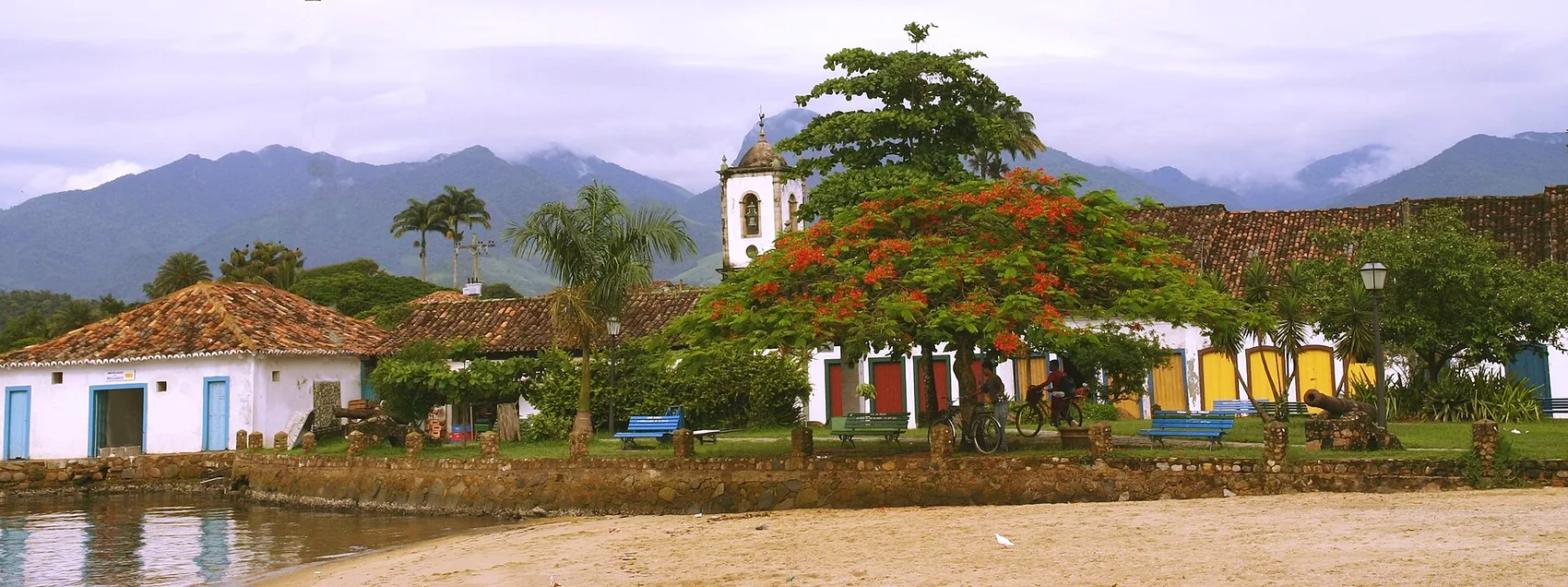
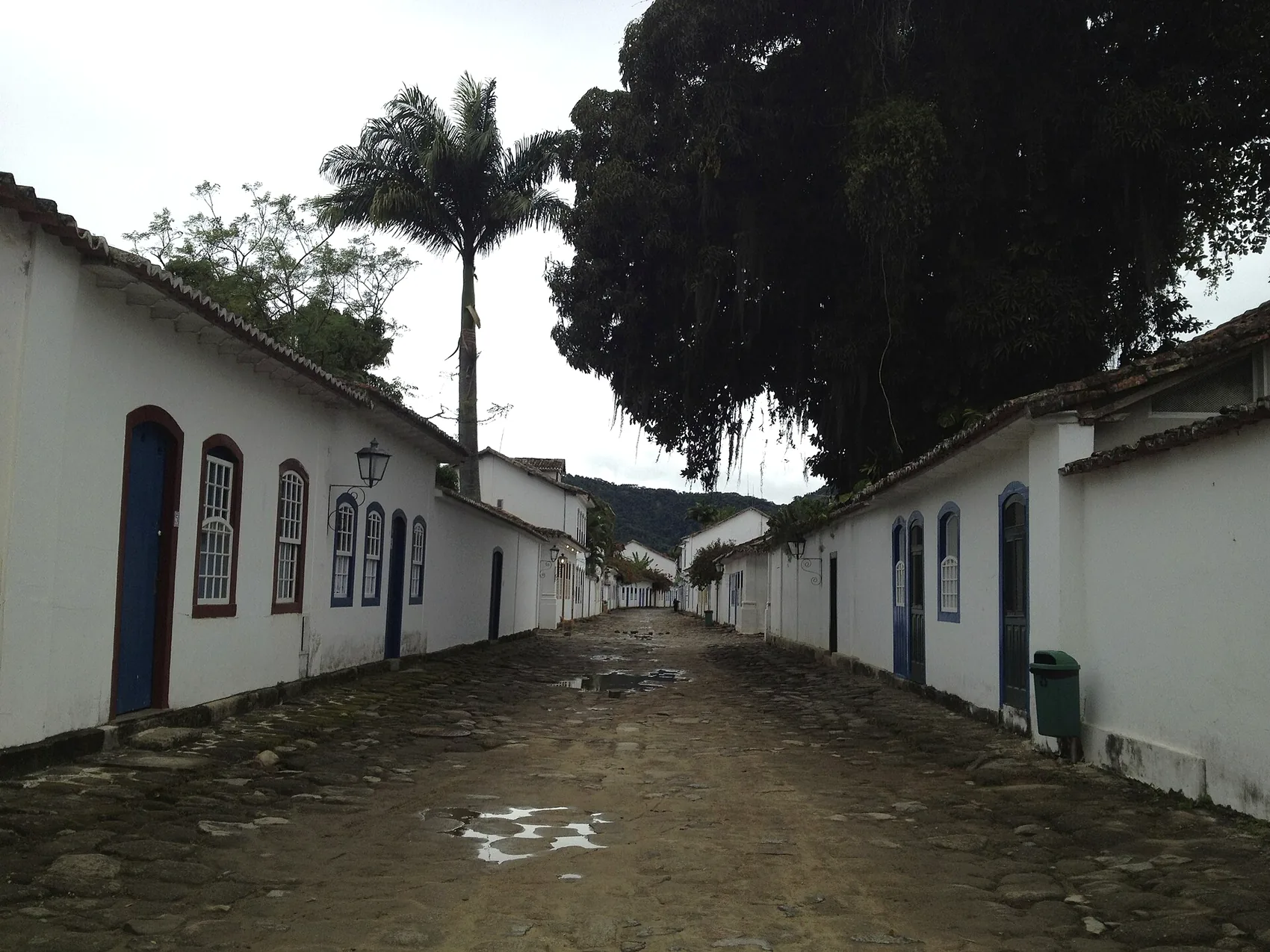
However you come, the arrival is the same and it is a good one. The historic centre reveals itself as a grid of whitewashed colonial houses and uneven cobblestones, closed to most traffic, with the bay glinting at the end of the streets. You will not drive into the heart of it; cars stop at the edge and the town is yours on foot. It is one of the most complete colonial centres in Brazil, and it is best met slowly.
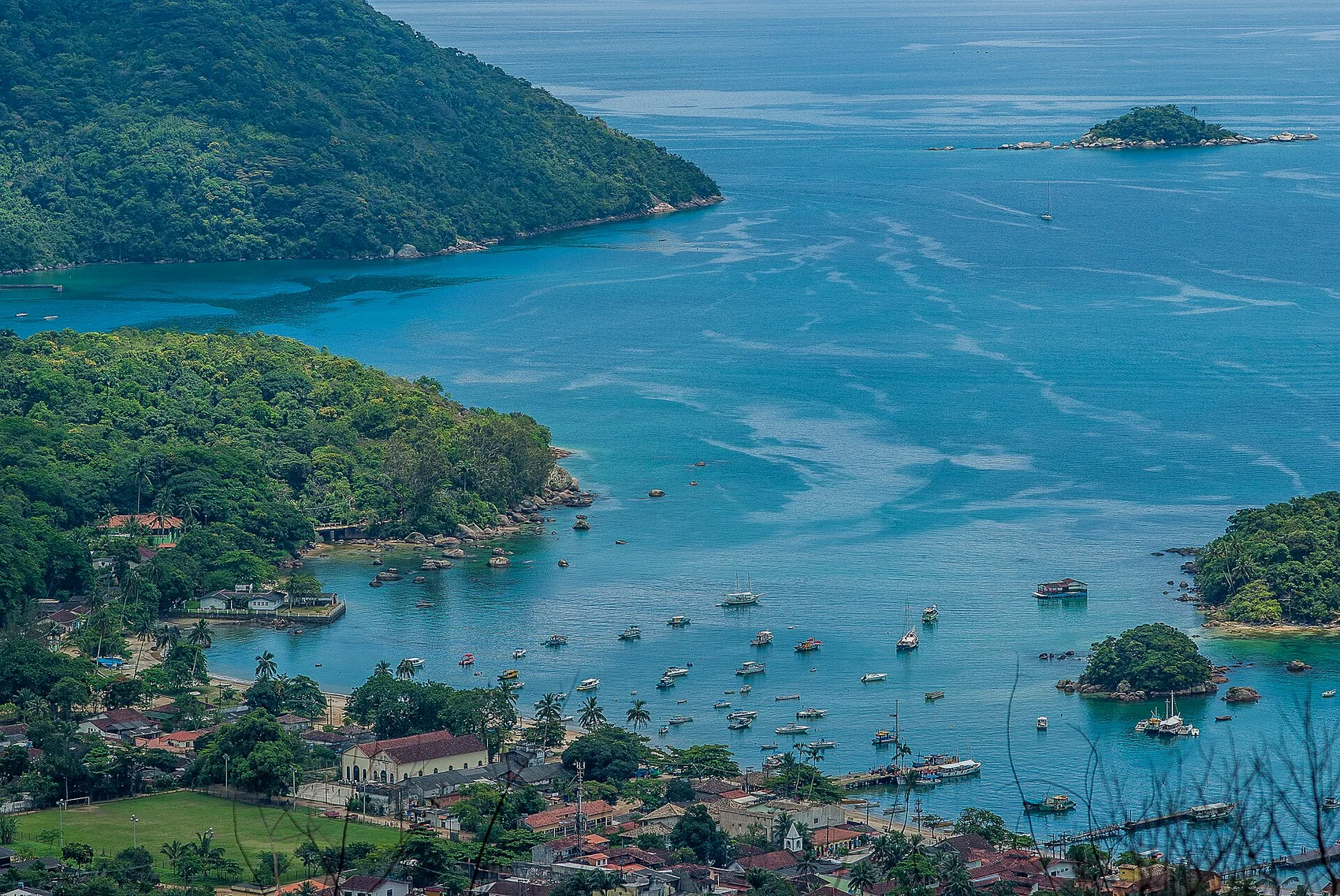
For guests staying with us, the final stretch is a short climb above the town. The chalet sits on the hillside roughly 400 metres up, high enough that the view opens out across three separate stretches of water: the Bay of Paraty in front, Angra dos Reis along the coast, and Ilha Grande out beyond. The road up is straightforward, and after the mountain you have already crossed it will feel like nothing. If you would rather we arranged the last leg for you, especially if you have come by bus, we will.
The reason we mention the hill at all is that it changes the shape of a trip. After a day on the water or in the historic centre, you come back not to a room off a busy street but to an infinity pool with the whole bay below it and, most evenings, a sunset that does the work for you. It is the swim you were thinking about on the drive down. You can read more about the house on the chalet page, and see what fills the days around it on our explore page.
A sample plan for the São Paulo weekender
To make all of this concrete, here is how a well-run long weekend from São Paulo actually looks, using the mountain route.
You leave the city around six on Friday morning, ahead of the traffic, coffee in hand. The Ayrton Senna and Dutra pass quickly while the day is still young, and you are climbing toward Cunha by mid-morning. You stop in Cunha for a proper breakfast and a wheel of cheese for the pool later, then take the descent slowly through the forest, the bay widening below you. By early afternoon you are dropping your bags at the chalet and getting in the water. The drive is behind you and the weekend has not really started spending time yet.
Saturday is a boat day: the bay, the islands, the calm water off Ilha Grande, back in time for the light to go long over the pool. If you want to plan that properly, our boat days page and the guide on getting from Paraty to Ilha Grande lay out the options. Sunday you wander the historic centre in the morning, eat well at the harbour end where the seafood houses are, and drive home mid-morning to stay ahead of the returning crowd. Two nights, one easy drive each way, and a weekend that felt twice as long as it was.
Stretch it to a third night and the drive amortises even better, which is the honest argument for a slightly longer stay: the four hours each way stops mattering once you have three or four days on the other side of it. If you are torn on length, how many days in Paraty makes the case one way or the other.
Pairing Paraty with Rio, or coming from further afield
A lot of our guests do not travel from São Paulo alone. Paraty sits almost exactly between São Paulo and Rio de Janeiro on the Costa Verde, which makes it a natural pivot for a longer trip that takes in both cities. If that is you, the tidiest plan is a loop: fly into one city, drive down to Paraty in the middle, and continue to the other rather than doubling back. Arriving from São Paulo and leaving toward Rio, or the reverse, means you never repeat a road and you see two very different stretches of coast.
From the Rio side the drive is a shade shorter than from São Paulo, roughly four hours down the coastal highway, and it is a genuinely lovely one, threading the same green mountains and sea that define this whole shoreline. International guests often find this the simplest shape of all: long-haul into Rio's Galeão, a few days in the city, then the drive down to Paraty for the quiet half of the trip, and out through São Paulo at the end. However you assemble it, the mountain-in-daylight and leave-early rules travel with you.
For visitors coming from abroad specifically, the one thing worth planning ahead is the final leg, because it is the part least like the flight that preceded it. A private transfer straight from the airport removes the unfamiliar mountain road from a jet-lagged first day, and it is the option we most often suggest to guests landing after a long flight. Send us your arrival details through the contact page and we will tell you honestly whether to drive, bus or transfer for your particular route and dates.
Which option is right for you
To bring it all together, the choice is simpler than the detail suggests. If you want the fastest, calmest drive and you are happy to cross a mountain in daylight, take the Cunha route and leave early; this is the right call for most first-timers, families, and anyone travelling on a busy date. If you have a whole unhurried day and you love a coastline, take the Tamoios and the Rio-Santos through Ubatuba and let the beaches slow you down. If you would rather not drive at all, the bus from Tietê is easy, cheap and reliable, and we will help you with the last leg up the hill. And if you are coming from abroad or from another city, fly into São José dos Campos if the schedule allows, or into Guarulhos or Galeão if it does not, and drive or transfer the rest.
Whichever you choose, the deciding factor is almost always the same: leave early, cross the mountain in daylight, and dodge the holiday exodus. Do that and the journey to Paraty becomes part of the pleasure rather than the tax you pay for it. When you are ready to plan the trip in earnest, or you just want to ask us about road conditions on your dates, our contact page is the place to start, and there is more practical detail across the rest of our guides.
The last word is a small one. Every guest who has made this drive and then floated in the pool that evening with the bay turning gold below them has said some version of the same thing: that was worth it, and it was easier than I expected. It usually is. Plan the departure, respect the mountain, and Paraty does the rest.
Come stay above the bay
Chalé Bel Air sits on the ridge that looks over everything in this guide. Tell us your dates and what kind of trip you are after — we answer personally.
Ask about your datesFrequently asked questions
How far is Paraty from São Paulo, and how long does it take?
By road it is roughly 250 to 330 kilometres depending on which route you take. The faster mountain route through Cunha runs about four hours of pure driving; the coastal route through Ubatuba is longer, closer to five or six hours. Add an hour to either figure if you are leaving the city in Friday traffic.
Which is the best route to drive from São Paulo to Paraty?
For speed, take the Dutra to Guaratinguetá and cross the Serra through Cunha. For scenery and a beach stop, take the Tamoios down to the coast and follow the Rio-Santos road through Ubatuba. First-timers who want the shorter, calmer drive should choose Cunha and cross the mountain in daylight.
Is there a direct bus from São Paulo to Paraty?
Yes. Buses leave from the Tietê terminal several times a day and run direct to the Paraty rodoviária, taking around six to seven hours. It is comfortable and inexpensive, but slower than driving and it leaves you without a car once you arrive.
What is the nearest airport to Paraty?
Paraty has only a small airfield for private and charter aircraft. For scheduled flights, most people land at São Paulo's Guarulhos or Rio's Galeão, both about four hours away by road, or at São José dos Campos, which is closer at under three hours. From any of them you drive or arrange a transfer for the final leg.
When is the best time to leave São Paulo to avoid traffic?
Leave early. A departure before seven in the morning clears the city before the worst of it and gets you over the mountain descent in full daylight. Avoid heading out on a Friday evening or the eve of a national holiday, when the whole coast empties out of São Paulo at once.
Is the Cunha to Paraty mountain road safe to drive?
It is fully paved now and in good condition, including a cobbled section on the steepest descent. It is also narrow and full of curves through the Serra da Bocaina. Drive it slowly, in daylight, in low gear on the way down, and it rewards you with some of the finest scenery on the trip.
Do I need a car once I am in Paraty?
Not for the historic centre, which is cobbled and closed to most traffic, but a car is genuinely useful for reaching the beaches, the waterfalls and a hillside stay above town. If you come by bus you can rely on taxis and boats, but you will move more freely with your own wheels.