The mountains behind Paraty hold as much water as the bay in front of it, and most of it comes down through the forest in a string of falls along one road. This is the long version of what we tell guests before they go.
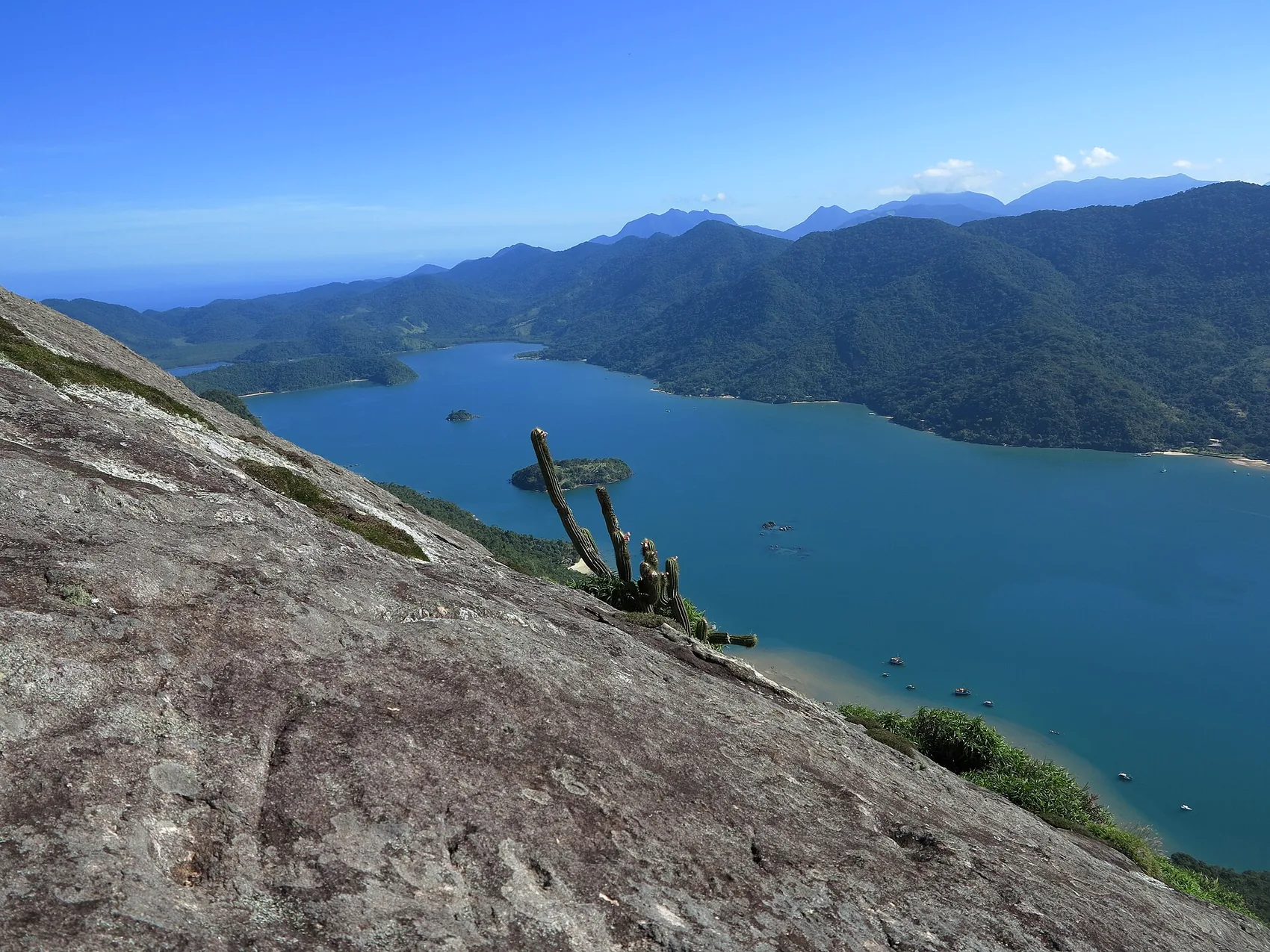
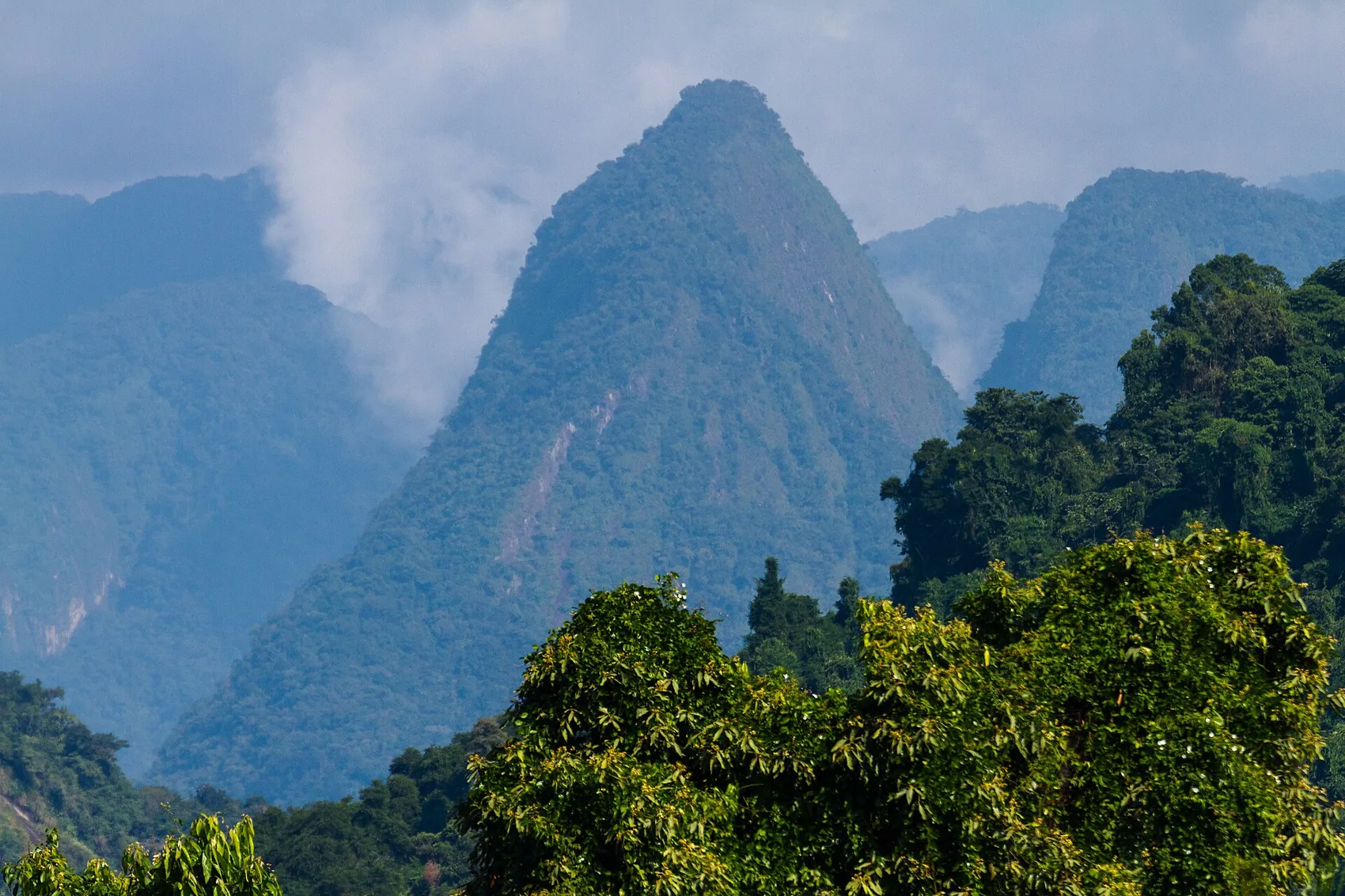
Paraty gets talked about for the bay: the schooners, the islands, the still green water you can see from almost anywhere in the historic centre. But the town sits on a narrow shelf between the sea and a wall of mountains, and those mountains hold as much water as the bay in front of them. It falls as rain on the high forest of the Serra da Bocaina, gathers into streams, and comes down through the trees in a long string of falls. If the beaches are what Paraty is famous for, the waterfalls are what the locals do on a hot afternoon.
The good news for anyone visiting is that the best of the Paraty waterfalls are close, cheap and easy to reach. Most of them sit along a single road that climbs out of town toward the mountain village of Cunha, and you can see the headline three inside a morning. The catch is that they are real forest falls on real rock, not a groomed attraction, and the same wet stone that makes the famous slide fun is what puts a handful of people a season on crutches. This guide is the long version of what we tell guests before they set off: where the falls are, how to get to them, which combine well with a cachaca tasting, and how to come home in one piece.
We wrote it as hosts rather than as a tour desk, so you will find honest trade-offs here, not a sales pitch. When we point you at a particular fall we say who it suits and who it does not. And because we run a hillside chalet with an infinity pool a short drive above town, we will admit our bias up front: the best way to do a waterfall day is to go early, get properly wet, and come back to a quiet swim with the bay laid out below you. More on that at the end.
Why Paraty is waterfall country
The geography does all the work. Warm, wet air blows in off the Atlantic and hits the Serra do Mar, the coastal mountain range that runs the length of southeast Brazil. The air is forced up, cools, and drops its water on the forested slopes above Paraty. This is some of the rainiest country in the region, which is exactly why the Atlantic Forest here is so dense and why the streams never really stop running. Behind the town the land rises fast into the Serra da Bocaina National Park, one of the largest protected stretches of Atlantic Forest left, and that whole massif drains seaward through the valleys around Paraty.
What that means on the ground is a lot of moving water within a very short drive. You do not need to mount an expedition. Several of the best-known falls are seven or eight kilometres from the centre, reached on a paved-then-dirt road, with short forest paths from the parking to the pools. That accessibility is the whole reason waterfalls are a standard Paraty outing rather than a serious hike, and it is why families, couples and day-trippers off the schooners all end up at the same handful of spots.
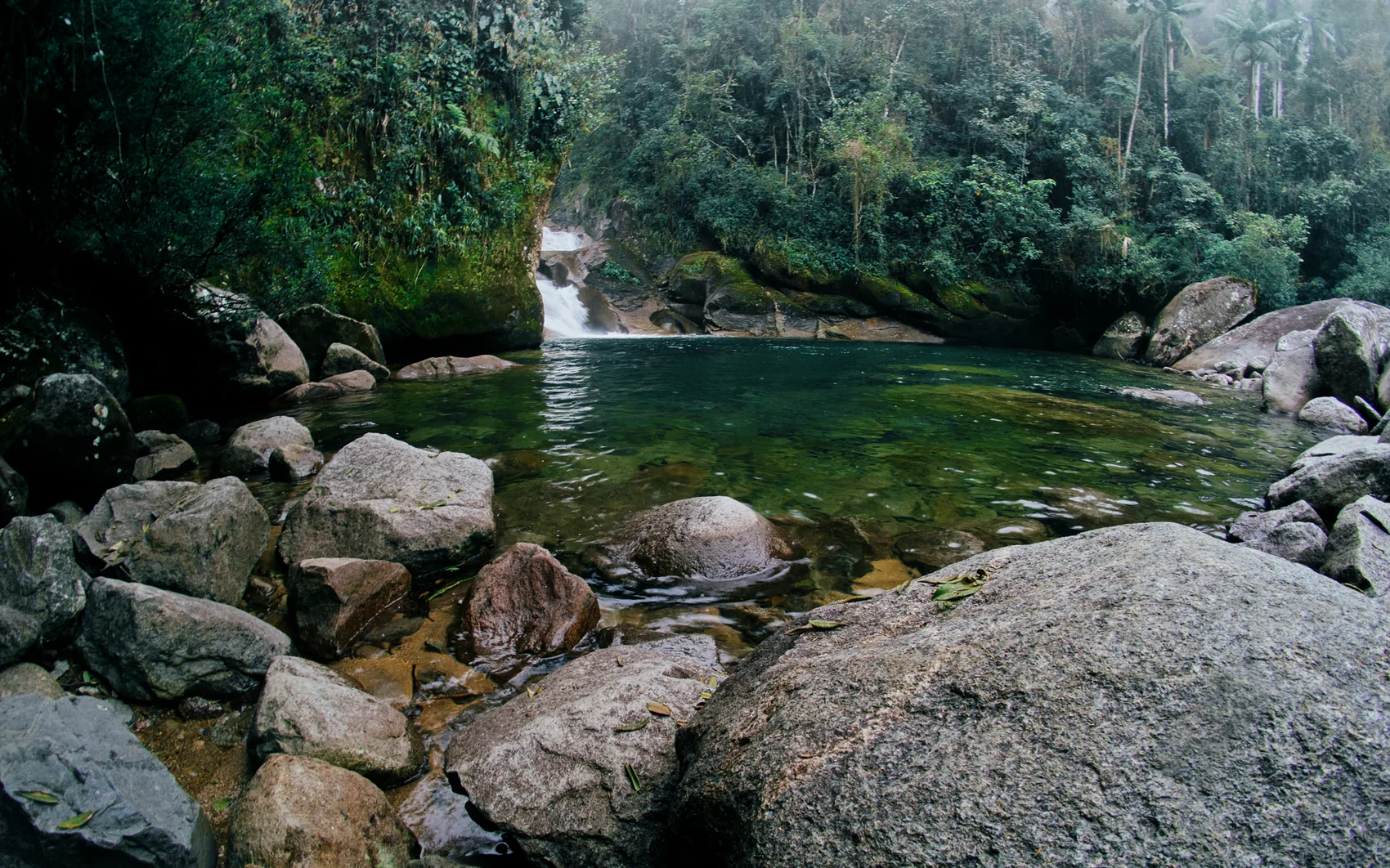
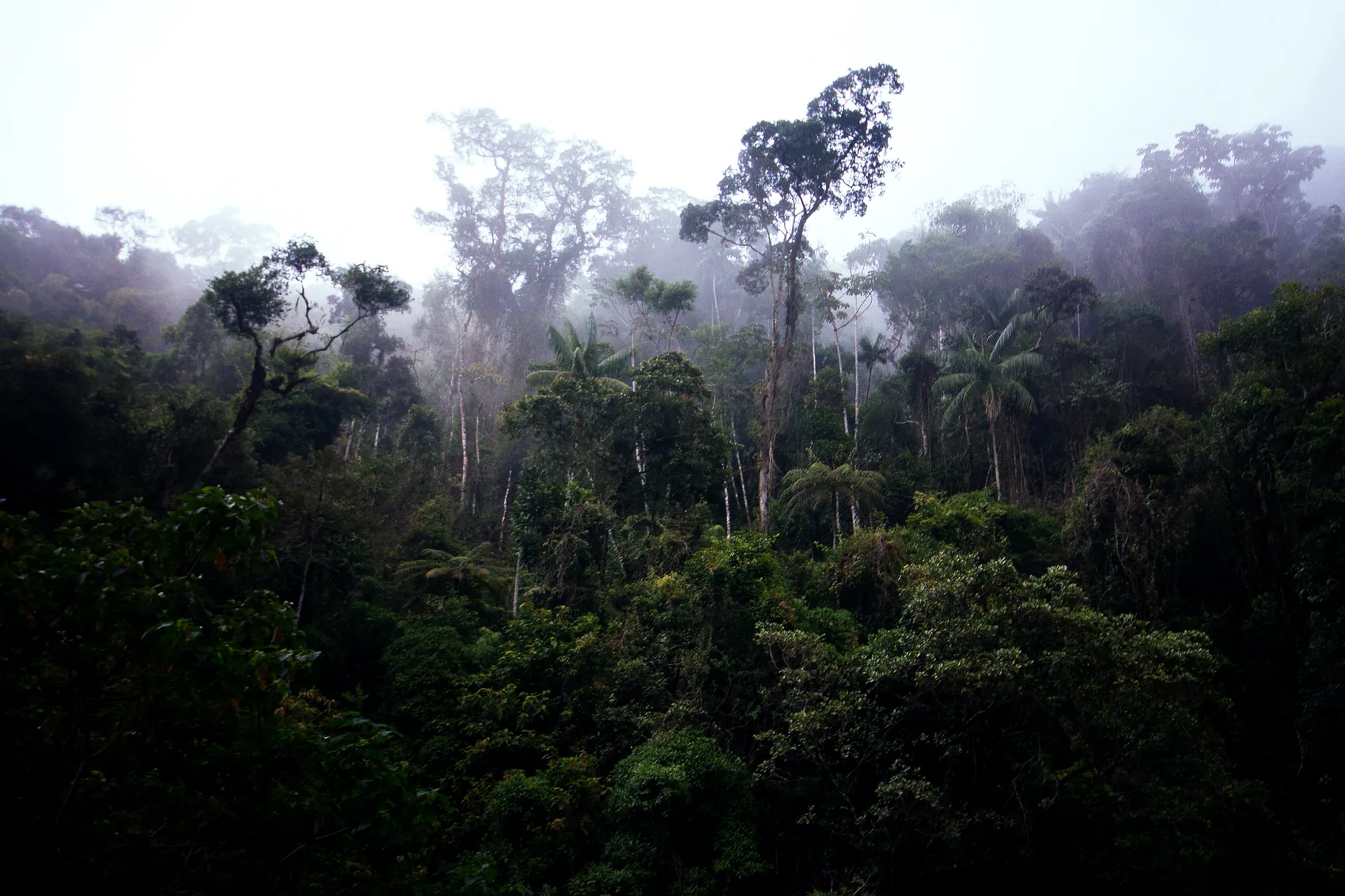
It also means the water is cool and clean. These are mountain streams, not warm coastal lagoons, so the swimming is bracing on a hot day in the best way. And because the falls sit inside or beside protected forest, the setting is genuinely wild: you will hear cicadas and, if you are lucky and quiet, see capuchin monkeys working the canopy or a toucan crossing a gap in the trees. It is a different Paraty from the cobblestones, and an easy one to add to any trip. If you are still shaping your days, our ultimate guide to Paraty sets out how the coast, the town and the mountains fit together.
The Cunha road: the spine of it all
Almost everything in this guide hangs off one road. The old Estrada Paraty-Cunha, now the RJ-165, leaves the edge of town and climbs into the Serra toward the mountain town of Cunha, which sits over the ridge in the state of Sao Paulo. In colonial times a stone mule path ran up this valley to carry gold and goods between the coast and the interior, and stretches of that Caminho do Ouro still survive in the forest alongside the modern road. Today the same valley is where you find the waterfalls, the artisanal cachaca distilleries, and some of the prettiest driving in the region.
The lower section, closest to town, is paved and gentle. Higher up the road turns to packed dirt as it climbs toward the park and the state line, which is where the 4x4 tours earn their jeeps. For the three headline falls you barely leave the paved part: the turn-offs for the Tobogao and the Poco do Tarzan are in the Penha neighbourhood, roughly seven to eight kilometres up from the junction, and Pedra Branca is a short way on from there. If you are self-driving, this is an easy road in a normal car in dry weather; after heavy rain the dirt upper reaches get greasy and the lower streams can run high across the road.
Think of the road as a menu rather than a single destination. You can do a short version, ninety minutes door to door, that takes in only the Tobogao and its pool. You can do the full menu, a whole day, that adds Pedra Branca, a distillery tasting and a riverside lunch. Or you can keep climbing past all of it to the cooler heights near Cunha, where the landscape shifts to pine and highland farms. How far up you go is mostly a question of how much of the day you want to give it, and whether you would rather drive or be driven.
Cachoeira do Tobogao: the famous rock slide
This is the one people mean when they say they are going to the waterfalls. The Cachoeira do Tobogao, sometimes called the Cachoeira da Penha after the neighbourhood, is not a tall dramatic curtain of water. It is something better for a hot afternoon: a long, smooth slab of rock, tilted at just the right angle, with a shallow stream running over it. Over centuries the water has polished the stone glass-smooth, so the current carries you down the slab and drops you into a pool at the bottom. It is a natural water slide, and it has been the local swimming hole for generations.
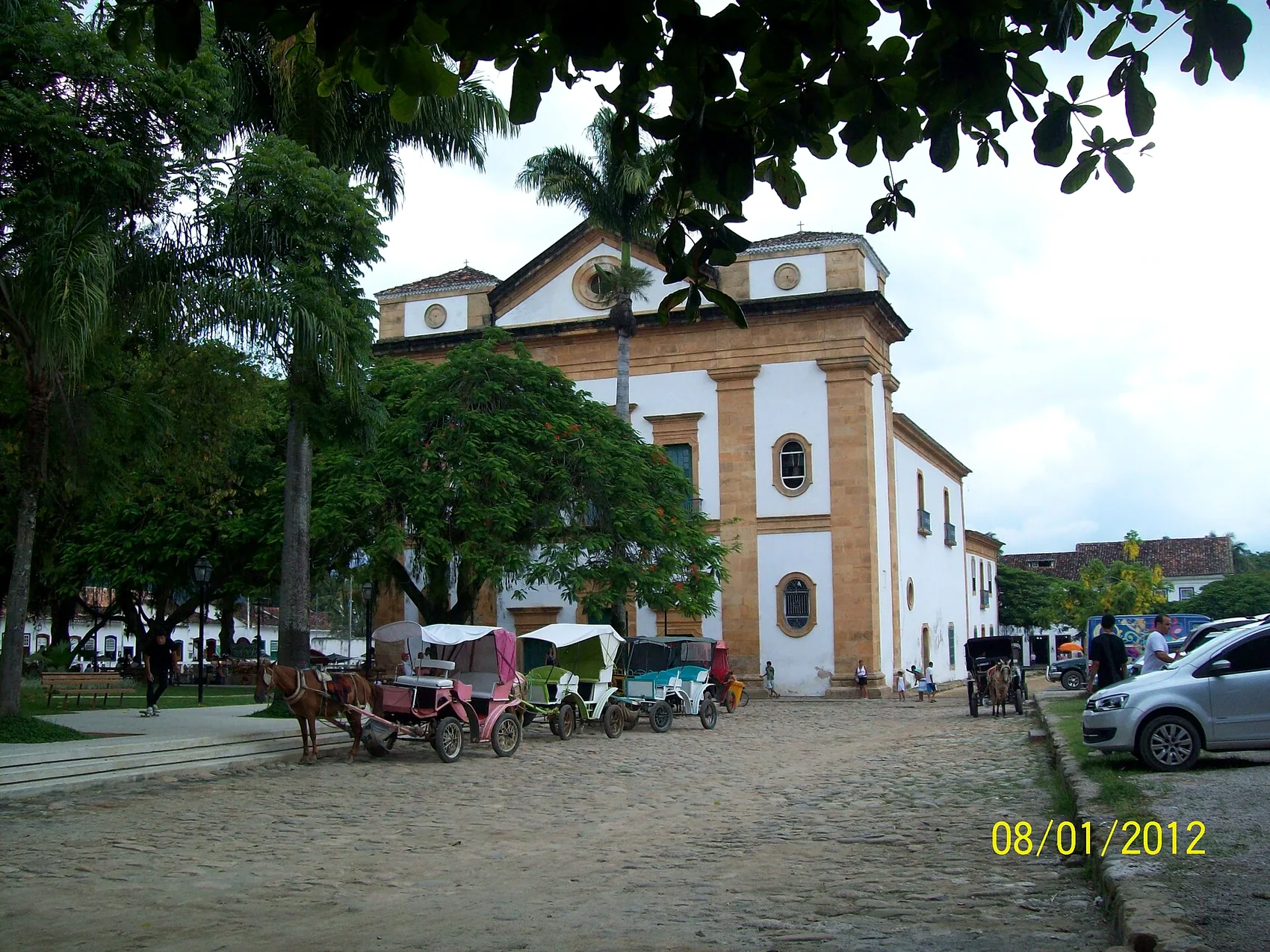
The setting is part of the charm. A small colonial chapel, the Igreja de Nossa Senhora da Penha, sits just above the river, and the trailhead has a cluster of simple riverside bars where you can leave your things, buy a drink and watch the action before you commit. The walk in from the parking is short and easy, a few minutes on a forest path, which is why the Tobogao gets busy: it delivers a genuine forest-and-water experience with almost no effort. On a summer weekend it can feel like the whole town turned out.
Because it is free and close, the Tobogao is as much a local social scene as a tourist stop. You will see families with coolers, teenagers daring each other down the slab, and older folk who have been coming since childhood parked in the shallows with a beer. That mix is half the pleasure of the place. It also means the etiquette is set by people who know the rock, so the visitor's job is to slot in quietly, take a turn without hogging the run, and read the room rather than treat it like a private attraction.
How the slide works
You climb up beside the slab, sit at the top of the smooth run, and let the water take you. Confident locals ride it standing up, surfing down the wet rock on bare feet, and it looks effortless when someone who has done it a thousand times does it. It is not effortless for you on day one. The rock is far more slippery than it looks, there is no braking, and the standing descent is exactly where the broken wrists and cracked tailbones come from. There is no shame at all in going down sitting, or lying back with your feet pointed downstream, which is how sensible first-timers do it and how we suggest you start.
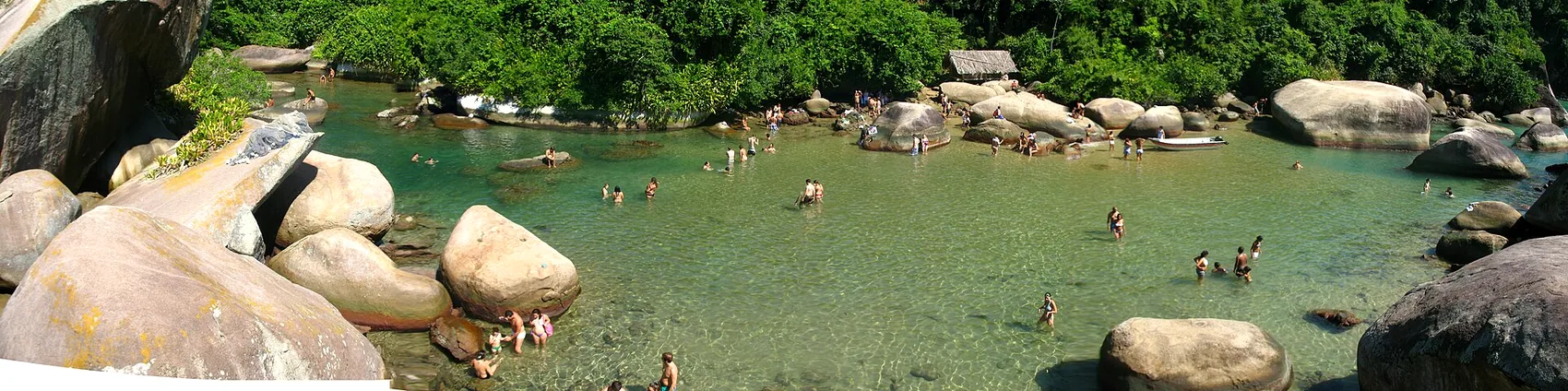
Watch before you slide
Spend ten minutes watching before you go anywhere near the top. See where people enter, the line the water actually takes, and where the pool at the bottom is deep enough to land safely. Notice how they clear out of the landing zone fast so the next person does not come down on top of them. The locals have an unwritten choreography here, and copying it is the whole safety system. If the water is running hard and fast after rain, the answer is simply not today, however good it looks: the fun slide becomes a shove you cannot control.
The rock is far more slippery than it looks, there is no braking, and the standing descent is exactly where the broken wrists come from.
Poco do Tarzan: the calm pool above
A short way up the same stream, above the slide, is the Poco do Tarzan, and for a lot of visitors it is the better half of the trip. Here the water pools deep and calm below a small fall, with a wooden footbridge over the river and, in the classic version, a rope for swinging out over the water and dropping in. It is called the Tarzan pool for exactly the reason you would guess. The rock around it is less of a hazard than the slide, so you can wade in and swim without fighting a current.
This is the spot for people who want the forest-swimming-hole experience without the adrenaline. Couples come here to float and cool off; families let small children paddle at the shallow edges while the braver members take turns on the rope. The two sites work as a pair: do the Tobogao slide when you are feeling bold, then walk up to the Poco do Tarzan to swim properly and calm down. Between them they make an easy, complete half-day, and neither asks much of your legs.
Bring water shoes or old trainers you do not mind soaking. Every rock at both sites is slick, the entries have hidden edges, and the sensible people you see moving confidently across the stream are almost all wearing something on their feet.
A word on the rope and the swings: they are informal, maintained by nobody in particular, and conditions change. Check the depth of the pool yourself before you launch off anything, especially after a dry spell when the water is lower than the regulars remember. As with the slide, the move is to watch the locals, match what they do, and skip it if something feels off.
Cachoeira da Pedra Branca
Further along the road is the Cachoeira da Pedra Branca, and it is the tall, photogenic one. Where the Tobogao is about play, Pedra Branca is about the classic postcard: a real drop of water over pale rock into a pool, set back in the forest, with the kind of picture everyone wants. It sits on private land, so there is a modest entrance fee and a short walk in from the gate, which has the useful side effect of keeping the crowds thinner than at the free sites.
Because access is managed, Pedra Branca tends to feel calmer and better kept. It is a good choice if the Tobogao is heaving with a weekend crowd and you would rather pay a little for space and a quieter swim. The pool at the base is cool and swimmable, and the fall is impressive enough after rain to justify the detour on its own. Do check current opening times and the fee before you go, since arrangements on private falls can change from season to season.
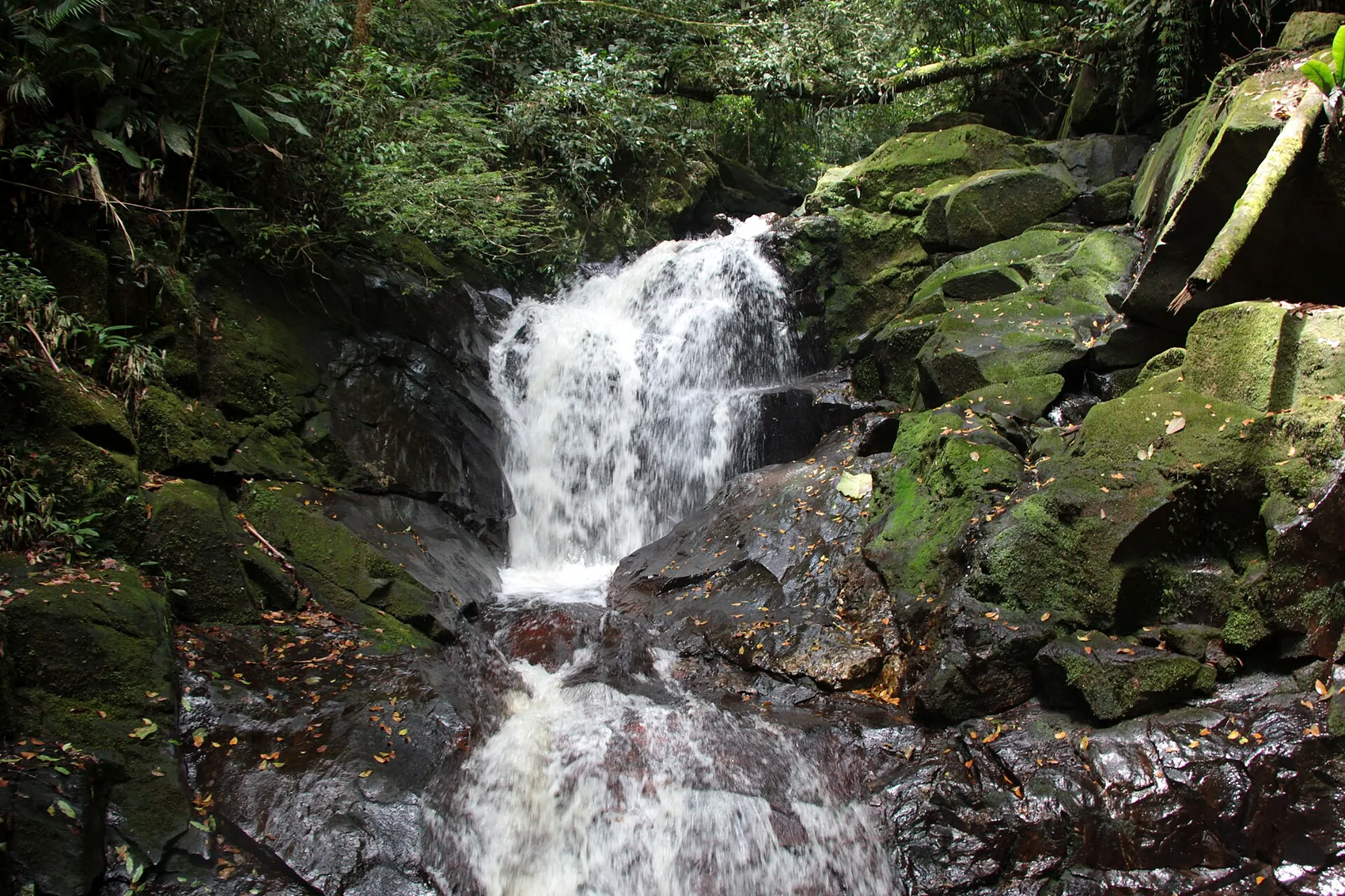
If you only have time for one of the three, choose by mood. The Tobogao for the slide and the social scene, the Poco do Tarzan for an easy family swim, Pedra Branca for the tall-waterfall photograph and a bit of quiet. Do all three and you have a full, varied day without ever driving more than a few minutes between them.
Deeper into the Serra: the quieter falls
The three above are the accessible headliners, but they are the beginning, not the end. Keep climbing the Cunha road and pushing into the folds of the Serra da Bocaina and you find falls that see a fraction of the traffic: streams tumbling through untouched forest, pools you might have to yourself on a weekday, and the occasional taller cascade that rewards a longer walk. These are not signposted the way the Penha falls are, and some sit on tracks that need a 4x4 or a wet-footed scramble to reach.
For these, take a local guide. It is not about difficulty so much as knowledge: which track is passable after rain, which pool is deep enough to swim, which land is private and which is park, and how the weather is moving up top. A guide who grew up in these valleys turns a vague idea of finding a quieter fall into a real, safe day, and usually shows you a couple of spots you would never have found from a map. If wild forest swimming is what you are after, this is where to spend a day, and it pairs naturally with the mountain sections of our hiking guide.
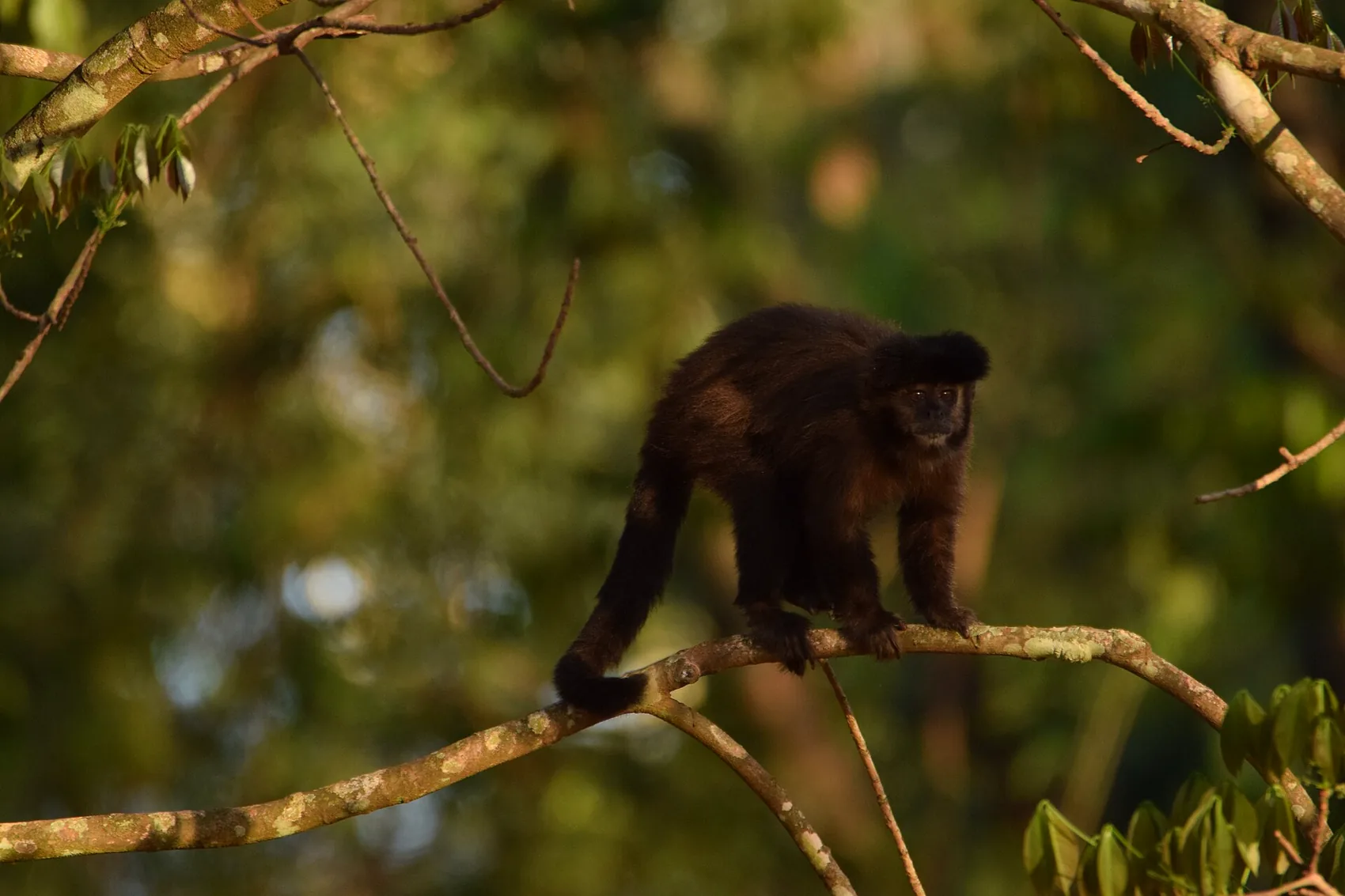
One honest caveat: the higher forest is genuinely remote, phone signal disappears fast behind the ridgelines, and the weather changes quickly. This is the part of the waterfall world where going with someone who knows the ground stops being a nice-to-have and becomes the sensible choice. For the headline three near Penha you do not need a guide at all; for the deep stuff, you do.
The jeep-and-cachaca tour
The single most popular way to see the falls is the 4x4 jeep tour that bundles them with a cachaca distillery, and it exists for good reasons. An open-sided jeep with a driver-guide collects you, handles the winding dirt road, strings together two or three falls with time to swim at each, stops at one of the artisanal alambiques in the hills for a tour and tasting, and usually breaks for lunch at a riverside restaurant along the way. It is a half to full day, priced per person, and it removes every logistical worry.
The distillery stop is the clever part. The same Cunha valley that carries the falls is also cachaca country, dotted with small family alambiques pressing sugarcane and distilling it in copper stills the traditional way. On a tour you walk through the press and the ageing room, taste a range from bright unaged white spirit to barrel-aged sippers, and learn how Brazil's oldest spirit is actually made. It is a genuinely good pairing with a morning in the water, and it means nobody has to choose between the two. Our cachaca guide goes deep on how a tasting works and what to look for.
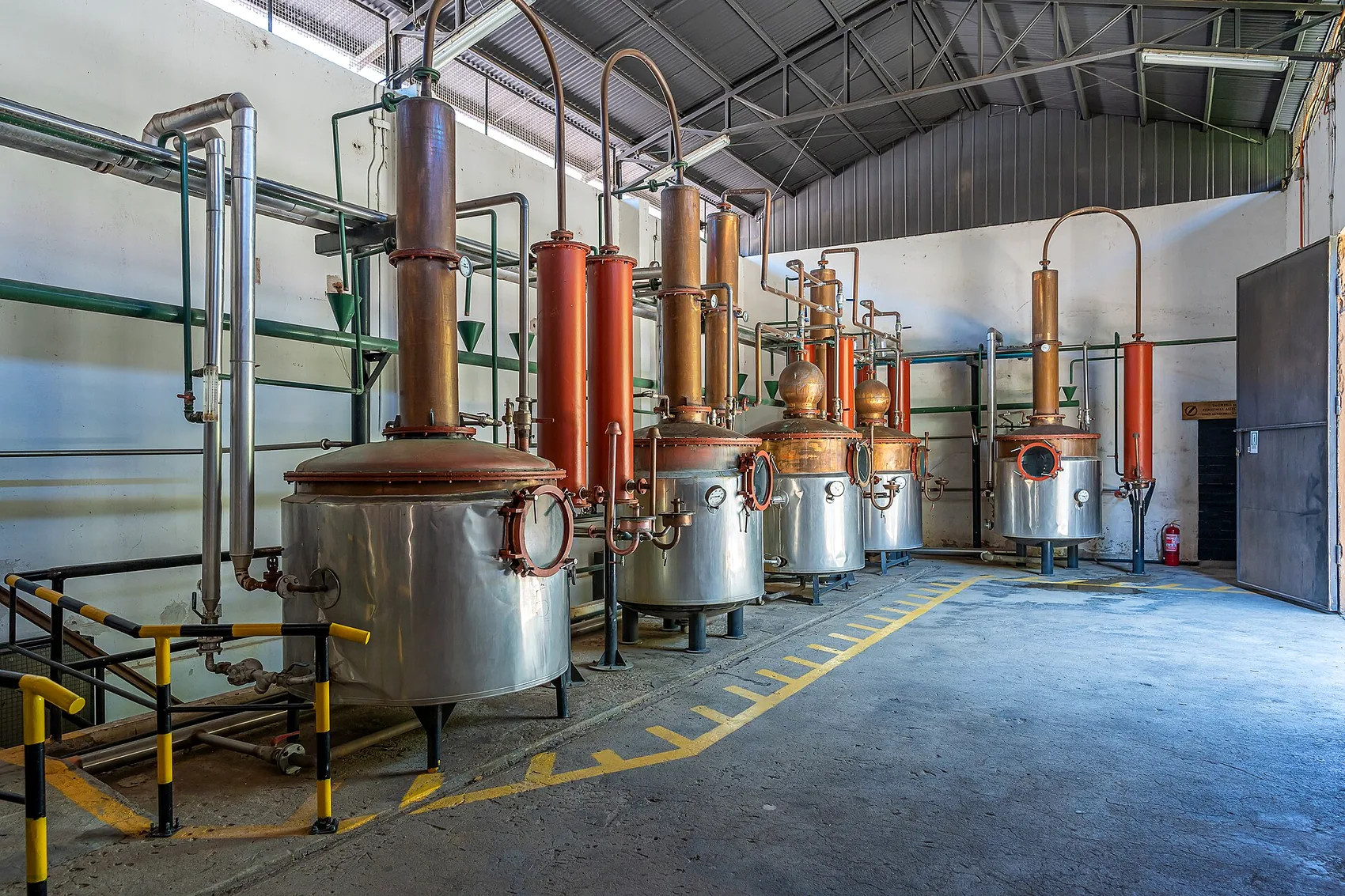
Who is it for? Anyone who would rather not drive the mountain road, anyone travelling without a car, and anyone who likes the falls-plus-tasting combination handled for them. Groups off the schooners and first-time visitors gravitate to it, and it is a reliably fun day. The trade-off is that you move on the tour's schedule, not yours, and popular falls are busiest when the tours arrive mid-morning. If you would rather have the Tobogao to yourself, self-drive and get there early instead.
A note on drinking and driving
If you take a tour, the tasting is handled and you are driven home, which is the whole point. If you drive yourself and want to include a distillery, decide in advance who is staying dry. Brazil has a firm drink-driving limit and the mountain road is not one to attempt after a generous tasting. The simple rule we give guests: one driver, no tasting, and the taster can make up for it back at the pool with a caipirinha nobody has to drive away from.

Safety on slick rock
We have threaded this through the guide because it is the thing that actually matters, but it is worth pulling together in one place. Waterfalls are the outing that most often goes wrong in Paraty, and it is almost never because someone did something extreme. It is because wet, algae-covered rock is far more slippery than any surface you deal with in normal life, and people forget that for one step. Nearly every injury here is a slip on rock, not a dramatic fall. Treat the stone as the hazard and you have solved most of the problem.
The rules that keep you safe
- Wear something on your feet. Water shoes or old trainers with grip. Bare feet and flip-flops are how visitors end up sliding when they did not mean to.
- Never dive or jump into a pool you have not checked. Depths change with the season, and submerged rocks move after floods. Wade in and feel it first.
- Watch the locals and copy them. They know the line down the slide, the safe entries, and where the pool is deep. This is the single best safety tool you have.
- Respect the water level. After heavy rain, falls run fast and hard and can rise without warning. If the flow looks strong, admire it and swim another day. Flash flooding is a real risk in mountain streams.
- Slide sitting or lying down your first time. Save the standing descent for when you understand the rock, if ever. There is no prize for the standing version except a story that ends at the clinic.
- Keep alcohol for afterwards. The slide and a couple of drinks do not mix, and neither does the drive home.
Signal drops out fast in these valleys. Tell someone at your accommodation where you are going and roughly when you will be back, and do not rely on your phone for navigation or an emergency call once you are up the road.
None of this is meant to scare you off. Thousands of people enjoy these falls every season without incident, and the risk is entirely manageable with a little respect for the rock. The people who get hurt are almost always the ones who treated a wild waterfall like a theme-park ride. Treat it like the mountain stream it is and you will have one of the best afternoons of your trip.
Best time to go
The falls have two seasons, and they are a genuine trade-off rather than a good one and a bad one. The wet summer, roughly December to March, is when the falls are fullest, loudest and most spectacular, and when the forest is at its most alive. It is also the hottest time, so the cold water feels best, but it is when the rock is most dangerous, the flow strongest, and afternoon thunderstorms most likely. Summer weekends and holidays bring the crowds too, so a weekday morning is worth planning for.
The cooler, drier months from around May to September give you gentler flow, clearer paths, safer sliding and thinner crowds, at the cost of a less dramatic torrent and colder air when you climb out. For most first-timers, especially anyone nervous about the rock or travelling with children, the shoulder and dry season are the easier introduction. We break the year down properly in our best time to visit guide, but the short version for waterfalls is this: go in the morning, whatever the season, before the crowds and the storms build.
Whichever month you come, mornings win. The light through the canopy is better, the water is quietest before the tour vans and the schooner crowds arrive, and you are off the mountain before the afternoon weather turns. A dawn start is not required, but being at the Tobogao by mid-morning rather than noon changes the whole feel of the place.
What to bring
You do not need much, but a few things make the difference between a good day and a soggy, uncomfortable one. Footwear you can swim in is the non-negotiable, for all the reasons above. Beyond that, pack light and pack for getting wet.
- Water shoes or old grippy trainers — the one thing not to skip.
- A dry bag or a plastic bag for your phone, keys and cash; there is nowhere secure to leave valuables.
- Cash in small notes for parking, the Pedra Branca fee, and a drink or lunch at the riverside bars, since cards are not a sure thing up the road.
- A quick-dry towel and a change of clothes for the drive home.
- Water and a snack — the bars are informal and may be closed midweek or out of season.
- Reef-safe sunscreen and insect repellent; the forest has mosquitoes and the odd patch of open sun.
Leave the good camera behind unless it is properly waterproof, and think twice before bringing anything you would be sad to drop in a pool. Our full packing guide covers the wider trip, but for a waterfall morning, less is genuinely more. One extra tip: bring a second dry bag purely for wet clothes, so the soaked kit does not end up sharing a car seat with your phone and your lunch on the drive back down.
Waterfalls for different travellers
The falls flex to suit almost anyone, as long as you match the spot to the group. For families, the calm pool at Poco do Tarzan and the shallow edges below the Tobogao are the play: small children paddle safely while older ones and adults take turns on the slide and the rope, always with a close eye and water shoes on every foot. Skip the slide for young kids and stay well clear of fast water after rain. Our Paraty with kids guide has more on which outings land with which ages.
For couples, the move is to go early, take the quieter Pedra Branca or a guided fall deeper in the Serra, and have the water almost to yourselves before the day-trippers arrive. For groups of friends, the jeep-and-cachaca tour is made for you: the slide, the swim and the tasting with none of the driving. And for solo travellers, the tour is also the easy social option, while the Penha falls are perfectly doable alone if you would rather set your own pace. Whoever you are, the falls are one of the few Paraty outings that genuinely suit every kind of visitor.
A rainy day and a wet-weather note
Rain complicates the waterfalls in two directions. A light drizzle is no reason to cancel; the forest canopy takes the edge off it and the falls look their best with a little extra water. But heavy or sustained rain is a firm no for the slide and for any fall running high, because mountain streams rise fast and the fun disappears into real danger. When the sky opens for the day, this is the outing to postpone, not to push through.
If your waterfall morning gets rained out, the town has plenty to fall back on: the colonial churches, the museums, a long lunch and the covered corners of the historic centre. Our rainy day guide maps the good indoor options, and the architecture and churches of Paraty are a fine dry-weather substitute. The falls will still be there, and they will be safer once the water settles.
Fitting it into your trip
A waterfall outing slots neatly into almost any Paraty stay. In a short visit it is the natural land day between beach and boat days; on a three-day itinerary it pairs beautifully with a cachaca tasting to make one full inland day, leaving the bay and the historic centre for the others. On a longer week on the Costa Verde you can split it: the easy Penha falls one morning, a guided day to the quieter Serra falls later in the week.
The practical shape most guests land on is a half-day. Leave after breakfast, do the Tobogao and the Poco do Tarzan, add Pedra Branca if the mood is there, and be back by early afternoon with the rest of the day open. Add the cachaca stop and lunch and it becomes a full, well-paced day out. However you build it, keep the morning for the water and you will avoid both the crowds and the weather. For how the roads and taxis actually work, see getting around.
The swim you come back to
Here is our honest bias, saved for the end. The best structure for a waterfall day is not to squeeze every fall in the valley into one exhausting loop. It is to go early, get properly wet in the cold mountain water, do the slide once with respect, swim the calm pool, and then come home to a warm, quiet swim of your own with nobody else around. The forest falls are a wonderful morning; the afternoon is better spent looking at the view rather than fighting for a spot on the rock.
That is where the chalet comes in. Chale Bel Air sits about four hundred metres above Paraty, a short drive up from town, with an infinity pool on a deck that looks out over a triple view of the Bay of Paraty, Angra dos Reis and Ilha Grande. After a morning at the Tobogao, rinsing off the river and sliding into that pool as the light softens over the islands is, we think, the right way to end a waterfall day. It is the place you come back to.
If you want help shaping a waterfall day around your dates, the weather and who you are travelling with, the easiest thing is to write to us and we will point you at what is running well and how to reach it. You can also browse the wider region on our explore page, which lays out the beaches, the bay and the mountains together. The water in the hills has been coming down these valleys far longer than the town has stood at the bottom of them. Go meet it, treat the rock with respect, and leave the afternoon for the view.
Come stay above the bay
Chalé Bel Air sits on the ridge that looks over everything in this guide. Tell us your dates and what kind of trip you are after — we answer personally.
Ask about your datesFrequently asked questions
What are the best waterfalls near Paraty?
The three most people come for sit along the Paraty-Cunha road, RJ-165: the Cachoeira do Tobogao with its natural rock slide, the Poco do Tarzan pool just above it, and the taller Cachoeira da Pedra Branca. All three are within about a twenty-minute drive of the historic centre, and many visitors see them on the same half-day. Deeper in the Serra da Bocaina there are quieter falls that need a guide.
Is the Tobogao rock slide in Paraty safe?
It can be, and it can also send you to the clinic. The rock is genuinely slippery and people slide it standing up, which is where the broken wrists come from. Watch a few locals first, go down sitting or on your back with feet forward the first time, keep clear of the landing pool, and do not attempt it after heavy rain when the flow is strong. Sober judgement matters more than nerve here.
How do you get to the Paraty waterfalls?
You drive, take a jeep tour, or hire a guide. The Tobogao and Poco do Tarzan sit right off RJ-165 in the Penha neighbourhood, roughly seven to eight kilometres from the Paraty junction, with a short forest path to the water. A hire car or taxi gets you there; the 4x4 jeep tours bundle several falls with a cachaca distillery and lunch, which suits anyone who would rather not drive the winding road.
How much does it cost to visit the waterfalls?
The Tobogao and Poco do Tarzan are free to reach, though you pay a small fee to park and it is normal to eat or drink at the riverside bar by the trailhead. The Pedra Branca fall sits on private land and charges a modest entrance fee. A full jeep-and-cachaca tour is priced per person and includes transport, stops and usually lunch, so it costs more but removes all the logistics.
Can you combine waterfalls and cachaca distilleries in one day?
Yes, and it is the classic Paraty day out. The same Cunha road that passes the falls also climbs past several artisanal cachaca distilleries, the alambiques, so the standard jeep tour strings together two or three falls, a swim and a tasting with lunch. If you are driving yourself, plan the tasting for the end and make sure the person at the wheel stays dry.
When is the best time to see the Paraty waterfalls?
The falls run strongest in the wet summer months from December to March, when they are loudest and fullest but the rock is at its most dangerous and afternoon storms are common. The cooler, drier months from May to September give you gentler flow, clearer forest paths and safer sliding. Any time of year, go in the morning before the crowds and the afternoon rain build up.
Are the waterfalls good with children?
Some are, with supervision. The calm pool at Poco do Tarzan and the shallow edges below the Tobogao suit families, and small children can paddle while adults take turns on the slide. The slide itself and the fast water after rain are not for young kids, and the wet rock is slippery for everyone, so water shoes and a close eye are the rule.