Paraty sits inside one of the richest surviving pieces of the Atlantic Forest, and you do not need a jeep to find it — a lot of the birds, monkeys and butterflies come to the forest edge just above town, if you know when and how to look.
Most people come to Paraty for the water — the bay, the schooners, the islands. What they tend to underestimate is what stands behind the town. Paraty is pinned on a narrow shelf between the sea and a wall of forested mountains, the Serra do Mar, and those mountains hold one of the largest surviving pieces of the Atlantic Forest, the Mata Atlantica. This is not scenery. It is a living, noisy, endlessly worked-over habitat, and it is one of the five most biodiverse places on Earth for its size. If the bay is the reason you booked, the forest is the reason a lot of guests end up extending.
This is our host's guide to Paraty wildlife and birdwatching: what actually lives up here, where and when to look for it, and how to watch without doing harm. We have written it the way we would brief a friend over coffee before they set off, which means honest trade-offs rather than a species-list fantasy. You will not tick everything. Toucans and monkeys are genuinely common; sloths and the rarer primates are a matter of luck and patience. What we can promise is that with an early start and a little quiet, the forest just above town will give you far more than you expect.
We run a hillside chalet at about four hundred metres, a short drive above Paraty, and one of the quiet pleasures of the place is that the wildlife comes to us. Tanagers work the trees at the edge of the deck, hummingbirds cross the pool, and on grey mornings before rain you can hear howler monkeys somewhere down the valley. So we come at this with a bias: the best way to do a wildlife day here is to go out early into the forest and come back to a swim with the bay laid out below you. More on that at the end. First, the forest itself.
Why Paraty is a wildlife hotspot
The Atlantic Forest once ran in an almost unbroken green belt down the length of Brazil's coast. Over five centuries of sugar, coffee, cattle and cities, most of it was cleared — today only a fraction of the original forest survives, in scattered fragments. What makes the Paraty region matter is that here, where the coastal mountains rise too steeply to farm, some of the best of that forest is still standing and still connected. The town sits at the meeting point of several large protected areas, and that is the whole reason the wildlife is here to see.
Two things make this stretch of coast unusually rich. The first is the vertical range. From the mangroves at sea level to the high ridges of the Serra da Bocaina above two thousand metres, you pass through several distinct forest zones in a short horizontal distance, and each holds its own set of birds and animals. The second is rainfall. Warm, wet Atlantic air blows in, hits the mountains, and dumps its water on the slopes — this is some of the rainiest country in southeast Brazil, which is exactly why the forest is so dense and so alive.
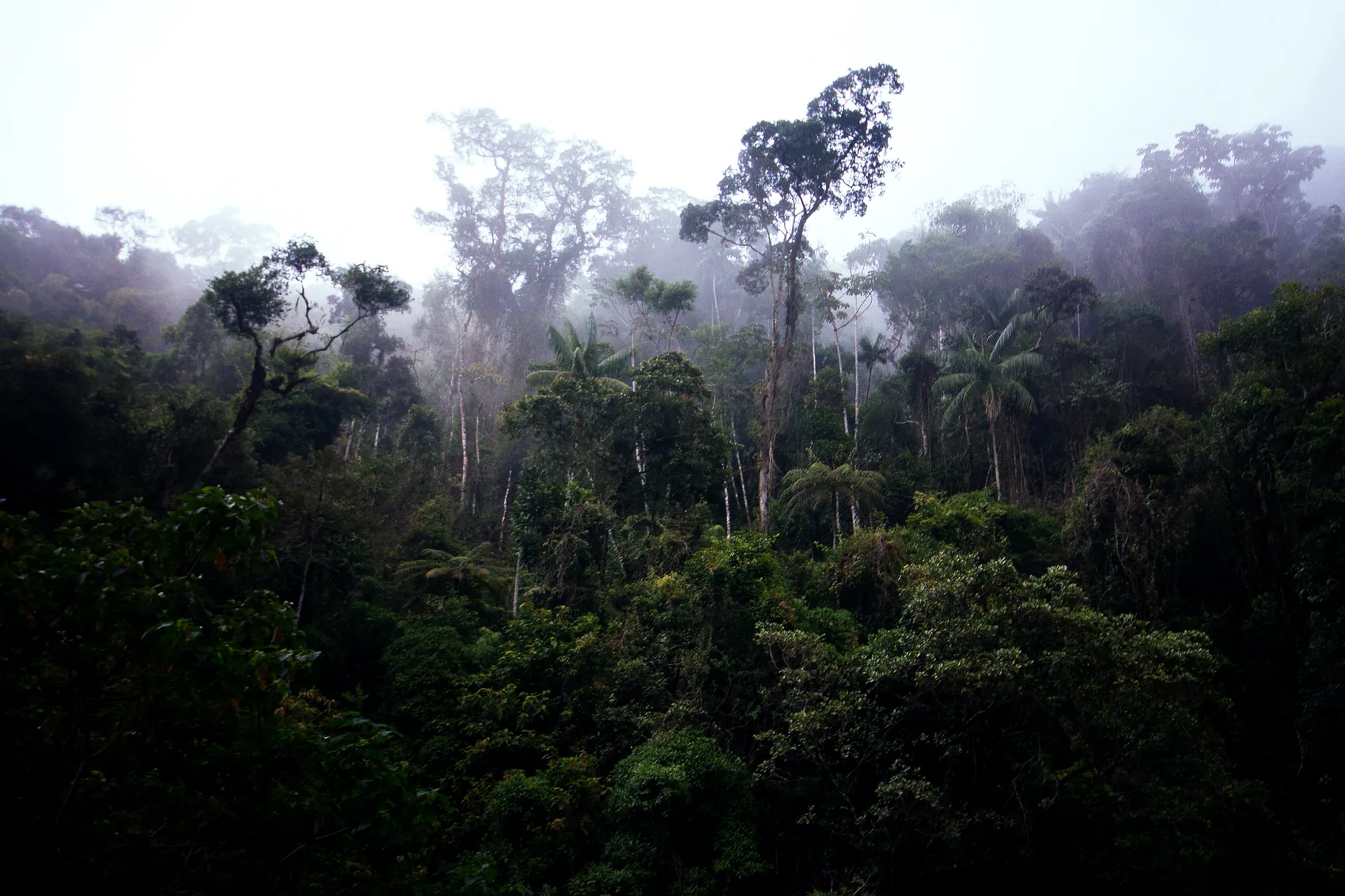
The result is a concentration of life that draws serious naturalists from around the world. The Atlantic Forest has something on the order of 188 bird species found nowhere else, along with a long list of endemic frogs, primates and plants. The region around Paraty and Ilha Grande is recognised by UNESCO precisely for this combination of culture and biodiversity. You do not have to be a specialist to feel it. Sit still on a forest trail for ten minutes and the layers start to separate: the insects, then the birds, then the movement in the canopy that turns out to be a troop of monkeys.
The honest caveat is that a rich forest is not a zoo. Density of species does not mean density of easy sightings. Much of this life is small, high, camouflaged or nocturnal, and the animals want nothing to do with you. That is the point of the rest of this guide — how to shift the odds in your favour, and how to be a good guest in a habitat that has already lost most of its ground.
The birds: Paraty wildlife and birdwatching up close
If you take one activity seriously here, make it the birds. The Serra da Bocaina area alone has more than three hundred recorded species, and because Paraty's forests run from sea level to high altitude, you can sample several distinct communities of them without driving far. Birders travel from Europe and North America specifically for the Atlantic Forest endemics, and the country immediately behind Paraty is a well-known part of that circuit.
Start with the ones you cannot miss. Tanagers are the forest's showpieces — small fruit-eating birds in colours that look invented. The green-headed tanager, known locally as the saira-sete-cores, the "seven-colour tanager", is the one people photograph and disbelieve afterward. Flocks of mixed tanagers move through the canopy at the forest edge, and a fruiting tree in the morning can hold a dozen species at once. This is the single easiest way for a non-specialist to get hooked: find fruit, sit down, wait.
Toucans and toucanets
Everyone wants the toucan, and the good news is you have a real chance. The one most often seen in these forests is the red-breasted toucan, called locally the tucano-de-bico-verde for its green-and-orange bill — a little smaller than the giant toucan on the postcards, and more a bird of the true forest. You are as likely to hear it first: a dry, frog-like croaking that carries through the trees. Watch the tops of tall fruiting trees in the early morning and you may catch the heavy, undulating flight as one crosses a gap in the canopy.
Alongside the full-sized toucans are the toucanets and araçaris — smaller relatives with the same outsized bill. The saffron toucanet, a yellow-green forest bird, is a Serra da Bocaina specialty that birders come for, and the spot-billed toucanet turns up at fruiting trees at mid-altitude. None of these are guaranteed on a given morning, but over two or three early starts in good forest your odds are genuinely decent, especially with a guide who knows the fruiting trees.
Find a fruiting tree in the early morning, sit down, and wait — it is the single easiest way for a non-specialist to get hooked on the birds here.
Hummingbirds
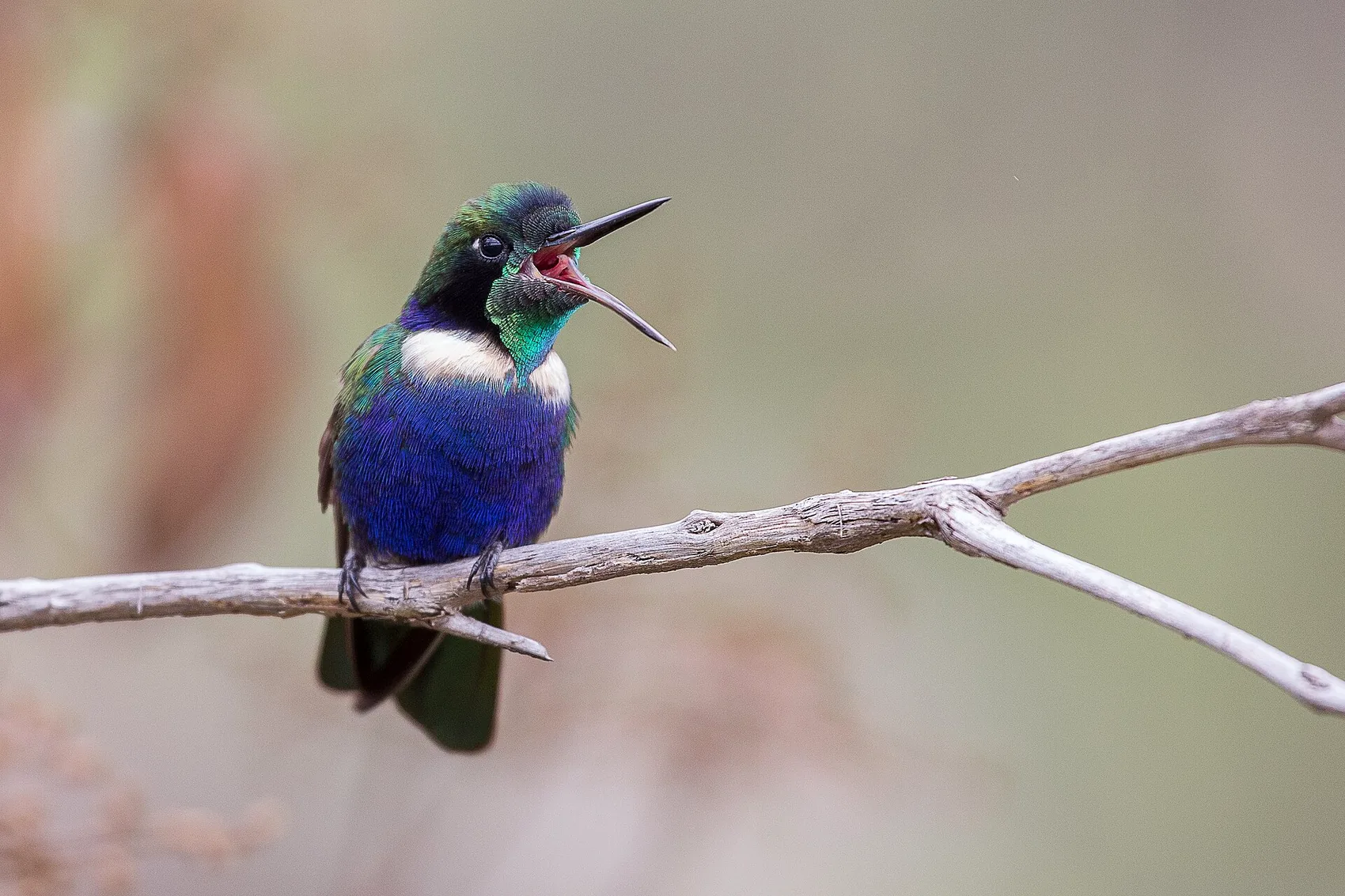
The Atlantic Forest is hummingbird country, and this is where casual visitors are most reliably delighted. More than a dozen species move through the region, from the tiny amethyst woodstar to the white-throated hummingbird and the sapphire-spangled emerald, with the deep-red Brazilian ruby among the prizes. They are drawn to flowering plants and, at many forest-edge homes and lodges, to sugar-water feeders where several species will jockey and chase within arm's reach.
This is the part of Paraty wildlife you can enjoy with zero effort and zero expertise. A veranda with the right flowers becomes a hummingbird theatre; the birds are bold, fast and completely used to people. If you want to photograph them, morning light and a bit of patience beat any amount of chasing. We keep flowering plants around the chalet's terraces for exactly this reason, and guests who arrived indifferent to birds often leave with a phone full of blurred hummingbird photos and a new hobby.
The quieter specialists
Beyond the showy birds is the deeper list that keeps serious birders coming back: antbirds, antwrens and antshrikes working the understorey; woodcreepers spiralling up trunks; spinetails and foliage-gleaners in the tangle; manakins with their mechanical courtship displays. Many of these are Atlantic Forest endemics, drab to look at but exciting to anyone keeping a life list. There are also large, threatened birds of the high forest — the black-fronted piping guan, and, for the very fortunate, a harpy eagle over the ridges of the Serra da Bocaina. Nobody should expect the eagle. Everybody should know it is up there.
The monkeys of the Mata Atlantica
After birds, primates are the wildlife most guests actually encounter, and the forest around Paraty holds several species at very different levels of visibility.
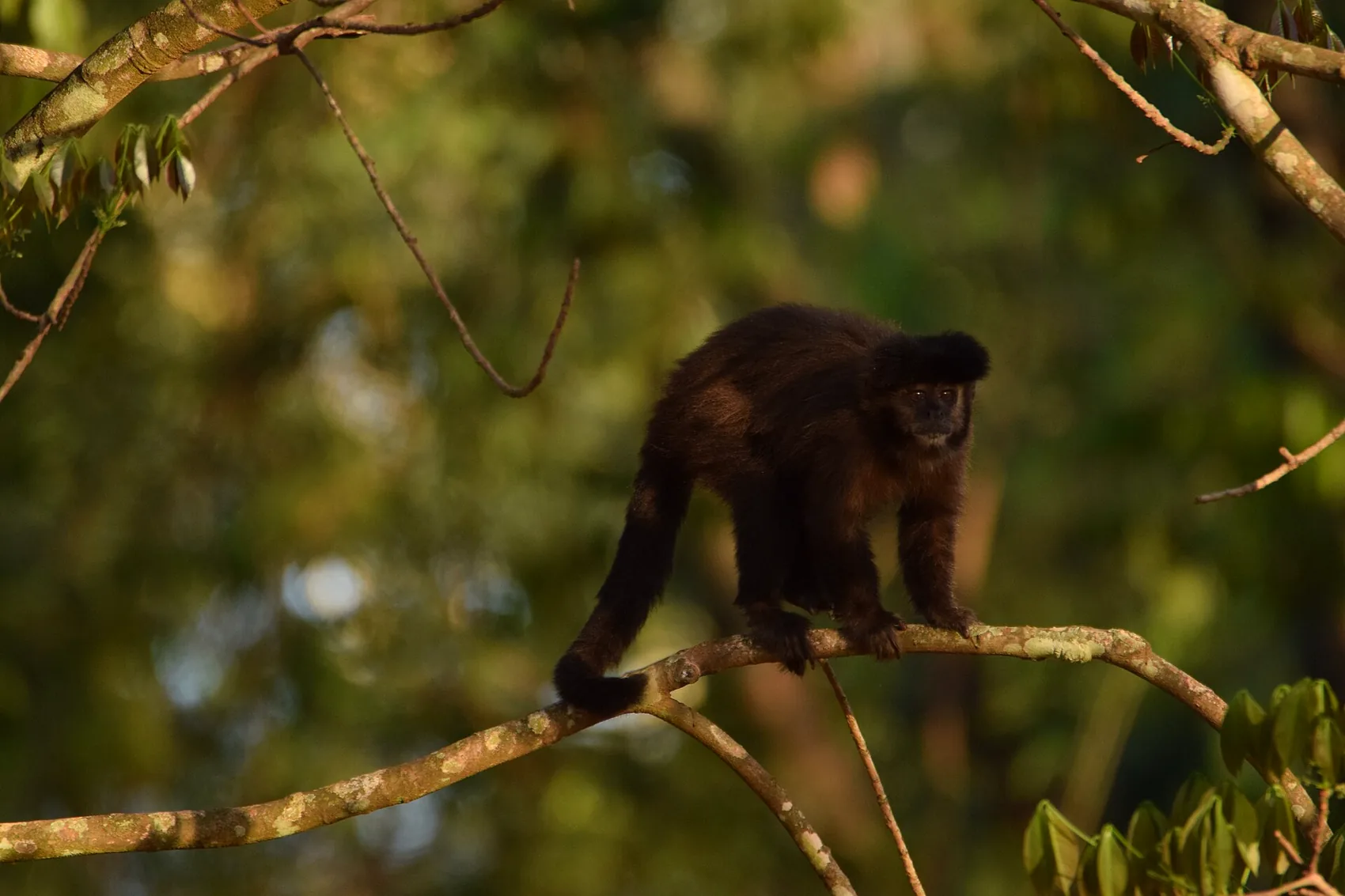
The one you are most likely to meet is the brown, or black-capped, capuchin — a clever, adaptable, quick-fingered monkey that works the canopy at the forest edge and, less happily, has learned that humans mean food. You will recognise a troop by the shaking branches and the rain of dropped fruit before you see the animals themselves. Capuchins are a delight to watch from a distance and a genuine nuisance up close: where people have fed them, they raid bins, open kitchens and unattended bags, and a fed capuchin is a bold and occasionally aggressive one. Enjoy them; give them nothing.
The other common primate is the brown howler monkey, the bugio, and here the sense you will use is hearing before sight. The male's call is one of the great sounds of the Atlantic Forest: a deep, rolling roar that carries well over a kilometre and sounds far larger than the animal making it. You will most often hear it at dawn or before rain, a whole troop answering itself across the valley. Actually seeing them takes more luck — they are slow, quiet feeders that sit high in the canopy for hours. Sadly, howler populations here have been hit hard by outbreaks of yellow fever, which is one reason your own vaccination matters, both for you and to reduce the chance of moving the virus around.
The rare and the lucky
The headline primate of this forest is one almost no visitor sees: the southern muriqui, or woolly spider monkey, the largest monkey in the Americas and one of the most endangered. It survives in a handful of protected forest patches, and its presence is part of why the Serra da Bocaina and the surrounding reserves matter so much. If a guide offers you a realistic muriqui trip, take it seriously and manage your expectations; if someone promises a guaranteed sighting, be sceptical. Wild animals do not sign contracts. The right attitude is to treat any glimpse of the rarer species as a gift rather than an entitlement.
Sloths and the harder-to-see mammals
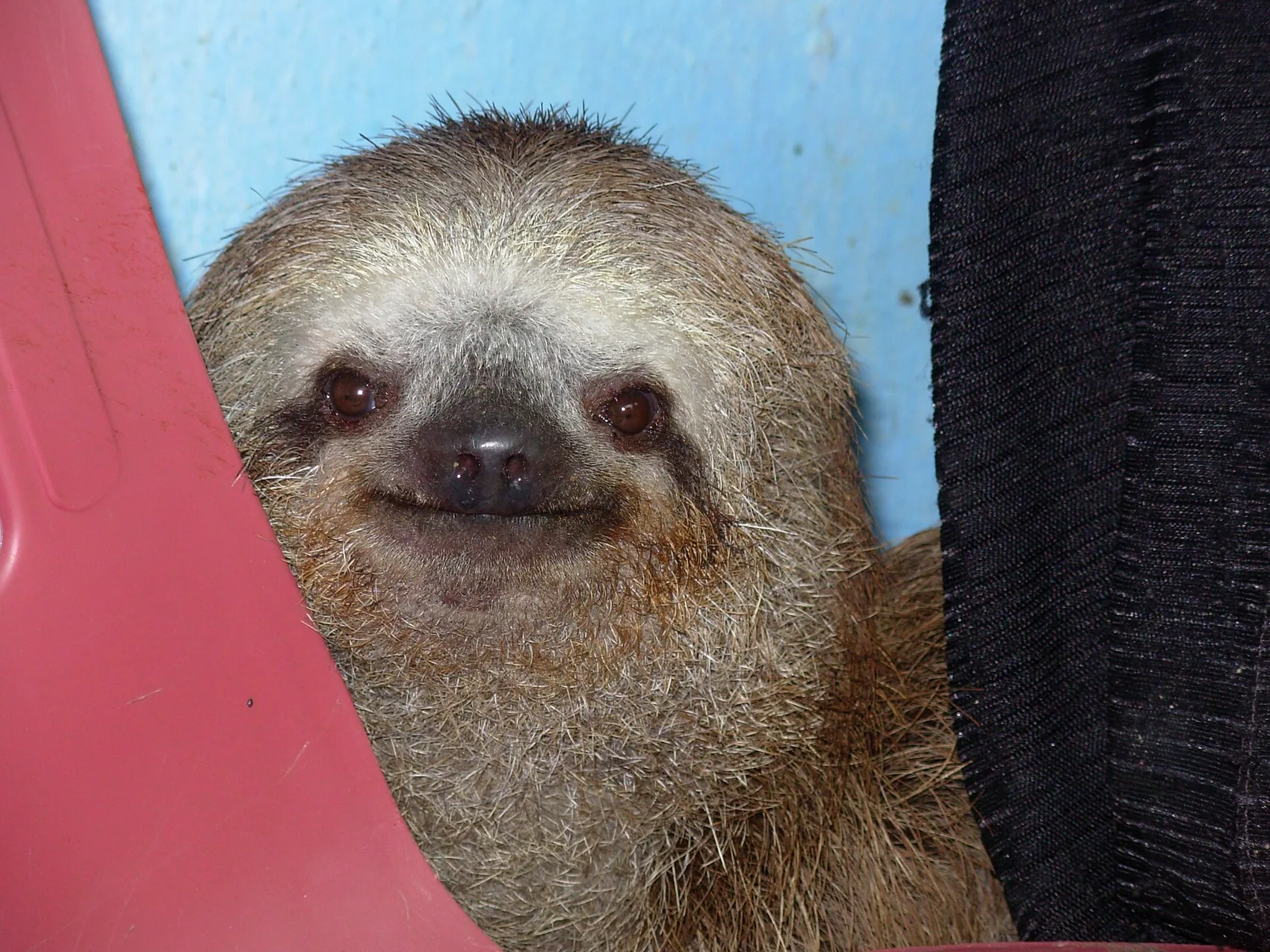
The animal guests ask about most and see least is the sloth. The brown-throated sloth does live in these forests, hanging in the crooks of tall trees, but it is superbly camouflaged, barely moves, and spends its time high in the canopy where it reads as a clump of dead leaves. Finding one is mostly a matter of a sharp-eyed local spotting the shape and pointing, or of sheer luck on a quiet trail. If you see a sloth here, it will very likely be because a guide found it, not because you did. Do not build a trip around it.
The forest holds a long list of other mammals that mostly stay out of sight: coatis, which travel in bands and are bolder than most; agoutis, the large forest rodents that bound away from trails; opossums; and, deeper in and mostly at night, ocelots, tayras and the shy lowland tapir. There are wild cats up to the jaguar in the largest protected blocks, though a visitor will essentially never see one. Most of this mammal life you will experience as tracks in mud, a rustle in the leaf litter, or eyeshine caught on a night walk with a guide. That is normal, and it is not a failure of the outing. A healthy forest keeps its mammals hidden.
Reptiles, frogs and the small stuff
Do not overlook the small life, which is often the most rewarding. The Atlantic Forest is a world capital of frogs, and after rain the chorus from the streams and bromeliads is extraordinary — tiny, jewel-bright species, some of them found only in this forest. Butterflies are everywhere in the warm months, including big electric-blue morphos that drift along the trails and streams. Lizards bask on rocks, and you may meet a harmless snake sunning on a path. Venomous snakes exist here, as anywhere in tropical Brazil, which is a simple argument for closed shoes and watching where you put your hands and feet, not for fear. The overwhelming majority of what you meet is going about its business and wants to avoid you.
The forest after dark
A whole layer of this wildlife only comes out at night, and a guided night walk is one of the more memorable things you can do here — provided you go with someone who knows the ground. After dusk the forest hands over to a different cast: frogs in full chorus by the streams, spiders whose eyes throw back the torchlight like scattered diamonds, night birds such as potoos and pauraques sitting frozen on a branch, and, for the lucky, the eyeshine of an opossum, a small cat or a kinkajou moving through the canopy. It is a slower, closer kind of watching, led entirely by a torch beam and your ears.
The rules tighten after dark. Go with a guide, not alone; the same slick trails and hidden edges that are manageable by day are genuinely risky at night, and phone signal is unreliable behind the ridges. Use a red light or a dimmed beam rather than blasting animals at full power, keep the group small and quiet, and resist the urge to hold a spotlight on any creature for long. Done gently, a night walk shows you a Paraty that most visitors never suspect is there — the forest is arguably busier at nine in the evening than at nine in the morning, just harder to see.
Where to look: the forest zones
One of Paraty's advantages is that you can sample several very different habitats in one short trip, and each has its own wildlife. Understanding the zones helps you decide where to spend a morning.
The mangroves and coastal edge
At sea level, where rivers meet the bay, the mangroves are a nursery for fish and a feeding ground for herons, egrets, kingfishers and the occasional roseate spoonbill. Birding guides often start here early, before moving uphill as the day warms. It is easy, flat, water-level watching, and it pairs naturally with a quiet paddle — our guide to Paraty-Mirim and the quieter beaches covers the calm coastal corners where this habitat is easiest to reach.
The lowland and hillside forest
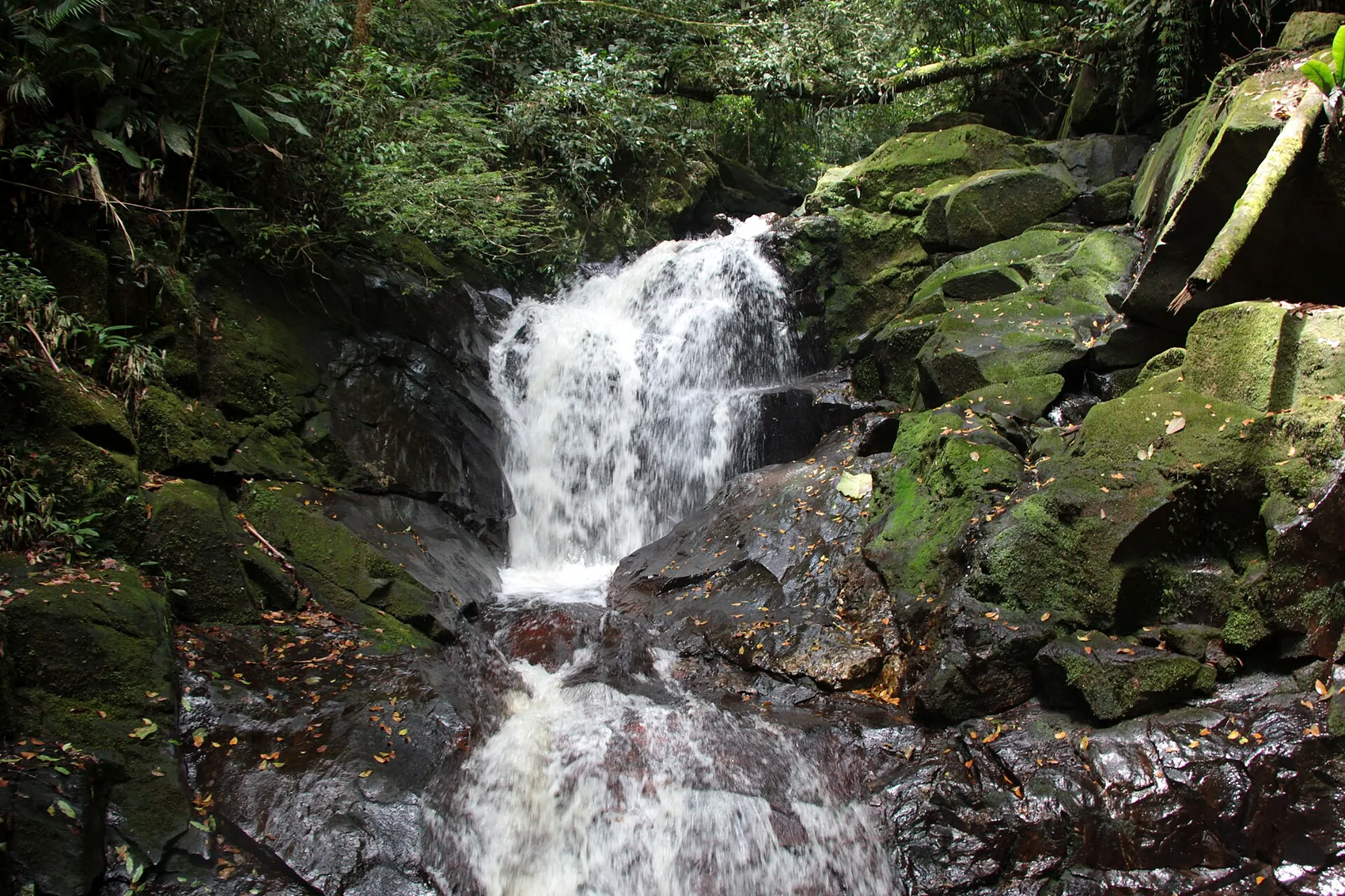
This is the zone most visitors actually experience, and the one the chalet sits in: the forest that clothes the slopes from the coast up to a few hundred metres. It holds the tanagers, the toucans, the capuchins, the hummingbirds — the core of the everyday wildlife. You do not need a national park for it. The edge of a quiet forest road or a garden that backs onto the trees, watched patiently at dawn, delivers a great deal. This is where a guest with no equipment and one good morning gets most of their sightings.
The high forest of the Serra
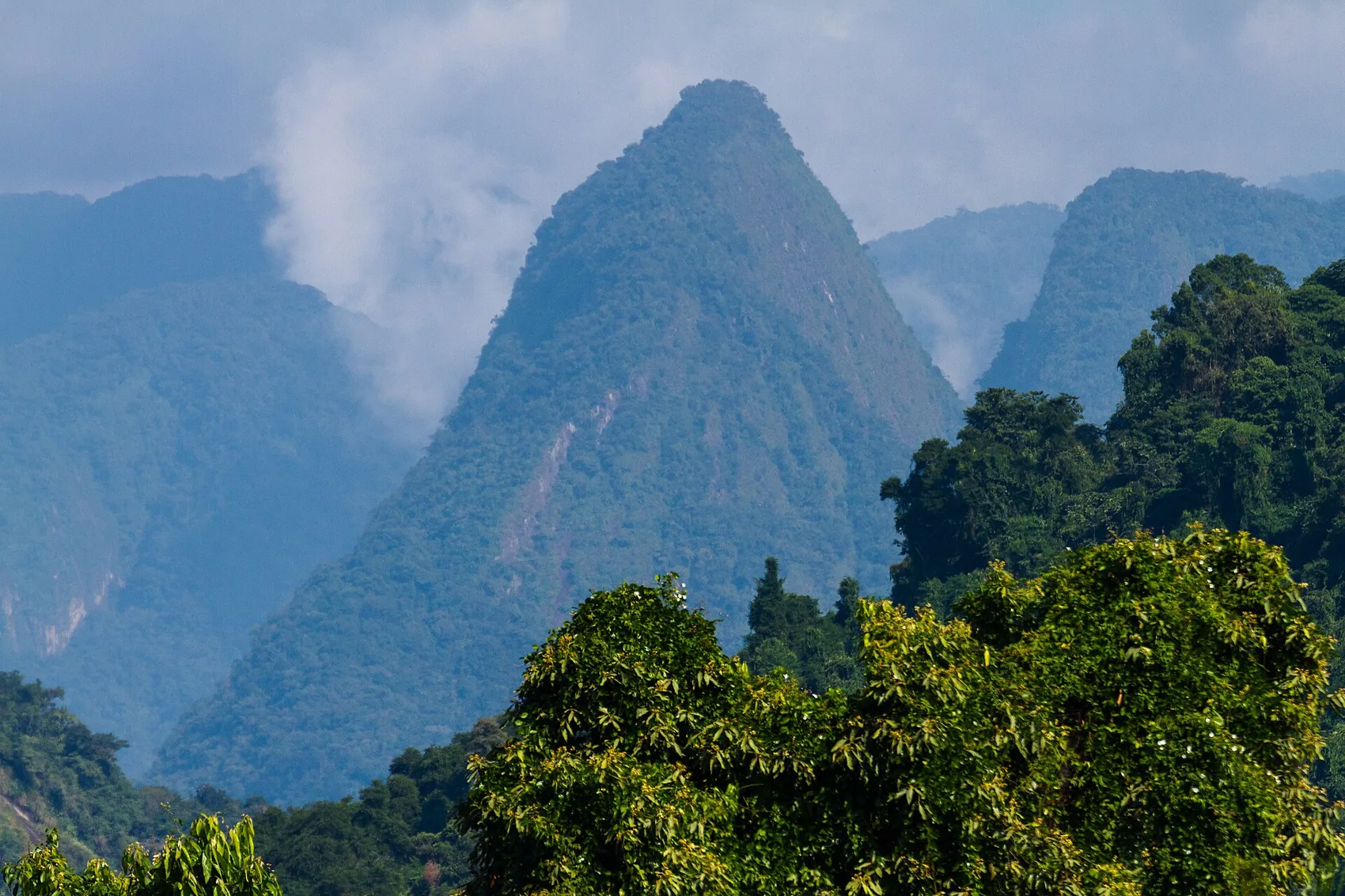
Climb the old road toward Cunha and the state line and the forest changes: cooler, mossier, wrapped in cloud, with a different set of birds that includes many of the altitude specialists birders travel for. Feeders at forest-edge properties up here draw hummingbirds and tanagers to a fixed spot, which is why serious birding trips often finish at height. The high country sits within and around the Serra da Bocaina National Park, one of the largest protected blocks of Atlantic Forest anywhere, and the same road carries you past the waterfalls and old gold trail — see our guide to hiking around Paraty for how these routes connect.
The best trails and places to look
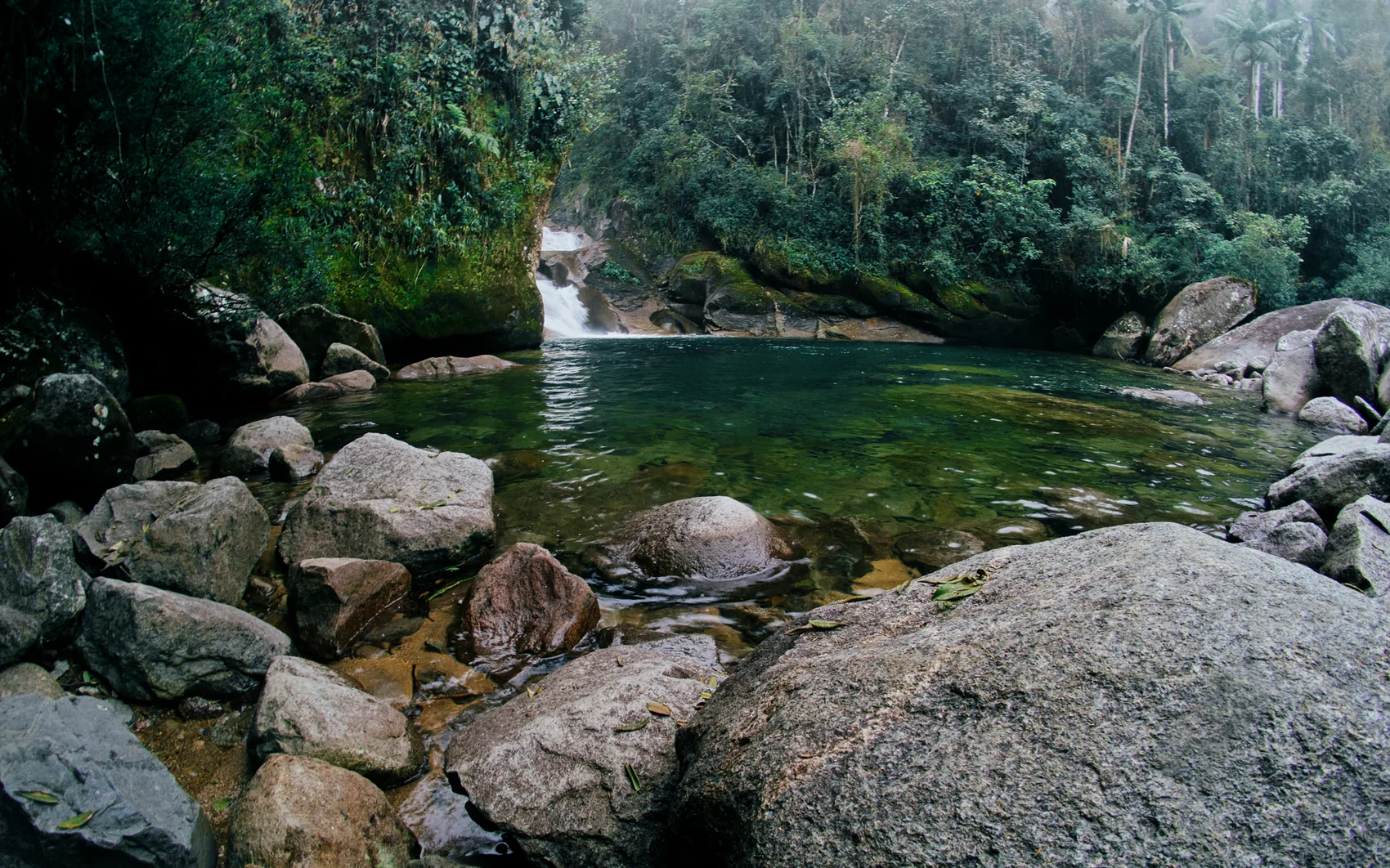
You do not need a formal reserve to see wildlife, but a few settings stack the odds. The forest-edge sections of the old Paraty–Cunha road are reliably good in the early morning, both for roadside birding and for the canopy above the waterfalls; the falls themselves double as wildlife spots if you arrive before the crowds, as our waterfalls guide explains. The trail to Praia do Sono and the paths of the Juatinga peninsula pass through excellent lowland forest, where howlers call and toucans cross the gaps. The Saco do Mamanguá, the long fjord-like inlet south of town, wraps mangrove, forest and quiet water together and is superb for birds from a kayak.
Within the Cairuçu Environmental Protection Area, the broad reserve south of Paraty, several caiçara community trails run up into steep forest — demanding walks, but through genuinely wild country. And the Serra da Bocaina National Park, up at altitude, is the destination for anyone chasing the high-forest specialties, best done with a guide who knows the access. Wherever you go, the pattern is the same: forest edge plus water plus early light equals wildlife.
A simple do-it-yourself morning
If you want to try on your own, keep it modest. Pick a quiet stretch of forest road or trail near where you are staying. Be in position by first light. Walk slowly and stop often — most people move far too fast and see far too little. Let your ears lead: follow the calls, watch any fruiting or flowering tree, and give a mixed flock time to work past you rather than chasing it. An hour of this, done patiently, will out-perform a whole day of rushing. Then be back before the heat kills the activity and the afternoon rain arrives.
The best time of day and year
Time of day matters more than almost anything else. The forest runs on a clear schedule: intense activity for the first two or three hours after dawn, a long quiet through the heat of the day, and a second, gentler burst in the late afternoon. This is why local birding trips leave around six in the morning and why guests who sleep in and go looking at noon come back convinced the forest is empty. It is not empty; it is resting, exactly as you would in that heat. If you do one thing differently after reading this, set an early alarm.
Plan wildlife outings for the morning and leisure for the afternoon, not the other way round. Dawn is when the birds sing, the monkeys move and the light is good; by early afternoon the forest goes quiet and, for much of the year, the rain moves in. A dawn walk and a midday swim is the right order of a Paraty day.
Season matters less than people expect, because there is no true off-season for wildlife here — the forest is evergreen and the birds are resident year-round. That said, the drier, cooler months from roughly April to September make the trails firmer, the mornings clearer and the going more comfortable, which is why many birders favour that window; our guide to the best time to visit Paraty lays out the trade-offs in full. The warm, wet months from around November to March bring more breeding, more song, more frogs and butterflies — and heavy afternoon downpours that make the morning discipline even more important.
Watching wildlife the right way
This forest has already lost most of its original range, and the animals in it are living on the fragments that remain. How you behave genuinely matters, and the rules are simple enough to state plainly.
Never feed wild animals. It sounds harmless and it is not: fed capuchins become aggressive raiders, fed coatis lose their fear and end up killed as pests, and human food damages animals not built for it. Keep your own food sealed and out of sight, especially around monkeys. Do not touch, chase or corner anything for a photograph — if an animal changes its behaviour because of you, you are too close. Keep your voice down; the forest is heard as much as seen, and a loud group clears every animal from the path ahead. Stay on the trails, both to protect the understorey and to keep yourself safe.
Supporting the forest
The best thing a visitor can do is make the living forest worth more standing than cleared. Hiring local guides, using community-run trails in the caiçara areas and the reserves, and paying park fees all turn wildlife into a livelihood for the people who live alongside it — which is, in the end, what keeps the forest there. Our guide to sustainable travel on the Costa Verde goes deeper on how to spend in a way that helps. Carry out everything you carry in, including fruit peel, which is not "natural" litter here and teaches animals to associate trails with food.
When to hire a guide, and how
For toucans, tanagers, hummingbirds and monkeys around the forest edge, you can do very well on your own with an early start. For anything more — a real species list, the high-forest specialties, the mangrove birds, a shot at the rarer animals — a good local birding guide changes the whole outing. They know the fruiting trees, the feeder sites, the calls, and the access roads, and a skilled one will find and name three or four times what you would alone. Paraty has a small community of experienced naturalist guides who work exactly this circuit, from the mangroves at dawn up to the altitude feeders by mid-morning.
We deliberately do not name individual operators here, because good ones come and go and a personal introduction beats a stale recommendation. What we will happily do is point guests toward the guides and community trail networks we currently rate, matched to what you actually want — a gentle morning of colourful birds, a serious dawn-to-dusk birding push, or a family walk pitched at children. Just ask us before you arrive, or through the contact page, and we will set it up. If you would rather browse the whole picture first, the explore page lays out how the forest, the bay and the town fit together.
Wildlife with children
The forest is a fine place for kids, and often a better introduction to Paraty than a long boat day. The trick is to aim at the reliable, close, active wildlife rather than the rare and patient stuff. Hummingbirds at a feeder, capuchins shaking the branches at the forest edge, frogs after rain, morpho butterflies on a trail, and the sheer drama of a howler chorus at dawn all land well with children because they involve movement and sound, not silent waiting.
Keep outings short and early, before heat and boredom set in, and lean on a patient guide who can turn a walk into a treasure hunt. Give each child a simple job — first to hear a toucan, first to spot a hummingbird — and the forest does the rest. Our guide to Paraty with kids has more on pacing a family trip here, including how to balance a forest morning against beach and pool time so nobody melts down by lunch.
What to bring for wildlife watching
You do not need much, but a few things make an enormous difference. A pair of binoculars is the single best investment; even a modest pair turns a distant speck into a green-headed tanager and a shape in the canopy into a sloth. Wear closed shoes with grip — the trails are muddy and the rocks are slick — and neutral, quiet clothing rather than bright colours. Bring water, a light rain layer whatever the forecast, and insect repellent, because the forest has mosquitoes and, in the wet season, ticks.
Add a camera with a bit of reach if photography is your thing, though be ready to simply watch when the light or the moment does not allow a shot. A soft voice, slow feet and patience are worth more than any gear. For a fuller checklist tuned to this climate, see our what to pack for Paraty guide. And do check, well before you travel, that your yellow fever vaccination is current — it is recommended for this region and, for many travellers arriving from abroad, worth confirming with a travel clinic weeks ahead.
How a wildlife day fits your trip
The neat thing about wildlife in Paraty is that it slots into a trip built around other things. A dawn birding walk finishes long before a schooner leaves, so you can watch toucans in the morning and be on the water by eleven. A forest-and-waterfall morning up the Cunha road pairs naturally with a cachaça tasting and a riverside lunch. Even a single early hour on a quiet trail, before the rest of the group is awake, changes the texture of a beach-and-boat holiday. If you are still shaping the days, our ultimate guide to Paraty and the three-day itinerary show where a forest morning fits best.
For anyone giving Paraty a proper week, wildlife deserves more than a single slot. Build in two or three early mornings across the trip — one in the mangroves, one on the hillside forest, one up at altitude — and you will come home with a real sense of the Atlantic Forest rather than a lucky snapshot. The seven-day Costa Verde itinerary has room to do exactly that without turning the holiday into a boot camp.
The forest, from the chalet
We will end where we began, honestly. The reason we love wildlife here is not that we chase it — it is that a good deal of it comes to us. Sitting at roughly four hundred metres on a forested hillside, the chalet is surrounded by the same lowland forest this whole guide describes. Tanagers and thrushes work the trees at the edge of the terrace, hummingbirds cross the infinity pool, and on still grey mornings the howler monkeys start up somewhere down the valley while you are still holding your coffee. You can bird from the deck before you have decided what to do with the day.
That is the rhythm we recommend: out early into the forest, back for a late-morning swim with the triple view of the Bay of Paraty, Angra dos Reis and Ilha Grande spread out below, then the afternoon at whatever pace you like. You can read more about the house on the chalet page, and if a forest-first trip is what you are after, tell us when you get in touch and we will line up the right guide, the right trails and the right mornings. The birds will be up before you are. The trick is simply to join them.
Come stay above the bay
Chalé Bel Air sits on the ridge that looks over everything in this guide. Tell us your dates and what kind of trip you are after — we answer personally.
Ask about your datesFrequently asked questions
Is Paraty good for birdwatching?
Yes, unusually so. Because Paraty sits where the Serra do Mar mountains meet the sea, you can move between mangrove, lowland forest and cool high forest in a single morning, each with its own birds. The Serra da Bocaina area alone has more than 300 recorded species, including endemics found nowhere outside the Atlantic Forest.
What animals can you see in the Atlantic Forest around Paraty?
Realistically: toucans and toucanets, tanagers, dozens of hummingbird species, brown capuchin monkeys, brown howler monkeys (more often heard than seen), and if you are lucky and patient, a brown-throated sloth high in the canopy. The forest also holds rarer, shyer animals like the endangered southern muriqui, which most visitors never see.
What is the best time of day for wildlife in Paraty?
The first two hours after sunrise, without much competition. Birds feed and sing hardest at dawn, the forest is cool, and the light is kind. Guided birding trips here typically leave around 6am for exactly this reason. Late afternoon is a decent second window; the middle of a hot day is the worst.
Do I need a guide to see wildlife near Paraty?
Not to enjoy the common birds and monkeys around the forest edge, which you can do on your own from a quiet trail or deck. But a good local birding guide will find and name three or four times as much, knows where the canopy feeders and mangrove birds are, and is worth it if a species list is the point of your trip.
When is the best time of year for birdwatching in Paraty?
Birds are present all year. The drier, cooler months from roughly April to September make the trails easier and the mornings clearer, which many birders prefer. The warm wet season brings breeding activity and more song but also heavy afternoon rain, so plan wildlife outings for the mornings.
Are there monkeys in Paraty?
Yes. Brown capuchins are the ones you are most likely to meet, working the canopy at the forest edge and, unfortunately, raiding bins and open kitchens where people have fed them. Brown howler monkeys live here too and announce themselves with a deep roaring call that carries for over a kilometre, especially at dawn and before rain.
Is it safe to see wildlife on your own around Paraty?
For roadside and forest-edge watching, yes, with common sense: go early, tell someone your plan, watch for slick trails and don't wander into deep forest alone, where signal dies fast. Never feed or touch wild animals, keep food sealed away from monkeys, and check that your yellow fever vaccination is current before travelling to this region.

_in_flight_composite.jpg)

.jpg)


