Ilha Grande is the long ridge you can see across the water from the chalé's deck, a car-free island whose beaches run from surf-battered ocean sand to glass-still snorkel coves, and this is how to read the difference and reach each one.
From the deck at the chalé, on a clear morning, you can trace the whole length of Ilha Grande lying along the horizon like a sleeping animal. It looks like one thing from up here: a single green ridge across the mouth of the bay. Spend a few days going ashore and it turns into a dozen different places. The Lopes Mendes beach that fills the postcards, with its long run of pale sand and its steady Atlantic surf, has almost nothing in common with the flat, glass-clear cove where you snorkel an hour's boat ride away. The island has two faces, an ocean side and a bay side, and knowing which is which is the difference between a good day and a wet, disappointed one.
This is a guide to the beaches of Ilha Grande written the way we would explain it to a friend staying with us. It covers the famous ones, Lopes Mendes above all, and the ones most visitors miss, and it is honest about the trade-offs: which beaches take real effort to reach, which are calm enough for small children, where the snorkelling actually rewards you, and when the trail beats the boat. Ilha Grande is the single best day trip from this stretch of the Costa Verde, and it is close enough that you can go across, spend the day on the sand, and be back on the hill by evening for a swim in the pool as the light goes.
A word on the island itself before the beaches. Ilha Grande has no cars, no roads worth the name and one small sand-street town, Vila do Abraão, where the boats come in. You get around on foot, by boat-taxi, or on a network of marked forest trails. Much of the island is protected within a state park and neighbouring reserves, which is why the beaches look the way they do and why some of them, Lopes Mendes among them, have not a single building in sight. Keep that shape in mind and the rest of this makes sense.
How the island is put together, and why the beaches differ
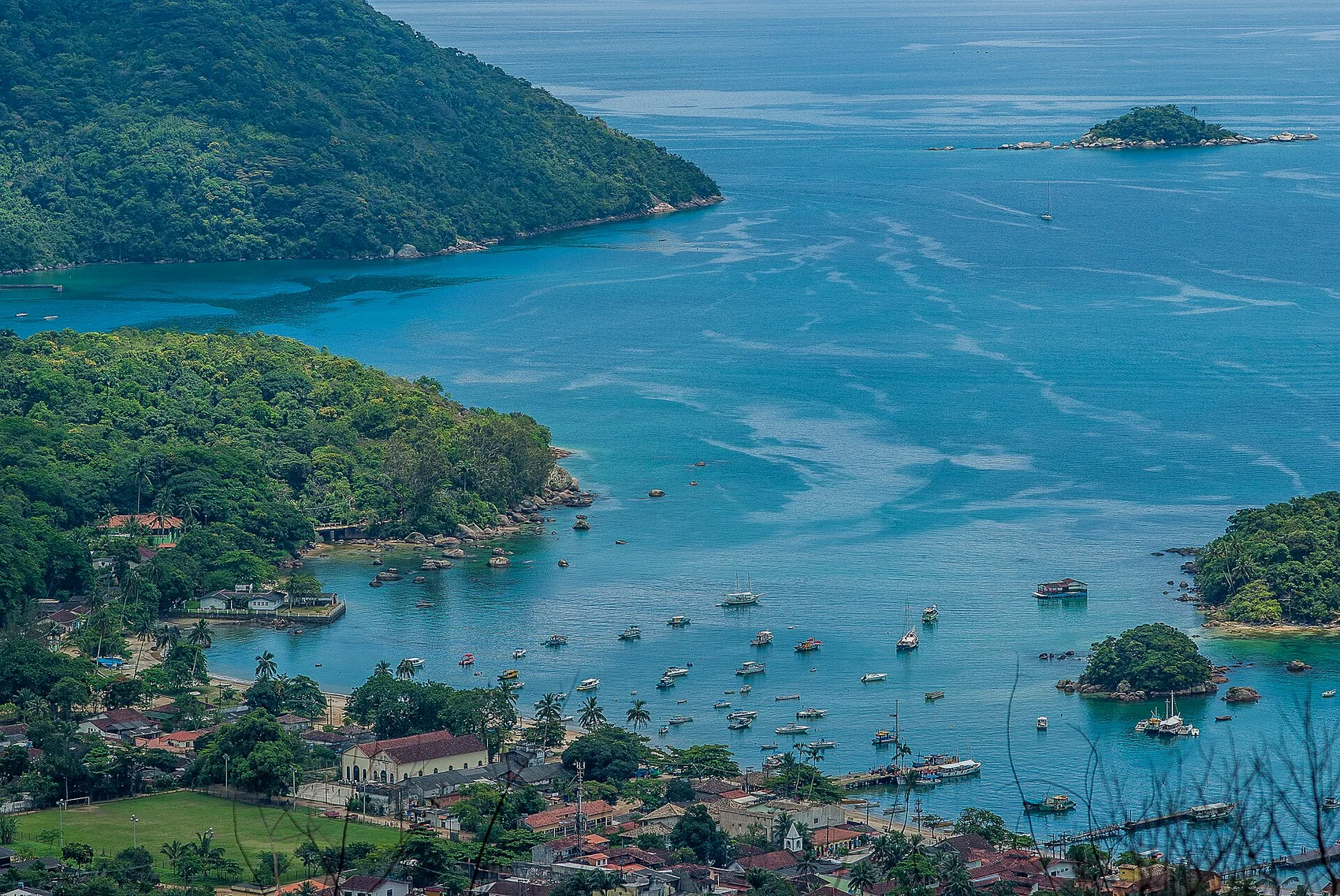
Picture Ilha Grande as a long spine of Atlantic Forest running roughly east to west, dropping steeply into the sea on both sides. The north side faces the mainland and the sheltered waters of the bay off Angra dos Reis. Those beaches are calm, often mirror-flat, backed by forest and dotted with a few fishing hamlets and simple guesthouses. This is where you go for easy swimming, snorkelling and lazy afternoons.
The south and east side faces the open Atlantic. Those beaches take the swell head-on. The sand is often finer and whiter, the water a deeper blue, the setting wilder, and the waves can be serious. Lopes Mendes is the most celebrated of these ocean beaches, but Aventureiro, Dois Rios and Parnaioca share the same exposure. They are more beautiful in a raw way and harder to reach, and none of them is where you take a nervous swimmer.
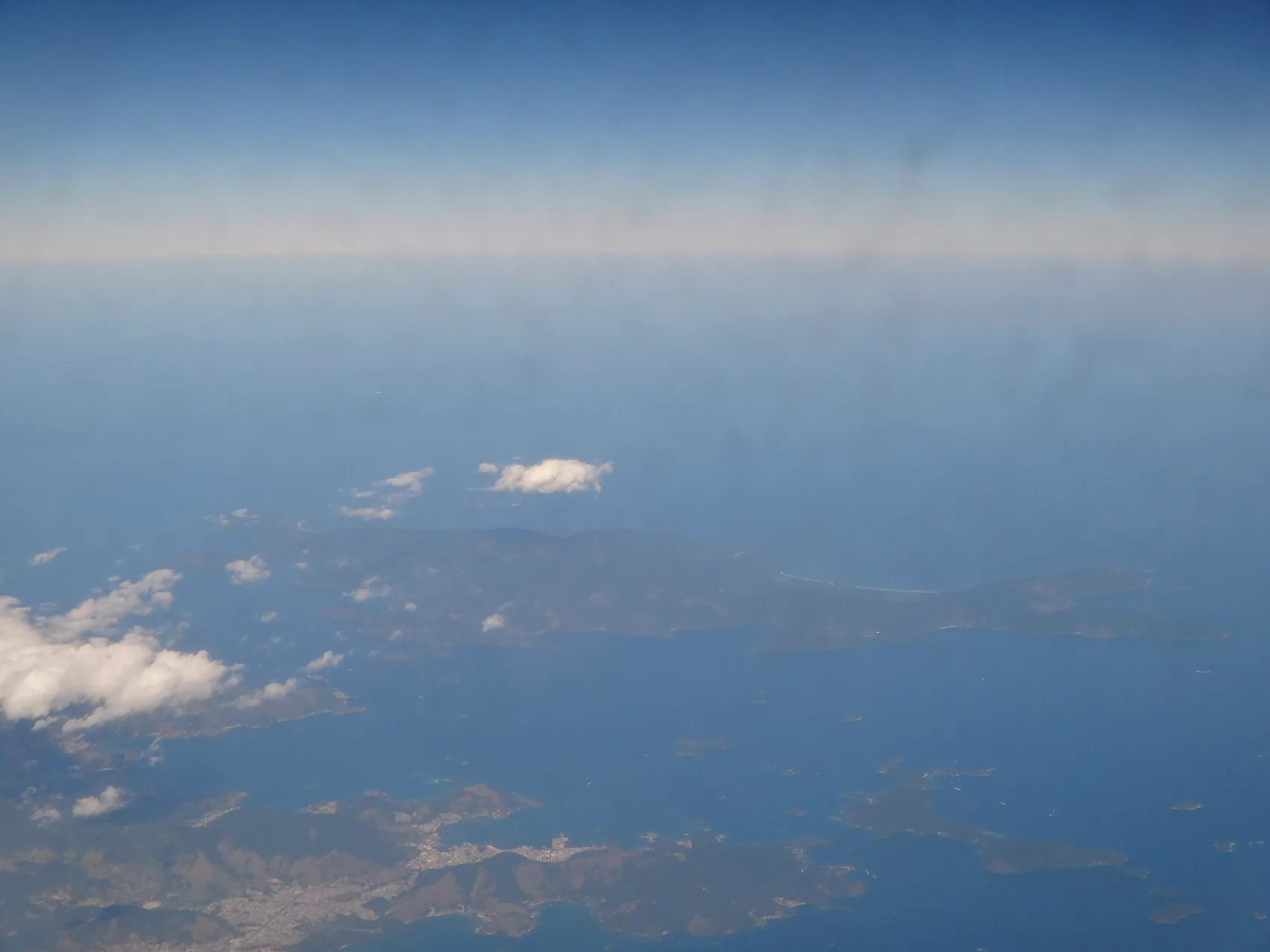
Vila do Abraão sits on the sheltered north side and is the hub for almost everything. Boat-taxis and tour boats leave from its pier, the trailheads start at the edge of town, and it has the island's densest cluster of kitchens, kiosks and beds. Whatever beach you are aiming for, you will most likely start your day here. For the full picture of the town, the crossings and the practical side of an overnight stay, our complete Ilha Grande guide goes deeper than we have room for here; this piece stays on the sand.
Lopes Mendes beach: the one everyone means
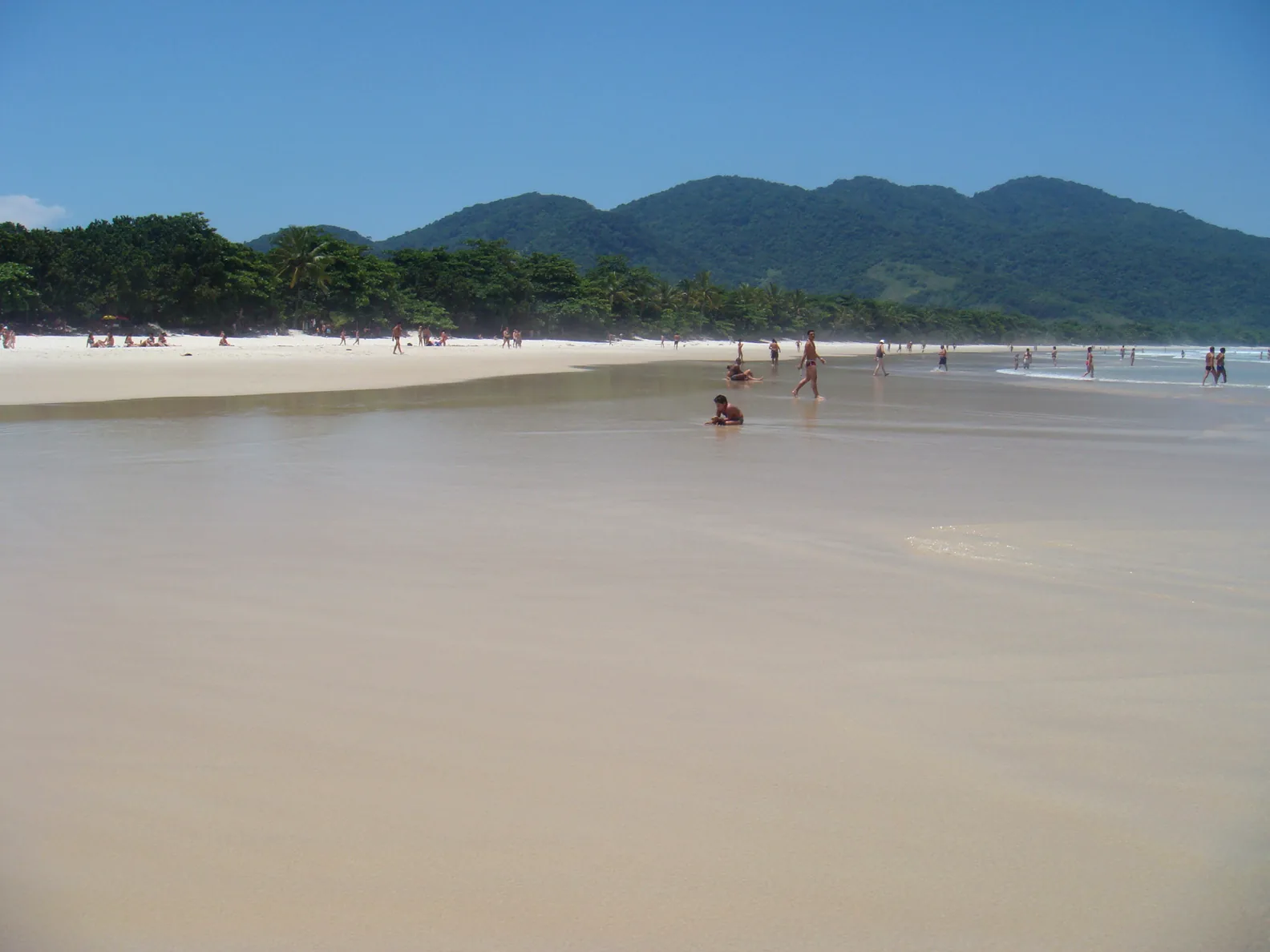
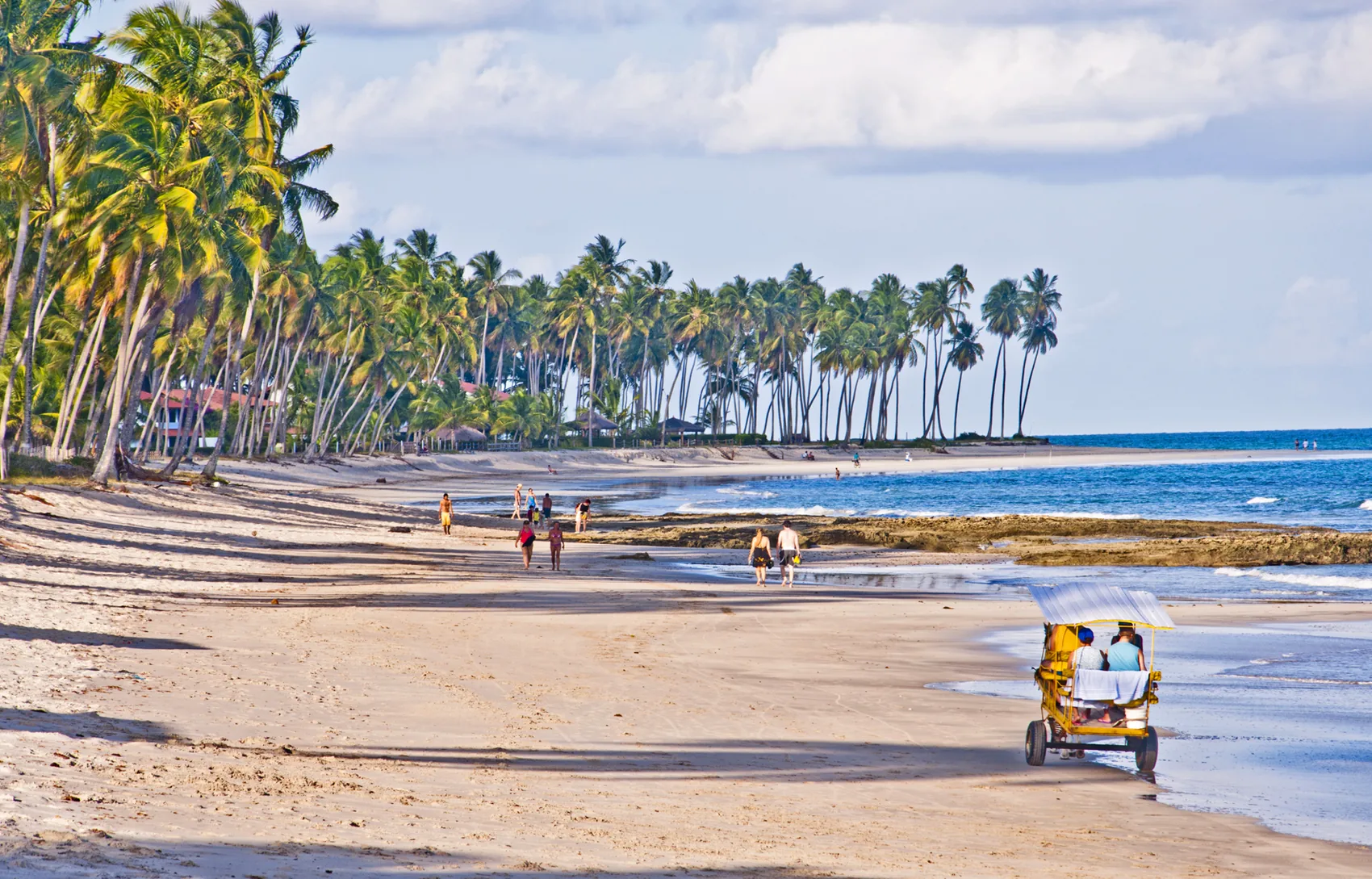
When people talk about the best beach on Ilha Grande, they almost always mean Lopes Mendes beach. It is a stretch of fine, pale sand running for close to three kilometres along the island's ocean side, with the forest at your back and nothing built along it at all. The sand is famously soft and squeaks underfoot. The water is clear and a strong blue, and because the beach faces the open Atlantic it usually carries a clean, rolling swell. On a good day it looks like the platonic idea of a tropical beach, and unlike most beaches that earn that reputation, there is not a bar, a road or a rooftop in sight.
That emptiness is not an accident. Lopes Mendes falls within a protected area, and boats are not permitted to land on the beach itself. There are no kiosks, no sun-lounger rental, no toilets and, for long stretches, no shade beyond the tree line. A couple of informal vendors sometimes set up near the path where it meets the sand, selling water, coconuts and the odd grilled snack, but you should never count on them. What you carry in is what you have. That is the price of a beach that looks untouched, and most people decide it is well worth paying.
How to reach Lopes Mendes
Because you cannot step off a boat onto Lopes Mendes, everyone walks the last part. There are two sensible ways to do it, and the right one depends on how much walking you want in your day.
The easy way, and the one most visitors take, is to catch a boat-taxi from Abraão around the coast to Praia do Pouso, a small beach on a headland just behind Lopes Mendes. From Pouso a well-worn path climbs over a low ridge through the forest and down the other side to the sand; it takes roughly fifteen to twenty-five minutes at a gentle pace and involves a short, sometimes muddy, up-and-over. This is the route for families, for anyone short on time, and for anyone who would rather spend their energy in the water than on a mountain. You simply agree a return time with the boatman, or catch one of the boats shuttling back and forth from Pouso through the afternoon.
The other way is to walk the whole thing from Abraão on the marked forest trail, often signposted as trail T10. It runs for something like six or seven kilometres each way through the Atlantic Forest, past the sheltered beaches of Palmas and Pouso, and takes most people two and a half to three and a half hours one way depending on fitness, mud and how often you stop. It is a genuine hike with a couple of steep, rooty climbs, not a stroll, and after rain it turns slick. Plenty of people compromise: they walk out through the forest in the cooler morning and take the boat-taxi back from Pouso once their legs have had enough. If you like walking, this is one of the finest trails on the island and a highlight in its own right; if you do not, there is no shame in taking the boat both ways. Our guide to hiking around Paraty and the Costa Verde has more on what the forest trails are actually like underfoot.
What to do once you are there, and what to watch
Lopes Mendes rewards the simple pleasures. Walk the length of it and you will find quieter sand the further you go from the path. The surf is the draw for board-riders: those consistent Atlantic waves make it one of the better surf beaches in the state of Rio, and it is at its cleanest in the winter months, roughly June to August. Boards can sometimes be hired from vendors near the entrance, but again, do not rely on it; if surfing is your plan, arrange it in Abraão first.
For swimmers, read the water before you commit. On calm days it is glorious. On bigger days the shore break and the pull along the beach are strong enough to respect, and there are no lifeguards standing by. Keep children in the shallows where the waves break gently, and if the sea is up, treat Lopes Mendes as a place to walk and sunbathe rather than to swim hard. It is not a snorkelling beach; the water is too lively and the bottom too sandy for much to see. For that you want the bay side, which we will come to.
Carry the essentials. There is no reliable food, water, shade or toilet on Lopes Mendes. Bring more water than you think you need, sun cover, and any cash you might want, and take every scrap of rubbish back out with you. A dry bag is worth its weight, both for the boat-taxi spray and the walk.
The Blue Lagoon: where the snorkelling actually happens
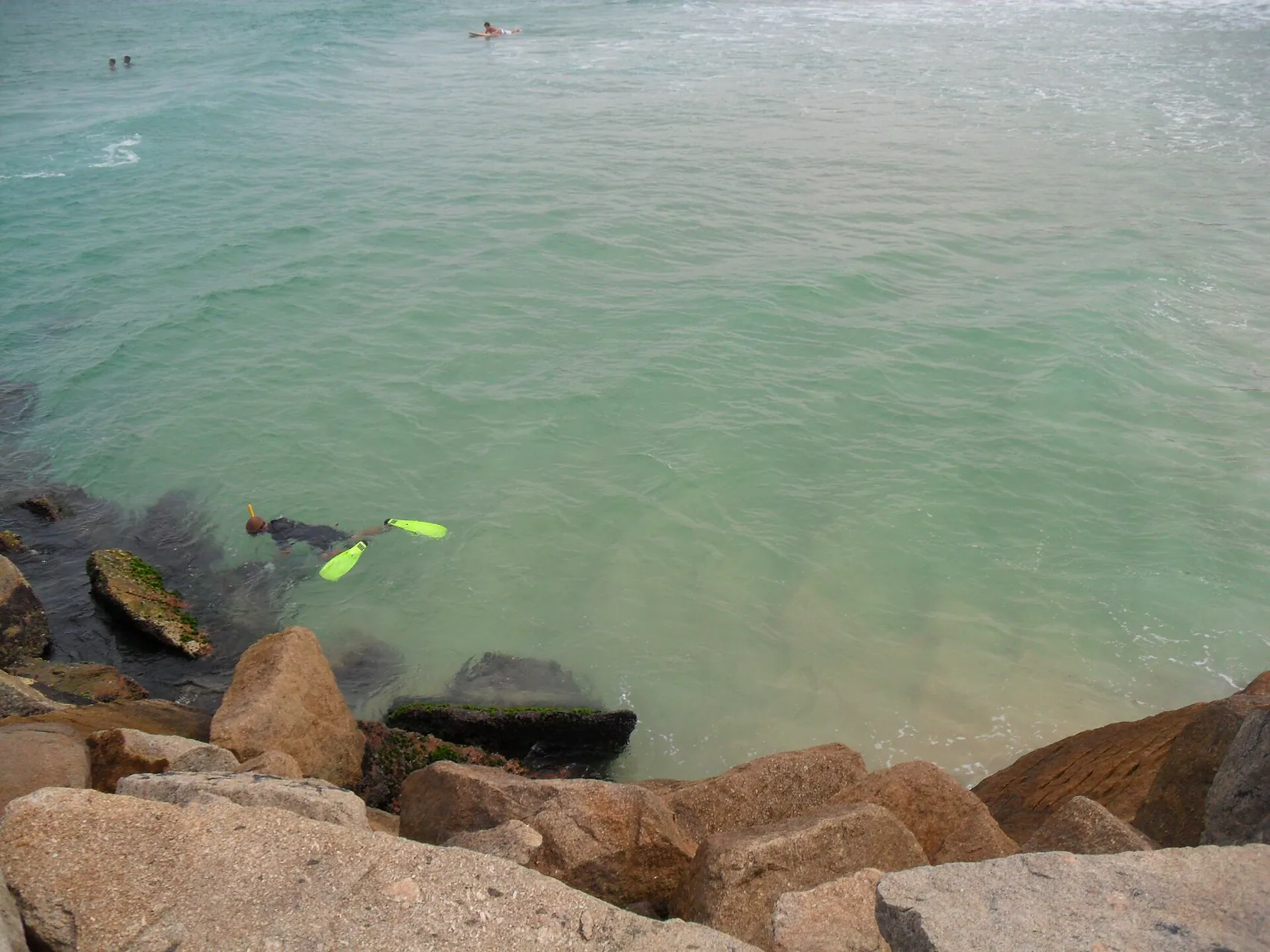
If Lopes Mendes is the beach you photograph, the Blue Lagoon, Lagoa Azul in Portuguese, is the water you get into. It sits on the calm north side of the island, and it is not really a beach at all but a shallow cove sheltered by a scatter of small rocky islets. The combination of pale sand below and still water above turns it a bright, almost artificial turquoise, and because it is protected from the swell the visibility is usually excellent. Shoals of small fish gather around the rocks, and on a good day you can drift over them for an hour without effort.
You reach the Blue Lagoon by boat, not on foot, and for almost everyone that means one of the island boat tours. The classic east-side or north-side circuit strings together the Blue Lagoon with other calm-water stops, dropping anchor at each so people can swim and snorkel before moving on. Masks and snorkels are usually provided or cheap to hire, but bringing your own that you know fits well makes all the difference. Because it is popular and beautiful, it does get busy in high season; go on the first boats of the morning if you can, before the flotilla builds. For a fuller treatment of where the clear water is and what you will see under it, our guide to snorkelling and diving on the Costa Verde is the companion to this one.
Lopes Mendes is the beach you photograph. The Blue Lagoon is the water you get into.
Near the Blue Lagoon on most tour routes you will also pass the Green Lagoon, Lagoa Verde, a similar sheltered snorkelling spot, and quiet inlets such as Saco do Céu, a deep, still bay ringed by forest that is at its best in the late afternoon when the water goes to glass. None of these are beaches you would walk to for the day; they are places the boat pauses, and they are the reason a boat tour is worth doing even if you have already seen the headline beaches.
Aventureiro: the wild southwest
Aventureiro is the beach for people who want Ilha Grande at its most remote. It lies on the far southwestern, ocean-facing corner of the island, a long way by boat or trail from Abraão, and it feels like it. This is a small fishing community set behind a curve of surf beach, backed by forest that rises straight into the mountains, and it borders one of the strictest reserves in the region, the Reserva Biológica Estadual da Praia do Sul, which is closed to casual visitors and protects a rare stretch of coastal wilderness.
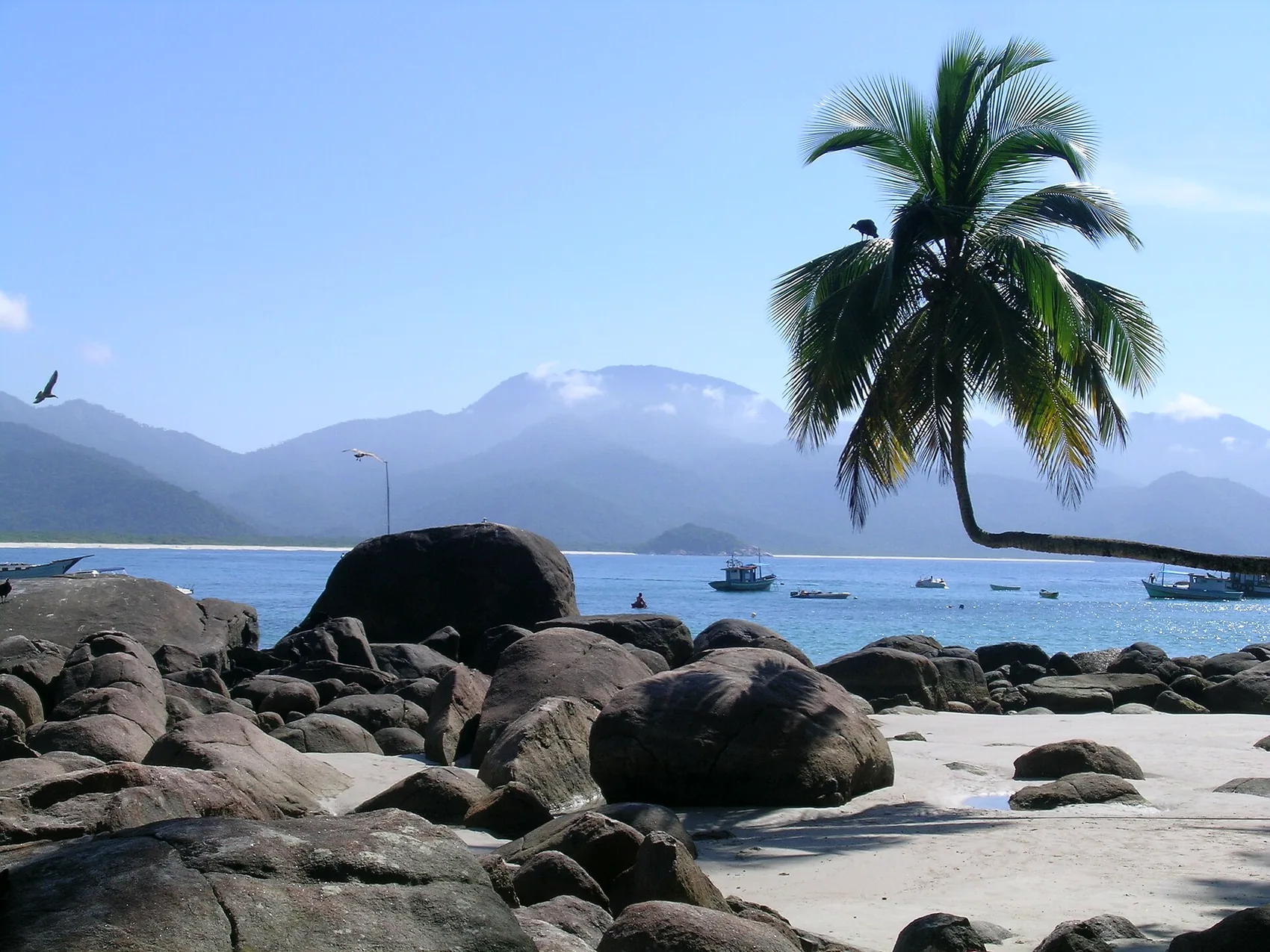
Aventureiro's signature image is a coconut palm that grew out low over the sand almost horizontally before turning up towards the light, the coqueiro deitado, said to be the most photographed tree on the island. Behind that easy picture is a genuinely wild place. The waves here draw surfers, the swimming is for confident water people, and the infrastructure is deliberately basic: simple guesthouses and campsites run by local families, meals of fresh fish, and not much else. There is a cap on how many people can stay, managed through the community, precisely so it stays the way it is.
Reaching Aventureiro, and why to plan ahead
Getting to Aventureiro takes commitment. Most people arrive by a longer boat transfer that runs around the coast, sometimes routed via the fishing village of Provetá, from where a forest trail crosses to the beach. Experienced walkers can reach it on foot on a full-day trail, but this is serious hiking, not a casual outing, and it is not something to attempt without a clear plan and enough daylight. Because access is limited and the logistics are involved, Aventureiro is best treated as an overnight rather than a day trip: arrange your stay and your transfer in advance with the local community or a reputable operator rather than turning up and hoping.
Is it worth the effort? For the right traveller, entirely. If your idea of a good day is an empty ocean beach, a hammock, fish grilled by the family you are staying with and no phone signal to speak of, Aventureiro is one of the finest places on the whole coast. If you want easy swimming, cold drinks on tap and a short trip, it is the wrong beach, and there is no point pretending otherwise.
Dois Rios: two rivers and the ghost of a prison
Dois Rios is the most quietly compelling beach on the island, and the one with the strangest history. It sits on the ocean side, reached by a forest trail of roughly six kilometres from Abraão, and its name, two rivers, describes it exactly: a broad, wave-washed beach where two freshwater rivers meet the sea at either end, so you can rinse the salt off in running water without leaving the sand.
Behind the beach stand the overgrown remains of Brazil's former maximum-security prison, Cândido Mendes, which held political prisoners and hardened criminals until it was demolished after closing in the mid-1990s. Today a small village occupies the site, and part of the old prison houses a modest museum run by a state university that tells the island's harder story, from quarantine station to penal colony to protected park. It is a sobering, fascinating counterweight to a day of beaches, and it explains a lot about why Ilha Grande stayed undeveloped for so long: for most of the twentieth century, this was not a place you came on holiday.
The walk to Dois Rios is a proper half-day hike across the spine of the island, climbing steadily through forest before dropping to the coast. Some people take a boat-taxi or a jeep-style transfer part of the way when one is running, but the trail is the honest way to do it and the arrival, breaking out of the trees onto that wide empty beach with the ruins beyond, is worth the sweat. Go with water, sun cover and time; there is little in the way of services at the far end.
The calm bay beaches near Abraão
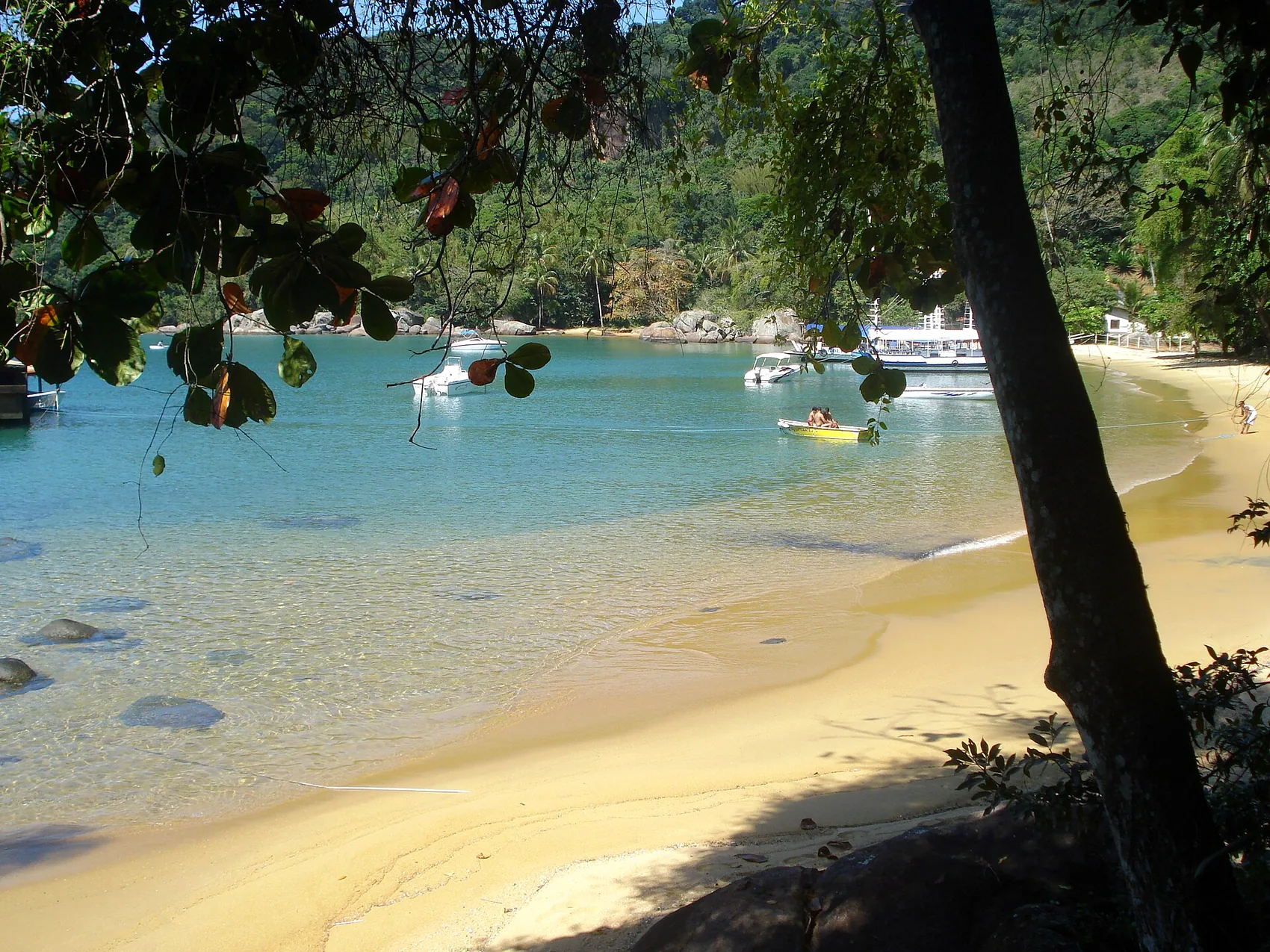
Not every good beach on Ilha Grande demands a hike or a leaning tree. The sheltered north coast, close to Abraão, is lined with calm-water beaches that are perfect when you want the island without the effort, and they are where families with young children tend to end up happiest.
Just around from town, a short walk or a five-minute boat-taxi ride, you will find a string of them. There are beaches with flat, warm, shallow water and forest coming right down to the sand, ideal for a paddle and a snorkel over the rocks at either end. A colonial-era church stands above one of the oldest of these bay beaches, a reminder of how long people have lived in these coves. Others are little more than a scoop of sand and a single kiosk grilling fish, reached by a footpath from Abraão in twenty or thirty minutes. Because they face the bay rather than the ocean, the water stays gentle even when Lopes Mendes is pounding, which makes them a reliable fallback on a big-swell day.
On the walk out towards Lopes Mendes you pass two of the most useful of these: Palmas and Pouso. Both are small, calm and pretty in their own right, and Pouso doubles as the jumping-off point for the final walk over to Lopes Mendes. It is entirely reasonable to make Palmas or Pouso your destination for a relaxed day and skip the ocean side altogether, especially with children or on a hot, still afternoon when the shade and the flat water are exactly what you want.
Match the beach to the crew. Travelling with small children or nervous swimmers? Point yourself at the bay-side beaches, Palmas, Pouso, the coves near Abraão, and the Blue Lagoon on a tour. Save Lopes Mendes, Aventureiro and Dois Rios for a day when the group is up for surf, walking or both.
Trail or boat: how to choose
Almost every beach on Ilha Grande can be reached two ways, on foot through the forest or by water, and the choice shapes your whole day. Here is how we think about it.
Take the boat-taxi when time is short, when your group includes children or anyone who tires easily, and when you simply want maximum hours on the sand. Boat-taxis are quick, they spare your legs for swimming, and for beaches like Lopes Mendes the Pouso shortcut turns a three-hour trek into a fifteen-minute stroll. The trade-off is cost, since you pay per trip, and the fact that you see the coast from the water rather than the forest from within.
Take the trail when the walking is part of what you came for. The Atlantic Forest on Ilha Grande is dense, shaded and alive with birdsong, and the marked trails are among the best in the region. Some beaches, Dois Rios especially, are most honestly reached on foot. The catch is real: these are proper hikes with mud, roots and climbs, they take longer than the map suggests, and after heavy rain some become genuinely tough. Wear shoes with grip, start early to beat the heat, and carry water.
For most visitors the answer is both. Walk one way, ride the other. Take the boat out to Pouso with fresh legs, walk over to Lopes Mendes, and hike home through the forest in the cool of the afternoon, or reverse it. You get the best of each and you are not committed to a three-hour slog in each direction. If you are weighing up how the crossings and transfers fit together across a whole trip, our guide on getting from Paraty to Ilha Grande lays out the moving parts.
The island boat tours, explained
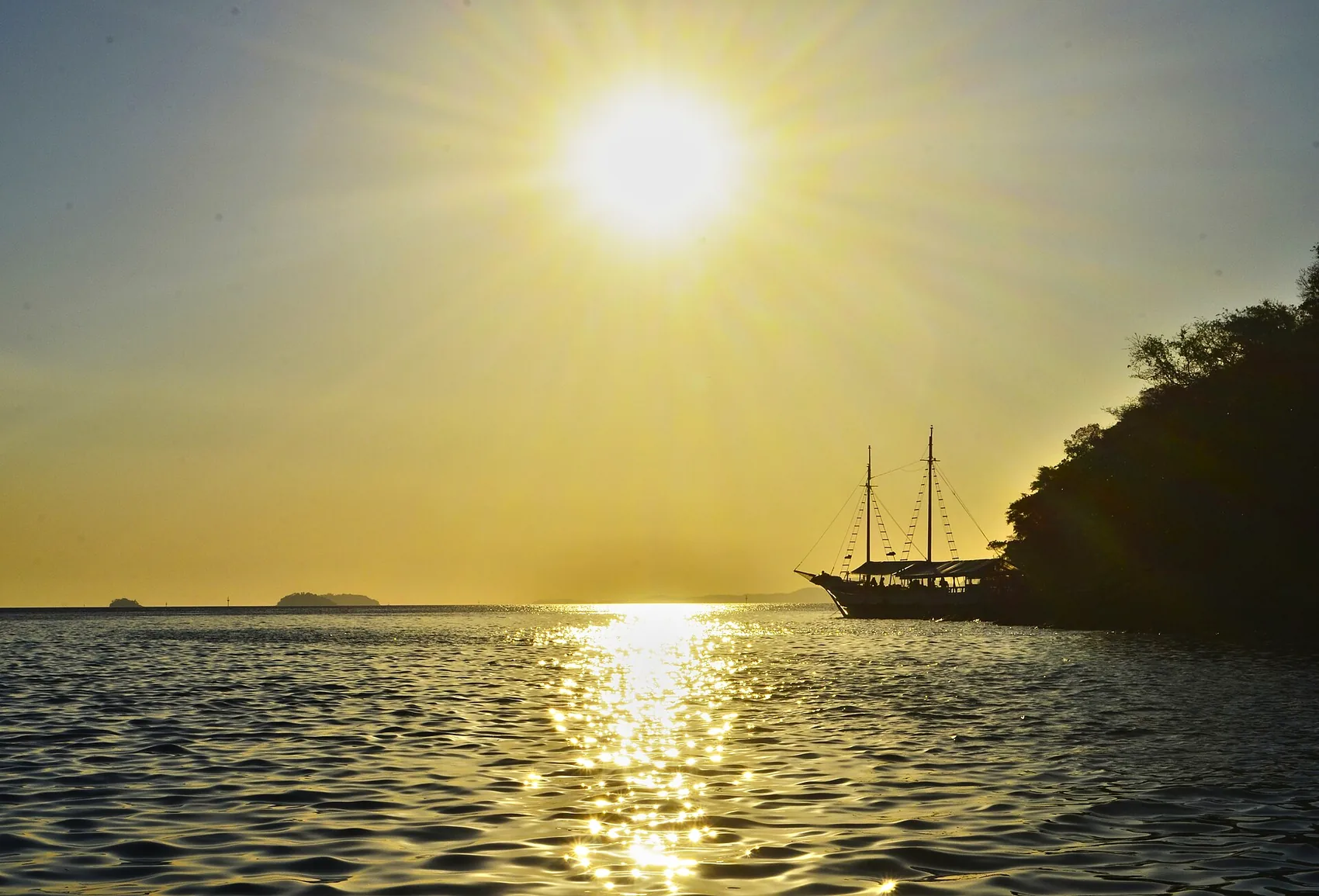
If you only do one organised thing on Ilha Grande, make it a boat tour, because it reaches water you cannot otherwise get to and it stitches the calm-side highlights into a single easy day. The tours generally split by direction. A north or east circuit typically links the Blue Lagoon, the Green Lagoon, a sheltered snorkelling bay or two, one of the old church beaches and a pass by Lopes Mendes from the water. A longer or west-leaning route reaches further, quieter coves. And the full loop, the volta à ilha, circumnavigates the whole island in a long day, which is a fine way to grasp its scale even though you spend more time cruising than swimming.
Two kinds of boat run these trips. The traditional wooden schooners are slower, roomier and more atmospheric, with music and a relaxed pace; the smaller, faster launches, sometimes called flex-boats or lanchas, cover more ground and let you tailor the stops, at a higher price. For a first visit, a shared schooner tour on the calm side is the easy, sociable choice. If there are a few of you, hiring a small boat with a skipper for the day buys you flexibility over where you go and when, and lets you dodge the crowds by timing your stops. We say more about the different kinds of day on the water on our boat days page.
Best for surf, calm and snorkel: a quick map
To cut through it all, here is the shortest honest summary of which beach suits which day.
- For surf and a long, wild ocean beach: Lopes Mendes, and Aventureiro for the truly committed. Both face the open Atlantic and carry real waves, best in winter.
- For calm swimming with children: the bay beaches near Abraão, plus Palmas and Pouso on the Lopes Mendes side. Flat, shallow, shaded and close to town.
- For snorkelling and clear water: the Blue Lagoon and the other sheltered coves on the north-side boat tours, where the water is still and the visibility is best.
- For remoteness and a story: Dois Rios, with its two rivers and prison ruins, and Aventureiro at the wild edge of the island.
- For a first-timer with one day: a morning boat tour of the calm side, then the Pouso shortcut to Lopes Mendes in the afternoon.
No beach on this island is trying to be all of those things at once, which is exactly why it is worth going more than once, or staying a night, or making it a repeat trip from a base on the mainland.
Getting to Ilha Grande from Paraty, Rio, São Paulo and abroad
Ilha Grande has no airport and no bridge; you reach it only by boat, and the boat leaves from the mainland opposite. Where you start from shapes the day.
From Paraty and the chalé
From our part of the coast the reliable, year-round route is to drive about an hour north-east along the coastal road to the small port of Conceição de Jacareí, leave the car in a guarded lot, and take a flex-boat across to Vila do Abraão in twenty to thirty minutes. Boats run through the day but thin out in the afternoon, so aim to cross early and know the time of the last return. In high summer there is sometimes a direct fast catamaran from Paraty's own pier straight to Abraão, which takes roughly two to two and a half hours and saves the drive, though it runs seasonally and should be booked ahead. Either way, plan on a good chunk of the day being travel, which is the main argument for staying a night rather than day-tripping.
From Rio de Janeiro
Rio is the closest big city. From there it is around two and a half to three hours by road down the Costa Verde to the departure ports, either Conceição de Jacareí for the short flex-boat crossing, or Angra dos Reis and Mangaratiba for the larger ferries. Many people from Rio come for a weekend, which the island handsomely rewards. If you are stitching together a longer coastal trip, our seven-day Costa Verde itinerary shows how Ilha Grande, Angra and Paraty fit into one loop.
From São Paulo and abroad
From São Paulo it is a longer haul, roughly five to six hours by road depending on traffic on the coastal route, so Paulistas usually build the island into a longer stay on the Costa Verde rather than a flying visit. Travellers coming from abroad almost always land in Rio or São Paulo and continue by road; there is no direct flight to the island. Whichever way you come, the last leg is the same short, salty boat ride, and the moment the car-free town comes into view it is clearly worth it. For the wider picture of when to come and how the seasons feel, see our guide to the best time to visit Paraty and the coast.
When to go, and reading the conditions
Ilha Grande is a year-round destination, but the sea and the sky change with the season and it pays to know what you are walking into. The warm, wet months from roughly December to March bring the hottest weather, the busiest beaches and the highest chance of afternoon downpours that turn the forest trails to mud. The cooler, drier months from about May to September bring clearer air, calmer bays, fewer crowds and the best surf on the ocean beaches, at the cost of shorter days and cooler water. Many regulars think the shoulder months, April and October, are the sweet spot: warm enough to swim, quiet enough to breathe.
Whatever the season, one rule holds. Check the swell before you plan an ocean beach. If the forecast shows a big south swell, Lopes Mendes and the other Atlantic beaches will be rough and the boat-taxi ride around to Pouso can be lumpy; that is the day to point yourself at the sheltered bays and the Blue Lagoon instead. Conditions can differ completely between the two coasts on the same afternoon, which is the whole reason to keep both options open. Our note on what to pack for Paraty and the islands covers the dry bags, reef-safe sunscreen and grippy shoes that make these days easier.
Practical things worth knowing before you go
A handful of small facts save a lot of grief on Ilha Grande.
Bring cash. There are no bank machines on the island and card acceptance is patchy, especially for boat-taxis, beach vendors and the smaller kitchens. Withdraw what you will need on the mainland before you cross, and keep it dry.
There are no cars. Everything moves on foot, by boat or on handcarts through Abraão. Pack light if you are staying over, and wear or carry shoes you can actually walk trails in; flip-flops alone will not get you comfortably to Lopes Mendes.
Respect the protection. Much of the island is a park or reserve. Take your rubbish out, do not touch the coral or the marine life when you snorkel, and stay on the marked trails. Some areas, the strict reserve behind Aventureiro among them, are closed to visitors entirely, and that is a good thing.
Mind the timing. Boat-taxis and shuttles thin out through the afternoon. Always agree a return and know the time of the last boat back to the mainland if you are not staying over. Being stranded on the wrong beach at dusk is the classic Ilha Grande mistake.
Sun and water are stronger than they look. The Atlantic light is fierce and the ocean beaches have real currents. Cover up, drink more than you think you need, and read the sea before you swim hard, because there are no lifeguards on the remote beaches.
Day trip or overnight, and making the chalé your base
The honest question for anyone staying near Paraty is whether to do Ilha Grande in a day or stay a night on the island. Both work, and the right answer depends on your trip.
A day trip is very doable and, from the chalé, a genuinely good day out: drive to the port in the morning, cross, take a calm-side boat tour or the Pouso shortcut to Lopes Mendes, and be back on the hillside by evening. What you give up is the island after dark, when the day boats have gone and Abraão's sand streets go quiet, which is one of its real pleasures. A single night on the island buys you that, plus an unhurried second day and the chance to reach a further beach like Dois Rios without watching the clock. For how the maths of nights and beaches works out, our guide on how many days to spend in Paraty and around is a useful sanity check.
There is a third way that suits a lot of our guests, and it is to treat the island as a series of day trips from a fixed base on the mainland. The appeal is simple. You spend the day on Ilha Grande's beaches, salt-crusted and happy, and instead of a shared bathroom in a busy hamlet you come home to the chalé, a hillside house about four hundred metres above Paraty with an infinity pool that looks out over the same water you have just been swimming in. You rinse the sea off, pour a drink, and watch the light go down over the Bay of Paraty, Angra dos Reis and Ilha Grande from one deck. Go back the next day for a different beach. It is the version we would choose ourselves: the wild beaches by day, a quiet swim and a proper bed by night.
A simple two-day plan
To make it concrete, here is how we would spend two unhurried days if the island were the point of the trip, whether you sleep over there or come back to the hill each evening.
Day one, the highlights. Cross early to beat the day-trippers. Take a calm-side boat tour first thing, while the Blue Lagoon is still quiet, and snorkel the sheltered coves before the flotilla arrives. In the afternoon, when the tour drops you back, catch a boat-taxi to Pouso and walk over to Lopes Mendes with the light softening and the crowds thinning. Walk its length, swim if the sea allows, and take the last easy boat back. If you are staying over, this is the evening to wander Abraão's sand streets and eat fish at the harbour end; if you are coming home, this is the crossing where you watch the island slide behind you and think about the pool.
Day two, the wild side. If you have the legs and the appetite, this is the day for a trail: the half-day walk across to Dois Rios, with its two rivers and the ruins of the old prison, or the forest route out to Lopes Mendes if you skipped the walk the day before. If you would rather take it slow, spend the day drifting between the calm bay beaches near Abraão with a book and a snorkel, and let the island set the pace. Either way you will leave with the sense that you saw the real place and not just its most famous photograph.
That is Ilha Grande, beach by beach: one island, two coasts, and a set of trade-offs that are easy to get right once you know they exist. Lopes Mendes for the surf and the long empty sand, the Blue Lagoon for the clear water, Aventureiro and Dois Rios for the wild edges, and the bay beaches for the easy days in between. If you would like a hand shaping a couple of island days around your dates, tides and who you are travelling with, our things to do pages lay out the wider region, and you are always welcome to get in touch and ask; we cross to that island often enough to have opinions worth borrowing.
Come stay above the bay
Chalé Bel Air sits on the ridge that looks over everything in this guide. Tell us your dates and what kind of trip you are after — we answer personally.
Ask about your datesFrequently asked questions
How do you get to Lopes Mendes beach?
You cannot land a boat directly on Lopes Mendes because it is protected, so everyone arrives on foot for the last stretch. The easy way is a boat-taxi from Vila do Abraão to Praia do Pouso, then a 15 to 25 minute forest walk over a low ridge to the sand. The other way is the full trail from Abraão, roughly two and a half to three and a half hours through the forest.
Is Lopes Mendes good for swimming or surfing?
Both, with a caveat. Lopes Mendes faces the open Atlantic, so it usually has clean, rolling waves that make it one of the better surf beaches in the state, best in the winter months. Those same waves mean the swimming is lively rather than calm. If you want flat, clear water for children or snorkelling, the sheltered bay-side beaches suit you better.
What is the best beach on Ilha Grande?
There is no single winner, only the right beach for the day you want. Lopes Mendes is the famous long strip of pale sand and surf. The Blue Lagoon is the standout for calm snorkelling. Aventureiro is the wild, remote one. The bay beaches near Abraão are the easy, family-friendly ones. Choose by mood, not by ranking.
How do you reach Aventureiro beach on Ilha Grande?
Aventureiro sits on the far southwestern, ocean-facing side of the island, so it is a long way from Abraão. Most visitors arrive by a longer boat transfer around the coast, sometimes via the village of Provetá, or on a full-day trail for experienced walkers. Access is capped and organised through the local community, so it pays to arrange a stay or a guided trip in advance rather than turning up.
What is the Blue Lagoon on Ilha Grande?
The Blue Lagoon, or Lagoa Azul, is a sheltered cove ringed by small rocky islets on the calm north side of the island, not a sand beach as such. Shallow water over pale sand gives it a bright turquoise colour and easy visibility, which makes it one of the most popular snorkelling stops on the island boat tours. You reach it by boat rather than on foot.
Should you take the trail or the boat to the beaches?
It depends on what you enjoy. The boat-taxis are quicker, save your legs and give you more beach time, which suits most families and anyone short on hours. The marked trails through the Atlantic Forest are part of the point of Ilha Grande if you like walking, and some coves are only sensibly reached on foot. Many people take the boat one way and walk the other.
Can you visit Ilha Grande as a day trip from Paraty?
You can, but it is a full and slightly rushed day given the drive and the crossing. A day trip realistically buys you one boat tour or a quick Lopes Mendes and little more. If you can spare a night on the island you see far more, and if you would rather sleep in your own bed the chalet above Paraty makes an easy base to come back to.

.jpg)


