Paraty is about 240 kilometres and four hours down the Costa Verde from Rio de Janeiro, with no airport at the far end — so you arrive by road. Here is every practical way to make the trip, and how to make it easy.
Paraty sits on the Costa Verde, the green stretch of coast that runs south-west from Rio de Janeiro toward São Paulo state. If you are starting your trip in Rio, getting to Paraty is one of the more pleasant transfers in Brazil: roughly 240 kilometres of coastal highway, about four hours of it, with the sea on one side and the wall of the Serra do Mar on the other for most of the second half. There is no airport in Paraty with scheduled flights, which is part of the reason the town has kept its scale and its quiet. You arrive by road, and the road is half the pleasure.
This guide covers every practical way to make the trip from Rio to Paraty: driving yourself down the BR-101 Rio–Santos, taking a Costa Verde coach from the Novo Rio bus terminal, booking a private door-to-door transfer, or piecing together a shared van from your hotel in the South Zone. We will be honest about the trade-offs, the timing, the tolls, and the one stretch of road that can slow you down after heavy rain. The aim is that you leave Rio knowing exactly what to expect and pull into Paraty relaxed rather than frazzled.
A quick word on where you are heading. Our own place, Chalé Bel Air, sits in the hills about 400 metres above the bay, a short drive up from the historic centre. It is the kind of arrival where the last ten minutes climb through forest and then the whole Bay of Paraty, Angra dos Reis and Ilha Grande open up below the infinity pool. Whichever way you come down from Rio, that view and that swim are what you are travelling toward. Now, the how.
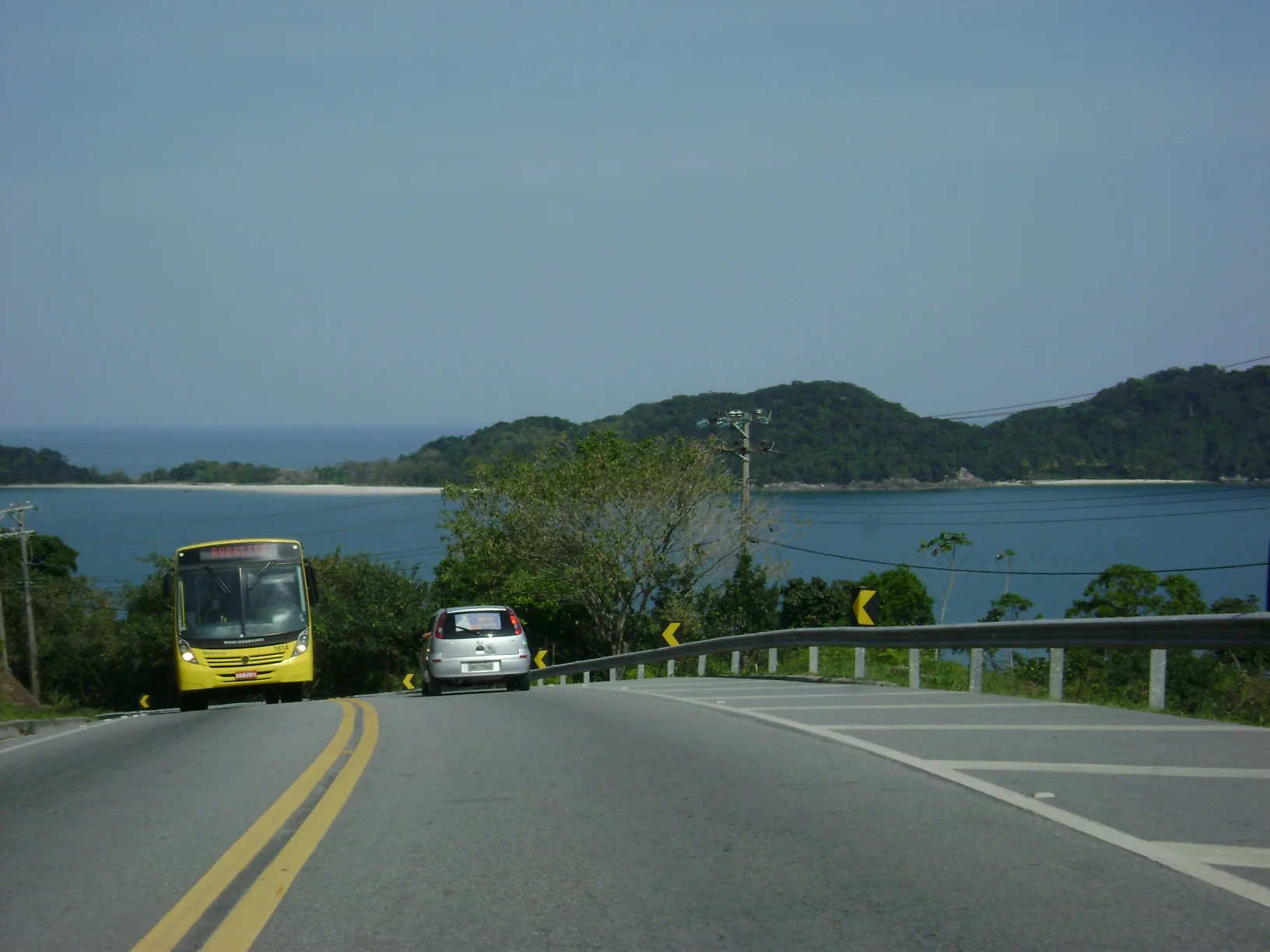
How far is Paraty from Rio, and how long does it take?
Paraty is about 240 kilometres from central Rio de Janeiro. By road that works out to roughly four to four and a half hours of driving in normal conditions, a little more if you leave during Rio's rush hours or hit rain on the coastal section. It is not a long haul by Brazilian standards, but it is not a quick hop either, and the last third of the road is winding enough that you will not want to rush it.
You have four realistic ways to cover that distance, and the right one depends on your group, your budget, and how much you want to explore once you are here:
- Drive yourself down the BR-101. The most flexible option, and genuinely useful for the waterfall and beach days that are best reached by car once you are settled in.
- Costa Verde coach from the Novo Rio terminal. Frequent, comfortable, inexpensive, and it drops you at Paraty's bus station a short ride from town.
- Private transfer, door to door from Galeão airport or your Rio hotel. The most relaxed choice after a long international flight, especially for groups or late arrivals.
- Shared van from the South Zone hotels or the airports. A middle path on price, with hotel pickup and no terminal changes.
Below we take each one in turn, then cover the scenery, the timing, and the last climb up to the chalet.
Driving from Rio: the BR-101 Rio–Santos
If you like being in control of your own day, driving is the obvious call. The route is essentially a single road, well signposted, paved the whole way, and busy enough that you are never alone on it. From Rio you leave the city heading west and south, pick up the BR-101 — the Rio–Santos coastal highway — and follow it all the way to the Paraty turn-off. There are no clever shortcuts worth taking; the classic advice from people who drive it often is to stay on the main road and ignore any app that tries to send you inland over the mountains.
Out of the city
The slowest and least scenic part of the whole journey is the first hour, getting clear of greater Rio through Zona Oeste and past Itaguaí. Traffic here can be heavy, particularly on Friday afternoons and Sunday evenings when half the city is heading to or from the coast. Once you are past Mangaratiba the road settles down, the towns thin out, and the sea starts appearing on your left. This is where the drive earns its reputation.
The coastal stretch
From roughly Mangaratiba onward the BR-101 hugs the Costa Verde: green mountains rising steeply inland, a scatter of islands offshore, small fishing towns and the occasional beach right beside the road. About two-thirds of the way along you pass Angra dos Reis, the largest town on this coast and the jumping-off point for its own bay of islands. After Angra the road narrows and starts to wind in earnest as it works around headlands and river mouths toward Paraty. Take these curves patiently. They are not dangerous in daylight and dry weather, but they reward a calm pace over an ambitious one.


Tolls and free-flow gantries
The Rio–Santos has moved to a free-flow tolling system, which means overhead gantries rather than toll booths where you stop and pay. There are gantries on the stretch between Rio and Paraty; you drive straight through and the toll is charged to your electronic tag or billed by plate. If you are renting a car, ask the rental company how tolls are handled on their vehicles — most supply a tag or add the charges to your final bill — so you are not caught out by an unpaid-toll fee later. There is nothing to physically stop and pay, which keeps the drive moving.
Tip: If your rental car comes with an electronic toll tag (Sem Parar, ConectCar and similar), you simply drive through the free-flow gantries and the charges appear on your statement. Confirm the arrangement at the counter before you leave Rio so there are no surprise fees.
Rain, and the one slow section
The honest caveat about driving this road: the section between Angra dos Reis and Paraty can be affected by heavy rain. After a serious downpour there can be slides, standing water or repair work, and in a bad spell that final stretch might take an extra hour. Rio's wettest months are the summer, roughly December through March, and that is exactly when many people visit. None of this makes the drive unwise — it simply means you check the forecast, leave earlier if rain is coming, and build a buffer into your plans rather than cutting it fine for a dinner reservation.
Two more driving notes. First, do the route in daylight your first time; the curves after Angra are much more comfortable when you can see them, and the scenery is the whole point. Second, keep a little fuel in reserve — stations are frequent enough along the highway, but you do not want to be hunting for one on the twisty final third.
Take the curves after Angra patiently. They reward a calm pace over an ambitious one.
The Costa Verde bus from Novo Rio
If you would rather not drive, the coach is an easy, cheap and reliable answer, and it is what a lot of Brazilians use. The company that runs the Rio–Paraty line is Viação Costa Verde, and it departs from the Novo Rio bus terminal (Rodoviária Novo Rio), the city's main long-distance station near the port.
Frequency and price
There are many departures a day — well over a dozen — spread from very early morning until mid-evening, so you are rarely tied to a single awkward time. The journey takes roughly four and a half to five hours including a stop or two. Fares are modest, generally in the region of R$80 to R$130 one way depending on the date, the time of day, and how far ahead you book. Weekday off-peak buses sit at the lower end; summer weekends and holidays climb toward the top.
Buying tickets
You can buy at the Costa Verde window inside Novo Rio, but on busy dates — summer, long weekends, the Festa do Divino, the FLIP literary festival in the winter — it is worth booking ahead online or through a ticketing site so you are not left with a sold-out afternoon. Reserving in advance also lets you pick a seat on the ocean side. Heading south from Rio, that is the left-hand side of the bus for the coastal views.
The ride, and arriving
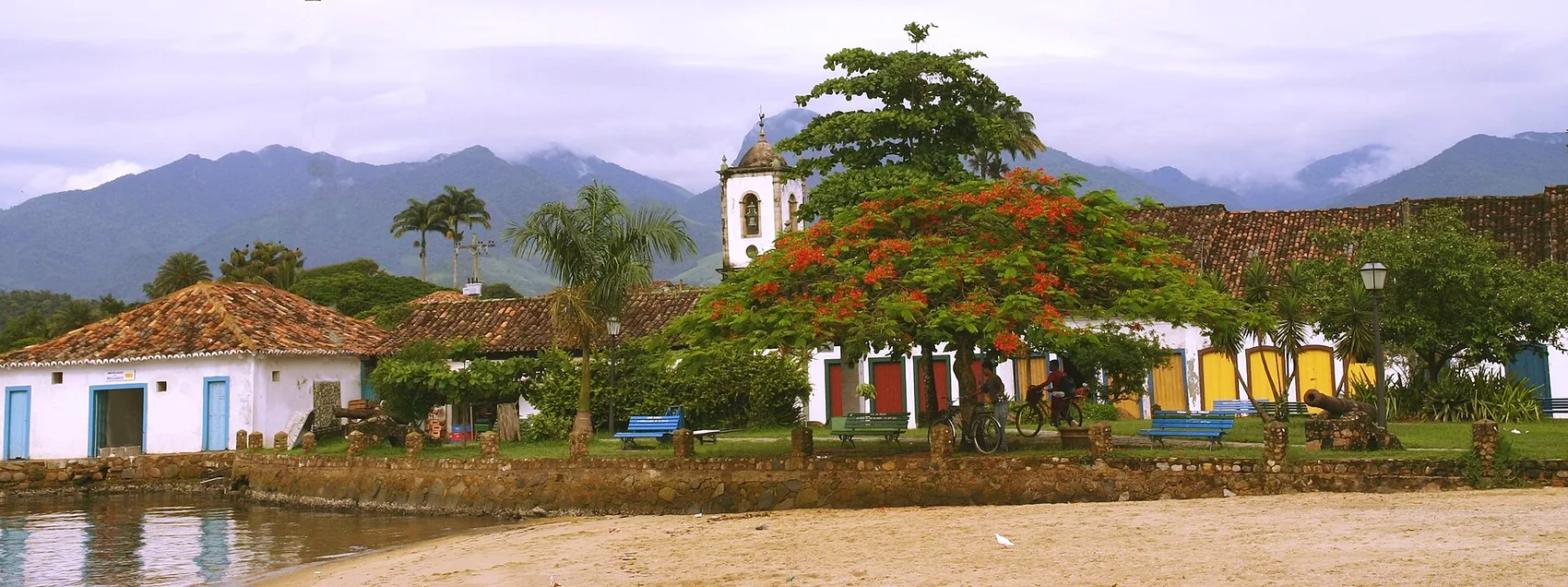
The coaches are comfortable in the Brazilian long-distance style: air-conditioned, reclining seats, usually USB charging and an onboard toilet. They set down at Paraty's own bus station, the rodoviária, which is on the edge of town about a kilometre from the historic centre. From there a local taxi or a ride-hailing car covers the last stretch into town or up to where you are staying. If you are coming to us, tell us your arrival time and we will have a driver meet the bus and bring you up the hill — the final climb is not one you want to improvise with luggage after five hours on the road.
.jpg)
Private transfers and shared vans
For a lot of guests, especially those arriving off an international flight, the most sensible option is to let someone else do the driving. Two versions exist, and they suit different budgets.
Private door-to-door transfer
A private car or van collects you from Galeão airport, Santos Dumont, or your Rio hotel and takes you straight to your door in Paraty — or, in our case, all the way up to the chalet. It is the most relaxed way to arrive: you can sleep, you are not navigating tolls and curves in a strange country, and the driver knows the road and the weather. It is the priciest option per head, but split across a family or a group of friends it becomes very reasonable, and it removes every logistical worry from the day you land. This is what we usually suggest for groups arriving late, for anyone coming in tired from a long-haul flight, and for first-timers who would simply rather look out of the window than at the road. Ask us and we will point you to a driver we trust.
Shared vans
Between the coach and the private car sits the shared van. These pick up from the South Zone hotels — Copacabana, Ipanema, Leblon — and from the airports, and drop you at your accommodation in Paraty without any terminal changes. You share the vehicle with other travellers, so it costs more than the bus but less than a private transfer, and you get hotel-to-hotel convenience. The trade-off is a little less control over timing and the occasional extra pickup stop on the way out of the city.
Which to choose? Driving suits explorers who want the car for beach and waterfall days. The coach suits budget-minded and solo travellers. A private transfer suits tired arrivals and groups who want zero friction. A shared van is the middle ground when you want hotel pickup without the private price.
Renting a car: worth it or not?
This is the question guests ask most, and the honest answer is: it depends what you plan to do once you are here. A car is genuinely useful in Paraty for three things — the inland waterfalls and cachaça distilleries along the old Cunha road, the down-coast beaches at Trindade and Paraty-Mirim, and the trailheads for walks like the one to Praia do Sono. For those, having your own wheels turns a half-day expedition into a simple morning out.
What a car does not help with is the town itself or the bay. Paraty's historic centre is closed to cars, walked corner to corner in about ten minutes, and everything on the water is reached by boat. So if your trip is mostly town, restaurants and boat days, a car spends its life parked. Many guests split the difference: they arrive by transfer or bus to keep the long drive stress-free, then rent a car locally for a day or two when they want to roam. We walk through the on-the-ground logistics in our getting around Paraty guide, and if you are weighing up how to structure the whole trip, how many days in Paraty is a good companion read.
One more consideration for the road up to us. The chalet sits above town, and the access road climbs through forest. It is fine in a normal car driven calmly, but it is not a road you want to meet for the first time after dark and after five hours of driving. If you are self-driving, aim to arrive in daylight, and we will send an exact pin and directions when you book.
Flying in: which airport, and why not Paraty?
Paraty has a small airstrip but no scheduled commercial flights, so whatever your ultimate origin, the last leg is by road. If you are flying into Rio, there are two airports and the difference matters.
Galeão versus Santos Dumont
Galeão (Rio's international airport, code GIG) handles the long-haul and most international arrivals. It sits on the north side of the city, which puts it a little closer to the road south and makes it the natural starting point for a transfer straight to Paraty. Santos Dumont (SDU) is the small downtown airport by the bay, used mainly for domestic shuttle flights to São Paulo and other Brazilian cities; it is central and charming but not set up as a jumping-off point for the coast. If you have any say in it and Paraty is your first stop, arriving into Galeão simplifies the onward journey. If you are spending a night or two in Rio first — which we would gently encourage, because the city rewards it — then either works and you will transfer from your hotel.


Coming from abroad
For international guests, the cleanest plan is to land at Galeão, spend at least one night in Rio to recover from the flight and see the city, and then travel down to Paraty rested. Trying to connect a red-eye arrival straight into a four-hour road transfer is possible but punishing; a night in Rio turns the drive from an endurance test into the pleasant scenic run it should be. If you are building a longer Brazilian itinerary, our luxury Brazil travel guide and the 7-day Costa Verde itinerary both fold the Rio-to-Paraty leg into a bigger picture.
The scenery: what you will actually see
The reason the Rio–Santos is on so many lists of great drives is the second half. Once you clear the city sprawl, the road becomes a long balcony between the mountains and the sea. To your right the Serra do Mar rises in steep, forest-covered ridges, part of the Atlantic Forest that still cloaks this coast. To your left the water opens out, first the Bay of Sepetiba and then, past Angra dos Reis, a sea studded with hundreds of islands.
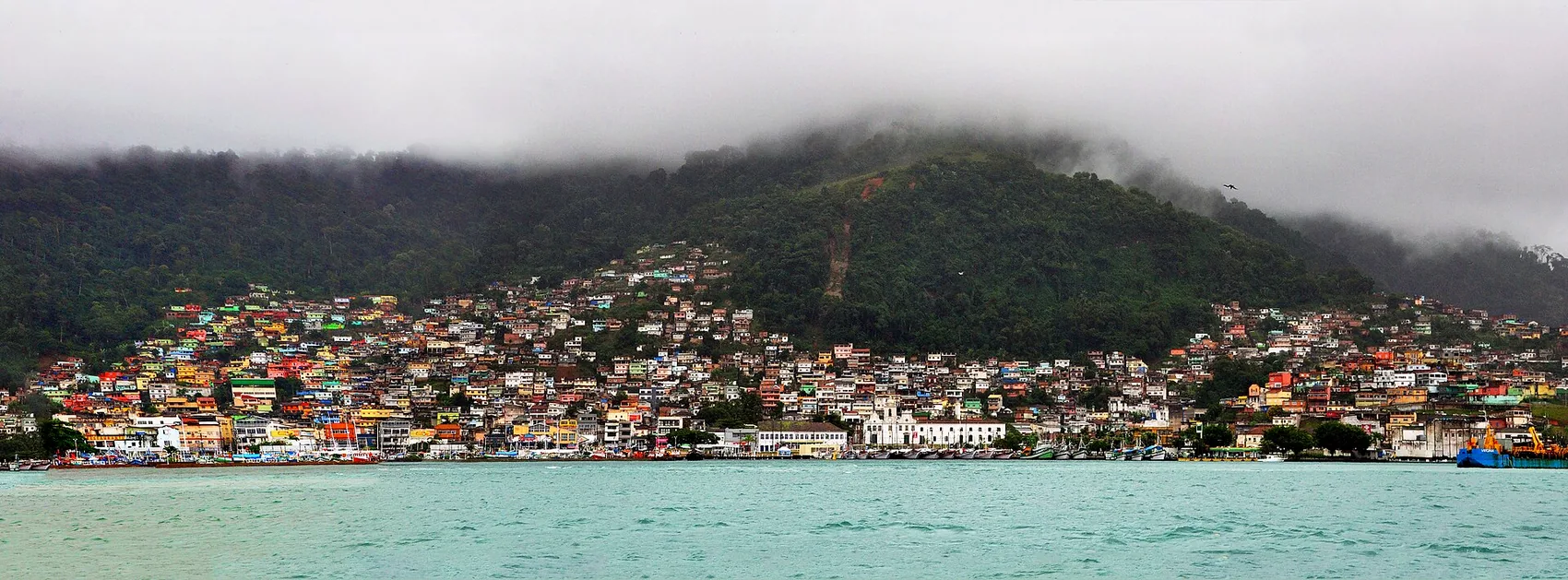
Angra itself, about two-thirds of the way, is a good rough marker of progress and a reasonable place to break the drive for a coffee or a leg-stretch. After Angra the character changes: the road tightens, the towns get smaller, and the forest presses closer. Waterfalls tumble down the rock face after rain, and you catch glimpses of the bays that make this coast what it is. By the time you reach the Paraty turn-off you have crossed from big-city Brazil into something slower and greener. If the scenery has you curious about the wider region, our explore pages and the ultimate guide to Paraty pick up where the road ends.

When to leave Rio: timing and traffic
The single biggest variable in your journey time is not the road — it is when you leave the city. Getting out of greater Rio is the slow part, and it is worst on Friday afternoons and Sunday evenings, when the coast-bound and city-bound traffic peaks. If you can, leave Rio in the morning. You clear the city while it is quieter, you drive the coastal stretch in good light, and you arrive in Paraty with the afternoon still ahead of you.
A morning departure also builds in a cushion for the things you cannot control: a rain-slowed section past Angra, a longer-than-planned coffee stop, a wrong turn out of the city. Aiming to arrive by mid-afternoon rather than after dark means the last climb up to the chalet happens in daylight, your first swim happens before sunset, and dinner is a choice rather than a scramble. For a sense of what the weather is likely to be doing when you travel, our guide to the best time to visit Paraty lays out the seasons honestly, including the wetter months when you will want the extra time buffer most.
And if you are coming from São Paulo
Plenty of guests reach us from São Paulo rather than Rio, and the trip is a little longer — around five to five and a half hours. There are two routes. The classic one runs up the Dutra highway and then drops down the mountains on the winding Cunha road into Paraty, a beautiful descent through farmland and cloud forest. The alternative heads out to the coast first and follows the BR-101 north-east through Ubatuba. Buses also run daily from São Paulo's Tietê terminal. If São Paulo is your starting point, the scenery is different but the principle is the same: leave with daylight to spare and take the mountain curves calmly.
Breaking the journey along the way
The drive down is short enough that most people do it in one go, but the Costa Verde gives you good reasons to stop, and if you have the time a break turns the transfer into a small adventure of its own. Angra dos Reis, two-thirds of the way, is the obvious pause: a working port town with cafés, a waterfront and boat trips out to its own archipelago. It is not as pretty as Paraty, but it is a natural place to stretch your legs, refuel and drink a coffee before the winding final section.
Some travellers make a bigger detour and spend a night on Ilha Grande, the large car-free island reached by boat from Angra, Conceição de Jacareí or Mangaratiba, before carrying on to Paraty. That turns a four-hour transfer into a two- or three-day coastal loop, and if you are the kind of traveller who likes to unspool a journey rather than sprint it, it is worth considering. We cover the island crossing from this side in our Paraty to Ilha Grande guide, and the wider region in the 7-day Costa Verde itinerary. For a first trip focused on Paraty itself, though, there is nothing wrong with pointing the car south and driving straight down — the town at the end is reason enough.
Comfort on the road: what to bring and know
A few small things make the drive down more pleasant, whether you are behind the wheel or in the back of a transfer. The winding sections after Angra are the ones that trouble anyone prone to motion sickness, so if that is you, sit in the front, keep your eyes on the horizon rather than a phone, and take something before you leave rather than once you already feel unwell. Children handle the curves better with a light stomach and regular water than with a big meal just before departure.
Carry water and a snack — service stops exist but are not on every corner in the final third — and keep a light layer within reach, because the air-conditioning on buses and in cars runs cool even when it is hot outside. Have your accommodation's location saved offline; mobile signal is generally fine along the highway but can drop in the hillier pockets, and you do not want to be relying on a live connection to find the last turn. If you are self-driving to us, the pin and written directions we send cover exactly that final stretch. And keep a swimsuit somewhere accessible near the top of your bag: the first thing most guests want after the drive is the pool, and it is a shame to be digging through a suitcase to reach it. Our what to pack guide covers the rest of the trip.
Booking around festivals and peak dates
One practical point that catches people out: Paraty is a festival town, and on the big dates the road, the buses and the town all fill up. The FLIP literary festival, held in the cooler winter months, and the Festa do Divino around Pentecost both draw crowds, and Brazilian holidays — Carnival, New Year, the long weekends scattered through the calendar — send a wave of traffic down the Costa Verde. On those dates, book your bus seats or your transfer well ahead, expect the exit from Rio to be slower than usual, and give yourself extra time on the road.
The flip side is that these are wonderful times to be in Paraty if you plan for them. If your trip coincides with one, read our guide to Paraty festivals and events so you know what you are arriving into, and lean toward a private transfer or an early departure so the journey down does not eat into the fun. On ordinary weekends and midweek, none of this applies — the road is quiet, seats are easy, and you can be more relaxed about timing.
The last climb: up to the chalet
However you travel down from Rio, the journey ends the same way — with a short climb out of Paraty into the hills. The chalet sits about 400 metres of altitude above the bay, and the access road winds up through Atlantic Forest for the final few minutes. In a normal car, driven at an unhurried pace, it is straightforward, and we send exact directions and a map pin when you book. If you have come by bus or you would simply rather not drive the last stretch after a long day, we arrange a local driver to bring you up; just give us your arrival time.
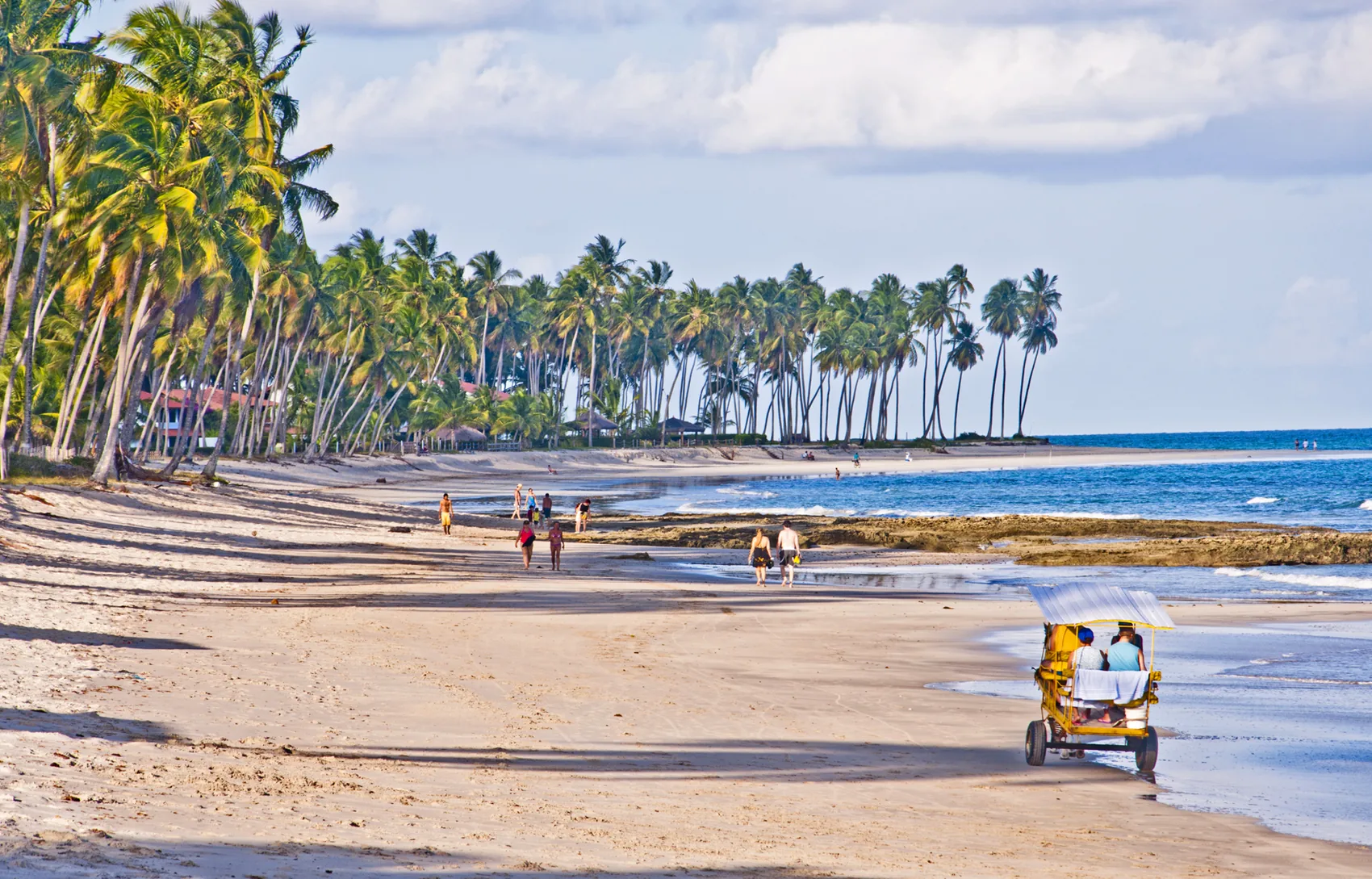
The reward for the climb is immediate. The road opens onto the terrace, the infinity pool runs out toward the horizon, and the whole triple view lays itself out below: the Bay of Paraty in the foreground, Angra dos Reis along the coast, and Ilha Grande beyond. After four hours on the road from Rio, that first swim with the bay spread out under you is the moment the travel was for. This is the place you come back to at the end of every day here — a quiet base above the town rather than in the middle of it.

A sample arrival day
To make it concrete, here is how a smooth arrival from Rio tends to go for our guests. It is a composite, but it reflects the real rhythm of the trip.
- Leave Rio mid-morning. You have had a night in the city, breakfast is done, and you are on the road by nine or ten, ahead of any afternoon build-up.
- Clear the city in the first hour. The stretch through Zona Oeste and past Itaguaí is the least interesting part; put on some music and be patient. Traffic eases once you are past Mangaratiba.
- Enjoy the coast. From there the road delivers: sea to the left, mountains to the right, islands multiplying as you go. Stop for a coffee near Angra if you like.
- Take the final third slowly. After Angra the curves begin. Ease off, enjoy the forest and the water, and do not chase the clock.
- Arrive by mid-afternoon. You reach Paraty with light to spare, make the short climb up to the chalet in daylight, and are in the pool before the afternoon is out.
Do that, and the drive is not a chore to be survived but a proper part of the holiday — arguably one of its highlights. If you are still shaping the trip around it, the 3-day Paraty itinerary and the luxury long weekend guide both assume you arrive in the afternoon and hit the ground gently.
Honest trade-offs and common mistakes
A few things we see catch people out, gathered here so they do not catch you.
Underestimating the exit from Rio
The four-hour figure is realistic for the whole trip, but people often mentally file it as four hours of open highway. The first hour is city traffic, and on a bad afternoon it can be more. Plan around getting out of Rio, not just the distance on the map.
Driving the last section in the dark
The curves past Angra and the climb up to the chalet are both far more comfortable in daylight. Booking a late flight into Rio and then attempting the full drive the same night is the classic mistake. Break it with a night in the city, or take a private transfer if you must travel late so someone who knows the road is at the wheel.
Cutting it fine in the rainy season
If you are travelling in the wetter summer months, respect the possibility that the Angra–Paraty stretch is slower than usual. Leave earlier, keep your plans for arrival day loose, and you will never notice the difference. Cut it fine for a fixed dinner booking and you might.
Assuming you need a car for everything
You do not. The town is walked, the bay is boated, and a car earns its keep only on the days you head inland or down the coast. Renting one for the whole trip and leaving it parked outside town is a common and avoidable expense.
Get those four right and the journey from Rio is genuinely easy. The road is good, the scenery is a gift, and the town at the far end has been rewarding the effort of reaching it for three hundred years. None of these are hard problems to avoid; they are simply the small differences between a trip that starts tired and one that starts well, and a little planning tips it firmly toward the second. When you are ready to sort the details of your own arrival — the transfer, the timing, the pin for the last climb — get in touch and we will make the last stretch effortless. If you want to keep reading around the trip, our full journal and resources cover everything from packing to the best beaches on the bay.
Come stay above the bay
Chalé Bel Air sits on the ridge that looks over everything in this guide. Tell us your dates and what kind of trip you are after — we answer personally.
Ask about your datesFrequently asked questions
How do I get from Rio de Janeiro to Paraty?
There are four main options. Drive yourself down the BR-101 Rio–Santos highway (about four hours), take a Costa Verde coach from the Novo Rio bus terminal (roughly four and a half to five hours), book a private door-to-door transfer from the airport or your hotel, or take a shared van with hotel pickup. Paraty has no scheduled flights, so the final leg is always by road.
How long does it take to drive from Rio to Paraty?
Around four to four and a half hours in normal conditions for the roughly 240-kilometre trip. The slow part is getting out of greater Rio, especially on Friday afternoons and Sunday evenings. Heavy rain on the stretch between Angra dos Reis and Paraty can add up to an hour, so leave earlier if the forecast looks wet.
How much is the bus from Rio to Paraty?
Viação Costa Verde runs the route from the Novo Rio terminal, with more than a dozen departures a day from early morning to mid-evening. Fares are typically around R$80 to R$130 one way depending on the date and time, cheaper on weekday off-peak buses and higher on summer weekends and holidays. Book ahead for busy dates and festivals.
Is it better to drive or take the bus from Rio to Paraty?
Drive if you want a car for the inland waterfalls, cachaça distilleries and down-coast beaches once you arrive, and you are comfortable with a winding final third. Take the bus if you want a cheap, comfortable, low-stress ride and plan to explore the bay by boat and the town on foot. Many guests arrive by transfer or bus, then rent a car locally for a day or two.
Which Rio airport should I fly into for Paraty?
Galeão (GIG), Rio's international airport, is the natural starting point for the drive south and where most long-haul flights land. Santos Dumont (SDU) is the small downtown airport used mainly for domestic shuttles. If Paraty is your first stop, arriving into Galeão simplifies the onward transfer, though from a Rio hotel either works.
Do I need a private transfer from Rio to Paraty?
Not necessarily, but it is the most relaxed choice after a long international flight or for a group arriving late. A private car takes you straight from the airport or your hotel to your door — in our case all the way up to the chalet — so you skip tolls, curves and terminal changes. Split across a family or group it becomes very reasonable.
Is the drive from Rio to Paraty scenic?
The second half is one of Brazil's great coastal drives. Once you clear the city, the BR-101 runs between the forested Serra do Mar and a sea full of islands, passing Angra dos Reis about two-thirds of the way. Sit on the left side of the bus, or drive it in daylight, to make the most of it.