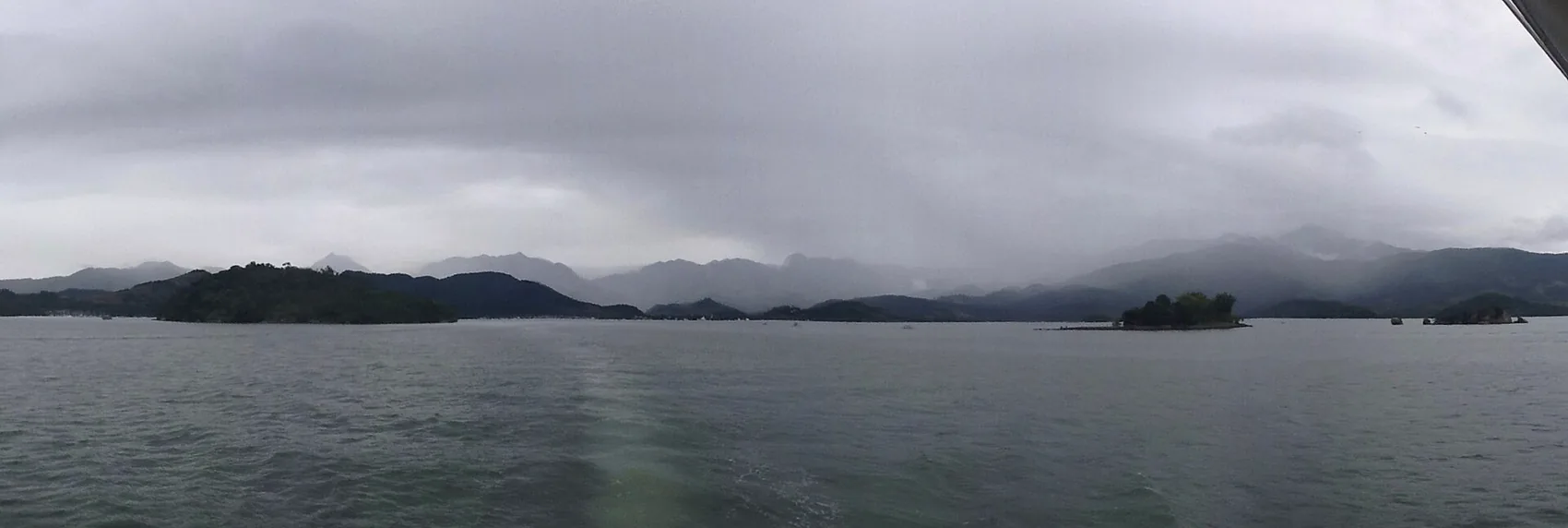
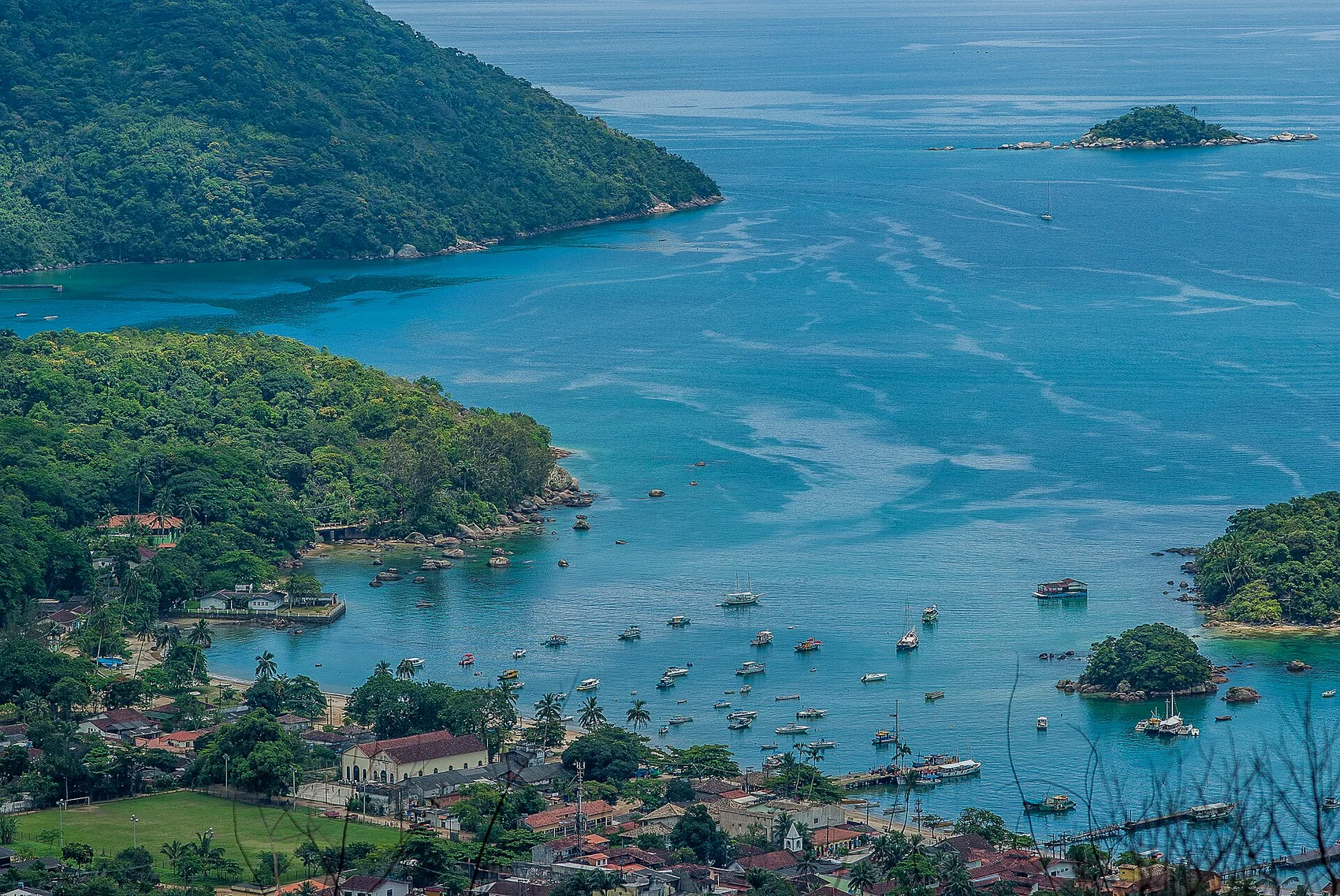
Paraty's bay holds dozens of islands and hundreds of small beaches, most of them reachable only by boat. Here is how island hopping actually works out here, how to choose between the schooner and a private charter, and how to plan a day on the water that suits your group.
From the chalé's deck the bay reads like a map. On a clear morning you can trace the whole thing at once: the colonial waterfront to the left, the long ridge of Ilha Grande lying across the far horizon, and between them a scatter of green islands sitting on water that shifts from jade to deep blue as the light moves. Most of those islands have a beach you cannot reach by road. That, in a sentence, is why island hopping in Paraty is the thing people come back for. The town is the reason you booked; the bay is the reason you extend your stay.
Paraty sits on the Costa Verde, the stretch of coast between Rio de Janeiro and São Paulo where the Atlantic rainforest runs straight down to the sea. The bay in front of town holds something like sixty-five islands and more than three hundred small beaches and coves, protected on every side by conservation land and forested peaks. You do not need to see all of them. You could not, in a week of trying. What you want is one good day on the water, planned to suit the people you are travelling with, and this guide is about getting that day right.
We watch the boats fan out from the pier every morning from up here, and over the years we have sent a lot of guests out onto the bay and heard how it went when they came back for a swim in the pool. What follows is the honest version: how the schooner circuit differs from a private charter, where the good snorkelling actually is, what a day on the water costs and involves, and the small decisions that make the difference between a great day and a merely fine one.
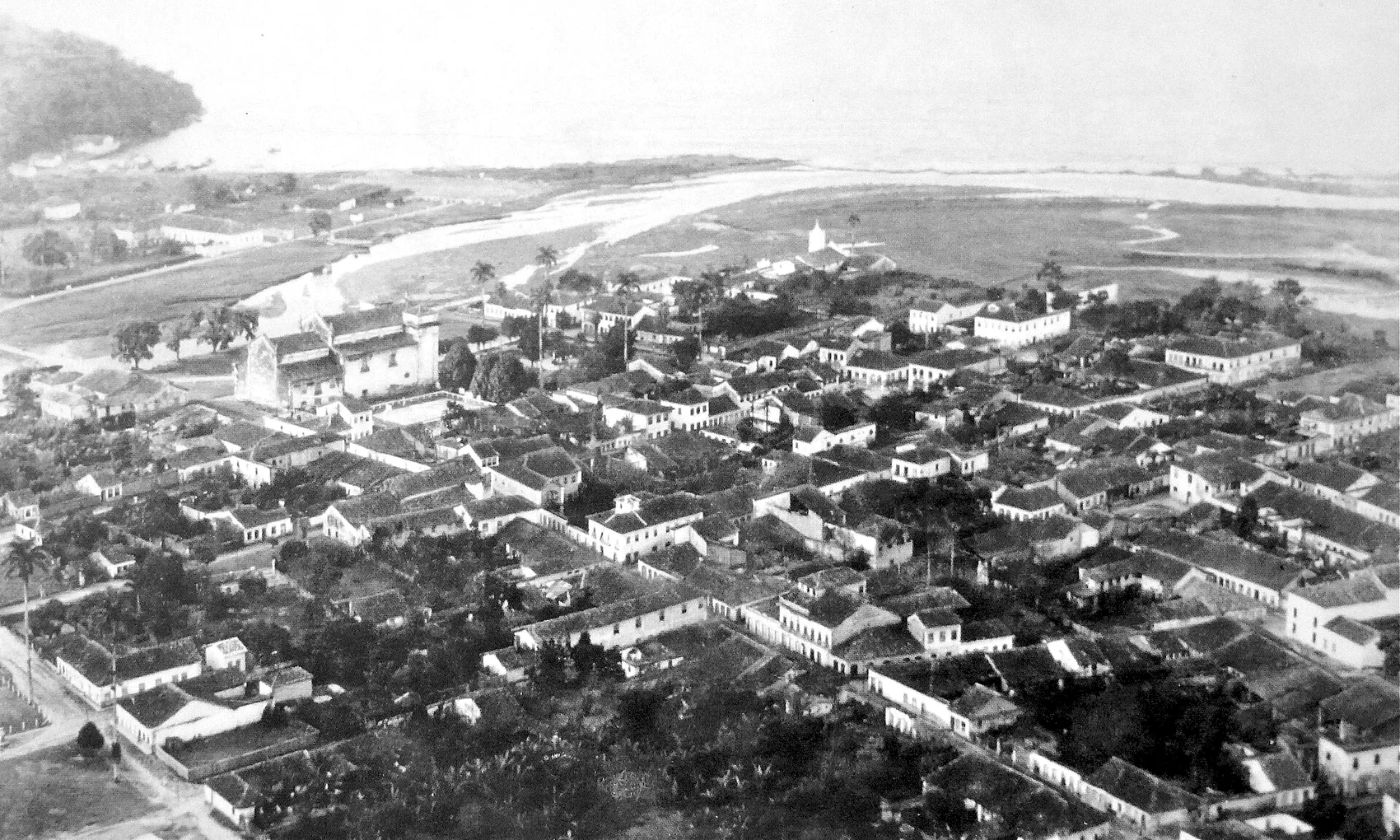
What island hopping in Paraty actually means
Island hopping here is not a single fixed product. It is a loose idea — spend the day on a boat, move between islands, swim at each — that comes in several shapes. At the cheap and cheerful end is the shared schooner, a big wooden boat that carries a few dozen people on a set loop of the inner bay. At the other end is a private speedboat you charter for the day with a skipper who takes you wherever you point. In between sit smaller shared launches and the caiçara fishermen who will run you out to a specific beach and come back for you later.
The geography is the thing to understand first. Paraty Bay is really an inner bay, sheltered and calm, opening south and west into the wider Baía da Ilha Grande. The classic island-hopping circuit stays inside that protected water, which is why it works for nervous swimmers and small children as well as strong ones. The islands are close together, the crossings are short, and the sea rarely gets rough. Push further out — toward Ilha Grande, or south into the Saco do Mamanguá — and the day gets longer and the water livelier, but the inner bay is where most trips happen and where most people should start.
One more point of orientation. The boats do not usually dock at these islands. They anchor in open water off a beach or a reef, and you go in off a ladder or over the side and swim the last stretch to the sand if you want it. Nobody rushes you, but the day runs on the boat's clock, not yours — unless you have chartered it, in which case the clock is yours to set.
The two ways to do it: schooner or private charter
Almost every island-hopping decision in Paraty comes down to this fork. They are genuinely different days, and the right answer depends entirely on your group and your budget.
The shared schooner
The schooner, or escuna, is the classic. Picture a broad wooden two-deck boat carrying thirty to sixty passengers, leaving the pier mid-morning and returning in the late afternoon. There is a bar on board, shade under the canopy, often a bit of music, and a fixed loop of four or five stops where everyone swims at the same beach at the same time. You buy a ticket per person, either at the pier the day before or through your hosts, and then you simply show up. The day runs itself.
The appeal is real. It is inexpensive, it is sociable, and it takes zero planning. If you are solo travellers, or a couple who want an easy first day getting the feel of the bay, or anyone who likes the sound of a lazy floating afternoon with a caipirinha in hand, the schooner is the obvious call. The trade-off is that you are on a bus timetable at sea. You stop where the schooner stops, for as long as it stops, alongside however many other boats are anchored at the same cove. On a busy summer Saturday the popular beaches can feel crowded, and forty minutes at a place you love can feel short.
The private charter
The private speedboat — a lancha, in local terms, or a covered caiçara boat for something simpler — flips all of that. You charter the boat for a half or full day with a skipper, and the route belongs to you. Want to skip the busiest island and spend two hours snorkelling somewhere quieter? Done. Want to be at the best beach at eight in the morning before the schooners arrive? Ask for it. Want to push out to a far cove the schooners never reach, or link the swimming with a beach lunch at a spot only the fishermen know? That is exactly what a charter is for.
The cost is higher, but it is priced by the boat, not the head, so the arithmetic changes fast with numbers. Split between a family of four, or two couples travelling together, a private charter often works out only a little more per person than the schooner and buys you a day of your own design. For anyone who cares about snorkelling, quiet anchorages, or simply not being on someone else's schedule, it is usually the better day.
Do the schooner once for the atmosphere. Charter a boat for the day you want the bay on your own terms.
Our honest advice, and the thing we tell most guests: do the schooner once, early in your stay, for the atmosphere and the lay of the land. Then, if the bay has got under your skin, charter a boat for a second day and go where you want. If you only have time for one day on the water and you are a group of three or more, skip straight to the charter. You can read our fuller breakdown of both in the boat days guide, which covers the mechanics of how a typical day runs.
The classic schooner circuit, stop by stop
Most schooner loops, and many charters, follow a version of the same circuit around the inner bay. The exact stops shift with the tide, the wind and the crowds — a good skipper picks the calmer of two beaches on any given day — but the shape of the day is consistent. It usually runs four to five stops of roughly forty minutes each, book-ended by the ride out and the ride home.
Out past the fort
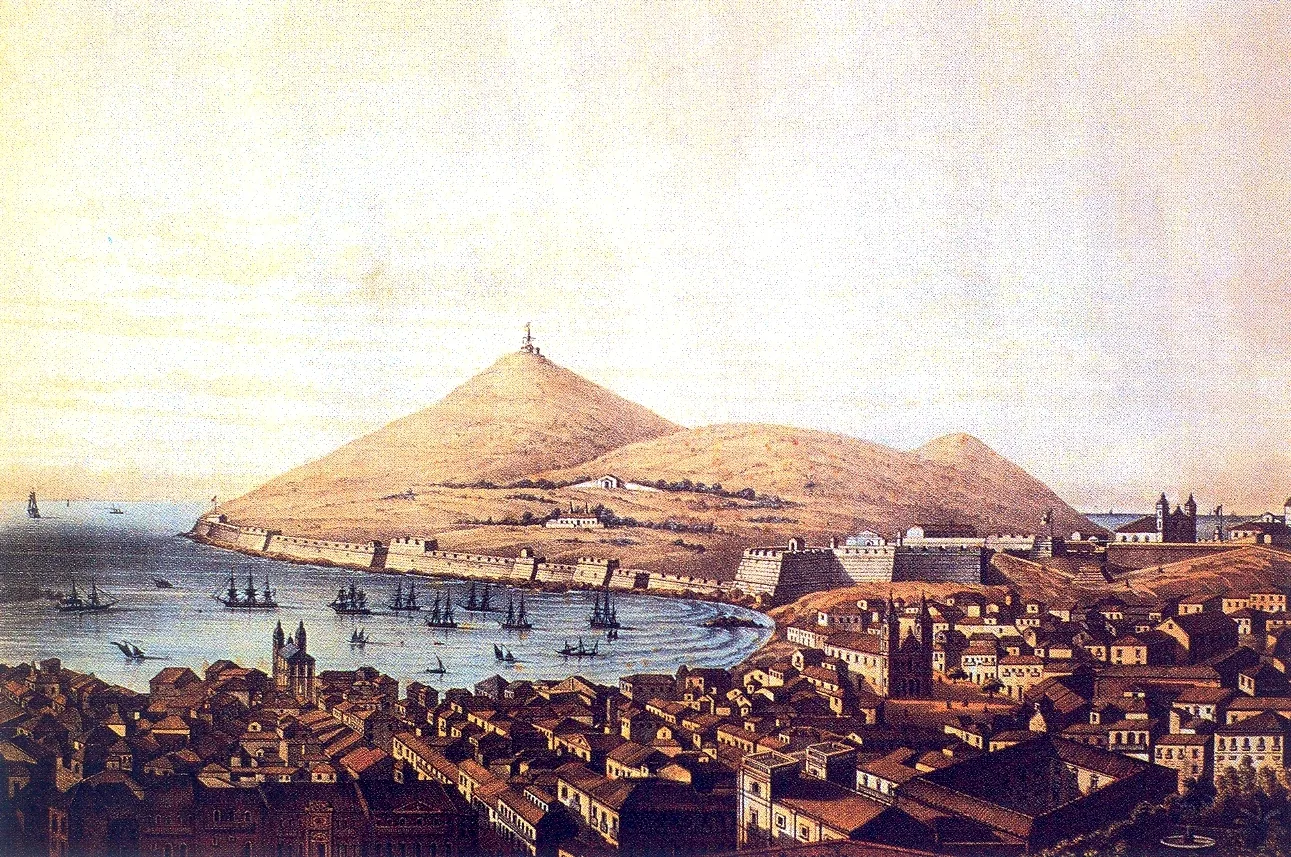
The boat leaves the pier, slides past the colonial waterfront and the low green headland where the Forte Defensor Perpétuo sits, and the town shrinks behind you. This is the part of the day where you get the view that no postcard quite captures: the whole historic centre laid out against the wall of the Serra do Mar, with the chalé's ridge somewhere among the hills above it. Have your camera ready in the first ten minutes.
Praia Vermelha and Praia da Lula
The first proper stop is usually one of two calm beaches on the bay's near shore — Praia Vermelha or Praia da Lula. Skippers choose whichever is calmer that day. Both are sheltered, jungle-backed and shallow near the sand, which makes them the easy warm-up swim: warm water, an easy wade in, a simple beach bar or two behind the sand for a coconut or a cold drink. Praia Vermelha is the busier and better known of the pair; Praia da Lula is quieter and softer. Neither is a place you need to conquer. They are where you get your first taste of how green and clear this water is.
Ilha Comprida, the natural aquarium
This is the snorkelling stop, and for many people the highlight. At Ilha Comprida there is barely a beach — the point of the anchorage is the water itself. The boat drops anchor over rock and clear open water, and you go in with a mask and find yourself swimming among schools of fish that gather around the hull. Locals call it an aquário natural, a natural aquarium, and on a clear winter day the name earns itself. Bring your own mask and snorkel if you have them; boat-supplied gear exists but its quality varies, and a mask that fits your own face is worth a great deal more than one that leaks.
Lagoa Azul
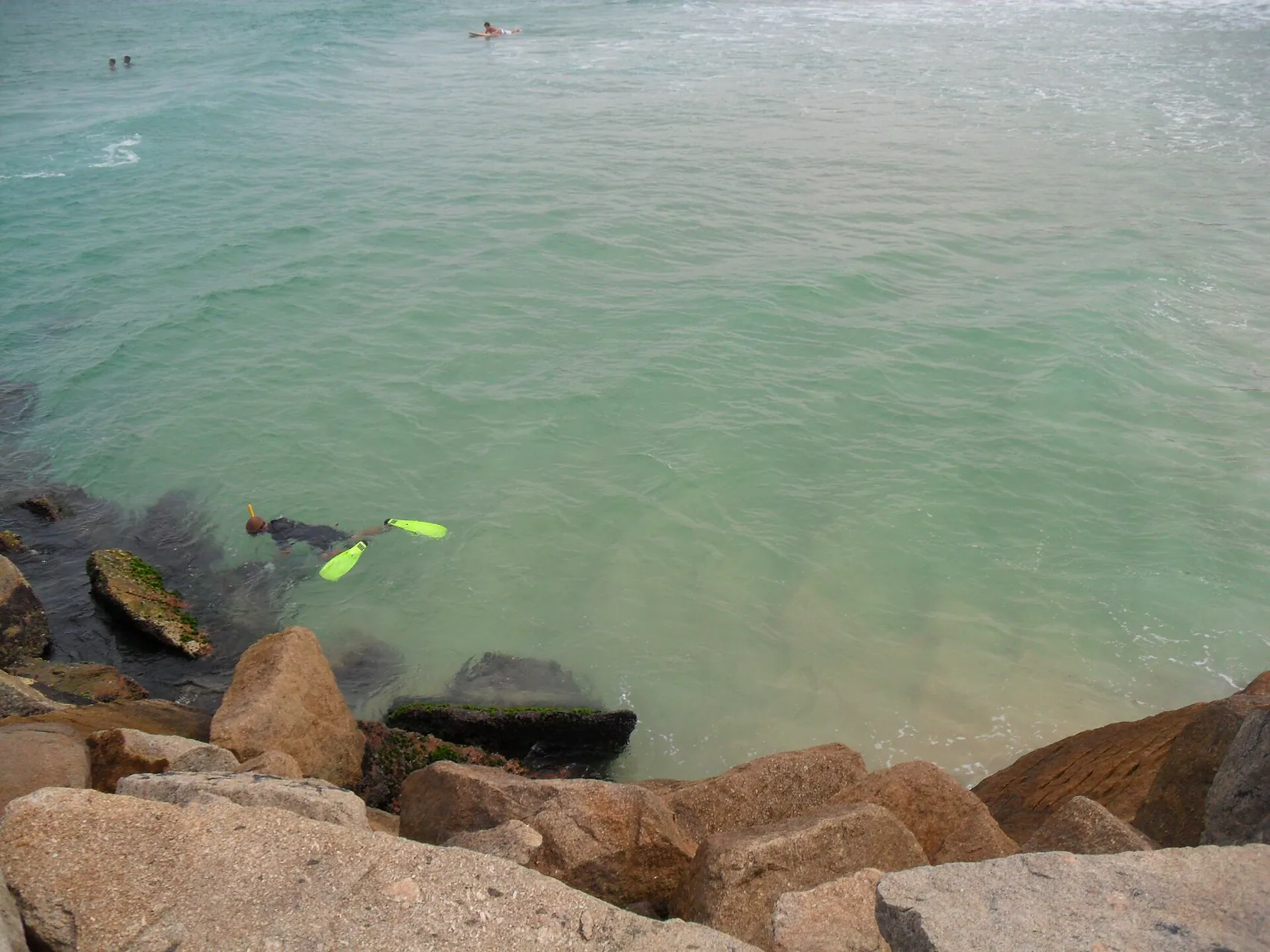
Lagoa Azul — the blue lagoon — sits around Ilha da Pescaria, and it is the stop the photographs are usually of. The water here is calm and pale over sand, shading from turquoise in the shallows to deeper blue where it drops away, and it is often used as the lunch or long-swim stop on the loop. It gets its name from the resemblance to the film, and on a still, sunny day it lives up to it. It is also, for the same reasons, the most popular anchorage in the bay, so it fills with boats by mid-morning in high season. This is the single strongest argument for chartering: a private boat can be at Lagoa Azul early, before the crowd, and gone before it peaks.
Ilha do Algodão and the lunch stop
Ilha do Algodão is the largest island in Paraty Bay, and it is where many circuits stop for lunch. There are simple seafood restaurants on the water here, the kind of caiçara kitchens that grill the morning's catch and pour a cold beer while you drip on the deck. Lunch is rarely included in a schooner ticket, so bring cash or a card. If you would rather not spend the money or the time on a sit-down meal, this is where a picnic packed from town, or from the house kitchen, earns its keep — you eat on the boat and swim the extra half hour instead.
From here the loop turns for home, usually with one last swim on the way back, timed so you reach the pier with the late-afternoon light on the mountains. From the water you can pick out the ridge where the chalé sits, and by then a swim in the infinity pool and a cold drink on the deck is exactly what the day has been building toward.
Chartering a boat: how to get it right
If you decide to charter, a few things are worth knowing so you get a good boat and a good day rather than an expensive version of the schooner.
First, match the boat to the plan. A fast lancha is right if you want to cover ground — reach a far cove, link two distant beaches, get somewhere before the crowds. A slower caiçara boat is right if you want an unhurried day close to town and care more about the swimming than the mileage. Say what you want when you book; the good skippers will tell you honestly whether your plan fits the day's weather and tide.
Second, agree the route and the hours before you leave the pier, not after. A half day is typically four to five hours, a full day six or more. Confirm whether fuel is included, where you will stop for lunch, and whether the skipper carries snorkel gear and vests. Confirm the price in full, in writing if you can, so there are no surprises at the dock.
Third, build in slack. The best days on the bay are the ones where you find a cove you love and stay an extra hour because you can. A charter's whole value is that flexibility, so resist the urge to cram in one more stop. Two or three beaches done slowly beats five done at a run.
Tip: your hosts can arrange a charter for you, brief the skipper in Portuguese, and time your departure to the tide and the weather. Ask us the evening before and we will have a boat waiting at the pier. It saves the haggling and gets you a skipper we already trust.
The snorkelling: what you'll see and where
The water on this coast is famously green and clear over sand and rock, and the snorkelling is gentle rather than dramatic — think warm, shallow, easy swimming among fish rather than deep reef diving. You will see schools of silver and yellow fish, the occasional larger grouper or parrotfish over the rocks, sea urchins in the crevices, and rays over the sand if you are lucky and quiet. It is snorkelling that a confident child or a rusty adult can enjoy, not a technical exercise.
Ilha Comprida is the reliable star, as above. Beyond it, the reefs and rocky points around several of the inner-bay islands hold fish, and a good skipper on a charter will know two or three anchorages that the schooners skip. Visibility is the variable that matters most: it is best in the dry winter months, from roughly June to September, when there is less river runoff and less plankton in the water. In high summer after a downpour the bay can go milky for a day or two. If underwater clarity is the point of your trip, plan it for winter and check the water the morning you go. Our dedicated snorkelling and diving guide goes deeper on gear, seasons and the handful of spots worth a proper mask.
Saco do Mamanguá: the fjord day
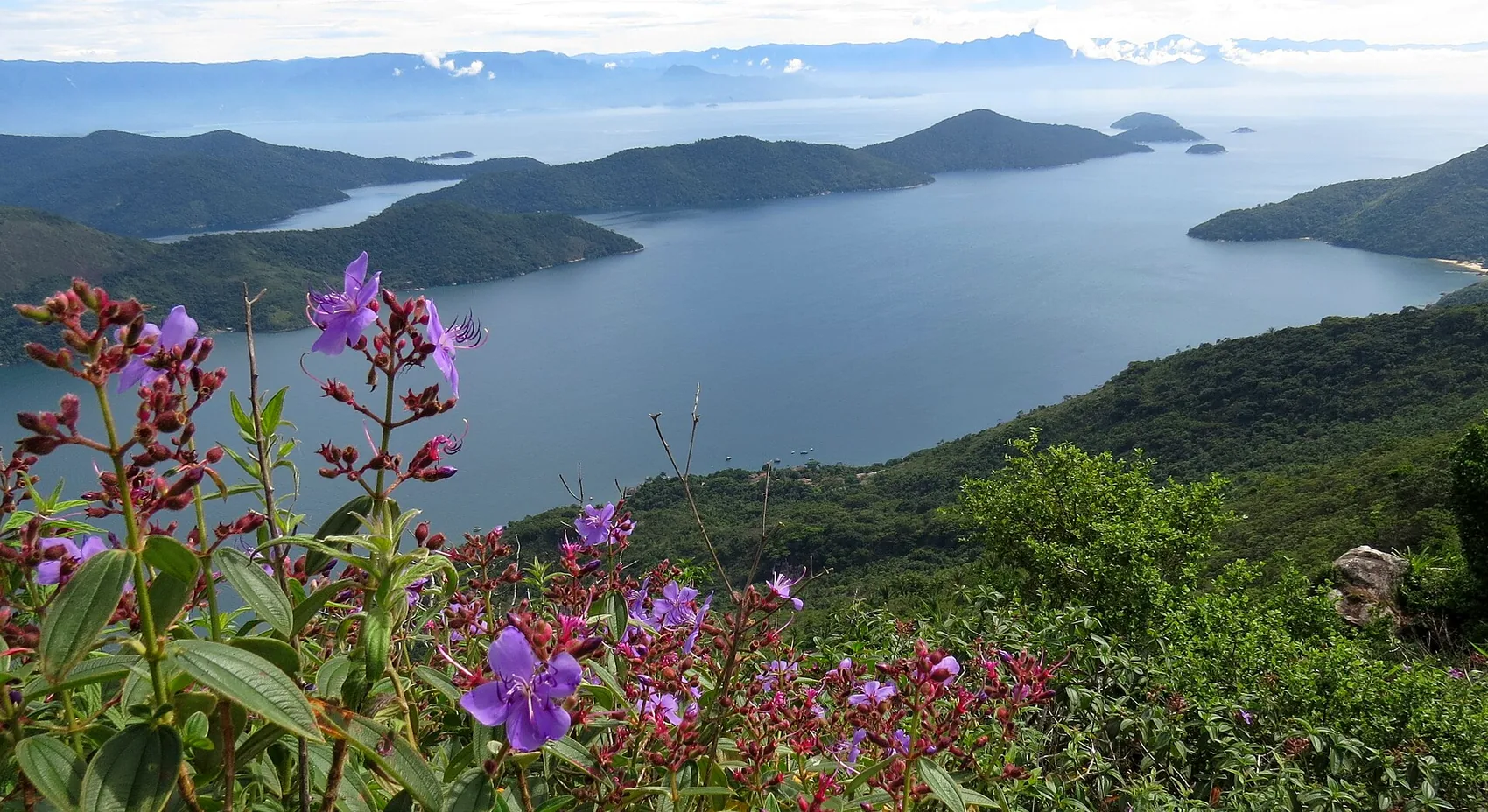
South of the main bay lies something genuinely unusual: the Saco do Mamanguá, a long, narrow sea inlet that reaches several kilometres inland between two forested ridges. It is often described as the only tropical fjord in the world, and whether or not that claim survives every geographer's scrutiny, the place feels like nowhere else on the coast. The water is shallow, calm and warm; the ridges rise steep and green on both sides; and small caiçara communities and oyster farms dot the shore. It is a different day from the island loop — quieter, wilder, slower — and it is worth planning as its own trip rather than tacking it onto a bay circuit.
How to see it
There are two main ways in. A fast boat from Paraty runs you down the coast and into the inlet in under an hour, with stops to swim, snorkel over the shallows and pull up at a floating oyster bar. The other way is under your own power, by kayak or stand-up paddleboard, which is really the truest way to experience a fjord this calm. Multi-day kayak trips paddle in from Paraty, camping on the beaches, and the flat protected water makes it accessible to anyone reasonably fit. The mangroves at the head of the inlet are worth the paddle for the birdlife alone.
The climb to Pico do Pão de Açúcar
The signature effort of a Mamanguá day is the hike up Pico do Pão de Açúcar — a local sugarloaf peak, not to be confused with Rio's. It is a steep climb of roughly an hour from the water, through forest and up rock, and the view from the top is the reward: the whole length of the fjord below you, the ridges folding away on either side, and the open bay beyond. Go early to beat the heat, wear proper shoes rather than flip-flops, and carry more water than you think you need. If you enjoy this kind of thing, our hiking guide covers the region's other trails, several of which also end at a beach you can only reach on foot or by boat.
Beyond the inner bay
The classic circuit is the inner bay, but the water keeps going, and if you have more than one day on it, the horizon is worth chasing.
To the south and east lies Ilha Grande, the big mountainous island that fills the far horizon from the chalé's deck. It is a destination in its own right rather than an island-hopping stop — a full crossing, its own beaches, its own famous trail to Lopes Mendes — and we cover the logistics honestly in the Paraty to Ilha Grande guide. It is a day trip at a stretch and much better as an overnight.
Up the coast toward Angra dos Reis, the Baía da Ilha Grande scatters hundreds more islands across a wider, busier stretch of water. Some of the clearest swimming near Paraty is actually on this side — a short drive north brings you to launch points for smaller islands where a fisherman's water taxi will run you across for a modest fee. It is a good option on a day when the main pier is heaving or when you want a beach to yourselves without a full boat charter.
And on the near side of town, the quieter beaches and coves toward Paraty-Mirim reward the same instinct on a smaller budget: a short drive, a fisherman's canoe or a gentle walk, and a cove with only a handful of people on it. We have written that up separately in the quiet beaches guide, and it pairs well with a boat day — one day out among the islands, one day slow on an empty stretch of sand.
Planning a day on the water
The difference between a great boat day and a merely fine one is almost always in the planning. A few honest rules.
Go in the morning
This is the single most useful piece of advice in the guide. In summer, the Costa Verde runs to an afternoon pattern: clear bright mornings, then cloud building over the mountains and, often, a short sharp thunderstorm in the mid-to-late afternoon. Morning departures get the best of the light, the calmest water and the smallest crowds, and they get you back before the weather turns. A boat that leaves at nine is a far better bet than one that leaves at noon. In winter the pattern is gentler, but morning is still when the light and the water are at their best.
Watch the season
Boats run all year, and each season has its case. Summer, from December to February, brings the warmest water, the longest days and the liveliest town, along with the biggest crowds and the afternoon storms. Winter, from June to August, is drier, clearer and a touch cooler — the water is still swimmable, the visibility is at its best for snorkelling, and the bay is calmer and less busy. The shoulder months either side are, to our minds, the sweet spot: warm enough, clear enough, and quiet enough. Our best time to visit guide lays out the year month by month.
Mind the tide and the wind
The tide shapes which beaches are worth stopping at and how the anchorages sit, and the wind — particularly a southerly — can turn a glassy inner bay lumpy and make the run toward Ilha Grande roll. You do not need to become a mariner about this; you need a skipper who reads it, which is one more reason a good local charter or a schooner with an experienced crew beats a cut-price mystery boat. If the forecast is genuinely bad, move the boat day and spend a day in town instead. There is plenty to do; our rainy-day guide has the wet-weather plan, and the bay is always better the day after a front clears.
How it fits into a trip
One full day on the water is the right amount for most stays. If you are here for a long weekend, give the boat one of your days and the historic centre another; our long-weekend guide sketches how that balances. If you have a fuller week, you can do the schooner early, a private charter later, and still have time for the fjord — the three-day itinerary shows one way to thread it together. The mistake is to schedule two boat days back to back; the bay is better with a slow land day in between.
What to bring on a boat day
Pack light but pack right. The essentials for a day of island hopping:
- Reef-safe sunscreen and a hat. The light off the water is far stronger than it feels under the canopy, and a burnt back ruins the next two days. Reapply after every swim.
- A dry bag or a zip-lock bag for phone, cash and keys. You will be wading or swimming to some beaches, and boats are wet places.
- Your own mask and snorkel if you have them. A mask that fits your face beats any hired one, and it is the difference between loving the snorkel stop and giving up on it.
- Cash and a card. For the lunch stop, drinks on board, and any water-taxi or gear hire. Not every caiçara kitchen takes cards, and signal on the water is patchy.
- A light layer and a towel. The breeze picks up on the ride home, especially late in the day, and the wind off the water cools you faster than you expect once you are wet.
- Water and a few snacks, more than you think you need. Between stops there is nowhere to buy anything.
- Seasickness tablets if you are prone. The inner bay is calm, but the more open stretches can roll, and it is better to take one and not need it.
Our full packing guide covers the wider trip, but for a boat day that list is the whole of it. Leave the rest at the house.
Island hopping with kids and different groups
The inner bay is genuinely good for families, which is not something you can say of every boat day on every coast. The water is warm, shallow and calm, the crossings are short, and every boat carries vests and floats — ask for them when you board and nobody thinks twice. The schooner in particular suits children: there is room to move, shade to retreat to, a bathroom on board, and the sociable atmosphere keeps them entertained between swims. Our guide to Paraty with kids has more on the practicalities.
For a couple, the choice tilts toward a private charter and a quiet cove, ideally reached before the schooners. For a group of friends, the schooner's bar and easy sociability is often the point, and the low ticket price keeps everyone happy. For solo travellers, the schooner is the easy, friendly default and a good way to meet people. And for anyone marking an occasion, a private boat with a picnic and a bottle of something cold, timed to end with the sunset light on the bay, is one of the loveliest things you can do here — the honeymoon guide and the celebrations guide both lean on exactly that.
Food, money and how to book
Lunch on the water is part of the pleasure. On most circuits it happens at a caiçara restaurant on one of the islands or a beach — seafood grilled or fried, a fish moqueca if you time it, rice, beans and a cold drink, eaten with your feet more or less in the sand. It is rarely included in a schooner ticket, and prices at the island kitchens run a little higher than in town for the obvious reason that everything arrived by boat. If you would rather not stop, a picnic packed from town, or from the chalé's kitchen, lets you swim through the lunch hour while everyone else is eating. For where to eat on the nights you are back on land, the Paraty dining guide has the harbour seafood houses and the town's better tables.
On money: bring more cash than you expect to spend. The schooner ticket is cheap; the extras — drinks, lunch, gear, tips — add up, and card signal on the water is unreliable. A private charter is priced by the boat, so settle the full number before you leave the dock. A modest tip for a good skipper and crew is normal and appreciated.
On booking: the schooners can be bought same-day at the pier in quiet season, but in high summer and over holidays it is worth booking a day ahead. Private charters should be arranged in advance, especially for the peak weeks. The simplest route, and the one we would point any guest to, is to let us handle it — we know the skippers, we can brief them in Portuguese, and we can time your day to the weather. Just get in touch before you arrive, or ask us the evening before, and we will have the right boat waiting.
Hopping responsibly
The bay is beautiful because it is looked after, and it stays that way partly by how visitors behave on it. A few things matter more than they seem. Wear reef-safe sunscreen — the ordinary kind washes off into shallow water that fish and coral live in. Take every scrap of your rubbish back to the boat; the small islands have no bins and no one to empty them. Do not stand on or break the rocks and coral when you snorkel, and keep a respectful distance from wildlife. And spend a little at the caiçara kitchens and with the local fishermen when you can — these are the families who have lived on and from this bay for generations, and tourism that reaches them directly is the kind worth having.
None of this costs you anything or dims the day. It is just the difference between being a guest on the water and being a nuisance on it, and the bay is generous to guests.
From the deck to the water and back
The thing we love about island hopping from up here is the rhythm of it. You wake to the whole bay laid out below the deck, watch the first boats leave the pier while you have coffee, and drive the short way down into town to catch your own. You spend the day out among the islands — swimming off the ladder at Ilha Comprida, drifting over the pale water at Lagoa Azul, eating grilled fish with your feet in the sand — and then the boat turns for home and you watch the same ridge you woke on rise up out of the heat. By the time you have showered off the salt, the light is going gold, and there is nothing to do but pour a drink and get back in the pool.
That is the version of a beach holiday we built the chalé around: not a resort where the day is handed to you, but a private house above a working bay, close enough to be on the water in twenty minutes and quiet enough that the day feels like your own. If you want a longer look at the house itself — the deck, the infinity pool, the triple view across the bay to Angra and Ilha Grande — the chalé page has it, and the explore section gathers the rest of what there is to do while you are here. When you are ready to plan the trip, or just want us to line up a boat for the morning after you land, write to us. We will point you at the right skipper, the right day, and the right cove — and the pool will be warm when you get back.
Come stay above the bay
Chalé Bel Air sits on the ridge that looks over everything in this guide. Tell us your dates and what kind of trip you are after — we answer personally.
Ask about your datesFrequently asked questions
What is island hopping in Paraty and how does it work?
Island hopping means spending a day on a boat that moves between the small islands and coves of Paraty Bay, stopping to swim, snorkel and have lunch. You can do it cheaply on a shared wooden schooner that follows a fixed loop, or you can charter a private speedboat and set your own route. Most trips run four to five hours with four or five stops.
How many islands are there in Paraty Bay?
The bay holds roughly sixty-five islands and more than three hundred beaches and coves scattered along the Costa Verde. No single day gets you to all of them. A typical schooner circuit visits four or five of the best-known stops in the inner bay, which is plenty for one day on the water.
Should I take a schooner or charter a private boat in Paraty?
Do the schooner once for the atmosphere. It is sociable, inexpensive and effortless on a fixed loop of the bay. Then charter a private speedboat, a lancha, for the day you want your own route, quieter coves and longer snorkelling stops. Split between a family or two couples, a charter is usually worth the extra cost.
What are the best snorkelling stops in Paraty Bay?
Ilha Comprida is the classic natural aquarium, where the boats anchor in open water over rock and you swim among schools of fish. Lagoa Azul, around Ilha da Pescaria, is calm and clear over pale sand. Both are on the standard schooner route. Bring your own mask if you can, and go in winter for the clearest water.
How much does a boat tour in Paraty cost?
A shared schooner ticket is inexpensive and bought per person at the pier or through your hosts. A private speedboat charter is priced by the boat for a half or full day, so the cost per head drops fast with a bigger group. Lunch, drinks and any snorkel-gear hire are extra on both, so bring cash or a card.
What is Saco do Mamanguá?
Saco do Mamanguá is a long, narrow sea inlet south of Paraty, often described as the only tropical fjord in the world. It runs several kilometres between forested ridges into calm, shallow water known for kayaking, oysters and the steep climb up Pico do Pão de Açúcar for the view back down the inlet. It is a longer day than the inner-bay circuit.
When is the best time of year for island hopping in Paraty?
Boats run all year. Summer, from December to February, brings the warmest water and an afternoon thunderstorm pattern, so morning departures get the best of the day. Winter, from June to August, is drier, clearer and a touch cooler, which usually means the best underwater visibility for snorkelling.