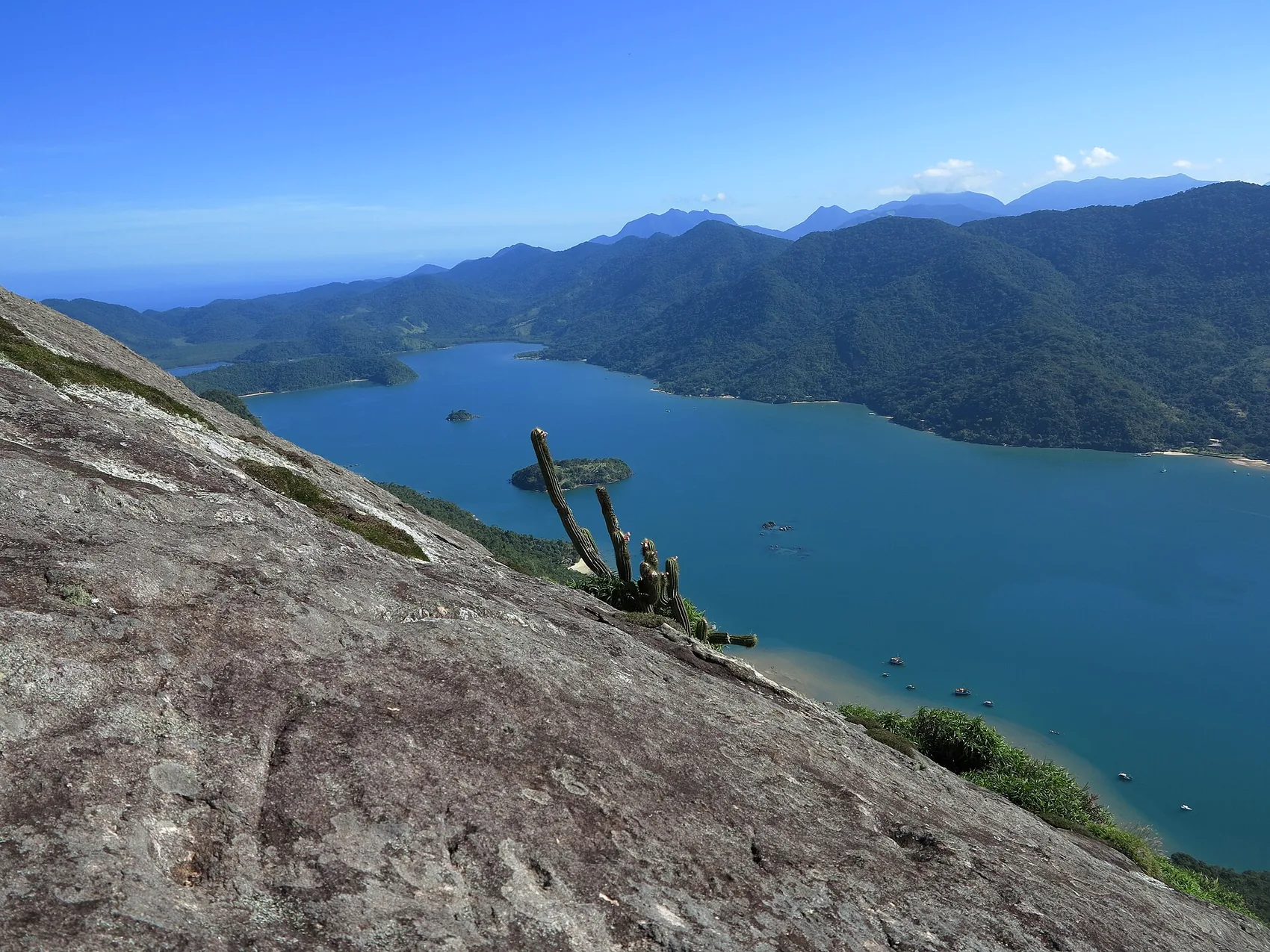
A few kilometres above town, a road paved by enslaved hands three centuries ago still climbs into the forest. This is how to walk the Caminho do Ouro well — the history under your boots, the viewpoints, the honest difficulty and why you go with a guide.
There is a moment on the Caminho do Ouro Paraty hike, usually about ten minutes up from the road, when the modern world drops away behind you and the path becomes something else entirely. The forest closes over the top. The traffic noise fades. And under your feet the ground stops being a dirt trail and turns into a road — a real road, built of large fitted stones, cambered and drained and worn smooth in the middle where three hundred years of mules and men wore it down. That is the point at which most guests go quiet. You are standing on the road that built this town, and the town is still down there below you, whitewashed and intact, because of what came up and down these stones.
We host guests on the ridge above Paraty, and the Gold Trail is the walk we most often talk people into before they arrive and the one they most often thank us for afterwards. It is not a long hike and it is not a hard one, whatever a breathless tour listing might tell you. What it is, is dense — dense with history, with forest, with the uncomfortable weight of how the road was made and who made it. You come for meaning more than for mileage. An hour on the stones with someone who can read them is worth more than a whole day on a longer, emptier trail.
This guide is the long version: what the Caminho do Ouro actually is, why it runs where it runs, how to walk the surviving section well, where it starts, what the difficulty really feels like underfoot, and how to fold it into a proper day out with the waterfalls and the cachaça stills that share the same mountain road. We will be honest about the parts that are steep, the parts that are slippery, and the part of the story that is hard to stand on. None of it is academic. Almost every line of this is something you can put your hand on.
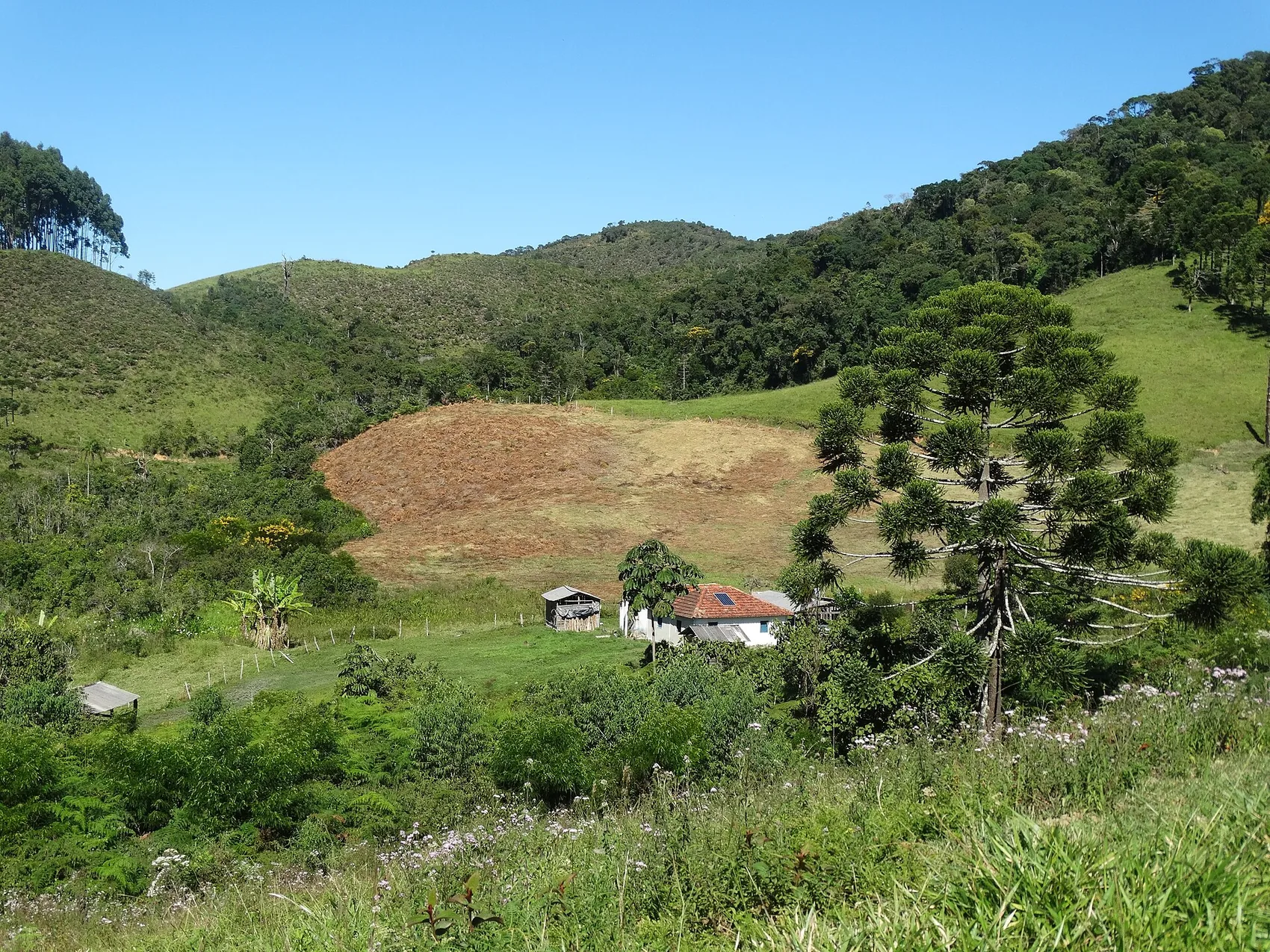
What the Caminho do Ouro actually is
The Caminho do Ouro — the Gold Trail — is the colonial mule road that once linked the gold-mining country of the interior to the coast at Paraty. In its full extent, with all its branches, it ran for well over a thousand kilometres, threading from the mining towns of Minas Gerais, across the state of São Paulo, down through the mountains and out to the harbour here. It was part of a wider network the Portuguese crown came to call the Estrada Real, the "Royal Road," the official and taxed route by which the wealth of the colony was supposed to move.
What survives above Paraty is not the whole thing — it is a section, a few kilometres of the steepest stretch where the road had to climb the coastal escarpment, the Serra do Mar. That is exactly why this piece was paved in stone and why it lasted. On the flat, a colonial road was often just cleared earth. On a slope this steep, in rainfall this heavy, bare earth would have washed away in a season. So the crown's engineers laid it with large stones, fitted them together, cambered the surface so water ran off, and cut drainage channels along the edges. That engineering is the reason you can still walk it. The forest took back almost everything else from this period; it could not take back the stones.
People sometimes arrive expecting a signposted national monument with a ticket office and a paved car park. It is not that. It is a working piece of forest with an old road running up through it, a controlled entrance, a local guide, and a lot of green quiet. Manage that expectation and you will love it. Arrive expecting a theme park and you will be briefly confused before the road wins you over anyway.
The Gold Trail and the Estrada Real
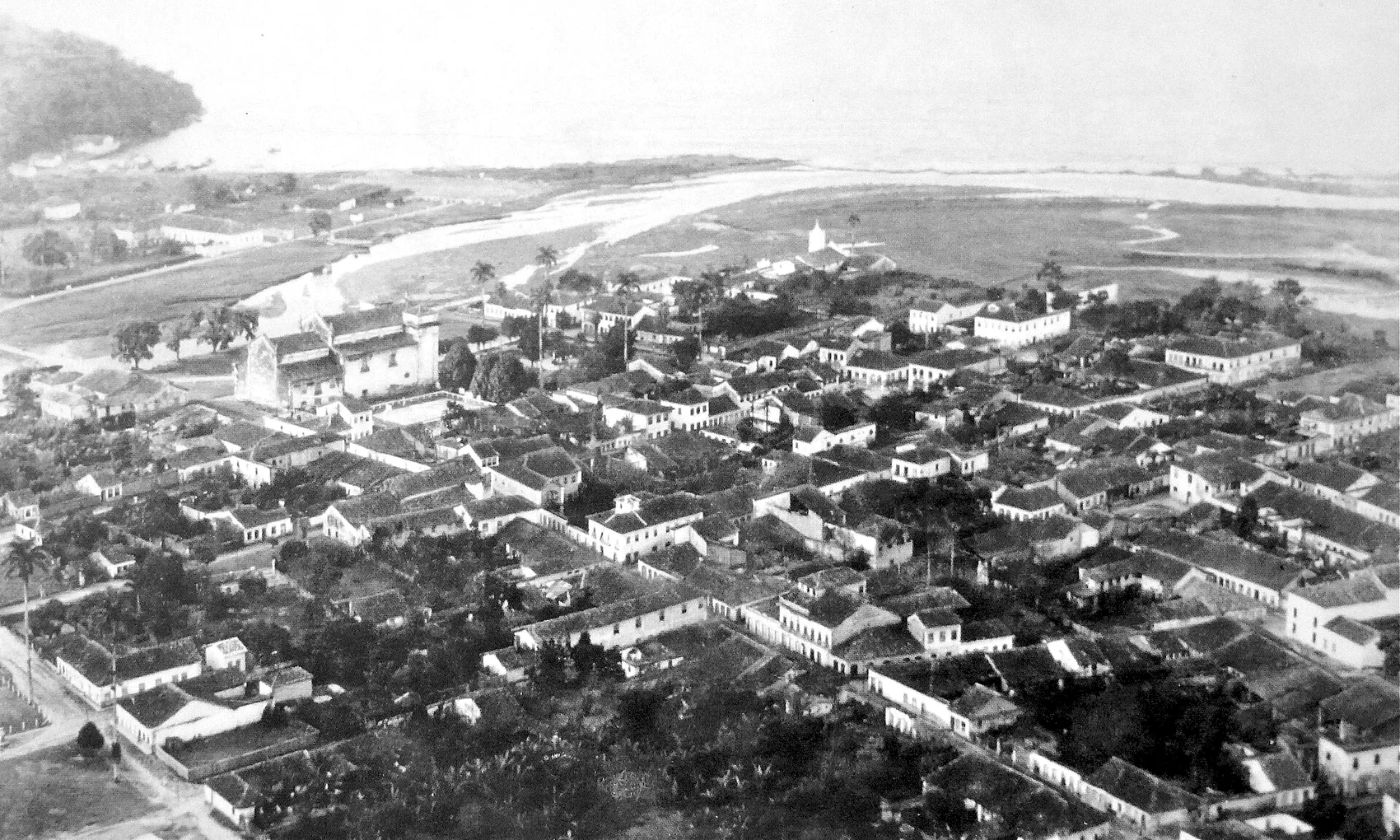
It helps to know where this fits in the bigger picture. When prospectors found gold in the mountains of Minas Gerais in the 1690s — eventually some of the richest strikes the world had ever seen — the crown had a problem it had never faced before: how to get an empire's worth of gold from the deep interior to ships bound for Lisbon, and how to tax every ounce on the way. The answer was to designate official roads, forbid all others, and build customs posts where the gold was weighed and the royal fifth was taken. Paraty's road was one of the earliest of these arteries, because Paraty had the one thing the mines needed most and could not make: a sheltered, navigable harbour on the right side of the mountains.
For roughly the first half of the 1700s, then, this quiet stretch of forest was one of the busiest overland routes in the Portuguese world. If you want the full arc of how the gold made and then unmade the town, we tell it in the dedicated history of Paraty guide. Here we are staying on the road itself.
The gold story underfoot
Walk the stones with a good guide and the abstraction of "a colonial gold road" turns into something specific and physical. This is the part that stays with people. The road was not a metaphor. It was a machine for moving weight up and down a mountain, and every feature of it was a solution to a practical problem.
Look at the surface and you will see it is not flat but slightly domed, higher in the centre than at the edges. That is deliberate — it sheds water to the sides so the road does not turn to a river in the rain, which here it otherwise would. Look along the edges and in places you will find the drainage channels, the stone gutters cut to carry that water away. Look at the individual stones and you can see they were shaped and fitted, not just piled; the mule trains needed a surface that would not shift under a laden animal. When archaeologists cleared and studied sections of the trail, they turned up the original paving intact beneath the leaf litter, along with the small hard evidence of the traffic — worn horseshoes, iron fittings, the debris of centuries of mules. It is genuinely well-built engineering, and part of the quiet pleasure of the walk is realising how much thought went into a road most of its users could not read a word about.
What moved on it is worth being plain about. Downhill, toward the harbour, came the gold and later the diamonds — the reason the whole apparatus existed. Uphill, toward the mines, went everything the mining camps needed and could not produce for themselves: salt, tools, dried and salted food, cloth, manufactured goods off the ships in the bay. And uphill also went people. The mule trains that carried imports inland carried enslaved Africans to the mines, and the same paved road that made Paraty's merchants wealthy was a road of forced movement and forced labour.
Who built the road
The stones you walk on were laid by enslaved people. That is not a footnote; it is the fact the whole road rests on. The paving, the drainage, the sheer physical labour of building a stone road up the face of a mountain in the tropics — all of it was done with enslaved African labour, the same forced labour that dug the gold at the far end of the line. A guide who is doing their job will say so plainly, and it changes the walk. The road is beautiful. The forest around it is beautiful. And it is also a monument to something that was not beautiful at all, and holding both of those in your head at once is, honestly, part of what makes the Caminho do Ouro more than a nice walk in the woods.
The stones are beautiful, the forest is beautiful, and the road was built by enslaved hands to carry a fortune it would never share. You walk it holding all of that at once.
We say this not to lecture but because guests consistently tell us the history is what made the hike land. If you skip it — if you treat the road as scenery — you have walked a pretty forest path and missed the reason it is there. The point of the Gold Trail is that it is one of the few places in this whole beautiful region where the colonial economy is not tucked behind a museum glass but literally under your feet, exactly where it was.
Where the trail starts and the visitor centre
The walked section of the Caminho do Ouro is reached from the Penha neighbourhood, up the Paraty-Cunha road — the mountain road that climbs inland toward the town of Cunha and the state of São Paulo beyond. The entrance is near the Penha church, roughly a fifteen to twenty minute drive up from Paraty's historic centre. It is genuinely close. You are not committing to an expedition; you are driving a short way up a hill and stepping into the forest.
That same stretch of road is the hub for the whole cluster of mountain attractions, which is why it works so well as a half-day. Along it you will find a tourism reference point and a small museum dedicated to the Gold Trail and the wider Estrada Real, set up to orient visitors and tell the story with objects and panels. The area is also the gateway to the well-known waterfalls — the Cachoeira do Tobogã, with its natural rock slide, and the Poço do Tarzan — and to several of the region's working cachaça distilleries. In other words, everything you would want for a land day is strung along one road, which is a gift when you are travelling with people of mixed appetite for exertion.
One practical note on getting there: the Paraty-Cunha road is paved but steep and winding, with a few sharp bends. A normal car is fine in dry weather. After heavy rain, take it slowly. If you would rather not drive it yourself, a guided tour that includes transport is the easy answer, and it is how most guests do it.
Why you go with a guide
Here is the thing to plan around: you do not simply turn up and walk the main paved section alone. The best-preserved stretch runs through private land, the entrance is controlled, and visits are made with an authorised local guide. So this is not a trail you casually add to a free morning; it is a small booked activity. Arrange it the day before through your pousada, a local operator or your host, rather than assuming you can wander up and let yourself in.
Once you get over the mild inconvenience, the guide requirement is a feature, not a bug. Left alone, the stones look like stones. You would walk up, think "nice old road," and walk back down having missed almost everything. A guide shows you the drainage, the toolmarks, the way the road reads the mountain; tells you what came up and what went down; points out the medicinal and useful plants the forest is full of; and knows which pools are safe to swim. On a road whose entire value is meaning rather than distance, the person interpreting it is most of the experience. We would rather send a guest up with a good guide for two hours than let them wander a longer trail alone for a whole day.
The forest you walk through
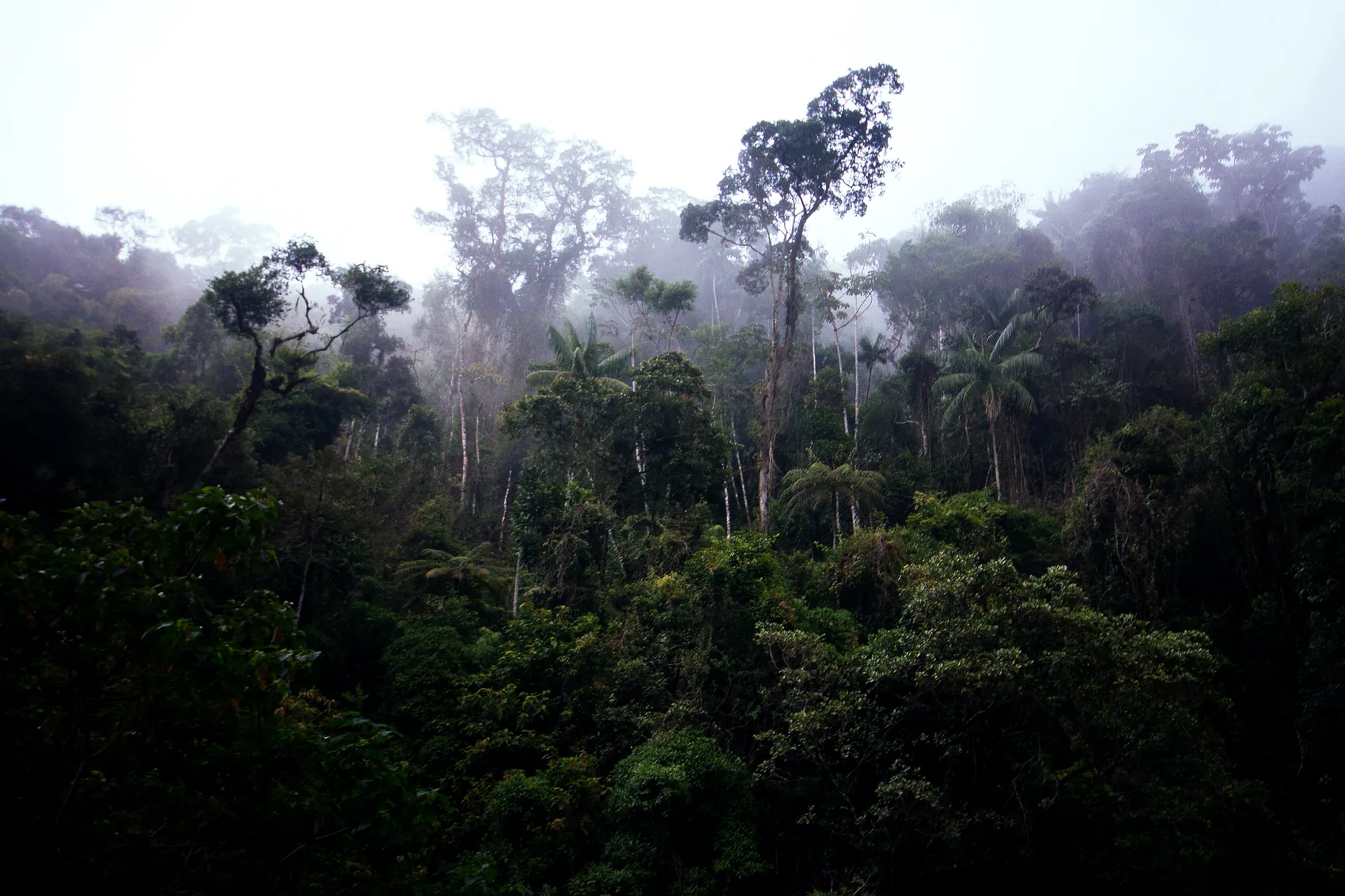
The Caminho do Ouro does not run through ordinary woods. It climbs through the Mata Atlântica, the Atlantic Forest, which once ran in an unbroken band down almost the entire Brazilian coast and has since been reduced to a fraction of its former reach. What is left is among the most biodiverse forest on the planet and one of the most threatened, and the mountains behind Paraty hold some of the best-preserved surviving stands of it, protected within the Serra da Bocaina national park and its buffer.
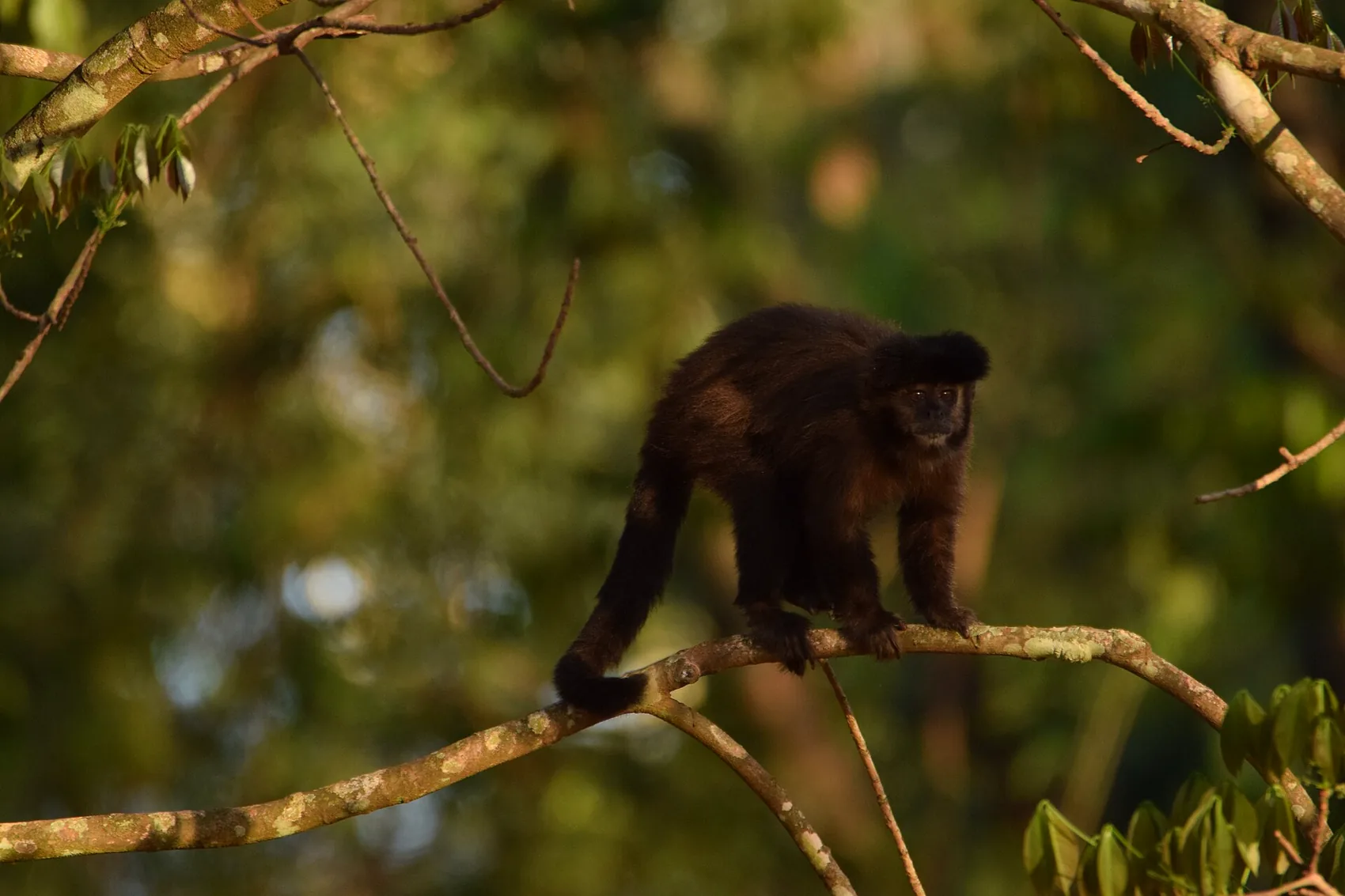
Practically, that means the walk is a wildlife walk as much as a history walk. You are very likely to hear far more than you see — the forest here is loud with insects and birds — but patient, quiet groups regularly spot small primates moving through the canopy, brilliantly coloured tanagers, and, if you are lucky and still, the flash of a toucan. The understory is thick with bromeliads and ferns and the tangle of a wet tropical slope. A guide who knows the plants will show you which ones the colonial travellers used, which is a neat way of collapsing the natural and human history into a single glance.
Do not expect a zoo. Rainforest wildlife is shy and the animals owe you nothing. But the sheer aliveness of the place is unmistakable, and it is a large part of why the walk stays with people. If the forest itself is what draws you more than the road, our wider guide to hiking around Paraty lays out the other trails — the roadless beaches, the sugarloaf climb — that go deeper into it.
Reading the living road
One of the pleasures of the guided version is that the road and the forest are read together. The same guide who explains the drainage channel will, a few steps later, point out a palm the caiçara communities still use, or a tree whose bark was a colonial fever remedy, or the leaf-cutter ants running their own highways across the human one. This is a landscape where people and forest have been entangled for centuries, and the Gold Trail is the seam where that entanglement is most visible. You are not walking through untouched wilderness and you are not walking through a ruin. You are walking through a working relationship between a forest and the people who have used it, which is a more interesting thing than either.
How hard is it, honestly
Let us be straight about the difficulty, because the online listings are all over the place and the range of what "the Gold Trail" means does not help. Some operators quote figures for the short restored section you walk in and back; others quote much longer distances that describe the historic road as a whole or a full crossing toward Cunha. For the standard guided visit that almost every traveller does, the reality is this: it is short and it is steep.
The walked section is on the order of a couple of kilometres there and back, and it climbs the whole way up. The effort is not in the distance; it is in the gradient and the surface. The paving is steep in places, uneven, and — this is the one that catches people — genuinely slippery when wet, which in a rainforest is often. Mossy stone on a slope is a banana skin. Nobody is going to lose their breath from the length of it, but you will be watching your feet, and coming back down is arguably harder on the knees than going up.
Call it moderate. A reasonably mobile adult will find it very manageable. Fit, sensible children do it happily and love the waterfalls at the end — we cover the wider question of Paraty with kids separately, but the Gold Trail is a good family outing if you keep an eye on little ones on the wet stone. Where you should think twice is if steep, uneven, slick descents are genuinely a problem for your knees or balance. If that is you, tell your guide at the start; the lower stretch is gentler and there is no shame in turning around at a viewpoint rather than pushing to the top.
The single most useful thing you can do for the Gold Trail is wear the right shoes. Closed shoes with real grip — trainers or light hiking shoes — turn a slippery scramble into an easy walk. Flip-flops and smooth-soled sandals turn it into a genuine hazard on the wet paving. If you pack for one activity in Paraty with proper shoes, make it this one. Our full what to pack for Paraty guide has the rest.
How long to allow
Allow a morning. The walk itself might be an hour or two with stops for the history, but the standard outing folds in a waterfall and often a distillery, so a comfortable half-day is three to four hours door to door, more if you swim and linger. Go in the morning for two reasons: the light is better in the forest, and the afternoon storms that build over these mountains in summer are both a soaking and a slipping hazard on the stones. An early start also gives you the best of the wildlife and the quietest trail.
The viewpoints and the waterfalls
The Gold Trail is a forest walk more than a panorama walk — for most of it, the trees are close and green and the views are of the road and the canopy rather than the coast. But there are openings, and on the clearer stretches and from the higher points you get glimpses out over the forested slopes falling away toward the bay, with Paraty a small white smudge far below and the islands beyond it. On a clear morning it is a lovely reminder of how high and how quickly the old road climbed away from the sea.
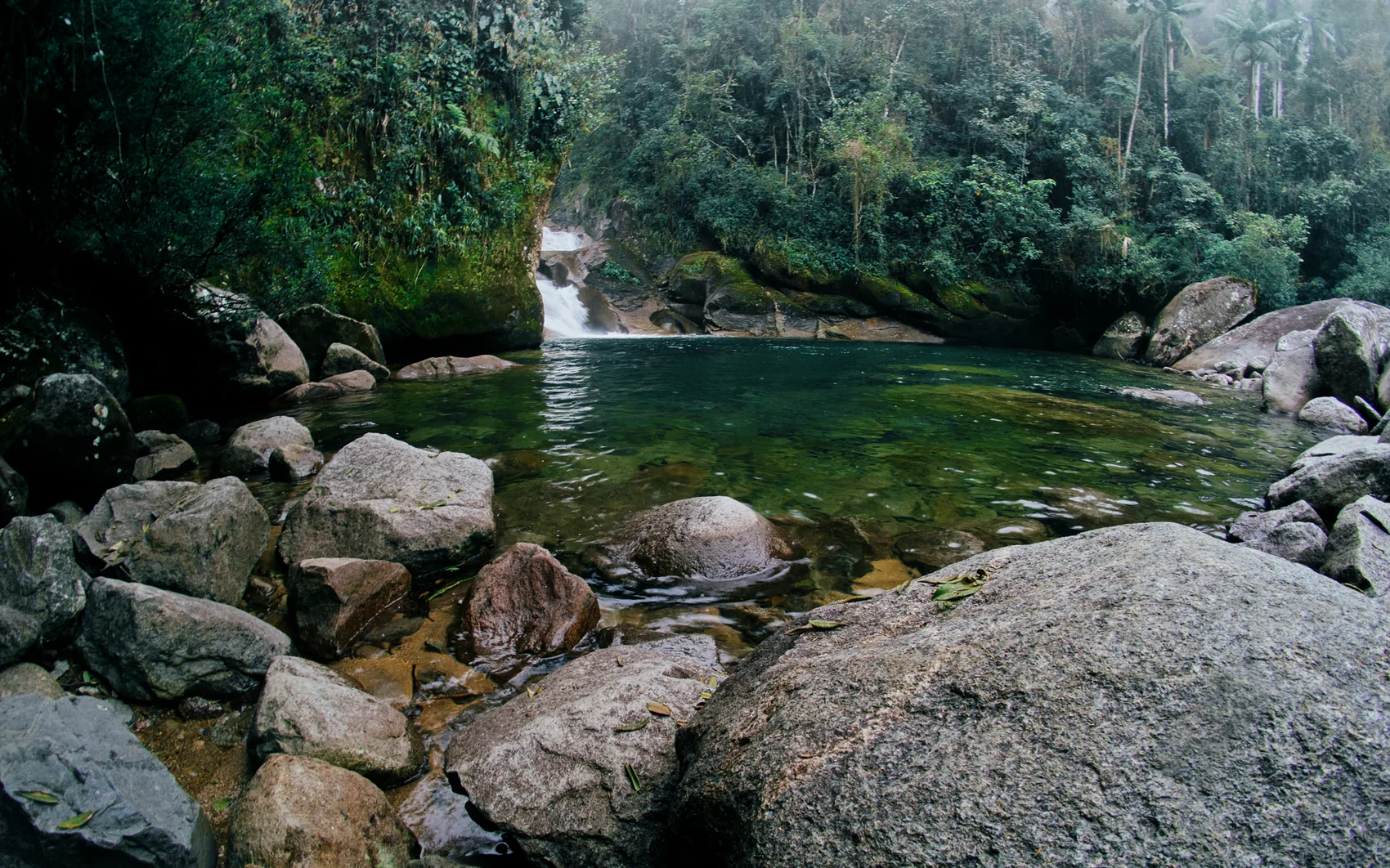
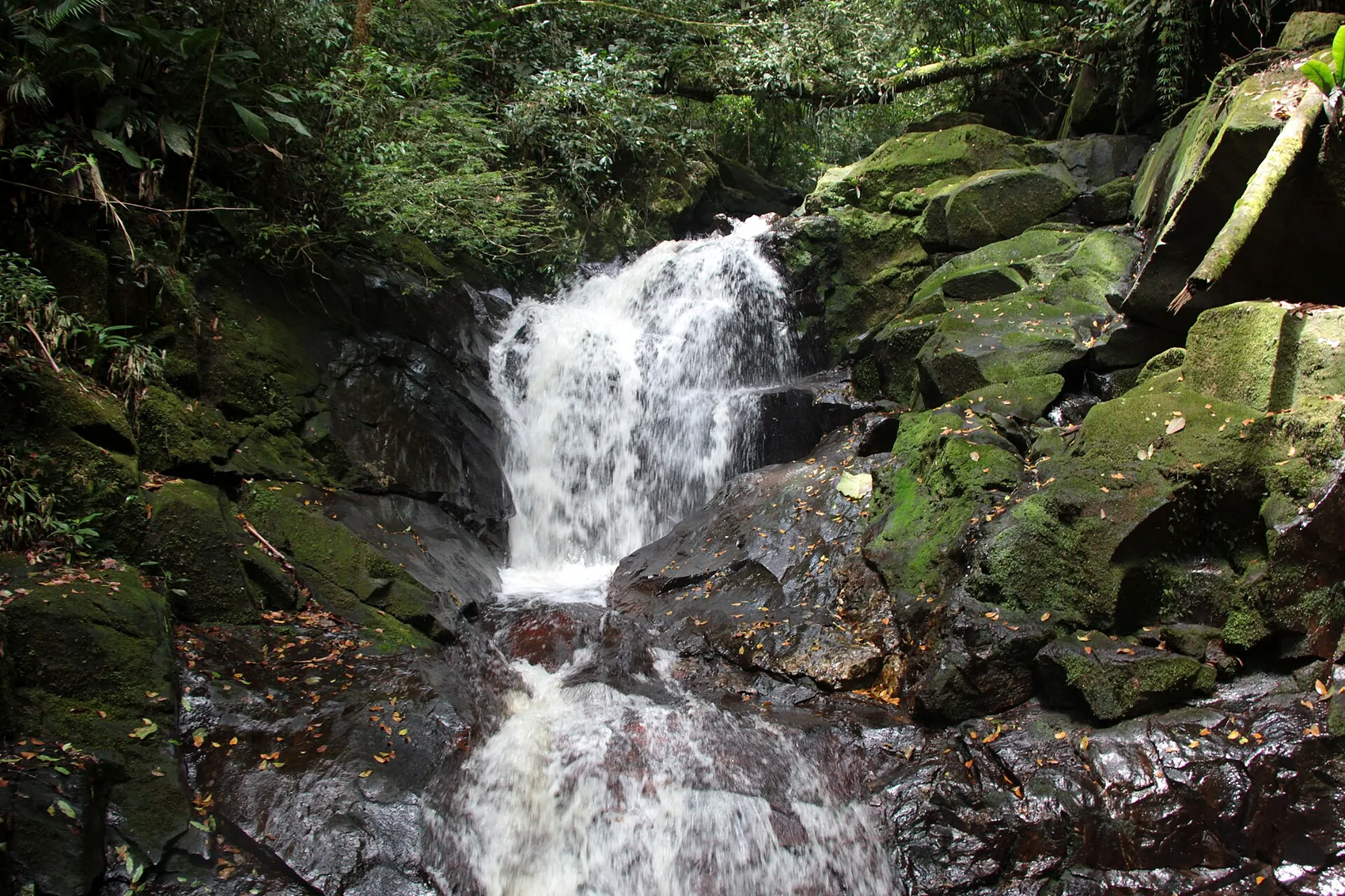
The real reward at the top end of a Gold Trail morning, though, is water. The same mountain that carried the road is laced with streams, and the Penha area is famous for its waterfalls. The best known is the Cachoeira do Tobogã, a smooth sheet of rock down which the stream runs like a natural slide — locals ride it standing up, which is not something we recommend attempting on a first visit — with a pool at the bottom for a cold, clean swim. Nearby is the Poço do Tarzan, a deeper pool with, as the name promises, a rope swing. After the climb, a swim in a forest pool is exactly the right way to close the morning. We keep a proper accounting of the region's cascades in the waterfalls around Paraty guide, but if you only do one, the Tobogã run at the end of the Gold Trail is the obvious pick.
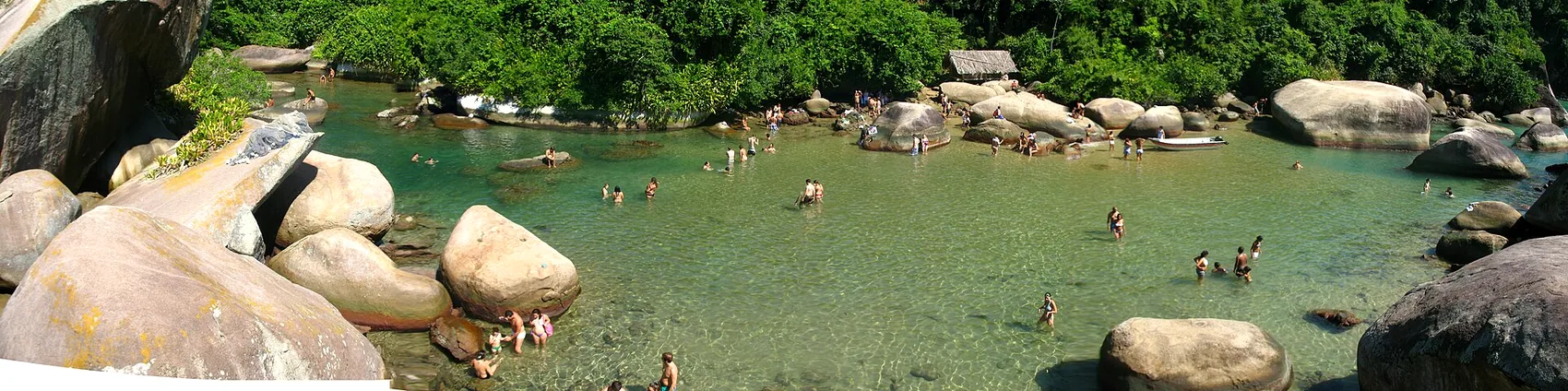
A word of caution on the waterfalls, because they deserve it. Mountain streams rise fast and hard after rain, and the smooth rock that makes the Tobogã fun is lethally slippery. Watch the water level, follow your guide's lead on where it is safe to be, and treat the natural slide with a great deal more respect than the confident local teenagers appear to. The pools are one of the joys of the region; they are also where the region's rare accidents happen. Sensible caution costs you nothing.
Building the day around the trail
The Gold Trail on its own is a couple of hours. The reason it earns a place on almost every guest's itinerary is that it anchors one of the best land days in Paraty, because everything you would want is on the same road. Here is the shape of the day we most often suggest.
Morning: the trail and the falls
Start early, up the Paraty-Cunha road to Penha. Walk the Caminho do Ouro with your guide — the stones, the drainage, the gold story, the forest — then come back down and cool off at the Tobogã waterfall. That is the historical and physical core of the day, done in the cool of the morning before the heat and the storms arrive. If you have driven yourself, the parking near the church and the falls is straightforward; if you are on a guided tour, transport is handled and you can enjoy the winding road instead of negotiating it.
Midday: a still on the way down
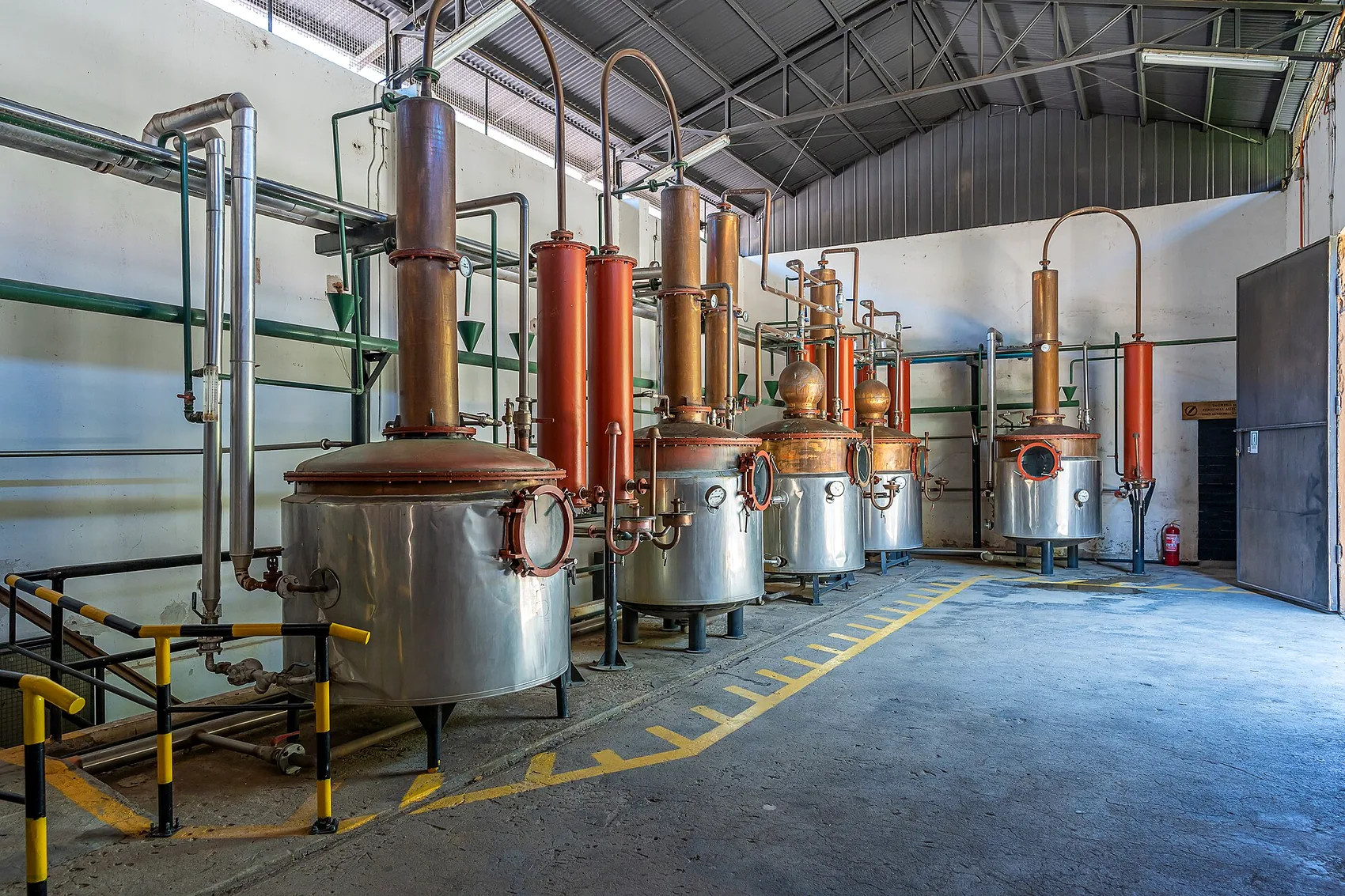
The valleys around this road have been distilling cachaça since the colonial days, and several working cachaça distilleries welcome visitors for a tour and a tasting. Slotting one in on the way back down from the trail is close to perfect: you have earned it, it is on the route, and there is a neat historical rhyme in ending a morning about the gold economy with the sugarcane spirit that kept the town alive after the gold left. Taste, buy a bottle of something aged that you cannot get at home, and let whoever is not driving enjoy it properly.
Afternoon: town, or the pool
By early afternoon you are back down at sea level with the day's exertion behind you, and you have a choice. You can carry the history into town and walk the colonial architecture and churches of the centre — the same gold money you just walked above built those whitewashed houses, so the two halves of the day talk to each other nicely. Or you can do what a fair number of our guests do, which is drive the short way back up to the chalet, change into swimwear, and spend the hot part of the afternoon in the infinity pool watching the light move across the bay. There is a particular satisfaction in swimming above the same coast you were photographing from a forest viewpoint that morning. That is the rhythm the place is built for: out for the mornings, home for the heat.
When to walk it
The Gold Trail is a year-round walk, but the season shapes it. The wetter, hotter months — roughly December through March — bring the forest to its most lush and the waterfalls to their fullest, which is glorious, but they also bring the afternoon downpours that make the stones treacherous and the streams dangerous. In that season, go early and be flexible. The drier, cooler months from around May to September give you firmer footing, clearer air, better long views on the open stretches, and a much lower chance of being rained off the mountain, at the cost of slightly thinner waterfalls. For a walk that is fundamentally about steep wet stone, the drier season has a real edge.
Either way, mornings beat afternoons on this particular trail more than almost any other outing in the region, precisely because of the storm-and-slip factor. We go deeper into the seasonal trade-offs across the whole region in the best time to visit Paraty guide, and if you are still shaping the trip, how many days in Paraty will help you decide whether this is a half-day among many or the anchor of a shorter stay.
Where the Gold Trail fits in a Paraty trip
If you are building an itinerary, the Gold Trail is a classic "land morning" that balances beautifully against Paraty's water days. A trip here tends to fall into two rhythms — days on the bay by boat, and days on the land — and the sea can dominate if you let it. A morning on the Caminho do Ouro is the perfect counterweight to a lazy day of island hopping and swimming stops, and it gives your legs and your sense of the place something the boat cannot.
On a short stay, it slots naturally into a three-day Paraty itinerary as the historical-and-forest half of one day, most often paired with the waterfalls and a distillery as described above. On a longer, more expansive trip, it earns a whole relaxed morning of its own within a seven-day Costa Verde itinerary, with time to linger at the pools and the still. For couples putting together a luxury long weekend, it is the one bit of gentle exertion that makes the cachaça and the long lunch afterwards feel earned. And it happens to be one of the better rainy-day options in reverse — a light drizzle in the forest is atmospheric and the museum gives you cover — though heavy rain is a reason to postpone rather than push on, for footing's sake.
Who it suits
The honest answer is almost everyone, which is unusual for a hike. History-minded travellers get the richest version — this is one of the few genuinely important colonial sites you experience with your feet rather than through glass. Families with children old enough to manage a steep staircase get a walk plus a waterfall, which is a strong combination. Couples get a quiet forest morning and a distillery. Solo travellers slot easily into a small guided group and get the benefit of a local who actually knows the ground. The only people we steer gently away are those for whom steep, slick descents are a real physical problem — and even then, the lower stretch and the museum give you a version that works.
Practical notes for the walk
A few things worth knowing before you go, gathered in one place.
- Book ahead. Because the main section is guided and access is controlled, arrange the walk a day in advance through your pousada, a local operator, or your host, rather than turning up cold.
- Shoes matter more than anything. Closed shoes with grip. This is the one Paraty activity where footwear genuinely changes your safety, not just your comfort.
- Go in the morning. Better light, cooler air, more wildlife, and you beat the afternoon storms that make the stones dangerous.
- Bring water, repellent and a rain layer. The forest is humid and buggy, and a passing shower is normal even in the drier months.
- Pack swimwear. The waterfall at the end is the reward. You will want to get in.
- Do not count on phone signal. It fades fast in the forest. Tell someone your plan, which with a booked guide is handled anyway.
- Take your rubbish out. The whole area sits inside protected forest. Leave the road as clean as it has stayed for three hundred years.
- Mind the money. A licensed guide charges a fair local rate; the falls and the distillery may have small fees. Carry a little cash, as card acceptance up the mountain is patchy.
Coming back to the chalet
There is a reason we like sending guests up the mountain in the morning and having them back by lunch. The Gold Trail is a walk about a road that climbed away from the sea, and there is a real pleasure in ending the day by coming back to a place that sits above the same coast the whole story is about. The chalet is a short drive up from town, high enough to catch the breeze and the triple view over the Bay of Paraty, Angra dos Reis and Ilha Grande, and after a morning on hot wet stone the infinity pool is precisely the thing you find yourself thinking about on the drive down.
That is the shape of a good Paraty day, and it is the one the house is built around: out early for the history and the forest, home for the swim and the long, slow afternoon. You do the hard, meaningful part while the day is cool, and you spend the heat of it looking at the same bay from above with a caipirinha and nothing to do. If you want help arranging a guide for the Caminho do Ouro, or building a couple of land mornings into a week on the coast, get in touch — it is the kind of thing we set up for guests all the time, and the trail is close enough that it never eats a whole day.
For everything else there is to do on the land and the water around the house, the full explore collection and our ultimate guide to Paraty lay it all out. But if you take one land morning while you are here, take this one. Three hundred years of history under your boots, a cold pool at the top, a good spirit on the way down, and your own pool waiting when you get home. That is hard to beat.
Come stay above the bay
Chalé Bel Air sits on the ridge that looks over everything in this guide. Tell us your dates and what kind of trip you are after — we answer personally.
Ask about your datesFrequently asked questions
What is the Caminho do Ouro in Paraty?
It's the surviving colonial Gold Trail, a stone-paved mule road that once carried the gold of Minas Gerais down over the mountains to Paraty's harbour. The best-preserved section runs through the forest above town, off the Paraty-Cunha road, and you walk it as a guided history hike rather than a long trek.
How long and how hard is the Gold Trail hike?
The walked section is short — roughly a couple of kilometres of restored paving in and back — but it climbs, and the stones are steep, uneven and slick when wet. Call it moderate: more history than endurance, but not a flat stroll. Most guided visits run two to four hours including the waterfalls, and reasonably fit children manage it fine.
Do you need a guide to hike the Caminho do Ouro?
Yes, in practice. The main paved section passes through private land and the entrance is controlled, so visits go with an authorised local guide. That's no hardship — the stones look like stones until someone shows you the drainage channels, the toolmarks and the gold story underfoot, which is the whole point of coming.
Where does the Gold Trail start and where is the visitor centre?
Access is from the Penha neighbourhood on the Paraty-Cunha road, by the Penha church, about a fifteen to twenty minute drive up from the historic centre. There's a tourism reference point and small museum on the same stretch of road, alongside the well-known Tobogã and Tarzan waterfalls, so most people fold the trail, the falls and a distillery into one morning.
Is the Caminho do Ouro worth it if I am not a serious hiker?
It is, precisely because it isn't a serious hike. You come for what the road means, not the distance. If you can manage a steep, uneven staircase for twenty minutes you'll be fine, and a good guide makes the history land. If steep wet stone is genuinely a problem for your knees, tell your guide and keep to the lower stretch.
What should I bring to hike the Gold Trail?
Closed shoes with real grip — the mossy paving is slippery and flip-flops are a bad idea — plus water, insect repellent, a light rain layer and swimwear if you want the waterfall pool afterwards. Go in the morning before the afternoon storms build, and don't count on phone signal in the forest.
Can you combine the Gold Trail with the waterfalls and cachaça distilleries?
Yes, and you should — they sit on the same Paraty-Cunha road. The usual half-day is the trail, then the Tobogã waterfall, then a cachaça distillery tasting on the way back down. It's one of the best land days in Paraty and pairs naturally with a lazy afternoon back at the pool.