Angra dos Reis is the working gateway to the Bay of Ilha Grande and its 365 islands, and from a hillside base above Paraty it makes one of the best day trips on the whole Costa Verde.
Most people meet Angra dos Reis without quite meaning to. You are heading for Ilha Grande, or for the Blue Lagoon, or for a schooner day out among the islands, and the maps and the ticket sites all keep naming this one place on the mainland. Angra is the door. It is the working port town at the head of the great bay that shares its name, and almost everything worth doing on this stretch of coast passes through it at some point. Understanding how that door works, and when to walk through it, is most of the battle.
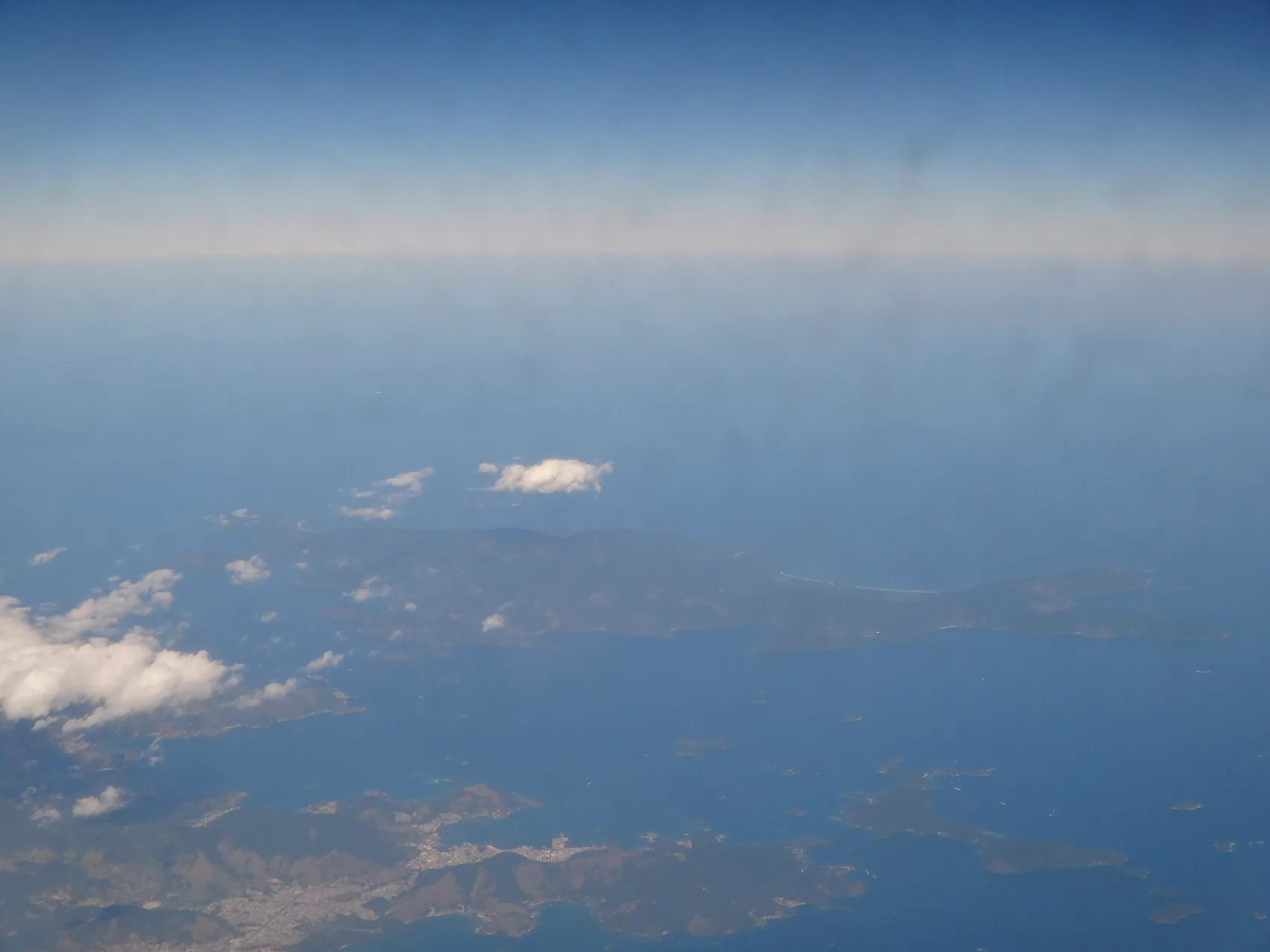
The number that gets quoted is 365, one island for every day of the year, scattered across the Baia da Ilha Grande. Nobody sits in a boat and counts them, and the true figure depends on how generous you are about what counts as an island versus a rock with a tree on it. What matters is the feel of the place: a wide, sheltered bay of deep green water, forested hills falling straight into the sea, and a horizon broken up by island after island after island. It is one of the most beautiful pieces of coastline in Brazil, and Angra dos Reis is the town you launch from.
This guide is written from a little further down the coast, from a hillside above Paraty, because that is where we sit and that is the base we know. The honest version is that Angra makes a very good day out and a slightly underwhelming place to sleep, and once you understand why, the whole region gets easier to plan. So this is the practical, unhurried take: what Angra actually is, how to reach it, how the boats and ferries work, what the islands hold, and how it all fits with a calm base up the road.
What Angra dos Reis actually is
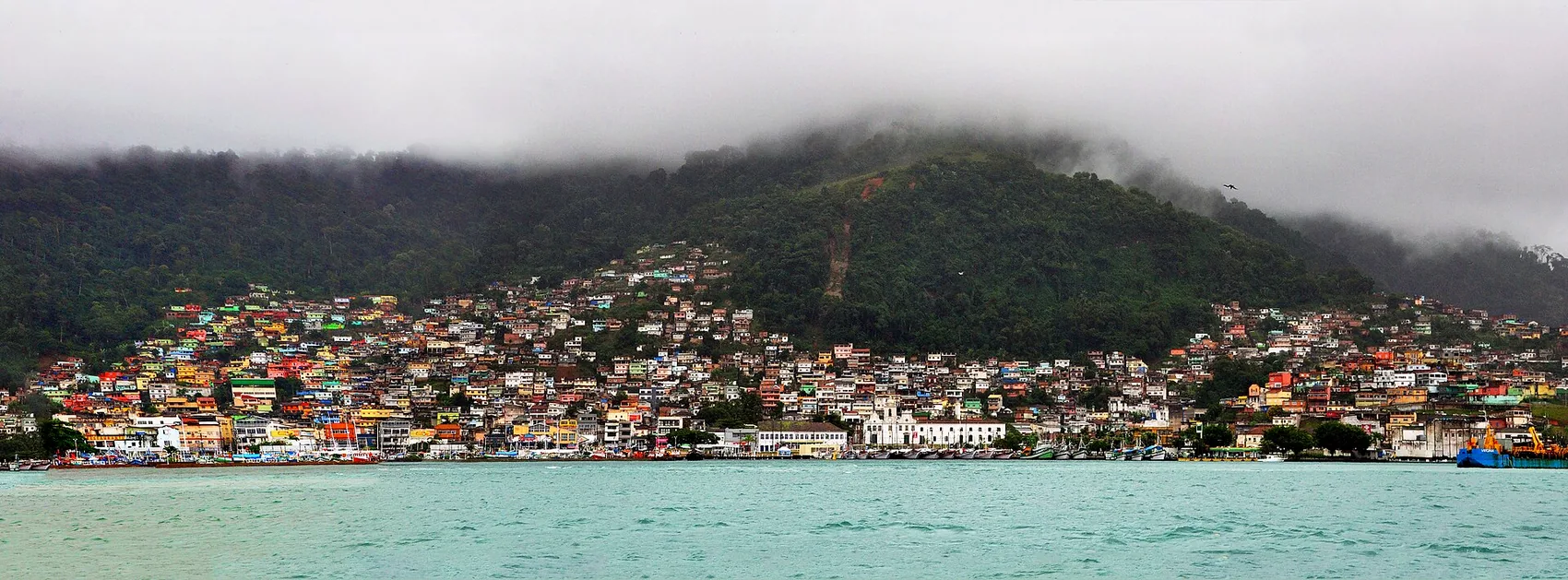
Angra dos Reis is a municipality on the Costa Verde, the green coast of Rio de Janeiro state, roughly halfway between the cities of Rio de Janeiro and the Sao Paulo border. It occupies the northern shore of a large, island-studded bay and includes a spread of the islands themselves, Ilha Grande the biggest among them. The name translates roughly as the bay, or inlet, of the kings, and we will come to why in a moment.
The town centre is a mix of everything the region has been over five centuries: an old colonial core with a few genuinely fine churches, a busy commercial harbour, a naval presence, ferry docks, fishing boats, and the sprawl of a real Brazilian working city around the edges. It is not a preserved museum town in the way Paraty is. People live and work here, ships load and unload, and the tourism sits alongside all of that rather than defining it. That is worth knowing before you arrive, because visitors who expect cobblestones and boutiques can be briefly disappointed. Angra earns its keep as a launch point, not a postcard.
The geography is the point. The bay is deep, protected by Ilha Grande and the mainland mountains from the open Atlantic, and it is dotted with those famous islands and hundreds of beaches. Behind the town the Serra do Mar rises fast and green. In front of it, the water is calm enough that boats of every size, from tiny fishing canoes to big schooners, thread out among the islands all day long. If you have read our wider guide to Paraty and the Costa Verde, this is the northern half of the same magnificent bay system.
A bay named for kings: a short history
The story usually told is that a Portuguese expedition, commanded by Goncalo Coelho, entered the bay on the sixth of January in 1502. That date is the Christian feast of the Epiphany, the day of the Three Kings, and so the sheltered water was christened Angra dos Reis, the bay of the kings. Whether the details are exact or polished by centuries of retelling, the name stuck, and it is a good deal older than most place names on this coast.
Permanent settlement followed later in the sixteenth century, and the town received formal status in the early 1600s, making it one of the older colonial centres in this part of Brazil. For a long time it was simply a small port serving the local coast. Its bigger moment came in the nineteenth century.
The coffee port
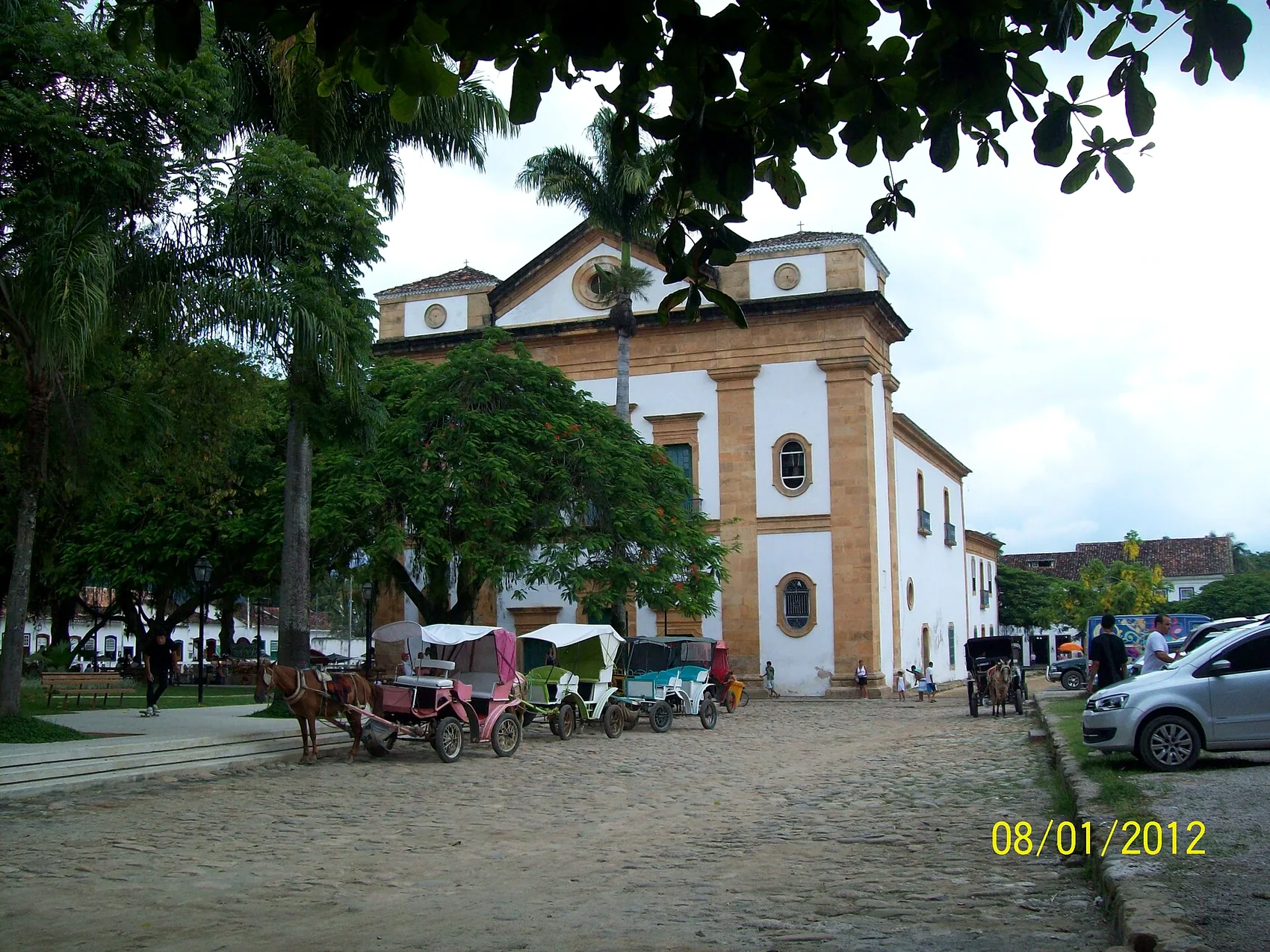
When coffee became Brazil's great export, Angra dos Reis found itself well placed. Beans grown inland in the Paraiba valley came down to the coast, and Angra became one of the ports through which that wealth flowed out to the world. This is the same coffee economy that, a little to the south, had earlier passed through Paraty's own harbour along the old gold road. The colonial churches and the oldest streets of the town date from these prosperous port centuries, and a slow wander through the centre is really a wander through that history.
The nuclear age
Angra has one modern footnote that surprises first-time visitors. Brazil's only nuclear power stations sit within the municipality, on the coast at Itaorna, out of sight of the tourist harbour. The first reactor came online in the mid-1980s and a second around the turn of the century. You will not see them on a schooner tour and they do not affect a beach day in the slightest, but if you notice unusually good coastal roads and infrastructure in one direction, that is why. It is a reminder that Angra is a real economy, not a resort built for visitors.
For the deeper colonial story of this coast, the gold road and the churches, our history of Paraty covers the ground in detail; the two towns share most of it.
How Angra dos Reis pairs with a Paraty base
Here is the heart of it, and the thing we get asked about most. Should you stay in Angra dos Reis, or in Paraty, or split the difference? Our answer, honestly held and honestly argued, is that for most travellers Paraty is the better base and Angra is the better day trip.
Paraty gives you the preserved colonial centre, the better restaurants, the quieter evenings and the sense of a town that has been looked after. Angra gives you the fastest, most frequent boats to the northern islands and to Ilha Grande's near shore. The two are only about ninety minutes apart by road. So the elegant solution is to sleep in the calm and drive to the boats: base yourself around Paraty, and treat Angra as the port you use on the days you want the 365-island bay.
Sleep in the calm and drive to the boats. That, in one line, is how the Costa Verde is best played.
That is exactly how we think about our own place. The chalet sits on the hillside about four hundred metres above Paraty, with an infinity pool and one broad deck that looks out over three bodies of water at once, the Bay of Paraty, Angra dos Reis and Ilha Grande beyond. You wake up looking at the very bay this guide is about. You drive down to the water for the day, do your island run out of Angra or Paraty, and come back up the hill in the evening to a swim and a quiet dinner with the lights of the bay below. The town is the adventure; the hill is the recovery. For how long to give the whole region, our note on how many days you need lays out the maths.
Quick rule of thumb: if your main goal is the Blue Lagoon and the northern islands, leave from Angra. If it is snorkelling and beaches closer to Paraty, leave from Paraty. Either way, one calm base up the coast serves both, and you never have to pack twice.
Getting to Angra dos Reis
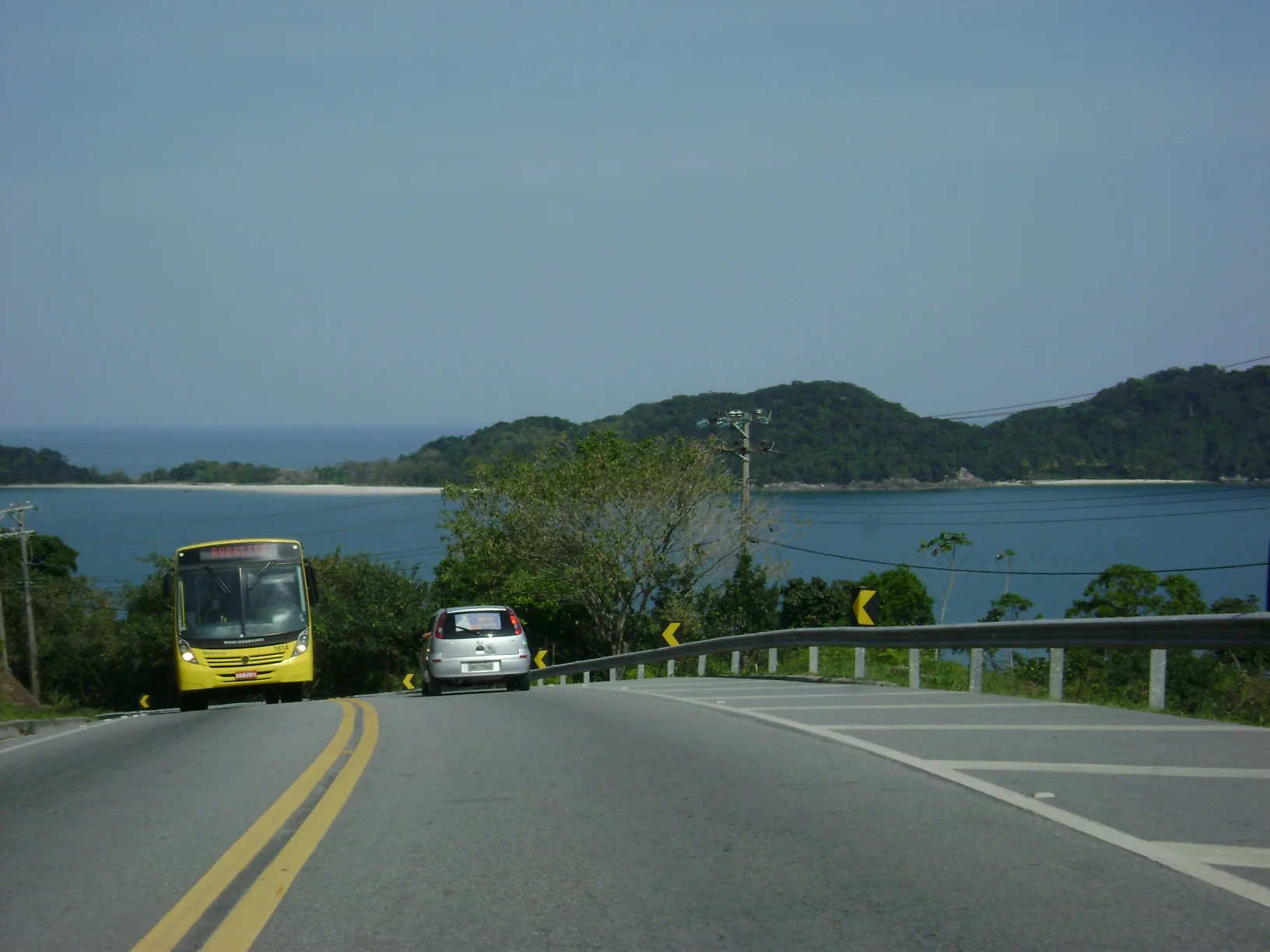
Angra sits on the BR-101, the Rio-Santos coastal highway, one of the most scenic and most winding roads in Brazil. It hugs the coast between mountain and sea the whole way, which makes for a gorgeous drive and a slow one. Do not judge distances here by the kilometre; judge them by the curve.
From Rio de Janeiro
Rio is the natural gateway. Angra is roughly two and a half to three hours west of the city along the coast road, traffic depending. Many people fly into Rio's international airport, spend a night, and drive or take a bus or transfer down the following morning. If you are basing in Paraty, you simply carry on past Angra another ninety minutes or so. The road is beautiful but demands attention: blind curves, trucks, and sudden rain are all part of it. Our getting around guide goes deeper on driving this coast.
From Sao Paulo
From Sao Paulo the approach is from the other direction, down through the coastal mountains and up the Rio-Santos from the southern end. It is a longer haul, commonly five to six hours to reach the Paraty stretch, and Paulistanos often break the journey. The reward is that you arrive from the quieter, greener end of the coast. Many Sao Paulo families treat this whole bay as their long-weekend escape, and they are right to.
From abroad
If you are coming from overseas, plan on landing in Rio or Sao Paulo and travelling overland from there. There is no meaningful direct air route to Angra for regular visitors. Give yourself a buffer day after a long-haul flight rather than driving the coast road jet-lagged; it is not a road to hurry on tired eyes. Once you are settled at a base, the region rewards slowness, and a week is a very comfortable length. Our seven-day Costa Verde itinerary is built for exactly this arrival.
The town itself: what to see on foot
Give the town an hour or two and it repays you. The old centre holds several colonial churches worth the walk, the oldest dating from the seventeenth century, their whitewashed walls and simple lines the same architectural language you see up and down this coast. The Rua do Comercio and the streets around the old harbour are the historic core, and there is a convent on the hill above town with a fine view back over the bay for anyone willing to climb.
The waterfront is where Angra shows its true character: fishing boats and ferries, stalls, the smell of the sea and diesel, families waiting for the crossing, tour touts calling schooner departures. It is not manicured and it is all the more real for it. Buy a coconut, watch the boats, and treat the town as the lively threshold it is rather than a place to linger for its own sake. If you want the preserved-colonial experience in full, that is Paraty's department, and our guide to its colonial architecture and churches is the one to read.
Ferries and boats to Ilha Grande
This is the practical knot most visitors need untangled, so here is the plain version. Ilha Grande has no bridge and no cars. To reach it you cross the water, and there are essentially two speeds of crossing and three main departure points.
The ports
Boats to Ilha Grande leave from the Angra dos Reis waterfront itself, from Conceicao de Jacarei a little to the east, and from Mangaratiba further toward Rio. For most people coming from Paraty, Conceicao de Jacarei is the sweet spot: it is the closest port to the island, so the crossing is shortest and the departures are most frequent, roughly through the daytime hours. The Angra town dock also runs boats and is convenient if you are already in the centre.
Fast boats versus the traditional ferry
The fast boats, often called flex boats or speedboats, make the crossing in roughly fifteen to thirty minutes depending on the port. They run frequently and are what most visitors use. The older, larger passenger ferries are slower, around an hour and a half, and cheaper, and run less often; they are a fine, cheap, breezy option if your timing suits and you are not in a hurry. Buy tickets at the dock or in advance in the high season, when the popular crossings can fill.
Cars stay on the mainland
Because Ilha Grande is car-free, you leave your vehicle in one of the secured parking lots by the departure ports and cross as a foot passenger. This is not a problem, it is a mercy: the island's charm is precisely that there are no roads and no engines. Pack a day bag, or an overnight bag, and leave the rest in the car. For the full run-through of getting between Paraty, Angra and the island, see our dedicated Paraty to Ilha Grande guide.
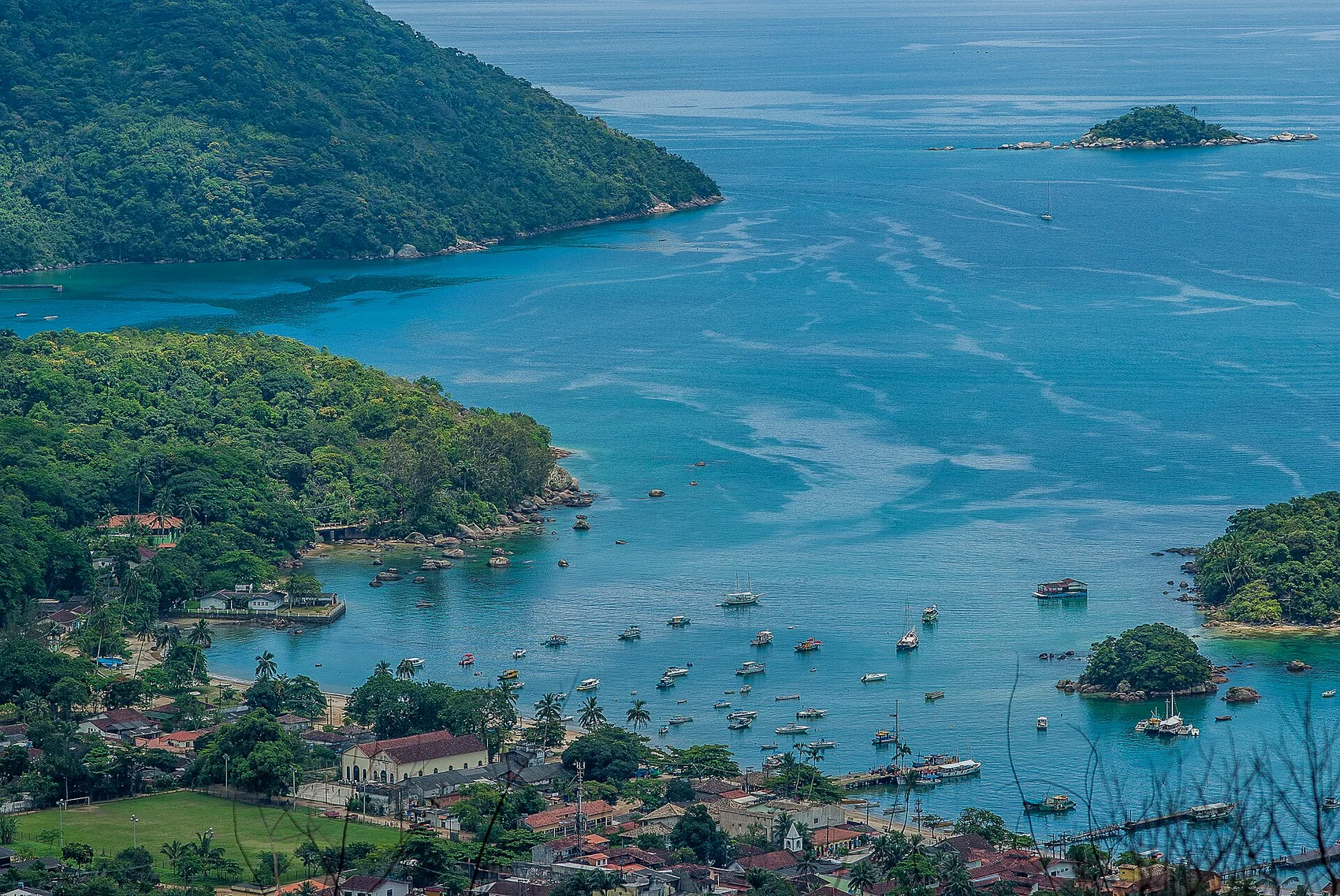
Ilha Grande: the island worth the crossing
If Angra is the door, Ilha Grande is the room you came to see. It is a large, mountainous, densely forested island, once home to a leper colony and later a prison, both long closed, which is part of why so much of it stayed wild. Today it is a national protected area laced with hiking trails, ringed with beaches, and entirely free of cars. Getting around is done on foot, by boat, or by water taxi.
Vila do Abraao
Every crossing lands at Vila do Abraao, the island's main village. Its streets are sand, its pace is slow, and it is the hub for everything: pousadas, simple restaurants, dive shops, boat operators and the trailheads. It is small enough to learn in an afternoon and pleasant enough to make a good base for a night or two. From here you fan out to the beaches and the peaks.
Lopes Mendes
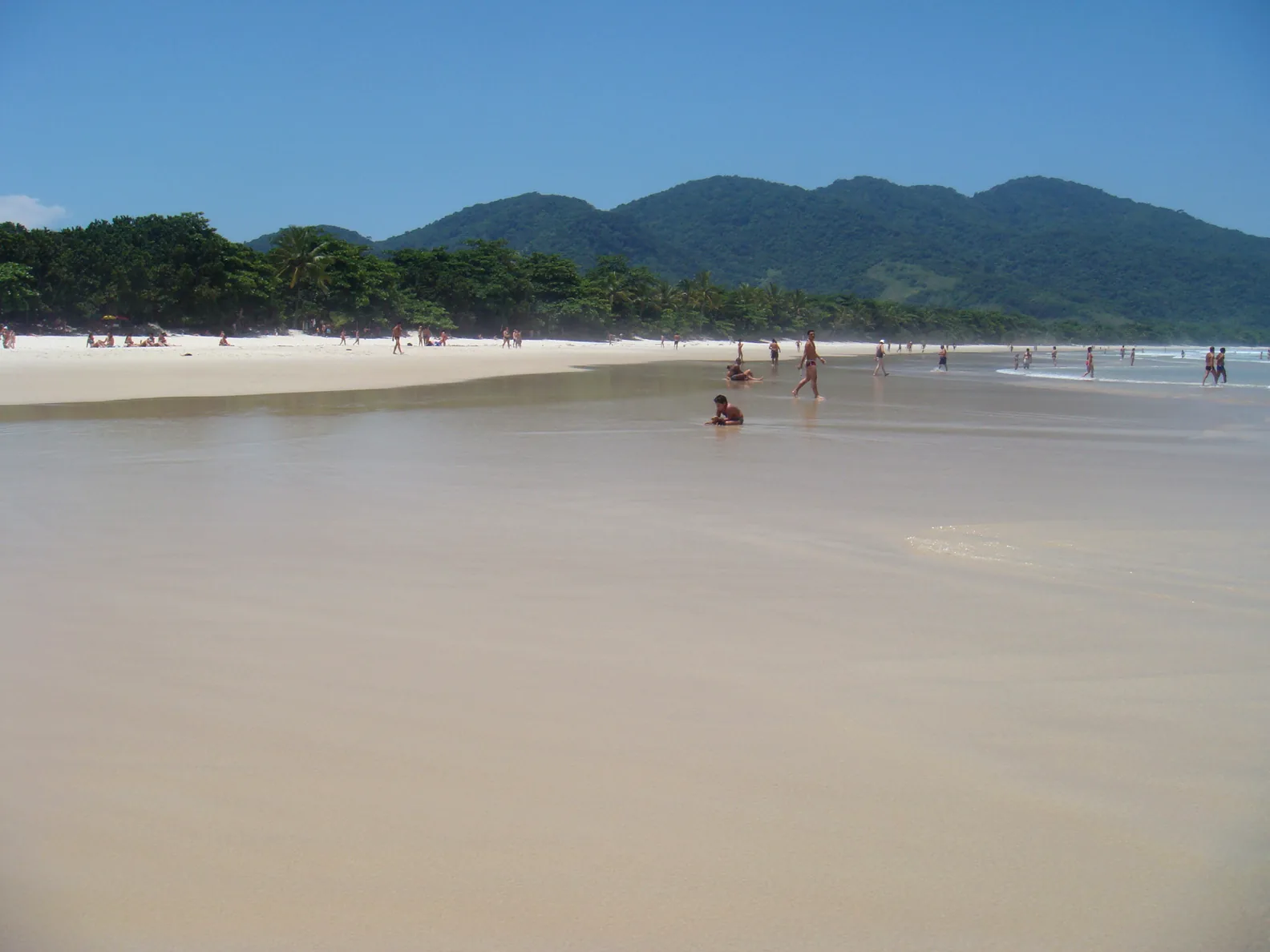
Lopes Mendes is the beach that gets called one of the finest in Brazil, and for once the billing is roughly fair. It is a long, open sweep of pale sand and clean surf on the island's Atlantic side. You earn it: the usual way is a boat to Pouso followed by a short walk over the headland, or a longer hike straight from Abraao through the forest. There are no big developments there, which is the whole point. Bring water and shade.
Aventureiro and the wilder south
Praia do Aventureiro, on the island's remoter southern flank, is the one you have seen in photographs, with a leaning coconut palm bent low over the sand. It sits within a protected area and takes real effort to reach, by long boat or long trail, which keeps the crowds thin. It rewards travellers who want the island at its wildest and are happy with simple facilities.
Pico do Papagaio
For the fit and the early-rising, the hike up Pico do Papagaio, the parrot's peak, is the island's great walk, usually done before dawn to catch sunrise over the whole bay of 365 islands from the summit. It is a serious climb, best done with a local guide, and unforgettable in the right weather. It is not a casual stroll; treat it as a proper hike. Our hiking guide for the region covers preparation and what to carry.
The Blue Lagoon and the schooner circuit
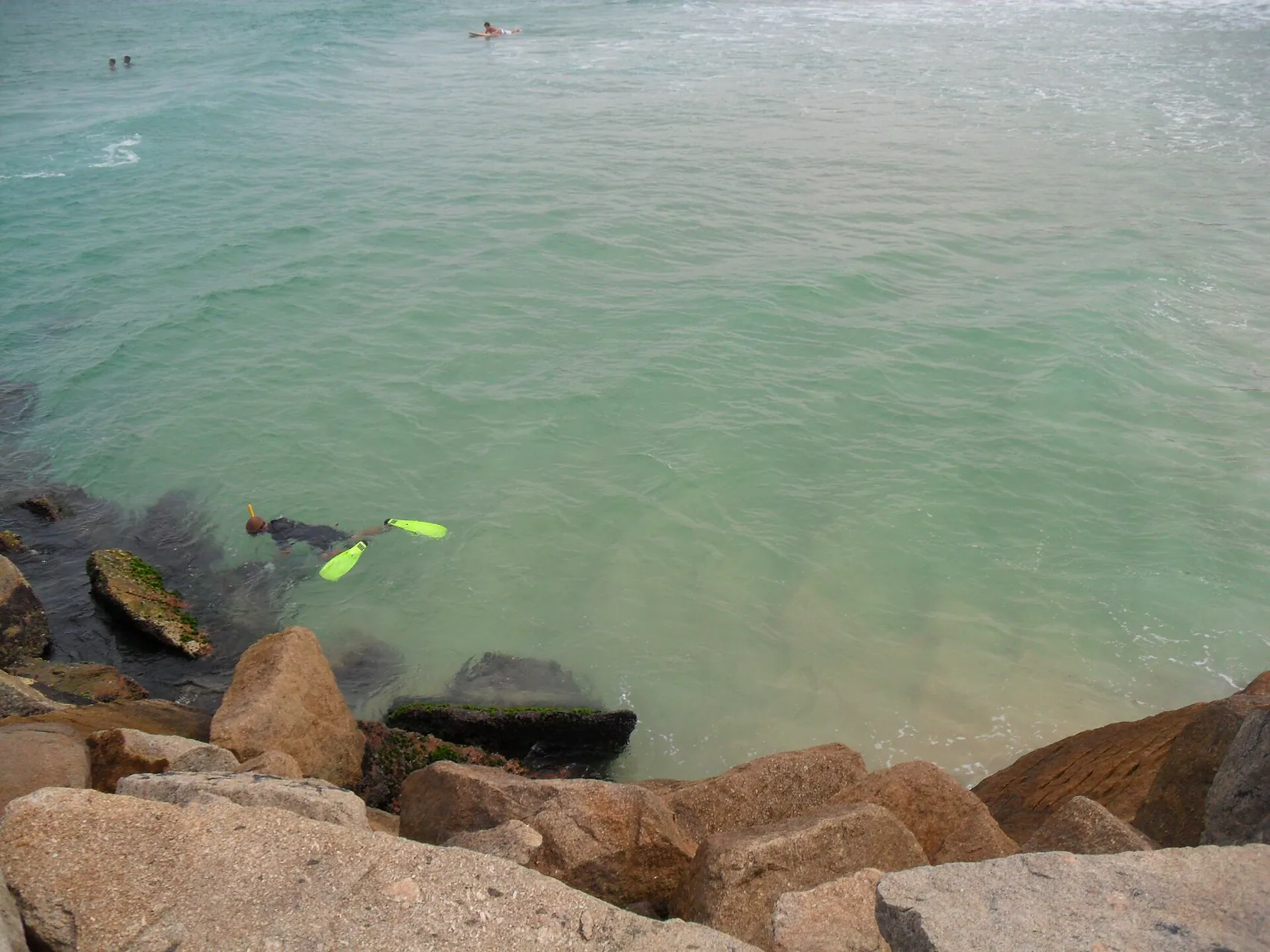
If you do only one thing on the water from Angra, this is it. Lagoa Azul, the Blue Lagoon, is not really a lagoon at all. It is a shallow, sheltered patch of glass-clear sea on the northern side of Ilha Grande, near the Freguesia de Santana peninsula, where the water turns a bright, almost Caribbean blue over the pale bottom. Schooner tours anchor here and hand out masks so people can slip in and snorkel among the fish, which gather thickly because they are used to being fed.
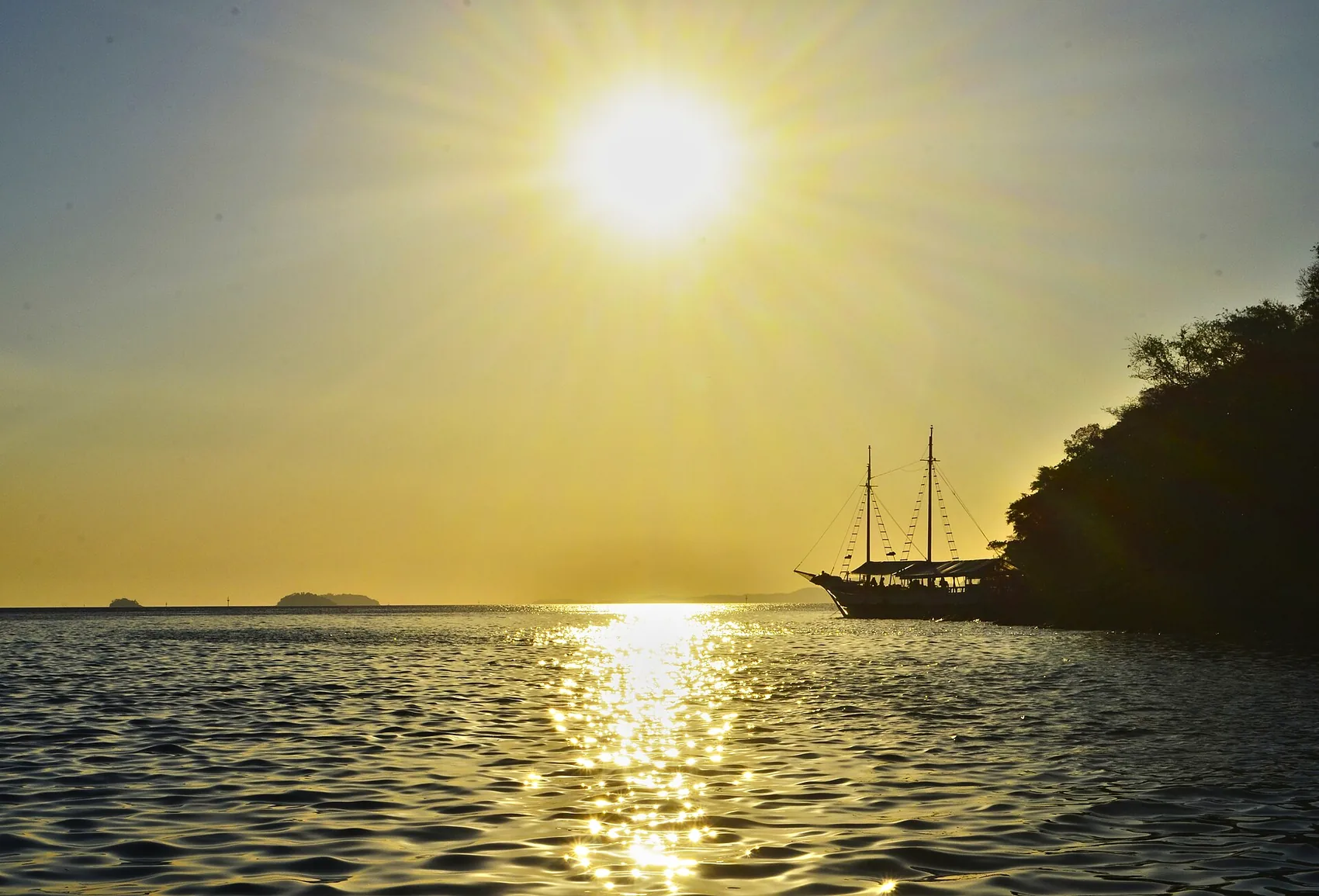
The classic day is a shared schooner, a broad wooden tour boat, that leaves the Angra harbour in the morning and threads a circuit of the northern islands and coves, stopping to swim and snorkel at several. A typical run takes in the Blue Lagoon and a handful of other stops, small islands and calm beaches with names like Cataguases, Japariz and the old settlement at Freguesia de Santana with its nineteenth-century church. Lunch and caipirinhas are usually part of it. It is relaxed, social, good value, and it needs no planning beyond turning up at the dock and choosing a boat.
A word of honesty: the Blue Lagoon is popular, and in high summer the schooners can cluster there together. It is beautiful and it is busy. If you want it quieter, go early in the day, go outside the December-to-February peak, or pay for a smaller private boat that can time its arrivals around the crowds. Our guide to snorkelling and diving on the Costa Verde has the honest ranking of the region's underwater spots.
Day trips by boat around the 365 islands
The Blue Lagoon is the headline, but the bay has more. The 365 islands are not all Ilha Grande; the archipelago includes dozens of small green islands, quiet anchorages, and beaches that only boats can reach. A day out among them, whether on a shared schooner or a private launch, is the truest way to understand the bay of the kings.
The choice comes down to boat and budget. A shared schooner is sociable, cheap and set to a fixed circuit. A private boat, split among a group or a family, buys you the freedom to choose your own coves, linger where you like, and dodge the crowds. Neither is wrong. For a family or a group wanting a slow, self-directed day on the water, the private option is often worth it, and it is how many of our guests choose to spend a bay day. We keep a fuller account on our boat days page.
Whatever you choose, the rhythm is the same and it is a fine one: motor out, cut the engine in a still cove, swim in water so clear you can count the fish, eat something grilled, and move on to the next island. It is the sort of day that flattens out any stress you arrived with.
One thing worth understanding is that the bay behaves like a giant natural harbour. Ilha Grande shelters the water from the open Atlantic swell, so even on days when the coast outside is rough, the anchorages inside stay calm and swimmable. This is why the schooners run so reliably and why families with nervous swimmers do well here: the sea inside the islands is more like a warm, salty lake than an ocean. It also means the water clarity holds up better than on exposed coasts, which is the real reason the snorkelling is as good as it is. When you hear the bay described as protected, that is not a figure of speech; it is the geography that makes the whole day possible.
When to go and how long to give it
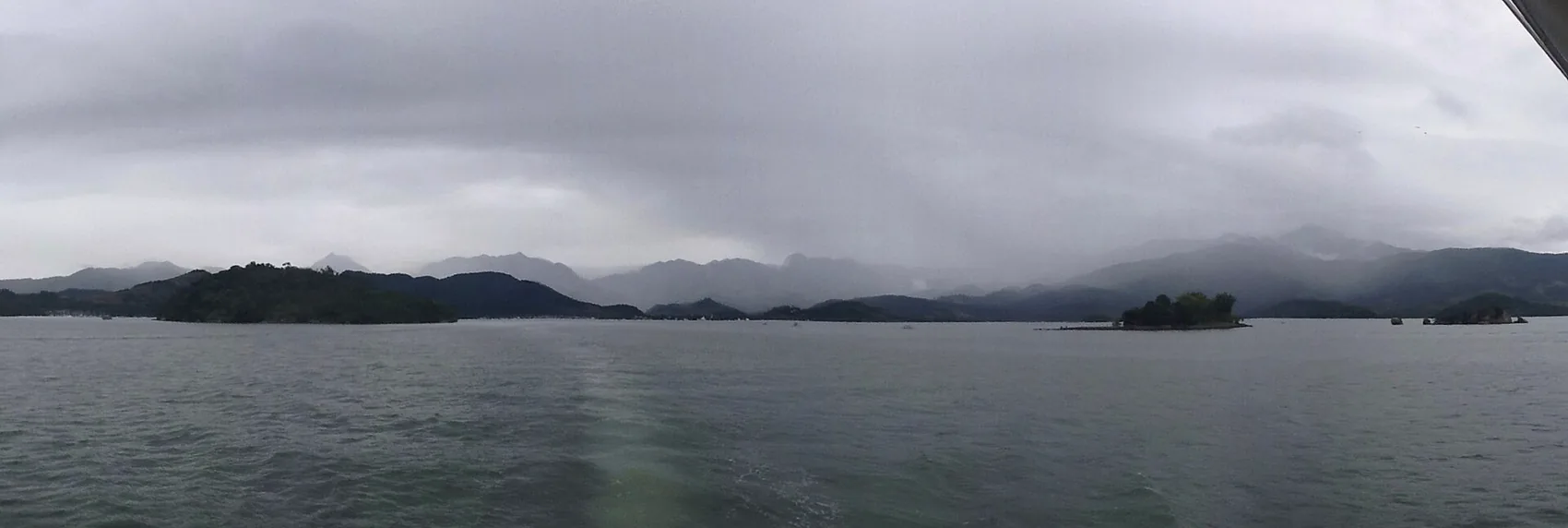
The bay is a year-round place, but the seasons have real character. The Brazilian summer, from December through February, brings the warmest, brightest water and the busiest crowds, the schools out and the beaches full. It is also the wettest and most humid stretch, with dramatic afternoon storms that clear as fast as they build. The shoulder months, roughly March to May and again September to November, are our quiet favourites: warm, greener, calmer and far less crowded. The cooler, drier winter of June to August is comfortable and clear, with cooler sea, and it is a lovely time to be on the water even if you swim a little less.
For the full seasonal breakdown, including the festival calendar, our guide to the best time to visit is the one to read; it applies to the whole bay, Angra included. As for length, do not try to see it all in a day. Angra and the islands reward at least a full week on the coast, with a couple of separate bay days spaced out so the sun and salt do not blur into one. A single frantic day trip will show you the highlights and none of the calm.
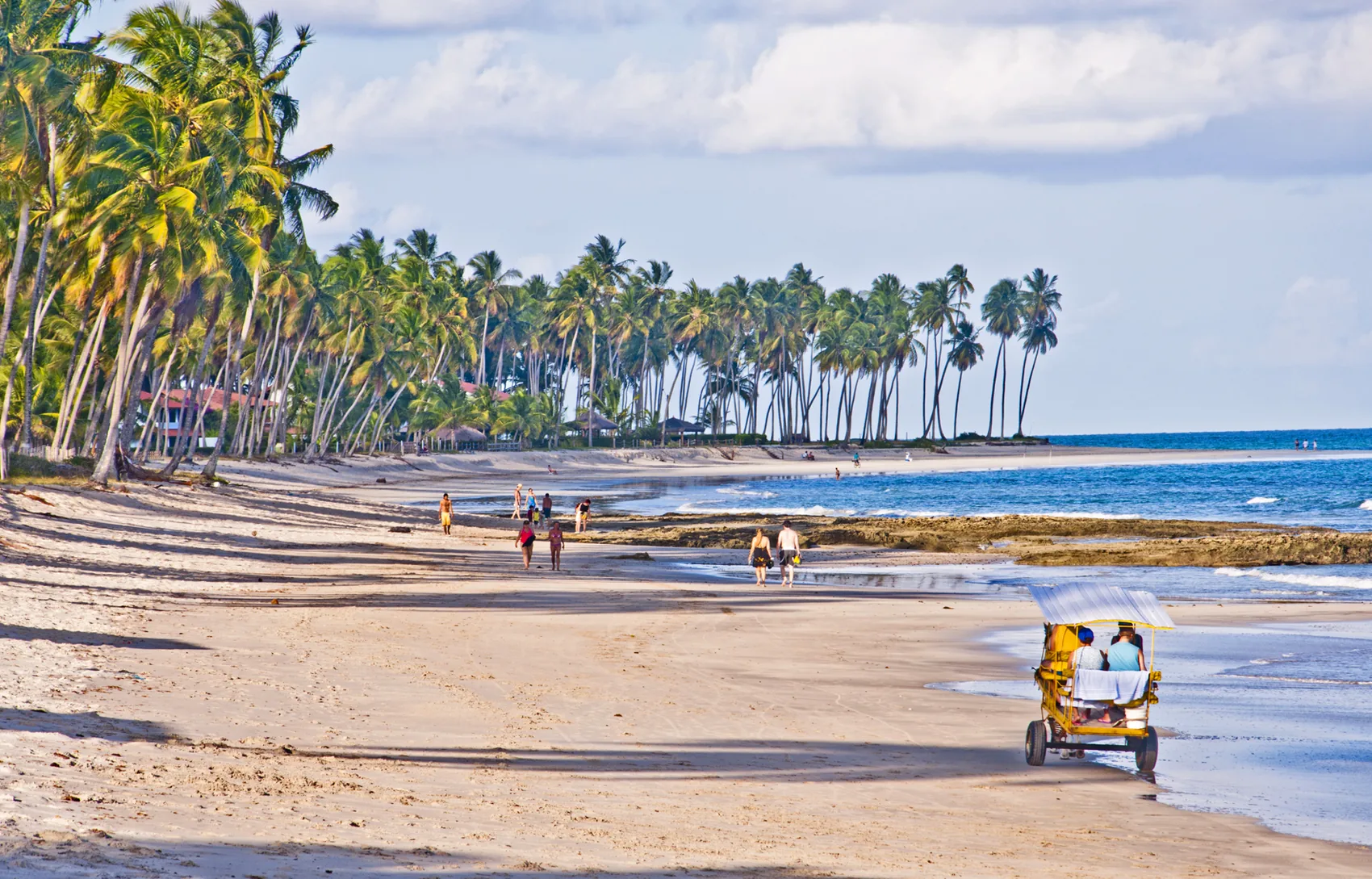
Eating around the bay
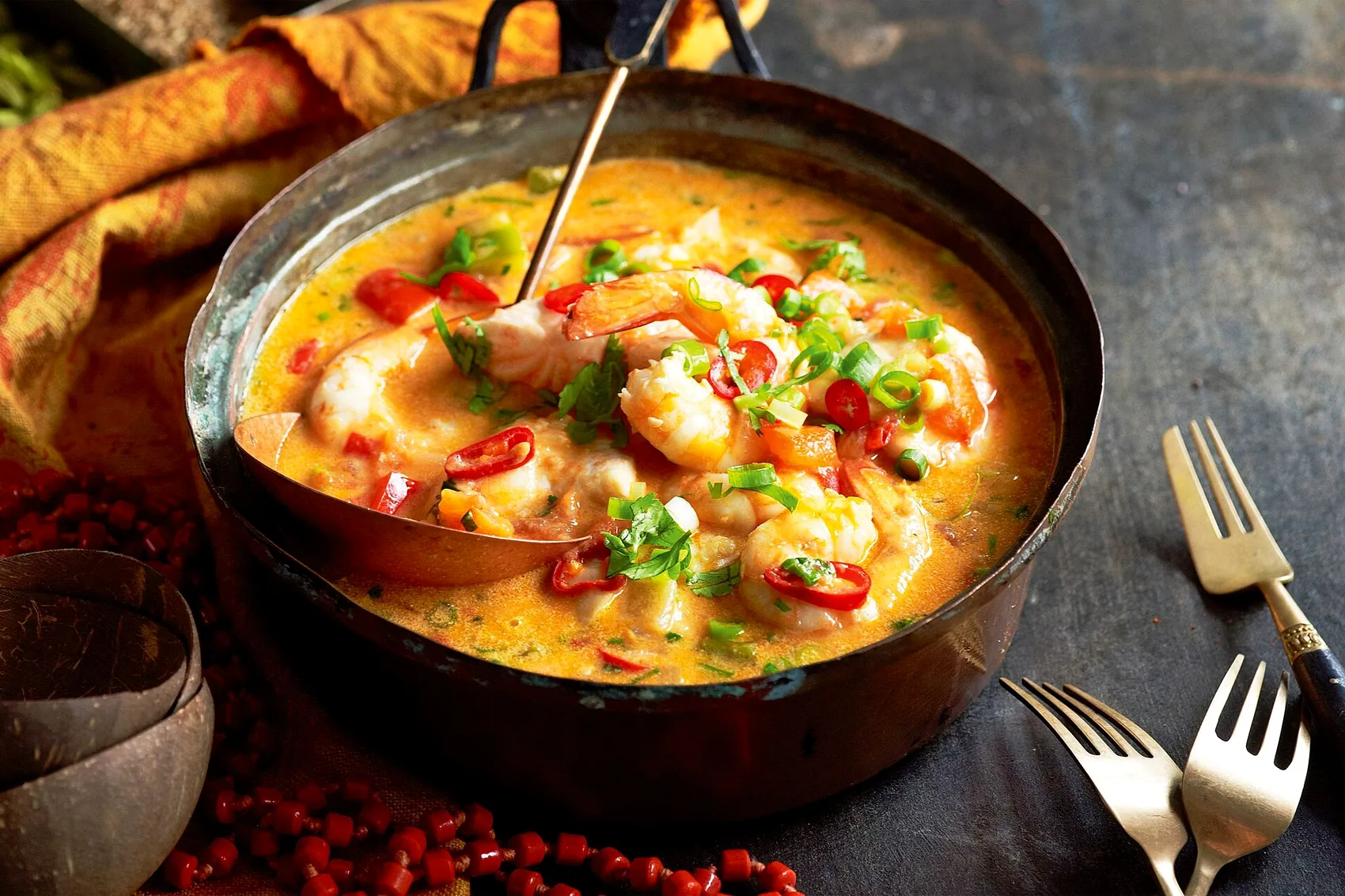
This is a fishing coast, and the food follows the boats. The dish to seek out is moqueca, a slow seafood stew of fish or prawns cooked with coconut milk, dende palm oil, tomatoes, peppers and coriander, served bubbling with rice and pirao. It is the taste of the whole coast and it is best eaten within sight of the water that supplied it. The seafood houses at the harbour end of any of these towns do it well; ask what came in that morning.
Beyond moqueca, expect grilled fish, prawns every way, and the small fried and grilled snacks that go with a cold beer and a long lunch. On the schooner tours a simple grilled lunch usually comes included, eaten with wet hair and salt on your skin, which improves any meal. We deliberately do not name restaurants in these guides, because places change hands and a host who sends you somewhere that has slipped does you no favours; instead we point you at the type of place and let you find the current best. For the fuller food picture up the coast, our where to eat in Paraty guide is the reference.
Practical notes and honest trade-offs
A few things worth knowing before you go, the sort of small print that makes a day run smoothly.
Money. Carry some cash. The harbour, the boat operators, the beach kiosks and the smaller places do not all take cards reliably, and a little cash smooths the day. Brazil's instant-payment system is everywhere if you have a local account, but visitors from abroad should not count on it.
Seasickness. The bay is sheltered and usually calm, but a schooner day is a long time on the water and the open stretches near Lopes Mendes can move. If you are prone to it, take something before you board, not after, and sit low and central on the boat.
Sun. The tropical sun off the water is stronger than it feels with a breeze on you. Reef-safe sunscreen, a hat, a shirt for snorkelling and plenty of water are not optional. People come home from a beautiful bay day badly burned every single week, and it is entirely avoidable.
With children. The calm water and the boat days suit families well, though the longer schooner circuits can be a lot for small children in one sitting. A shorter private trip is often the kinder choice with young kids. Our Paraty with kids guide has the detail on ages and stamina.
The honest trade-off. Angra town is not pretty in the way you might be hoping. It is a working port and it looks like one. The beauty is on the water and the islands, not in the streets. Accept that, use the town as the efficient gateway it is, and you will not be disappointed. Come expecting a second Paraty and you will be.
One bag, two speeds. Keep a ready day bag by the door: swimwear, a dry shirt, reef-safe sunscreen, a hat, cash, water and a waterproof pouch for your phone. When a clear morning arrives, you want to be on the road to the boats within the hour, not packing.
How we would plan it from the chalet
Here is the version we would map out for a guest, assuming a week on the coast and a base on the hill above Paraty. It is not the only way, but it is a good one, and it treats Angra as what it is: a tool, used well.
Give yourself an arrival day to do nothing but settle, swim in the pool and look at the bay you have come to explore. On your first proper water day, drive over toward Angra or Conceicao de Jacarei in the morning and take a schooner circuit to the Blue Lagoon and the northern islands, back by evening for a quiet dinner up the hill. Space a second water day a few days later: this time cross to Ilha Grande itself, either as a long day walking to Lopes Mendes, or better, an overnight in Vila do Abraao so you can climb Pico do Papagaio at dawn and feel the island without a boat schedule pressing on you.
Fill the gaps with the closer pleasures: the Paraty historic centre on foot, the quieter mainland beaches, a cachaca distillery, a long lunch, a lazy pool afternoon. That way Angra and its 365 islands become the two grand set-pieces of the week rather than a single overloaded day, and every big day out is bracketed by rest. The whole approach is laid out further in our long-weekend and three-day itinerary guides for shorter trips, and the seven-day plan for a full week.
And this, unforced, is where the base earns its keep. A day among the islands is glorious and it is tiring: sun, salt, boats, walking, the good exhaustion of a full day outdoors. Coming back up the hill to a quiet chalet with an infinity pool and a deck that looks out over the very bay you spent the day on turns a good day into a great one. You slip into the pool, watch the light go on the water below, and the day settles. That is the whole idea of staying above the town rather than in it.
The bay of the kings, unhurried
Angra dos Reis is not a place you fall in love with at first sight of its streets. It is a place you come to appreciate for what it does: it opens the door to one of the most beautiful bays in Brazil, and it does it every day, reliably, from a busy harbour full of boats. Learn to use it well, sleep somewhere calm up the coast, and give the water the time it deserves, and the 365 islands will give you the kind of days you remember for years.
When you are ready to plan the trip properly, our wider guide to staying on this coast and the explore pages lay out the region in full, and the resources and journal go deeper on the details. If you would like a hand shaping an itinerary around the islands, or you simply want to talk through the days from a base on the hill, get in touch. We are glad to help you get the bay right.
Come stay above the bay
Chalé Bel Air sits on the ridge that looks over everything in this guide. Tell us your dates and what kind of trip you are after — we answer personally.
Ask about your datesFrequently asked questions
Where is Angra dos Reis and how far is it from Paraty?
Angra dos Reis sits on the Costa Verde coast of Rio de Janeiro state, on the mainland edge of the Bay of Ilha Grande. From Paraty it is roughly an hour and a half by road along the winding BR-101 Rio-Santos highway. That makes it an easy day trip from a base in or above Paraty, with no need to relocate.
How do you get from Angra dos Reis to Ilha Grande?
Boats leave from the Angra waterfront and from nearby ports such as Conceicao de Jacarei, which is the closest crossing. The fast flex boats take around 15 to 30 minutes; the older, slower ferries take about an hour and a half but cost less. Cars are not allowed on Ilha Grande, so you park in a secured lot on the mainland and cross on foot.
What is the Blue Lagoon at Ilha Grande?
Lagoa Azul, the Blue Lagoon, is a shallow, sheltered stretch of clear water off the northern side of Ilha Grande near the Freguesia de Santana peninsula. It is not a true lagoon but a calm patch of reef-clear sea where schooner tours anchor so people can snorkel over the fish. It is the signature stop on the classic island boat circuit.
Can you visit Angra dos Reis as a day trip from Paraty?
Yes, and many people do. You can drive over for a schooner tour of the islands and be back the same evening. If you specifically want the Blue Lagoon and the northern islands, leaving from Angra can be quicker than the longer run out of Paraty. For Ilha Grande itself, an overnight is worth considering rather than a rushed day.
How many islands are there in Angra dos Reis?
The bay is famous for its 365 islands, one for every day of the year, along with hundreds of beaches. Ilha Grande is by far the largest and the one most visitors head for. The rest range from tiny rocks to green, forested islands, and the schooner tours thread between a handful of the prettiest.
Is it better to base in Angra dos Reis or Paraty?
For most visitors Paraty is the more rewarding base: a preserved colonial centre, better food and a quieter feel, with Angra reachable in about ninety minutes when you want the islands. Angra is more of a working port and ferry town than a destination in its own right. From a hillside chalet above Paraty you get the calm and use Angra as the launch point.
Do you need a boat tour or can you go independently?
Both work. For the Blue Lagoon and island-hopping, a shared schooner tour is the simplest and best-value option and needs no planning beyond turning up at the harbour. For Ilha Grande, you can cross on the scheduled ferries independently, stay in Vila do Abraao and walk or take water taxis to the beaches at your own pace.