Paraty is a small, walkable coastal town where most trouble is the ordinary kind, and most of it is avoidable with the same common sense you'd use anywhere. Here is the honest picture, and the habits that keep a trip smooth.
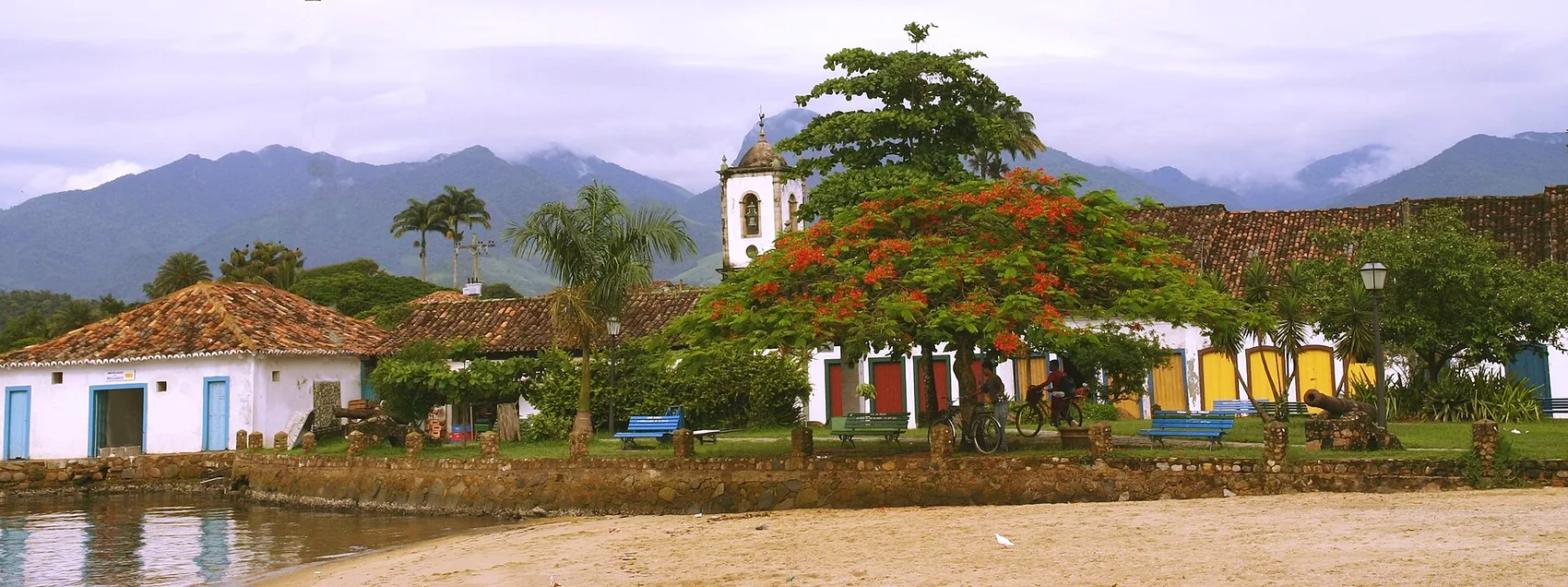
The question we get asked most often, from first-time visitors flying in from abroad and from paulistas who've somehow never made the drive, is a version of the same thing: is Paraty safe? It's a fair question to ask about anywhere in Brazil, and it deserves a straight answer rather than either the nervous hand-wringing you'll find in some corners of the internet or the everything-is-perfect gloss of a brochure. So here is the honest version, from people who live and host on this coast.
The short answer is that Paraty is a small, tourism-dependent town where the realistic risks are ordinary ones — a phone lifted in a festival crowd, a scrape on wet cobblestones, a sunburn, a stomach upset from being careless with water — and where violent crime against visitors is uncommon. That doesn't mean you switch your brain off. It means the sensible habits you'd use in any unfamiliar place carry you almost all the way, and the rest is a short list of local specifics worth knowing before you arrive.
This guide walks through all of it: how Paraty compares with Rio and São Paulo, the petty-crime picture and how to sidestep it, whether it's safe to walk at night, notes for solo travellers and families, money and card sense, the drive in and getting around, and then the practical health side — water, food, mosquitoes, sun, the sea — plus connectivity and who to call if something goes wrong. None of it is complicated. Most of it you'll internalise within a day.
Is Paraty safe? The honest answer
Paraty is generally safe for travellers. It's a town of a few tens of thousands of people whose economy runs on visitors, which shapes the place: the historic centre is well-populated and watched-over, local businesses have every reason to want guests comfortable, and the pace is slow. Compared with a big Brazilian city, there's simply less of the density and anonymity that street crime feeds on. Most visitors spend a week here and go home with nothing worse to report than a bruised shin from the cobblestones.
What Paraty is not is a crime-free bubble, and no honest host would tell you otherwise. Petty theft happens, as it does in any place where tourists carry phones, cameras and cash. Pickpocketing and opportunistic bag-snatching turn up in crowds — during festivals, in the Saturday bustle, at the busy waterfront. Cars left with valuables visible get broken into. These are avoidable events, not ambient danger, and the difference matters: you are managing opportunity, not fending off threat.
It also helps to separate the town from the region. Paraty the historic centre is one thing; the wider municipality includes quieter neighbourhoods, remote beaches and forest trails where the calculus is different — not more dangerous, exactly, but more isolated, with fewer people around if you need help. We'll come back to that, because "safe" means slightly different things in a crowded plaza and on an empty trail an hour from town.
The other honest thing to say is that Paraty's safety is seasonal in feel. In the quiet months the town is sleepy and the streets thin out early; in the peak of summer and during the big festivals it swells with visitors, and the petty-crime opportunity rises simply because the crowds do. Neither version is unsafe — it's the same town at different volumes — but a January festival night asks for a little more attention to your bag than a still Tuesday in May. Match your caution to the crowd, not to a headline you half-remember about somewhere else in Brazil.
The realistic risk in Paraty is a phone lifted in a crowd, not violence in a dark street.
How Paraty compares to Rio and São Paulo
If your mental model of Brazilian safety was built from headlines about Rio or São Paulo, set it aside for Paraty. The big cities carry the risks that come with scale — dense favelas beside wealthy districts, organised crime, express kidnappings, the need to know which streets change character after dark. Those are real concerns to manage in Rio and São Paulo, and travellers there rightly take more precautions. Paraty is a different animal: small, coastal, and economically dependent on keeping visitors happy.
For travellers coming from Rio, the practical point is that the drive out of the city is arguably the part that asks for most attention, and the town at the end of it is a decompression. For paulistas, Paraty is the classic long-weekend escape precisely because it feels a world away from the intensity of São Paulo. And for visitors arriving from abroad, the reassuring framing is this: if you were nervous about Brazil in the abstract, Paraty is close to the gentlest possible introduction to it — Portuguese, cobblestones, boats and rainforest, with the risk profile of a small tourist town rather than a megacity.
That said, the journey usually routes you through a big city's airport — Rio's Galeão or Santos Dumont, or São Paulo's Guarulhos — and city-level caution applies there and in transit. Treat the airport, the bus station and the first hour on the road with more care than you'll need once you've settled into town.
Petty crime and street smarts
Almost everything that goes wrong for visitors in Paraty falls under petty crime, and almost all of it is preventable. The mindset is simple: don't be the easiest target in the crowd. Thieves work on opportunity, and a little friction is usually enough to send them looking elsewhere. You don't need to be locked-down or suspicious of everyone — Paraty is a warm, friendly town and most people you meet are on your side — you just need to not leave the door open.
What actually happens
The common incidents are phones left on restaurant tables or dangling from a back pocket, bags hung on the back of a chair and forgotten, cameras set down for a moment, and cars parked overnight with a backpack visible on the seat. Festival crowds and the busiest market hours are the prime windows, because that's where distraction and density meet. Violent robbery of tourists is rare in the centre; the realistic threat is a quiet hand, not a confrontation.
The habits that cover you
- Carry less. Take what you need for the day and leave the rest at your accommodation. A closed bag worn across the front in crowds beats an open tote every time.
- Keep your phone off the table. The single most-lifted object. Pocket it between photos, and don't leave it face-up at a bar.
- Split your cash and cards. Some on you, some back at base. Carry one card and a modest amount of cash out; you rarely need more.
- Don't advertise. Expensive watches and jewellery have nowhere to go in a beach town and only draw eyes. Leave them home.
- Empty the car. Nothing visible, nothing in the boot you'd mind losing, and use a proper car park rather than a dark street overnight.
The one-minute rule: before you leave any table, bar or beach spot, do a slow visual sweep — phone, wallet, keys, bag, sunglasses. Most losses in Paraty are things left behind, not things taken.
Is it safe to walk around at night?
Walking Paraty at night is normal, and the historic centre in the evening is one of the pleasures of the place — lamplit cobblestones, open doorways, music drifting out of the bars, families and couples out late. This is when the town is at its warmest, and you should enjoy it. The centre and the main restaurant streets stay busy and feel calm.
The sensible boundaries are the ones you'd draw anywhere. Stick to lit, populated streets rather than cutting through empty lanes to save five minutes. Keep your phone pocketed while you walk. If you're heading somewhere on the edge of town, back to a place up in the hills, or you've had a few drinks and would rather not think about the route, take a licensed taxi or a ride-hail — they're inexpensive and remove the only real variable. For a fuller picture of the after-dark scene, our guide to Paraty's nightlife and bars covers where the evening actually happens.
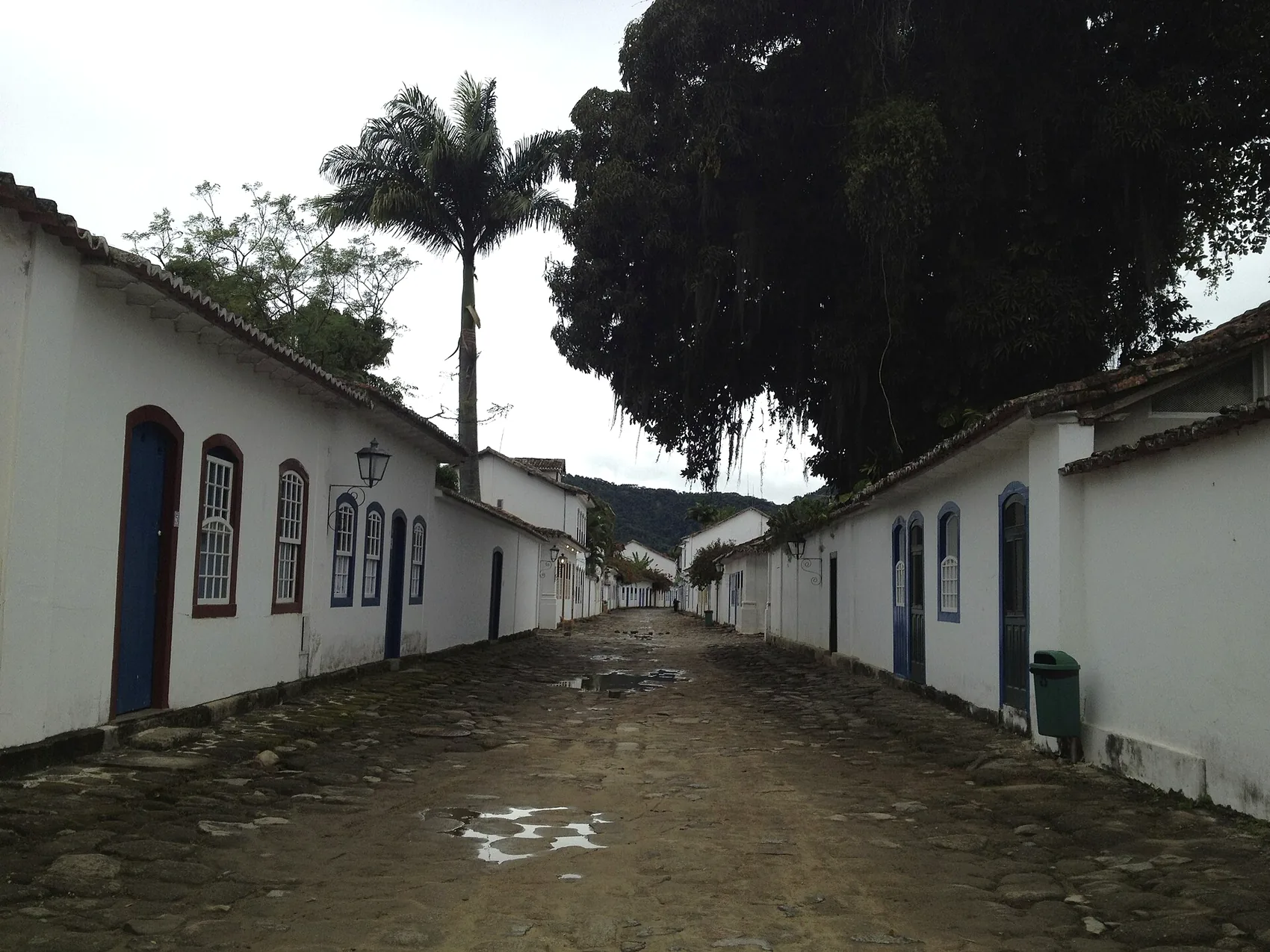
One local specific: the historic centre's streets flood at high tide by design — the colonial drainage lets seawater wash through — so night walks can involve wet, slippery cobblestones and the odd ankle-deep crossing. That's more a footing hazard than a safety one, but it's a genuine reason to wear shoes with grip rather than smooth soles after dark.
Solo travellers, women and families
Paraty suits every kind of traveller, and the small-town scale works in everyone's favour. It's the sort of place where the boat crew remembers you from yesterday and the café owner waves you over — social texture that quietly makes a place safer.
Solo and female travellers
Plenty of women travel Paraty alone and have an easy time of it. The instincts that serve you anywhere serve you here: tell someone your plans for a remote trail or beach day, favour daylight for anything isolated, keep an eye on your drink in bars, and choose licensed transport late at night rather than walking unfamiliar edges of town. Catcalling exists in Brazil as it does elsewhere; it's generally more nuisance than threat. Local staff, hosts and boat crews are, in our experience, quick to help if a situation feels off — don't hesitate to ask.
Families and kids
For families, Paraty is gentle. The car-free historic centre means children can walk without traffic, the beaches are calm, and boat days are a natural fit. The safety notes for kids are the practical ones rather than the fearful ones: those cobblestones are ankle-turners for small legs and buggies, the sun is fierce, and the sea has the usual respect-the-water rules. Our dedicated guide to Paraty with kids goes deeper, and much of the health advice below — water, sun, mosquitoes — matters more for young travellers than adults.
Money, cards and common scams
Brazil is a card-and-app economy, and Paraty is no exception. Most restaurants, shops and operators take cards, and Pix — Brazil's instant bank-transfer system — is everywhere, though it needs a local account so it's mostly for residents. For visitors, a contactless card and a modest cash float cover almost everything.
- Use ATMs inside banks or shops, in daylight, rather than isolated street machines at night. Shield the keypad. Card skimming exists in Brazil, so favour reputable locations.
- Keep the card in sight when you pay. In smaller places the machine comes to your table anyway; that's normal and preferable.
- Carry some cash for beach kiosks, boat-day lunches, small vendors and tips — not everywhere on the water takes cards, and signal can be patchy offshore.
- Agree prices first for informal boat trips, taxis without meters and market goods. Overcharging a tourist is the most common "scam", and it's solved by asking the number before you commit.
- Book boats and tours through your host or established operators. It's not that informal offers are dangerous, but a name you can go back to is worth the small premium. Our overview of boat days explains how the trips usually work.
None of this is unique to Paraty — it's ordinary travel hygiene. The town isn't a hotbed of scams; it's a small place where the honest thing to do is simply confirm a price before you hand over money.
One card-specific note for visitors from abroad: tell your bank you're travelling to Brazil before you leave, or the first Paraty purchase may trip a fraud block just when you're standing at a counter with no signal to answer the app. Carry a backup card kept separately from your main one, and note that many places apply a small surcharge for international cards or offer a better rate for cash — worth asking. If a machine ever offers to charge you in your home currency rather than reais, decline it; the "dynamic currency conversion" rate is almost always worse than letting your own bank do the maths.
Getting there and driving the Rio–Santos road
For many visitors the drive in is the part of the trip that most rewards attention, so it's worth its own section. Paraty sits on the Costa Verde roughly 250 kilometres from Rio de Janeiro and a good deal further from São Paulo, and the road that links it all is the BR-101, the coastal Rio–Santos highway.
The drive from Rio
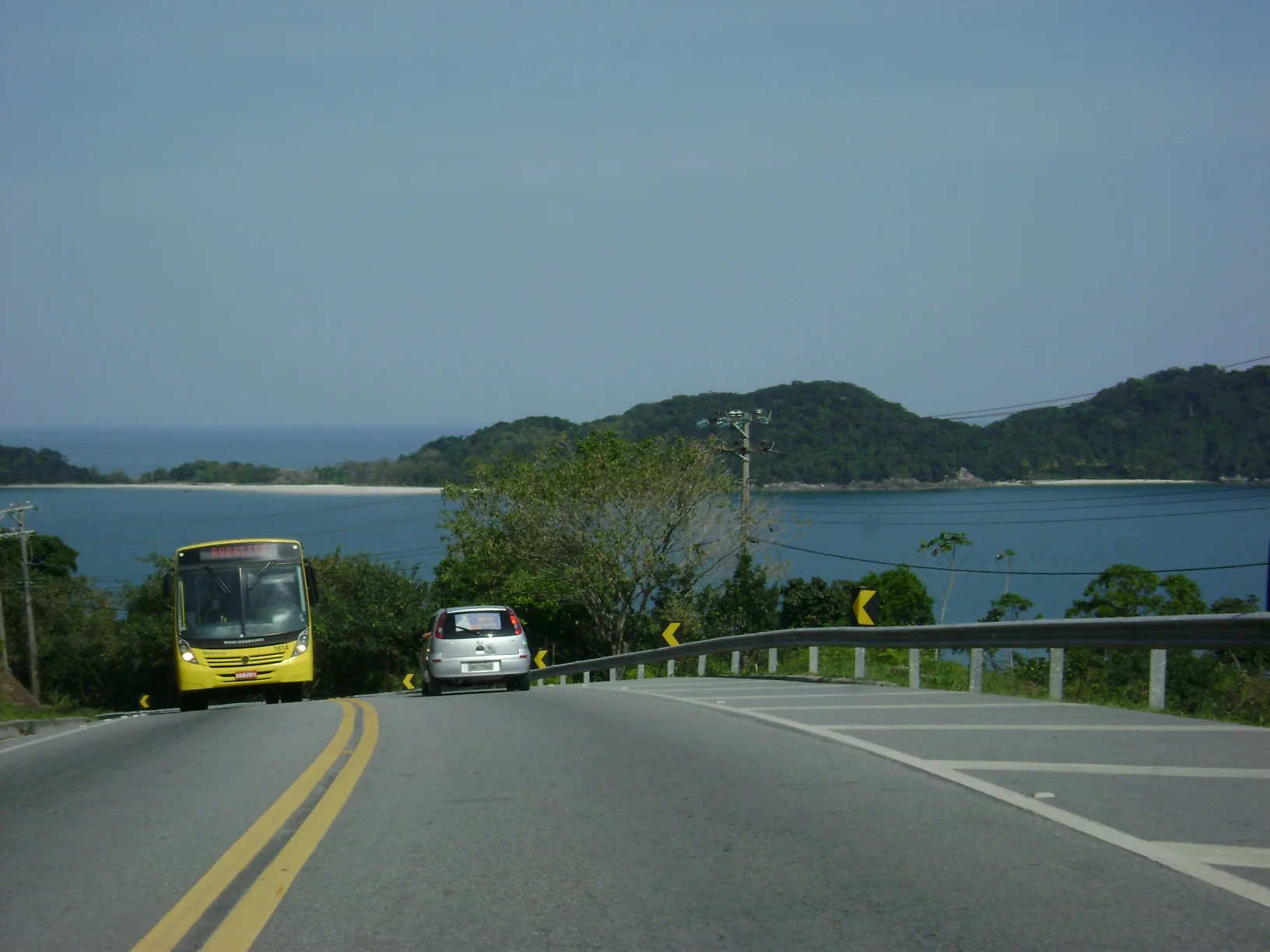
Reckon on somewhere around four to five hours from Rio, depending on traffic and how often you stop. The road is genuinely scenic — mountains on one side, bays on the other — but it's also winding, with slow trucks, blind curves, speed cameras, and stretches where the surface has seen better days. The safe way to drive it is the unhurried way: daylight rather than dark, patience behind trucks, and no ambition to make good time. Keep doors locked in stop-start traffic, a routine city habit in Brazil that costs nothing.
The drive from São Paulo
From São Paulo it's longer — plan for a full half-day with stops — and the common route drops down through the mountains before joining the coast. The famous Cunha–Paraty mountain road is spectacular and now paved, but it's steep and serpentine; take it slowly and in good conditions. For paulistas doing this as a long weekend, leaving early beats arriving frazzled after dark. Our guide to the drive from São Paulo maps the options in detail.
If you'd rather not drive
You don't have to. Comfortable long-distance buses run from both cities, private transfers are straightforward to arrange, and many guests simply hand off the road entirely and arrive relaxed. There's also a small airport at Paraty used by light aircraft and charters, though most visitors fly into Rio or São Paulo and continue overland — our airport guide lays out how the connections work. However you come, the getting around page covers the last mile.
Getting around town and on the water
Once you're here, most of Paraty is covered on foot, and that's the safest way to see it. The historic centre is closed to most traffic, so it's you, the cobblestones and everyone else strolling. Park at one of the official car parks on the edge of the old town and leave the car there; trying to drive the centre is neither allowed in most of it nor wise on those stones. For anything further afield, licensed taxis and ride-hail apps both work, and short hops are cheap by the standards most visitors are used to — there's rarely a good reason to walk a long, dark, unfamiliar stretch when a car costs so little.
On the water, the safety story is mostly about good operators and good sense. Paraty's schooners and small boats are the way you reach the islands and swimming spots, and the crews know the bay. Wear the life jacket when it's offered, particularly with children and weaker swimmers, take motion-sickness tablets before boarding if you're prone, and don't push a small-boat captain to go out in weather they're wary of — local judgement about the sea is worth more than your schedule. For longer crossings, our guide from Paraty to Ilha Grande covers what to expect.
On the water, cash and a dry bag: phone signal drops offshore, some island kiosks are cash-only, and everything gets wet. A dry bag with cash, a card and your phone solves most boat-day headaches before they start.
Health: water, food and your stomach
The most likely thing to derail a Paraty trip isn't crime — it's a stomach upset, and it's largely avoidable. Brazil's food is a genuine pleasure and Paraty's seafood is a reason to come, so this is about small precautions, not paranoia.
Drinking water
Treat Paraty's tap water as not for drinking. It's chlorinated and fine for showering and washing, but coastal supply on this stretch isn't reliable enough to drink straight, especially if your stomach is sensitive to unfamiliar water. Stick to bottled or filtered water for drinking, and use it for brushing your teeth too if you're being careful. Bottled water is cheap and everywhere. A reusable bottle you refill from a filter at your accommodation is the low-waste version — worth doing on a coast where plastic ends up in the sea, a theme we return to in travelling lightly on the Costa Verde.
Ice, food and eating well
In reputable restaurants — which is most of where you'll eat — ice is made from treated water and salads are washed properly, so you needn't fret over it. The caution is for the informal end: a roadside stall, a beach kiosk on a slow day, anything that's been sitting warm. The reliable seafood houses at the harbour end serve the local moqueca fresh and busy, and busy is your friend — high turnover means fresh food. If you have a delicate stomach, ease into the street food rather than diving in on day one, carry a basic remedy, and drink more water than you think you need in the heat.
What to pack for health
Bring any prescription medicines in their original packaging with enough to cover the trip, a small kit for the predictable stuff (rehydration salts, an anti-diarrhoeal, antihistamines, plasters for cobblestone scrapes and blisters), strong sunscreen and good repellent. Pharmacies in Paraty are well-stocked and staff are used to helping travellers, but bringing your own basics saves a hunt. Our full packing guide has the complete list; consider this the health-focused subset.
Mosquitoes and what actually works
This is the health topic worth taking seriously, calmly. Paraty sits between rainforest and sea, which means mosquitoes, and Brazil sees seasonal outbreaks of dengue — a virus carried by the daytime-biting Aedes aegypti mosquito. Related viruses like Zika and chikungunya circulate too. The risk is highest in the hot, wet months (roughly December to April) and lower in the dry season. There is no malaria on this part of the coast, so that's one worry you can set down.
The defence is unglamorous and effective:
- Use real repellent. Formulas with DEET or icaridin work; the essential-oil products mostly don't, for long. Reapply, especially after swimming and sweating.
- Cover up at dawn and dusk, the peak biting windows. Long sleeves and trousers in light fabric are your most reliable barrier — more dependable than lotion alone.
- Sleep protected. Screens, fans and air-conditioning all help; mosquitoes dislike moving air.
- Kill standing water near where you stay — a saucer under a plant, an uncovered bucket — since that's where Aedes breeds. It's the single most effective community measure, and worth a glance around your own space.
If you develop a high fever, severe aches or a rash in the days during or after a trip, see a doctor and mention that you've been in a dengue area — it's usually manageable but worth taking seriously, and Paraty's hillside altitude is no reason to assume you're above the mosquito line. Check your government's current travel-health advice before you go for any vaccine recommendations; yellow-fever vaccination is advised for much of Brazil, and it's a conversation to have with a travel clinic well ahead of departure.
Keep the risk in proportion, though. Most visitors go home with a couple of itchy ankles and nothing more, and the dry-season traveller may barely notice the mosquitoes at all. The point of this section isn't to alarm you off a beautiful coast — it's to make the small routine (repellent in the bag, long sleeves at dusk, a glance for standing water) automatic, so it never becomes the thing you wish you'd done. Families with young children should be the most diligent, since kids are both more attractive to mosquitoes and less likely to sit still for the repellent; make it part of the sunscreen ritual and it stops being a battle.

Sun, heat and the sea
Paraty is close to the Tropic of Capricorn and the sun here is stronger than it feels, particularly off the water where the light doubles back at you. Sunburn is one of the most common ways visitors quietly ruin a day or two, and it's entirely preventable.
Sun and heat
Use high-factor, reef-safe sunscreen and reapply it far more often than you'd like to, especially on boat days. A wide-brimmed hat and a light long-sleeve shirt do more than any lotion on a long day in the sun. You will burn on a cloudy day if you're careless — the cloud cover is not the shield it looks like. Drink water steadily through the heat; the humid warmth dehydrates you faster than a dry climate would, and a lot of "I felt unwell" days are really just heat and not enough water.
Swimming and currents
The sheltered bays around Paraty are generally calm, which is part of the appeal — much of your swimming is in protected, gentle water. The open-ocean beaches out past the town, the surf beaches near Trindade among them, can have real waves and rip currents. The rules are the ordinary ones: watch the water before you go in, don't swim alone at a deserted beach, keep an eye on children, and if you're caught in a current that pulls you out, swim across it rather than fighting straight back to shore. Most Paraty beaches are calm; it's the exceptions that ask for respect.
You will burn on a cloudy day here if you're careless. The cloud is not the shield it looks like.
Connectivity, phones and staying in touch
Staying connected in Paraty is easy in town and patchy the moment you leave it, and that gap is worth planning around. In the historic centre and most accommodation you'll have decent mobile data and wifi. On the water, on remote beaches and deep in the forest, signal drops away — which is part of the charm, but not if you were relying on a live map or a booking confirmation.
- Sort a local eSIM or SIM for a Brazilian number and data if you're here more than a few days. It's cheap, and having working data makes ride-hail, maps and translation apps far easier than hunting wifi.
- Download offline maps of Paraty and the coast before a boat or trail day, and screenshot any bookings or addresses you'll need where there's no signal.
- Save the key numbers offline — your accommodation, your host, a trusted taxi or transfer, and the emergency services below.
- Tell someone your plan for remote days. A message to your host saying which beach or trail you're heading to costs nothing and matters if signal vanishes.
Treat the disconnection as a feature to prepare for rather than a problem to solve. Half the point of Paraty is the afternoon where nobody can reach you; just make sure you can reach help if you need it.
Emergencies, pharmacies and who to call
You'll almost certainly never need this section, but knowing it removes the low hum of worry. Brazil's emergency numbers are free from any phone: 190 for the police, 192 for an ambulance (the SAMU medical service), and 193 for the fire brigade. Operators generally work in Portuguese, so if you don't speak the language, get help from your host, accommodation staff or a passer-by — Paraty is a small place used to visitors, and people step in.
Paraty has a hospital and health posts for urgent care, and well-stocked pharmacies where the staff can advise on minor ailments and often sell, over the counter, things that need a prescription elsewhere. For anything serious, the bigger hospitals are in Angra dos Reis up the coast or back in the cities, which is one more quiet argument for taking the sea and the roads at a measured pace. Carry travel insurance that covers medical care and repatriation — it's the single most important thing to arrange before any trip to Brazil, and the one people most often skip.
Keep this offline: Police 190 · Ambulance (SAMU) 192 · Fire 193. Add your accommodation's number and a trusted taxi, and screenshot the lot before you lose signal on a boat or trail.
A calm base above the town
A lot of feeling safe somewhere is really about having a settled base to return to — a door that locks, a place to leave the passport and the spare card, a host who knows the coast and can point you at the good operator, the calm beach, the road that's flooded today. That's the quiet argument for staying somewhere with a bit of separation from the crowds.
Chalé Bel Air sits about 400 metres up the hillside, a short drive above the historic centre, with an infinity pool and a deck that takes in the triple view over the Bay of Paraty, Angra dos Reis and Ilha Grande. Practically speaking, that height buys you a slightly cooler evening, a breeze that moves the mosquitoes along, and the simple reassurance of coming back from a busy day in town to somewhere quiet and your own. You go down for the cobblestones, the boats and the moqueca; you come back up for a swim and the long view while the light goes.
To plan around any of this — the drive, the boat days, a trail, the right time of year — the rest of the library is here to help. Start with the ultimate guide to Paraty for the wide view, the best time to visit to weigh the seasons (which also shapes the mosquito and rain picture), and how many days you need to get the shape right. When you want to talk through a stay, get in touch — and browse the things to do when you're ready to fill the days. Come for the beauty; arrive prepared, and the safety question mostly answers itself.
The short version, if you skimmed: Paraty is a safe, small tourist town where the real risks are petty theft, the sun, the sea, mosquitoes and a careless glass of water — not violence. Keep your valuables close and off the table, walk the busy lit streets at night and take a cab from the dark edges, drink bottled water, wear repellent and far more sunscreen than feels necessary, drive the coast road in daylight without rushing, sort local data and download offline maps, carry travel insurance, and save 190, 192 and 193. Do those, and you'll spend your trip thinking about the view rather than your wallet — which is exactly the point of coming.
Come stay above the bay
Chalé Bel Air sits on the ridge that looks over everything in this guide. Tell us your dates and what kind of trip you are after — we answer personally.
Ask about your datesFrequently asked questions
Is Paraty safe for tourists?
Yes, on the whole. Paraty is a small tourism-dependent town, and the historic centre is calm and well-populated day and night. The realistic risk is petty theft in crowds, not violent crime. Keep valuables close, don't flash phones and cameras in busy markets, and you'll likely never have an issue.
Is Paraty safe to walk around at night?
The historic centre and the main restaurant streets stay busy and pleasant into the evening, and walking there at night is normal for locals and visitors alike. Stick to lit, populated streets, keep your phone pocketed, and take a licensed taxi or ride-hail for anything on the dark edges of town or the road up the hills.
Is Paraty safe for solo female travellers?
Many women travel Paraty solo without trouble, and the small-town scale helps. Use the same instincts you'd use anywhere: share your plans, favour daytime for remote trails and beaches, keep an eye on your drink, and choose licensed transport at night. Local staff and boat crews are generally helpful if something feels off.
Can you drink the tap water in Paraty?
Treat it as not for drinking. Paraty's tap water is chlorinated but the coastal supply isn't reliable enough to trust straight from the tap. Stick to bottled or filtered water for drinking and brushing if you have a sensitive stomach. Tap water is fine for showering, and reputable restaurants use safe ice and washed produce.
Do I need to worry about mosquitoes and dengue in Paraty?
It's worth taking seriously, not panicking about. Dengue is carried by daytime-biting Aedes mosquitoes and Brazil sees seasonal outbreaks, mostly in the hot, wet months. Use repellent with DEET or icaridin, cover up at dusk, and empty any standing water near where you stay. There is no malaria risk on this stretch of coast.
Is it safe to drive to Paraty?
Yes, with attention. The Rio–Santos road (BR-101) is scenic but winding, with slow trucks, blind curves, speed cameras and occasional rough patches. Drive in daylight, don't rush, keep doors locked in traffic, and use official car parks in town since the historic centre is largely closed to cars. The drive from Rio is roughly four to five hours.
What number do you call in an emergency in Brazil?
Dial 190 for police, 192 for ambulance (SAMU) and 193 for the fire brigade. These are free from any phone. Paraty has a hospital, pharmacies and a tourist-friendly centre, and your host or accommodation can help translate and direct you quickly if you don't speak Portuguese.
.jpg)


