
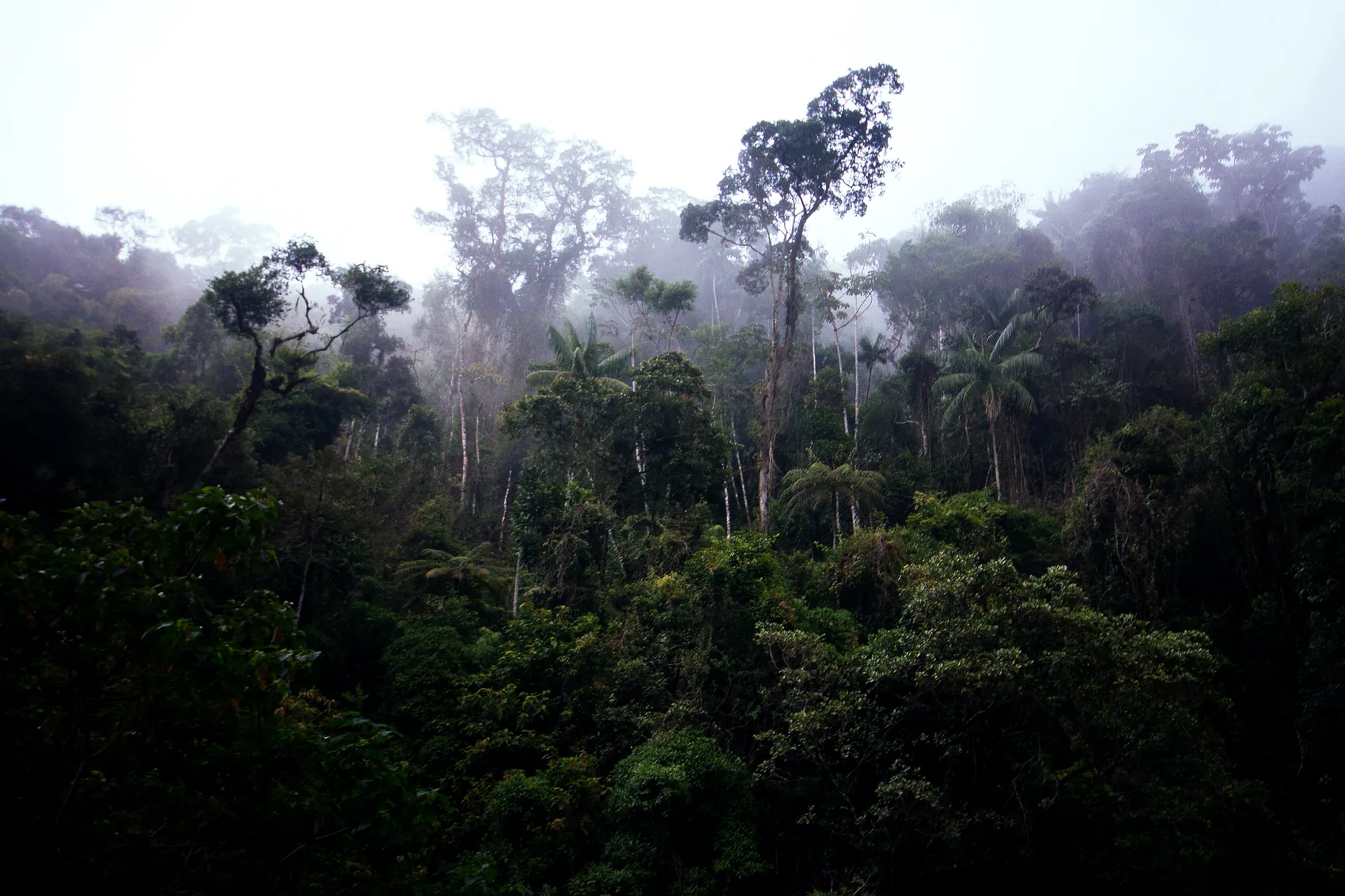
Behind Paraty the Atlantic Forest climbs fast off the sea, and everything steep and green turns into something to do — a trek to a roadless beach, a granite summit above a tropical ria, a rope down a waterfall, a zipline through the canopy.
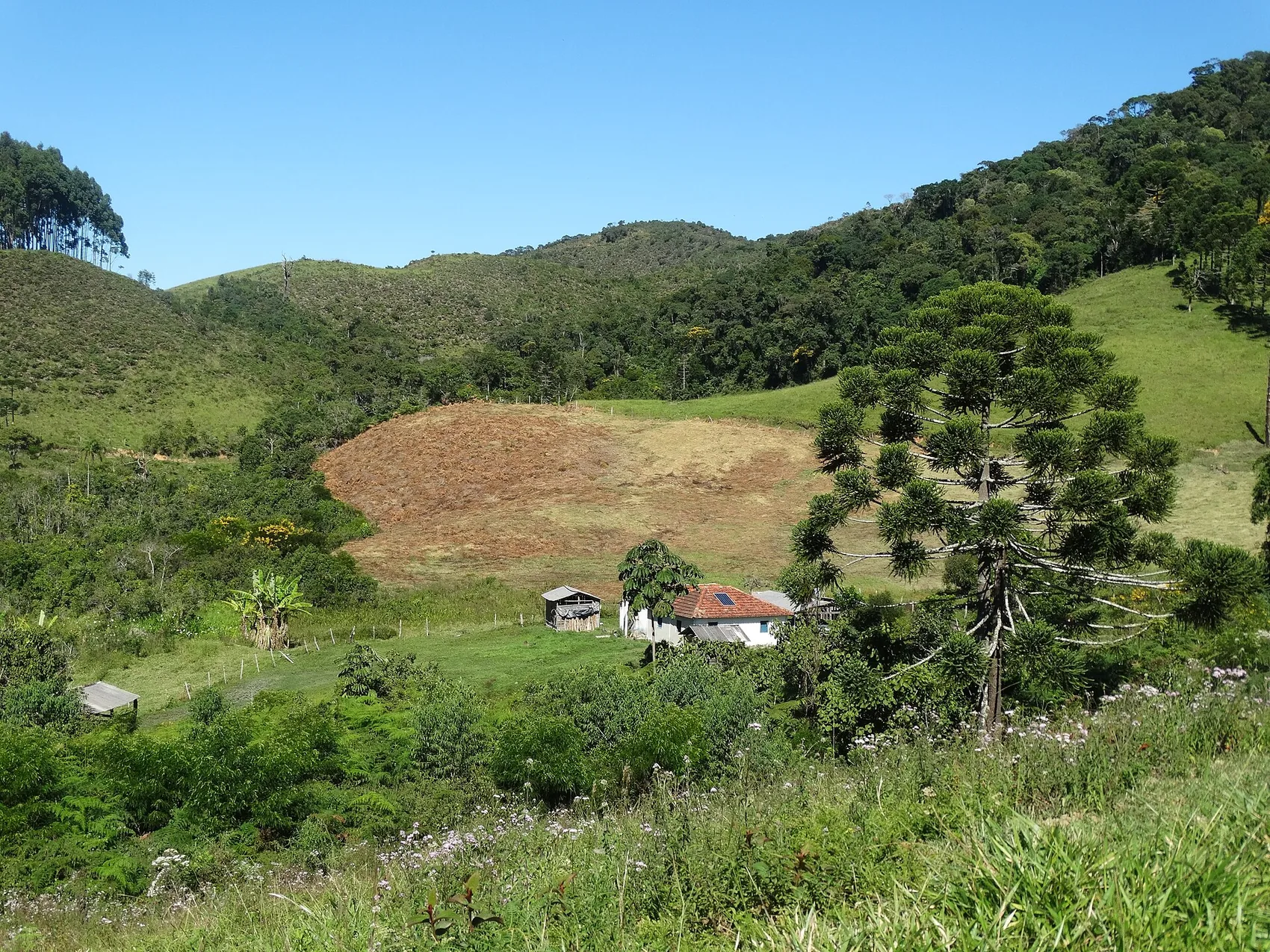
Most people arrive in Paraty for the cobblestones and the boats, and those are worth every minute. But turn your back on the water for a moment and look up. The Serra do Mar rises almost straight off the sea here, wall after wall of Atlantic Forest folding up toward the Serra da Bocaina, and every one of those green ridges is a day out waiting to happen. A Paraty adventure is not a bolt-on to the beach holiday — it is the other half of what this coast actually is. Mountains meet ocean with almost nothing flat in between, and that geography is the whole reason the trekking, the waterfalls, the canyons and the summit views are as good as they are.
This is the guide we hand to guests who want to earn their swim. It covers the honest range of it: jungle trails to beaches you can only reach on foot, the granite climb everyone asks about, canyoning and waterfall rappel, the zipline circuit in the canopy, mountain biking in the national park, and the natural rock waterslide that even the cautious end up loving. For each one we give you the difficulty in plain terms, who should sit it out, and who guides it — because on this coast the difference between a great day and a bad one is almost always the operator and the timing, not your fitness.
A word on where you sleep, because it matters more than it sounds. Chalé Bel Air sits about 400 m up the hillside above town, a short drive from the historic centre, with an infinity pool looking out over the Bay of Paraty, Angra dos Reis and Ilha Grande all at once. After a day of mud and rope work, coming home to that — rinsing off, dropping into the pool, watching the light go while your legs stop aching — is the reward the guidebooks forget to mention. Everything below is within striking distance of the door.

The lay of the land
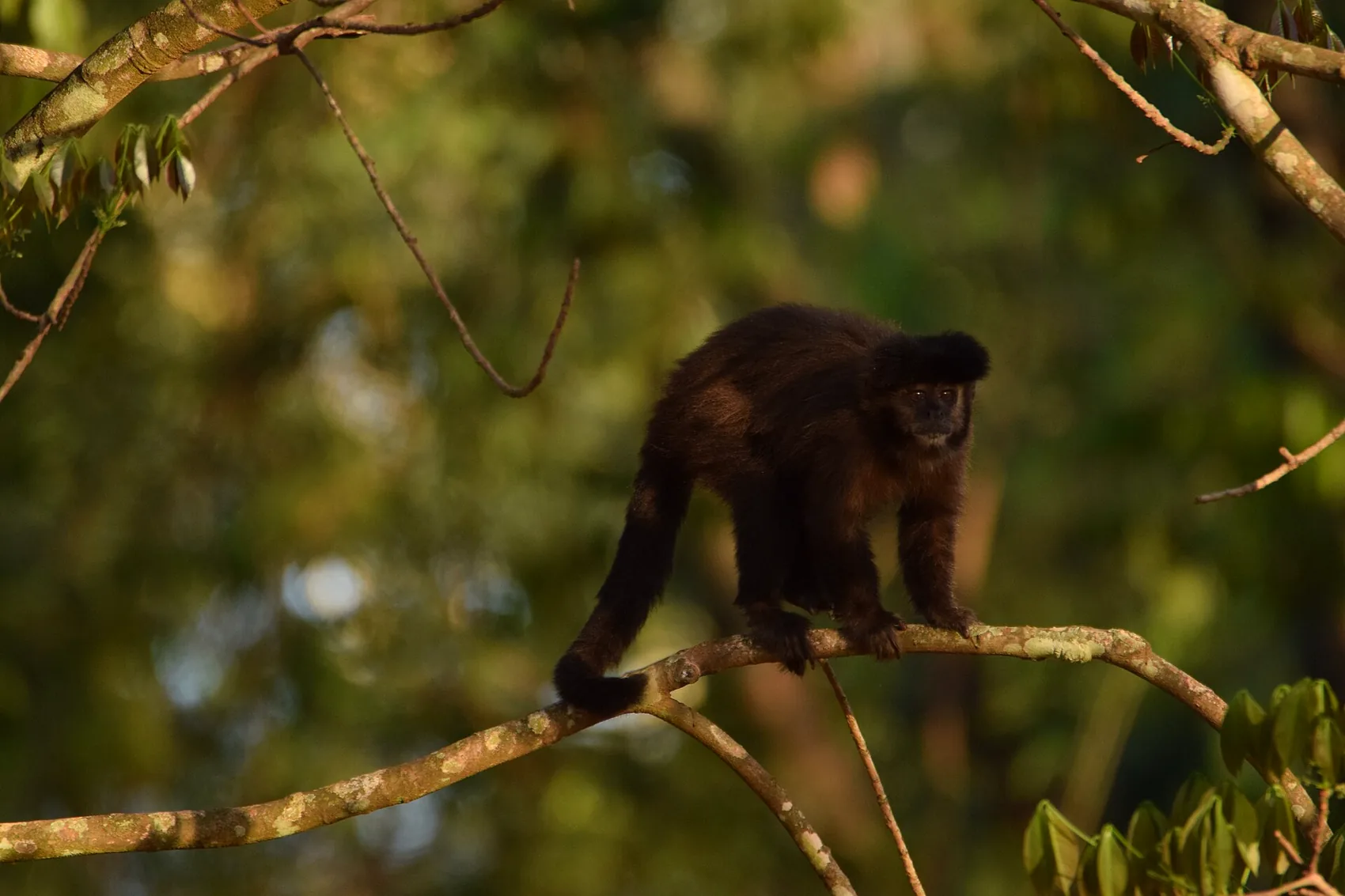
Paraty sits in a rare pocket of protection. Behind it is the Serra da Bocaina National Park, more than 100,000 hectares of Atlantic Forest straddling the border of Rio de Janeiro and São Paulo states. In front and to the south is the Cairuçu Environmental Protection Area and the Juatinga reserve, a wild peninsula of roadless beaches and fishing communities. This is one of the most biodiverse and most threatened forests on earth, and the fact that so much of it survives here is exactly why the adventure is worth having — you are moving through real wilderness, not a landscaped version of it.
Practically, that means three kinds of terrain within an hour of the historic centre. There is the coast itself, all coves and headlands, best explored by a mix of boat and short trail. There is the low forest of the foothills, where the waterfalls, the canyons and the gold-mining trails live. And there is the high country of the Bocaina, cooler and wilder, where the mountain biking and the longer treks run. You can taste all three in a few days, and the drive between them is short because Paraty is compact and the mountains start immediately.
Two things shape everything. First, water: this is one of the wettest coasts in Brazil, and rain is what fills the falls and carves the canyons, but it also closes them. Second, heat: summer under a closed canopy is punishing, and the safest, most comfortable adventure days start early and finish before the afternoon storms build. Keep those two facts in mind and the rest of this guide falls into place.
Jungle trekking to roadless beaches
If you do one thing on foot here, make it a trek that ends at a beach with no road to it. That combination — an hour or two through proper rainforest, then sand and sea as the payoff — is the signature Paraty walk, and it ruins you a little for ordinary hikes afterward.
Praia do Sono and Praia dos Antigos
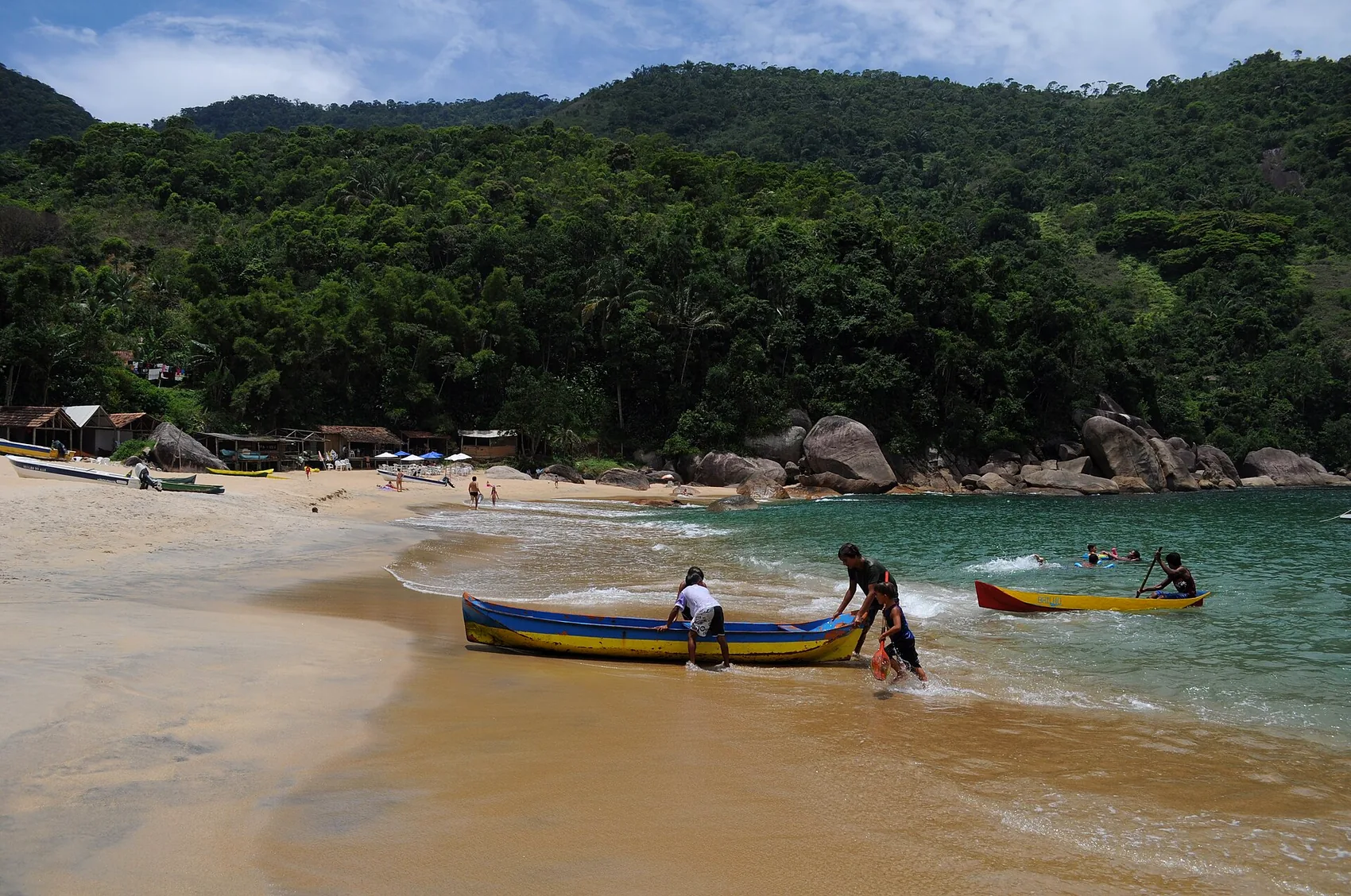
The classic is the trail to Praia do Sono from the Laranjeiras gate, about twenty-five minutes south of town by car or taxi. From the trailhead it is roughly an hour and a half of root staircases, stream crossings and sudden sea views before the path drops onto a long crescent of sand with a caiçara fishing village behind it and simple beach kitchens serving fried fish and cold beer. Push one headland further, another thirty to forty minutes, and you reach Praia dos Antigos, wilder and usually near-empty. It is a moderate walk — anyone reasonably fit in real shoes manages it — and when the sea is calm you can skip the return climb entirely by taking a boat-taxi back to Laranjeiras. We cover the full route in our dedicated hiking around Paraty guide.

The Juatinga peninsula, for the committed
South of Sono the land turns genuinely wild. The Juatinga reserve is crossed by multi-hour trails linking roadless beaches and small caiçara communities — Ponta Negra, Cairuçu das Pedras, the lighthouse point — and people walk it over two or three days, sleeping in village campsites or simple rooms locals rent out. This is the most remote coastline you can reach on foot in Rio state, and it is not a casual outing. It needs planning, tide awareness and, honestly, a local guide who knows which headlands you can round on foot and which you have to boat past. If that is your appetite, write to us and we will point you to current conditions and reliable people.
The Gold Trail, more history than sweat
Not every trek is a lung-buster. In the 1700s Paraty was the port where Minas Gerais gold met the sea, hauled down the mountains on a stone-paved mule road. Sections of that road — the Caminho do Ouro — survive in the forest above town along the Cunha road, and walking the polished, fern-edged stones is the closest thing this coast has to time travel. The effort is moderate, the reward is atmosphere, and it pairs naturally with the waterfalls and cachaça distilleries on the same road. It also holds up as a plan for a grey day, when the canopy softens the drizzle.

Pico do Mamanguá, the climb everyone asks about
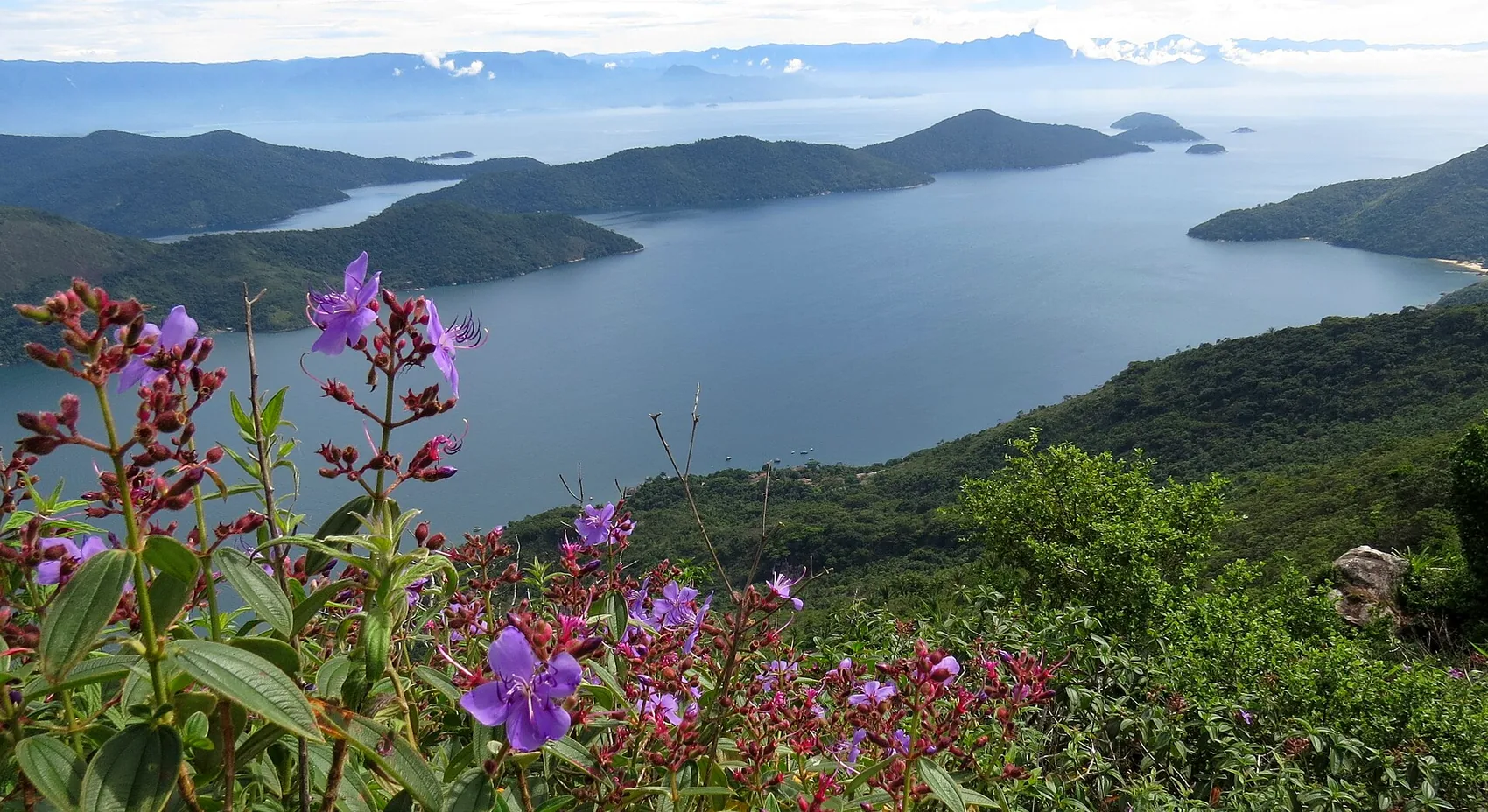
Ask ten people what the best view in the region is and most will say the same thing: the summit of the Pico do Mamanguá, sometimes called the Pão de Açúcar do Mamanguá. It stands at the head of the Saco do Mamanguá, an 8 km inlet of still, shallow water hemmed by forested walls — often described as the only tropical fjord of its kind, though it is technically a ria. At the head of that inlet a bare granite cone rises about 425 m straight up, and the view from the top is the one all the others on this coast are measured against.
Getting there is part of the adventure. You take a boat-taxi from Paraty-Mirim into the ria — a beautiful ride in itself, past oyster beds and mangroves — and land near the trailhead. From there it is a steep, honest climb of roughly an hour and a half to two hours, with a final stretch on open rock where you use your hands. From the summit ridge the ria, the outer bay, the scatter of islands and, on a clear day, Ilha Grande all arrange themselves below you like the satellite map come alive. It is a genuine 360-degree payoff for a genuine effort.
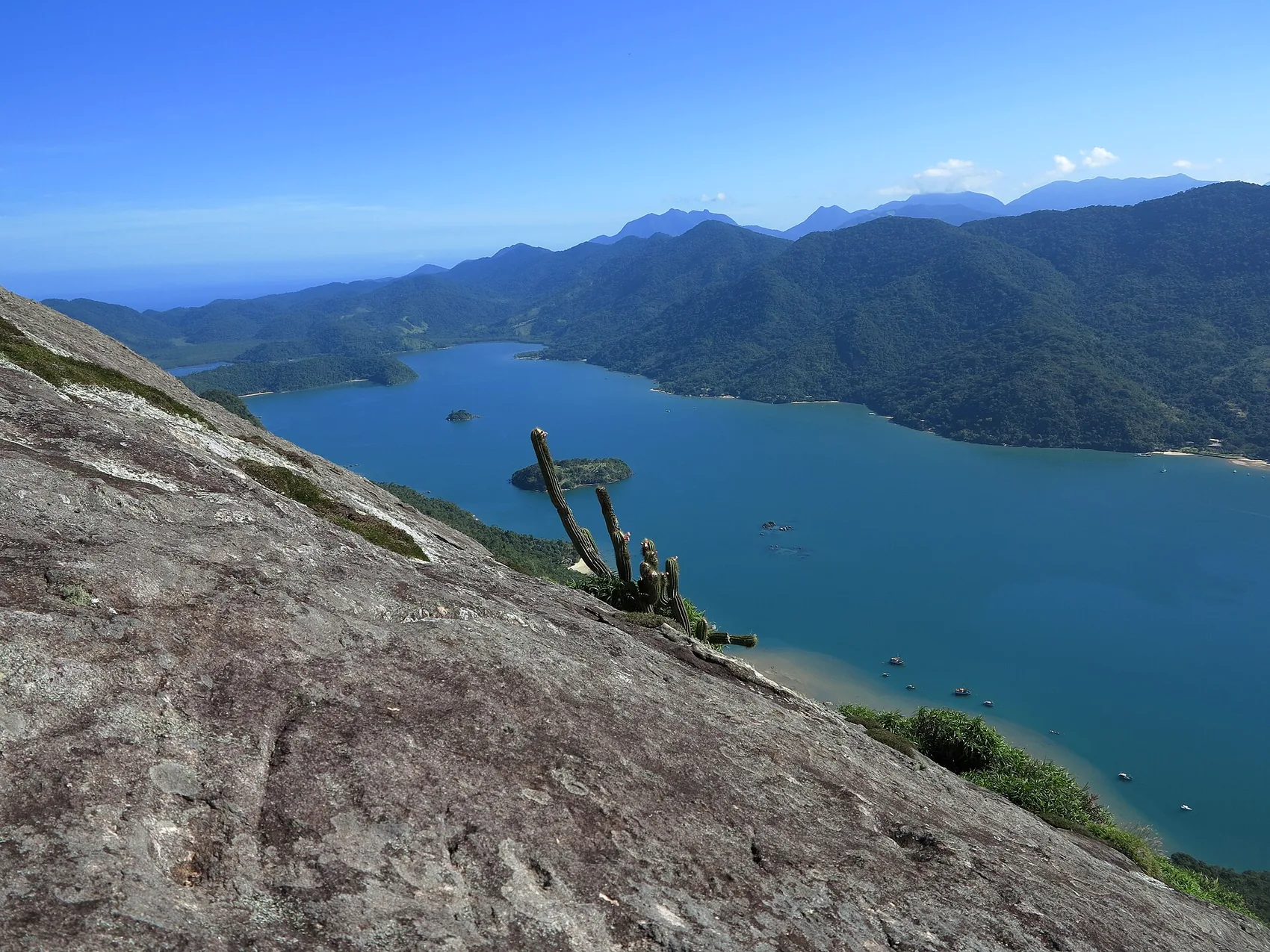

Be honest with yourself about the difficulty. This is not a stroll. The last section is exposed rock, it is slick and dangerous after rain, and there is no shade for most of the climb. Carry two litres of water per person, start early to beat both the heat and the afternoon cloud, and wear shoes with real grip. Anyone who is unsteady on their feet, afraid of exposure, or travelling with young children should choose a different day out — there is no shame in it, and the boat ride into the ria is worth doing on its own. If you want the full breakdown, the boat logistics and where to eat afterward, see our Saco do Mamanguá guide.
Tip: Many people combine the summit with a night in one of the simple ecopousadas inside the ria, doing the climb at first light before the boats and the heat arrive. If you would rather sleep with a pool and a bay view, do it as a long day trip from the chalet and be back for an evening swim.
Canyoning and waterfall rappel
This is where Paraty gets properly adrenal. The forest around town is full of steep creeks and waterfalls, and licensed operators run canyoning trips that take you down them on a rope — abseiling over rock faces, sliding into plunge pools, scrambling and swimming through narrow canyons carved by the water. Waterfall rappel is the simpler cousin: a single guided descent down the face of a fall on a fixed rope, harness and helmet on, with a guide checking every anchor and belaying you from above.
The good news for nervous first-timers is that the beginner canyons are genuinely beginner-friendly. You do not need any prior rope experience, because the guide sets and inspects every anchor, teaches you the braking hand on the ground, and stays with you the whole way. What you do need is to be reasonably comfortable in cold, moving water, steady enough on slick rock to walk between pitches, and okay with a bit of height. If any of those is a hard no for you, say so when you book — a good operator will match the canyon to the group rather than push you onto something above your comfort.
A typical beginner trip runs a morning or a full half-day. You meet in town or at the trailhead, drive out to the forest, and walk in to the first pitch while the guide talks you through the harness and the braking hand. Then it is a sequence of descents and swims, each one a little more confident than the last, with the guide going first to set the rope and last to clear it. Most groups finish elated and a bit cold, wolf down a packed lunch by the pool, and are back at the chalet with time for a hot shower and a swim before dinner. It is a big day that does not swallow your whole day.
The trade-offs to know: canyoning is entirely weather-dependent, and a responsible operator will cancel or move you when the river is running high, because flash flooding in a canyon is exactly as dangerous as it sounds. That means the drier months from about April to September are the reliable season, and even then plans can shift on the morning. It also means you should never, ever attempt a canyon or a rappel on your own or with an unlicensed guide. This is the one category where cutting corners can kill you.
Canyoning is the one activity where the operator matters more than your fitness — book the licensed one, and let them read the river.
Ziplines and canopy circuits
For families, mixed-ability groups, or anyone who wants the thrill without the cold water and the exposure, the canopy circuit is the sweet spot. An adventure park on the edge of town strings a course of ziplines through the Atlantic Forest, some of them linked by a suspended obstacle course between platforms — rope bridges, cargo nets, wobbling planks — so you can do the whole aerial circuit or just the zipline sequence on its own.
It is well-suited to teenagers and confident kids, with weight and age limits the operator sets and checks. You are clipped to a continuous safety line the whole time, staff walk you through the braking and the clip-overs, and the pace is entirely up to you — nobody is timing you across the wobble bridge. The forest setting is the real draw: you are eye-level with the canopy, sometimes with a river below, in a stretch of the same Atlantic Forest you would otherwise only see from the ground.
Honest expectations: this is fun and safe rather than extreme, and that is exactly the point. If you are chasing a genuine adrenaline hit, the canyoning will deliver more. If you want a couple of hours the whole group can share, including the ones who would never abseil down a waterfall, the zipline circuit is the one that keeps everyone happy. It also combines neatly with a nearby river or waterfall stop to round out the day.

Mountain biking in the Serra da Bocaina
The high country behind Paraty is quietly brilliant on two wheels. Certified guides run half-day and full-day mountain-biking trips up into the Serra da Bocaina National Park, on old carriage roads and forest tracks that climb through the Atlantic Forest to waterfalls and viewpoints. The park spreads across the Rio–São Paulo border and holds a spread of trails from mellow to seriously technical, so the ride can be matched to your group — a rolling forest loop for casual riders, or a lung-burning climb to a ridge like Pedra da Macela for those who want the elevation and the panorama that comes with it.
What makes it worth doing with a guide rather than renting and winging it: the good trails are not obvious, the weather turns the surface from grippy to greasy in minutes, and the best descents finish at a swimming hole you would never find on your own. Bring or ask about a proper bike with real brakes — the descents are steep and often wet — and treat the altitude and the heat with respect. Mornings are cooler and safer here just as they are everywhere else on this coast.
If you would rather keep it gentle and self-guided, the flatter lanes around town and out toward the nearer beaches are pleasant on a hybrid or town bike, and we can point you to where to hire one. That is a different kind of day — sightseeing on wheels rather than a workout — but it counts, and it is a good option on a hot afternoon when the mountains feel like too much.
Cachoeira do Tobogã, the natural waterslide
Some adventures are pure joy with almost no barrier to entry, and this is the one everyone remembers. Cachoeira do Tobogã sits in the Penha area, about 8 km inland from Paraty, where a stream runs over a long slab of smooth rock to form a natural slide into a pool. The local kids ride it standing up like surfers; most visitors go down on their backsides, laughing, and that is completely fine. Right beside it is the calmer Poço do Tarzan pool for a gentler swim, a pretty wooden footbridge, and — this being Paraty — a cachaça distillery across the road where you can watch the spirit being made and taste it afterward.
You can reach it independently: local buses run roughly hourly from the town terminal toward Penha, or it is a short drive or taxi. It costs little to nothing to enter, and it works as a half-day on its own or bolted onto a Gold Trail walk and a distillery visit, since they are all on the same road. It is one of the best rainy-adjacent plans too — you are getting wet anyway — though the rock gets more slippery and the current stronger after heavy rain, so read the water before you commit to standing up on the slide.
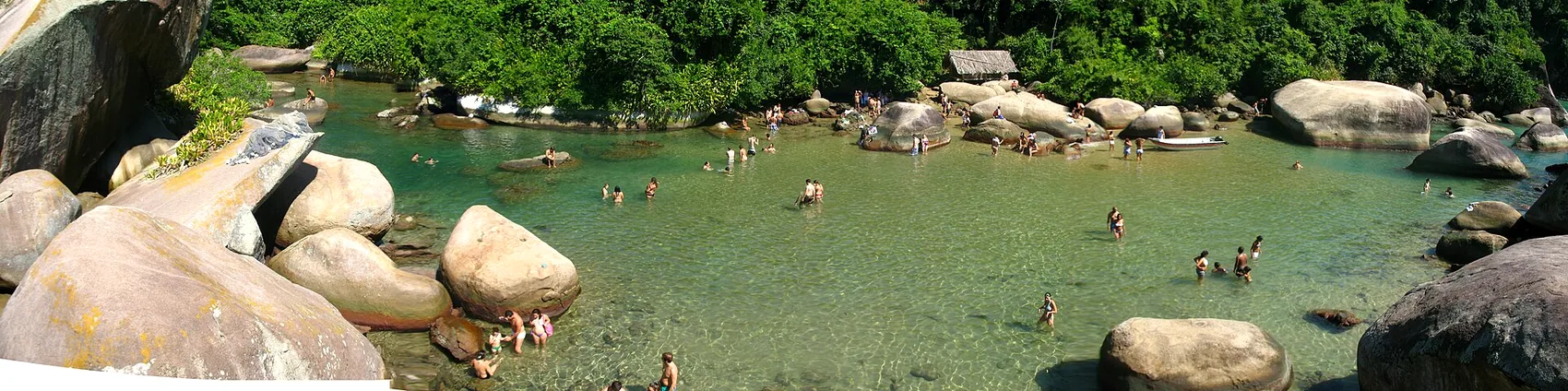

One honest caution: the slide is fun precisely because it is fast, and the rock is unforgiving. Watch someone local do it first, keep your arms in, and do not attempt the standing ride unless you genuinely know what you are doing. Families do this happily every day — just supervise the little ones closely near the top and stick to the calm pool with them.
Waterfalls and wild swimming
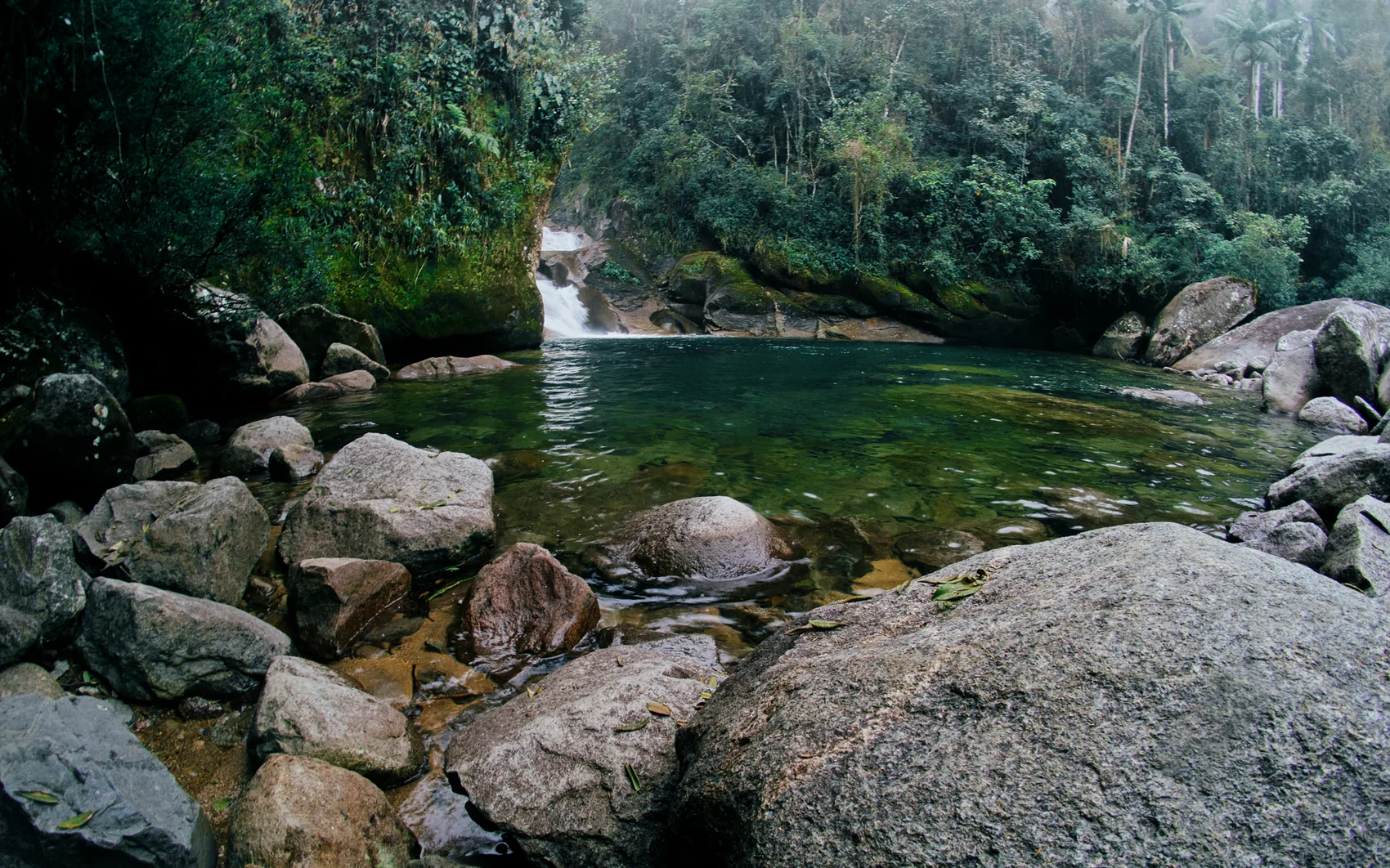
Beyond the Tobogã, the foothills are stitched with falls, and hunting them down is an adventure in its own right. Some are a five-minute stroll from a parked car; others are the reward at the end of a forest trail or a canyoning descent. The water is cold, clean and dark-tea-coloured from the forest, the pools are deep enough to swim, and on a hot day there is nothing better. Many of the accessible ones cluster along the Cunha road above town, which is why a waterfall-and-cachaça loop is such a natural Paraty day.
The season matters here more than anywhere. Right after the summer rains the falls thunder and the pools are full; late in the dry season some slow to a trickle. That is a genuine trade-off — full water is more spectacular but the trails are muddier and the rock more dangerous, while the dry months give you safer footing and thinner flows. We map out the pick of them, with access notes and which ones suit small children, in the waterfalls around Paraty guide.
Etiquette: every one of these falls sits inside a protected area or on caiçara land. Take your rubbish out, use only biodegradable products if you must, and if a small community charges a modest entry or parking fee, pay it gladly — it is what keeps the place looked after. More on this in our note on travelling lightly on this coast.
On the water counts too
Adventure in Paraty is not only vertical. The Saco do Mamanguá, the same ria you cross to reach the summit climb, is one of the best places in Brazil to paddle. Its shallow, sheltered water is ideal for sea kayaking and stand-up paddleboard, threading between mangroves and oyster beds with the forested walls rising on both sides. It is calm enough for beginners and interesting enough to hold a strong paddler's attention, and unlike the open bay it rarely gets rough.
Out in the main bay proper, the schooner and speedboat trips to the islands are the headline act — but there is adventure in the smaller-scale version too, hiring a local boatman and a kayak to reach a cove the big boats skip. We keep the paddling and the island logistics in their own guides, our kayaking and paddleboard piece and the boat days overview, so we will not repeat them here. The point for an adventure trip is simply this: budget a water day among your land days. After a summit climb or a canyon, a slow paddle through the ria is exactly the right kind of tired.

Difficulty, graded honestly
Because "adventure" gets used to sell everything from a gentle boardwalk to a technical descent, here is a plain grading of what is on offer, so you can build a trip that fits the actual group you are travelling with.
- Easy, all ages: the Tobogã waterslide (in the calm pool), the Gold Trail stroll, a self-guided town bike ride, a gentle paddle in the ria. These need no special fitness, just sensible shoes and sun sense.
- Moderate, reasonably fit: the Praia do Sono trek, most waterfall walks, the canopy zipline circuit, a beginner canyoning trip, a rolling mountain-bike loop. You will sweat and you might get scared for a second, but the barrier to entry is low.
- Hard, for the committed: the Pico do Mamanguá summit, a multi-pitch canyon, a technical Bocaina climb on the bike, and the multi-day Juatinga trek. Real fitness, a head for heights or exposure, and — for the technical ones — a licensed guide are non-negotiable.
The honest advice is to mix the grades across your stay rather than stacking hard days back-to-back. A summit climb one morning, a lazy waterfall the next, a boat day after that — that rhythm is how you come home glowing rather than wrecked. And there is no dishonour in choosing the easy version of any of these; the forest is just as beautiful from the gentle trail.
Who guides you, and how to choose
For anything technical — canyoning, waterfall rappel, ziplines, the remote treks — go with a licensed local operator, and let that be non-negotiable. The signs of a good one are boring and reliable: proper harnesses, helmets and ropes that look maintained; guides who brief you thoroughly on the ground before anything happens; a willingness to cancel or change plans when the weather turns; and small enough groups that the guide can actually watch you. If an operator is casual about any of that, walk away. This coast is beautiful and it is also genuinely wild, and the water in particular does not forgive improvisation.
For the marked walks and the waterslide you can go independently, but even then a guide earns their fee in context — the caiçara history on the Sono trail, the name of the bird that just crossed the path, the pool that is safe to jump into and the one that is not. Guiding here is often a family trade passed down through the fishing and farming communities, and hiring locally keeps money in the villages whose land you are enjoying. That is worth doing on its own terms, quite apart from the safety.
We are happy to make the introductions. Because we live here, we know which operators are running well this season and which guides suit a nervous first-timer versus a group chasing a hard day. Tell us what you are after and who is coming — get in touch and we will line it up, or point you at it so you can book direct. There is no markup and no pressure; it is simply easier than cold-searching from abroad.
When to go, and staying safe
The season shapes the whole experience. The drier, cooler stretch from about April to September is the reliable window for adventure: firmer trails, safer canyons, clearer summit views, and afternoons that hold together instead of dissolving into storms. December to March is hot, intensely green and dramatic — the waterfalls are at their fullest — but the afternoon thunderstorms are real, they arrive fast, and they close canyons and slick the rock. If you come in high summer, front-load every serious activity into the morning and keep the plan flexible. Our fuller breakdown lives in the best time to visit guide.
A handful of rules cover almost everything. Start early, always — for the heat, the light and the weather. Carry more water than you think you need, and food for anything over a couple of hours. Tell someone your plan, because phone signal dies fast behind the ridgelines. Never enter a canyon, climb exposed rock, or attempt the waterslide standing up when the river is running high after rain. And respect the protected land you are moving through: take your rubbish out, stay on the trails, and pay the small community fees without grumbling.

For anyone weighing whether Paraty is the right base for an active trip at all — versus the more polished ease of somewhere like Búzios or the pure island focus of Ilha Grande — the short answer is that nowhere else on this coast packs mountain, forest and sea into such a small radius. We lay the comparison out plainly in Paraty versus Búzios versus Ilha Grande if you are still deciding.
How to fit it into a trip
Adventure days are demanding, so pace them. If you have a long weekend, one hard day — the summit or a canyon — plus one easy nature day and one on the water is a full, satisfying balance; our long-weekend guide shows how that fits together without rushing. With a week you can spread things properly: a summit, a canyon, a mountain-bike morning, a waterfall loop and a couple of pure beach or boat days, with real rest in between. The three-day itinerary and the broader ultimate guide to Paraty both help you sequence it.
Travellers from São Paulo and Rio have the easier logistics here — a drive of roughly five to six hours from São Paulo, and around four from Rio along the coast road — which means you can arrive, settle, and start early the next morning while the trails are cool. Coming from abroad, build in a buffer day: the connection through Rio or São Paulo plus the transfer down is a long travel chain, and you do not want to attempt a 425 m granite climb on no sleep. However you arrive, the pattern is the same — treat your first morning as the acclimatiser and save the hard day for once you have found your feet.
Packing, and the chalet as basecamp
You do not need to bring a mountaineering kit. Licensed operators supply the technical gear — harness, helmet, rope, and often the bike and the wetsuit-adjacent bits. What you bring is the everyday adventure kit: trail shoes with real grip that you do not mind soaking, quick-dry clothes, a swimsuit worn underneath, a dry bag for your phone, plenty of water, high sun protection, and insect repellent for the forest. A light rain layer earns its place year-round. Our what to pack guide has the full list, including the shoes that survive the mud and the ones that do not.
And then there is the part that turns a good active trip into a great one: where you land at the end of the day. Chalé Bel Air was built for exactly this rhythm. It is a hillside chalet with an infinity pool and a deck that takes in the Bay of Paraty, Angra dos Reis and Ilha Grande in a single sweep — the triple view — a short drive above the historic centre. You go out early into the forest or up the granite, you come home muddy and grinning, you rinse off and slide into the pool as the heat leaves the day, and the whole bay turns gold below you. That contrast, between the wild morning and the quiet evening, is the thing guests write to us about afterward.

Have a look at the chalet if you have not already, browse the full set of things to do in our explore section, and when you are ready to shape an itinerary around the trekking, the canyons and the climbs, just tell us what you are after. We live here, we do these things ourselves, and we would rather point you at the right guide and the right day than watch you guess from a search page. The mountains are not going anywhere — but the good weather windows are shorter than you think, so it is worth planning the hard days first and letting the swims fall where they may.
Come stay above the bay
Chalé Bel Air sits on the ridge that looks over everything in this guide. Tell us your dates and what kind of trip you are after — we answer personally.
Ask about your datesFrequently asked questions
What adventure activities can you do in Paraty?
The short list is jungle trekking to roadless beaches, the Pico do Mamanguá summit climb, canyoning and waterfall rappel in the forest, zipline and canopy circuits at an adventure park on the edge of town, mountain biking in the Serra da Bocaina, and the natural rock waterslide at Cachoeira do Tobogã. Most run year-round, weather permitting, and most are half-day trips you can reach within an hour of the historic centre.
How hard is the Pico do Mamanguá hike?
It is a genuinely steep climb of roughly 425 m to the summit ridge, usually done in about 1.5 to 2 hours up, with the last section on open rock. It is reached first by boat-taxi from Paraty-Mirim into the Saco do Mamanguá. Fit walkers manage it fine with two litres of water and an early start; it is not for anyone unsteady on rock, and it is best skipped after heavy rain.
Is there canyoning near Paraty?
Yes. Operators run canyoning and waterfall rappel in the forest around Paraty, descending rock faces and pools on a rope with a harness and helmet. No prior experience is needed for the beginner canyons because a certified guide sets and checks every anchor. You need to be comfortable in cold moving water and reasonably steady on slick rock.
Can you do ziplines in Paraty?
An adventure park on the edge of town runs a canopy circuit strung through the Atlantic Forest — a sequence of ziplines, some with a suspended obstacle course between platforms. It is one of the more family-friendly ways to get up into the trees, with weight and age limits set by the operator, and it pairs well with a river or waterfall stop nearby.
What is Cachoeira do Tobogã?
It is a natural rock waterslide in the Penha area, about 8 km inland from Paraty. Smooth stone under a shallow waterfall lets you slide into a pool; the confident local kids ride it standing up, but you do not have to. The Poço do Tarzan pool and a cachaça distillery sit right beside it, so it is easy to combine into a half-day.
Do you need a guide for Paraty adventures?
For the technical activities — canyoning, waterfall rappel, ziplines — always, and only with a licensed operator who supplies the harness, helmet and rope work. For remote treks like the Juatinga peninsula a local guide is strongly advised for route-finding and tides. Short, marked walks and the Tobogã slide you can do independently, though a guide adds context and safety.
When is the best time for adventure activities in Paraty?
The drier, cooler months from about April to September give firmer trails, safer canyons and clearer summit views. December to March is hot and green but storms build fast in the afternoon, which closes canyons and makes rock slick — so start early and keep plans flexible. Waterfalls run fullest right after the summer rains.