Paraty is one of the most photogenic small towns in Brazil, but the good pictures depend almost entirely on timing the light and the tide. This is where we send guests, when to go and what to leave behind.
Paraty is one of those places where nearly everyone comes home with a picture they like, and almost nobody comes home with the picture they could have had. The town gives up its best Paraty photography spots only to people who understand two things it runs on: the light, which changes the whitewashed houses from flat white to warm gold in the space of an hour, and the tide, which floods the lowest cobbled streets on schedule and turns them into mirrors. Get both of those right and a phone will out-shoot a stranger with a heavy camera bag who turned up at noon.
We say this as people who watch it happen from above. Our house sits on the hillside about 400 metres up, a short drive above the historic centre, with an infinity pool and a deck that looks straight down the coast onto the Bay of Paraty, Angra dos Reis and Ilha Grande all at once. From up here you can read the whole day: the mist burning off the islands at dawn, the schooners crossing the flat morning water, the light going amber over the rooftops in the late afternoon, and the town lamps coming on while the sky is still blue. This guide is the long version of what we tell guests over coffee before they drive down with a camera.
It is organised the way you would actually shoot the place: the tidal centre and its reflections, the churches, the fort hill, the bay from height, the schooners, the fjord at Mamangua, the waterfalls, and then the practical business of timing, gear and manners. None of it needs a drone or a professional kit. It needs you to be in the right spot when the light and the water are doing their part.
Why Paraty photographs the way it does
Three things make this town unusually easy to shoot well and unusually easy to shoot badly. The first is the architecture. The historic centre is a near-complete colonial grid of low, whitewashed houses with brightly painted door and window frames, set on wide, uneven cobblestones. There are almost no cars, no power lines strung across the good streets, and very little that looks like the twenty-first century once you are inside the old town. That means clean frames in almost any direction, but it also means the pictures live or die on light and colour rather than on some dramatic single subject.
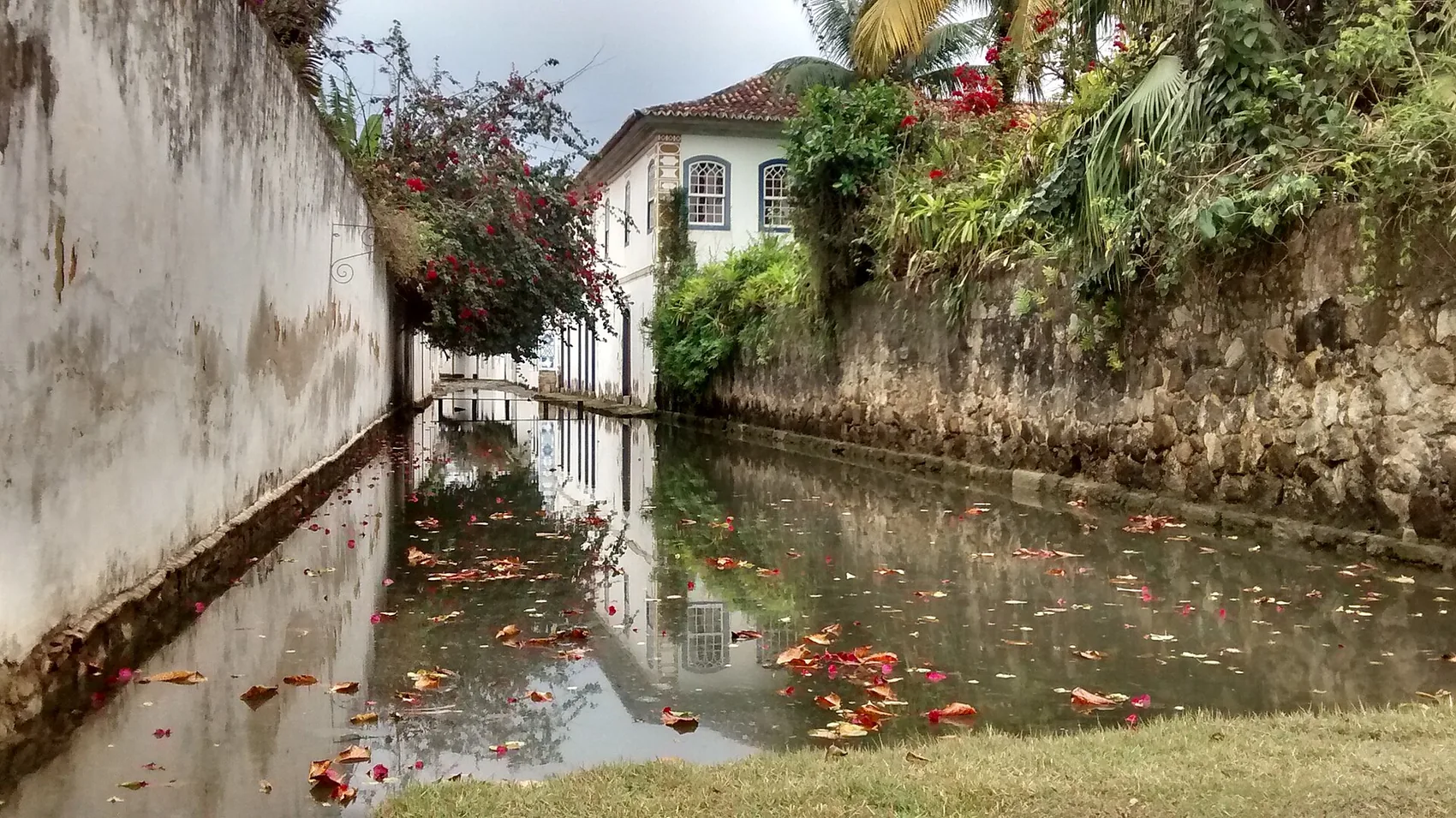
The second is water. Paraty sits where the Serra do Mar mountains meet a bay scattered with islands, so you are never far from a reflective surface. The bay itself is glassy on calm mornings, the rivers and waterfalls come down clear through the forest, and, most famously, the sea comes up into the streets. The lowest lanes near the seawall were laid so the highest spring tides slide in through gaps in the walls, wash the cobbles, and drain away. For a photographer this is a gift: for a short window, the town doubles itself in a sheet of still water.
The third is the light itself. This is the tropics, so the sun climbs fast and drops fast, and the middle of the day is fierce and contrasty in a way that flattens the pastel colours and blows out the white walls. The margins of the day are long and generous, though, and the humidity often leaves a soft haze over the islands that separates them into pale layers. The practical takeaway runs through this whole guide: shoot early, shoot late, and treat the flooded streets and the golden hour as appointments you keep, not accidents you hope for.
The cobbled centre and the spring-tide reflection
The single most photographed thing in Paraty is the historic centre with water lying on the cobbles, and it is worth understanding exactly how it works, because most visitors never see it and assume it is rare. It is not rare. It is a calendar event.
Reading the tide, not your luck
The flooding happens on spring tides, which come around the full moon and the new moon, roughly twice a month. On those days the highest tide of the day pushes seawater up into the lowest streets near the waterfront. The water is normally only ankle- to shin-deep, it sits for an hour or two, and then it drains back out as the tide drops. So the plan is simple: before you travel, or once you arrive, look at a tide table for Paraty for your dates, find the days with the biggest high tides, and note the clock time of the peak. If that peak lands near sunrise or sunset, you have hit the jackpot, because you get the reflection and the good light in the same frame. If it lands at midday you can still shoot it, you just accept harder light.
Do not confuse this with the summer rain floods. Heavy December-to-March storms can also put water in the streets, but that water is muddy, moving and not something you want to stand in. The tidal flooding is clean, calm seawater, and that stillness is the whole point. A good habit is to check the tide table on your first evening in town, mark the two or three best windows of your stay in your phone, and build the rest of your plans around them, because a peak spring tide at golden hour is not something you want to sleep through or spend on a boat.
Where to stand
The best reflections happen where a tall, clean subject stands at the end or edge of a flooded lane, so it has something to reflect. The waterfront square in front of the little Igreja de Santa Rita is the classic, because the church sits low by the water and floods early. The streets running down toward the seawall, and the open ground near the Matriz, also pool well. Once you find water, get low. Crouch, or set a phone almost on the surface, so the reflection fills the bottom half of the frame and the real building fills the top. The lower you go, the more symmetrical and dreamlike it reads. A small pocket tripod helps here, and so does patience between gusts of wind, because it only takes a breath of air to break the mirror.
One honest warning: everyone else wants this shot too, and on a full-moon evening the popular corners fill up. Arrive before the light peaks, not at it. And watch your footing, because the domed pe-de-moleque stones are slick and hard to read under water.
For a short window, the town doubles itself in a sheet of still water. Nobody who plans for it goes home disappointed.
The dry-street version
If your dates miss the big tides, the centre still delivers. Come at first light, when the lanes are empty and the sun is raking low along them, and shoot down the streets so the perspective pulls your eye toward a church or a corner of coloured houses. The painted window frames, the old lamps, the flower boxes and the odd fishing net make good tight details. Our fuller walk-through of the buildings themselves lives in the guide to Paraty's colonial architecture and churches, which is worth a read before you go so you know what you are looking at.
The four historic churches
Paraty's colonial society built four churches, one for each part of a rigidly divided town, and each has its own character and its own best angle. Treat them as places of worship first, keep your voice down inside, dress modestly, and check opening times locally, because they are short and irregular.
Igreja de Santa Rita
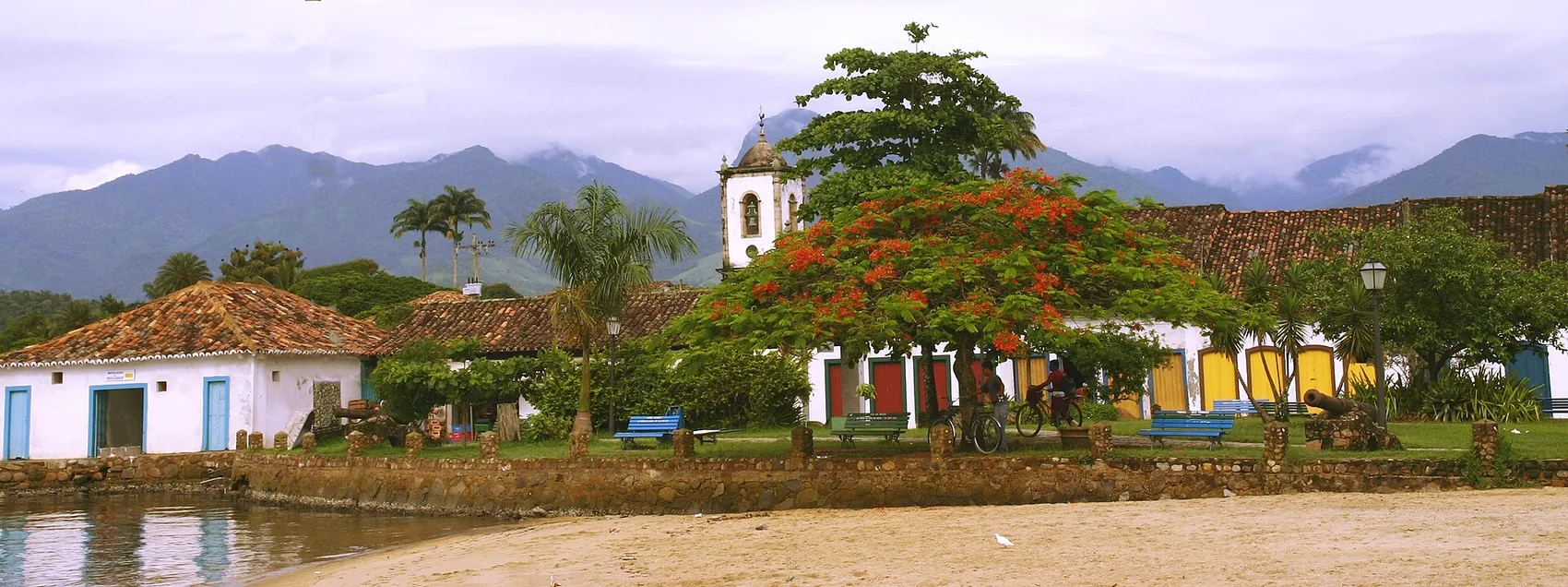
Founded in 1722 and generally cited as the oldest surviving church in the centre, Santa Rita stands on the waterfront and is the postcard. It was built by and for Paraty's free mixed-race Catholics and now holds a small museum of sacred art. Photograph it from across the open square at golden hour, when the low sun warms its pale front and the palms beside it, and again at high tide when the wet ground in front reflects the whole facade. It also silhouettes cleanly against a bright sky if you expose for the background and let the church go dark.
Igreja Matriz de Nossa Senhora dos Remedios
The Matriz is the main church, a larger neoclassical building on the central square, and it anchors most wide shots of the town. Its plain, imposing front takes warm evening light well, and the square around it floods on the biggest tides, which gives you a reflection of the whole building. Step back far enough to get the twin bell openings and the full width, and try a frame with a few figures crossing the square for scale.
Rosario and Nossa Senhora das Dores
The Igreja de Nossa Senhora do Rosario e Sao Benedito was the church of Paraty's enslaved and free Black population, and the small Igreja de Nossa Senhora das Dores served the town's white elite. Both are quieter, less crowded subjects, and Dores in particular sits near the water with a graceful simplicity that rewards a clean, symmetrical composition. Shooting all four in one slow morning is a satisfying little photo project in itself, and it teaches you the social map of the old town as you go.
Forte Defensor Perpetuo and the town from the side
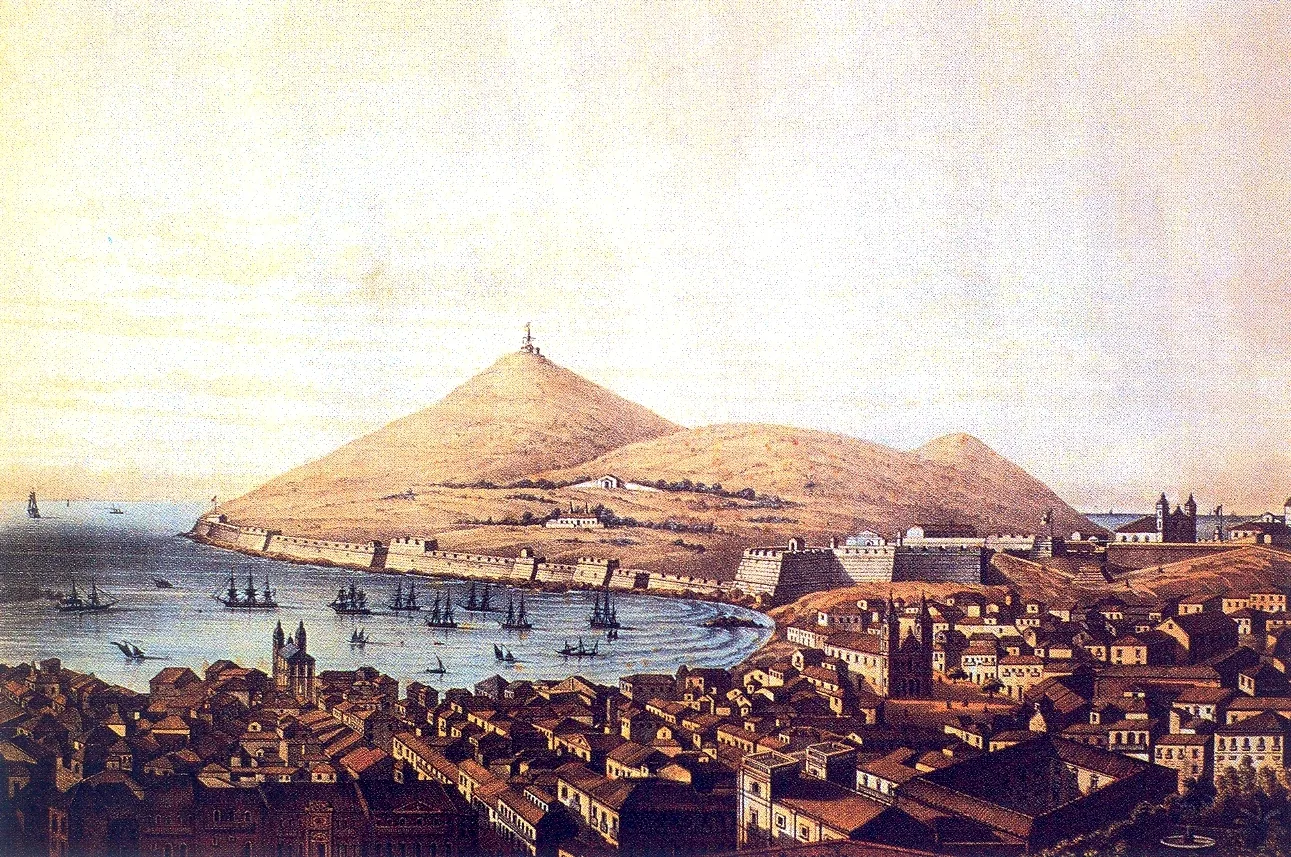
To get the town and the bay in one frame you need a little height, and the easiest is the hill on the Pontal side of the harbour that holds the Forte Defensor Perpetuo. The fort was rebuilt in 1822, now works as a small museum, and the walk up gives you a raised view back across the roofs of the historic centre to the mountains behind, with the bay and its islands off to the side.
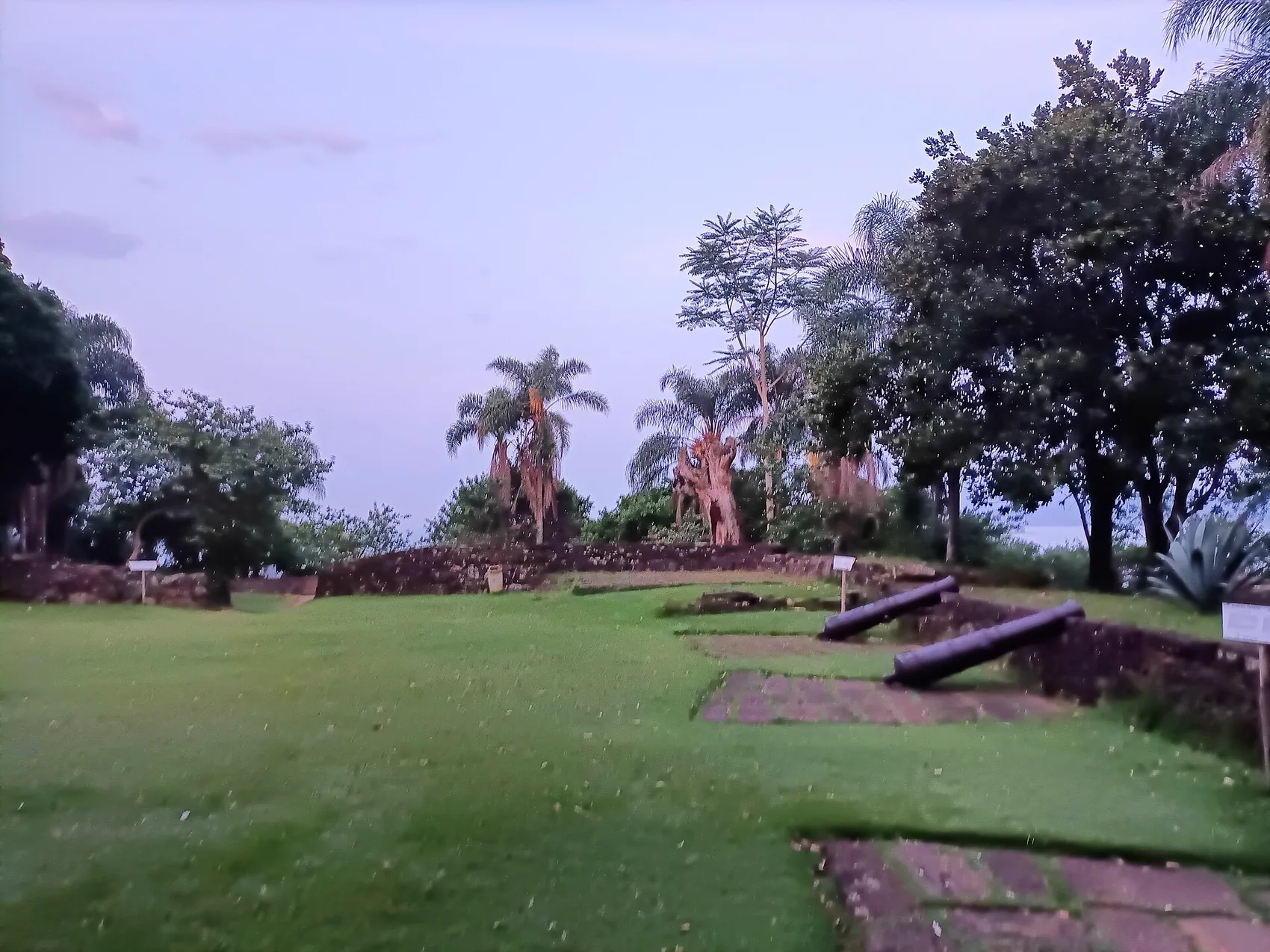
Go in the late afternoon so the sun is behind you and lighting the town, not in your lens. From up here the tangle of terracotta rooftops reads as a warm carpet against the green wall of the Serra do Mar, and on a clear evening the light turns everything amber before it drops. It is also a good vantage for the boats coming and going from the harbour. The walk out along the Pontal shore adds a few beach-and-boat compositions on the way, and it is a gentle enough stroll to do with a camera in hand and children in tow.
Where the best Paraty photography spots really open up: the bay from above
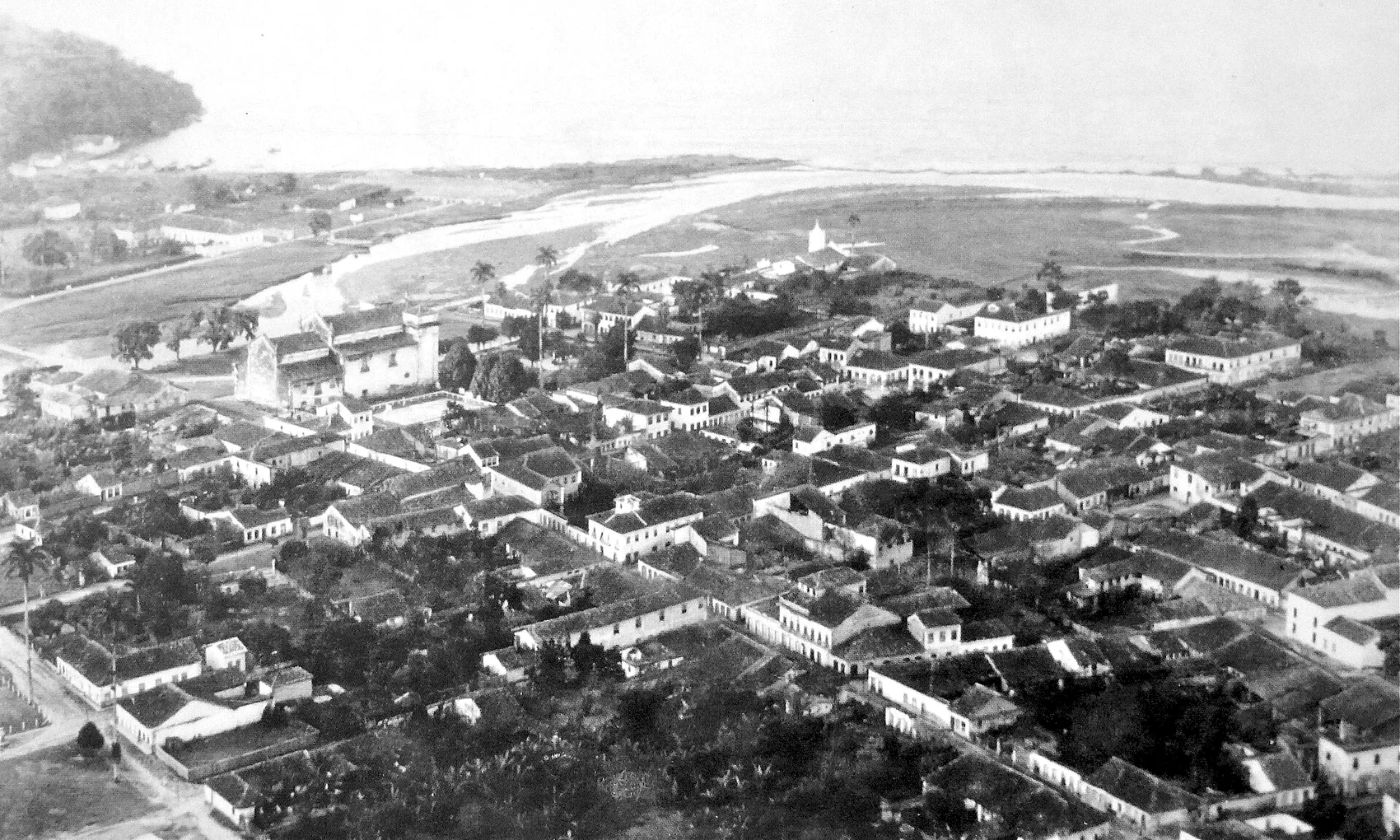
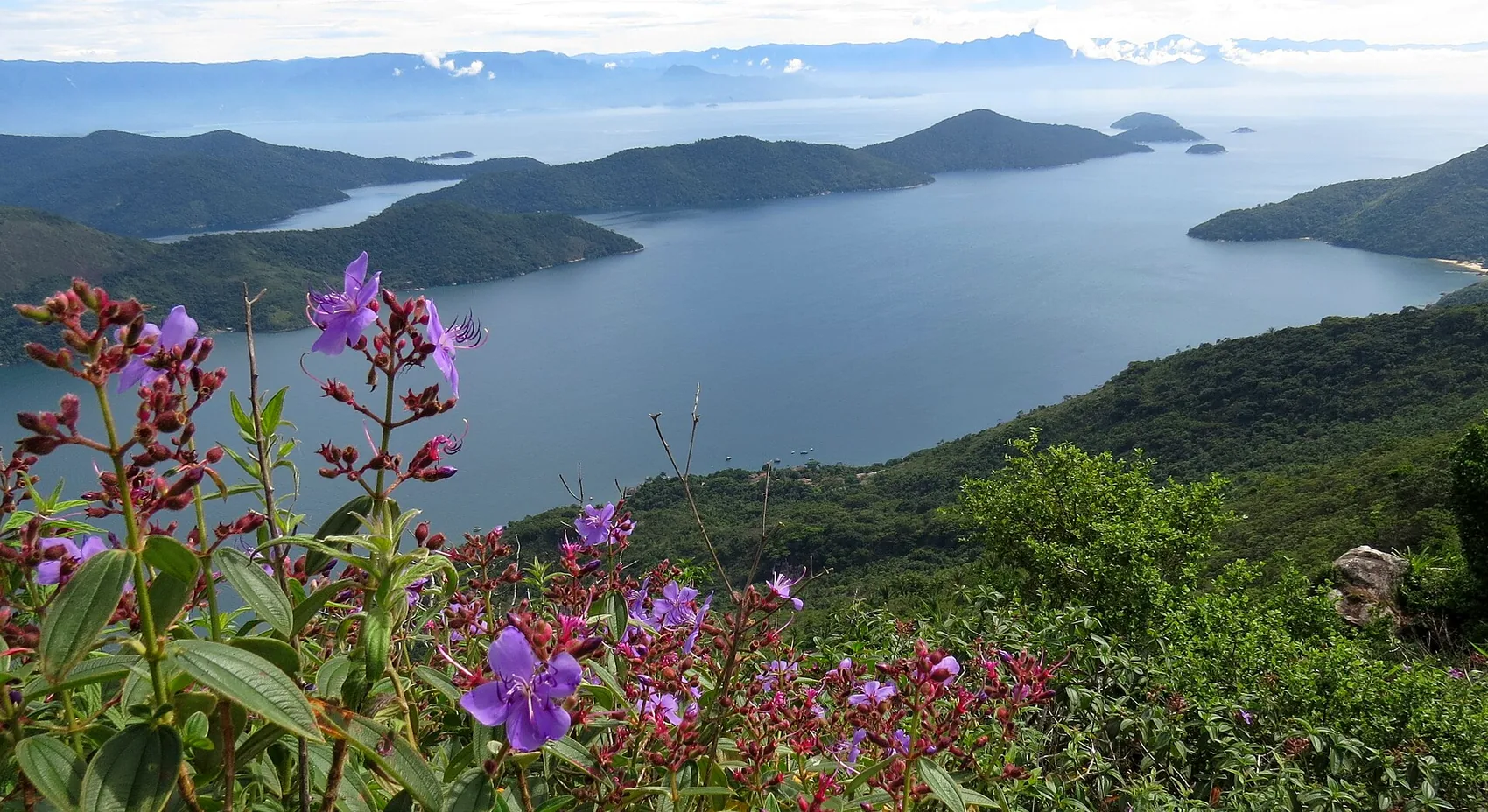
Here is the thing most guides miss. The image people most want from Paraty, the wide sweep of blue bay studded with green islands, is a view from altitude, and you do not need to fly a drone to get it. You need to be up a hill. The hillsides that ring the town all look down onto the water, and the higher you are, the more the bay, the islands and the coastline stack up into the frame.
This is the part we know best, because it is the view we live with. From the deck of the chalet, about 400 metres up, the land falls away to a triple view: the Bay of Paraty directly below, the wider sprawl of Angra dos Reis along the coast, and the long dark shape of Ilha Grande beyond. In the morning the islands sit in pale layers of haze, separated like stage flats. In the late afternoon the whole thing goes gold and then, for a short while after the sun drops, an even blue with the first lights coming on far below. You do not have to be our guest to understand the principle: gain height, shoot at the ends of the day, and let the haze do the work of separating the layers.
A long lens or a phone's telephoto is useful up here, because it compresses the islands and pulls them closer together into that stacked, layered look. A wide shot captures the sweep; a tight one captures the mood. Shoot both. And if you are staying somewhere with a pool that meets the horizon, the infinity edge against the bay at golden hour is its own picture, one we never get tired of.
Tip: the layered-island haze is strongest in the cooler, drier months. In peak summer the air is clearer but heavier, and afternoon cloud builds over the mountains, so shoot the panorama in the morning before it forms.
Schooners and the working waterfront
Paraty's harbour is still full of traditional wooden schooners, the broad-beamed tour boats and older working craft that cross the bay every day. They are one of the most reliably good subjects in town because they combine warm timber, tall masts and reflections, and they move, so there is always a new arrangement.
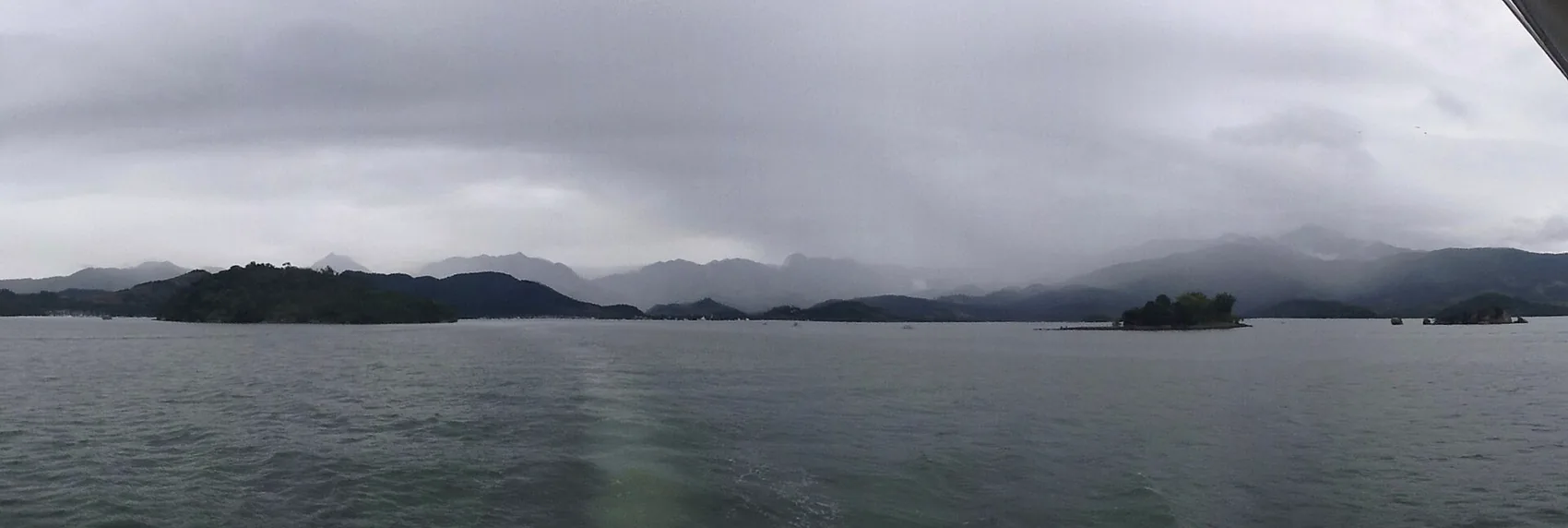
From land, the quay along the waterfront and the Pontal side give you the boats moored in rows. At golden hour, position the low sun behind them for warm-rimmed silhouettes with the islands beyond. At high tide, drop low so the still water doubles the hulls and masts. Early morning, when the water is glassy and a boat or two is just pushing off, gives you the calm, empty version.
The better move, if you have the time, is to get on the water. A day out on a schooner or a smaller boat puts you alongside the fleet, gives you the town shrinking behind its mountains, and drops you at island beaches where you can shoot the boats anchored over clear water. We keep a whole guide to planning that at our boat days page, and the practicalities of moving around the region, including which boats go where, sit in getting around Paraty. Bring a soft cloth for spray and keep the camera in a dry bag between shots, because salt water and lenses do not forgive each other.
Islands, beaches and clear water
Between the town shots and the big panoramas sits a whole category people underuse: the islands and quiet beaches of the bay, photographed from a boat or from the sand. On a calm day the water over the shallows near the islands goes a clear pale green that reads beautifully from above, so shoot down into it from the boat's rail as well as out across it. Anchored boats sitting on their own reflections, a lone canoe crossing an empty cove, a strip of white sand backed by forest that comes right down to the tideline: these are the frames that say Costa Verde as clearly as any church does.
The trick with beaches is the same as everywhere else here: avoid the hard midday overhead sun, which turns the sea a flat grey-blue and burns out the sand. Early and late, the water holds its colour and the light rakes texture across the beach. The quieter, harder-to-reach coves tend to photograph best simply because they are empty, and we point to several in the guide to Paraty-Mirim and the quiet beaches. If you would rather cross the water to Ilha Grande for its beaches and forest trails, the logistics are in getting from Paraty to Ilha Grande.
The Saco do Mamangua and the Sugarloaf viewpoint
If you want the genuinely wide, aerial-style panorama, and you are willing to earn it on foot, the Saco do Mamangua is the place. It is a long, narrow arm of sea, often called a tropical fjord, that reaches some eight kilometres inland between steep forested ridges. At its mouth stands the Pico do Pao de Acucar, a granite peak of around 425 metres, and the climb to the top is the best big-view photograph in the whole region.
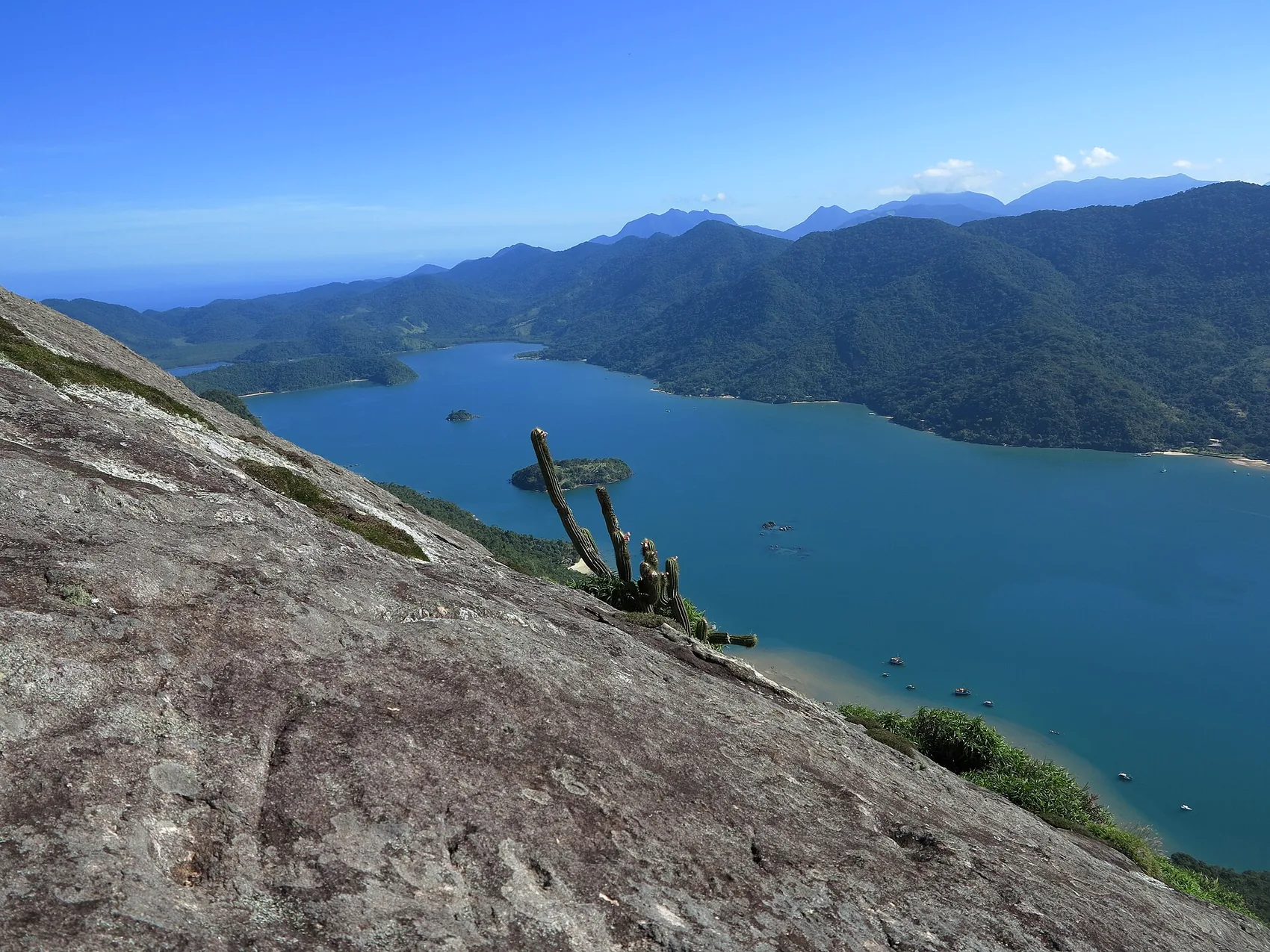
You reach the trailhead by boat from Paraty or Paraty-Mirim, usually landing near the head of the fjord and walking up from there. The hike is short but steep, roughly two hours round trip, and the last section uses hands as well as feet, so it is not for small children or anyone unsteady. The reward at the top is a 360-degree view: the whole shape of the fjord below you, the mangroves at its head, and the open coast and islands beyond. Go early to beat both the heat and the afternoon cloud, carry water, and wear grippy shoes, because the rock gets slick.
Even if you do not climb, the fjord itself is beautiful from the water, flat and green and framed by ridges, and a paddle up it at first light is a lovely, quiet shoot. We go deeper on the whole area, including how to time the boat and the light, in the Saco do Mamangua guide.
Waterfalls and the forest
Behind the town, the mountains hold as much water as the bay does, and it comes down through the Atlantic forest in a string of falls, most of them along the Paraty-to-Cunha road. They are a different kind of subject: green, wet, high-contrast, and best on an overcast day rather than in full sun.
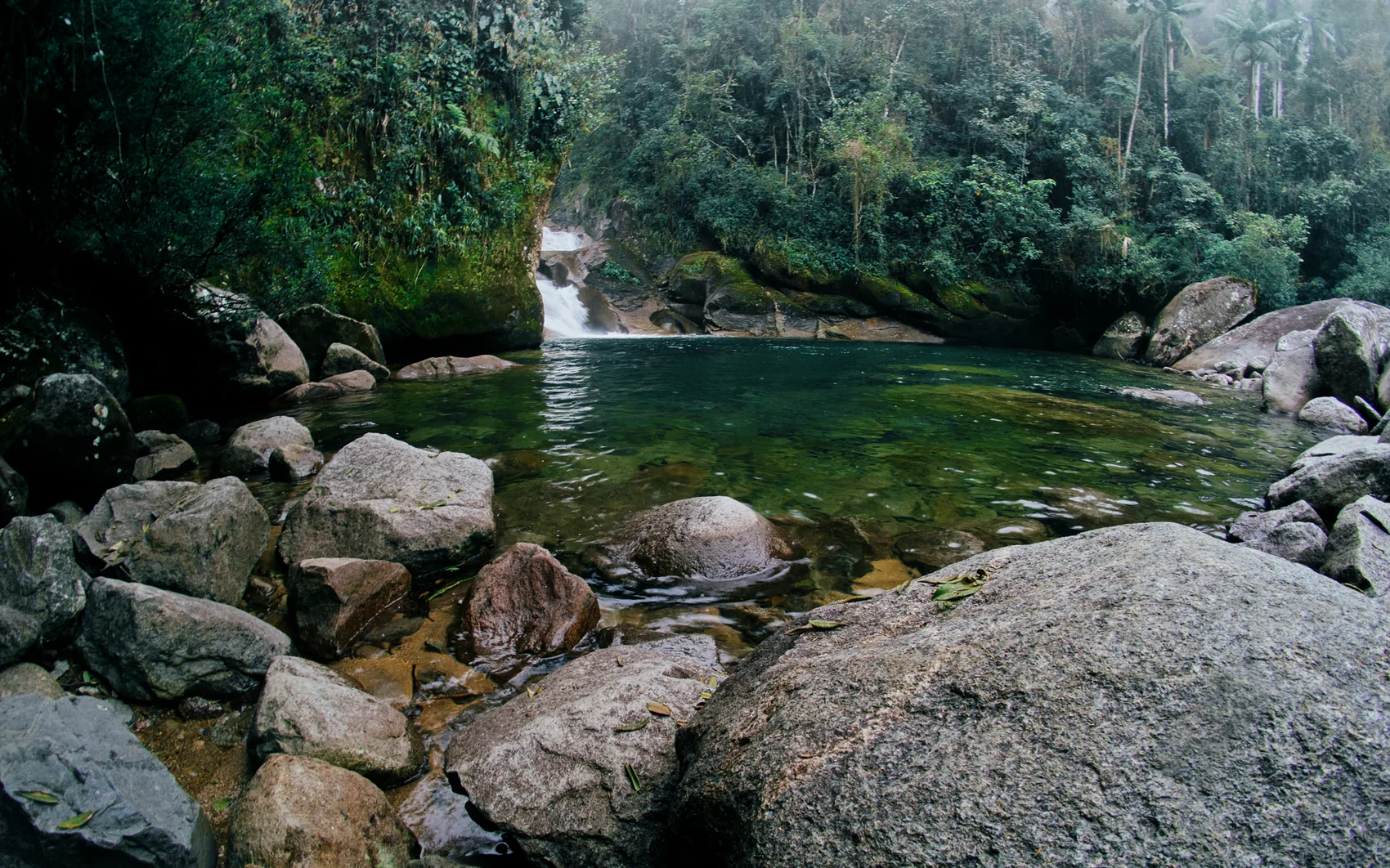
The best-known is the Cachoeira do Tobogao, a natural rock slide people ride sitting down, with a pool above it and a taller fall, the Pedra Branca, further up the same road. For photographs, cloud is your friend here, because it evens out the brutal contrast between bright water and dark leaves. If you have a phone or camera that can slow the shutter, or a small tripod, you can smooth the water into that soft, milky flow; on a phone, look for a long-exposure or live-photo blur option. Protect the gear from spray, and be genuinely careful on the rocks, which are slippery in a way that lands people in the clinic. We lay all of that out, including safety and how to reach each fall, in the waterfalls around Paraty guide, and the historic gold-mule track that climbs into the same forest has its own walk-through in the Caminho do Ouro guide.
The forest around the falls is also full of smaller subjects if you slow down: bromeliads, filtered light through the canopy, and, if you are lucky and quiet, a capuchin monkey or a bright bird. Do not chase wildlife or bait it; a long lens and patience get better results than any amount of noise. The green is at its most saturated a day or two after rain, when everything is wet and the light is soft, which is another argument for keeping the forest for a grey morning and saving the bright days for the bay.
Golden hour, blue hour and the shape of a shooting day
The rhythm of a good photography day in Paraty is the same whether you have a full camera or a phone, and it is built around the two ends of the day.
Dawn is for the empty town. Be on the cobbles as the sun comes up and you will have the historic centre almost to yourself, with soft, directional light down the lanes and nobody in your frame. This is also when the bay is glassiest for reflections and when the island haze is at its most layered from height.
The middle of the day, roughly eleven to three, is for the pool, the beach or lunch. The light is harsh and top-down, the whites blow out, and the pastel colours go flat. Do not fight it. This is the swim-and-nap window, which is exactly why a hillside base with a pool earns its keep.
The late afternoon is golden hour, when the church fronts, the boats and the rooftops all warm up. Then comes the part people forget: the blue hour, the twenty to thirty minutes after the sun has actually set, when the sky over the bay goes a deep even blue and the town lamps and boat lights switch on. That balance between warm artificial light and cool sky is the most atmospheric window of the whole day, and it needs a steady surface or a small tripod because the light is low.
If you are staying up the hill, you get a version of all of this without leaving the deck, which is part of why we like sending guests down for the dawn and the golden hour and keeping the harsh middle of the day for the water. For the seasonal picture of when the light and weather are kindest, the best time to visit Paraty guide goes month by month.
Gear, phones and settings without the jargon
You do not need a professional kit to photograph Paraty well. Most of the pictures in this guide are within reach of a recent phone if you know a few things.
Learn where your exposure and focus locks are. On a phone, tapping to set focus and then dragging to darken or brighten the frame is the single most useful habit, because it stops the bright sky from fooling the camera into underexposing a church, or the white walls from blowing out. For the flooded-street reflections and the blue hour, a small pocket tripod or even bracing the phone on a wall makes the difference between sharp and soft. A cheap clip-on wide or tele lens can be fun but is not essential; the phone's own lenses cover most of it.
The one accessory we would never skip near the water is a soft microfibre cloth. Sea spray and waterfall mist land on the lens constantly, and a smeared front element ruins more Paraty photos than bad light ever does. Keep it in a pocket and wipe often.
If you carry a proper camera, a mid-range zoom covers the streets and the churches, and a longer lens earns its place on the bay and from height, where it compresses the islands into layers. Bring more memory than you think and a way to keep everything dry. The salt air is hard on gear, and the humidity can fog a cold lens brought out of air conditioning, so let equipment acclimatise before you shoot. Our fuller list of what to bring, including for the boat and the forest, is in what to pack for Paraty.
Manners: people, churches and drones
Paraty is a living town, not a set, and the pictures are better and the trip is kinder when you shoot with some care. Ask before photographing people close up, especially fishermen, market sellers and residents going about their day; a smile and a gesture at the camera is usually enough, and the portrait is better for the consent. Do not photograph anyone at prayer inside the churches, and go easy with flash near old painted altars.
On drones, be realistic. The historic centre is a protected heritage site, flying over crowds and boats is restricted, and rules in Brazil require registration and sensible distances from people. For the wide bay shot you almost never need one anyway, because the hills give you the height. If you do fly, do it away from the town and the harbour, over open water or empty hillside, and never over people or moored boats without permission. A viewpoint is simpler, quieter and far less likely to end your trip with a confiscated aircraft.
The same restraint applies at the waterfalls and on the trails: stay on the paths, do not move rocks or plants to improve a frame, and leave the forest as you found it. The explore section of the site rounds up the wider region if you want to plan where to point the camera next, from the quiet beaches to the islands.
A one-day and a two-day shooting plan
If photographs are the point of your trip, here is how we would sequence it.
One full day
Be in the historic centre at sunrise for the empty cobbles and the reflections if the tide obliges. Shoot the four churches and the waterfront through the soft early light, then walk out to the Forte Defensor Perpetuo hill for the town-and-bay frame before the sun climbs. Retreat for the harsh middle of the day. In the late afternoon, get on or beside the water for the schooners at golden hour, and stay put through the blue hour for the town lights over the bay. That is a complete, well-lit day without ever rushing.
Two days
Give the second day to height and water. Take a boat to the Saco do Mamangua and climb the Pico do Pao de Acucar in the cool of the morning for the big panorama, then spend the afternoon on the bay among the islands, shooting the boats anchored over clear water. If the weather turns, swap in the waterfalls, which actually prefer a grey sky. A useful way to slot all of this into a broader trip is the 3-day Paraty itinerary, and if you have longer, the 7-day Costa Verde itinerary spreads the same shots across the wider coast at a gentler pace.
Festivals add another layer if your dates line up. The Corpus Christi flower carpets, the Festa do Divino and the winter literary festival, FLIP, all fill the streets with colour and life, though FLIP in particular packs the town, so factor the crowds into your timing. The rundown of what happens when is in the Paraty festivals and events guide.
Bringing it home from the deck
The pictures most of our guests end up loving are not the postcard church at all. They are the ones from the house at the edges of the day: the pool's infinity edge cutting into the bay, the islands going from haze to gold to blue, the town lights waking up 400 metres below while the deck is still warm from the afternoon. That triple view of the Bay of Paraty, Angra dos Reis and Ilha Grande does most of the work; all you do is be there with something to catch it, and come back up after the day's shooting for a swim and the sunset.
That, in the end, is the argument for a hillside base when photography is the point. You send yourself down into the town for the dawn and the golden hour, you keep the flat middle of the day for the water, and you have a high, quiet vantage waiting for you at both ends. If you want to see exactly what the deck looks down on, the details are on the chalet page, and we are always happy to help plan the boat days, the tide timing and the best evenings to be up here with a camera. Just reach us through the contact page and tell us what you are hoping to shoot. Half the pleasure, for us, is watching people work out that the best light in Paraty was never a secret. It was just a schedule.
Come stay above the bay
Chalé Bel Air sits on the ridge that looks over everything in this guide. Tell us your dates and what kind of trip you are after — we answer personally.
Ask about your datesFrequently asked questions
What are the best photo spots in Paraty?
The short list is the tidal cobbled streets of the historic centre at high water, the waterfront in front of the Igreja de Santa Rita, the neoclassical Matriz on the main square, the Forte Defensor Perpetuo hill for the town-and-bay shot, and the wooden schooners moored along the quay. On the water, the Saco do Mamangua and the Pico do Pao de Acucar viewpoint give you the wide aerial-style panorama without a drone.
When is the best light for photography in Paraty?
The first hour after sunrise and the last hour before sunset. Early morning gives you empty cobblestones and soft, flat light on the whitewashed houses before the day-trip groups arrive. Golden hour warms the church facades and the boats, and the blue half-hour after sunset lights the sky over the bay while the town lamps come on. The harsh midday sun between roughly 11am and 3pm is the one window worth avoiding for anything but swimming.
How do I photograph the flooded streets in Paraty?
You need a high spring tide, which happens for a few days around the full and new moon. Check a local tide table, aim for the peak of the highest tide of the day, and get low so the reflection of a church or a colonial house fills the wet cobbles. A phone held just above the water works as well as any camera. The water is usually only ankle- to shin-deep and drains within an hour or two, so you have a short window.
Do you need a drone to get the aerial shot of Paraty bay?
No. The classic wide view of the bay, the islands and the coastline comes from height, not from a drone. The Pico do Pao de Acucar hike above the Saco do Mamangua gives you a 360-degree panorama from about 425 metres, and the hillsides above town, including the ground our own chalet sits on, look straight down onto the Bay of Paraty, Angra dos Reis and Ilha Grande. Drones are restricted around the protected historic centre and near boats, so a viewpoint is usually the simpler and more reliable option.
Can you take photos inside Paraty's churches?
Usually yes, but treat them as places of worship first. Hours are short and irregular, some open mainly around Mass, and flash is discouraged near old painted altars. Keep your voice down, dress modestly, avoid photographing people at prayer, and check current opening times locally, since they shift with the season and with restoration work.
Is a phone camera good enough for Paraty?
For most people, yes. A recent phone handles the cobblestones, the reflections and golden hour on the bay very well, and its wide lens suits the narrow streets. Bring a soft cloth for sea spray, learn where the exposure and focus lock live, and consider a small clip-on lens or a pocket tripod for the blue-hour and reflection shots. You do not need a full camera bag to come home with pictures you are happy with.
Where can you photograph the schooners in Paraty?
The traditional wooden schooners moor along the waterfront and around the Pontal side of the harbour, and the best angles are from the quay at golden hour or from the water itself on a bay tour. Shoot them backlit against a low sun for silhouettes, or from a low angle at high tide when the reflections double the masts. A short boat day out puts you alongside them and gives you the island backdrops as well.

.jpg)


