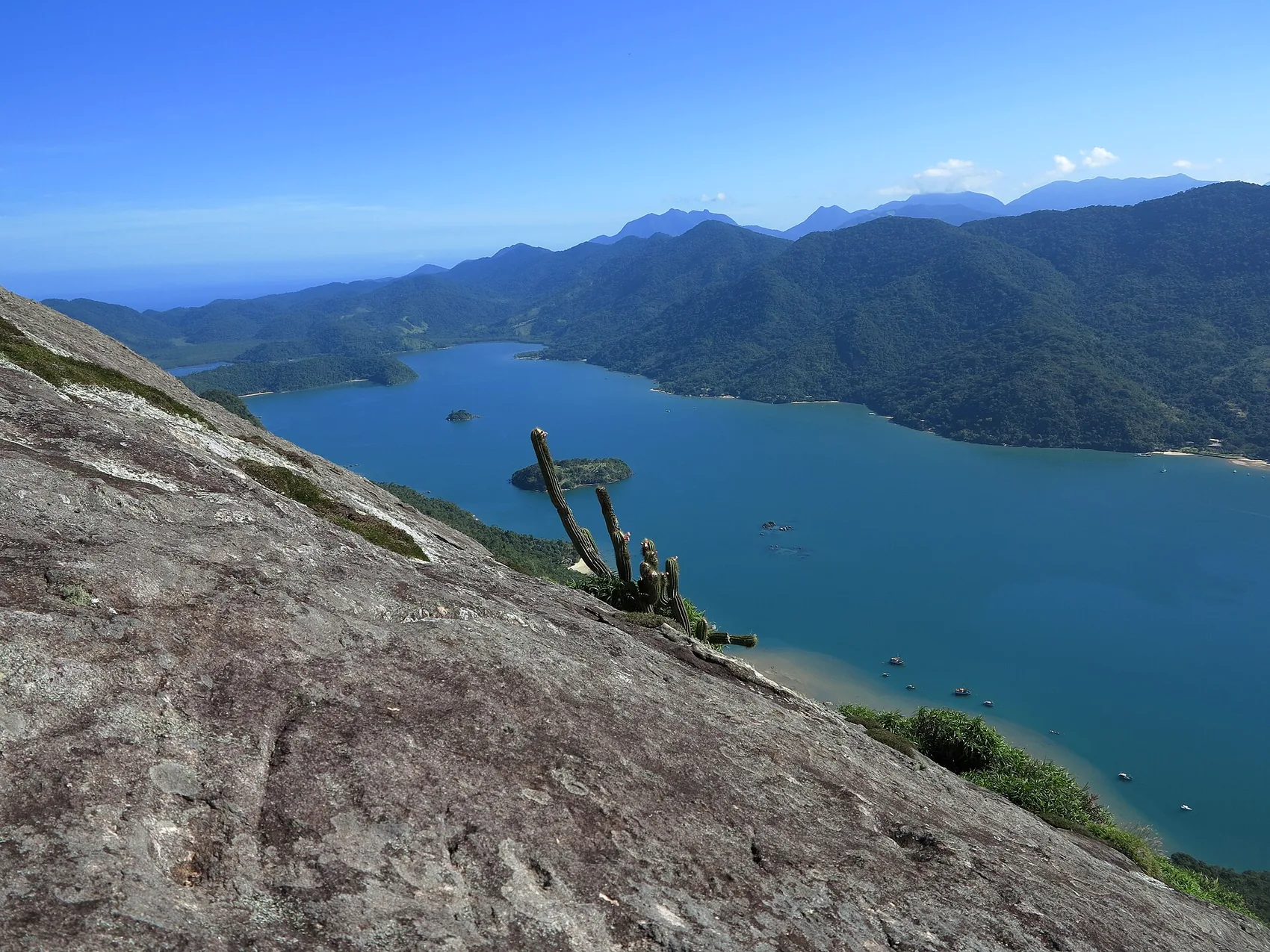
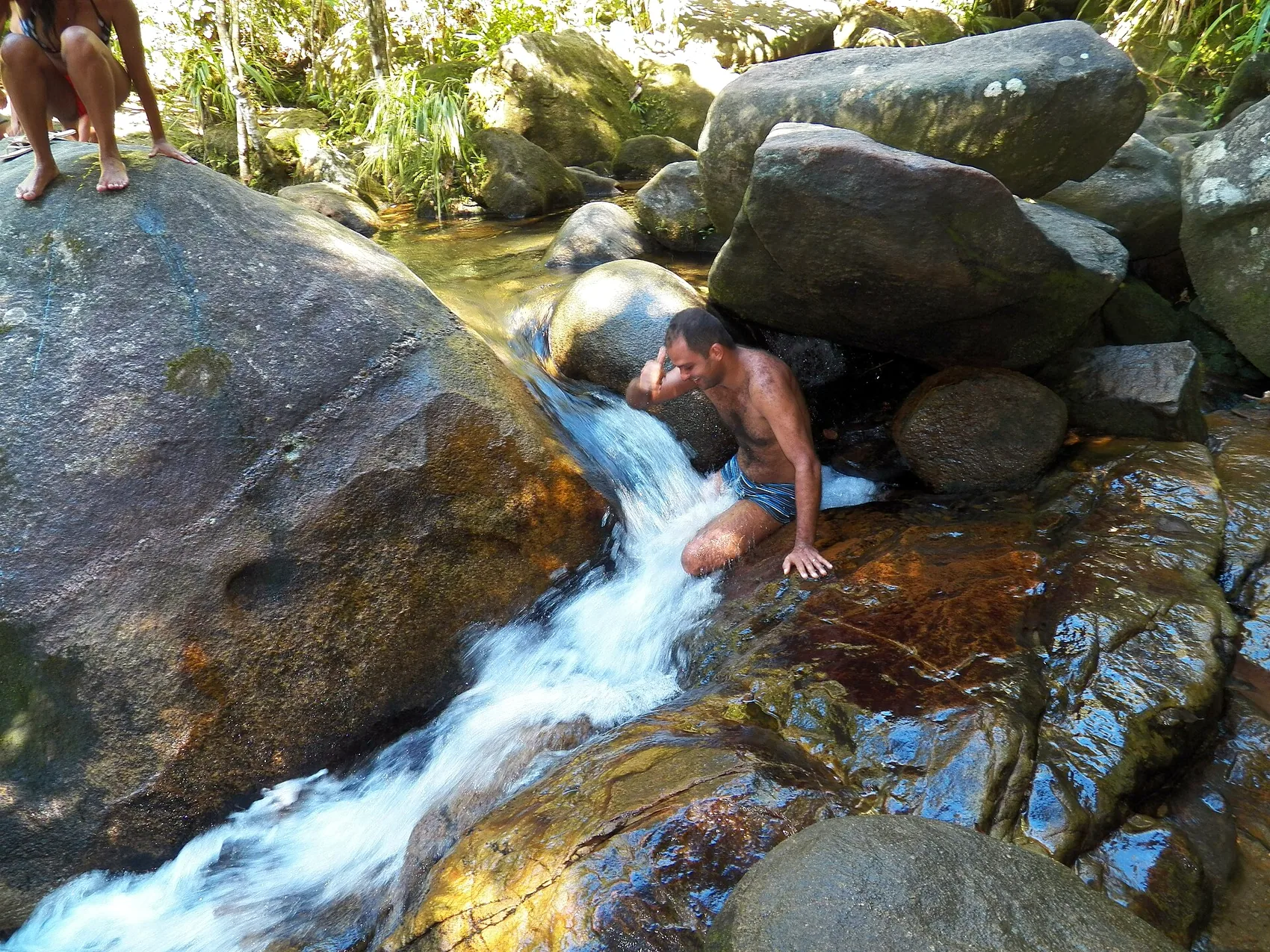
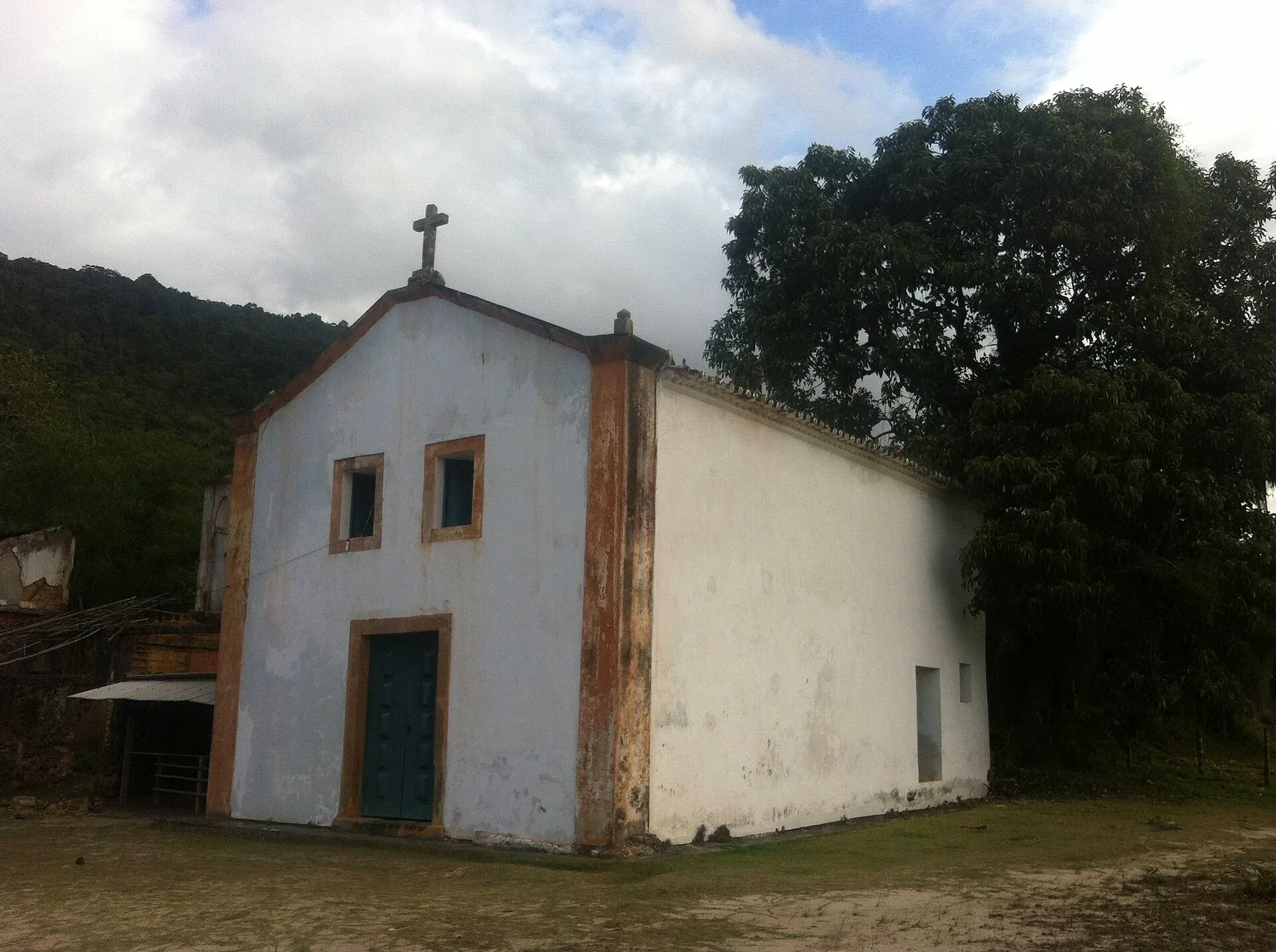
Some of the finest beaches near Paraty have no road to them: Praia do Sono, Antigos and Antiguinhos sit on the ocean side of the Juatinga peninsula, reached on foot through the forest or by a short boat-taxi, and they reward the effort.
There is a particular kind of beach around Paraty that no car will ever reach, and it tends to be the best kind. The coastline south of town breaks up into forested ridges and headlands, and where the road stops, the good stuff begins. Praia do Sono is the name most people say first, and with reason: a long crescent of pale sand on the open-sea side of the Juatinga peninsula, backed by a small fishing village that still keeps caiçara time. To stand on it you have to earn it, either with your legs on a forest trail or with a short ride in a wooden boat. Both are easy enough that anyone reasonably fit can manage, and both filter out the crowds who never leave the harbour.
This guide is about that stretch of roadless coast and how to do it properly. We will walk through where Praia do Sono actually sits, how to reach the trailhead at Laranjeiras from Paraty, what the trail is genuinely like, when to skip it and take the boat instead, and what waits at the far end of the sand: Praia dos Antigos, Praia dos Antiguinhos, and the deeper reaches of the Reserva Ecológica Estadual da Juatinga, where a hard trail leads to one of the most photographed waterfalls on this whole coast. We will also be honest about the trade-offs, because a beach with no road has no lifeguard, no pharmacy and no cash machine either.
We host guests a short drive above Paraty, and Sono is the day we most often help people plan, because it is the one that goes wrong when you improvise it and goes beautifully when you don't. Get the timing, the footwear and the cash right, and it is the finest day out you can have here without chartering a boat. Our own version usually ends the same way: back up the hill by late afternoon, salt still on our skin, straight into the pool while the light goes gold over the bay.
Where Praia do Sono actually is
Paraty sits at the head of a large, sheltered bay, its water dotted with islands and calm most days. Praia do Sono is not on that bay. It sits on the outer, ocean-facing side of the Juatinga peninsula, the long green arm of land that closes off the bay to the south. Picture the peninsula as a wall between Paraty's protected water on one side and the open Atlantic on the other; Sono and its neighbours are on the far, seaward face, which is why they feel bigger, wilder and more exposed than the postcard coves inside the bay.
That geography explains almost everything about a day here. Because it faces the open sea rather than the sheltered bay, the water has more energy, the sand runs longer and the horizon is uninterrupted. Because the peninsula is steep and forested, no road was ever pushed all the way through, so the settlements along this coast stayed small and stayed caiçara, the fishing-and-farming culture of the southeast Brazilian shore. And because so much of it falls inside the Reserva Ecológica Estadual da Juatinga, a protected area created in 1992 that covers most of the peninsula, development has stayed low and the forest has stayed intact.
The reserve is not a manicured national park with a visitor centre and a gift shop. It is a living landscape where roughly 1,500 people in a scatter of caiçara communities still fish, farm cassava and now host visitors, all inside protected forest. When you walk the trail to Sono you are crossing the edge of that reserve, and the same rules apply that apply to any of the wild trails around here: take everything out that you bring in, and tread lightly through people's home.
Getting to the trailhead at Laranjeiras
Every route to Praia do Sono starts at the same place: the village of Laranjeiras, which you will also see written as Vila Oratório on maps and bus signs. It is roughly 28 kilometres south of Paraty along the coastal highway, and it is where the tarmac gives up and the peninsula begins. Whether you plan to walk or to take a boat, you are going to Laranjeiras first.
By car or taxi
Driving is the simplest option and takes about 40 to 45 minutes from central Paraty. You follow the BR-101, the Rio–Santos coastal road, south past the turnings for the beaches at Paraty-Mirim and the descent to Trindade, then take the signed turn down toward Laranjeiras. There is informal paid parking near the trailhead run by local families; it is cash only and worth it, because the alternative is leaving a car unattended on a narrow road for the day. If you would rather not drive the winding coast road yourself, a taxi or ride-app car from Paraty will run you out and, if you arrange it, collect you later. Our note on getting around the region covers the road, the app coverage and the honest state of the buses in more detail.
By bus
The local operator runs regular buses from the Paraty bus terminal toward Laranjeiras and Vila Oratório throughout the day, often as many as nine departures, and the fare is a few reais. The bus is the budget option and it works, but it is slower than a car, it fills on summer weekends, and the last return of the day leaves earlier than you might hope. If you take the bus out, check the return times before you walk down to the beach, not after, because there is no signal to look them up from the sand and no taxi rank waiting when you climb back up.
Cash before you leave town. Laranjeiras has no bank, and the parking, the boatmen and the beach kiosks all want reais in hand. Draw what you need in Paraty in small notes. Card machines out here depend on a signal that often is not there.
The trail from Laranjeiras to Praia do Sono
From the beach at Laranjeiras the trail proper begins at Vila Oratório, climbing away on the right side of a small square. It is about three kilometres to Praia do Sono and takes most walkers somewhere between an hour and an hour and a half, depending on fitness, footing and how often you stop to look. It is rated moderate. That word does real work here, so let us be specific about what it means.
The path climbs over a forested headland, so there is a genuine uphill at the start, then a descent to the beach on the other side. Underfoot it is roots, rock, packed earth and the occasional set of rough steps. In the dry months it is straightforward; after rain it turns slick and muddy in the low sections, and the descents demand more care than the climbs. You are walking inside standing Atlantic Forest the whole way, so it is shaded, humid and loud with birds and insects. None of it is exposed or dangerous for a competent walker, but it is not a boardwalk, and it is not a place for flip-flops or a bad knee having a bad day.
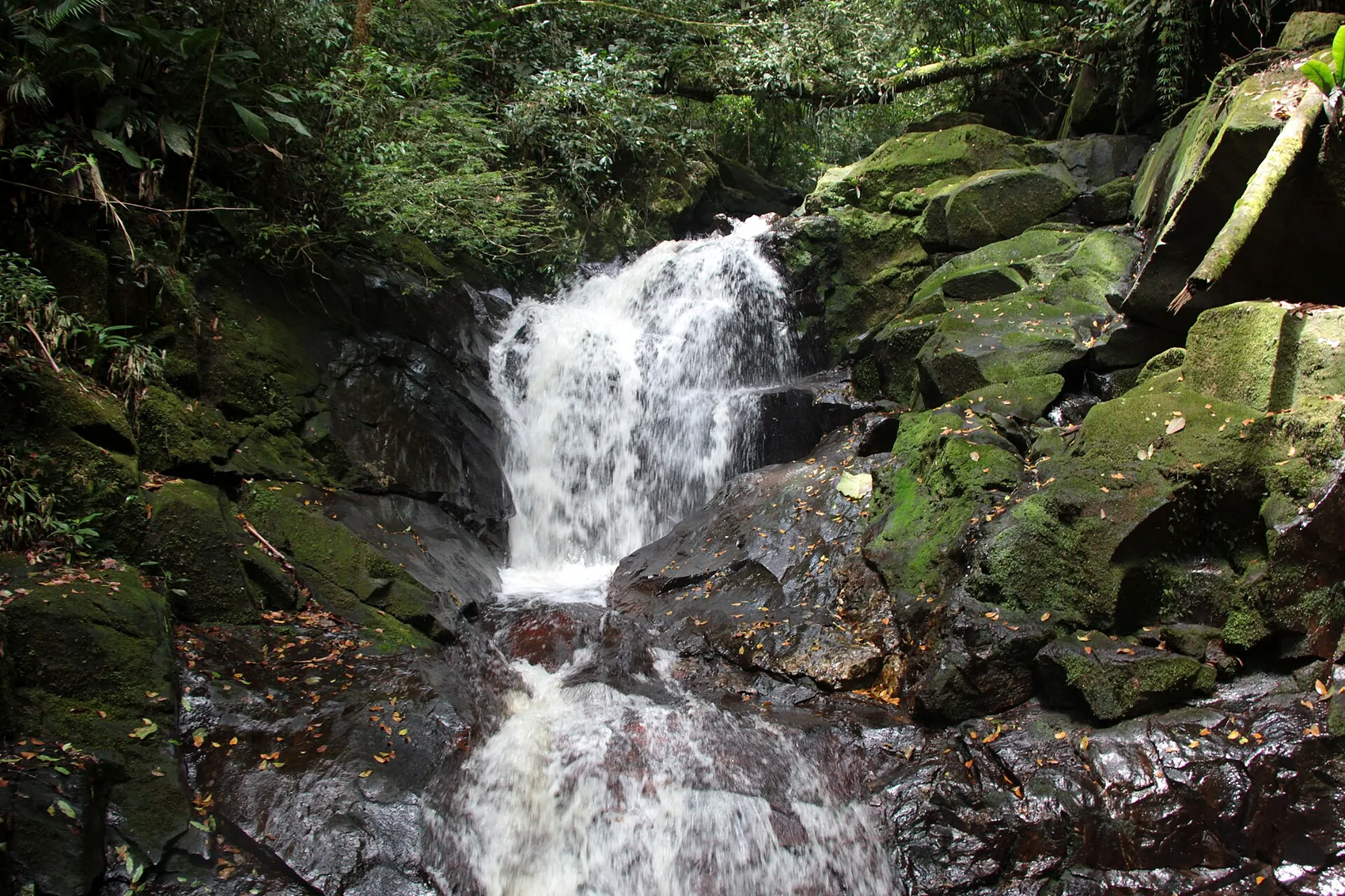
The forest itself is the reason to walk rather than boat, if you can. This is preserved mata atlântica, one of the richest and most threatened forest types on earth, and the trail is a slow-motion transect through it. You will hear far more than you see, which is how it should be, but patient walkers are rewarded: the flit of a hummingbird at a flowering shrub, the ruckus of a troop of monkeys moving through the canopy, the occasional heavy silence that means something larger is nearby and would rather you moved along. If you want to understand what you are walking through, our guide to hiking around Paraty sets this trail in the context of the others, from the gentle to the genuinely demanding.
Set off in the morning if you are walking. The forest is cooler, the light through the canopy is better, and you arrive at the beach with the whole day in front of you rather than one eye on the return. Carry water even though it is a short walk, because the humidity does more than the distance suggests, and wear something on your feet that you are willing to get muddy.
A beach with no road has no lifeguard, no pharmacy and no cash machine either. That is exactly what makes it good, and exactly what you plan around.
The boat-taxi option
Not everyone should walk, and there is no shame in the boat. Down on the sand at Laranjeiras, local boatmen run a taxi service across to Praia do Sono, a short hop of roughly fifteen minutes around the headland in an open wooden boat. It is inexpensive per person, it is quick, and it saves your legs entirely. For families with small children, for anyone carrying a cooler or beach gear, for a group that wants to arrive fresh, it is often the right call.
The classic move, and the one we usually suggest, is to combine the two: walk in through the forest in the morning while you are fresh and the light is good, then take the boat back in the afternoon when your legs have had enough and the tide of the day is turning. You get the forest and you get the sea, and you skip the tired uphill return in the heat. If you would rather not walk at all, boat both ways and spend the saved energy on the beach.
A few honest caveats about the boats. They run on demand and on weather, not on a printed timetable, so on a rough day or a quiet weekday you may wait, and on a busy summer Sunday you may queue. Agree the price before you step in, keep your cash dry, and if the sea looks lumpy, trust the boatman's judgment over your schedule. These are working boats crewed by people who have read this water their whole lives.
Praia do Sono itself
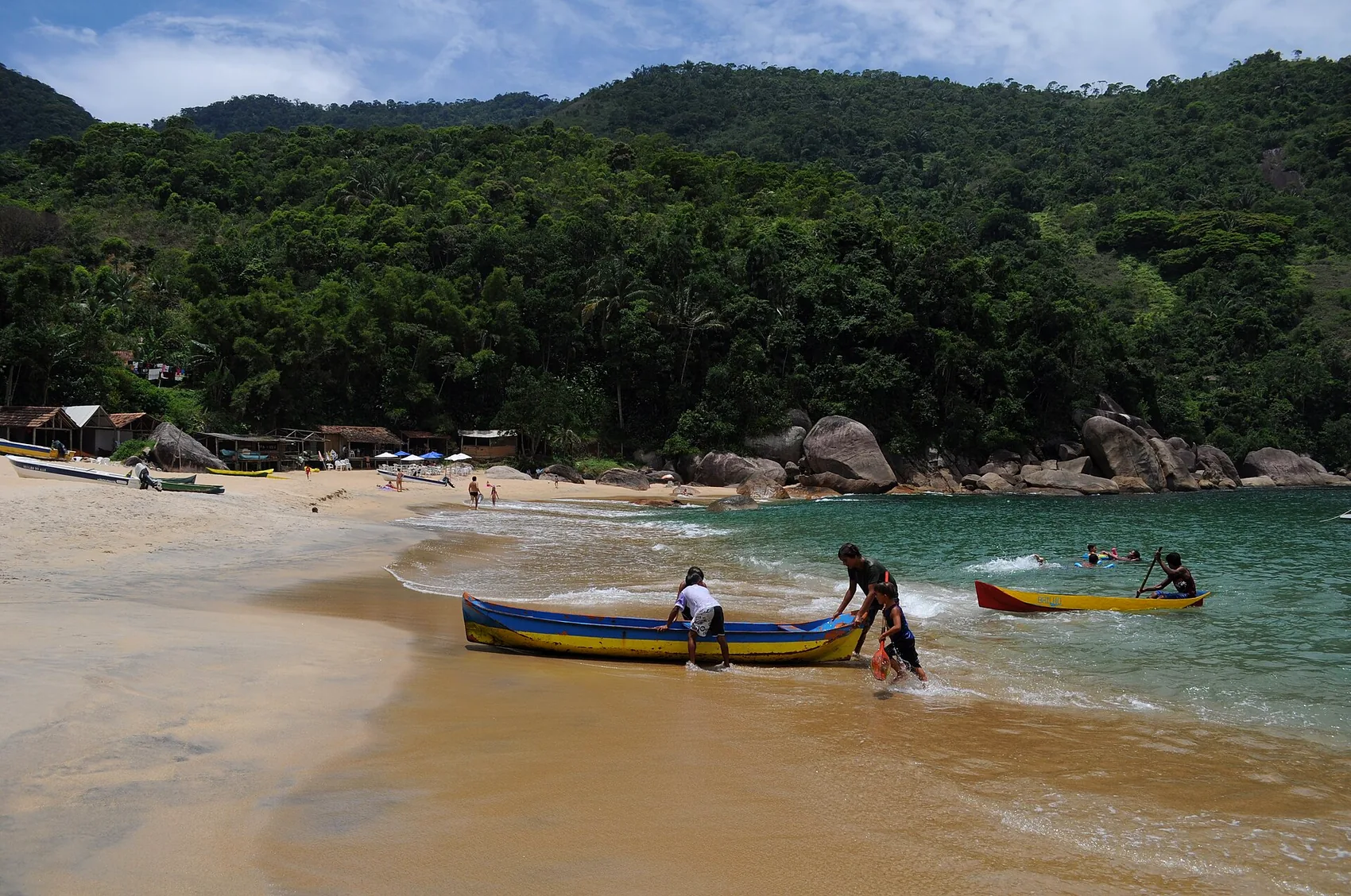
The trail spills you out at the eastern end of a long, generous beach, and the first impression is space. Praia do Sono is wide and open, the sand pale and firm near the water, the sea a clean blue-green that usually breaks in gentle, swimmable waves. Because it faces the open sea rather than the sheltered bay, it has more movement than the flat coves inside Paraty's water, but on a normal day it is calm enough for a long swim and easy floating. On a big swell it picks up real surf, which is part of why the village has a quiet surf culture threaded through its fishing roots.
Behind the sand sits the caiçara village, a low scatter of houses, kiosks and small guesthouses under the trees. It is not a resort and does not pretend to be. A handful of beach kiosks grill fish, pour cold drinks and sell the plate of the day; a few families rent rooms; children and dogs move between the houses with the unhurried confidence of a place where nothing much has to happen by a particular hour. The name Sono means sleep, and on a weekday morning it earns it.
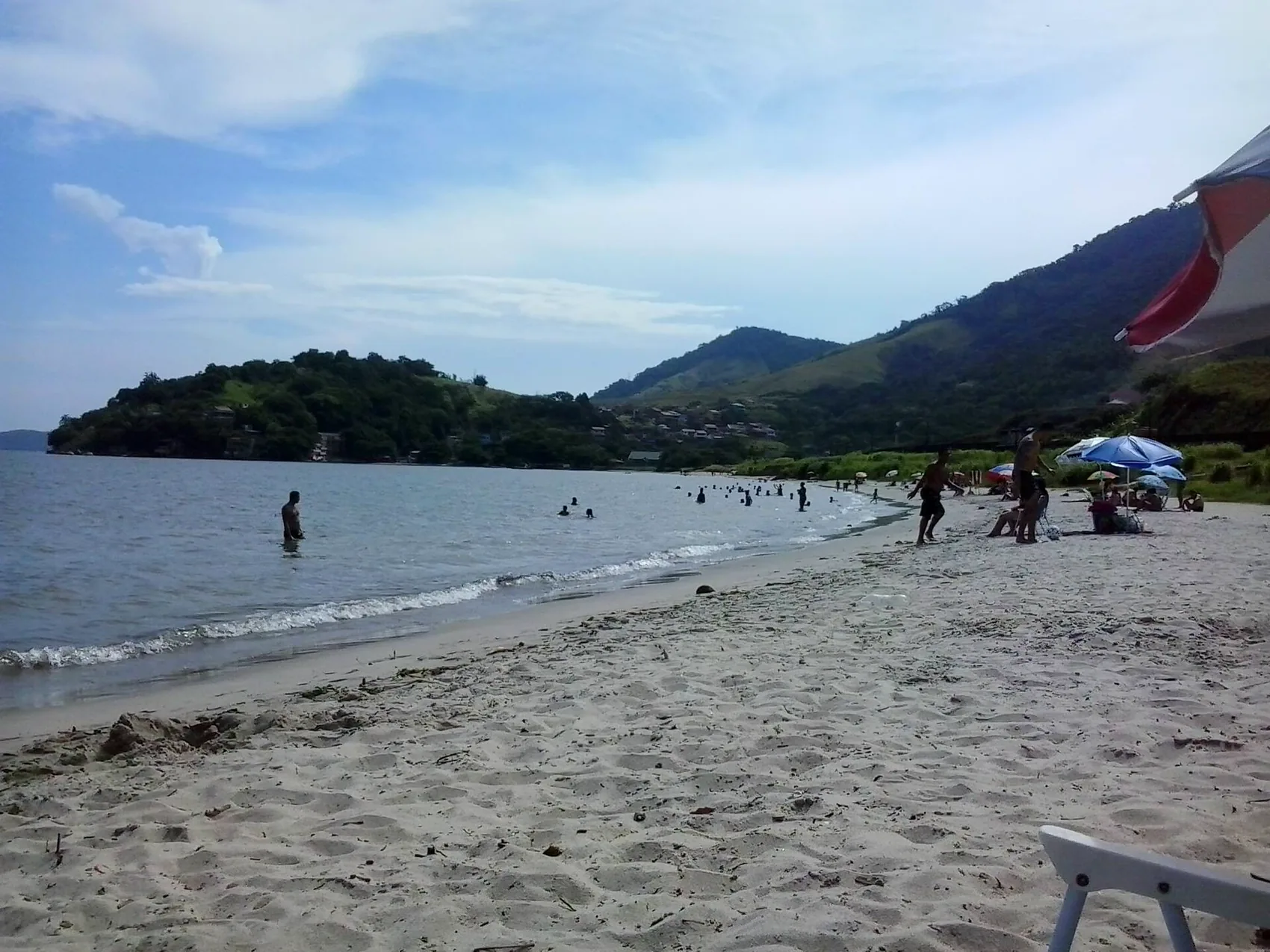
Eating here is simple and good. The kiosks do grilled fish, prawns when the boats have brought them, rice, beans, farofa and the cold beer that tastes better for the walk. This is not the place for the refined plates you will find back in town; for that, see our guide to where to eat in Paraty. Out here the pleasure is exactly its plainness: fish that was in the sea this morning, eaten with your feet in the sand, paid for in cash. Order, wait, swim, come back when it is ready. That is the rhythm of the day.
A word on facilities, because it sets expectations. There is no supermarket, no pharmacy, no bank, and the mobile signal is thin to non-existent. Toilets are basic and usually attached to a kiosk or campsite for a small fee. Power in the village is limited. None of this is a problem if you have planned for it and a real problem if you have not, which is the whole argument for the cash, the water and the sun protection you brought from town.
Onward to Praia dos Antigos
Most people stop at Sono, and Sono alone is a full and satisfying day. But the reason serious beach people speak of this coast in reverent tones is what lies beyond it. From the far, western end of Praia do Sono, a trail climbs over another headland to Praia dos Antigos, a smaller, quieter beach perhaps forty minutes further on foot.
The Antigos trail is shorter than the Laranjeiras one but steeper in places and rougher underfoot, a proper little climb over the point with roots and rock and, in the wet, mud. You gain height, get a fine view back over Sono, then drop to a beach that trades Sono's village life for near-solitude. Antigos has a scatter of simple structures and, in high season, a kiosk or two, but on a normal day it is a fraction of the people, a longer horizon and a stronger sense that you have walked off the edge of the ordinary map. The water is clear and clean, the swimming good, the shade generous under the treeline.
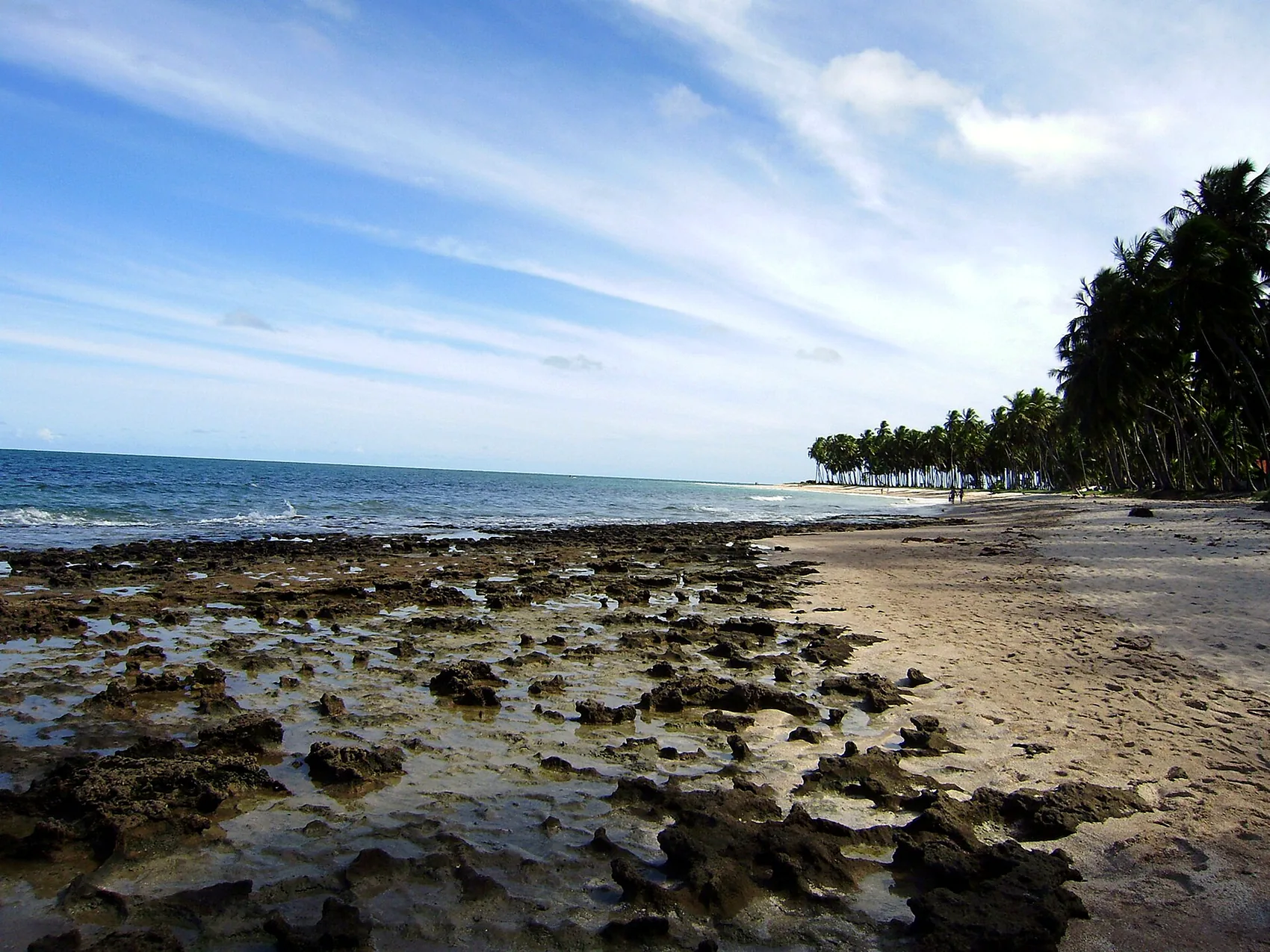
Take the Antigos walk only if you are comfortable on rough ground and you have the day for it. Add the forty minutes each way to your plan, keep water in reserve, and remember that every step past Sono is a step further from the boat and the kiosks. It is worth it. Just do the arithmetic on daylight before you go, because you do not want to be picking your way back over that headland in the dark.
Praia dos Antiguinhos
Beyond Antigos, for those who cannot leave a good thing alone, comes Praia dos Antiguinhos. The name is the diminutive of Antigos, the little sister, and it fits. A short scramble of around six hundred metres from Antigos brings you to a small cove closed off by a rocky islet, with water clear enough that the whole point of coming is simply to look at it and then get into it. Antigos and Antiguinhos together earned a place on national lists of Brazil's best beaches years ago, and the ranking has aged well.
Antiguinhos is smaller and more sheltered than its neighbours, the kind of pocket beach where a handful of people feels like a crowd and most days there is no crowd at all. There is little to no infrastructure, so this is the far end of the day-tripper's reach and the point at which self-sufficiency stops being advice and becomes the whole deal. Bring your own water and shade; expect nothing to be sold to you here. In return you get some of the clearest water and quietest sand on the entire Costa Verde, which for many walkers is the exact reward they came three beaches to find.
The clear, protected water at these smaller coves makes them fine for a mask and snorkel; you will find fish among the rocks at the edges. If underwater is your thing, our guide to snorkelling and diving on the Costa Verde covers where the water is clearest and what you are likely to see.
Deeper into Juatinga: Ponta Negra and the waterfall
The peninsula does not stop at Antiguinhos. For those who treat a beach as a checkpoint rather than a destination, the trails carry on around the Juatinga coast to further caiçara communities and, most famously, to Ponta Negra and the Cachoeira do Saco Bravo, a waterfall that drops almost directly into a saltwater inlet. It is one of the signature images of this coast: fresh water tumbling off the forested rock into a sheltered arm of the sea.
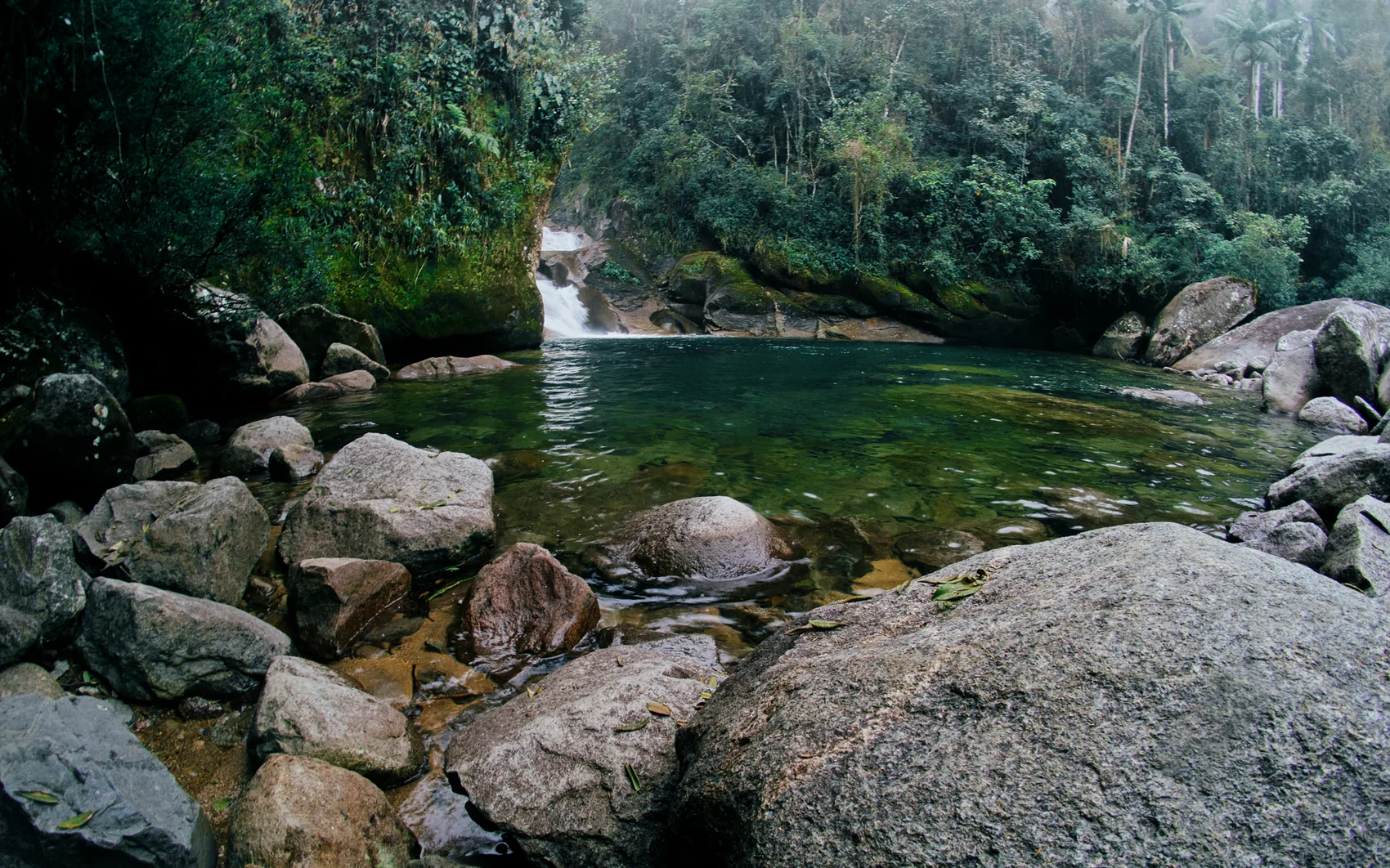
Be clear-eyed about what this involves. The waterfall trail from the Ponta Negra community runs several kilometres over rough forest terrain and is rated heavy, a round trip of the better part of a day for many people. Ponta Negra itself is most easily reached by boat rather than by extending the Sono walk, and the multi-day traverse of the whole peninsula, the Travessia da Juatinga, is a proper backcountry expedition that people do with a guide, camping along the way. This is a different order of undertaking from a day at Sono, and it deserves its own planning, its own guide and its own respect for the weather and the tides.
Most guests will not go this far, and they lose nothing by stopping at Sono or Antiguinhos. But it is worth knowing the country keeps going, because it explains the feel of the place. You are on the near edge of a large wild peninsula, not at a tidy dead end, and the trail under your feet is the same one that, hours further on, reaches waterfalls the day crowd never sees. If a waterfall is what you are after and you would rather not commit to a heavy trek, our guide to the waterfalls around Paraty covers the easier ones inland, several of them a short drive rather than a hard walk.
What to bring
The packing list for Sono is short but non-negotiable, because there is nowhere to buy what you forgot. Get these right and the day is effortless; get them wrong and you spend it improvising.
- Cash, in small notes. For parking, the boat, the kiosks and the toilets. No bank, unreliable card signal.
- Water, more than you think. The forest humidity dehydrates you faster than the distance suggests. Refill options past Laranjeiras are limited to what kiosks sell.
- Sun protection. Reef-safe sunscreen, a hat and a light long-sleeve. The beach is open and the sun is strong; there is no lifeguard and no shade shop.
- Proper footwear. Trainers or trail shoes with grip for the walk, plus sandals or light shoes for the sand. Flip-flops alone will not do on the muddy sections.
- Food, if you are fussy. The kiosks feed you well but simply, and they can run short in low season or on a quiet day. Bring snacks and anything a child will insist on.
- A dry bag. For phone, cash and camera on the boat and in the surf. Water gets everywhere out here.
- A rubbish bag. You are in a protected reserve. Everything you carry in, you carry out.
Leave the heavy cooler and the beach cabana at home if you are walking; you have to carry it over a headland and back. If you want all the comforts, take the boat both ways and bring what you like. For the wider regional list, from insect repellent to the right rain layer, see our guide on what to pack for Paraty.
Reef-safe, please. These are protected waters full of small life. Choose a mineral, reef-safe sunscreen, and rinse off the ordinary stuff before you swim. It is a small courtesy to a coast that has stayed this clean for a reason.
Staying overnight at Praia do Sono
You can sleep out here, and for a certain kind of traveller it is the whole point. The village offers campsites, simple rooms to rent from local families, and a handful of basic guesthouses, most of them a short walk from the sand. Prices are modest, the standard is rustic, and the reward is specific: the beach at dawn with no one on it, the village going about its slow evening, and, in the busy weeks, the impromptu beach parties and luaus that the young crowd brings.
Set your expectations honestly. Power is limited and sometimes runs on generators or solar with quiet hours. Hot water is not guaranteed. The signal is thin. There is no room service and no reception desk in the sense you might expect; you arrange things directly with the family whose house it is. If that sounds like an inconvenience, it is not the trip for you. If it sounds like freedom, it is exactly the trip for you, and a night here is a genuinely memorable one.
For most of our guests, though, the better version is different. They do Sono as a full day, walk and boat and swim and eat, and then come back to a comfortable base with a proper bed, a hot shower, a kitchen and a pool. There is no wrong answer; it is a question of what you want that particular night. If you would like to talk through whether to overnight at Sono or day-trip it, write to us and we will give you the honest version based on your group and the season.
When to go, and how the crowds work
Sono is busiest exactly when you would guess: summer weekends from December to Carnival, Brazilian holiday weeks, and any long weekend with good weather. On those days the trail has a steady file of walkers, the boat has a queue, the kiosks are full and the village hums. It is still a fine day out, but it is not the empty paradise the photographs promise.
The quiet version is a matter of timing more than secrecy. Go on a weekday. Go in the shoulder and low seasons, roughly April to June and August to November, when the weather is often still lovely and the crowds thin dramatically. Set off early, so you are on the sand while the day-trippers are still deciding to come. Our guide to the best time to visit Paraty breaks the year down month by month, and almost everything it says about the bay applies double to a beach you have to walk to.
Weather is the other variable, and it matters more here than in town. After heavy rain the trail is slick and the low sections turn to mud, the boats may not run in a big sea, and the beach loses its shine under grey skies. Sono is a fair-weather plan. Keep it flexible, watch the forecast, and if the day turns against you, there is plenty to do in town instead; our guide to a rainy day in Paraty exists for exactly that pivot.
Sono with kids, and honest limits
Families do this trip, and it can be wonderful, but the trail is the deciding factor. Older children who are used to walking will manage the hour-and-a-half forest path fine and probably enjoy it, monkeys and all. Younger kids, toddlers, or anyone unsteady on rough ground are a different matter: the boat-taxi both ways is the obvious answer, turning the whole thing into a short ride and a long, easy beach day.
The beach itself suits children well on a normal day, with its firm sand and generally gentle water, though the open-sea aspect means you keep an eye on the surf and there is no lifeguard to share the watching. Pack for self-sufficiency, keep the day unhurried, and do not try to add Antigos and Antiguinhos with small children in tow; save those for a trip when the group can move at pace. Our guide to Paraty with kids has more on which beaches and trips travel well with a young family and which to leave for later.
How Sono fits a Paraty trip
Sono is a full day, and it is best treated as one. Do not try to bolt it onto a morning of something else; give it the whole span from a morning start to a mid-afternoon return, and build the rest of your time around it. It pairs naturally with the other roadless and quiet-water experiences on this coast rather than with the busy town-centre days.
If you are here for several days, think of the region as a set of contrasts and space them out. Sono is the ocean-side wild-beach day. Trindade, a little further down the same highway, is its road-accessible cousin: a surf village with five beaches and a natural swimming pool, wilder in feel but reachable by car. The Saco do Mamanguá on the bay side is the calm-water opposite, a fjord-like arm of flat sea with tiny roadless beaches of its own. And the quiet beaches near Paraty-Mirim are the gentle, family-friendly middle ground. Do one wild-beach day, one calm-water day, one town day, and you have the shape of a good week. Our ultimate guide to Paraty ties the whole region together if you are still building the outline.
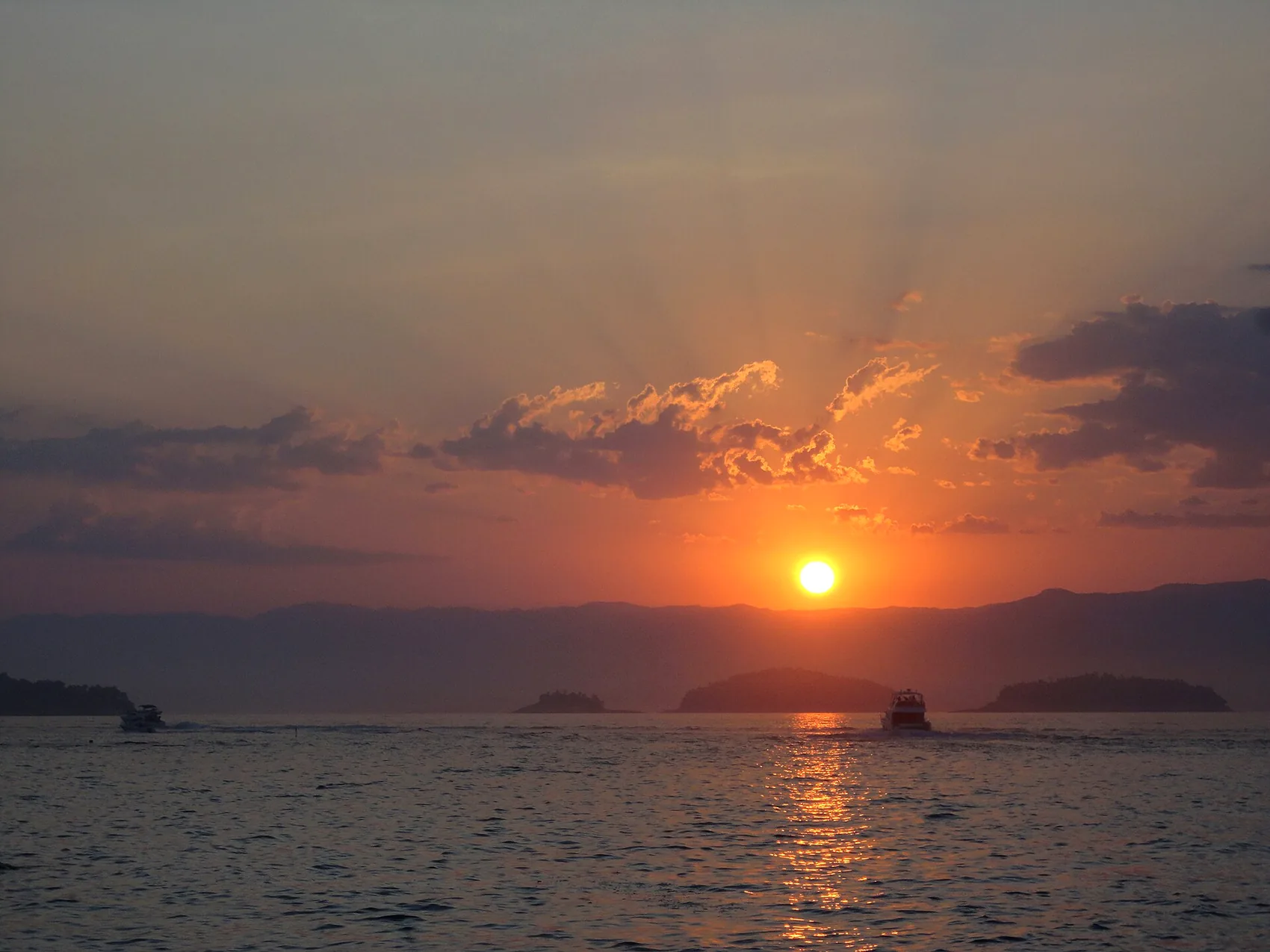
Whichever way you cut it, the pattern that works is effort in the morning and comfort in the evening. That is our own rhythm here, and it is why we set up the way we did: you spend the day on a beach with no road and no cash machine, then you come back up the hill to a place with everything.
Respecting the reserve
One last thing, and it matters. Praia do Sono and its neighbours are not a resort that will absorb whatever you throw at it. They are a working caiçara coast inside a protected reserve, kept clean and quiet by the fact that they are hard to reach and by the care of the people who live there. Carry every scrap of rubbish back out, including the things you assume someone else will deal with; there is no bin lorry coming. Use reef-safe sun products. Ask before you photograph people or their homes. Pay the local boatmen and parking families fairly and in cash; this is their livelihood and their land. Keep the noise down away from the party beaches, especially early and late.
None of this is onerous, and all of it is the reason the coast is worth the walk in the first place. The visitors who do it well leave no trace and take only the day. Our note on travelling responsibly on the Costa Verde goes further into how to be a good guest on a coast like this one.
Our version of the day
Here is how we do it when friends are staying, for what it is worth as a template. Coffee and a proper breakfast up at the house first, because you eat simply once you are out there. Draw cash in town if we did not already have it. Drive down to Laranjeiras for a mid-morning start, park with the same family we always park with, and walk in through the forest while it is still cool, taking our time over the birds and the view from the top of the headland. Onto the sand by late morning, straight into the sea, then grilled fish and cold beer at a kiosk while it all cooks slowly. A long afternoon of swimming, reading, doing not very much. If the group is game and the day is young, the walk over to Antigos for the emptier sand; if not, more of the same at Sono. Then the boat back around the point in the late afternoon, salt-crusted and content, and the drive home.
And then the part that makes the whole shape of it work: back up the hill to the chalet, straight out of the car and into the infinity pool, the triple view of the Bay of Paraty, Angra dos Reis and Ilha Grande going gold and then pink over the edge of the water. A day at a beach with no road, ended at a place with everything. That contrast, the wild and the comfortable in the same afternoon, is the best of what this coast offers, and it is exactly why we settled where we did.
If you want help slotting Sono into your dates, judging whether to walk or boat, or deciding between a day trip and a night in the village, look through the rest of the guides or just get in touch. We would rather you arrive with the plan already sound than learn the cash-and-footwear lesson the hard way. The beaches have waited a long time; a little planning is all they ask.
Come stay above the bay
Chalé Bel Air sits on the ridge that looks over everything in this guide. Tell us your dates and what kind of trip you are after — we answer personally.
Ask about your datesFrequently asked questions
How do you get to Praia do Sono from Paraty?
There is no road to the beach itself. You drive or take a bus about 45 minutes south to the village of Laranjeiras, also called Vila Oratório, then either walk the forest trail for roughly an hour and a half or hire a boatman for a short crossing of about fifteen minutes. Most day-trippers walk one way and take the boat back.
How long is the Praia do Sono trail?
The trail from Laranjeiras is around three kilometres and takes most people between an hour and an hour and a half each way. It climbs over a forested headland and drops down to the beach, with roots, rocks and a few steep sections. It is rated moderate rather than hard, but it is a real walk, not a stroll.
Can you take a boat to Praia do Sono instead of hiking?
Yes. Boatmen wait at the beach in Laranjeiras and run a short taxi crossing to Praia do Sono, usually about fifteen minutes on the water. It is inexpensive per person, and it is the easy option if you are carrying children, a cooler or a lot of gear. Many visitors walk in and boat out, or the reverse.
What are Praia dos Antigos and Antiguinhos?
They are two smaller beaches reached by trail beyond Praia do Sono. Antigos is over a headland at the far end of Sono, perhaps forty minutes on foot; Antiguinhos is a short scramble further, about six hundred metres more, ending at a small cove with a rocky islet and very clear water. Both are wilder and emptier than Sono.
Can you stay overnight at Praia do Sono?
You can. The caiçara village has campsites, simple rooms to rent and a handful of guesthouses, most of them basic. Staying overnight buys you empty beaches at dawn and a slow village rhythm, but expect limited power, patchy signal and no supermarket. Many guests prefer to visit for the day and return to a comfortable base near Paraty.
What should I bring to Praia do Sono?
Bring cash in small notes, plenty of water, sun protection, shoes you can walk in and light shoes or sandals for the sand, plus any food you want beyond what the beach kiosks sell. There are no banks or pharmacies past Laranjeiras, and card signal is unreliable, so carry what you need and carry your rubbish back out.
Is Praia do Sono safe and family-friendly?
The beach is generally calm and swimmable, and families do the walk with older children who are used to hiking. The trail is the main consideration: it is uneven and can be muddy after rain. Younger kids and anyone unsure on their feet are better off taking the boat-taxi both ways and enjoying the beach itself.