Romantic Paraty is not about grand gestures; it is about slow evenings, empty water and a town with no traffic and no skyline. Here are the things we point couples toward, from sunset cruises to candlelit dinners to the pool at dusk.
Romantic Paraty is a quieter thing than the brochures make it out to be. There are no rooftop bars, no swim-up cocktails, no strip of resorts with hearts drawn in rose petals. What there is instead is a small colonial town with no cars running through its centre, a bay scattered with coves you can only reach by boat, and evenings that wind down slowly over dinner and live music rather than ramping up. If your idea of a good time as a couple is a packed nightlife and a full itinerary, Paraty will feel sleepy. If it is empty water, a long dinner, a dark sky and time with no plan in it, this is one of the best places in Brazil to spend it.
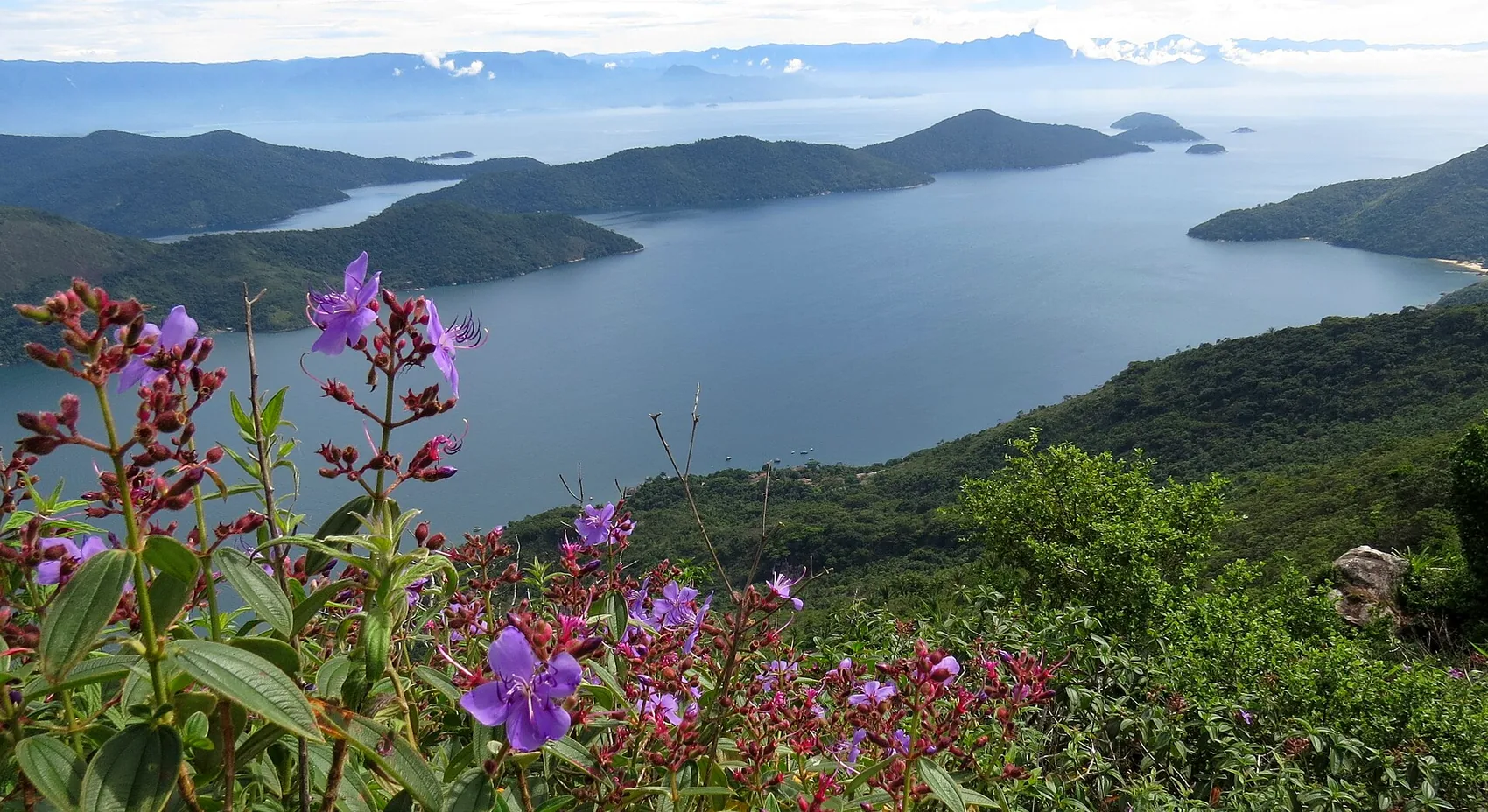
We host couples on the ridge above the town, roughly 400 metres up, where a single deck looks out over three bodies of water at once — the Bay of Paraty in the foreground, Angra dos Reis off to the side, and the long blue line of Ilha Grande on the horizon. From up here the shape of a romantic trip is easy to see. The good things are close, but most of them take a short boat ride or a walk to reach, which is exactly why they stay quiet. You come up the hill for a swim in the pool and the view; you go down for dinner and the water. This guide is our long answer to the question couples actually ask us, which is not "what's the most we can see" but "how do we spend a few days here really well, just the two of us."
We have tried to be honest throughout, because false promises are the only thing that ever disappoints people here. Paraty rewards a certain kind of traveller and gently frustrates another. Read it as advice from people who live above the bay and watch the light change on it every evening, not as a sales pitch. If you want the wider picture of the town before you dive into the romance, our complete guide to Paraty is the place to start, and you can come back here for the good part.
Why Paraty is quietly romantic
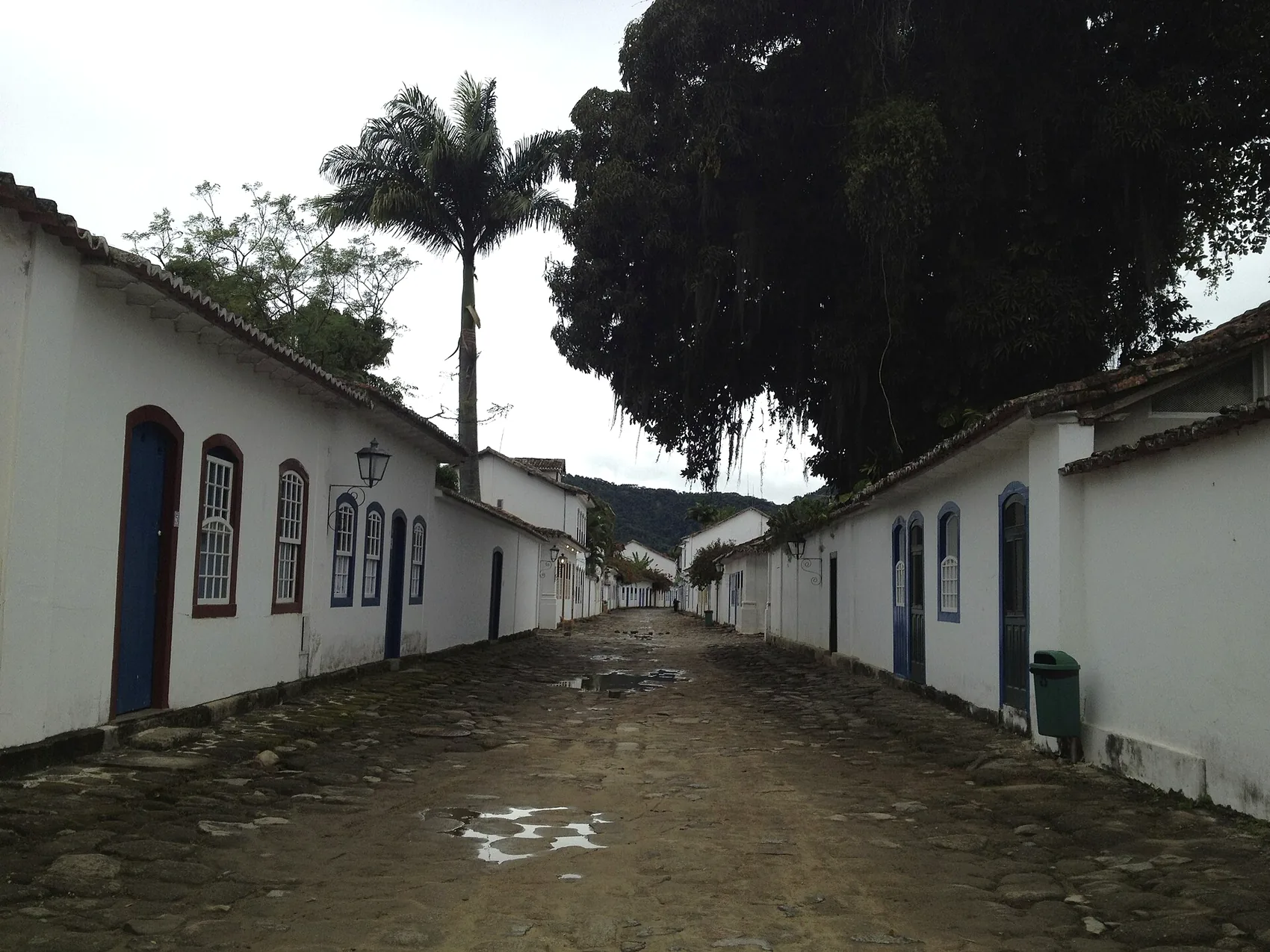
Plenty of places market themselves as romantic and turn out to be loud, over-built, and designed for crowds. Paraty is the opposite, and the reason is history. It was an 18th-century gold port that grew rich shipping the metal down from the mountains of Minas Gerais, then got bypassed when a better road was built inland, and was more or less forgotten for over a century. That neglect is why its colonial centre survives almost untouched: a grid of whitewashed houses with blue and ochre trim, heavy wooden doors, and streets paved in the same rough stones the mule trains once crossed. In 2019 Paraty and neighbouring Ilha Grande together became Brazil's first mixed UNESCO World Heritage Site, recognised at once for the colonial culture and the wild coast around it.
What that leaves behind is a town built at a human pace. There is no traffic in the historic centre, so evenings there are genuinely peaceful; you hear footsteps on stone, a guitar from an open doorway, the tide moving against the seawall. There is no skyline to speak of, and no building tall enough to break the line of the hills. The result is a place where the natural rhythm of a couple's day — slow morning, one real outing, long evening — fits the town exactly, rather than fighting it.
The other thing in Paraty's favour is the geography. The good beaches are not the ones you can walk to from the centre. They are the coves around the bay you reach by boat and the roadless beaches you reach on foot through the forest. That sounds like a drawback and is the opposite: with a little effort you can have a strip of sand and clear water more or less to yourselves, even in a busy week. Privacy here is not a luxury add-on. It is simply how the coast is shaped.
Set the right expectation. Paraty is not a beach-resort town with loungers and swim-up bars, and it is not a party destination. The cobblestones are genuinely rough underfoot, so pack flat, sturdy shoes rather than heels. Come understanding that, and the town delivers the kind of romantic trip people remember for the quiet rather than the photos.
A sunset cruise on the bay
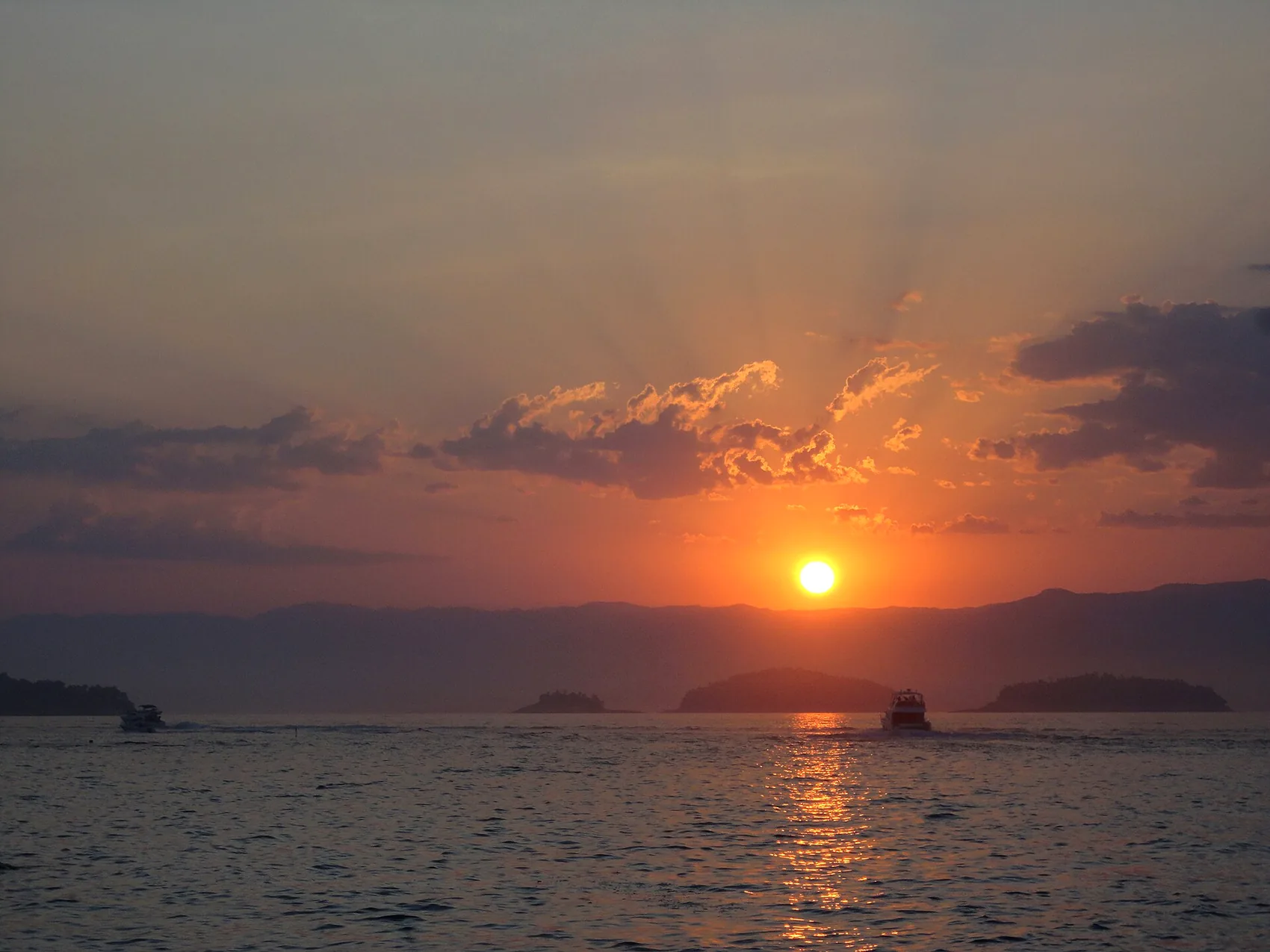
If you do one romantic thing in Paraty, make it an evening on the water. The Bay of Paraty holds dozens of islands and a shoreline of jungle-backed coves, and the last hour of daylight is when it is at its best: the light goes gold, the water flattens, the day-boats head home, and the whole bay seems to empty out for you. There are two ways to do it, and they suit different couples.
Schooner or private charter
The traditional Paraty boat is the schooner, a broad wooden two-master that runs a set loop of the bay with a crowd aboard, music playing, and a bar on deck. Schooners are sociable, inexpensive and genuinely fun, and there is nothing wrong with doing one for the atmosphere. But for two people chasing a quiet evening, they can feel busy, and they run to their own schedule rather than yours.
A private charter is a different experience. You hire a small motorboat with a skipper for a few hours, and the trip is yours to shape. You leave the pier in the late afternoon, run out past the old fort into the bay, and let the skipper find the coves the crowds have already left. You stop for a last swim while the water is still warm, drift with a bottle of something cold as the sun drops behind the mountains, and come back into the lit-up harbour after dark. For a couple, the difference is worth the money. The full mechanics of chartering, and roughly what it costs, are in our guide to a day on the water, and our page on Paraty to Ilha Grande covers the longer runs across to the island.
The last hour of daylight is when the bay is at its best: the light goes gold, the water flattens, and the whole thing seems to empty out for you.
Timing and weather
A sunset cruise lives or dies on the weather, so treat it as a plan you keep flexible. Calm, clear evenings are the ones you want; a grey, choppy afternoon is better spent in town. In the dry winter months from June to September you get the steadiest run of clear skies, which is one reason we think that is the most romantic season here — more on timing below and in our guide to the best time to visit Paraty. Book a day or two ahead in high season, but keep an eye on the forecast and be willing to move the trip if the sky turns. A skipper who knows the bay would rather take you out on the right evening than the booked one.
A long candlelit dinner in the old town
After the boat, the second pillar of a romantic evening here is dinner in the historic centre, and Paraty makes this easy. The whole colonial grid is closed to traffic, lit by lanterns and low window-light after dark, and full of small restaurants set inside old merchant houses, courtyards and former warehouses. You can walk the streets with no cars to dodge, look in a few doorways, and pick the room that feels right. Reservations are worth making in high season and on festival weekends; the rest of the time you can wander and choose.
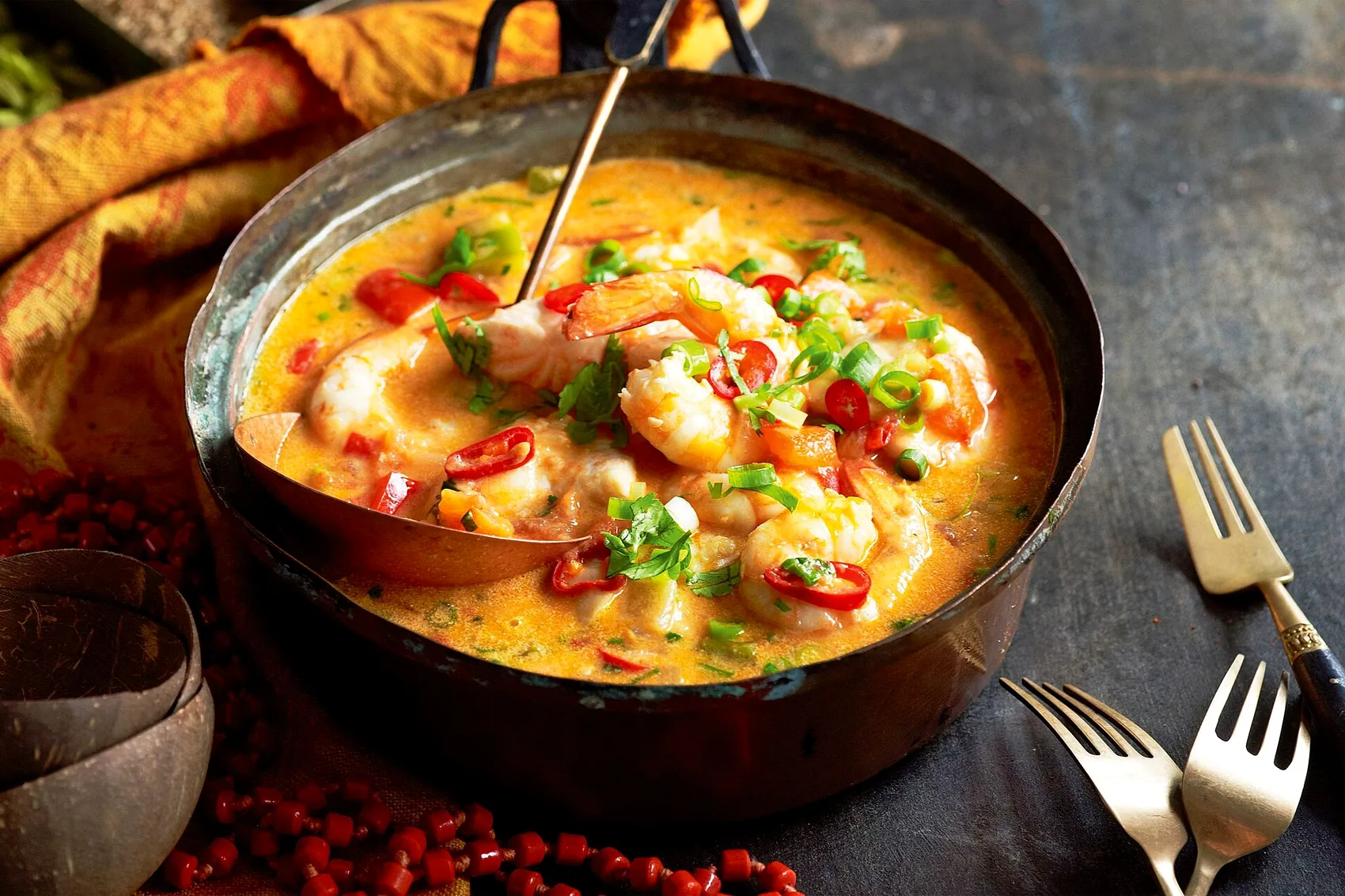
Order the seafood. This is a fishing coast, and the thing to eat is a moqueca, the slow-cooked stew of fish or prawns in coconut milk, tomato, coriander and dendê palm oil, served bubbling with rice and pirão. It is made for two to share and it takes its time to arrive, which suits the evening. Beyond that, look for the day's grilled catch, prawns done simply with garlic, and hearts of palm. Start with a caipirinha made from local cachaça, of which Paraty has been a serious producer for centuries. We keep a proper account of where and what to eat in our guide to where to eat in Paraty.
Follow the music afterwards
The nicest thing about dinner in Paraty is that it does not have to end at the table. Live music drifts out of bars and doorways across the centre most nights — samba, chorinho, bossa nova, sometimes a single guitar. The pleasure is to eat slowly, then walk out into the streets and follow whatever you can hear until you find a spot you like, order another drink, and stay a while. It is the closest the town comes to nightlife, and for most couples it is exactly the right amount. If you want the full lay of the evening, our guide to Paraty nightlife and bars maps where the music tends to be.
Private beaches and quiet coves
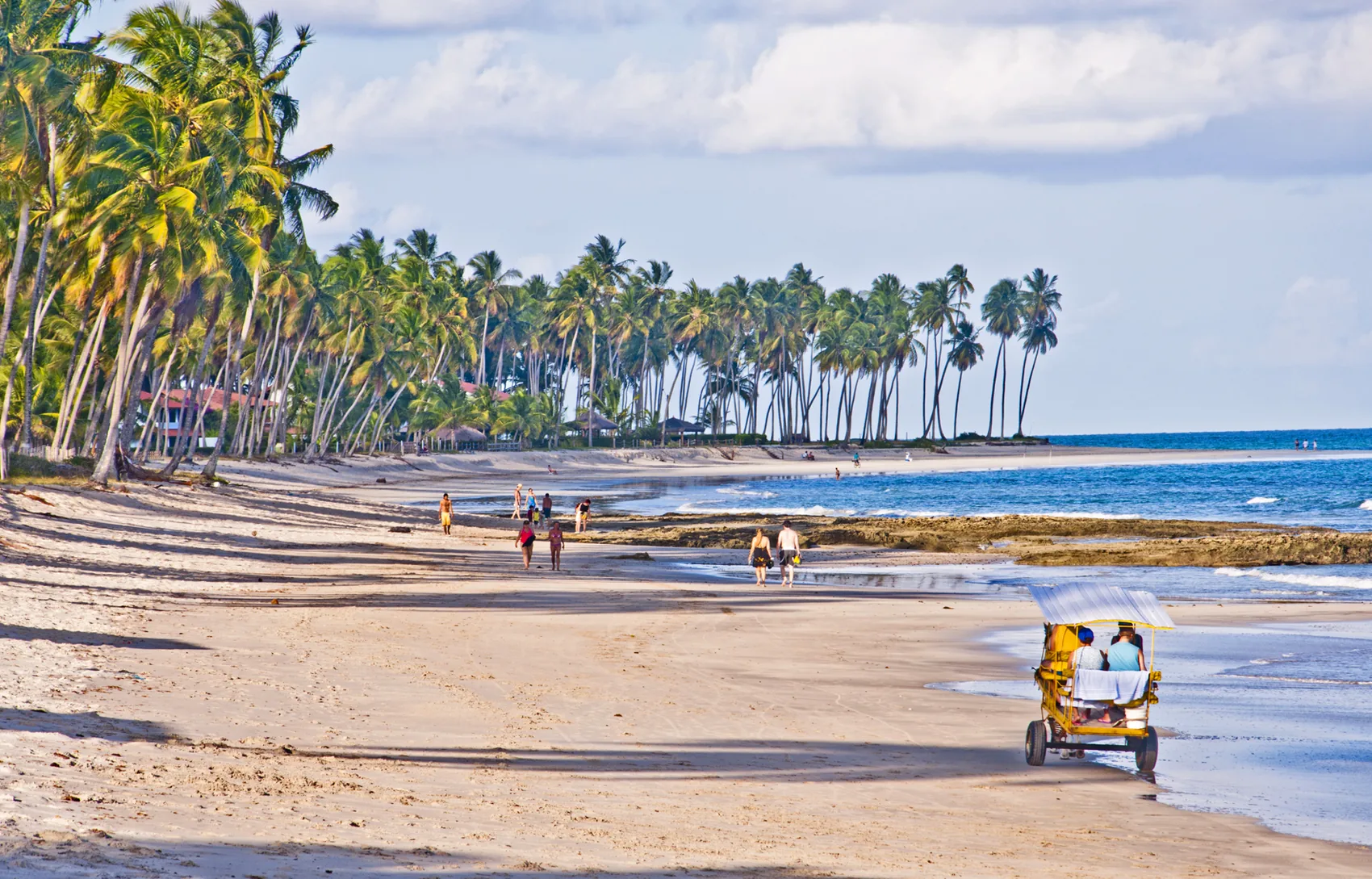
A beach to yourselves is one of the most romantic things Paraty can give you, and the bay is built for it. The coast around the town is a scatter of small, jungle-backed coves, many with no road and a few with nothing on them at all — no kiosk, no buildings, just sand, shade and clear green water. The trick is getting to one at a time when nobody else is there, and that comes down to timing and, usually, a boat.
The coves you reach by boat
Some of the prettiest beaches in the bay have no land access. They tend to be small — a curve of pale sand, forest dropping to the waterline, water clear enough to watch fish gather under the hull — and because you can only arrive by water, they stay empty outside the middle of the day when the schooners swing by. The move is to charter a small boat and time your visit for early morning or late afternoon, before or after the crowd. Reach one of these coves at eight in the morning with a flask of coffee and it is yours; the tour boats do not get there until eleven.
You do not need to memorise names. What matters is the type of place: a roadless cove, reached by water, with no facilities, where you swim and lie in the shade and do not see another soul for an hour. Your skipper will know which coves are quietest on the day, depending on tide, wind and where the tour boats are headed. That local read is worth more than any list.
The wild beaches you walk to
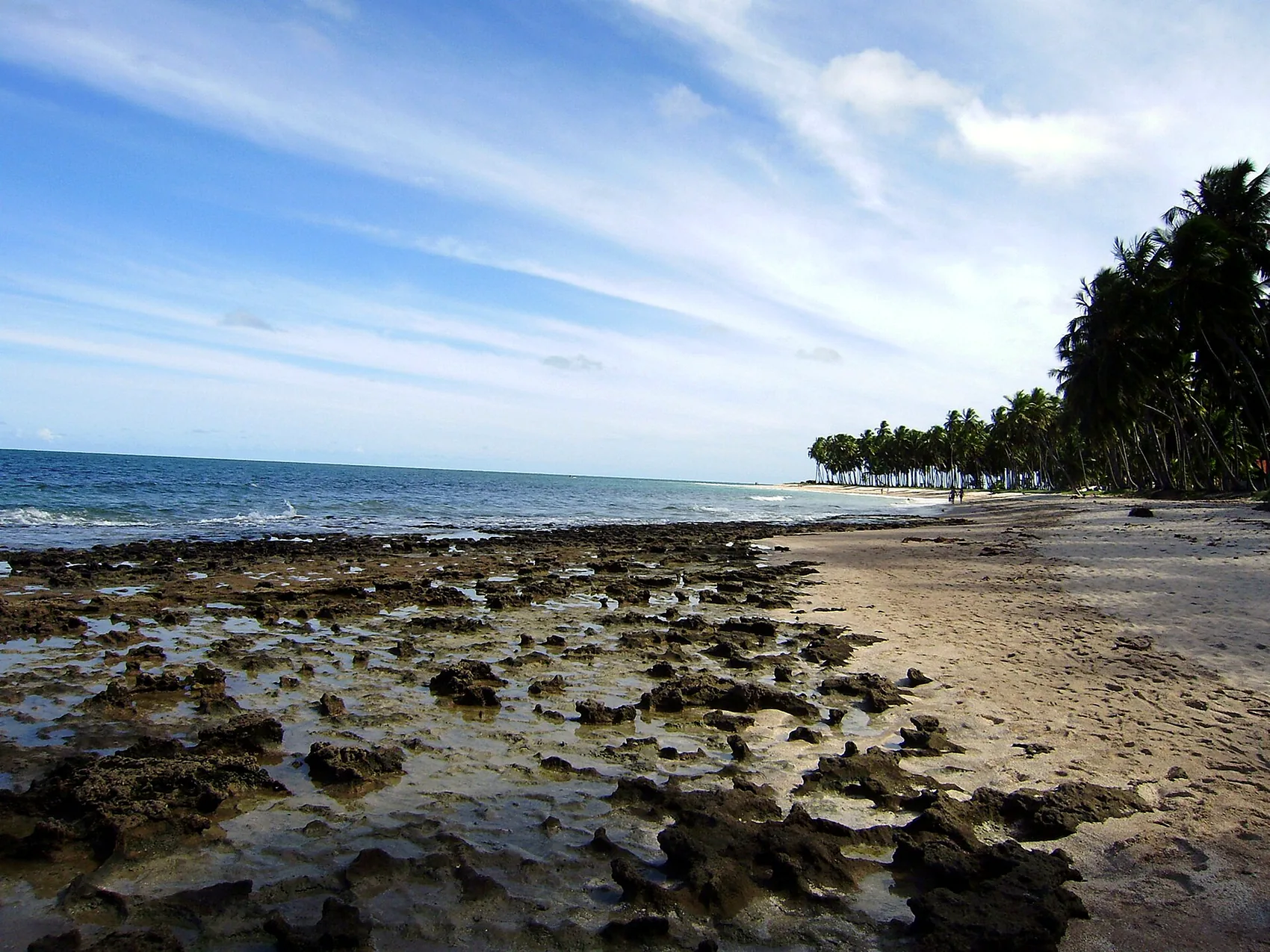
South of town, past the village of Laranjeiras, the coast turns wild. The best-known of the roadless beaches, Praia do Sono, is reached by a forest trail of about an hour over a low headland, or by a short boat-taxi when the sea is calm. It is a true caiçara beach — the caiçara are the traditional fishing communities of this coast — with a handful of simple homes, a couple of rustic bars serving cold drinks and the day's catch, and no development to speak of. Beyond it, along the same trail, lie even emptier beaches for couples who like to earn their solitude on foot. Further south again, the village of Trindade has a run of beautiful surf beaches and a natural tidal pool in the rocks that is worth the trip on its own.
The walk is part of the romance: a shaded path with glimpses of the sea, birdsong, and the quiet satisfaction of arriving somewhere most people never bother to reach. Wear proper shoes, carry water and cash, and check the tide and the forecast before setting off. If a long hike is not your idea of a good afternoon, take the boat-taxi and save your legs for the evening. Our guide to Paraty Mirim and the quiet beaches maps the calm end of the coast, and hiking around Paraty covers the trails.
The silent water of the Mamanguá
For pure quiet, nothing on this coast beats the Saco do Mamanguá, a long, narrow inlet often called Brazil's only tropical fjord — an eight-kilometre finger of calm water reaching back into the hills, ringed by mangrove and forest and a scatter of small caiçara beaches. There is almost no development, no through-traffic, and on a still morning the water goes to glass. Couples go in by boat or, better, by kayak or stand-up paddleboard, drifting between the shores in near silence. The fit and the patient can climb the Pão de Açúcar do Mamanguá, the sugarloaf peak at the mouth, for a view back down the whole inlet. It is the most peaceful few hours we can point you to anywhere near Paraty.
The pool at dusk
Not every romantic hour has to be earned by boat or trail. Some of the best ones are the simplest, and this is where staying above the town earns its keep. The chalet sits on the ridge with an infinity pool that reads out toward the bay, and the hour we most often hear couples talk about afterwards is the one just before dinner: the sun dropping, the town lights coming on far below, the water of the pool warm and dead still, and the whole sweep of the bay, Angra dos Reis and Ilha Grande laid out in front of you. You have swum, you are not in a hurry, and there is nowhere you have to be for another hour.
It is a deliberate part of how we tell couples to shape a stay. Do one real thing a day — a boat, a beach, a walk — and come back up the hill for the pool and the view before you head down for the evening. The height does two things at once: it gives you the long view you cannot get from the town, and it gives you the privacy you cannot get on a public beach. You can read more about the house on the page for the chalet, and see the wider list of things to do from here in our explore pages.
You have swum, you are not in a hurry, and there is nowhere you have to be for another hour. That is the pool at dusk, and it is most of the point of staying above the town.
Stargazing on a dark night
One of the most underrated romantic things to do in Paraty costs nothing and needs no booking: look up. Because the town is low-built and much of the surrounding coast is protected Atlantic Forest, the skies away from the centre get properly dark, far darker than anything a city couple from São Paulo or Rio sees at home. On a clear, moonless winter night you can pick out the Milky Way as a real band of light, find the Southern Cross low over the mountains, and watch satellites track across.
A few practical notes make the difference between a glance and a proper hour of it. Get away from the town lights — a hillside, a boat deck offshore, or a quiet beach all work. Time it for the nights around the new moon rather than the full moon, since a bright moon washes the faint stuff out. Let your eyes adjust for a good twenty minutes and resist checking your phone, which resets them instantly. And bring something warm; winter nights up on the ridge are cool once the sun is gone. From the deck above the bay, with the town glow well below you and the sky open to the south, it is about as good as casual stargazing gets on this coast.
Spa afternoons and doing nothing well
Romance is not only the big outings; a lot of it is the slow parts in between, and Paraty is unusually good at those. The town and the pousadas around it have a small but real spa scene — massages, couples' treatments, the kind of unhurried afternoon that resets a trip. After a day of walking on cobblestones or swimming in salt water, an hour of that is not indulgent so much as sensible, and it sets you up for a long evening rather than an early night.
Equally, give yourselves permission to do nothing. Our strongest single piece of advice to couples is to protect at least one full day with no plan in it: a slow breakfast, a swim, a book by the pool, a nap through the hot part of the afternoon, and a wander into town only when the light softens. Paraty is small and everything is close, so you never have to rush between things, and the trips people remember are almost never the packed ones. If a day turns rainy, the town takes it well — the churches, the little museums, the cachaça and a long lunch all suit a grey afternoon, and our guide to a rainy day in Paraty has the full list.
A slow wander through the historic centre
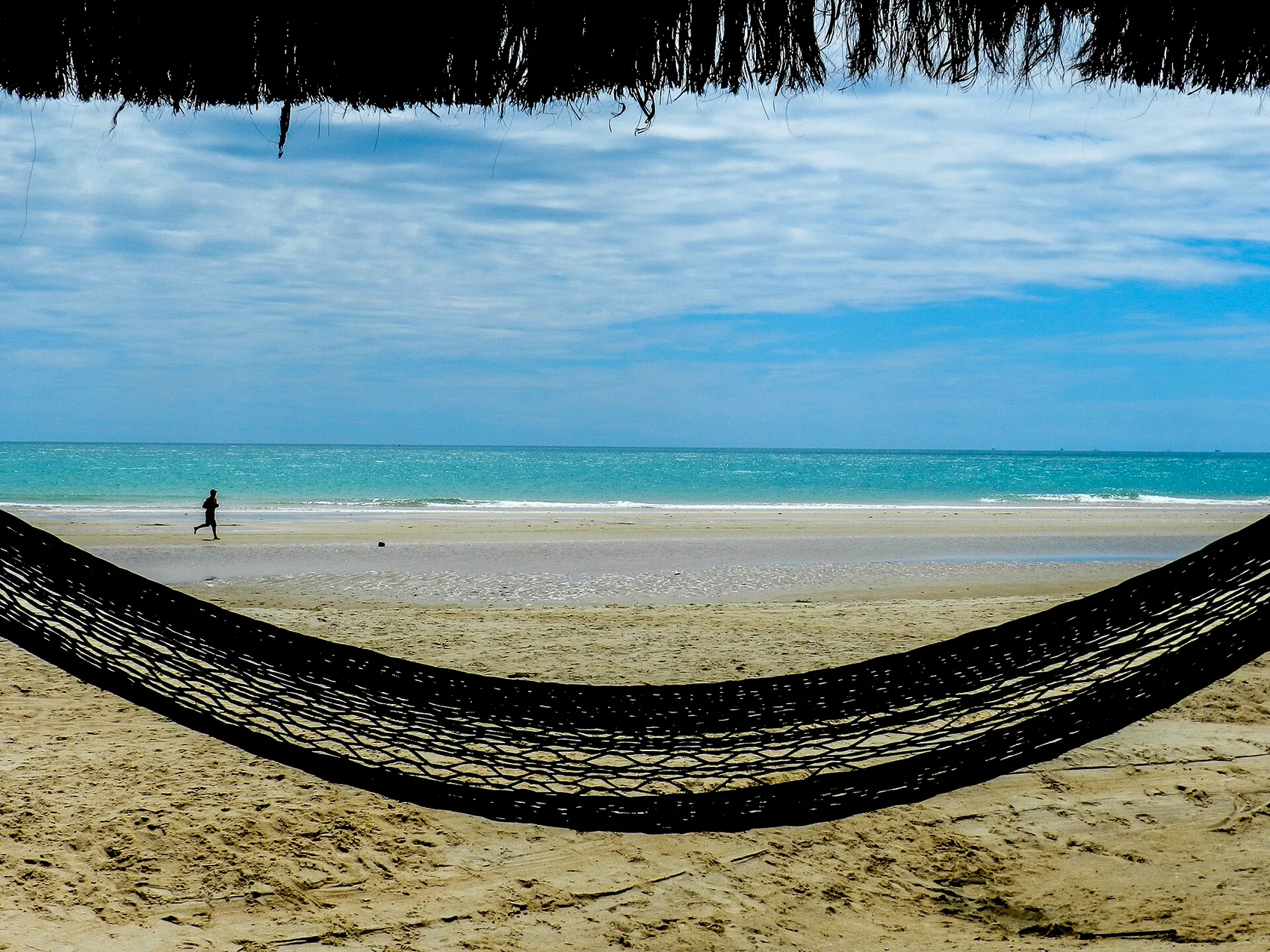
By day, the colonial centre is worth an unhurried couple of hours on foot, and it is free. The pleasure is not in ticking off sights but in walking slowly with no cars around, looking at the old merchant houses, the church squares and the boats on the water at the harbour end. Wear flat shoes and watch your footing — the famous pé de moleque paving is a jumble of large, uneven stones that turns ankles if you stride.
The churches and the squares
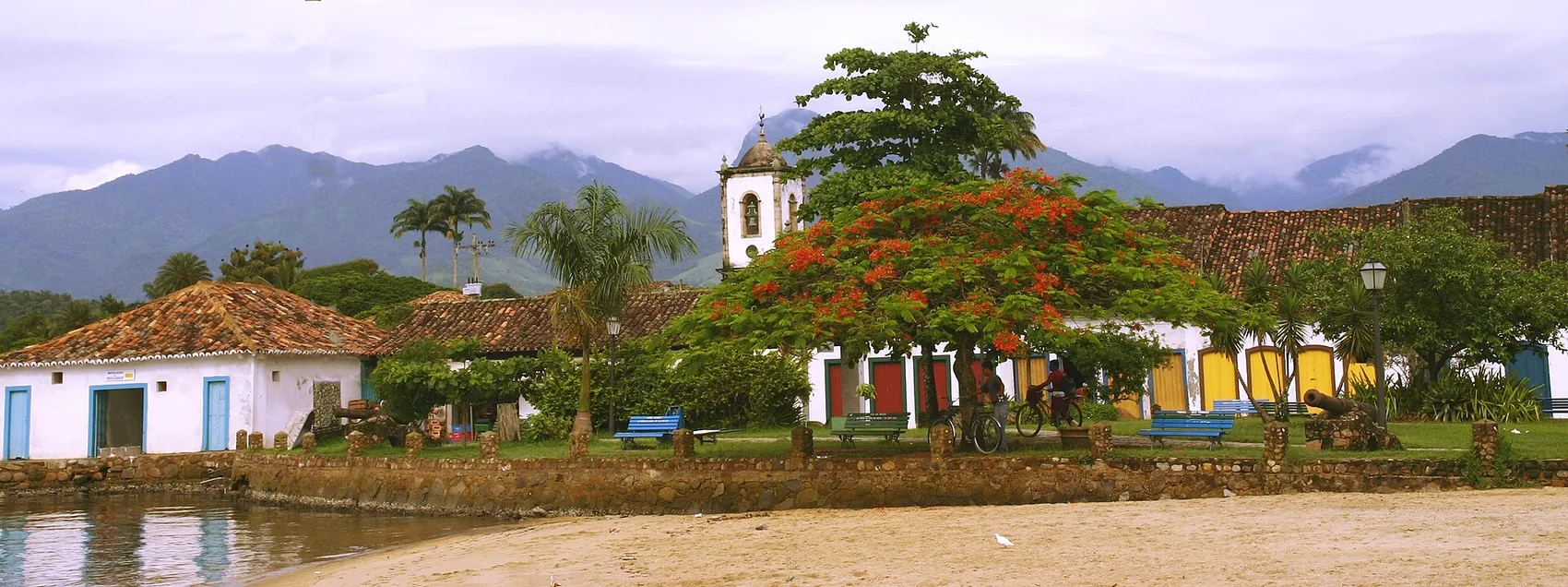
Paraty's churches tell the town's social history in stone. The Capela de Santa Rita, the pretty one on the waterfront finished in 1722, is the oldest, historically the church of the town's freed and free-born Black population, and now home to a small museum of sacred art. The Igreja Matriz Nossa Senhora dos Remédios, the larger church on the main square, was the parish church of the white gentry. There was a separate church for the enslaved, too. Standing in the squares between them, it is easy to read how the colonial town was ordered. Our guide to colonial architecture and churches goes deeper, and the history of Paraty fills in the gold-and-slaves backstory that built the place.
Time your walk with the tide
Paraty has a quirk worth planning around, and it is oddly romantic. The colonial centre was built with gaps in the seawall so that the highest tides flow up into the streets and drain out again, rinsing the cobbles. On the full-moon high tides the water can sit ankle-deep across the lower streets, turning them into mirrors that reflect the whitewashed houses and the church fronts. Locals call the flooded town the "mermaid's mirror." If your dates line up with a big tide, take an evening walk when the water is in and the streets are lit — it is one of the more memorable sights the town offers, and it is entirely free. Check a tide table when you arrive so you know which evenings to aim for.
Waterfalls and a cachaça tasting inland
When you want a change from the water, the mountains behind Paraty give you two very different romantic outings. The first is the waterfalls. A short drive up the old road toward the mountains brings you to a run of forest cascades and natural rock pools, some with a smooth rock chute you can slide down into the water below. Going midweek, or early, gets you the quiet version; weekends and holidays bring families and can get busy. Wear shoes with grip, since the rocks are slick, and go with the current conditions in mind — after heavy rain the falls run hard and are best admired rather than swum.
The second is cachaça. Paraty has distilled sugarcane spirit since colonial times, and the valleys around town still hold small family distilleries, or alambiques, that welcome visitors. A tasting makes a lovely slow afternoon for two: a tour of the still, an explanation of how the cane is pressed and the spirit aged in different woods, and a flight of everything from raw white cachaça to barrel-aged bottles and sweet liqueurs. It is unhurried, a little indulgent, and you come home with a bottle worth opening on a special night. Our guide to the cachaça distilleries of Paraty covers how to arrange it and what to expect. For couples travelling without a car, both the waterfalls and the distilleries are easy half-day trips by taxi or arranged transfer; getting around has the details.

Time it with a festival, or avoid one
Paraty's calendar can either make a romantic trip or complicate it, so it pays to know what is on. The two big fixtures are the Festa do Divino Espírito Santo, a religious festival with processions, music and decorated streets built around the church calendar, and FLIP, the Festa Literária Internacional de Paraty, an international literary festival that fills the town with readings, talks and crowds for several days. Both are wonderful and both change the character of the place completely.
For a couple, the calculation is simple. If you want energy, colour and a town at full tilt, aim for a festival and book early, because rooms and tables vanish months ahead. If you want quiet and privacy, check the dates and deliberately avoid them, because the same streets that feel intimate on a normal night are shoulder-to-shoulder during FLIP. There is no wrong answer, only the one that matches the trip you want. Our guide to Paraty festivals and events lists the dates and what each one is actually like.
How to shape a romantic few days
You do not need a rigid schedule here — the town is too small and too relaxed for that — but a loose shape helps you get the best of it. Below is roughly how we would spend a few days as a couple, and you can stretch or compress it to fit.
How long to stay
Three nights is the honest minimum: one day for the town and a long dinner, one day on the water, and one for the mountains or a quiet beach. Four or five nights is the sweet spot, because it adds the thing that makes Paraty work — a day with nothing planned. Any less and you spend the trip in transit, since Paraty is a half-day's travel from the big cities. Our guides to how many days to spend in Paraty and a luxury long weekend go into the trade-offs, and the 3-day Paraty itinerary gives you a ready-made plan.
A loose rhythm for two
The pattern we suggest is the same one that suits the town: slow mornings, one real outing, long evenings. Take breakfast without rushing. Do your one big thing in the cooler part of the day — the boat, the beach walk, the waterfalls. Come back to the pool through the hot afternoon and let the sun do the work. Then head down to the old town as the light softens for dinner and whatever music you find. Protect one day with no outing at all, and let the trip breathe. If you are folding in a longer coastal loop, our 7-day Costa Verde itinerary stitches Paraty together with Ilha Grande and Angra.
Our one rule for couples. Do not over-book. The single biggest mistake we see is trying to cram every beach, island and waterfall into three days. Pick a couple of things you genuinely want, do them slowly, and leave real gaps. The empty hours are where the romance actually happens.
Where to base yourselves
You have two broad choices. Stay in a pousada in or near the historic centre and you can roll out of dinner and into bed on foot, at the cost of some evening noise and no view. Stay up on the hillside and you trade the walk into town for privacy, a pool, and the long view over the bay — you drive or arrange a transfer down for dinner, and back up afterward to the quiet. For couples who came to Paraty for peace, we are obviously biased toward the second, and the whole design of the chalet is built around it: the deck, the pool, and that triple view of the bay, Angra and Ilha Grande. See luxury vacation rentals in Paraty for how the options compare, and the page for the chalet for ours.
Getting here from Rio, São Paulo and abroad
Paraty sits almost exactly halfway between the two big cities on the coastal BR-101, which makes it reachable from either. From Rio de Janeiro it is roughly 230 kilometres and about four to four and a half hours by road, along a scenic stretch of the Costa Verde that hugs the sea for much of the way. From São Paulo it is roughly 260 kilometres and a similar four and a half hours or so, depending on traffic leaving the city and the state of the mountain descent to the coast. Both routes carry tolls, so keep some Brazilian currency to hand if you drive.
There is no commercial airport at Paraty itself. Couples flying in from elsewhere in Brazil or from abroad generally land at Rio de Janeiro (either Galeão international or Santos Dumont) or at São Paulo's Guarulhos, then continue by road — a private transfer, a rental car, or the comfortable long-distance buses that run down the coast. A private transfer is the most romantic way to arrive, since neither of you has to drive the mountain road, and you can watch the coast unspool instead. Our guide to flying to Paraty lays out the airport options, and getting around covers transfers and taxis once you are here.
A word for international couples: it is well worth pairing Paraty with a few days in Rio de Janeiro on one end of the trip. Rio gives you the city, the famous beaches and the big views; Paraty gives you the quiet. Most couples do Rio first and come down the coast to slow down, or reverse it so the trip ends somewhere calm. It is the natural rhythm of a Costa Verde honeymoon or romantic escape, and if that is what you are planning, our dedicated guide to a honeymoon in Paraty picks up where this one leaves off.
When to come for romantic Paraty
Season shapes a romantic trip here more than most people expect, so it is worth a moment. The dry winter, roughly June through September, is our favourite for two: the skies are clearest, the crowds thinnest outside the festival weeks, the sea at its most transparent for snorkelling, and the evenings cool enough to want a fire and a bottle of red. The stargazing is at its best then too. The trade-off is a sea that is bracing rather than warm and the odd cold front that brings a grey day or two.
High summer, from December to March, brings the warmest sea, the longest days and a festive buzz, but also heat, humidity, reliable afternoon storms and the full weight of the Brazilian holiday crowds around Christmas, New Year and Carnival. Prices peak and the quiet coves are less quiet. The shoulder months of April, May and October are the connoisseur's compromise — warm enough, quiet enough, and often beautifully clear. Whatever season you pick, keep your boat day flexible and watch the forecast; the weather here changes fast, and the best romantic evenings are the ones you are willing to move to catch the calm. Our full best time to visit guide breaks it down month by month.
A last word
The thing to understand about romantic Paraty is that it does not perform for you. There is no manufactured version of romance here, no engineered sunset deck with a queue for the photo. There is a quiet colonial town, a bay full of empty water, a dark sky, and enough distance from ordinary life to actually feel it. The couples who love it are the ones who lean into that — who take the slow boat instead of the fast one, keep an evening free, and treat doing less as the point rather than a failure of planning.
Our part in it is small and, we think, the right size: a quiet place to come back to at the top of the hill, a pool to swim in as the light goes, and a deck with the whole bay laid out below for the hour before dinner. Everything else — the coves, the candlelight, the music, the stars — is out there waiting and mostly free. If you are shaping a trip and want a local read on any of it, we are happy to help; just get in touch through our contact page, and browse the rest of our resources and the journal when you are planning. Come for the quiet, and Paraty gives you back more than the noisier places ever do.
Come stay above the bay
Chalé Bel Air sits on the ridge that looks over everything in this guide. Tell us your dates and what kind of trip you are after — we answer personally.
Ask about your datesFrequently asked questions
What are the most romantic things to do in Paraty?
Charter a small boat for a sunset cruise on the bay, eat a long candlelit dinner in the car-free colonial centre and follow the live music by ear, walk or ride to a quiet beach at a time when the tour boats have gone, and end the night looking up at a genuinely dark sky. None of it needs booking weeks ahead, and none of it needs to be rushed, which is rather the point of Paraty.
Is Paraty a good place for a romantic trip?
Yes, if your idea of romance is quiet rather than loud. Paraty is a small colonial town with no cars in its centre and no high-rises anywhere, set on a bay full of coves you reach only by boat or trail. Evenings are about a good dinner, a caipirinha and live music rather than clubs. It suits couples who want time alone and good food over resorts and nightlife.
What is the most romantic time of year to visit Paraty?
The dry winter months of roughly June to September give the clearest skies, the calmest crowds and the best stargazing, with cool evenings made for a fire and a bottle of wine. Summer, from December to March, is hotter with the warmest sea but brings afternoon storms and holiday crowds. The shoulder months of April, May and October are the quiet connoisseur's choice. Always check the current forecast before fixing a boat day.
Where can you watch the sunset in Paraty?
The best sunsets are seen from the water on an evening cruise, or from high ground west of town where the light drops behind the mountains and the bay. From a hillside above Paraty you get the whole sweep of the bay, Angra dos Reis and Ilha Grande in one view as the sky changes. The harbour front and a quiet west-facing beach also work well if you would rather stay on land.
Are there sunset boat cruises in Paraty?
Yes. Both group schooners and private charters run late-afternoon and sunset trips on the Bay of Paraty. For a couple, a small private boat with a skipper is worth the difference: you pick the coves, set the pace, and time the last swim for the soft light before turning for home. Book a day or two ahead in high season and watch the forecast, since sunset trips are best on calm, clear evenings.
Is Paraty good for a romantic dinner?
Very. The colonial centre is closed to traffic, lit by lanterns after dark, and full of small restaurants set in old merchant houses and courtyards. The seafood is the thing to order, above all a moqueca, the coconut-and-palm-oil fish stew of the coast. Many places have live music drifting out into the streets, so you can eat, then simply follow your ears from one square to the next.
Can you go stargazing in Paraty?
Yes, and it is one of the underrated romantic things to do here. Because the town is low-built and much of the coast is protected forest, skies away from the centre get properly dark. On a clear, moonless winter night you can see the Milky Way and the Southern Cross from a hillside, a boat deck or a quiet beach. Avoid the nights around a full moon if the stars are what you are after, and let your eyes adjust for twenty minutes.
Do you need a car to have a romantic time in Paraty?
Not within the town. The historic centre is car-free and walkable, and boats handle the bay. A car helps if you want to reach waterfalls, the cachaca distilleries inland or the wilder beaches south toward Trindade under your own steam, but many couples skip driving entirely and use boats, taxis and the occasional transfer. If you are staying on the hillside above town, you will want a car or arranged transfers for the short trip up and down.


.jpg)

