A host's guide to Carnival 2027 in Paraty: the dates, the Bloco da Lama mud parade at Jabaquara, the brass bands and giant puppets of the old town, and how to plan a Carnival week by the bay.
Carnival in Paraty is a small-town celebration with a big personality. Brass bands march through the colonial streets, neighborhood blocos dance behind their banners, giant papier-mâché puppets bob above the crowd, and on the Saturday of Carnival a tribe of revelers covered head to toe in mangrove mud walks out of Jabaquara beach and into the old town. If you have heard of Paraty's Bloco da Lama and wondered whether to plan a February trip around it, this guide is for you.
In 2027, Carnival Tuesday falls on February 9, so the main weekend runs from Saturday, February 6, with the town's program expected to start on Friday, February 5. Below we cover the dates and how the week usually unfolds, the story of the mud bloco and how to join in, the bands and puppets of the old town, where everything happens, how to fit beach and boat days around the parties, and how to pair Paraty with a night at Rio's Sambadrome. The town publishes its official program shortly before Carnival, so treat the specific hours here as a guide to the pattern rather than a schedule.
Carnival 2027 dates and the shape of the week
Carnival is tied to Easter, so its dates move every year. In 2027 the calendar is early and simple: Carnival Saturday is February 6, Sunday February 7, Monday February 8, and Carnival Tuesday February 9. Ash Wednesday, the start of Lent, is February 10. Paraty usually opens its celebrations on the Friday before, which in 2027 would be February 5.
Last year gives a good picture of the rhythm. In 2026 Paraty's Carnival ran officially from Friday, February 13 to Tuesday, February 17, five days of music in the historic center and in communities around the district. Expect the 2027 edition to follow the same five-day shape, from Friday, February 5 to Tuesday, February 9, with the town confirming the program in the weeks before.
Across Brazil, Carnival Monday and Tuesday are treated as optional days off rather than national holidays, and some states and towns declare them local holidays. For federal offices in 2026, Ash Wednesday was a working day from 2 pm. In practice, much of the country takes the long weekend, and a lot of people turn it into a full week.
The week has a natural arc. Friday is arrival day and the opening night. Saturday is the big day in Paraty, when the Bloco da Lama traditionally takes to the streets. Sunday and Monday are full days of blocos, bands and music. Tuesday is the last night of Carnival and often the liveliest. Ash Wednesday is the day the town breathes out, and the days after are some of the most relaxed of the summer.
If you are planning your stay, the ideal window is Thursday, February 4 to Thursday, February 11. Arrive a day before the town fills, enjoy all five days of Carnival, and keep a couple of calm days at the end for the beaches. Our month-by-month guide to Paraty shows how Carnival fits into the rest of the summer.
What Carnival feels like in Paraty
Paraty's Carnival belongs to a family of celebrations that Brazilians call carnaval de interior, the small-town Carnival: brass bandinhas playing in the squares, traditional blocos formed by neighborhoods and groups of friends, puppets from local folklore, and marchinhas, the old Carnival marches that everyone knows the words to, echoing off the stone streets. It is recognized as one of the most authentic Carnivals in the state of Rio de Janeiro, and it keeps that character on purpose.
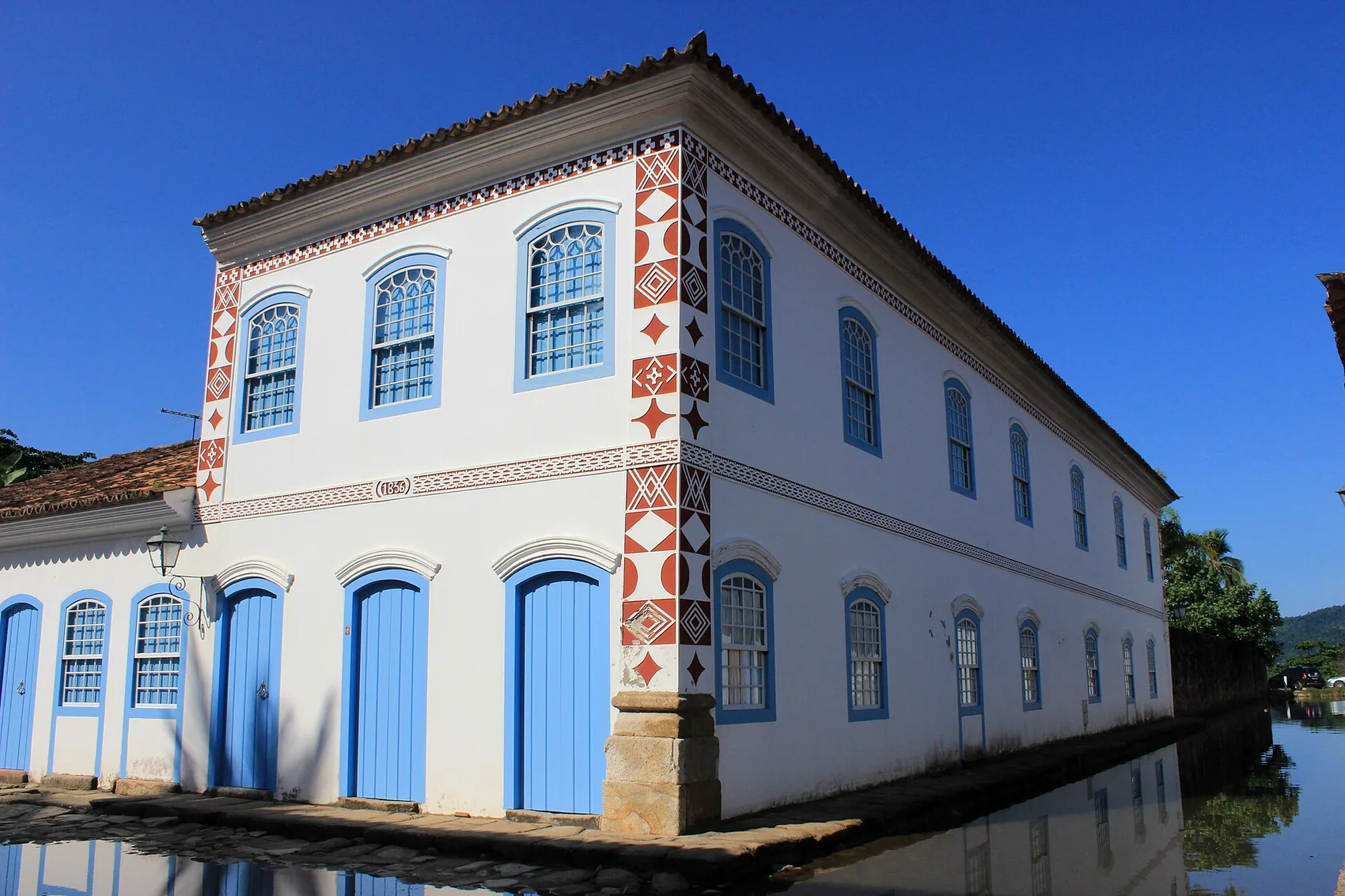
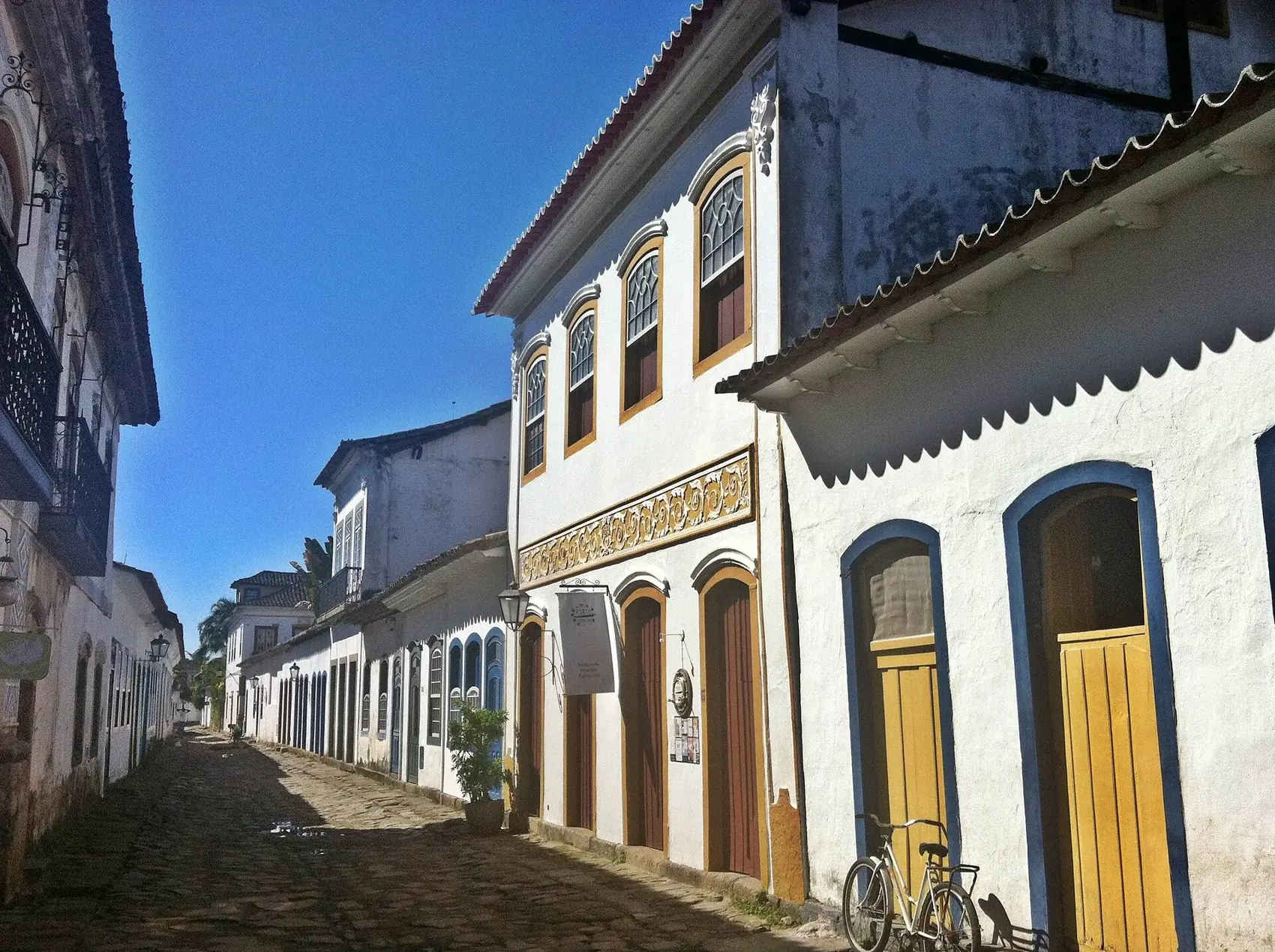
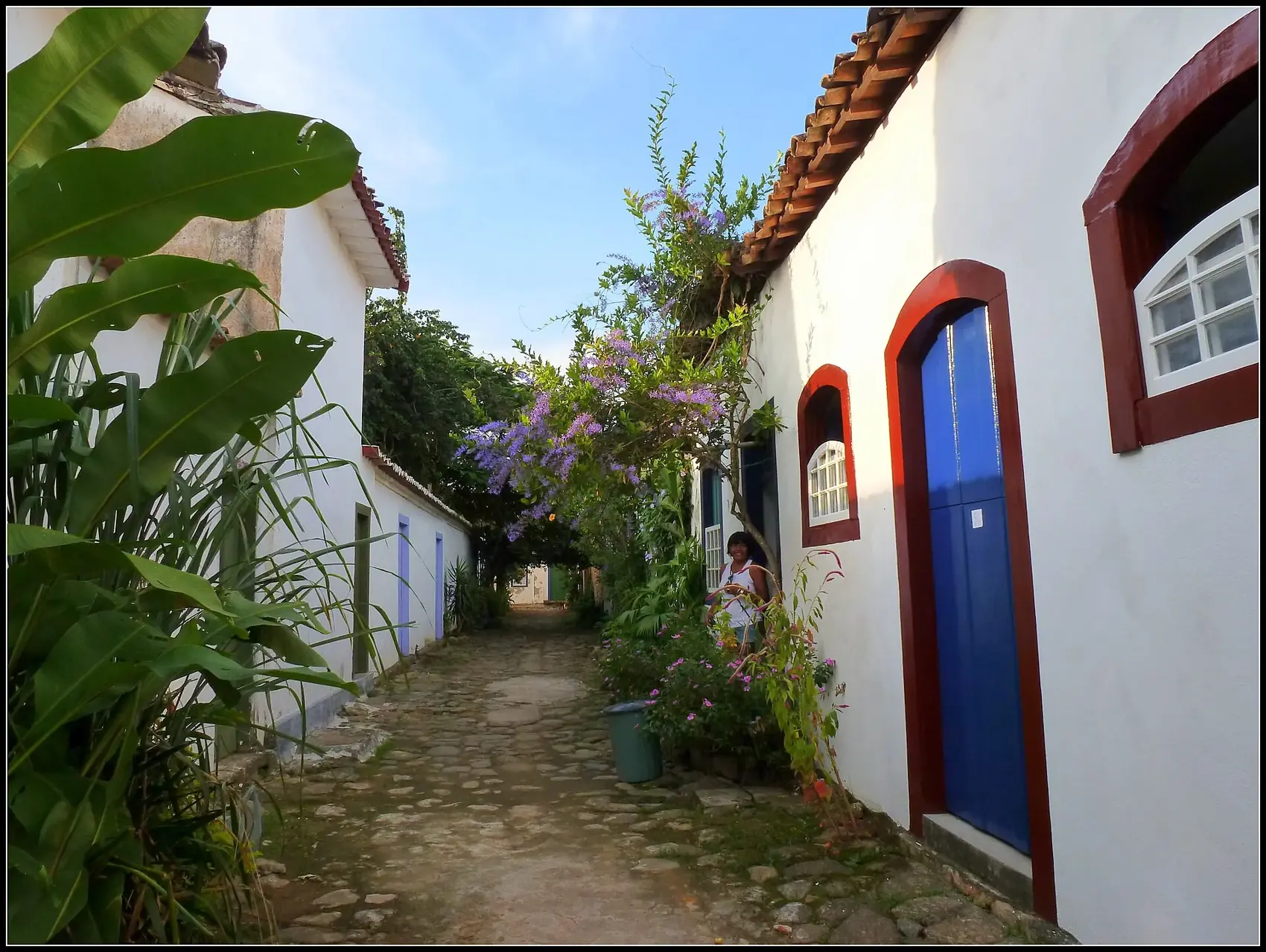
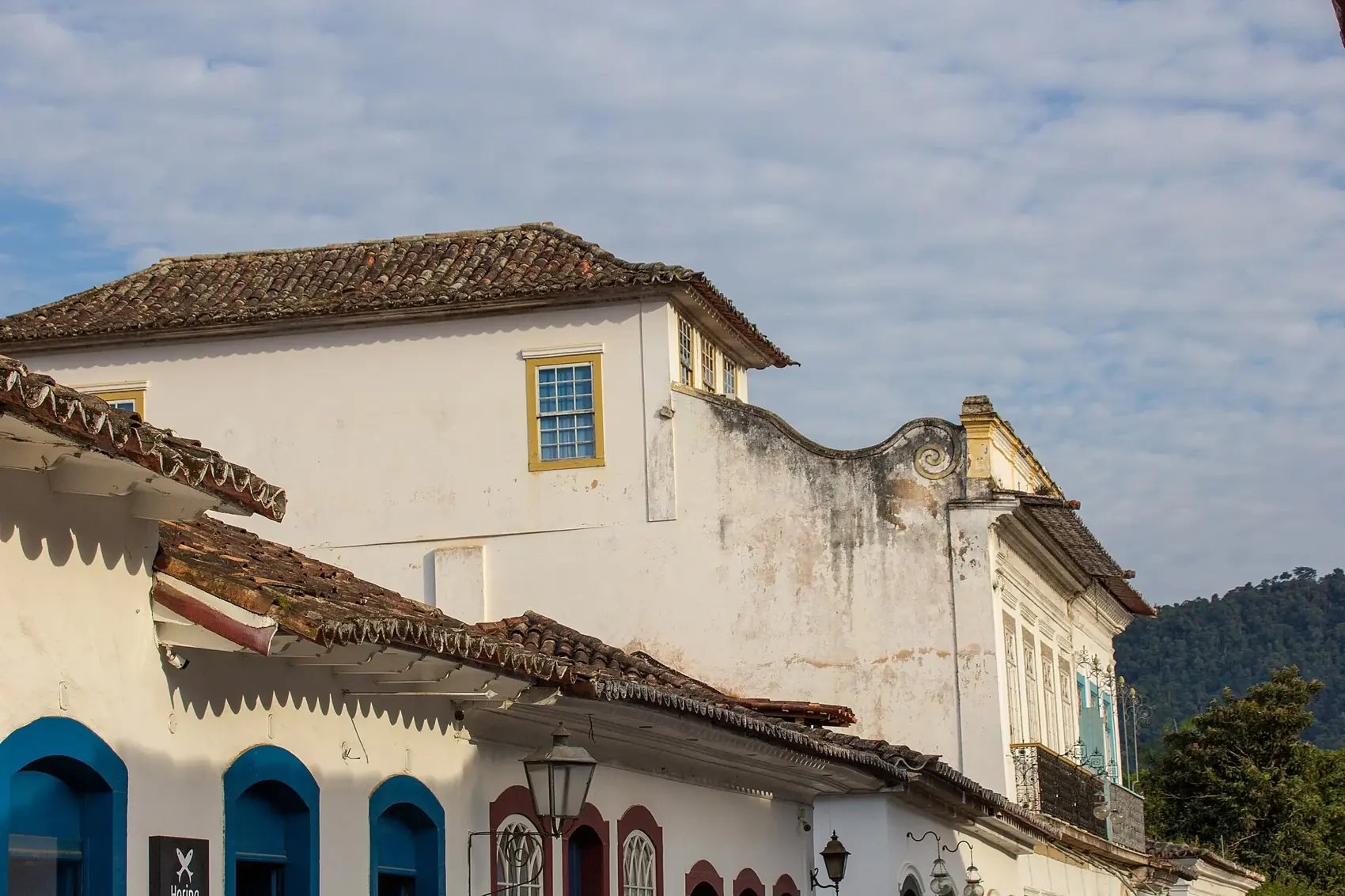
The setting makes it special. Paraty's historic center, part of a UNESCO World Heritage site since 2019, is a grid of whitewashed colonial houses with colored doors and window frames, built in the eighteenth century when the town was a port on the gold route. During Carnival those streets fill with music, costumes and confetti, and the contrast between the old architecture and the party is part of the fun.
The atmosphere is warm and inclusive. Grandparents dance next to teenagers, children ride on shoulders to see the puppets, and visitors join in alongside families who have followed the same blocos for decades. The town presents its Carnival as a safe, democratic celebration for residents and visitors alike, and that is how it feels on the ground.
Costumes are part of it, and you do not need anything elaborate. A colorful shirt, a flower garland, a hat, some biodegradable glitter or a simple mask is enough. Many locals dress in the colors of their favorite bloco, and others improvise something funny on the day. Throughout Carnival you will see bonecões, the giant puppets, and mascaradinhos, little masked revelers, wandering through the streets.
Above all, Paraty's Carnival happens at a human scale. You can walk from one end of the celebration to the other in a few minutes, step out to a quiet terrace when you want a break, and be back in the music five minutes later. For many of our guests, that is exactly the appeal. Our festivals calendar puts Carnival alongside the town's other big moments.
How the Bloco da Lama began
The Bloco da Lama, the mud bloco, is Paraty's most famous Carnival tradition, and it started almost by accident. On the Saturday of Carnival in 1986, a group of friends were playing in the mud of the mangrove at Praia do Jabaquara, the beach just north of the historic center. By the time they had finished they were coated so thoroughly that they were unrecognizable, and in that state they walked into the old town, where they caused a sensation.
One account of that first day says the friends had taken to the mud to cool off during a spell of very hot weather. Whatever the reason, the effect was instant. The following year a larger group came back on Carnival Saturday, this time on purpose, dressed as a prehistoric tribe: covered in mud and decorated with rags, vines, bones and skulls. The image stuck, and the bloco has been a fixture of Paraty's Carnival ever since.
Four decades later, the Bloco da Lama is one of the defining sights of Brazilian Carnival outside the big cities. It has appeared in international travel media as one of the most unusual Carnival customs in Brazil. For Paraty it remains a local tradition first, celebrated by the town as one of the most distinctive expressions of its Carnival.
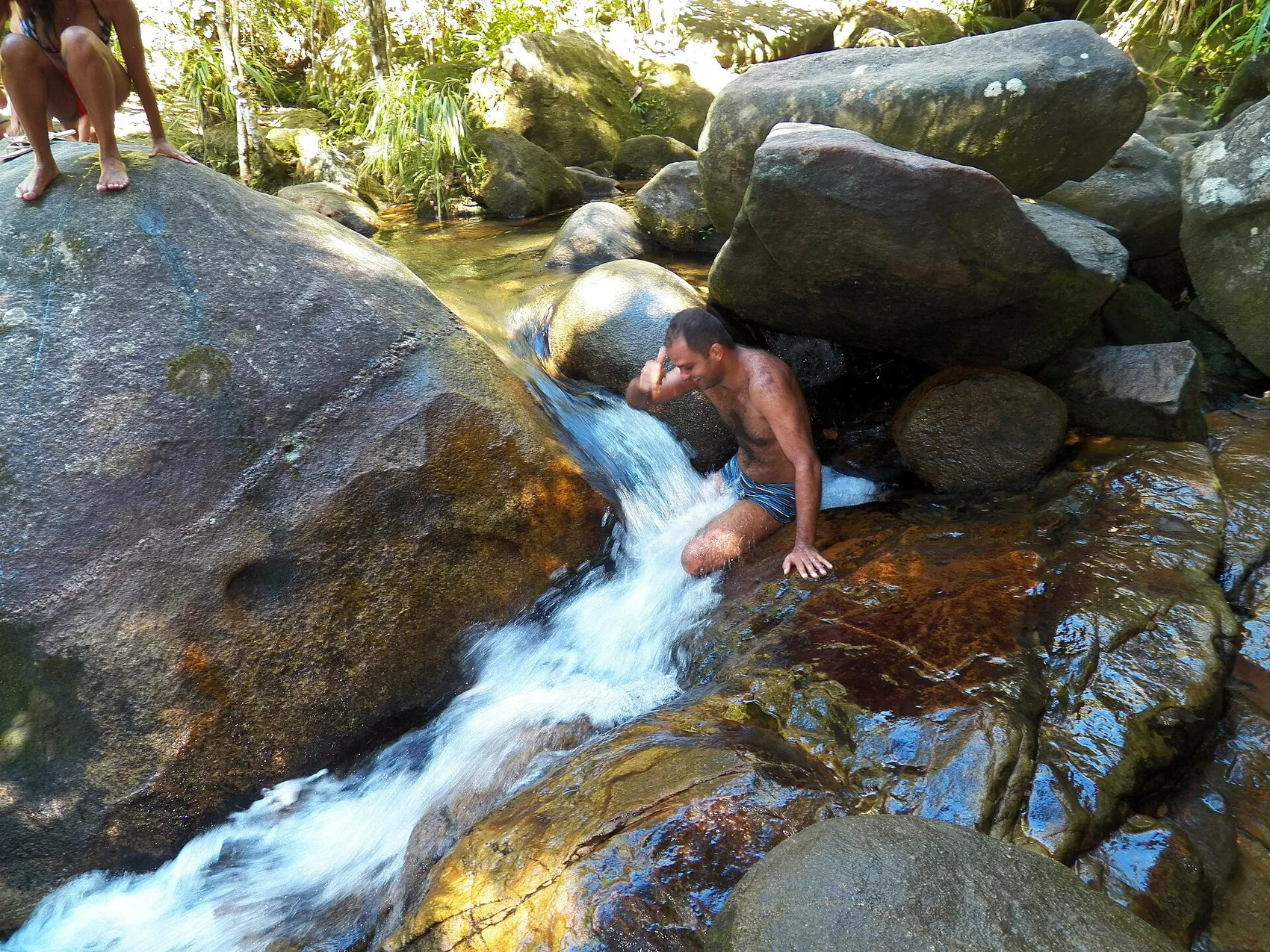
Part of what makes the bloco special is its material. The mud comes from the mangrove that fringes Jabaquara, a dark, fine, mineral-rich mud that covers every participant from head to toe.
By Carnival 2027 the bloco will be more than forty years old. If you love the stories behind places, our history of Paraty tells the longer tale of the town, from the gold road to the rediscovery of its colonial center.

A Bloco da Lama day at Jabaquara
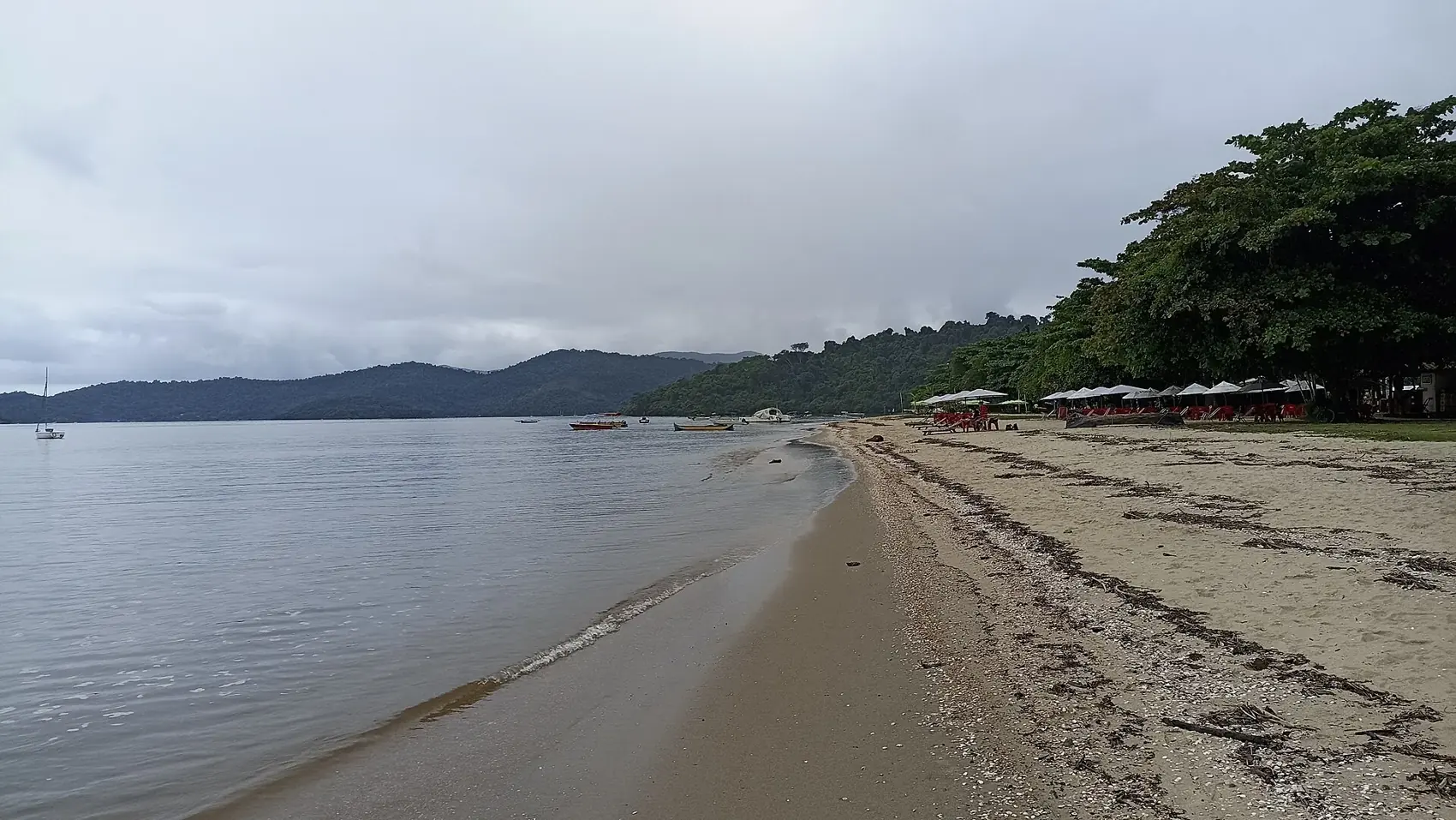
Carnival Saturday is the bloco's traditional day, and the action starts at Praia do Jabaquara, a calm, shallow beach a few minutes from the historic center on foot or by car, across the Perequê-Açu river. The town lists the start time in its Carnival program. The gathering takes place by day, so plan a relaxed morning and keep the whole day free.
The day unfolds in stages. First comes the mud: participants wade into the mangrove at the edge of the beach and cover each other completely, faces and hair included, often adding leaves, shells and improvised decorations. Then the beach turns into a playground, with mud wrestling, tug-of-war and a great deal of laughter. Finally the tribe sets off toward the old town, dancing and chanting behind the music, a parade of happy, mud-caked figures against the white colonial walls.
For spectators, the beach is the best place to watch the transformation, and the route into town is the best place to see the parade. Arrive early to find a good spot, bring water and a hat, and keep a little distance if you are not planning to get muddy, because enthusiasm travels.
The kiosks along Jabaquara make it easy to spend the whole day there. Before the mud gets going, have a coffee or a coconut; afterward, settle in for grilled fish and a cold drink. When the parade moves on, many people rinse off in the sea and stay for the afternoon, and the beach has a happy, worn-out feel by sunset.
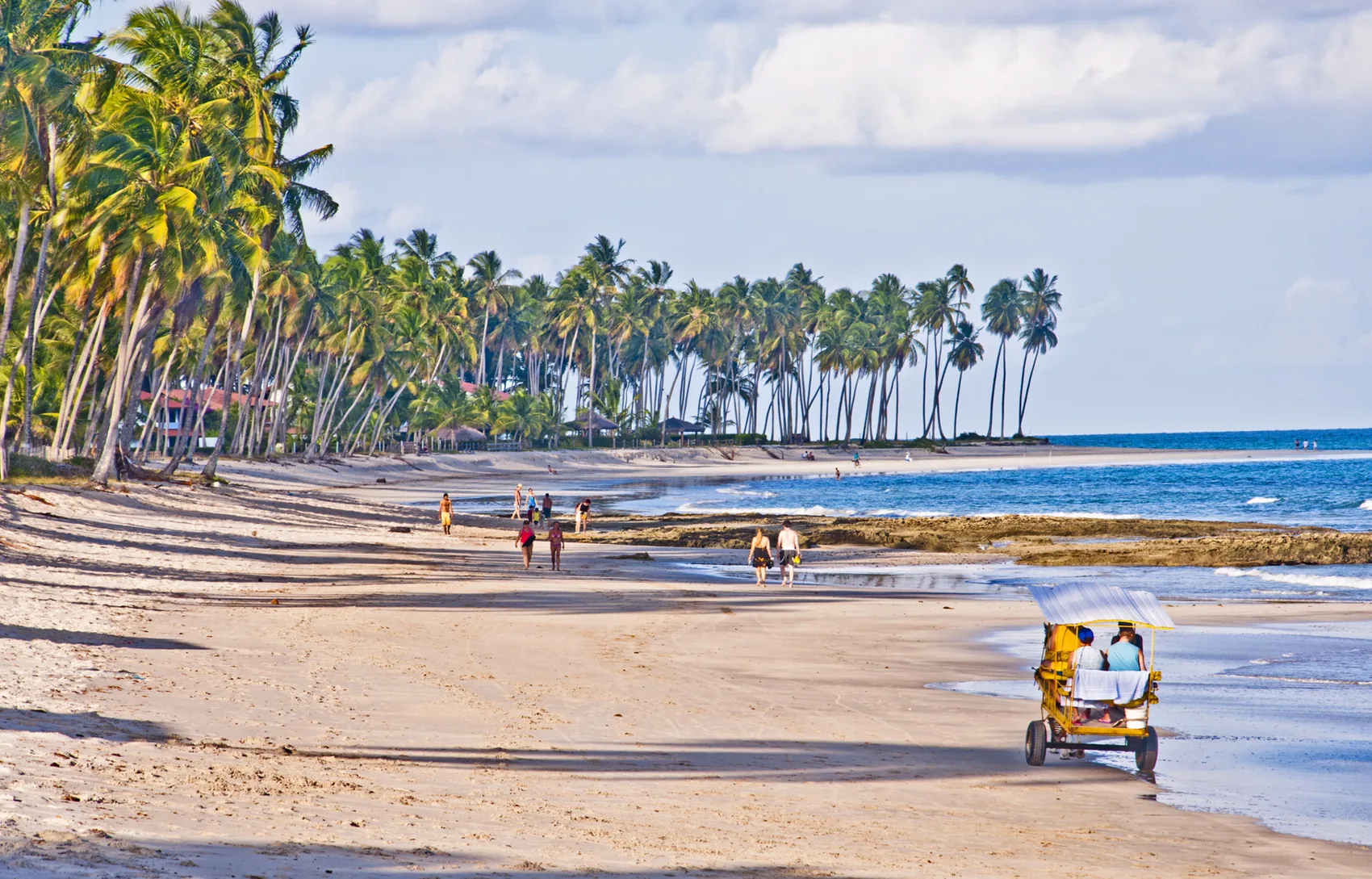
Jabaquara itself is a lovely beach at any time of year, with calm water and views across the bay, and it is a favorite with families. Our complete guide to Paraty's beaches describes it alongside the other beaches near town.
Taking part in the mud, or watching
The Bloco da Lama is a street bloco, and visitors join in alongside locals: you turn up at Jabaquara with the right clothes and the right spirit. If you are curious, it is one of the most memorable things you can do in Brazil, and nobody forgets their first walk into town as part of the mud tribe.
A few tips make the day easier. Wear an old swimsuit or clothes you are happy to throw away, because the mud does not always wash out. Leave jewelry, watches and anything valuable at home. Put your phone in a waterproof pouch on a lanyard, or better, leave it with a friend who is staying clean. Tie long hair back. Bring a towel, a change of clothes and a bag for the muddy ones, and plan to rinse off in the sea before you head home.
Protect your eyes and ears. The mud is fine and gets everywhere, so blink it away rather than rubbing, and keep a bottle of fresh water handy for a quick rinse. Sunscreen still matters: the mud is a good layer, but it dries and cracks in the afternoon sun.
If you would rather watch, you will still have a wonderful day. Stand at the edge of the beach to see the mud go on, then follow the parade into the historic center. The photographs from the bloco are some of the best of Carnival anywhere in Brazil; ask before photographing individuals up close, as you would at any celebration.
Either way, take the day slowly. Drink plenty of water, eat something before you start, and leave space in the afternoon for a rest. Carnival Saturday is only the beginning of the week, and the music continues every evening until Tuesday.
The blocos and bands of the old town
Beyond the mud, Paraty's Carnival is built around its blocos, the street groups that parade with their own music, colors and loyal followers. Some have been part of the town's Carnival for decades, and others are newer additions that keep the celebration fresh.
The town's traditional blocos include Os Meninos do Pontal, Paraty do Amanhã and Vamos que Tô, groups with deep roots in their neighborhoods. In recent years they have been joined by newer blocos such as Tribo do Samba, Tarja Preta, Bloco das Piranhas and Os Caras de Pau, and Unidos da Ilha was among the highlights of the 2026 program. Each has its own personality, from samba-driven processions to playful costume groups, and following a different bloco each day is a good way to see the town's Carnival from several angles.
The Banda Santa Cecília is one of the stars of the week. Its traditional appearance in the historic center is one of the highlights of Paraty's Carnival, and the band's music sets the pace for the streets around it. When you hear the band coming, follow the crowd.
Blocos typically gather at a set point, play for a while to warm up, then move through the streets with their followers dancing behind. Hundreds of people can follow a popular bloco, and the mood is friendly and easygoing. You can join for a few streets and peel off whenever you like.
The official program, published by the town shortly before Carnival, lists which blocos parade on which days and from where. Pick up a copy or check the town's official channels when you arrive, and choose a couple of blocos to follow each day. Between them, the squares of the historic center have music late into the evening; the nightlife guide lists the bars and squares where evenings carry on.
Giant puppets and marchinhas
Two sights and sounds define Carnival in Paraty's old streets: the giant puppets and the marchinhas.
The puppets, or bonecões, are tall papier-mâché figures carried by a person inside, with large painted heads and long arms that swing as they walk. Two of Paraty's blocos are known especially for them: the Arrastão do Jabaquara and the Assombrosos do Morro, whose puppets parade to the sound of marchinhas and enchant children and adults alike. Seeing a giant figure dance down a colonial street with a brass band behind it is one of the happiest images of the week.
Marchinhas are the classic Carnival marches of Brazil, short, catchy songs with simple choruses that the whole crowd sings. They belong to the older tradition of street Carnival, and in towns like Paraty they remain the heart of the music. You will hear them from the brass bands, from the blocos and from groups of friends singing on the way home. Learn the chorus of one or two and you will find yourself singing along by the second day.
The puppets and marchinhas are what give Paraty's Carnival its family atmosphere. They belong to the daytime and early evening, when children are out with their parents, and they connect the celebration to generations of small-town Carnivals across Brazil.
For photographers, the puppets are a gift. The best light is in the late afternoon, when the sun is low enough to light the colorful heads against the white walls. Find a spot on a corner where the procession turns, so the puppets come toward you down the street.
If you are traveling with children, plan at least one afternoon around the puppets. Ask at your accommodation or check the program for the days and starting points of the blocos that carry them, and arrive a little early to find a place in the shade.
Where Carnival happens around the district
Paraty's Carnival spreads across several areas, each with a slightly different feel. Knowing the map makes it easy to choose where to spend each day.
The historic center is the heart of it. The bands and blocos parade through its stone streets and squares, and in the evenings the center fills with music and people. This is where you will find the Banda Santa Cecília, most of the traditional blocos and the arrival of the mud tribe.
Avenida Roberto Silveira, the main avenue leading into the old town, is another key stage of the street Carnival, with space for larger crowds and music.
Jabaquara and Pontal, the neighborhoods and beaches across the river from the center, have their own Carnival life. Jabaquara is home to the Bloco da Lama and the Arrastão do Jabaquara, and Pontal gives its name to Os Meninos do Pontal. Both beaches have kiosks and space to relax between events.
Further out, the town takes Carnival to communities around the district. In 2026 the program reached Prainha, Tarituba, Campinho and Trindade, each with its own celebrations. These smaller parties are a good choice if you want a taste of Carnival in a beach village setting. Trindade adds its surf beaches to the mix; our Trindade guide has the background.
The satellite map on our Explore page shows where each beach and neighborhood sits, which helps when you are planning how to move between them.
A simple way to choose is by mood. For brass bands, puppets and the classic small-town Carnival, stay in the historic center and on the avenue. For a day in the sun with the party nearby, base yourself at Jabaquara or Pontal and walk over to the center when the evening music starts. For a smaller, village-style celebration, the communities along the coast each put on their own program. Most visitors mix all three over the week, and the distances are short enough to do so without fuss.
Carnival with children
Paraty's Carnival is one of the best in Brazil for families. The daytime blocos, the brass bands and the giant puppets are made for children, the beaches nearby are calm and shallow, and the town presents its celebration as a family event.
Plan your days around the daytime events. Mornings and afternoons are when the puppets and family-friendly blocos are out, and the historic center has plenty of shade and places to sit. Evenings get busier and louder as the week goes on, so many families head home after the late afternoon procession and save the night music for the adults.
Children love to dress up for Carnival. A simple costume, face paint, a flower crown or a mask makes them part of the celebration, and you can look for Carnival accessories in shops around town in the days before. Bring a hat and sunscreen for each child, plenty of water, and snacks for the moments between parades.
Ear defenders are a good idea for small children, especially near the brass bands. A brightly colored hat or T-shirt makes them easy to spot in a crowd, and it helps to agree a meeting point in case anyone gets separated. Write your phone number on a wristband for the youngest.
Older children and teenagers often love the evening atmosphere, the music and the costumes. Agree a plan with them before you go out: a meeting point, a time to check in, and a charged phone. In a town this small, it is easy to keep the group together and still give everyone a little freedom.
The Bloco da Lama is fun for older children who want to get muddy, and the mud play at Jabaquara is much like a giant sandbox. Younger children usually enjoy watching from the beach. Afterward, the shallow water at Jabaquara is perfect for rinsing off and playing.
Balance the busy days with calm ones. A boat trip to a quiet beach, a morning at a waterfall, or an afternoon at the pool gives everyone a rest. Our guide to Paraty with children has more ideas for family days around the region.
A Carnival week, day by day
Many of our guests adapt this seven-night plan for Carnival. It assumes arrival on Thursday, February 4 and departure on Thursday, February 11, and it mixes Carnival days with time on the water so the week never feels like a marathon.
- Thursday, February 4. Arrive by road before dark, fill the fridge, and take a first stroll through the old town while it is still quiet.
- Friday, February 5. Morning boat trip on the bay. In the evening, the expected opening of Carnival in the center: bands, the first blocos and a festive dinner.
- Saturday, February 6. Bloco da Lama day. Jabaquara from late morning, the parade into town, a swim and a long lunch. Rest in the afternoon, music in the evening.
- Sunday, February 7. Beach morning, then the giant puppets and daytime blocos in the center. A night at Rio's Sambadrome is an option for those who want to combine both.
- Monday, February 8. A quieter day: Trindade, a waterfall or the pool, with an evening in town for the blocos.
- Tuesday, February 9. The last day of Carnival. Follow the Banda Santa Cecília and your favorite blocos, then stay out for the final night.
- Wednesday, February 10. Ash Wednesday. A late breakfast, a boat to a quiet beach, a calm evening in the center.
- Thursday, February 11. Leave in the morning, or stay on to enjoy the calm after Carnival.
Adjust the plan to your group. Party lovers may want every evening in town; families may prefer the daytime events and evenings at home. Couples may want a sunset sail instead of a night of music. The key is to alternate busy and quiet days, and to keep Saturday free for the Bloco da Lama.
For more planning ideas, for shorter visits, how long to stay in Paraty and the three-day itinerary help you trim the plan.
Boat days and quiet beaches
One of the pleasures of Carnival in Paraty is that the bay is right there. While the town sleeps off the night before, you can be on the water by nine, swimming off an island, and back in time for the afternoon puppets.
Islands and small beaches are spread across the bay, many of them reachable only by boat. A private boat is the best option during Carnival: you choose the start time and the stops, and the captain can find a calm, quiet beach well away from the town's busiest spots. Shared schooners are a sociable alternative and leave from the quay in the historic center. Our boat-day guide compares the two, and the island-hopping guide suggests routes.
South of town, the Saco do Mamanguá reaches deep between the hills, its shores lined with mangroves and caiçara fishing villages, and it is a lovely escape during the Carnival week, green and sheltered, with calm water in the mornings. Read our Saco do Mamanguá guide for how to visit.
On land, Paraty-Mirim is one of the gentlest beaches in the area, with a small colonial chapel and calm water, a perfect place for a quiet morning. The quiet-beaches guide lists several more.
Plan your boat days for the mornings after big nights out and for Ash Wednesday, when the town is recovering and the bay feels especially peaceful. Book private boats as early as you can, because Carnival week is one of the busiest of the year for the captains.
Pack the boat bag the night before: swimsuits, towels, sunscreen, a hat, water, snacks and a waterproof bag for phones. Most private boats leave from the quay in the historic center, and an early start gives you the calmest water and the quietest beaches.

Carnival for couples and groups of friends
Paraty's Carnival works beautifully for couples and for groups of friends, and each can shape the week in its own way.
For couples, the appeal is the balance. You can spend an afternoon following the brass bands, dine by candlelight in a colonial house, and walk home through streets still echoing with music. Mornings belong to the two of you: a private boat to a quiet beach, a swim before breakfast, a slow coffee on a terrace. Many couples choose one big day, often the Bloco da Lama or the final Tuesday, and keep the rest of the week relaxed. For more plans made for two, see romantic things to do in Paraty, and if this is a honeymoon, the honeymoon guide is written for you.
For groups of friends, Carnival is the perfect reason to share a house. Everyone can follow their own rhythm during the day, with some joining the mud bloco while others take a boat or head to Trindade, and the group comes together in the evening for dinner and the music in town. A house with space for everyone also makes the logistics easier: one kitchen for breakfasts and lunches, one place to meet before going out, and a terrace for the late-night stories. Our guide to Paraty for groups covers how to plan a group stay.
Groups have the best Carnivals when the logistics are settled early. Set up one shared fund for the groceries and the bar. Book boats and dinners for the whole group in advance. Choose the days you want to spend together, such as the Bloco da Lama and the last night, and leave the others open. And decide how everyone will get back from town each night, so that the end of the evening is as easy as the start.
Whatever the size of your group, the secret is to enjoy Carnival at your own pace. With five days of celebration and a beautiful bay to return to, there is room for every kind of Carnival.
Eating and drinking through Carnival
Carnival in Paraty is a week of long lunches, street snacks and late dinners, and the town's food scene is in full swing.
During the day, the beach kiosks at Jabaquara and Pontal are the natural place to eat: grilled fish, shrimp, fried snacks, cold drinks and fresh coconuts, with your feet in the sand. In the historic center, street vendors sell snacks and drinks along the parade routes, and cafés and restaurants have terraces for watching the blocos go by.
For dinner, reserve ahead on the main Carnival nights. Paraty's restaurants range from casual seafood houses to refined kitchens in colonial buildings; the Paraty restaurant guide describes the kinds of places to look for, and the seafood and moqueca guide explains the local dishes.
Cachaça is part of Paraty's identity, and Carnival is a fine time to try it. The town has a long history of distilling the sugarcane spirit, and a well-made caipirinha with good local cachaça is the drink of the week. Our guide to caipirinha and cachaça bars lists where to taste.
A house with a kitchen is a real advantage during Carnival. A breakfast at home before the blocos, a simple lunch by the pool on a rest day, or a dinner cooked with fish from the morning market lets you balance the party with quieter meals. Many guests book a private chef for one evening of the week, often Ash Wednesday, to celebrate the end of Carnival.
Above all, keep hydrated. The days are warm and the dancing is energetic, so alternate every drink with water and coconut water, and eat well before the evening.
If you are cooking at home, shop early in the week. A big grocery run on Thursday, before the town fills, means you will only need fresh bread, fruit and fish on the busier days.
Getting to Paraty for Carnival
Paraty is on the BR-101 coastal highway, about three and a half hours by road from Rio, while from São Paulo you should allow close to five. The coastal drive, where forested mountains drop straight into a sea full of islands, is a highlight of any trip.
For Carnival, the best advice is about timing. Much of the region travels to the coast on the Friday and Saturday of Carnival, so aim to arrive on Thursday, February 4, or earlier. Arriving early gives you a relaxed journey and an evening to unpack before the first band plays. For the return, Ash Wednesday afternoon and Thursday are good choices.
Drive in daylight to enjoy the views; in early February the sun rises around 5:40 am and sets around 6:45 pm, which leaves plenty of time to make the journey. Plan a lunch stop along the way, and you will arrive in Paraty in the late afternoon.
International visitors usually fly into Rio or São Paulo. From either city, a private transfer is the most relaxed way to arrive, especially during Carnival. Our guides to getting to Paraty from Rio, from São Paulo and to the airports for Paraty cover routes, buses, transfers and timings.
If you are combining Paraty with Rio's Carnival, consider arriving in Rio first, enjoying a night or two in the city, and then driving to Paraty, or the reverse. The next chapters explain how to make that work.
If you are taking the bus, the coastal line between Rio and Paraty runs from Rio's main bus station, and buses also connect Paraty with São Paulo. Reserve seats in advance for Carnival week, when the buses are popular, and allow extra time for the journey.
Getting around town during Carnival
Paraty's historic center is closed to cars, which makes it a pleasure to explore on foot during Carnival. A little planning makes moving around easy.
The town's car parks are at the edges of the center, and during Carnival they fill early. If you are driving into town for the evening, arrive in the late afternoon and stay until you are ready to go home. Even simpler, book a taxi or a driver for the night and leave the car at home. Our getting around page explains taxis, transfers and parking.
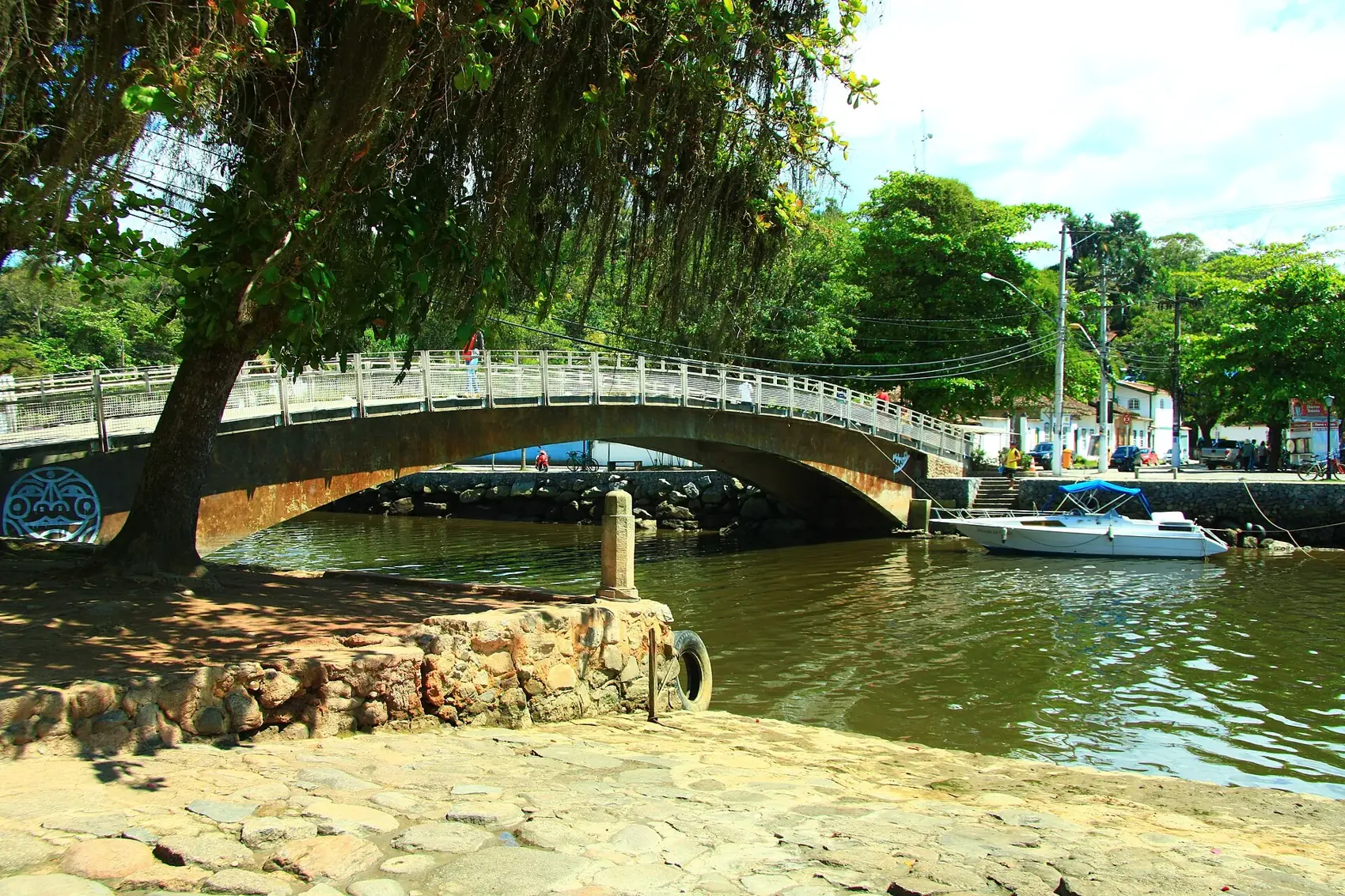
From the center, Jabaquara and Pontal are a short walk across the main bridge over the Perequê-Açu. On Bloco da Lama day, walking is the easiest way to move between the beach and the old town, following the parade.
Wear comfortable shoes with a good grip. The historic center is paved with large, irregular stones that are part of its charm, and at the highest tides the sea flows into some of the lower streets, one of the old town's famous sights. Sandals are fine for the beach, but for an evening of following blocos through the old streets, closed shoes are more comfortable.
If you are staying outside the center, book your return taxi in advance on the busiest nights, and agree a pickup point. Carry a little cash for drinks and snacks, and keep your phone in a bag that closes.
Distances in town are short. The walk from the main square to the bridge takes only a few minutes, and from there Pontal is just across the river, with Jabaquara a little further along the shore. On a busy evening, walking is often quicker than finding a parking space, and it is part of the fun: the blocos are moving through the same streets, and you will hear the music long before you see it. Agree a meeting point with your group for the end of the night, such as the steps of a church or the bridge, so nobody needs to search for anyone in the crowd.
Pairing Paraty with a night at Rio's Sambadrome
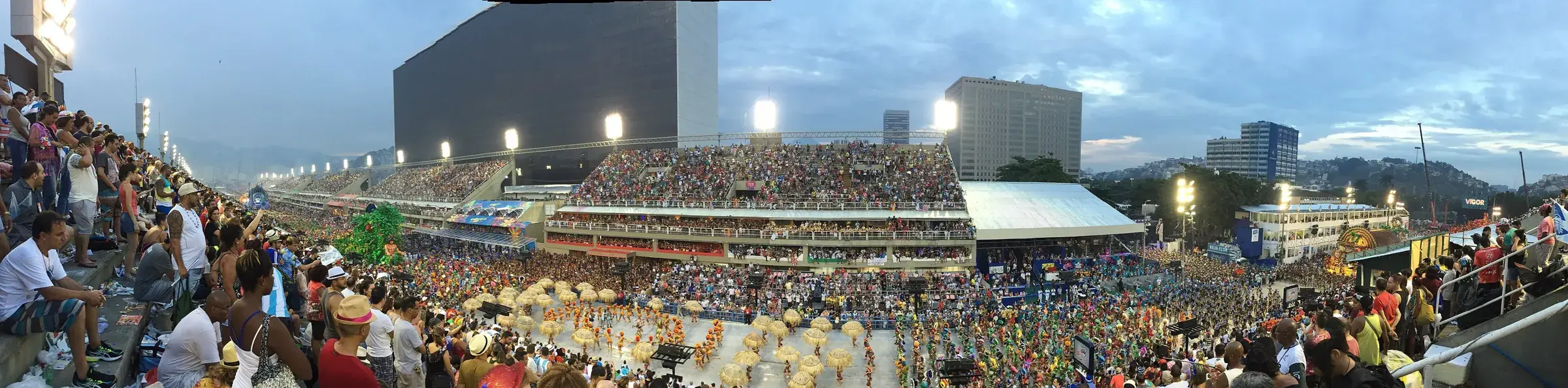
Paraty's Carnival and Rio's Carnival are very different experiences, and many travelers like to combine them. The small-town celebration and the great samba school parades at the Sambadrome complement each other well.
In 2027, Rio's Special Group samba schools parade at the Marquês de Sapucaí, the purpose-built avenue known as the Sambadrome, on three nights: Sunday, February 7, Monday, February 8, and Tuesday, February 9. The order of the schools was drawn in April 2026, and tickets are sold through the official channels in the months before. The parade of the champion schools traditionally takes place on the Saturday after Carnival, which in 2027 would be February 13.
There are two good ways to combine the two. The first is to spend Saturday in Paraty for the Bloco da Lama, drive to Rio on Sunday for a night at the Sambadrome, and return to Paraty for the last days of Carnival and the calm week after. The second is to start in Rio for the opening weekend and the Sambadrome, then drive to Paraty on Monday for the final days and Ash Wednesday by the sea.
Either way, plan the logistics carefully. The parades run late into the night, so stay in Rio after your Sambadrome night rather than driving back the same evening, and book your Rio hotel, tickets and transfers well in advance. Our guide to getting between Rio and Paraty covers the drive and transfer options.
For many guests, the combination is the perfect Carnival: the scale and spectacle of Rio for one unforgettable night, and the warmth and tradition of Paraty for the rest of the week.
Ash Wednesday and the week after
Ash Wednesday, February 10, 2027, marks the end of Carnival and the start of Lent. In Paraty, the day after the last night of music has a special charm: the streets are quiet, the town is tidying up, and there is a feeling of shared contentment.
It is one of our favorite days for a boat trip or a long lunch at a quiet beach. The bay is calm, the town has emptied a little, and you have the luxury of time. Many guests save their most relaxing plans for this day: a private boat to an island, a waterfall in the hills, or a slow afternoon at the pool.
The week after Carnival is also a wonderful time to stay on. Much of Brazil returns to work, the beaches and restaurants are calmer, and the summer weather and warm sea continue. If your schedule allows, adding a few days after Carnival gives you the best of both worlds: the celebration and the peaceful Paraty that follows.
Paraty's long Catholic tradition is visible in the colonial churches of the historic center, and the town's other religious festivals, including the Festa do Divino later in the year, are described in our festivals guide.
Ending the trip on a quiet note is a good way to take Carnival home with you. You will remember the mud tribe and the brass bands, and also the calm morning on the bay that followed.
If you would like an outing on land, the days after Carnival are a good moment to visit one of the cachaça makers on the roads into the hills, where you can taste the spirit at its source, or to swim in one of the forest waterfalls that run full in summer. Our guides to the cachaça distilleries and waterfalls around Paraty have the details.
What to pack for Carnival in Paraty
Packing for Carnival in Paraty means packing for a beach summer with a festive week on top. Pack light, breathable clothes and add a handful of Carnival extras.
- An old swimsuit or clothes to throw away if you plan to join the Bloco da Lama, plus a towel and a bag for the muddy things.
- A waterproof phone pouch on a lanyard for the mud day and the beach.
- Costume pieces: a colorful shirt, a flower garland, a hat, a mask or biodegradable glitter. Simple is perfect.
- Light, breathable clothing in cotton and linen for the warm days and evenings.
- Comfortable closed shoes for the stone streets, plus sandals for the beach.
- Sunscreen that is kind to the reef, plus a wide-brimmed hat and sunglasses.
- A refillable water bottle to keep hydrated between parades.
- Insect repellent for the evenings.
- Ear defenders for small children near the brass bands.
- Some cash in reais for kiosks, vendors and small purchases.
- A small cross-body bag that zips closed, for evenings following the blocos.
- A spare phone battery, since long days of photos drain phones quickly.
- A light rain layer for a passing summer shower.
- Something smarter for a dinner out or a private chef evening at the house.
Our Paraty packing list covers the essentials for any time of year, from beach gear to clothes for the boat.
Anything missing can usually be found in town, where costume pieces and beach gear fill the shop windows in the days before Carnival. Buying a Carnival hat or a garland in Paraty is part of the fun.
A practical note for the Bloco da Lama: pack the muddy clothes in a separate bag and rinse them at the beach before you bring them home. A quick soak in fresh water the same day makes them much easier to wash, and if they are past saving, there is no shame in letting them retire after their big day.
Carnival etiquette in a small town
Paraty's Carnival is warm and welcoming, and a few simple courtesies keep it that way for everyone.
The most important one belongs to the Bloco da Lama. The town and the bloco's organizers have run campaigns asking participants not to smear mud on walls, cars or people who have not chosen to join. The historic center's whitewashed facades are part of a World Heritage site, and keeping them clean is a sign of respect for the town that welcomes you. Get as muddy as you like, and keep the mud on the people who signed up for it.
Ask before photographing people up close, especially children. Most revelers are happy to pose, but a quick gesture of permission is always appreciated. The puppets and bands, of course, are made to be photographed.
Look after the beaches. Take your rubbish with you, use the bins at the kiosks, and leave Jabaquara as clean as you found it. Use biodegradable glitter if you wear any, since it ends up in the sea.
Join in with good humor. Carnival is about sharing the celebration, so dance, sing the choruses and say yes when someone offers you a garland. A little Portuguese is always appreciated, and bom Carnaval, happy Carnival, is the greeting of the week.
Finally, pace yourself. Drink water, eat well and take a rest in the afternoon. Carnival lasts five days, and pacing yourself is what keeps you dancing on Tuesday night.
Respect for the town also means respect for its rhythms. Many residents live and work in the historic center, and the streets return to their everyday life when the blocos move on. Keep the volume down when you walk home late through residential lanes, and you will be welcomed back next year with the same warmth.
February weather, the sea and the night sky
In February the Costa Verde is deep in summer, and the sea is close to its warmest of the year. The water around Paraty averages about 27.6°C in February, close to 82°F, and daytime highs on land are around 29°C, about 84°F. Days are long, with sunrise around 5:40 am and sunset around 6:45 pm in early February.
The rhythm of a summer day suits Carnival perfectly. The early hours tend to be the clearest, which makes them the time for boats and beaches. The middle of the day is hot, best spent in the shade or the water. Late afternoons bring softer light and the puppets and blocos, and evenings are warm enough for music in the streets until late. A short summer shower in the afternoon cools things down and usually passes quickly.
Warm water and a deep green forest define the season. Snorkeling around the islands, swimming at any hour and long evenings outdoors are the pleasures of the season.
The night sky is a bonus this year. The moon is new on February 6, 2027, Carnival Saturday, so the nights of Carnival week are dark. Once you step away from the lights of town, the stars over the bay are bright, and from a hillside the Milky Way can be striking on clear nights. It is a lovely contrast to the music in the streets.
Plan your days with the sun in mind: active outings early, shade and water at midday, Carnival in the late afternoon and evening.
The month-by-month guide to visiting Paraty follows the weather, the sea and the events through the rest of the year.
Booking a Carnival stay
Houses with room for a whole family or a band of friends go first for Carnival week, so early planning pays off for February 2027.
In your message, share the dates you have in mind, who is coming, and what kind of week you picture: in the thick of the blocos, on the water, or a mix of both. Carnival stays are often booked for the whole week, so ask about minimum stays and whether a few extra days before or after are possible. Boats, chefs and transfers from Rio or São Paulo are in demand that week as well, so add them to the same note.
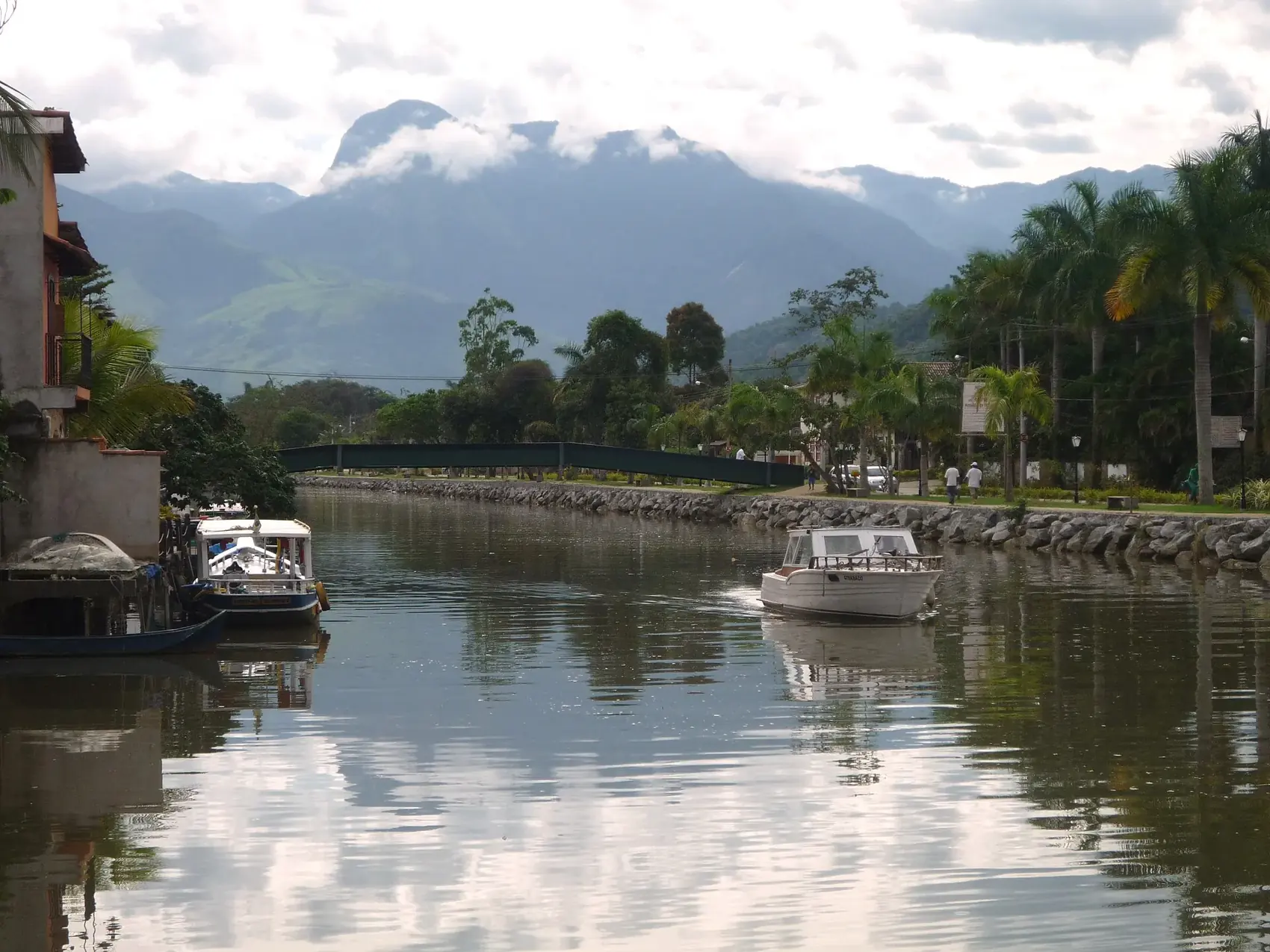
A hillside house above the bay makes a fine Carnival base. You can be in the music in town in the evening and wake up to a quiet morning and a swim. Our guides to where to stay in Paraty and to luxury vacation rentals in Paraty explain the options, and you can read about Chalé Bel Air itself.
Send your dates through the contact page and one of us will answer personally with availability and ideas.
Not sure whether you want the party itself or the calm that follows? Tell us that too. The days just after Ash Wednesday keep the warm sea and long evenings with quieter streets, and a stay that spans both, the last nights of Carnival and the first slow mornings after it, is one of our favorite ways to spend February in Paraty.
Whichever way you spend it, come ready to dance behind a brass band, to watch the mud tribe walk out of Jabaquara, and to rest on the bay when the music stops. Paraty's Carnival is small, joyful and unlike any other, and February 2027 is a wonderful time to discover it.
Sources. Dates and details in this article were checked against these sources in October 2026. Paraty publishes its official Carnival program shortly before Carnival; times for individual blocos are confirmed there.
- Bloco da Lama: tradição desde a década de 80 (Correio da Manhã, February 26, 2025)
- Carnaval de Paraty valoriza tradição e cultura em meio a cenário histórico (Correio da Manhã, February 11, 2026, page 29)
- 8 of Brazil's best festivals beyond Rio (National Geographic Traveller UK, October 20, 2025)
- Quando é o Carnaval 2027 (InfoMoney, February 20, 2026)
- Grupo Especial do Carnaval Rio 2027 tem ordem dos desfiles definida (Diário do Rio, April 17, 2026)
- Feriados nacionais e pontos facultativos de 2026 (Movimento Econômico, December 30, 2025)
- Phases of the Moon, 2027 (U.S. Naval Observatory)
- Sunrise and sunset for Paraty, February 6, 2027 (Sunrise-Sunset.org)
- Water temperature in Paraty in February (SeaTemperature.info)
- Paraty and Ilha Grande, Culture and Biodiversity (UNESCO World Heritage Centre)
- Réveillon Paraty 2026, road times from Rio and São Paulo (BlaBlaCar blog)
Cover photo: Praia do Jabaquara near the Pontal fort, by adilson_miranda, CC BY 3.0, via Wikimedia Commons.
Come stay above the bay
Chalé Bel Air sits on the ridge that looks over everything in this guide. Tell us your dates and what kind of trip you are after — we answer personally.
Ask about your datesFrequently asked questions
When is Carnival in Paraty in 2027?
Carnival 2027 runs from Saturday, February 6 to Carnival Tuesday, February 9, with Ash Wednesday on February 10. Paraty usually opens its program on the Friday before, so expect the celebrations to start on Friday, February 5. In 2026 the town's Carnival ran from Friday to Tuesday, and the 2027 program is published by the town shortly before Carnival.
What is the Bloco da Lama in Paraty?
The Bloco da Lama, or mud bloco, is Paraty's most famous Carnival tradition. It began on the Saturday of Carnival in 1986, when friends covered in mangrove mud at Praia do Jabaquara walked into the historic center. Today revelers coat themselves in the same mud, play on the beach and parade into town as a prehistoric tribe.
When does the Bloco da Lama take place?
The Bloco da Lama traditionally takes place on Carnival Saturday, which in 2027 is February 6. Participants gather at Praia do Jabaquara during the day, cover themselves in mud from the mangrove, then parade into the historic center. The exact start time is listed in the town's official Carnival program, published shortly before Carnival.
Can visitors join the Bloco da Lama?
Yes. It is a street bloco, and visitors join in alongside locals. Wear an old swimsuit or clothes you can throw away, leave valuables behind, keep your phone in a waterproof pouch and rinse off in the sea afterward. The one firm rule is courtesy: keep the mud off walls, cars and anyone who has not chosen to join.
Is Carnival in Paraty good for families?
Very much so. Paraty's Carnival is a small-town celebration built around brass bands, neighborhood blocos, giant puppets and marchinhas, and the daytime events are made for children. The beaches closest to town have calm, shallow water, and the town presents its Carnival as a safe, family celebration for residents and visitors.
How is Paraty's Carnival different from Rio's?
Rio's Carnival is known for the samba school parades at the Sambadrome and its huge street blocos. Paraty's is intimate: bands and blocos in colonial streets, giant puppets and the mud tribe at Jabaquara. Many visitors combine both, since Rio's Special Group parades run on February 7, 8 and 9, 2027, about three and a half hours away by road.
How long does it take to get from Rio to Paraty?
About three and a half hours by road in normal traffic along the BR-101 coastal highway, and a little under five hours from São Paulo. For Carnival, aim to arrive on Thursday, February 4, before the region heads for the coast, and drive in daylight. A private transfer or the coastal bus from Rio are relaxed alternatives to driving.
What should I pack for Carnival in Paraty?
Light cotton and linen clothes, a few costume pieces such as a garland or hat, an old swimsuit for the mud bloco, a waterproof phone pouch, closed shoes for the paving stones, sandals for the beach, reef-safe sunscreen, a hat, a refillable water bottle and some cash in reais for kiosks and vendors.